
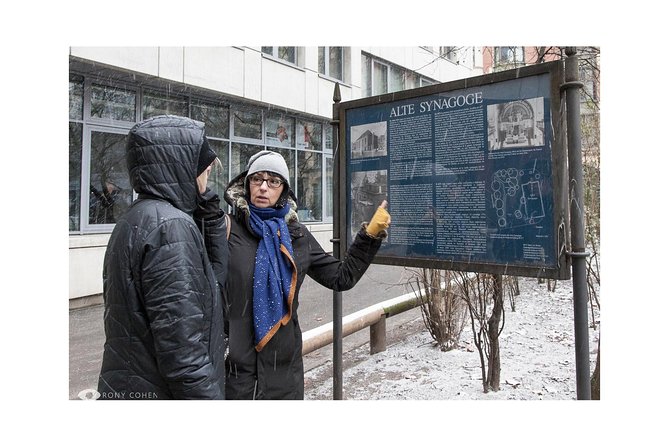
Reviewed · BERLIN TOURS
“The Jewish Berlin”
Berlin’s Jewish story is told here through places scattered across the city, not in one museum alone. You move from the grand remains of the New Synagogue to the stark Holocaust Memorial, the quiet Book Burning Memorial at Bebelplatz, an old cemetery, and Track 17 in Grunewald.
I like the private format, which gives you room to ask questions and connect the sites to your own family story. I also like the wide range of stops, since the tour covers religious life, intellectual life, persecution, remembrance, and the physical traces left behind.
The main drawback is the price if you are traveling as a couple, and admission to the New Synagogue is extra. The four-hour schedule also leaves only a short time at some stops, so this is best for a clear introduction rather than a detailed museum visit.
In This Review
- Key points to know before booking
- A four-hour introduction to Jewish Berlin
- The New Synagogue and Centrum Judaicum
- The Holocaust Memorial in central Berlin
- Bebelplatz and the Book Burning Memorial
- The old Jewish cemetery and Moses Mendelssohn
- Track 17 at Grunewald Station
- What a private guide adds
- Is $648.86 a fair price?
- Who will get the most from this tour?
- Should you book The Jewish Berlin?
- FAQ
- How long is The Jewish Berlin tour?
- What time does the tour start?
- Is pickup available from my accommodation?
- Is this a private tour?
- What language is the tour offered in?
- Is admission to the New Synagogue included?
- Are the other listed stops free?
- Which sites are included?
- Can service animals participate?
- What is the cancellation policy?
Key points to know before booking
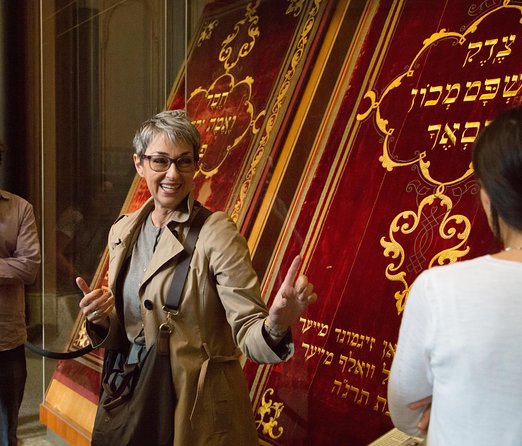
- A private tour for up to six people: You receive personal attention rather than joining a large bus group.
- Five very different sites: The route includes a synagogue, two memorials, a cemetery, and a railway station memorial.
- Pickup from your accommodation: This can save time in a city where the sites are spread across several districts.
- A guide with strong Berlin experience: Nirit Ben-Joseph is associated with the tour and has guided in Berlin for more than 20 years.
- New Synagogue admission costs extra: The memorials are free, but the synagogue exhibition ticket is not included.
- Best for history-minded visitors: The guide can adapt the conversation and answer questions throughout the day.
A four-hour introduction to Jewish Berlin
I see this experience as a focused city tour rather than a conventional museum outing. You spend time at five important locations, but the greater value comes from hearing how those places fit together.
Berlin’s Jewish community did not begin with the Holocaust, and this route makes that point clearly. The New Synagogue and old cemetery introduce centuries of community life. Bebelplatz and the Holocaust Memorial show how persecution moved from public humiliation to mass murder. Track 17 brings the story to a railway station on the edge of the city.
That broad arc is useful because it prevents Berlin’s Jewish history from becoming only a sequence of Nazi-era memorials. You hear about religious practice, education, philosophy, public life, destruction, and remembrance in one morning or afternoon.
The tour begins at 10:00 a.m. and lasts about four hours. Since pickup is offered from all accommodations, you do not need to make your way to a fixed city-center meeting point. The exact transport arrangement is not specified, so I would confirm that detail when booking if it matters to you.
Other Berlin days worth putting on the list:
- Berlin: Reichstag, Dome and Government District Guided Tour
★ 4.7 · 18,288 reviews - Berlin: 1-Hour City Tour by Boat with Guaranteed Seating
★ 4.3 · 16,993 reviews - Berlin: Boat Tour Along the River Spree
★ 4.4 · 11,252 reviews
The New Synagogue and Centrum Judaicum
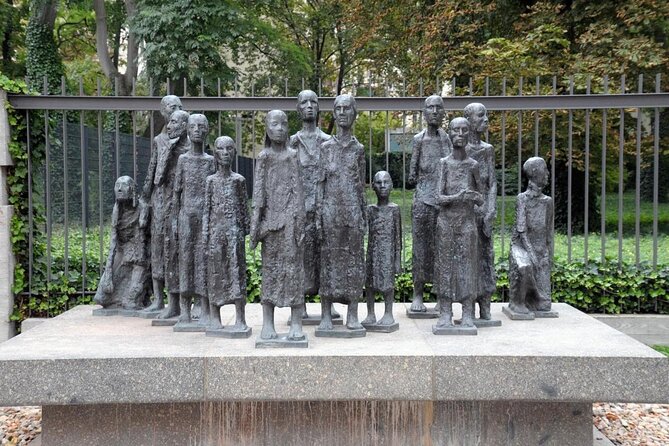
The first stop is the Stiftung Neue Synagoge Berlin, also known as Centrum Judaicum. The original synagogue had 3,200 seats and was once described as the largest and most beautiful synagogue in Germany. Today, the surviving building and exhibition tell a much harder story.
You can expect about 30 minutes here, with admission not included in the tour price. That matters because this is the one stop where you may need to pay an additional entrance fee, while the other listed memorials are free.
The site is valuable because it gives you a physical sense of the scale and public importance of Berlin’s Jewish community before its destruction. This was not a small neighborhood prayer room. It was a major institution in the capital, and its remains help explain the place Jewish Berlin once held in the city’s civic life.
I would keep your expectations realistic. The structure is partly ruined, and the condition may feel stark rather than polished. One account described the site as neglected and objected to both the admission charge and the audio guide. That is a fair caution if you prefer carefully maintained museums with extensive displays.
Still, the building’s worn condition is also part of what you are seeing. The damage is not an abstract lesson. It is a visible reminder of what happened to the community the synagogue served. Your guide can add the historical context that a short visit alone may not provide.
Nirit Ben-Joseph is especially associated with this style of explanation. She has more than 20 years of experience guiding in Berlin and has led tours in English, German, and Hebrew. Her approach, based on the information available, includes connecting major events with everyday life and answering questions in detail.
The Holocaust Memorial in central Berlin
The second stop is the Memorial to the Murdered Jews of Europe, usually called the Holocaust Memorial. You have about 20 minutes among its large field of concrete steles.
There is no admission charge for the outdoor memorial. The site’s power comes from its open location in the middle of Berlin. You are not being taken to a distant historical site. The memorial occupies a central part of the modern capital, close to the places where the German government now operates.
Twenty minutes is enough to walk among the steles and listen to the guide’s explanation, though it is not enough for a long, quiet visit. I would treat this as a first encounter. If you find the memorial especially meaningful, you can return later on your own and spend more time there.
The changing height and narrow paths create a physical experience that photographs cannot fully convey. You do not simply look at a plaque and move on. You enter the memorial, walk through it, and see the city from within it.
This stop also gives the tour a useful change of scale. The New Synagogue concerns a specific community and building. Here, the memorial addresses the murder of Europe’s Jews through a vast public installation. A private guide can help you consider the difference between seeing a place alone and understanding how it fits into Berlin’s wider story.
Bebelplatz and the Book Burning Memorial
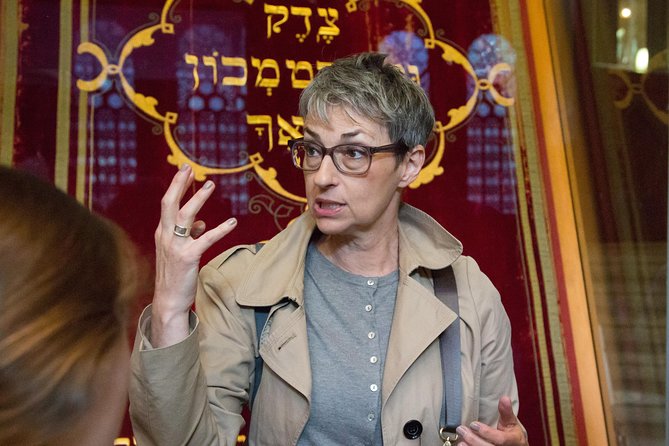
At Bebelplatz, you spend about 15 minutes at the Book Burning Memorial. This is the authentic location of the Nazi book burning on May 10, 1933.
The memorial is easy to miss if you are walking through the square without a guide. That is one reason this stop earns its place on a private route. A small, understated memorial can carry great weight when you know what happened there.
The site points to the attack on books, writers, ideas, and public debate that formed part of the Nazi rise to power. It also helps you see persecution as a process. The destruction of Jewish life did not begin with deportations and camps. Public attacks on culture and identity came earlier.
Fifteen minutes is brief, but suitable for an explanation and a look at the memorial. I would not expect a long stop or a full treatment of Nazi censorship here. Instead, the guide uses Bebelplatz as one chapter in a larger account.
This is another place where personal questions can improve the experience. You can ask how the book burning fits into Berlin’s political history, how the memorial was designed, or how the city remembers an event that happened in such a prominent square.
Same city, a completely different kind of day:
- Discover Berlin Half-Day Walking Tour
★ 5.0 · 9,624 reviews - Berlin: Hop-on Hop-off Bus Tour with Live Commentary
★ 4.3 · 8,579 reviews - Berlin: Government District around the Reichstag Guided Tour
★ 4.7 · 8,447 reviews - Berlin: Reichstag, Plenary Chamber, Cupola & Government Tour
★ 4.6 · 8,422 reviews
The old Jewish cemetery and Moses Mendelssohn
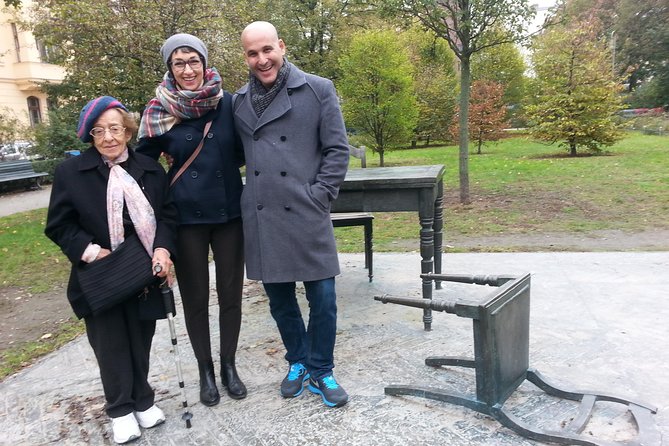
The fourth stop is the Alter Judischer Friedhof, or Old Jewish Cemetery. The visit lasts about 10 minutes, making it the shortest stop on the route.
Members of Berlin’s Jewish community were buried here from 1672 onward. Among them was Moses Mendelssohn, the philosopher associated with the Enlightenment. The cemetery was destroyed by the Gestapo in 1943, adding another layer of loss to a place already marked by the disappearance of its community.
This stop is important because it pushes the story back well before the 20th century. Mendelssohn’s presence links Berlin’s Jewish history with the intellectual life of the European Enlightenment. The cemetery also reminds you that Jewish Berlin was not created in the modern era. It had institutions, families, leaders, and thinkers across many generations.
Ten minutes does not allow for a slow cemetery visit or close study of every remaining trace. I would see it as a concise historical stop, especially useful if you want to understand how long the community had been part of Berlin.
The short timing may be a drawback for anyone with a special interest in Jewish cemeteries or Mendelssohn. You may want to ask the guide in advance if more time can be arranged, though the published schedule gives only about 10 minutes here.
Track 17 at Grunewald Station
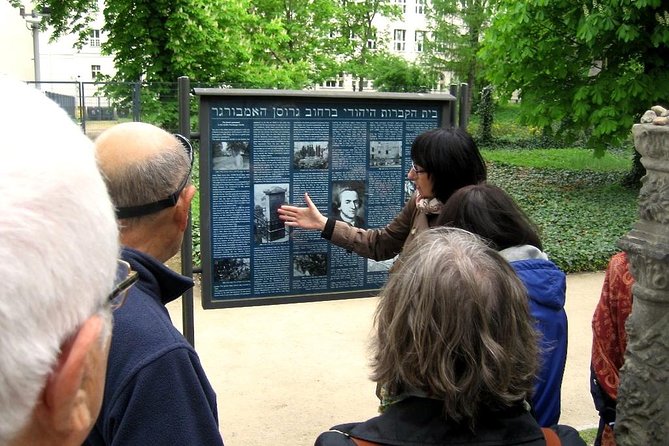
The final listed stop is the Track 17 Memorial at Grunewald Train Station. You spend about 30 minutes visiting the memorial.
This location changes the mood again. Earlier stops concern a synagogue, a city square, a memorial field, and a cemetery. Track 17 places the story at a railway station, bringing the machinery of persecution into an ordinary part of the city’s transport system.
The site’s setting is part of its meaning. You are not only looking at a monument in a central plaza. You are visiting a station connected with the movement of people out of Berlin during the Nazi period. The guide’s role is especially useful here, since the place can otherwise seem quiet and disconnected from the city center.
Thirty minutes gives you enough time to see the memorial and hear the explanation without rushing. It also provides a more reflective ending than a final stop in a busy central square might offer.
Because this stop is in Grunewald, the pickup and private transport arrangement can save time. Berlin is spread out, and combining distant places by public transport would take more planning. The convenience is part of what you are paying for.
What a private guide adds
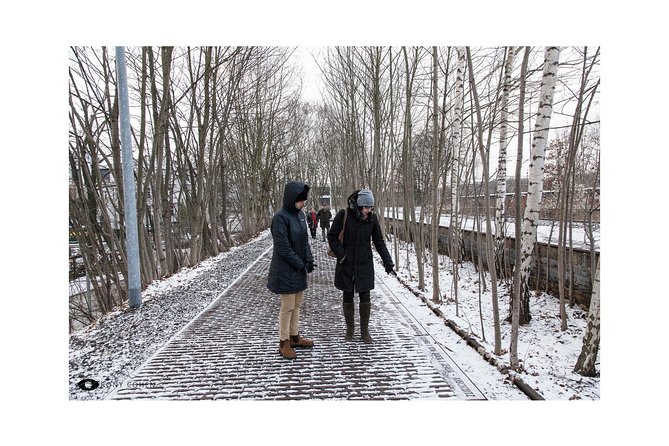
The strongest reason to choose this tour is not simply the list of addresses. It is the ability to shape the conversation as you go.
Nirit Ben-Joseph is described as having a historian’s approach, using maps and broader political context to explain Germany from its formation to the present. Her tours can also connect Jewish history with the wider history of Berlin, including the city during and after the Berlin Wall period.
That flexibility can be valuable if your family has roots in Europe. Information associated with the experience says she may research family addresses, businesses, and registered records when information is available. You should confirm what research is included before booking, but the approach is clearly more personal than a standard sightseeing route.
The guide can also explain daily life, not just dates and disasters. One account describes a careful comparison between Jewish life in Berlin from the 1600s into the early 20th century and Jewish life in New York. That kind of connection can make the subject easier to understand, especially if you are new to German Jewish history.
You should also expect a guide who talks readily and directly. One description calls the style assertive but pleasant, with occasional gentle humor even when the subject is painful. That will suit you if you enjoy an active conversation. If you prefer long periods of silence and private reflection, the private format lets you ask for a quieter pace.
Is $648.86 a fair price?
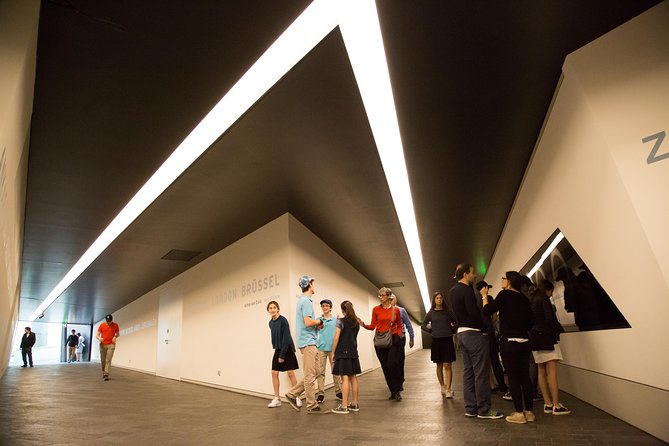
The listed price is $648.86 for a group of up to six people. That works out to about $108 per person for six, or about $324 per person for a couple.
For a solo visitor or couple, that is a serious expense for four hours. You are paying for a private guide, accommodation pickup, route planning, and the ability to ask questions throughout the visit. You are not paying for a large group experience where the guide must follow a fixed script.
For six people, the value becomes much stronger. Families or small groups can divide the cost while keeping the personal format. If the pickup saves you from arranging transport between central Berlin and Grunewald, that adds practical value, although the exact transport details should be confirmed.
Remember that the New Synagogue admission fee is not included. The Holocaust Memorial, Bebelplatz memorial, old cemetery, and Track 17 are listed as free, so the synagogue is the main additional cost identified here.
I would book this for the guide and the structure, not because it is the cheapest way to see memorials. You can visit several of these places independently. What you cannot easily reproduce is the continuous explanation linking Jewish life in Berlin, the Nazi assault, and the city’s effort to remember.
Who will get the most from this tour?
I would recommend it to you if you want more than a quick photograph at Berlin’s major memorials. It suits history fans, families tracing Jewish roots, and first-time visitors who want a strong introduction without spending days planning a route.
The private format also works well for mixed-interest groups. You can ask about Jewish history, general Berlin history, family connections, architecture, politics, or the city after reunification. The guide’s experience includes both Jewish and secular Berlin tours, so the discussion does not have to stay narrowly within one subject.
I would think twice if you want extensive time inside museums. The schedule gives 30 minutes at the New Synagogue, 20 minutes at the Holocaust Memorial, 15 minutes at Bebelplatz, 10 minutes at the cemetery, and 30 minutes at Track 17. That is a lot of ground in four hours.
I would also consider your comfort with the New Synagogue’s condition. It is a surviving and partly ruined site, not a spotless modern attraction. Some visitors may find the additional admission charge and audio guide disappointing, and the reported restroom condition is another practical concern.
The tour is offered in English, and most people can participate. Service animals are allowed, and the stops are near public transportation. Confirmation is sent within 48 hours, subject to availability. Free cancellation is available if you cancel at least 24 hours before the start time. A minimum number of participants is required, though this remains a private activity for your own group.
Should you book The Jewish Berlin?
Book it if you want a personal, guided account of Berlin’s Jewish past and you are willing to pay for private attention. The best parts are the route’s variety, the chance to ask unlimited questions, and the guide’s ability to connect centuries of community life with the Holocaust and modern remembrance.
For a group of up to six, the cost can be reasonable. For two people, it is a premium choice, so make sure you value the guide more than low-cost sightseeing. If you mainly want to enter the New Synagogue or spend a long time at one memorial, plan an independent visit instead.
I would choose this tour for a family with personal connections to Jewish Europe, a history-focused couple, or anyone who wants Berlin explained by a person rather than by plaques alone. Just allow for the extra synagogue admission and the compact timing at several stops.
FAQ
How long is The Jewish Berlin tour?
The tour lasts approximately four hours.
What time does the tour start?
The listed start time is 10:00 a.m.
Is pickup available from my accommodation?
Yes. Pickup is offered from all accommodations.
Is this a private tour?
Yes. Only your group participates, with a maximum group size of six people.
What language is the tour offered in?
The tour is offered in English. Information about the guide also identifies German and Hebrew as languages used on tours.
Is admission to the New Synagogue included?
No. Admission to Stiftung Neue Synagogue Berlin, Centrum Judaicum, is not included.
Are the other listed stops free?
The Holocaust Memorial, Book Burning Memorial, Old Jewish Cemetery, and Track 17 Memorial are listed with free admission.
Which sites are included?
The tour visits the New Synagogue and Centrum Judaicum, the Holocaust Memorial, the Book Burning Memorial at Bebelplatz, the Old Jewish Cemetery, and the Track 17 Memorial at Grunewald Train Station.
Can service animals participate?
Yes. Service animals are allowed.
What is the cancellation policy?
You can cancel at least 24 hours before the start time for a full refund. Cancellations or changes made less than 24 hours before the start time are not accepted for a refund.
Just added around Berlin
- Love and War in Berlin: Self-Guided Story Puzzle Walk★ 5.0 · 7 reviews
- Rickshaw Tours Berlin – Groups of up to 16 people with several rickshaws★ 4.0 · 97 reviews
- Walking on the Wall: 3-Hour Tour in Berlin★ 4.5 · 34 reviews
- eSIM for Germany and 34 European Countries★ 4.5 · 16 reviews
- Warnemuende Shore Excursion: Berlin Private Sightseeing Tour from Rostock★ 5.0 · 4 reviews
- Your ticket to The Wall Museum Berlin★ 3.0 · 60 reviews
- Warnemuende Shore Excursion: Private Berlin Tour★ 4.5 · 27 reviews
- Berlin’s Gay, Lesbian, and Queer Scene Small-Group Walking Tour★ 4.5 · 66 reviews
Berlin Tours, compared.

Reichstag, Dome and Government District Guided Tour
Read our review →
1-Hour City Tour by Boat with Guaranteed Seating
Read our review →


Reichstag, Plenary Chamber, Cupola & Government Tour
Read our review →

