Reviewed · PRIVATE
The Best of Berlin Private Guided Tour
Berlin makes the most sense when you connect its monuments to the events that shaped them. This private tour does that in one sweep, from the Prussian royal boulevard to the Brandenburg Gate, Nazi power sites, the Berlin Wall, and today’s German capital.
I like the private format, which lets your guide adjust the pace and answer your questions without a large group slowing things down. I also like the hotel pickup and the chance to follow Berlin’s story through specific places rather than hearing a string of disconnected dates.
The main thing to check is timing. The tour is described as the most complete 4-hour Berlin tour, but the listed duration is 3.5 hours, and the route covers a great deal of ground. You should expect a fast, big-picture introduction rather than long visits inside museums.
In This Review
- Key points
- Berlin’s story in one long walk
- Museum Island and the royal heart of Berlin
- Unter den Linden and Bebelplatz
- Gendarmenmarkt and Berlin’s grand civic face
- Checkpoint Charlie and the Cold War divide
- The Berlin Wall and former Nazi headquarters
- Potsdamer Platz, rebuilt after destruction
- Hitler’s bunker and the final days of the Nazi regime
- The Reichstag and the battle for Berlin
- The Memorial to the Murdered Jews of Europe
- Brandenburg Gate and a city reunited
- How the private format affects the experience
- Who should book this Berlin tour?
- Should you book The Best of Berlin Private Guided Tour?
- FAQ
- How long does the tour last?
- How much does the private tour cost?
- Where does the tour begin?
- Which languages are available?
- Is this a private group experience?
- Is the tour wheelchair accessible?
- Can I cancel for a full refund?
Key points
- A private group of up to 15: You get your own guide, with more room for questions and changes of pace.
- Berlin’s full political story: The route covers Prussian rule, Bismarck’s Germany, the Weimar Republic, Nazism, the Cold War, and reunification.
- Hotel pickup included: Meet at your accommodation or another agreed meeting point.
- Major sights in one route: Museum Island, Bebelplatz, Gendarmenmarkt, Checkpoint Charlie, the Wall, Potsdamer Platz, the Reichstag, the Holocaust Memorial, and Brandenburg Gate all appear on the route.
- English or German guiding: You can choose between the two listed tour languages.
- Flexible and wheelchair accessible: The provider says guides remain flexible on the day, and the activity is listed as wheelchair accessible.
Berlin’s story in one long walk
Berlin is not a city where one beautiful old center tells the whole story. Its past is scattered across grand avenues, empty spaces, rebuilt facades, memorials, and stretches of wall. That can make sightseeing confusing on your own, especially if you are trying to understand how a royal capital became the center of Nazi rule, a divided Cold War city, and then the capital of reunited Germany.
This tour gives you a useful framework. You begin with Frederick the Great and the Hohenzollern dynasty, move through the creation of the German nation under Otto von Bismarck in 1871, and then follow Berlin into World War I, the unstable Weimar Republic, Hitler’s rise, World War II, the Cold War, and reunification.
That broad sweep is the tour’s chief strength. You are not only looking at buildings. You are being shown how power moved through the city and how each political era left its mark.
The route is presented as a walking tour, with your guide meeting you at your accommodation or chosen meeting point. Since the route includes many major sites, wear comfortable shoes and be ready for a steady pace. The tour is wheelchair accessible, but the exact starting point and route details should still be confirmed when booking if you have particular mobility needs.
A few more Berlin trips to weigh up
- Berlin: Private Reichstag and Glass Dome Tour
★ 4.8 · 2,226 reviews - Berlin Private Complete History All Day Walking Tour
★ 5.0 · 474 reviews - Private Walking Tour Berlin Third Reich Hitler and World War II
★ 5.0 · 360 reviews
Museum Island and the royal heart of Berlin
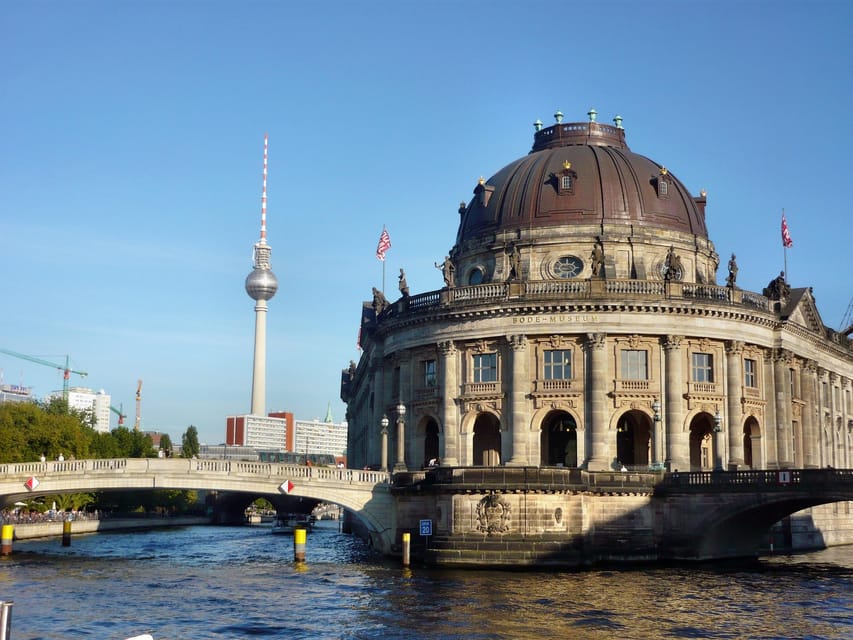
Museum Island is the historic center of Berlin, set along the Spree and home to six world-class museums. The tour also brings you to Berlin Cathedral and the newly rebuilt Hohenzollern city palace.
Even if you do not enter a museum, this opening section gives you a clear sense of Berlin as a royal capital and center of learning. The buildings around the island show how the Prussian rulers used architecture to announce power and culture. Your guide can connect the palace, cathedral, museums, and surrounding streets to the Hohenzollern dynasty and Frederick the Great.
The practical catch is time. Six museums could fill several days, while this tour only gives you part of a morning or afternoon. Treat Museum Island here as an orientation stop, not a museum visit. If you want to see the collections inside, plan a separate visit.
The rebuilt city palace is also a reminder that Berlin is still deciding how to present its past. Old royal forms have returned in a city that has spent decades confronting monarchy, dictatorship, war, and division.
Unter den Linden and Bebelplatz
From Museum Island, the route follows Unter den Linden, Berlin’s famous avenue named for the linden trees that once lined it. The boulevard links the City Palace and Museum Island with the Brandenburg Gate, making it one of the best places to understand the old royal city.
Along the way, your guide discusses Frederick the Great and the development of Prussia. The avenue is grand, but its importance is not only visual. It was designed as a ceremonial route, and its buildings reflect the ambitions of a ruling dynasty.
Bebelplatz, once called Frederick’s Forum, brings a darker chapter into view. The square is home to Humboldt University, the Opera House, the former Royal Library, and Hedwig’s Cathedral. It is also the site of the Nazi book burning on May 10, 1933.
This is one of the stops where a guide adds real value. The square can look calm and formal, yet it marks an early public act of Nazi repression. The contrast between elegant architecture and political violence is difficult to grasp from a photograph alone.
Because the tour is short, you should expect an explanation of the site rather than a long pause at every building. Still, Bebelplatz is an important stop for understanding how the Nazi regime attacked free thought and public life before the war began.
Gendarmenmarkt and Berlin’s grand civic face
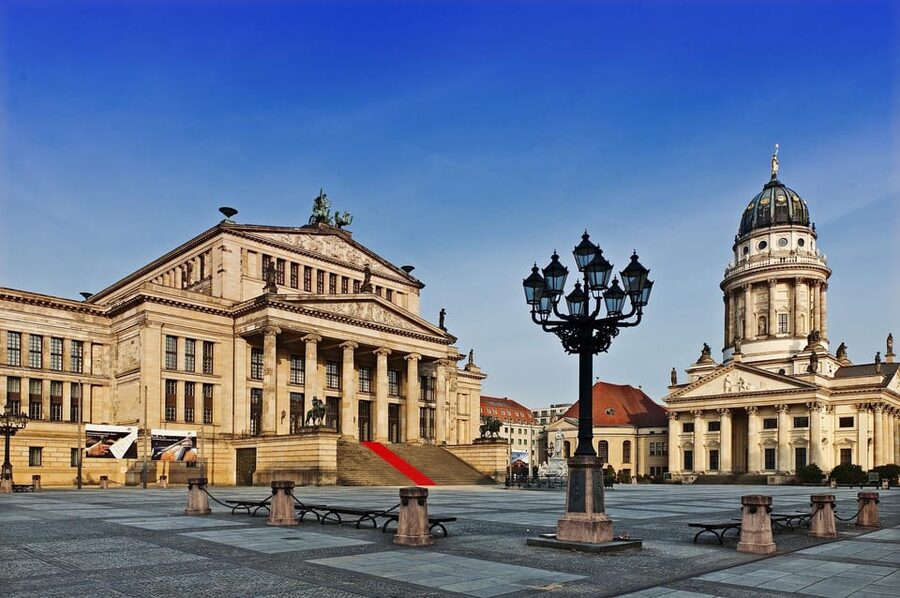
Gendarmenmarkt is widely considered one of Berlin’s most beautiful squares. The French Cathedral and German Cathedral face the Konzerthaus, creating a carefully balanced setting that reflects Berlin’s historic mix of royal ambition, religion, and civic display.
This is a good place to pause and look around. The square’s symmetry can make Berlin feel orderly and classical, but the larger tour keeps reminding you that the city’s past was anything but calm. Your guide’s job here is to place the architecture in the story of Prussia and the German state, not simply point out attractive facades.
The square may also be affected by restoration or city activity on the day of your tour. The provider promises flexibility, which matters in a central city where routes can change. You should see the square as part of the walking narrative rather than expect a long formal stop.
Same city, a completely different kind of day:
- Berlin: Reichstag, Dome and Government District Guided Tour
★ 4.7 · 18,288 reviews - Berlin: 1-Hour City Tour by Boat with Guaranteed Seating
★ 4.3 · 16,993 reviews - Berlin: Boat Tour Along the River Spree
★ 4.4 · 11,252 reviews - Discover Berlin Half-Day Walking Tour
★ 5.0 · 9,624 reviews
Checkpoint Charlie and the Cold War divide
Checkpoint Charlie is one of Berlin’s most famous Cold War locations. It was the frontline crossing and Allied checkpoint manned by Americans and Soviets, and its name has become shorthand for the divided city.
This is where the tour shifts from royal and Nazi Berlin to the postwar struggle between East and West. Your guide can explain why this particular crossing mattered and how Berlin became a pressure point in the conflict between the United States and the Soviet Union.
Checkpoint Charlie is also a place where expectations matter. It is famous, easy to reach, and heavily associated with tourism. The value here comes less from the checkpoint structure itself than from understanding what the border meant. Listen for the political context and the human cost of a city split by ideology.
The private format helps if you have questions about the Wall, escape attempts, or daily life in divided Berlin. The supplied information does not promise a particular display or interior visit, so think of this as a guided historical location rather than a museum admission.
The Berlin Wall and former Nazi headquarters
The route includes one of the three remaining stretches of the Berlin Wall. This section sits on the former site of the SS and Gestapo headquarters, directly across from the former Nazi Luftwaffe headquarters.
Few places make Berlin’s layered past so plain. The Wall belongs to the Cold War, but the ground beneath it also carries the history of Nazi terror. Your guide can connect the two dictatorships without treating them as identical, showing how the same city became the center of two very different systems of repression.
This is one of the most useful parts of the tour for first-time visitors. You see how little distance separates the landmarks of Nazi Germany and the divided city. Berlin’s past is not arranged in neat museum rooms. It lies under office blocks, beside traffic lanes, and along ordinary streets.
The remaining Wall sections are limited, so do not expect a long continuous barrier. The power of the stop comes from knowing what the fragment represents and where it sits in relation to the former SS and Gestapo headquarters.
Potsdamer Platz, rebuilt after destruction
Potsdamer Platz was one of Europe’s busiest traffic intersections in the 1920s, with more than 20,000 cars crossing each day. World War II destroyed almost all of it, and the area was rebuilt in the 1990s and early 2000s as one of Berlin’s most modern districts.
The stop gives you a sharp before-and-after picture. First, your guide can describe the lively interwar crossroads. Then comes the wartime destruction, the division of Berlin, the empty zone near the Wall, and the modern rebuilding that followed reunification.
This is a useful reminder that Berlin’s modern architecture is not simply a style choice. Much of it reflects war, division, and the effort to make a new capital after 1990. If you like architecture, urban planning, or the story of how cities rebuild, Potsdamer Platz will likely hold your attention.
If your main interest is medieval or classical Berlin, the modern district may feel less personal than Museum Island or Bebelplatz. Its role on this tour is to show how quickly Berlin changed after the Wall came down.
Hitler’s bunker and the final days of the Nazi regime
The route stops at the site of Hitler’s bunker, the air raid shelter that became the center of the Nazi government during the last week of World War II in Europe. Hitler took his own life there as the regime collapsed.
There is no grand surviving monument to the bunker. That absence is part of the point. Your guide discusses the final days of Hitler and the Nazi leadership at the location, helping you understand the end of the dictatorship without turning the site into a place of fascination.
This stop requires a sober approach. It is less about seeing a dramatic structure and more about facing the reality of how close the Nazi leadership was to the city center, and how the war ended in ruin around it.
For many people, this is among the most important explanations on the route. It places the end of the war in a physical setting and links directly to the nearby government district and memorials.
The Reichstag and the battle for Berlin
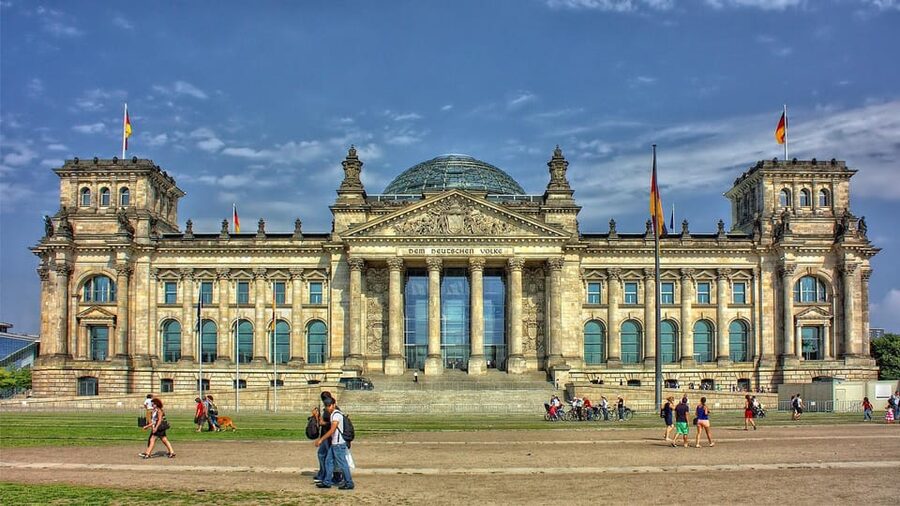
The Reichstag is Germany’s House of Parliament. It is remembered not only as a national institution but also for the fire that helped Hitler take total control. During the Battle of Berlin, German and Soviet forces fought over the building.
Today, the Reichstag is topped by a glass dome designed by British architect Sir Norman Foster. The dome gives the building a modern public face, a fitting contrast to its role in dictatorship and war.
Your guide can help you read the Reichstag as more than a handsome government building. It represents the failure of the Weimar Republic, the destruction of democratic government under Hitler, the violence of 1945, and the return of parliamentary Germany.
The tour does not state that it includes entry to the Reichstag or the glass dome. Plan on seeing and discussing the exterior unless your guide confirms otherwise. If the dome is high on your list, arrange that separately and check its visiting rules before you go.
The Memorial to the Murdered Jews of Europe
The Memorial to the Murdered Jews of Europe is Germany’s central memorial to the six million Jews murdered by the Nazis in concentration and death camps across Europe.
The memorial’s open field of concrete blocks creates a serious, unsettled place in the heart of Berlin. It is not a decorative monument, and it rewards quiet attention. Your guide can explain its purpose and place the Holocaust within the wider story of Nazi rule.
This stop matters because the tour does not treat World War II as only a military event. It brings the organized murder of Europe’s Jews into the center of the route, alongside the government district and the former bunker site.
Give yourself emotional room here. The itinerary is tightly packed, so the guide may need to keep moving, but this is a place where you may want a little silence before continuing. The tour data does not specify an entrance to the memorial’s underground information center, so do not assume that part is included.
Brandenburg Gate and a city reunited
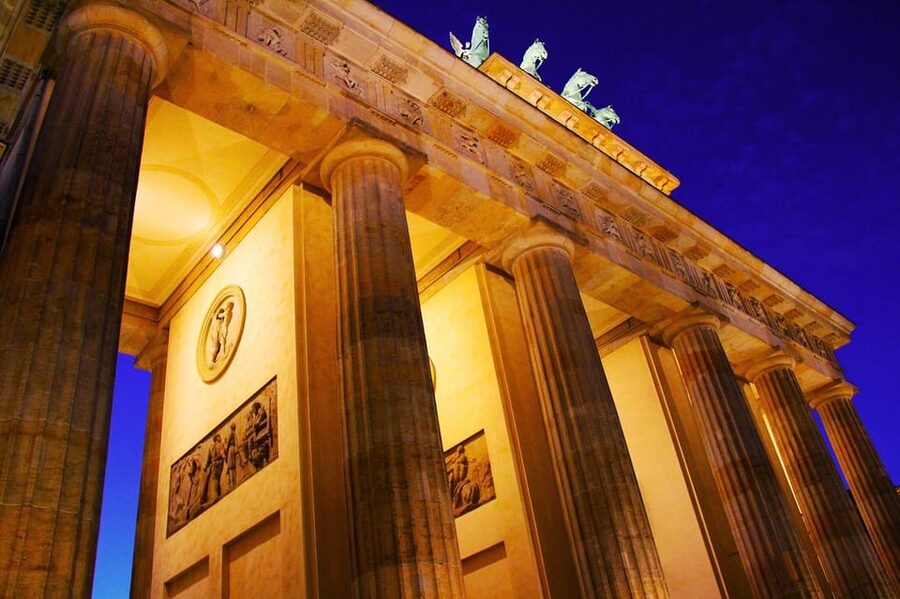
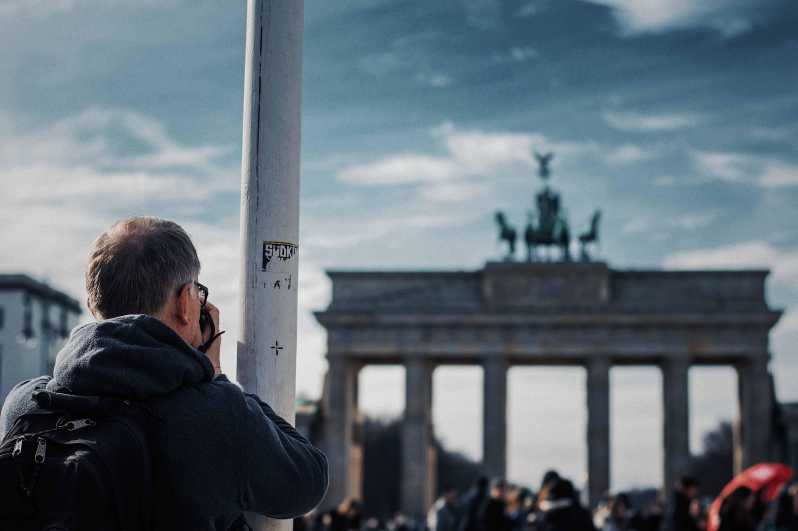
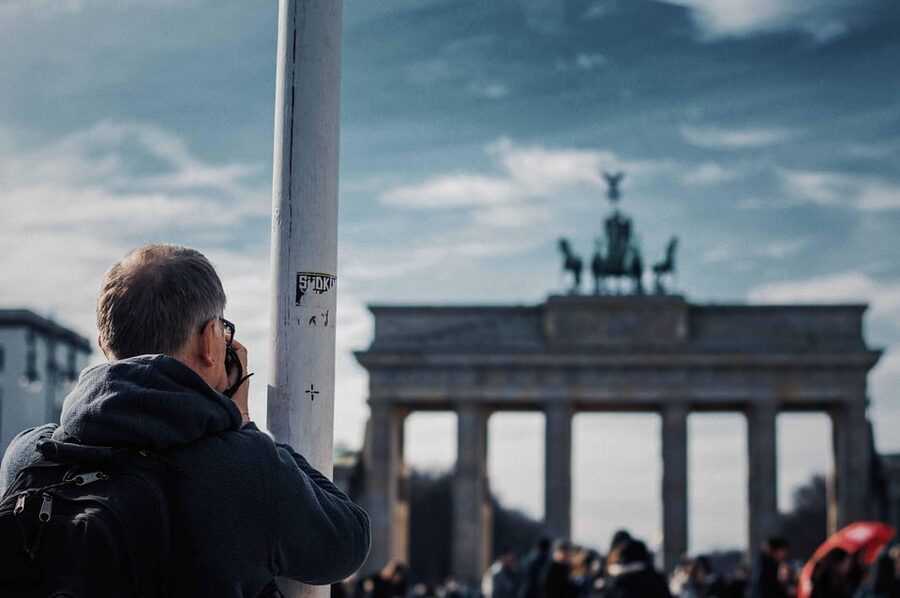
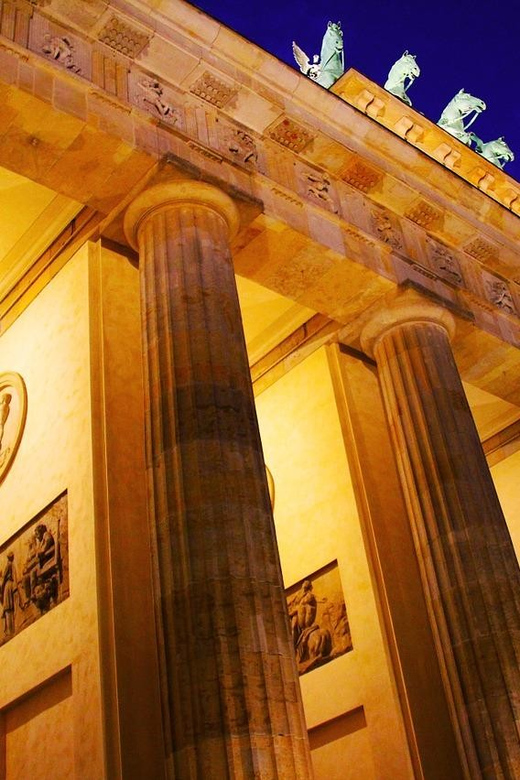
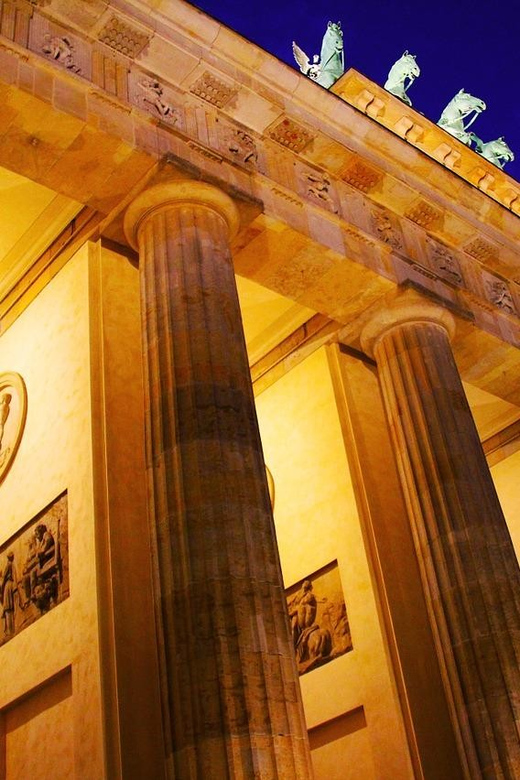
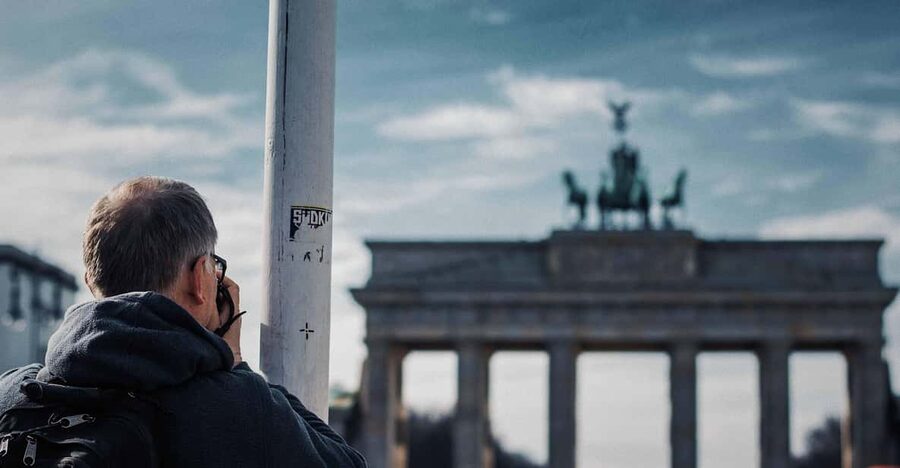
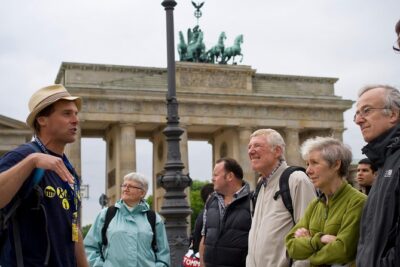
The Brandenburg Gate is one of Berlin’s defining sights and once served as a royal entrance for the Prussian family. It survived Napoleon and World War II, then spent almost 30 years trapped beside the Berlin Wall.
The gate once symbolized royal power, then division, and now German unity. That change gives the final stop real weight. After hearing about Prussia, Bismarck, Nazi rule, the war, the Wall, and the Cold War, you reach a monument that has been given a new meaning by reunification.
I like ending here because the Brandenburg Gate ties the whole route together. It is not just a photo stop. It lets you think about how a city can reuse the same symbol as its politics change.
The area can be crowded and active, but the guide’s explanation should help you look beyond the familiar image. Pay attention to the gate’s location and the former Wall line around it. Berlin’s division was once physically close to this landmark, even though today the scene feels open.
How the private format affects the experience
At $295 per group of up to 15, the cost looks very different depending on your party size. A full group of 15 pays about $19.67 per person. A couple pays the full group rate between them, so the value depends on how much you want personal attention and schedule flexibility.
A private guide is especially useful for a historical route this dense. You can ask for more time at Bebelplatz, spend less time at a stop that does not interest you, or request clearer explanations of the Cold War and reunification. The guide remains flexible on tour days, though the exact changes will depend on timing and the route.
The experience is available in English or German. One named guide, Natalie, received especially strong praise for being easy to chat with and for explaining Berlin clearly. You cannot assume she will lead your tour, but her mention gives you a useful sense of the friendly, accessible style you can hope for.
Hotel pickup is included, as is meeting at another chosen point. That saves you the trouble of finding a central starting place, though you should provide a clear meeting location when arranging the tour.
Cancellation is free up to 24 hours before the start time, and you can reserve now while paying later. The tour is also listed as wheelchair accessible. Since accessibility can depend on the exact route and starting point, discuss your needs before the tour if you require specific arrangements.
Who should book this Berlin tour?
I would choose this tour if you have limited time in Berlin and want a connected explanation of the city’s major historical chapters. It is also a good fit for families, couples, or private groups who prefer to ask questions freely instead of joining a large scheduled group.
The route suits first-time visitors especially well. You will see the main political and historical landmarks in a single outing, then decide which places deserve a longer return visit.
It is less suitable if you want extended time in museums, long interior visits, or a slow photography walk. The route covers many sites in 3.5 hours, despite being described in places as a 4-hour tour. That means you are paying for expert connection between places, not for a deep examination of each one.
Should you book The Best of Berlin Private Guided Tour?
Book it if you want Berlin’s major sights explained as one story, from Prussian kings to German unity. The private group setup, hotel pickup, flexible guide, and English or German language options make it easy to shape the outing around your interests.
Before booking, confirm the start time and clarify the 3.5-hour duration. Also ask which stops are exterior explanations rather than interior visits. At $295, it is strongest value for a family or group sharing the cost, and less compelling for two people unless private guiding is important to you.
If that tradeoff works for your party, this is a sensible first look at Berlin. It gives you the map, the difficult questions, and enough context to make the rest of your stay more meaningful.
FAQ
How long does the tour last?
The listed duration is 3.5 hours. The experience is also described as a 4-hour Berlin tour, so confirm the exact duration when checking availability.
How much does the private tour cost?
The price is $295 for a private group of up to 15 people.
Where does the tour begin?
Your guide meets you at your accommodation or at another chosen meeting point.
Which languages are available?
The live tour guide is available in English or German.
Is this a private group experience?
Yes. The tour is for a private group, with a maximum group size of 15 people.
Is the tour wheelchair accessible?
Yes, the activity is listed as wheelchair accessible.
Can I cancel for a full refund?
Yes. You can cancel up to 24 hours in advance for a full refund.
Just added around Berlin
- Love and War in Berlin: Self-Guided Story Puzzle Walk★ 5.0 · 7 reviews
- Rickshaw Tours Berlin – Groups of up to 16 people with several rickshaws★ 4.0 · 97 reviews
- eSIM for Germany and 34 European Countries★ 4.5 · 16 reviews
- Walking on the Wall: 3-Hour Tour in Berlin★ 4.5 · 34 reviews
- Warnemuende Shore Excursion: Berlin Private Sightseeing Tour from Rostock★ 5.0 · 4 reviews
- Your ticket to The Wall Museum Berlin★ 3.0 · 60 reviews
- Warnemuende Shore Excursion: Private Berlin Tour★ 4.5 · 27 reviews
- Berlin’s Gay, Lesbian, and Queer Scene Small-Group Walking Tour★ 4.5 · 66 reviews
Private, compared.


Berlin Private Complete History All Day Walking Tour
Read our review →
Munich Private Tour with a Local – Highlights & Hidden Gems
Read our review →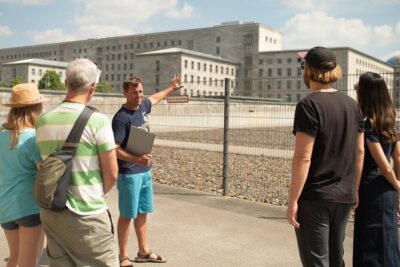
Private Walking Tour Berlin Third Reich Hitler and World War II
Read our review →
Your private 3-hour Hamburg driving tour with a former policeman
Read our review →
Private Berlin: Iconic Sights and Hidden Gems Walking Tour
Read our review →