Reviewed · PRIVATE
Private Tour of David Bowie’s West-Berlin
David Bowie’s Berlin story is best understood on foot and by train, moving between the places that shaped his West Berlin years. This private tour links Where Are We Now? with Hansa Studios, Zoo Station, KaDeWe, the former Dschungel nightclub, Neues Ufer, and the apartment building where Bowie lived from 1976 to 1978.
I like the small private format, which lets Martin adjust the pace and explain the city rather than simply point at buildings. I also like the route’s mix of music, architecture, everyday shopping, nightlife, and postwar Berlin change.
The main consideration is that this is a walking and public-transit experience, not a museum visit. Admission and transport tickets are not included, and several stops are now former sites, so the value comes from the guide’s storytelling and connections between places.
In This Review
- Key points to know before booking
- Why Bowie’s West Berlin still makes a strong walking tour
- Potsdamer Platz and a city rebuilt around the void
- Hansa Studios, where the Berlin sound took shape
- Zoo Station and the darker side of West Berlin
- KaDeWe, Bowie’s everyday Berlin stop
- The former Dschungel site and Berlin nightlife
- Neues Ufer and the optional nightcap
- Hauptstraße 155, Bowie’s former home
- Martin’s guiding style and the value of a private group
- Walking, trains, tickets, and practical comfort
- Who will get the most from this Bowie tour
- Should you book it?
- FAQ
- How long does the David Bowie West Berlin tour last?
- How many people can join the private tour?
- What is the price of the tour?
- Are public-transit tickets included?
- Where does the tour end?
- Can I have a drink at Neues Ufer?
- Is the tour suitable for people with limited mobility?
- What is the cancellation policy?
Key points to know before booking
- Hansa Studios is the musical centerpiece: See the building where Bowie recorded much of his Berlin Trilogy.
- The tour connects song lyrics to real places: Potsdamer Platz, KaDeWe, and Zoo Station all tie into Bowie’s Berlin years and Where Are We Now?
- Martin can shape the experience: His past tours have covered Bowie, architecture, the Holocaust, German culture, and custom school-focused history.
- You use Berlin’s trains between sections: This helps you cover West Berlin efficiently, but tickets are your responsibility.
- The route ends at Bowie’s former home: Hauptstraße 155 remains an important stop for fans, with flowers or candles often placed outside.
- You get a private three-hour outing: Your group alone participates, with a maximum of eight people.
Why Bowie’s West Berlin still makes a strong walking tour
Bowie’s Berlin was divided, tense, gritty, and far removed from the polished city you see today. This tour works because it does not treat the singer as an isolated celebrity. Instead, it places him inside the West Berlin of the late 1970s, then shows you how dramatically those streets have changed.
The route also gives you a useful contrast between famous locations and ordinary ones. Potsdamer Platz is a major public square. KaDeWe is an enduring department store. Hansa Studios remains tied to landmark recordings. But the former Dschungel site and Bowie’s apartment are quieter, more personal stops.
That range is important. You are not simply collecting photographs of music sites. You are following the daily pattern of Bowie’s life: recording, shopping, going out at night, riding the train, and returning home.
The tour lasts about three hours, which is enough time for seven stops without turning the day into a long endurance test. You should still expect regular walking, stairs or station access, and time spent moving through the city. A moderate fitness level is recommended.
A few more Berlin trips to weigh up
- Berlin: Private Reichstag and Glass Dome Tour
★ 4.8 · 2,226 reviews - Berlin Private Complete History All Day Walking Tour
★ 5.0 · 474 reviews - Private Walking Tour Berlin Third Reich Hitler and World War II
★ 5.0 · 360 reviews
Potsdamer Platz and a city rebuilt around the void
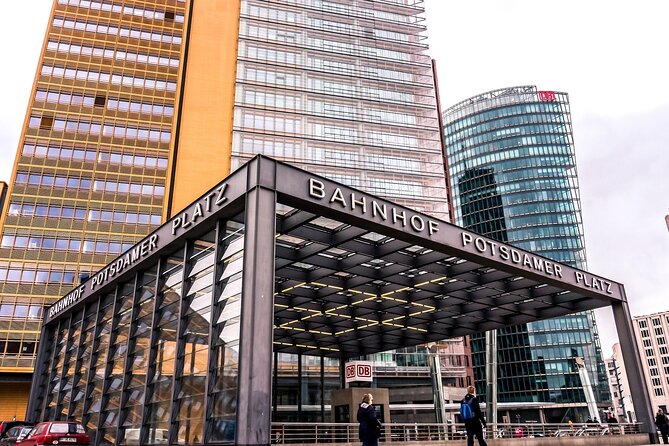
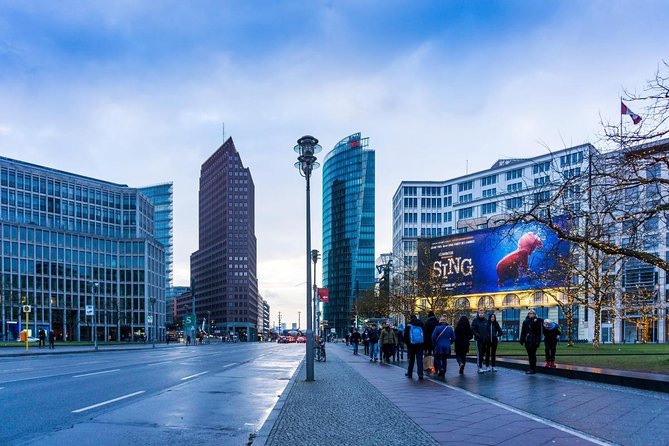
The route begins at Potsdamer Platz, one of Berlin’s clearest examples of change. Before the Second World War, it was a busy center. During the Cold War, the Berlin Wall left it as a largely empty zone. Today, it is once again filled with modern buildings, shops, offices, and traffic.
Bowie referred to Potsdamer Platz in Where Are We Now?, a song that looks back at Berlin with a reflective eye. Starting here gives the tour a useful frame: you see a place that has not merely changed a little, but has gone from urban center to wasteland and back again.
The stop lasts about 15 minutes and has no admission charge. Do not expect a preserved Bowie-era setting. The point is the contrast between what stood here in the 1970s and what you see now.
The listed meeting point is Deutsche Kinemathek at Mauerstraße 79, while the route description begins at Potsdamer Platz. Since those locations are not presented in exactly the same way, I would confirm the precise meeting instructions before setting out.
Hansa Studios, where the Berlin sound took shape
Hansa Studios is likely to be the most rewarding stop for serious Bowie fans. Bowie recorded much of his Berlin Trilogy here, including work associated with Low, “Heroes”, and Lodger. The building is closely tied to the sound and atmosphere that made this period so important.
You do not enter the studio as part of the stated experience. Instead, you stop outside for photographs and to see a Bowie GIF animation displayed in one of the windows. That limitation matters. If you are expecting a studio tour, recording-room access, or an exhibition, this will feel modest.
Still, the exterior has real value because the building is not an abstract memorial. It is the actual place connected to the recordings. Martin’s role is especially important here, since the significance comes from understanding what Bowie was making, why Berlin mattered, and how the site fits into the wider route.
The stop is scheduled for about 20 minutes. That is enough time for photos and explanation, but not for an extended visit.
Zoo Station and the darker side of West Berlin
From Hansa Studios, you board the train toward City West and visit Bahnhof Zoologischer Garten, better known as Zoo Station. In Bowie’s Berlin, this was a rougher and more troubled place than the station area many people see today.
The stop also connects to Christiane F., whose story became known internationally through the book and film Christiane F. Bowie was a major influence on her and allowed his music to be used throughout the film. The connection gives the station a strong cultural link, but it also points to the harder realities of West Berlin youth culture.
You spend about 15 minutes here. This is a good stop for readers who want more than a list of recording locations, since it brings in film, social conditions, and the gap between Bowie’s artistic image and the city’s daily problems.
Again, you should keep your expectations grounded. Zoo Station has changed, and the tour is not presenting a preserved 1970s scene. Martin’s explanation is what makes the connection worthwhile.
Same city, a completely different kind of day:
- Berlin: Reichstag, Dome and Government District Guided Tour
★ 4.7 · 18,288 reviews - Berlin: 1-Hour City Tour by Boat with Guaranteed Seating
★ 4.3 · 16,993 reviews - Berlin: Boat Tour Along the River Spree
★ 4.4 · 11,252 reviews - Discover Berlin Half-Day Walking Tour
★ 5.0 · 9,624 reviews
KaDeWe, Bowie’s everyday Berlin stop
Kaufhaus des Westens, usually shortened to KaDeWe, is one of Berlin’s best-known department stores. Bowie used it to buy groceries, and the store is referenced in Where Are We Now?
That everyday detail makes the stop appealing. Recording studios and nightclubs tell you about Bowie’s public and artistic life. A department store tells you where he handled ordinary errands. It is a reminder that famous people still need food, household items, and a place to shop.
The visit lasts around 15 minutes and does not include an admission ticket. You will likely see KaDeWe as an operating department store rather than a Bowie attraction. The tour does not promise a special interior presentation, so the stop is mainly about context and the connection to the song.
If you enjoy seeing how a musician fitted into a city’s normal routines, this will be more interesting than it sounds. If you want rare memorabilia or a formal Bowie display, it may seem brief.
The former Dschungel site and Berlin nightlife
At Nürnberger Str. 53, Martin points out the former location of the Dschungel, a club where Bowie was often seen. The club itself is gone, but the address remains, giving you a physical link to one of his regular night spots.
This is a classic example of a place where the building or address matters more than what is currently inside. You will not be walking into the old club, and there is no promise of preserved décor. The stop lasts about 15 minutes, enough for the guide to explain what the Dschungel meant and how Bowie’s nightlife fit into the City West scene.
I like this kind of stop because it asks you to use your imagination without pretending the past is still intact. Berlin changes quickly, and former nightlife sites are often more revealing than a polished memorial.
Neues Ufer and the optional nightcap
The tour then takes another train ride to Neues Ufer, formerly known as Anderes Ufer. This local gay bar was one of the places Bowie spent time, often stopping for a nightcap. In the period described, it was open around the clock.
The bar remains part of the route, and having a drink there is optional. Many people choose to stay for one after the formal tour ends, but the stated tour itself does not include coffee, tea, or other drinks.
This stop adds an important part of Bowie’s Berlin identity. It is not simply about where he recorded. It points to the social spaces he frequented and to the role of West Berlin’s gay nightlife in his life during those years.
Allow about 10 minutes for the guided portion. If you want to have a drink, plan for extra time and budget separately. Since the tour ends elsewhere, staying at Neues Ufer may also mean arranging your own onward travel.
Hauptstraße 155, Bowie’s former home
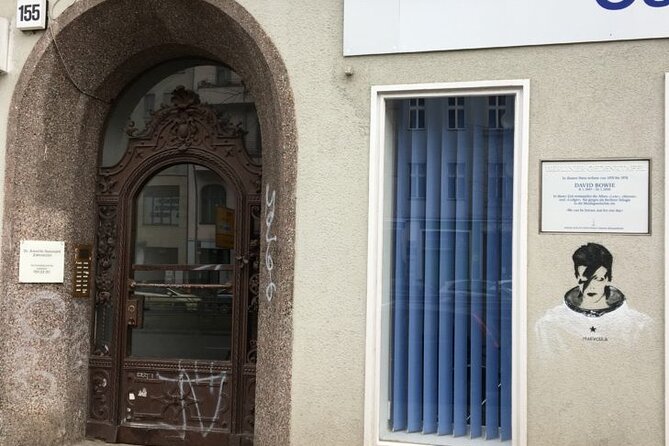
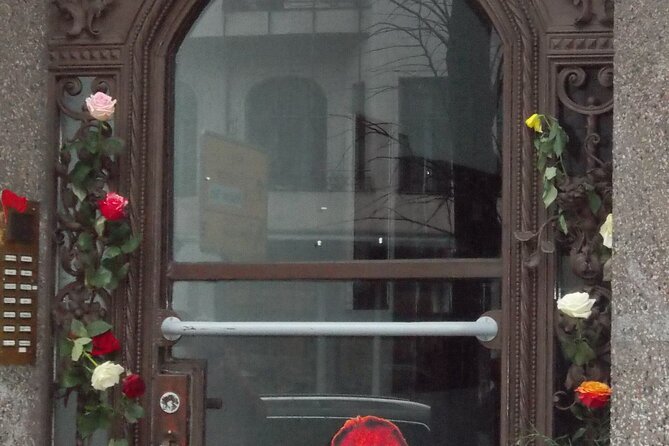
The final stop is Hauptstraße 155, the building Bowie called home from 1976 to 1978. The tour ends here, giving the route a personal finish rather than leaving you at another public landmark.
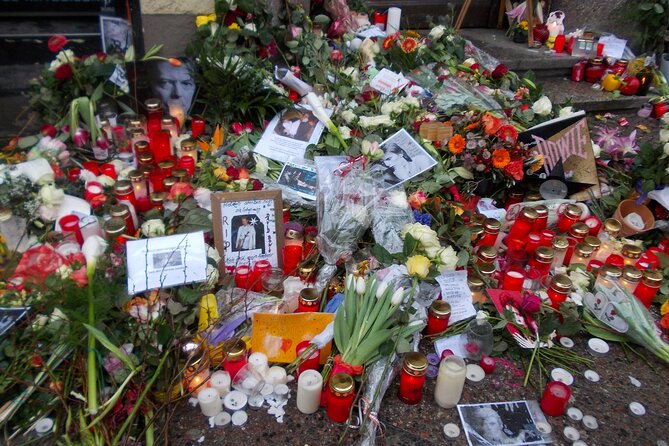
The building is not presented as a museum, and there is no entry included. You look at the exterior and the ledge outside, where flowers, candles, and other small tributes are often left for Bowie.
This can be a quiet and moving stop, especially after seeing the studios, stations, stores, and clubs connected with his Berlin life. It also gives you a better sense of the difference between celebrity mythology and ordinary residential life. Bowie lived in a real apartment building on a normal street, not inside a purpose-built shrine.
The location is in Berlin’s Schöneberg area, and the tour’s stated end point is outside this building. If you want to continue exploring after the tour, you will need to make your own plans.
Martin’s guiding style and the value of a private group
Martin is the named guide connected with this experience. The strongest praise attached to his work focuses on his broad command of subjects and his ability to adapt a tour to the people in front of him.
That matters here because Bowie’s Berlin story crosses several topics. You may want music and recording details. Someone else in your group may care more about architecture, German culture, the Holocaust, or the social setting of West Berlin. Martin’s past work has covered all of those areas, and he has also built a tour around a student’s GCSE history curriculum.
That does not guarantee that every Bowie-focused visit will follow a custom script, but it does suggest that you can ask questions and request emphasis where appropriate. A private tour is better suited to that than a large group with a fixed lecture.
The group limit is eight people. At $285.07 per group, the price looks quite different for two people than for eight. Split among eight, it works out to roughly $35.63 per person before any transport tickets or drinks. For a couple, the per-person cost is much higher, but you are paying for a private guide rather than a seat on a standard group walk.
Walking, trains, tickets, and practical comfort
This is not a bus tour. You walk between nearby sites and use Berlin’s train network to connect Hansa Studios with City West and later reach Neues Ufer. The public-transit element is useful because it shows how the neighborhoods relate to one another, but it also adds a small layer of planning.
Transport tickets are not included. You should be ready to buy the required tickets separately and allow time to move through stations. The experience includes mobile ticketing and confirmation at booking, but that does not cover local transit fares.
Wear comfortable shoes and bring water. The tour asks for moderate physical fitness, and the three-hour length includes both stops and movement. Service animals are allowed, and the route is near public transportation.
The experience is private, so you do not need to match the pace of a large group. That is helpful if you want to pause for photographs at Hansa Studios or ask Martin to explain a point in more detail.
Who will get the most from this Bowie tour
I would choose this tour if you already care about Bowie’s Berlin period and want to connect songs, addresses, and city change. It is also a good match for someone who enjoys music history but does not need every stop to be a formal museum.
You may enjoy it less if you want interior access, rare objects, or a large collection of Bowie memorabilia. Several locations are viewed from outside, and two key nightlife sites are former locations or ordinary working venues.
The tour can also suit mixed-interest groups. Martin’s wider subject range gives the experience room to move into architecture, German culture, or the city’s difficult twentieth-century story. Families with an older student may find the private format useful, especially if they want the discussion shaped around school history.
Should you book it?
Book this private tour if you value place-based storytelling more than exhibits. Hansa Studios, Zoo Station, KaDeWe, the Dschungel site, Neues Ufer, and Hauptstraße 155 create a strong route, but the guide’s explanations are the main event.
The price is easiest to justify for a group of four to eight people. Solo visitors and couples should compare the higher per-person cost with the benefit of a private guide, flexible questions, and a route built around one shared interest.
I would also confirm the start location, bring money for transit, and decide in advance if you want to stay for a drink at Neues Ufer. Cancel at least 24 hours before the start time if your plans change, since that is the stated deadline for a full refund.
FAQ
How long does the David Bowie West Berlin tour last?
The tour lasts approximately three hours.
How many people can join the private tour?
The private tour is for your group only and allows up to eight people.
What is the price of the tour?
The listed price is $285.07 per group of up to eight people.
Are public-transit tickets included?
No. Tickets and other personal costs are not included.
Where does the tour end?
The tour ends at Hauptstraße 155 in Berlin, outside David Bowie’s former home.
Can I have a drink at Neues Ufer?
Yes. Having a drink at Neues Ufer is optional, and you may choose to stay for one after the tour. The drink is not included.
Is the tour suitable for people with limited mobility?
The tour requires a moderate level of physical fitness and includes walking and train travel. The provided information does not specify full accessibility details.
What is the cancellation policy?
You can cancel up to 24 hours before the start time for a full refund. Cancellations or changes made less than 24 hours before the start time are not accepted for a refund.
Just added around Berlin
- Love and War in Berlin: Self-Guided Story Puzzle Walk★ 5.0 · 7 reviews
- Rickshaw Tours Berlin – Groups of up to 16 people with several rickshaws★ 4.0 · 97 reviews
- Walking on the Wall: 3-Hour Tour in Berlin★ 4.5 · 34 reviews
- eSIM for Germany and 34 European Countries★ 4.5 · 16 reviews
- Warnemuende Shore Excursion: Berlin Private Sightseeing Tour from Rostock★ 5.0 · 4 reviews
- Your ticket to The Wall Museum Berlin★ 3.0 · 60 reviews
- Warnemuende Shore Excursion: Private Berlin Tour★ 4.5 · 27 reviews
- Karl-Marx-Allee Tour: Life and Architecture in East Berlin★ 5.0 · 19 reviews
Private, compared.


Berlin Private Complete History All Day Walking Tour
Read our review →
Munich Private Tour with a Local – Highlights & Hidden Gems
Read our review →
Private Walking Tour Berlin Third Reich Hitler and World War II
Read our review →
Your private 3-hour Hamburg driving tour with a former policeman
Read our review →
Private Berlin: Iconic Sights and Hidden Gems Walking Tour
Read our review →