
Reviewed · HISTORICAL TOURS
Private Tour: Jewish Heritage Walking Tour of Berlin
Berlin’s Jewish story is not confined to one museum. It runs through courtyards, railway tracks, workshops, cemeteries, protest sites, and memorials. This private walking tour connects those places in one serious, moving half-day, with Gleis 17 and the tiny Otto Weidt Museum providing especially strong moments.
I like the private format, which gives you room to ask difficult questions and adjust the pace. I also like the range: Jewish life before 1933, acts of courage during the Nazi years, and the way modern Berlin remembers its past. The main consideration is distance. Seven stops in four hours, including a trip to Grunewald, can feel brisk, and the Berlin AB transport ticket is extra.
In This Review
- Key points at a glance
- Why this private Berlin tour works
- Hackesche Höfe and the Jewish city
- The New Synagogue’s golden dome
- Otto Weidt’s workshop and quiet acts of courage
- Gleis 17, where the rails tell the story
- The Old Jewish Cemetery and Berlin’s earlier generations
- Rosenstraße and the women who protested
- Walking among the concrete slabs
- Four hours, public transport, and the real pace
- Is $191.62 per person good value?
- Who will get the most from this tour?
- Booking advice and cancellation terms
- Should you book this Berlin Jewish heritage tour?
- FAQ
- How long is the Jewish Heritage Walking Tour of Berlin?
- Is this a private tour?
- What language is the tour offered in?
- Is hotel pickup available?
- Is public transportation included?
- Is food or drink included?
- Does the tour visit Gleis 17?
- Is admission to the listed sites included?
- Can I cancel for a full refund?
Key points at a glance
- A private guide for your group: You get undivided attention rather than a standard script delivered to a large crowd.
- Otto Weidt’s preserved workshop: Spend about 25 minutes in the small museum where a brush maker helped protect Jewish employees.
- Gleis 17 in Grunewald: Read deportation dates and numbers on metal plaques set into the former railway platform.
- Jewish Berlin beyond the Holocaust: Hackesche Höfe, the New Synagogue, the Old Jewish Cemetery, and Rosenstraße add social and cultural context.
- A serious four-hour route: Expect moderate walking, public transport, and several emotionally heavy stops.
- Flexible conversation: Guides such as Eran, Ioana, Nikolai, and Zvika are praised for answering questions and adapting the route to families and weather.
Why this private Berlin tour works
The strongest feature here is the combination of scale and intimacy. Berlin is spread out, and its Jewish sites do not form one neat museum district. A guide helps you connect the pieces: immigrant life and commerce at Hackesche Höfe, religious renewal at the New Synagogue, persecution at Gleis 17, and remembrance at the Holocaust Memorial.
Because the tour is private, you can shape the conversation. If your family has roots in Germany, you can ask the guide to spend more time on that subject. If you are traveling with children, the guide can adjust the language and pace. One guide, Nikolai, was specifically praised for being patient with 10 and 12-year-old children, while another, Asaf, changed the tour when rain made the original plan less comfortable.
The guide lineup varies. Eran, Mickail, Ioana, Nikolai, Zvika, Oren, Finn, Ariel, Asaf, Sarah, Rennes, and others have led this experience. The important point is not to expect one particular person unless the booking confirmation names your guide. The strongest praise centers on clear English, strong command of Berlin and Jewish history, patience, and a willingness to discuss hard subjects honestly.
The tour is offered in English, though a multilingual guide may also speak German or Hebrew. One guide was praised for Spanish, and another for French, but you should confirm language needs when booking rather than assume a particular guide.
A few more Berlin trips to weigh up
- Berlin: Natural History Museum Entrance Ticket
★ 4.6 · 3,382 reviews - Berlin: World Heritage Cruise to Potsdam
★ 4.5 · 1,435 reviews - Berlin Historical Highlights Walking Tour
★ 4.9 · 657 reviews
Hackesche Höfe and the Jewish city
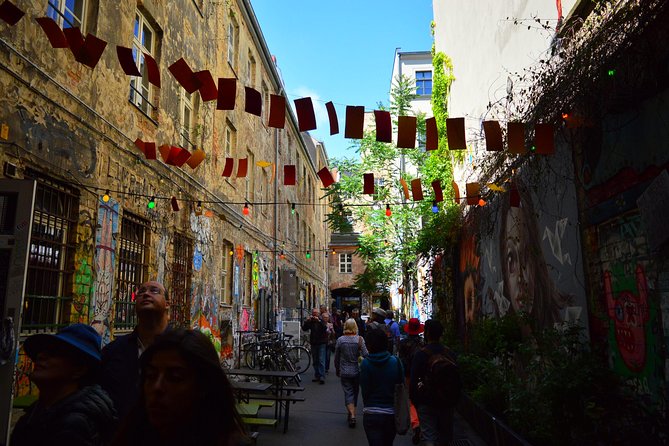
The tour begins at Hackesche Höfe, a group of linked courtyards off Rosenthaler Straße. You see decorative architecture, but the point is not simply to admire the façades. These courtyards once housed Jewish artisans, merchants, immigrants, and small businesses whose work helped shape Berlin’s cultural life in the late 19th and early 20th centuries.
Allow about 15 minutes here. That is enough for an introduction and a look at the courtyards, but not enough for a long architectural study. I like this opening because it begins with ordinary city life rather than starting immediately with Nazi persecution. You first get a sense of people working, trading, making homes, and building a community.
The courtyards are also an active part of modern Berlin, so the setting can feel busy and commercial. That contrast is useful, but it means you should listen closely. The traces of the past are not always obvious in the present-day shops and passageways.
The New Synagogue’s golden dome
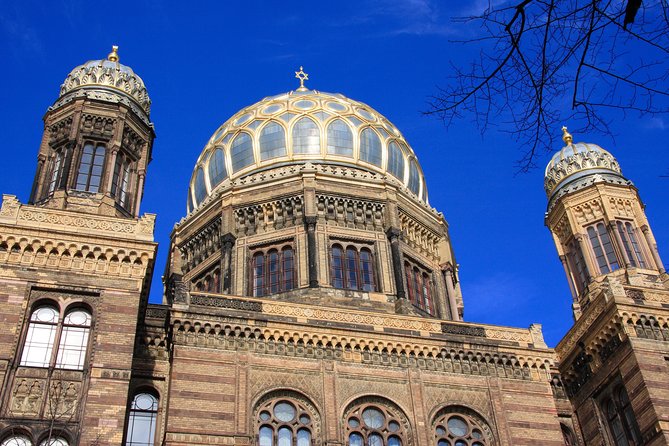
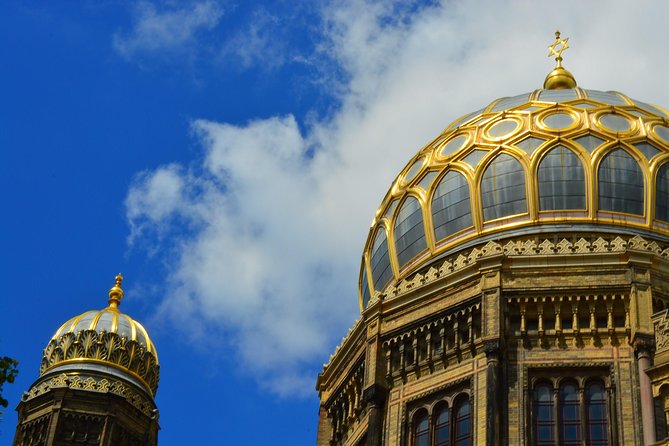
The New Synagogue, home to the Stiftung Neue Synagoge Berlin and Centrum Judaicum, offers a short stop of about 10 minutes. The restored building is known for its dome and detailed exterior, which recall the synagogue that opened in 1866.
The center preserves and presents Jewish culture and memory through exhibitions, lectures, educational programs, and events. The supplied tour details describe a visit to the site, but they do not promise admission to the interior or a full museum visit. Treat this portion as an exterior view and historical explanation unless your guide confirms that entry is included.
That distinction matters. If you want substantial museum time, ten minutes will not be enough. The value here is the building’s place in the story of Berlin Jewish life, plus the chance to understand what the synagogue represented before the war and what its restoration means today.
Otto Weidt’s workshop and quiet acts of courage
The Museum Blindenwerkstatt Otto Weidt is one of the most affecting stops. It occupies the original workshop of Otto Weidt, a blind brush maker who employed Jewish workers and tried to shield them from Nazi persecution.
You have about 25 minutes here, longer than at most stops. The small museum preserves work areas and tells the stories of the people Weidt helped. The material focuses on practical acts of protection, including false papers and efforts to delay or prevent deportation.
I would give this stop your full attention. It shows how resistance could take the form of daily choices, personal risks, and attempts to use a small business as a protective space. It does not turn the period into a simple story of heroes and villains. The guide can help explain the danger involved and the uncertainty faced by those trying to survive.
The museum is listed with free admission, and the tour details do not list a separate entry charge. Still, the site is compact, so do not expect a large museum with extensive galleries. Its power comes from the preserved setting and the individual stories.
Same city, a completely different kind of day:
- Berlin: Reichstag, Dome and Government District Guided Tour
★ 4.7 · 18,288 reviews - Berlin: 1-Hour City Tour by Boat with Guaranteed Seating
★ 4.3 · 16,993 reviews - Berlin: Boat Tour Along the River Spree
★ 4.4 · 11,252 reviews - Discover Berlin Half-Day Walking Tour
★ 5.0 · 9,624 reviews
Gleis 17, where the rails tell the story
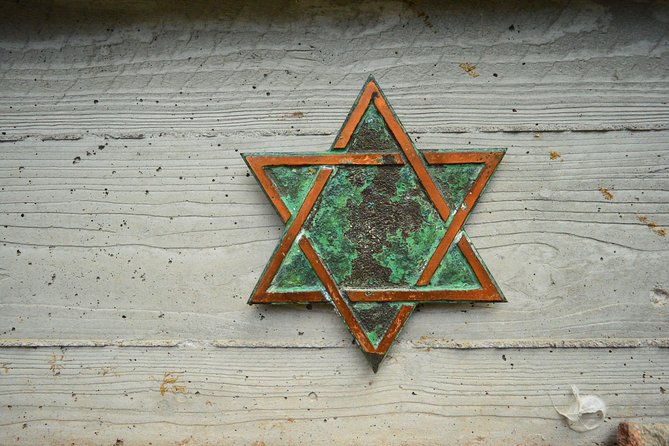
Gleis 17 at Grunewald station is the tour’s clearest physical reminder of deportation. From this railway platform, thousands of Jewish people were transported between 1941 and 1945 to concentration camps and extermination sites across Europe.
Metal plaques set into the ground record transport dates and numbers. You do not need a grand monument here. The plain railway setting and the repeated data make the machinery of deportation easier to grasp.
The scheduled visit lasts about 15 minutes, but the journey to Grunewald is the reason this tour requires public transport. The Berlin AB ticket costs 2.70 euros and is not included. Wear shoes that can handle a moderate amount of walking, and keep your schedule open enough that the transit connection does not make the tour feel rushed.
This is also a place where the guide’s role matters greatly. The plaques provide dates and figures, but a guide can explain how the deportation process affected Berlin’s Jewish population and place individual experiences beside the larger numbers.
The Old Jewish Cemetery and Berlin’s earlier generations
The Alter Jüdischer Friedhof offers a different mood. Here, the focus turns to Jewish community life across earlier generations, including scholars, philosophers, and community leaders. Tombstones and epitaphs provide clues about the people who lived and worked in Berlin before the catastrophe of the 20th century.
The scheduled time is about 15 minutes. That is enough for a respectful introduction and a walk through part of the site, but not for a detailed study of every grave. Cemeteries reward quiet attention, so this stop may feel brief if you want to read inscriptions or explore artistic details.
I value its place in the sequence. Without it, a Jewish heritage tour could become only a Holocaust tour. The cemetery reminds you that Berlin’s Jewish community had centuries of family life, learning, work, and civic contribution before the Nazi period.
Rosenstraße and the women who protested
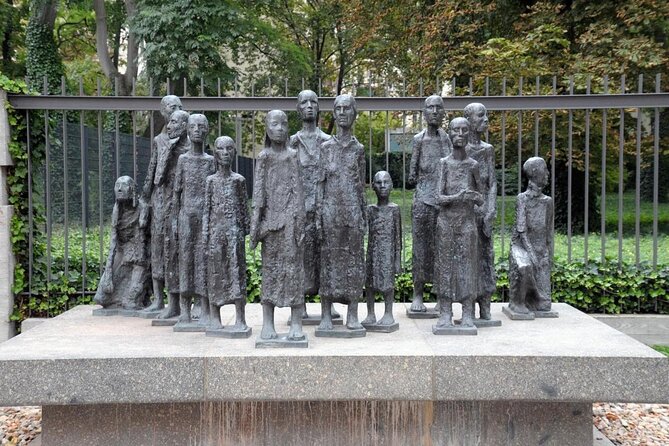
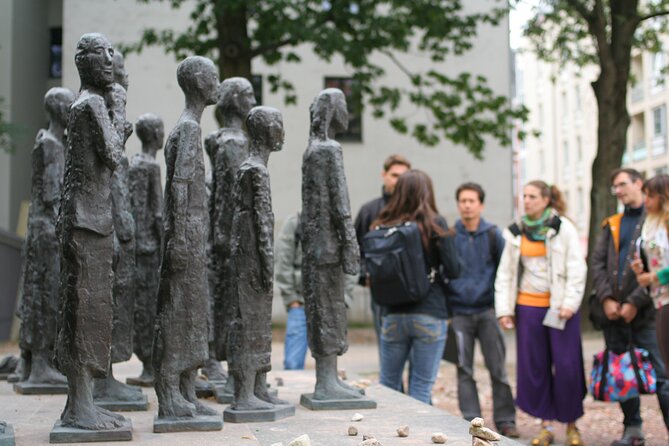
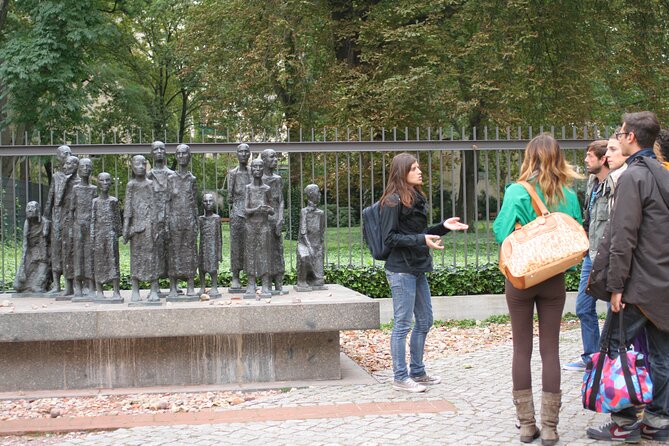
The Rosenstraße stop recalls the 1943 protest by women demanding the release of their Jewish husbands. These women gathered near the police headquarters after Jewish men were arrested for deportation, and their protest continued for several days.
The memorial includes an inscription explaining what happened. The tour schedule gives this stop about 15 minutes, which should allow your guide to set out the basic events and explain why the protest is remembered.
This is a valuable pause because it focuses on public action by ordinary people. It also gives you a chance to ask how protest, family ties, and fear operated under dictatorship. The stop information uses a Humboldt University library heading for this location, while the description concerns the Block der Frauen memorial on Rosenstraße. Ask your guide to confirm the exact point when the tour begins so there is no confusion.
Walking among the concrete slabs
The Memorial to the Murdered Jews of Europe occupies a central site in Berlin. Peter Eisenman’s design consists of 2,711 concrete slabs arranged across an uneven field. The paths between them change as you walk, and the experience is deliberately unsettling.
The planned stop lasts around 20 minutes. That gives you time to enter the field, walk a short section, and discuss the memorial’s design. It is not a conventional monument with a single viewpoint or a long explanatory text. Your response comes partly from moving through the space yourself.
The memorial is powerful, but it is also exposed and popular. You may encounter people crossing the site casually, taking photographs, or treating it as part of a city walk. A guide cannot control that atmosphere. What the guide can do is provide context and give you time to think about the memorial’s purpose.
Four hours, public transport, and the real pace
The tour lasts approximately four hours and includes moderate walking. The central sites are not all next door to one another, and Gleis 17 requires transport to Grunewald. Your 2.70 euro Berlin AB ticket is extra, as are food and drinks.
Pickup is offered, which can make the start easier, particularly if you are staying outside the central area. Confirm the meeting details in advance because the route includes both central Berlin and a more distant memorial site.
The order may vary, and the tour description includes seven stops with times totaling less than four hours. The remaining time is useful for transport, introductions, questions, and movement between places. Still, you should not expect long independent visits at each site.
Plan for all weather. The tour operates in rain and other conditions, so a waterproof layer and comfortable shoes are sensible. You are on foot for much of the experience, and Berlin’s memorials are often open, exposed spaces.
Is $191.62 per person good value?
At $191.62 per person, this is not a budget walking tour. Its value depends heavily on your group size. For one or two people, the price pays for a private specialist guide and can feel high. For a larger family or small private group, the cost per person becomes easier to justify, especially since the guide can answer your own questions rather than follow a fixed group script.
The price includes the private guide, but not transport, food, or drinks. The listed sites are generally described as free, though the New Synagogue and Centrum Judaicum details do not promise interior admission. You are paying mainly for interpretation, route planning, and the ability to connect scattered places.
I would choose it early in a Berlin visit if Jewish history is a main reason for your trip. It gives you a framework for later visits and helps you recognize how different parts of the city relate to one another. If your budget is tight, compare the cost with a larger group tour, but you will give up the same level of flexibility.
Who will get the most from this tour?
This experience suits you if you want more than a list of memorial names. It is especially useful for:
- Families researching Jewish roots in Berlin
- First-time visitors who want historical context while seeing the city
- Jewish and non-Jewish visitors seeking a serious introduction to Berlin’s Jewish past and present
- Families with older children who can engage with difficult subjects
- People who prefer asking questions instead of listening to a standard group presentation
The subject matter includes persecution, deportation, and murder. It is not a light sightseeing walk, although the route also covers culture, work, architecture, protest, and modern Jewish life.
The private format helps families. Guides have adjusted explanations for younger children, answered personal questions, and discussed both historical and current topics. If you have mobility concerns, note that a moderate amount of walking is involved. The tour information says most people can participate, but it does not promise step-free access at every point.
Booking advice and cancellation terms
This tour is often booked about 70 days ahead, so early planning is sensible for a particular date or preferred language. Confirmation is immediate in most cases, but bookings made within two days of departure may be confirmed within 48 hours, subject to availability.
You can cancel for a full refund up to 24 hours before the start time. Cancellations or changes made less than 24 hours ahead are not accepted for a refund.
Should you book this Berlin Jewish heritage tour?
Book it if you want a private, serious introduction that links everyday Jewish life with Nazi persecution and modern remembrance. The Otto Weidt Museum, Gleis 17, and Rosenstraße give the tour emotional and historical range, while Hackesche Höfe and the New Synagogue prevent the story from being reduced to only the years of the Holocaust.
Think twice if you want a slow museum day or a short central walk. Four hours is full, Gleis 17 adds transit, and the time at several sites is limited. For families, history-focused visitors, and anyone with a personal connection to Berlin, the private format makes the $191.62 price easier to defend.
FAQ
How long is the Jewish Heritage Walking Tour of Berlin?
The tour lasts approximately four hours.
Is this a private tour?
Yes. Only your group participates, and the private guide gives you individual attention.
What language is the tour offered in?
The experience is offered in English. A multilingual guide may operate the tour in English, German, or Hebrew.
Is hotel pickup available?
Pickup is offered. Confirm the exact pickup details when booking.
Is public transportation included?
No. A Berlin AB Zone ticket costing 2.70 euros is not included.
Is food or drink included?
No. Food and drinks are not included.
Does the tour visit Gleis 17?
Yes. The itinerary includes the Gleis 17 Memorial at Grunewald station, where Jewish deportations took place between 1941 and 1945.
Is admission to the listed sites included?
The listed stops are described with free admission, and the tour includes a private guide. The information does not promise interior admission to every building, so confirm whether the New Synagogue or Centrum Judaicum interior is part of your specific tour.
Can I cancel for a full refund?
Yes. You can cancel at least 24 hours before the local start time for a full refund. Cancellations or changes made less than 24 hours before the start time are not accepted for a refund.
Just added around Berlin
- Love and War in Berlin: Self-Guided Story Puzzle Walk★ 5.0 · 7 reviews
- Rickshaw Tours Berlin – Groups of up to 16 people with several rickshaws★ 4.0 · 97 reviews
- Walking on the Wall: 3-Hour Tour in Berlin★ 4.5 · 34 reviews
- eSIM for Germany and 34 European Countries★ 4.5 · 16 reviews
- Warnemuende Shore Excursion: Berlin Private Sightseeing Tour from Rostock★ 5.0 · 4 reviews
- Your ticket to The Wall Museum Berlin★ 3.0 · 60 reviews
- Warnemuende Shore Excursion: Private Berlin Tour★ 4.5 · 27 reviews
- Berlin’s Gay, Lesbian, and Queer Scene Small-Group Walking Tour★ 4.5 · 66 reviews
Historical Tours, compared.

City History Canal Sightseeing Tour on a Motorboat
Read our review →






Browse the lists this tour appears in