Reviewed · PRIVATE
Private taxi tour to Potsdam and Sanssouci 6-8h
Potsdam is where Prussian kings built a small world of palaces, vineyards, temples, ruins, windmills, and grand avenues just outside Berlin. This private taxi tour lets you see that world without wrestling with regional trains, park distances, or a rigid group schedule. Guide Gunter Bauer drives from your hotel or apartment and turns the day into a moving history lesson.
I like the private format, which gives you room to linger at Sanssouci, stop for coffee, or add a place such as Alexandrowka, the Russian village. I also like Gunter’s personal touch: he has been praised for taking photos at important sites and sending them afterward. The main drawback is simple: six to eight hours is barely enough for Potsdam, and palace admissions are not included unless you choose the Sanssouci+ option.
In This Review
- Key points to know before you book
- Why a private taxi is useful in Potsdam
- Sanssouci Palace and the vineyard terraces
- The windmill, Orangery, and Chinese House
- Sanssouci Park is the main attraction
- Potsdam’s gates, streets, and Dutch Quarter
- Cecilienhof and the Potsdam Conference
- Alexandrowka, Babelsberg, and Glienicke Bridge
- What Gunter Bauer adds to the day
- Price, tickets, walking, and timing
- Who should book this Potsdam tour?
- FAQ
- Where does the tour begin?
- How long does the tour last?
- Is the tour private?
- Are palace entrance tickets included?
- Is transportation included?
- What should I wear?
Key points to know before you book
- Frederick the Great’s Sanssouci: See the small rococo palace, vineyard terraces, fountain, and royal rooms built for a king who preferred intimate gatherings to court ceremony.
- A private route through Potsdam: Your group travels in an air-conditioned taxi with hotel pickup, parking, and the city tour included.
- Much more than one palace: The route can include the New Palace, Chinese House, Orangery, Roman Baths, Dutch Quarter, Cecilienhof, and Glienicke Bridge.
- Gunter Bauer’s style: Expect lively commentary, architecture, royal gossip, historical context, and an ability to adjust the day to your interests.
- Plan for walking: Sanssouci Park has long, mostly unpaved paths. Good walking shoes matter more than stylish sandals.
- Tickets need attention: The basic fare does not include palace admissions. The optional Sanssouci+ choice covers all castle tours.
Why a private taxi is useful in Potsdam
Potsdam can look close to Berlin on a map, yet its sights are spread across a large area. Sanssouci Palace sits west of the old city center, the New Palace is farther along the park, Cecilienhof is away in the New Garden, and Glienicke Bridge sits near the Berlin border. Public transport can get you around, but it takes planning and often leaves you walking between stops.
This tour solves that problem with door-to-door pickup at 10:30 a.m. You are asked to wait inside until Gunter sends an SMS or WhatsApp, then come out to the street. That small detail matters in a city where stopping a taxi in front of a hotel may not be easy.
The vehicle is air-conditioned, and parking fees are covered. The price of $179.01 per person is not a bargain for one person, but the calculation changes with two or more people sharing a private vehicle and guide. Group discounts are offered, and you avoid paying separately for a taxi, parking, and a private city guide.
The time is listed as six to eight hours, though one reported outing lasted about nine hours. That extra flexibility is useful, but you should not assume every booking will run long. The more palace interiors you want to enter, the more carefully you need to manage the clock.
A few more Berlin trips to weigh up
- Berlin: Private Reichstag and Glass Dome Tour
★ 4.8 · 2,226 reviews - Berlin Private Complete History All Day Walking Tour
★ 5.0 · 474 reviews - Private Walking Tour Berlin Third Reich Hitler and World War II
★ 5.0 · 360 reviews
Sanssouci Palace and the vineyard terraces
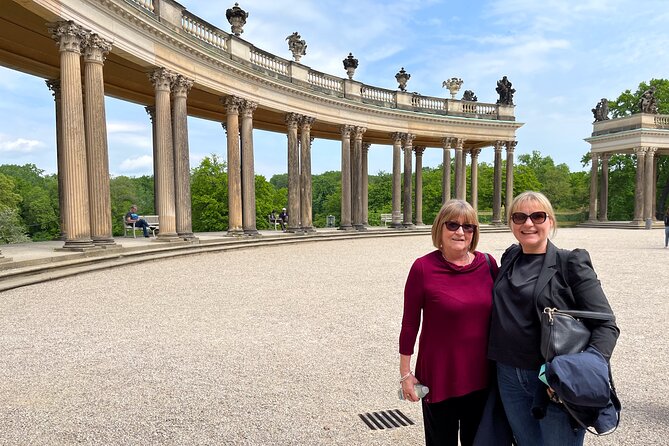
Sanssouci is the natural heart of the day. Frederick the Great built this small rococo retreat on a vineyard slope, far from the formal demands of Berlin. The name means without worries, and the building gives that idea some architectural proof: it has only eight main rooms, each with access to the garden.
This was not a vast ceremonial palace meant to overwhelm visiting armies. It was a private retreat for Frederick, his dogs, and selected male visitors such as the French philosopher Voltaire. French was the language of conversation, and music mattered here too. Frederick played the flute and composed music, using the palace as the setting for the cultivated life he wanted to lead.
The intimacy is part of the appeal. You can picture the king moving from room to garden rather than marching through endless state apartments. The drawback is that a 30-minute stop at the palace itself is short if you want a slow interior visit and time for photographs. Ask Gunter early how much time is available for entry.
Below the palace, the vineyard terraces create the famous postcard view. Vines still grow here, though modern protection behind glass helps preserve them. In the 18th century, Potsdam was a difficult place for wine production, so gardeners used glazed panels to shield the vines from cold weather and spring frost. French and Italian wine could fill the gap when local grapes failed.
The huge fountain below the terraces is not merely decoration. Its water comes from a higher pond, cleverly disguised by the Ruinenberg, or ruin mountain. The fake ruin was designed to look picturesque while hiding a useful technical system. That mixture of practical engineering and royal theater is one of the best themes in Potsdam.
The windmill, Orangery, and Chinese House
Near Sanssouci is the Historic Windmill, a charming reminder that royal building projects did not always get their way. Its owner entered a legal dispute with the king and won the first case. The mill survived, and grain can still be ground there.
The stop is brief, about 10 minutes, and admission is not included. If the mill is open, a visit can add a good human story to a day otherwise filled with royal residences. You also get a fine view across the park.
The Orangery Palace occupies the high ridge and gives you another broad view of the gardens. Its practical purpose was to shelter exotic plants in winter, yet its Roman-style design made it another royal showpiece. This is typical of Potsdam: even a greenhouse had to look like a palace.
The Chinese House is smaller but more playful. It was built as a garden café for the vineyard workers, yet it follows the 18th-century fashion for chinoiserie. Gold decoration, Chinese porcelain, and gilded figures turn a modest refreshment building into a theatrical object.
You should not expect a large museum here. The pleasure comes from the scale and detail. It is the sort of stop that makes a private tour worthwhile because Gunter can explain why the building exists rather than treating it as just another pretty structure.
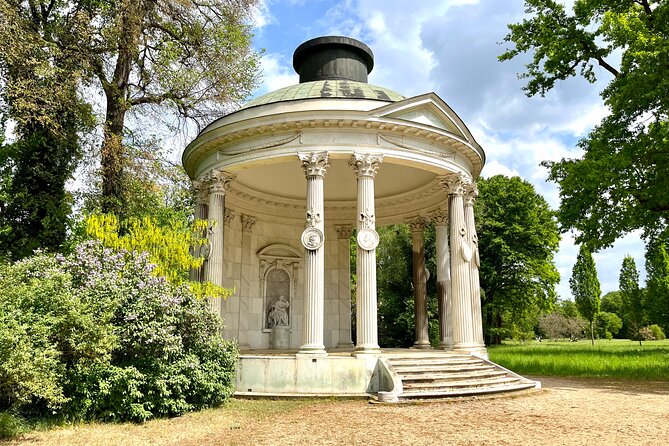
Other park buildings add to the same royal fantasy. The Roman Baths were designed for the eye and imagination more than for regular bathing. The Friendship Temple provided a small, intimate place for a pause or picnic. The picture gallery housed Frederick’s collection of paintings in its own purpose-built building, an unusual level of attention for art in a garden setting.
Sanssouci Park is the main attraction
The palace is famous, but I think Sanssouci Park itself is the real experience. Its paths connect the vineyard, the fountain, the New Palace, and a series of smaller buildings over roughly two kilometers. Plantings, terraces, water, and architecture are arranged to reveal something new as you walk.
The stated park visit lasts about 45 minutes, with admission included. That is enough to see key sections, but not enough for every path and building. If you want to explore at a leisurely pace, tell Gunter. A private guide can favor gardens over interiors, or the reverse.
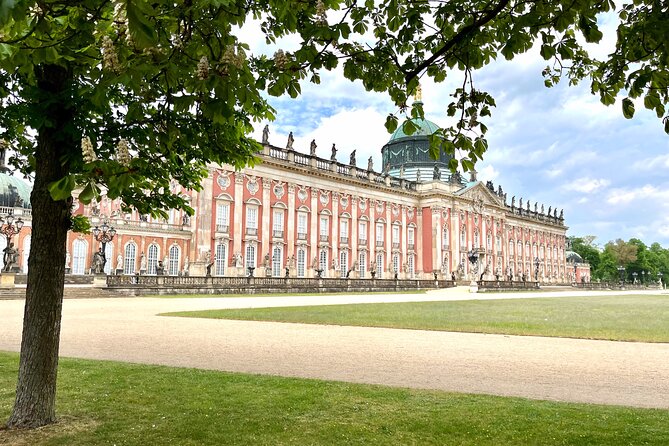
The New Palace makes a grand contrast with Sanssouci. Frederick called it a display of boasting, and he was not wrong. It was built as a huge guest palace, with about 600 rooms, apartments for royal relatives, reception rooms, music rooms, bedrooms, and writing rooms.
The king did not use it as his daily home. Its distance from Sanssouci suited him. The long avenue between the two palaces measures about two kilometers, allowing Frederick to keep his smaller retreat separate from the relatives and formal duties associated with the New Palace.
The servants lived in the nearby Communs, connected by arcades around a large courtyard. Kitchens were kept away from the royal apartments, partly because food smells were not welcome near the palace. Potsdam students now use the area as part of the University of Potsdam, an amusing modern use for former service buildings.
You may also see the mosque-like structure with a minaret near the New Palace. It is not a mosque. The minaret hides a chimney connected to a steam turbine that produced electricity, an example of modern machinery dressed in romantic clothing. That detail captures the Prussian habit of adopting new technology while carefully managing appearances.
Same city, a completely different kind of day:
- Berlin: Reichstag, Dome and Government District Guided Tour
★ 4.7 · 18,288 reviews - Berlin: 1-Hour City Tour by Boat with Guaranteed Seating
★ 4.3 · 16,993 reviews - Berlin: Boat Tour Along the River Spree
★ 4.4 · 11,252 reviews - Discover Berlin Half-Day Walking Tour
★ 5.0 · 9,624 reviews
Potsdam’s gates, streets, and Dutch Quarter
The tour shifts from royal parkland to the city center, where Potsdam’s scale becomes more human. The Dutch Quarter was built for Dutch workers and skilled canal builders brought to Brandenburg. Its red brick buildings give the streets a distinctly Netherlands-like feel, with cafés, small shops, crafts, and antiques.
The stop lasts about 15 minutes, but you may want more time here if coffee or browsing appeals to you. One well-regarded pause is Café Heider, where coffee and Viennese cakes fit the setting. Snacks are not included, so budget for your own food and drinks.
Nauen Gate is one of four surviving city gates and probably the most imposing. Its medieval Romanesque look contrasts with the shorter, more modest buildings around it. The square nearby has cafés and restaurants, making it a practical place to take a break.
Potsdam also has its own Brandenburg Gate, built in the classical style. It marked the route west toward Brandenburg, while other gates led toward hunting grounds or the town of Nauen. These gates help you read the old city as a planned royal residence rather than a random collection of streets.
The main pedestrian street leads through geometric squares and restored town houses. Look for the small department store with its Art Nouveau glass roof. This part of Potsdam is not as grand as Sanssouci, but it shows how royal planning shaped ordinary city life.
Cecilienhof and the Potsdam Conference
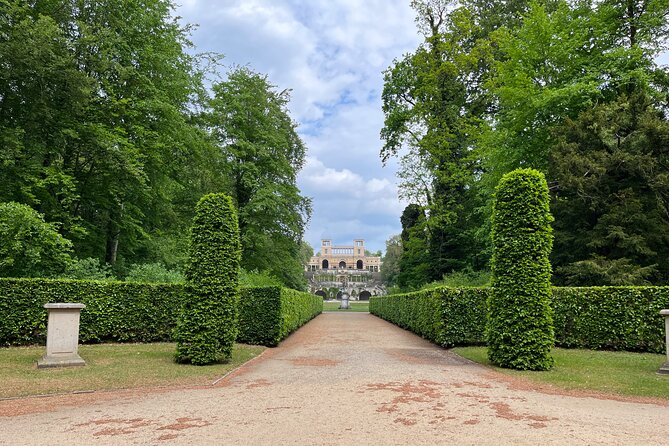
Cecilienhof Palace lies away from the main Sanssouci group, so it is easy to miss without a vehicle. Built for Crown Prince Wilhelm and Crown Princess Cecilie, it was completed shortly before the First World War and designed to resemble an English country house.
Inside, modern comforts included central heating and bathrooms. A room styled like a ship’s cabin reflects the princess’s fondness for sea travel. The palace is not simply an old royal home, though. Its main claim to fame is the 1945 Potsdam Conference, where Stalin, Truman, and Churchill met after the defeat of Nazi Germany.
The conference rooms remain furnished in period style, and the outdoor setting is part of the visit. This stop gives the tour a necessary 20th-century dimension. Without it, Potsdam can seem like a beautiful but sealed-off world of 18th-century kings. Cecilienhof connects the palaces to the political decisions that shaped postwar Europe.
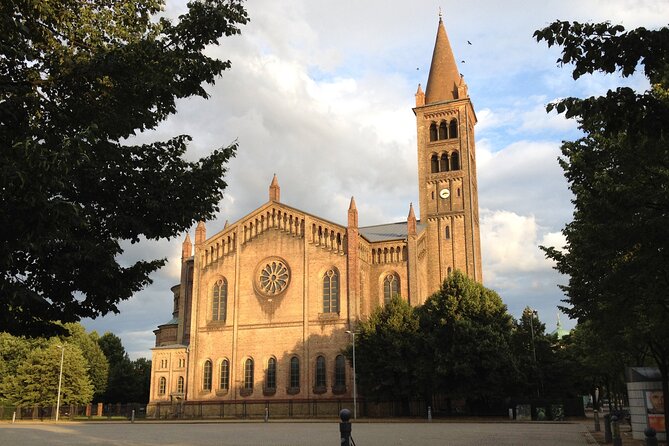
The tour may also pass the Garrison Church and the rebuilt City Palace. Both were damaged or destroyed in the war and later lost in the early socialist period. The City Palace has since been reconstructed, including its Baroque exterior and courtyard, and now houses Brandenburg’s state parliament.
The Garrison Church is being recreated as well. Potsdam’s rebuilding projects can prompt debate, but they also make the city’s missing and restored pieces visible. Gunter’s strength, according to the detailed feedback about his tours, is explaining which buildings were damaged, demolished, rebuilt, or altered, rather than presenting the city as an untouched old town.
Alexandrowka, Babelsberg, and Glienicke Bridge
The route can be personalized. One group asked to visit Alexandrowka, the Russian colony, and Gunter took them there for a meal. The settlement began when Prussia received a group of Russian soldiers as a diplomatic gift, connected to the exchange between Frederick William I and Tsar Alexander. Its wooden houses and Russian traditions add a very different note to the day.
Do not assume every optional stop will fit. Potsdam offers too much for one outing, and adding Alexandrowka may mean less time at a palace or in the old center. The advantage is that you can tell Gunter what matters most before the day gets underway.
Babelsberg Palace is another possible highlight. Built in an English medieval style for the future Kaiser Wilhelm I and Augusta, it has battlements, turrets, and a tower modeled on Frankfurt’s Eschenheim Tower. The palace gives the royal scenery a different architectural accent from the rococo and classical buildings around Sanssouci.
The Glienicke Bridge brings Cold War drama. For four decades it marked the boundary between West Berlin and East Germany. Covert exchanges of spies and prisoners took place here, and the bridge later became a film location. It is a quick photo stop with a strong sense of place, especially when paired with the story of the border that once cut through this peaceful-looking area.
On the Berlin side, Glienicke Palace sits beside the road between Berlin and Potsdam. Its Italian style, courtyard, lake views, and separate casino reflect the tastes of Prince Carl, who could look across the water toward Potsdam. Nearby, the New Garden and Marble Palace add still more royal architecture if time allows.
What Gunter Bauer adds to the day
The most praised part of this experience is Gunter’s guiding. He is described as energetic, conversational, and able to explain architecture alongside political and royal history. That matters in Potsdam, where a building can look beautiful while hiding a technical trick, a family quarrel, or a story of wartime damage.
He also adjusts the route. You can focus on palaces, gardens, architecture, German history, Cold War sites, or lesser-known places. He has added stops that were not expected, including the Barberini Museum’s unicorn exhibition and Alexandrowka, when time and interest allowed.
The driving matters too. Gunter handles the route while talking about places along the way from Berlin. That gives you context before you arrive, rather than leaving you to figure out why a distant palace or gate matters.
His habit of taking photos is useful for solo visitors and couples. He has photographed people at major sites and sent the images afterward. That is a small service, but it saves you from relying on hurried phone selfies.
The style is information-heavy. If you like quiet transport and long stretches without commentary, this may feel intense. If you want a guide who connects details and keeps the conversation moving, it is a strong match. The available score is 5 out of 5 from 30 reviews, with 100 percent recommending the experience, and the praise centers heavily on Gunter’s personal attention and command of Potsdam’s architecture.
Price, tickets, walking, and timing
At $179.01 per person, the value depends on group size and priorities. For a solo visitor, it is a premium day. For a small group, the cost buys private transport, pickup, parking, an English-language guide, and the ability to change the pace.
The taxi ride is priced under the local tariff, with 7 percent VAT, while the city tour carries 19 percent VAT. Those costs are included, so you are not sorting out separate transport charges during the day.
Palace admission is the important extra. Sanssouci Palace, the Historic Windmill, and other interiors list admission as not included, while Sanssouci Park itself is included. Choose the Sanssouci+ option if you want admission to all castle tours. Confirm exactly what you want to enter, since every interior visit uses time as well as money.
Wear proper walking shoes. Paths in the park and around the palaces are often unpaved, and the distances add up quickly. Sandals are specifically discouraged. Bring water and plan to buy lunch or snacks, since food is not included.
The taxi can accommodate a removable stroller cradle with a foldable frame, but luggage space is reduced. A baby Maxi-Cosi seat is available on request. Service animals are allowed, and medium-sized dogs can lie on the rear floor. Large dogs use the back area, leaving no room for luggage, and animals cannot sit on passenger seats unless secured in a proper carrier.
Free cancellation is available up to 24 hours before the 10:30 a.m. start. Changes or cancellations inside that window are not accepted for a refund.
Who should book this Potsdam tour?
I would choose this tour if you want to see more than Sanssouci Palace and do not want to manage Potsdam’s spread-out sights on your own. It is especially useful for a small group, a family with limited time, a solo visitor who values private guiding, or anyone interested in architecture and German political history.
It is also a good choice for repeat Berlin visitors. The city tour adds royal residences, Russian buildings, Dutch brick houses, Cold War sites, and modern reconstruction projects that you might not find on a basic palace visit.
I would hesitate if you want a slow, single-site museum day. The route can cover a lot, and the guide’s lively commentary may be more than you want. I would also check the ticket option carefully before booking, since the advertised price does not automatically cover every palace interior.
For most people, I would book it with a clear request: prioritize Sanssouci, the New Palace, Cecilienhof, and the Dutch Quarter, then add Glienicke Bridge or Alexandrowka if time allows. That gives you the royal center, the modern political story, the city itself, and one distinctive extra.
FAQ
Where does the tour begin?
Pickup is offered from your hotel or accommodation in Berlin. The listed start time is 10:30 a.m. You should include a cell phone number when booking and wait inside until the guide sends an SMS or WhatsApp message.
How long does the tour last?
The tour lasts approximately six to eight hours. One reported outing lasted about nine hours, but you should plan around the stated six to eight hour duration.
Is the tour private?
Yes. Only your group participates, so the route and timing can be adjusted around your interests.
Are palace entrance tickets included?
Palace admissions are not included in the basic tour. The Sanssouci+ option includes admission to all castle tours. Sanssouci Park admission is included.
Is transportation included?
Yes. The package includes pickup, an air-conditioned vehicle, parking fees, the taxi ride according to the tariff, and the city tour.
What should I wear?
Wear good walking shoes rather than sandals. Many paths in Sanssouci Park and around the palaces are unpaved.
Just added around Berlin
- Love and War in Berlin: Self-Guided Story Puzzle Walk★ 5.0 · 7 reviews
- Rickshaw Tours Berlin – Groups of up to 16 people with several rickshaws★ 4.0 · 97 reviews
- Walking on the Wall: 3-Hour Tour in Berlin★ 4.5 · 34 reviews
- eSIM for Germany and 34 European Countries★ 4.5 · 16 reviews
- Warnemuende Shore Excursion: Berlin Private Sightseeing Tour from Rostock★ 5.0 · 4 reviews
- Your ticket to The Wall Museum Berlin★ 3.0 · 60 reviews
- Warnemuende Shore Excursion: Private Berlin Tour★ 4.5 · 27 reviews
- Berlin’s Gay, Lesbian, and Queer Scene Small-Group Walking Tour★ 4.5 · 66 reviews
Private, compared.
Berlin Private Complete History All Day Walking Tour
Read our review →
Munich Private Tour with a Local – Highlights & Hidden Gems
Read our review →
Private Walking Tour Berlin Third Reich Hitler and World War II
Read our review →
Your private 3-hour Hamburg driving tour with a former policeman
Read our review →
Private Berlin: Iconic Sights and Hidden Gems Walking Tour
Read our review →