
Reviewed · CITY TOURS
Private Berlin City Center Walking Tour
Berlin’s center is a history book spread across city blocks. On this private walk, you move from the Brandenburg Gate and Reichstag to Hitler’s bunker site, the Holocaust Memorial, Checkpoint Charlie, and Museum Island, with a guide explaining how the pieces fit together.
I like the private format, which lets your group ask questions and adjust the emphasis. I also like the hotel pickup, a real help in a large city, and the way the route brings together Nazi Germany, the Cold War, Prussian Berlin, and today’s culture of remembrance.
The main drawback is pace. Four hours is not enough for a full visit inside Berlin’s museums or a long look at every memorial. This is a brisk outdoor introduction, and public transport tickets, food, and drinks are not included.
In This Review
- Key points at a glance
- Why this four-hour Berlin walk works
- Brandenburg Gate and the Reichstag
- The Holocaust Memorial and Hitler’s bunker site
- The Aviation Ministry and the Topography of Terror
- Checkpoint Charlie and Gendarmenmarkt
- Bebelplatz and Unter den Linden
- Neue Wache and the problem of remembrance
- Museum Island, Lustgarten, and the Humboldt Forum
- How the timing feels on the street
- Who gets the most value
- Booking and cancellation details
- Should you book this Berlin tour?
- FAQ
- How long is the private Berlin City Center Walking Tour?
- How many people can join the private tour?
- Is hotel pickup available?
- Where is the stated meeting point?
- Where does the activity end?
- Is the tour offered in English?
- Are public transportation tickets included?
- Can I cancel for a full refund?
Key points at a glance
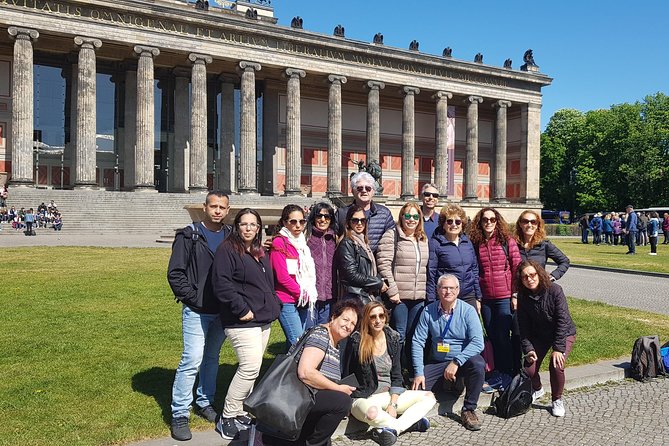
- Seventeen central Berlin stops: See major sights from the Brandenburg Gate to Museum Island in one half-day.
- Private group of up to 15: You receive a guide for your own party rather than joining a large shared group.
- Strong first-day orientation: Hotel pickup and a central route help you get your bearings quickly.
- Serious historical themes: The walk covers Nazi rule, the Holocaust, the Berlin Wall, the GDR, German reunification, and changing memorial traditions.
- Flexible focus: A private itinerary gives you room to ask for more attention to the subjects that matter most to your group.
- A brisk outdoor tour: Most stops last about 10 minutes, with five minutes at the Berliner Dom, so comfortable shoes matter.
Why this four-hour Berlin walk works
I see this tour as an orientation walk first and a sightseeing tour second. You are not simply checking off Berlin landmarks. You are being shown how the city’s political past is layered into its streets, squares, buildings, and empty spaces.
The route is especially useful if Berlin is your first stop in Germany or if you have only a short stay. The guide meets you at your hotel lobby, then leads you through the city center instead of leaving you to work out the route on your own. That saves time and gives you a framework for later independent visits.
The private setup is the biggest advantage. Your group can ask about a family interest, pause longer at a memorial, or shift the emphasis toward architecture, Nazi history, the Cold War, or the former GDR. The group limit is 15 people, but smaller parties should find the format more personal.
The listed cost is $397.38 per group. That is a serious price for one or two people, but the value improves as your party grows. Ten people, for example, would split the cost far more easily than a private tour for a couple. Since admission is free at the listed outdoor stops, you are paying mainly for the guide’s time, route planning, and historical explanation.
A few more Berlin trips to weigh up
- Discover Berlin Half-Day Walking Tour
★ 5.0 · 9,624 reviews - Berlin: Third Reich and Cold War 2 Hour Walking Tour
★ 4.9 · 6,830 reviews - Berlin: Discover Berlin Walking Tour
★ 4.9 · 5,998 reviews
Brandenburg Gate and the Reichstag
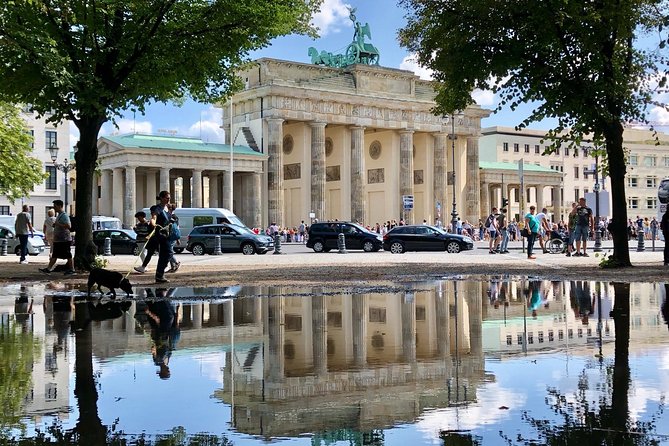
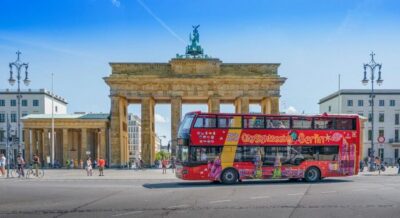
The Brandenburg Gate is a sensible opening sight. You can look at one of Berlin’s best-known symbols while the guide explains why it matters, rather than treating it as a quick photo stop. The gate also gives you an immediate sense of how much major Berlin history is concentrated in this central area.
The Reichstag Building comes next. From outside, you discuss its past and political importance. The schedule allows about 10 minutes here, so this is a view and explanation, not an interior visit or a tour of the dome.
That distinction matters. If you want to enter the Reichstag, you would need to arrange that separately. This experience is designed to keep moving and connect one major site to the next.
The Holocaust Memorial and Hitler’s bunker site
The Holocaust Memorial is one of the most important stops on the walk. You can walk among the concrete blocks while the guide explains the memorial’s setting, purpose, and different interpretations. The experience does not reduce the site to a single easy message, which is appropriate for a memorial designed to raise difficult questions.
Give this stop your attention. Ten minutes is enough for an introduction, but not enough for a slow personal visit. You may want to return later if you prefer to spend more time walking through the field of blocks or visiting the underground information center, which is not listed as part of this tour.
The nearby Führerbunker site shifts the discussion to the final days of World War II. The guide explains what happened there and addresses the historical question of whether Hitler died by suicide. Today, the site itself is modest and easy to miss, so having someone identify it and explain its significance gives the location meaning.
This is a useful reminder that Berlin’s most important places are not always grand buildings. Some are ordinary-looking spaces where the weight comes from what happened there.
The Aviation Ministry and the Topography of Terror
The former Aviation Ministry offers a different kind of history. The guide discusses the building as Hermann Göring’s Aviation Ministry and its later use as the House of Ministries under the East German government. One structure thus opens a conversation about Nazi administration, postwar division, and life in the GDR.
The tour then reaches the Topography of Terror area. You see an original section of the Berlin Wall and discuss how the wall came into being, along with the division of Berlin and Germany after World War II.
The stop is listed twice in the schedule, once for the wall and division and once for the site’s history. In practical terms, treat this as one connected area with two parts to the explanation. The schedule gives about 10 minutes to each listing, but the exact time can depend on your guide and the group’s questions.
This is one of the stronger parts of the route because it links physical evidence to political change. You are not just looking at a surviving piece of wall. You are considering why Berlin was divided and how that division shaped the city.
Same city, a completely different kind of day:
- Berlin: Reichstag, Dome and Government District Guided Tour
★ 4.7 · 18,288 reviews - Berlin: 1-Hour City Tour by Boat with Guaranteed Seating
★ 4.3 · 16,993 reviews - Berlin: Boat Tour Along the River Spree
★ 4.4 · 11,252 reviews - Berlin: Hop-on Hop-off Bus Tour with Live Commentary
★ 4.3 · 8,579 reviews
Checkpoint Charlie and Gendarmenmarkt
Checkpoint Charlie is another quick outdoor stop. You see the site and discuss its place in Berlin’s divided past. The tour does not include a museum admission, and 10 minutes is a short visit, so keep your expectations realistic. This is an explanation of the location, not a full Cold War museum experience.
Gendarmenmarkt changes the mood. The square gives you a chance to see a major civic and architectural space while the guide explains its place in central Berlin. The itinerary does not list interior visits, so you will be viewing the square rather than spending time inside its buildings.
The contrast between Checkpoint Charlie and Gendarmenmarkt is part of the route’s appeal. Berlin’s story is not confined to one period. A few blocks can take you from military tension and border controls to formal urban design and older civic life.
Bebelplatz and Unter den Linden
At Bebelplatz, the guide discusses the events that took place there. The square is tied to one of the most disturbing episodes in the history of Nazi Germany, and the stop gives you a chance to consider how public places can become sites of both propaganda and remembrance.
The schedule allows about 10 minutes. That is enough for the historical context and a look around, but you will not receive an extended visit to every nearby building.
Unter den Linden then provides a broad view of Berlin’s central avenue. You see the avenue and learn how it fits into the city’s historic core. This is a walking segment rather than a single monument, so it helps connect the individual stops into one readable route.
I like this part for its sense of scale. After several stops tied to war and repression, the avenue shows Berlin as a planned capital with grand spaces, institutions, and public buildings. The guide’s job here is to connect the scenery to the political forces that shaped it.
Neue Wache and the problem of remembrance
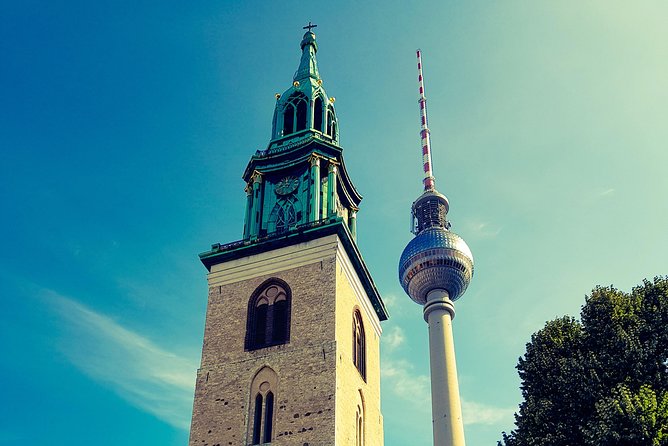
Neue Wache is one of the most thoughtful stops. It serves as a central memorial for victims across German history, and the discussion covers when the building was created, the different regimes that used it, and the changing purposes assigned to it.
That subject is not simple. Germany’s memorials have been reshaped by monarchy, dictatorship, division, and democracy. At Neue Wache, you can see why public remembrance is difficult in a country forced to confront several layers of its past.
The stop is scheduled for about 10 minutes, but this is a place where a good question can easily extend the conversation. If your group wants to discuss memorial design or the politics of remembrance, tell the guide early. The private format makes that kind of adjustment possible.
Museum Island, Lustgarten, and the Humboldt Forum
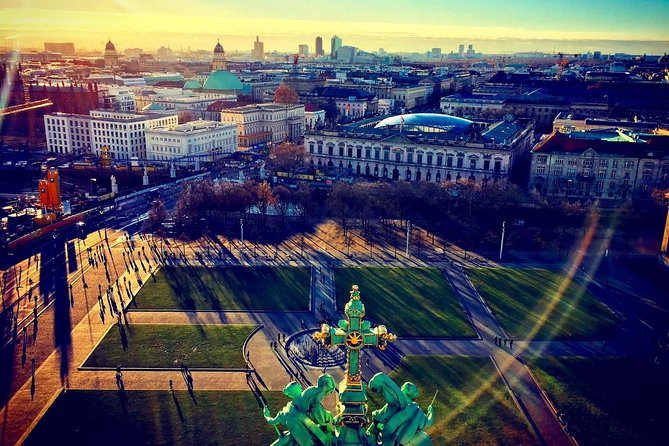
The Deutsches Historisches Museum is covered from the outside, with attention to the building’s history and architecture. You should not expect a museum visit within the four-hour tour, but the explanation can help you decide if you want to return on your own.
At Lustgarten, the guide discusses the history of the site. This open space is useful because it brings together several nearby landmarks and lets you see how Berlin’s central institutions relate to one another.
The Humboldt Forum follows, with a discussion of the history of the Berlin City Palace. The site raises questions about reconstruction, royal Berlin, and the way the city presents its past in the present. The tour provides context rather than an interior museum program.
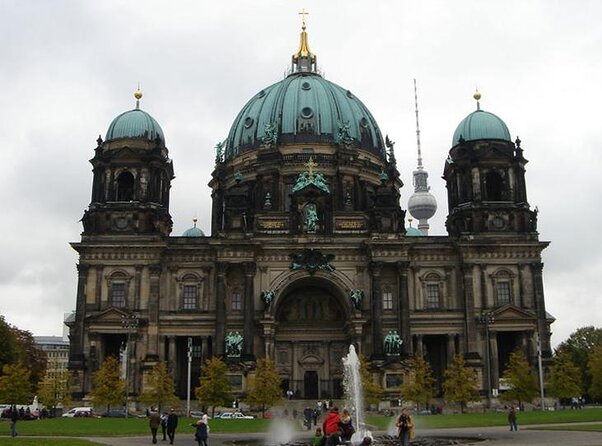
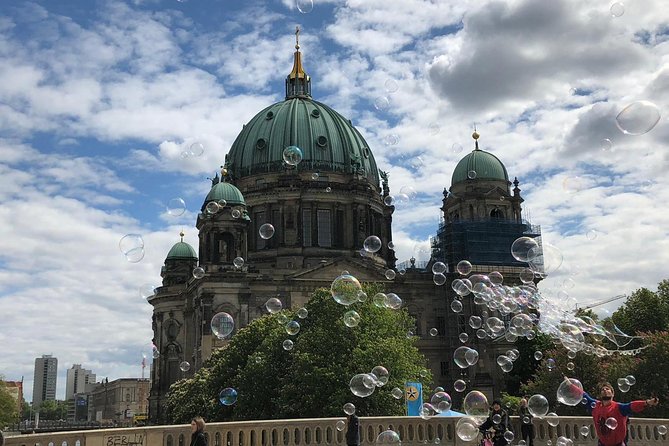
The Berliner Dom receives about five minutes, the shortest scheduled stop. You see the site and discuss its history, but the timing is not suited to a full look inside. If church interiors matter to you, mark the cathedral for a separate visit.
Museum Island completes the route. You see the area and discuss its history, bringing the walk back to Berlin’s major cultural center. This is a fitting finish because the route has moved from government and war sites to the institutions that preserve and interpret the past.
How the timing feels on the street
The tour lasts about four hours and lists 17 stops. Most are scheduled for 10 minutes, while the Berliner Dom receives five minutes. That tells you exactly what kind of experience this is: a moving overview with short explanations, not a slow architectural walk or a series of museum visits.
The stops are close enough to form a coherent city-center route, but the day still involves substantial walking. Wear comfortable shoes and plan for outdoor conditions. Since food and drinks are not included, carry what you need for the half-day.
Public transportation tickets are also excluded. Pickup is offered from your hotel lobby, while the stated meeting point is Scheidemannstraße 5, 10557 Berlin, and the activity ends back at the meeting point. Because both pickup and a fixed meeting point are provided in the tour details, confirm the exact arrangement after booking.
Operating hours are listed daily from 8:00 AM to 8:00 PM. The tour is offered in English, and confirmation is sent within 48 hours, subject to availability.
Who gets the most value
I would recommend this walk to first-time visitors who want a clear introduction before exploring Berlin alone. It also fits families or mixed-age groups, since the guide can adjust the pace and explanation to the people in your party.
A particularly useful detail is that three generations can take part and still receive personalized attention. That makes the private format appealing for a family group with different interests and energy levels. The high rating of 4.9 from 36 reviews, along with a 97 percent recommendation rate, supports the impression that personal care is a major strength.
You may want something else if you prefer long museum visits, a relaxed café-based day, or a narrowly focused tour of one period. The route covers a lot of ground. It gives you context, but it cannot offer a full treatment of every site.
The experience is also less cost-effective for a very small party unless the private guide and flexible schedule are especially important to you. For a group of several relatives or friends, the per-person price becomes easier to justify.
Booking and cancellation details
Free cancellation is available if you cancel at least 24 hours before the start time. Changes or cancellations made within 24 hours are not accepted for a refund, and the cut-off uses Berlin local time.
The provider is Nadav Tours, also identified as Gablinger Berlin Tours. Service animals are allowed, the route is near public transportation, and most people can participate. This is a private activity, so only your own group takes part.
Should you book this Berlin tour?
Book it if you want one guide to connect Berlin’s major sights across several difficult and important periods. The hotel pickup, private setting, English-language service, and flexible focus make it a strong choice for a first day in the city or a short visit.
I would skip it if your main goal is to enter museums, spend an hour at each memorial, or keep the price as low as possible. For everyone else, especially a family or friend group that values clear context over a simple photo checklist, this four-hour route offers a useful, serious introduction to Berlin.
FAQ
How long is the private Berlin City Center Walking Tour?
The tour lasts approximately four hours.
How many people can join the private tour?
Up to 15 people can participate in one private group.
Is hotel pickup available?
Yes. Pickup is offered from the lobby of your hotel.
Where is the stated meeting point?
The meeting point is Scheidemannstraße 5, 10557 Berlin, Germany.
Where does the activity end?
The activity ends back at the meeting point.
Is the tour offered in English?
Yes. The tour is offered in English.
Are public transportation tickets included?
No. Public transportation tickets are not included.
Can I cancel for a full refund?
Yes, if you cancel at least 24 hours before the experience start time. Cancellations made less than 24 hours in advance are not refunded.
Just added around Berlin
- Love and War in Berlin: Self-Guided Story Puzzle Walk★ 5.0 · 7 reviews
- Rickshaw Tours Berlin – Groups of up to 16 people with several rickshaws★ 4.0 · 97 reviews
- Walking on the Wall: 3-Hour Tour in Berlin★ 4.5 · 34 reviews
- eSIM for Germany and 34 European Countries★ 4.5 · 16 reviews
- Warnemuende Shore Excursion: Berlin Private Sightseeing Tour from Rostock★ 5.0 · 4 reviews
- Your ticket to The Wall Museum Berlin★ 3.0 · 60 reviews
- Warnemuende Shore Excursion: Private Berlin Tour★ 4.5 · 27 reviews
- Berlin’s Gay, Lesbian, and Queer Scene Small-Group Walking Tour★ 4.5 · 66 reviews
City Tours, compared.

1-Hour City Tour by Boat with Guaranteed Seating
Read our review →
City History Canal Sightseeing Tour on a Motorboat
Read our review →

Browse the lists this tour appears in