
Reviewed · BERLIN TOURS
Path of Resistance: Berlin’s Hidden Holocaust Stories
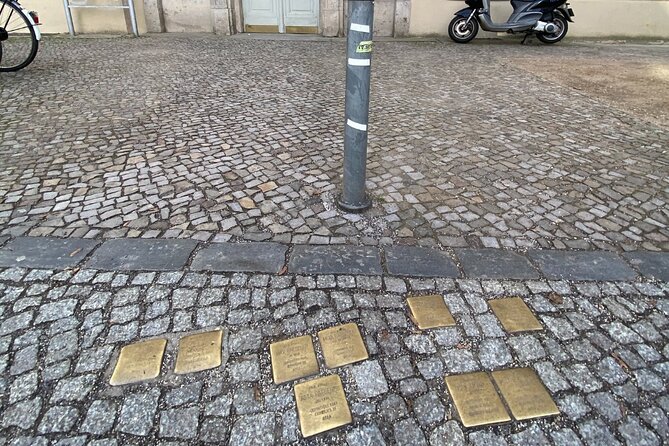
Berlin’s most affecting Holocaust stories are often found away from the grand memorials. This 2.5-hour walk takes you through courtyards, plaques, former deportation sites, and quiet streets where ordinary people resisted Nazi rule in small but dangerous ways. You’ll hear about Otto Weidt, the Rosenstraße protest, Nicholas Winton, and the victims named on Stolpersteine.
I especially like the human scale of this tour and its careful route through Berlin’s Jewish quarter. I also like the use of old photographs and maps, which help you see how homes, schools, workshops, and public squares looked before the Nazi terror reshaped them. The main consideration is emotional weight: this is serious material, and the pace leaves little room for unrelated sightseeing.
In This Review
- Key points to know before you book
- Why this walk feels different from a standard Berlin history tour
- Starting at the former Imperial Post Office
- New Synagogue and the Moses Mendelssohn Jewish School
- Grosse Hamburger Strasse and the traces of a vanished community
- Otto Weidt’s workshop and practical courage
- Rosenstraße and the Block of Women
- Museum Island, Neue Wache, and the problem of public memory
- Bebelplatz and the May 10, 1933 book burning
- Trains to Life, Trains to Death
- What the $56 price includes
- Who will get the most from this experience
- My call: book it for context, not just for sights
- FAQ
- How long does the Path of Resistance tour last?
- What language is the tour conducted in?
- Where does the tour begin?
- Where does the tour finish?
- Which major sites are included?
- Is museum admission included?
- Is the walk wheelchair accessible?
- What should I bring?
Key points to know before you book
- Otto Weidt’s workshop: Learn how a blind brushmaker protected blind and deaf Jewish workers from deportation.
- Rosenstraße protest: Hear how German women demanded the release of their Jewish husbands in one of Berlin’s clearest acts of public resistance.
- Bebelplatz book burning site: Look into the underground memorial marking the Nazi destruction of books and free thought.
- Jewish quarter memorials: Walk past Stolpersteine, the former deportation centre, the New Synagogue, and the Grosse Hamburger Strasse cemetery.
- Small English-speaking group: The tour is designed for an intimate group, with the published information listing a maximum between 10 and 15 participants, so confirm the current limit when booking.
- Practical route: You walk for 2.5 hours in all weather, beginning at the former Imperial Post Office and finishing near Berlin Friedrichstraße station.
Why this walk feels different from a standard Berlin history tour
Many Berlin tours concentrate on Hitler’s bunker, the Berlin Wall, or the government district. This one shifts your attention to people who were persecuted, helped, protested, hid, escaped, or chose not to act.
That change in focus matters. Nazi Germany was not only a system of laws and camps. It was also a network of schools, workplaces, police offices, homes, railway stations, and public squares. The tour shows how persecution entered everyday life and how resistance could emerge from everyday places.
Your guide explains the Nazi belief in Aryan superiority and the classification of people into supposed sub-races. That background helps make sense of the later stories. Antisemitism did not remain a private prejudice. It became state policy, then organized theft, forced removal, deportation, and genocide.
The strongest part of the experience is its attention to choices made by individuals. You hear about courage, but also about silence and inaction. That gives the walk a more honest tone than a simple parade of heroes.
The guides are presented as professional World War II historians and storytellers. Names associated with past departures include Tom and Hannah. Tom is described as friendly and able to handle questions on sensitive subjects. Hannah is noted for her passion and for bringing lesser-known people into the story. A guide’s style always varies, but this tour clearly depends on a strong storyteller, and the available feedback points to patient, well-prepared leadership.
Other Berlin days worth putting on the list:
- Berlin: Reichstag, Dome and Government District Guided Tour
★ 4.7 · 18,288 reviews - Berlin: 1-Hour City Tour by Boat with Guaranteed Seating
★ 4.3 · 16,993 reviews - Berlin: Boat Tour Along the River Spree
★ 4.4 · 11,252 reviews
Starting at the former Imperial Post Office
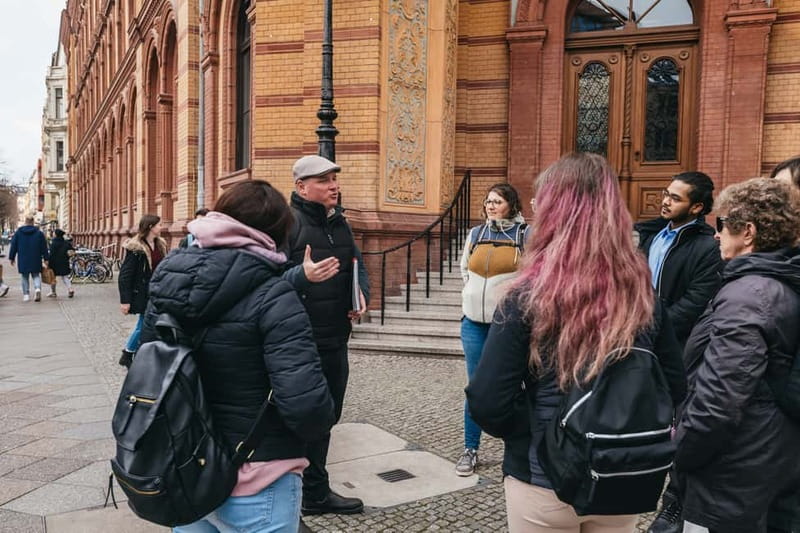
Arrive 10 minutes early at the former Imperial Post Office. Look for the guide at the main entrance with a blue umbrella.
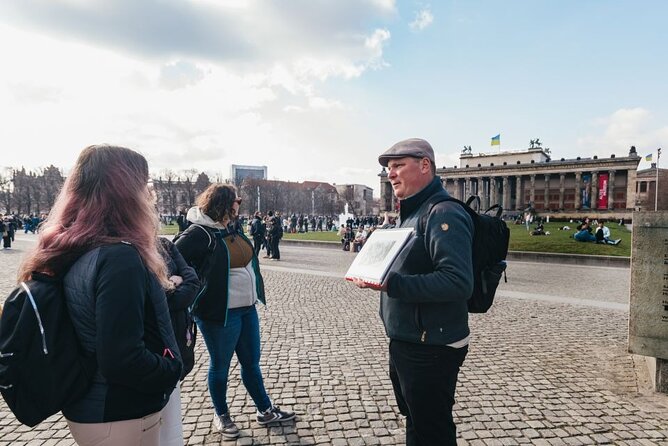
This is a useful meeting point because the route quickly moves into Berlin’s old Jewish quarter. You do not need a public transport ticket for the walking tour, though you’ll want comfortable shoes. Bring water and an umbrella or other weather protection. The walk operates in rain or shine, and much of its value comes from being outside among the actual streets and buildings.
The tour is conducted in English. Museum and memorial entry is included, along with historical maps, then-and-now photographs, discussion, questions, and recommendations for further exploration.
New Synagogue and the Moses Mendelssohn Jewish School
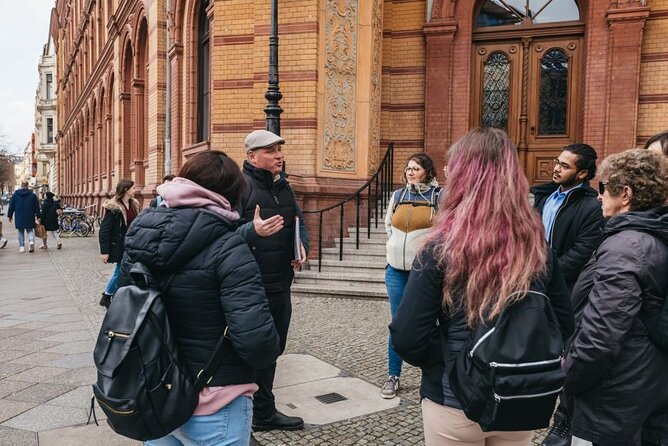
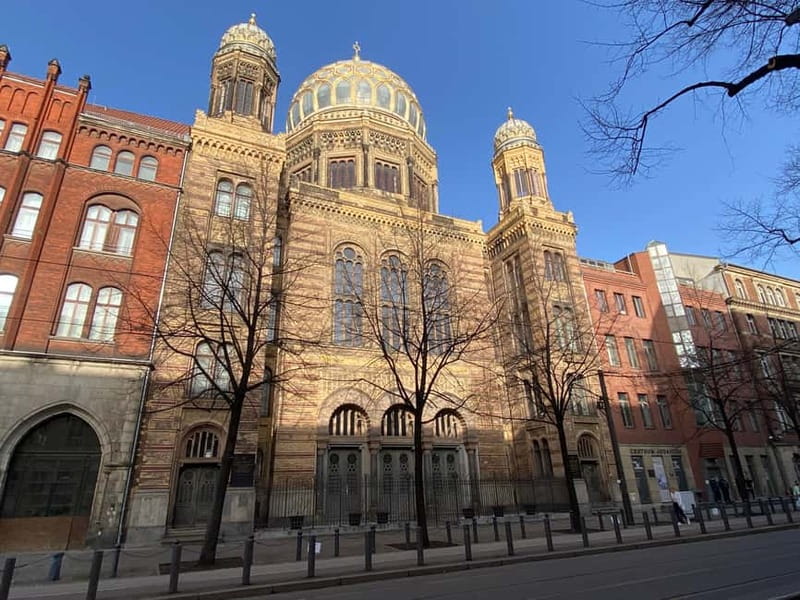
The New Synagogue Berlin, also called the Jewish Centre, is one of the route’s most recognizable buildings. The tour uses it to introduce the Jewish presence in this part of Berlin and to place the surrounding streets in their proper setting.
You then visit the Jüdisches Gymnasium Moses Mendelssohn. The school stop helps move the story beyond monuments and dates. Jewish life included education, family, work, religious practice, and neighborhood ties. Seeing those institutions as part of the city makes the later persecution more personal.
You should expect guided sightseeing rather than a long indoor museum session at each stop. The scheduled time at the synagogue is about 15 minutes, followed by about 10 minutes at the school. That keeps the walk moving, but it also means you should listen closely and save detailed questions for the discussion points.
Grosse Hamburger Strasse and the traces of a vanished community
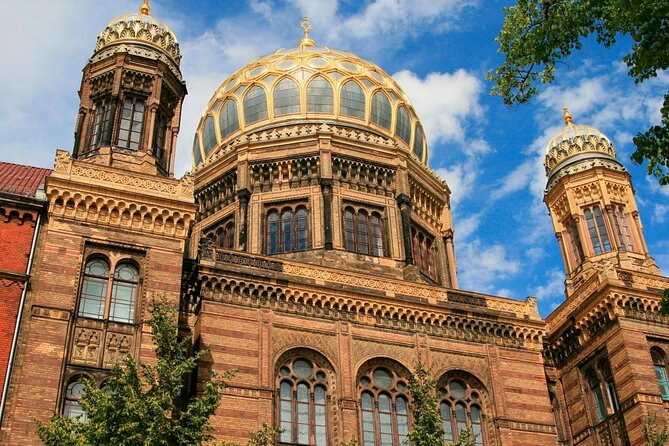
The Grosse Hamburger Strasse cemetery is one of the quietest and most reflective stops. Cemeteries can tell you a great deal about a community before persecution began. They show that Jewish Berlin was not a footnote added to the city later, but part of its long social and cultural life.
The stop lasts about 15 minutes. Your guide connects the cemetery with the destruction of Jewish families and institutions under Nazi rule. You’ll also encounter memorials to people who were deported and murdered.
This is where the walk’s use of maps and old photographs becomes especially helpful. Berlin has changed greatly, and a normal stroll can hide what once occupied a street or courtyard. The visual material gives you a second view of the city, one that is not always visible from the pavement.
Same city, a completely different kind of day:
- Discover Berlin Half-Day Walking Tour
★ 5.0 · 9,624 reviews - Berlin: Hop-on Hop-off Bus Tour with Live Commentary
★ 4.3 · 8,579 reviews - Berlin: Government District around the Reichstag Guided Tour
★ 4.7 · 8,447 reviews - Berlin: Reichstag, Plenary Chamber, Cupola & Government Tour
★ 4.6 · 8,422 reviews
Otto Weidt’s workshop and practical courage
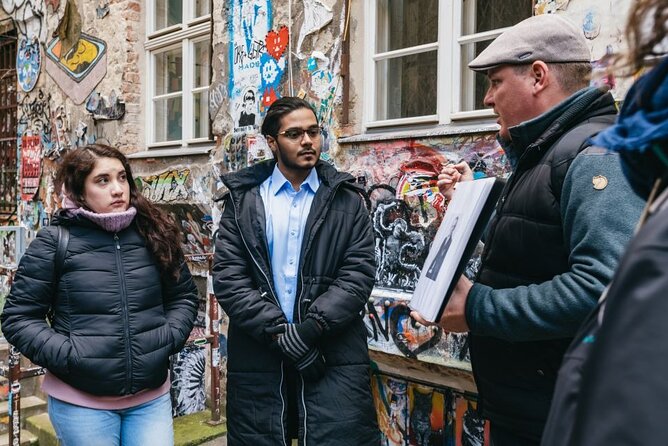
Otto Weidt’s Workshop for the Blind is the tour’s most intimate stop. Weidt made brushes and employed blind and deaf Jewish workers. He also tried to shield them from persecution.
The story is valuable because it does not present resistance as something reserved for soldiers or political leaders. A workshop owner used his position, relationships, and personal courage to protect people who were marked for persecution. The setting makes the question immediate: what could one person do with limited power, and what risks came with doing it?
You’ll spend about 15 minutes here with the guide. Entry is included, though the information provided does not promise a long museum visit or time to examine every display. Think of it as a focused stop within a wider walking route.
I would pay close attention here. This is one of the places where the tour’s theme becomes concrete. Resistance could mean hiding someone, falsifying information, using a workplace to delay an arrest, or refusing to treat a targeted person as disposable.
Rosenstraße and the Block of Women
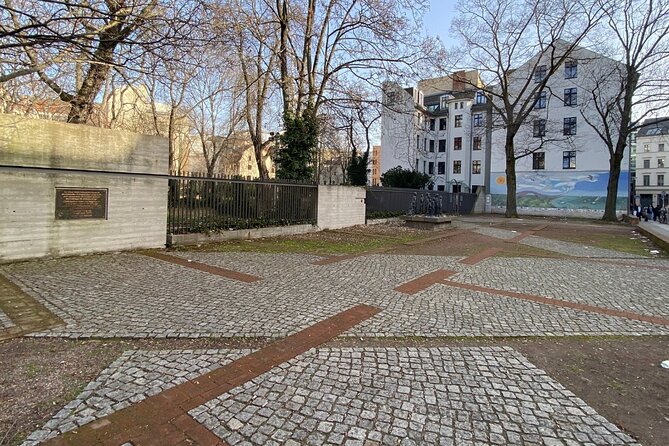
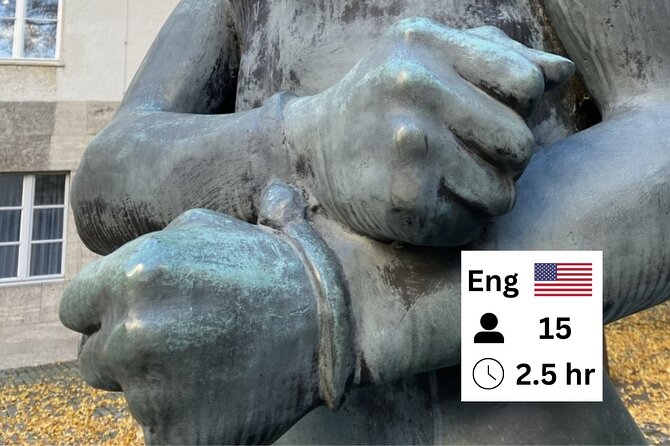
The Block of Women marks the site of the Rosenstraße protest. German women gathered here to demand the release of their Jewish husbands, who had been arrested by the Nazis.
The protest is important because it shows collective action in a dictatorship. The women were not standing outside a neutral government office. They were confronting a regime that had already shown its willingness to imprison and deport people.
Your guide spends about 15 minutes at this stop, explaining what happened and why the protest matters. The story also raises difficult questions about resistance. Why did some people act here when so many remained silent elsewhere? What made public protest possible at this particular moment? The tour does not reduce those questions to a simple answer.
This is likely to be one of the most memorable sections for anyone interested in women’s history or civil resistance. It also breaks the usual image of resistance as a secret underground operation. Sometimes it took the form of people refusing to leave.
Museum Island, Neue Wache, and the problem of public memory
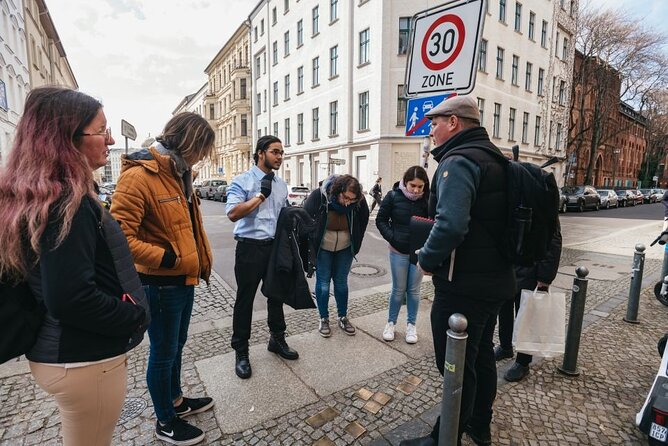
The route continues through Museum Island, with about 20 minutes of guided sightseeing. This section connects the Jewish quarter with Berlin’s larger civic and cultural centre.
The exact buildings and memorial views matter less than the contrast. Berlin places world-famous museums and state monuments close to sites linked to persecution and war. Walking between them makes the city feel layered rather than neatly divided into tourist sights and historical sites.
At Neue Wache, the guide addresses another major memorial space. The building is tied to remembrance of war and victims of tyranny. Here, you can think about how Germany presents grief in public and how different groups of victims have been remembered.
This portion may feel less intimate than the workshop or Rosenstraße. It is also more open and urban, so the guide’s explanation carries much of the meaning. If you want a quiet moment at each site, the steady route may feel brisk. If you prefer a clear story that links separate parts of central Berlin, this is useful connective tissue.
Bebelplatz and the May 10, 1933 book burning
Bebelplatz is the site of the Nazi book burning on May 10, 1933. The event signalled the campaign against free thought, intellectual freedom, and writing that the regime considered threatening.
The memorial here is easy to miss if you do not know where to look. That is part of its power. The site does not need a huge structure to make its point. Your guide explains what happened and why the burning was more than a publicity event. It showed that the regime intended to control ideas, education, culture, and public debate.
The scheduled visit lasts about 10 minutes. That is enough for a concise explanation, but not for a long lecture. You’ll likely want to return on your own if you prefer extra time with the memorial.
This stop also broadens the tour beyond Holocaust history alone. The destruction of books was part of the wider attack on anyone who challenged Nazi racial, political, or cultural beliefs. It shows how the regime prepared the ground for greater crimes by first narrowing what people could read, teach, and say.
Trains to Life, Trains to Death
The Trains to Life, Trains to Death memorial recalls children who escaped persecution and those who were sent to their deaths. The route also introduces Nicholas Winton, sometimes called the British Schindler, who helped hundreds of Jewish children leave danger.
This story brings a different form of rescue into the walk. The children who escaped did not all experience the same fate as their parents, families, or communities. Rescue could save a life while still leaving a permanent wound.
The memorial is a fitting late stop because the tour has already shown you the machinery of deportation. You have seen where Jewish families lived, worked, studied, and worshipped. By this point, a railway reference is not an abstract symbol. It points to the forced movement of real people.
The tour then finishes near Berlin Friedrichstraße station. That ending keeps the route connected to the city’s transport network and makes it easy to continue sightseeing or head back to your accommodation.
What the $56 price includes
At $56 per person, this is not the cheapest way to walk around central Berlin. You can visit many outdoor memorials on your own for free. The price makes sense only if you want the connections, context, and personal stories supplied by a specialist guide.
The value comes from four things:
- Entry to museums and memorials is included.
- You get a small-group setting, listed as limited to 10 participants in the activity details, with another description giving a maximum of 15.
- The guide uses maps and then-and-now photographs rather than relying only on a spoken lecture.
- The route includes places you could easily pass without understanding, such as the Rosenstraße site and the subtle book-burning memorial.
A private guide would cost much more, while a large city tour might offer less room for questions. This sits in the middle. It is a fair price for a focused specialist walk, especially if you want more than a general introduction to Nazi Berlin.
The main limitation is time. Two and a half hours sounds generous, but the route covers 11 locations. You will receive short guided visits rather than a detailed museum tour at every stop. If you want to study exhibits at length, plan separate visits later.
Who will get the most from this experience
I would recommend this walk to anyone who wants to understand how Nazi persecution affected ordinary streets and households. It suits history enthusiasts, first-time Berlin visitors, and people who prefer personal stories to military timelines.
It is also a good choice if you have already seen the major Nazi-era sites and want a different angle. The tour adds Jewish institutions, acts of protest, rescue efforts, and small memorials to the better-known Berlin story.
You should be ready for difficult material. Deportation, murder, antisemitism, and the failure of many people to resist are central subjects. This is not a light sightseeing break between museums.
The route is listed as wheelchair accessible, though you should still consider that it takes place outdoors and runs in all weather. Wear shoes that can handle several hours of city walking. The group size is intended to remain small, but because the supplied details give both 10 and 15 as the limit, confirm the current number when you reserve.
Free cancellation is available up to 24 hours before the start, and you can reserve now and pay later. Those terms are useful if your Berlin schedule is still moving around.
My call: book it for context, not just for sights
Book this tour if you want Berlin’s Holocaust story told through people and places rather than a list of dates. Otto Weidt’s workshop, the Rosenstraße protest, and the book-burning memorial give the walk a clear human focus.
Skip it if you want a relaxed city stroll, long museum visits, or a broad survey of Berlin’s entire history. The subject is heavy, the route is purposeful, and the guide’s presentation shapes much of the experience.
For the right reader, $56 buys more than admission and directions. It gives you a way to notice what the city does not announce loudly: a workshop where people were protected, a street where women protested, a school and cemetery tied to a destroyed community, and memorials that ask you to remember people who once lived ordinary lives.
FAQ
How long does the Path of Resistance tour last?
The walking tour lasts 2.5 hours. Starting times vary, so check availability when booking.
What language is the tour conducted in?
The tour is conducted in English with a live guide.
Where does the tour begin?
It begins at the former Imperial Post Office. Arrive 10 minutes early and look for the guide at the main entrance holding a blue umbrella.
Where does the tour finish?
The route finishes near Berlin Friedrichstraße station. The meeting information also says the activity ends back at the meeting point, so confirm the exact end point when booking.
Which major sites are included?
The route includes the New Synagogue, Jüdisches Gymnasium Moses Mendelssohn, Grosse Hamburger Strasse Cemetery, Otto Weidt’s Workshop for the Blind, the Block of Women, Museum Island, Neue Wache, the May 10, 1933 Nazi book-burning memorial, and Trains to Life, Trains to Death.
Is museum admission included?
Yes. Entry to the museums and memorials included in the tour is provided.
Is the walk wheelchair accessible?
Yes, the activity is listed as wheelchair accessible.
What should I bring?
Bring comfortable shoes, water, and an umbrella. The tour operates in all weather, so bring rain protection or sun coverage as needed.
Just added around Berlin
- Love and War in Berlin: Self-Guided Story Puzzle Walk★ 5.0 · 7 reviews
- Rickshaw Tours Berlin – Groups of up to 16 people with several rickshaws★ 4.0 · 97 reviews
- Walking on the Wall: 3-Hour Tour in Berlin★ 4.5 · 34 reviews
- eSIM for Germany and 34 European Countries★ 4.5 · 16 reviews
- Warnemuende Shore Excursion: Private Berlin Tour★ 4.5 · 27 reviews
- Warnemuende Shore Excursion: Berlin Private Sightseeing Tour from Rostock★ 5.0 · 4 reviews
- Your ticket to The Wall Museum Berlin★ 3.0 · 60 reviews
- Berlin’s Gay, Lesbian, and Queer Scene Small-Group Walking Tour★ 4.5 · 66 reviews
Berlin Tours, compared.

Reichstag, Dome and Government District Guided Tour
Read our review →
1-Hour City Tour by Boat with Guaranteed Seating
Read our review →


Reichstag, Plenary Chamber, Cupola & Government Tour
Read our review →

