
Reviewed · WALKING TOURS
Oberammergau Private Guided Walking Tour
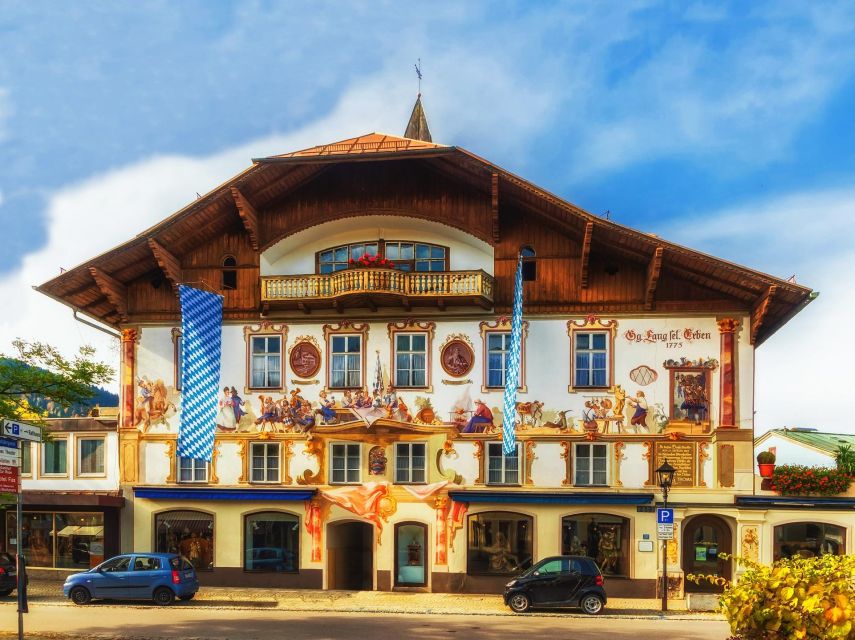
Oberammergau packs an unusual amount of history into a small Alpine village. In 90 minutes, you trace its monastery roots, frescoed houses, wood carving trade, Passion Play, and uneasy WWII past without being swept into a large group.
I like the private format and the way the walk joins sacred stories with everyday village life. I also like the chance to shape the route with your guide, especially if you want more time on the Passion Play or the Märchenhäuser. The main drawback is the short running time: 90 minutes goes quickly, and entrance fees are not included.
A guide named Ekaterina has led this walk with lively interaction, clear historical notes, and a personal approach for a small group. The tour has a current rating of 4.7 from five ratings, so the strongest praise centers on the guide’s personal attention and ability to bring Oberammergau’s story to life.
In This Review
- Key points at a glance
- Why Oberammergau rewards a guided walk
- Meeting at Eugen-Papst-Straße 9A
- Monastery roots and the road to Ettal
- Pilgrims, markets, and the rise of wood carving
- Märchenhäuser and the village’s playful side
- War, plague, and the birth of the Passion Play
- The 18th-century frescoes on village homes
- WWII secrets beneath the postcard image
- What the private format is really worth
- Who should book this Oberammergau walk?
- Practical details before you reserve
- Should you book it?
- FAQ
- Where does the Oberammergau walking tour meet?
- How long does the tour last?
- How much does the private tour cost?
- Is the tour private?
- Which languages are available?
- Are entrance fees included?
- Can the tour be customized?
- What is the cancellation policy?
- Can I reserve now and pay later?
Key points at a glance
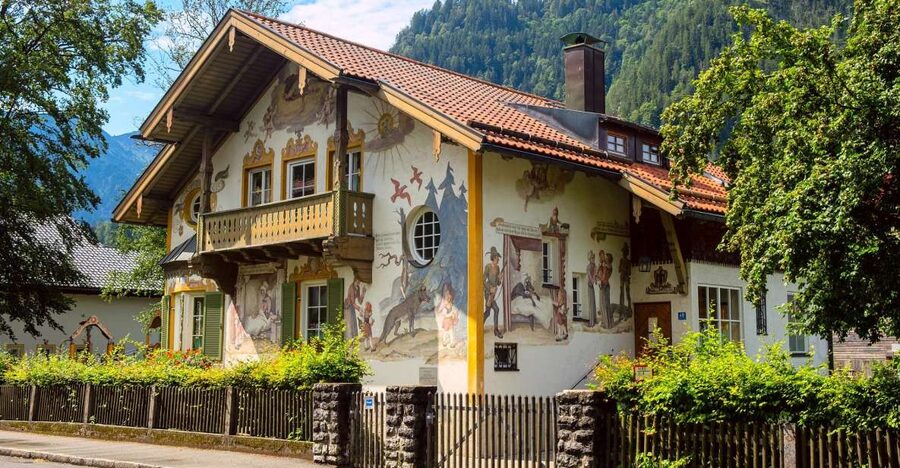
- See Oberammergau’s painted house fronts: The 18th-century frescoes turn ordinary village buildings into storybooks in plaster and paint.
- Follow the road from monastery to market town: Learn how the nearby Ettal connection and pilgrimage routes helped shape local life.
- Understand the wood carving tradition: Pilgrims, markets, and the route between Germany and Italy helped spread Oberammergau’s carved religious art.
- Connect plague to the Passion Play: The village’s famous performance grew from a promise made during a period of war and disease.
- Hear the less comfortable 20th-century story: The walk covers a Wehrmacht headquarters and a Messerschmitt factory.
- Book for a private, flexible walk: One group of up to 15 shares a guide, with English and German available.
Why Oberammergau rewards a guided walk
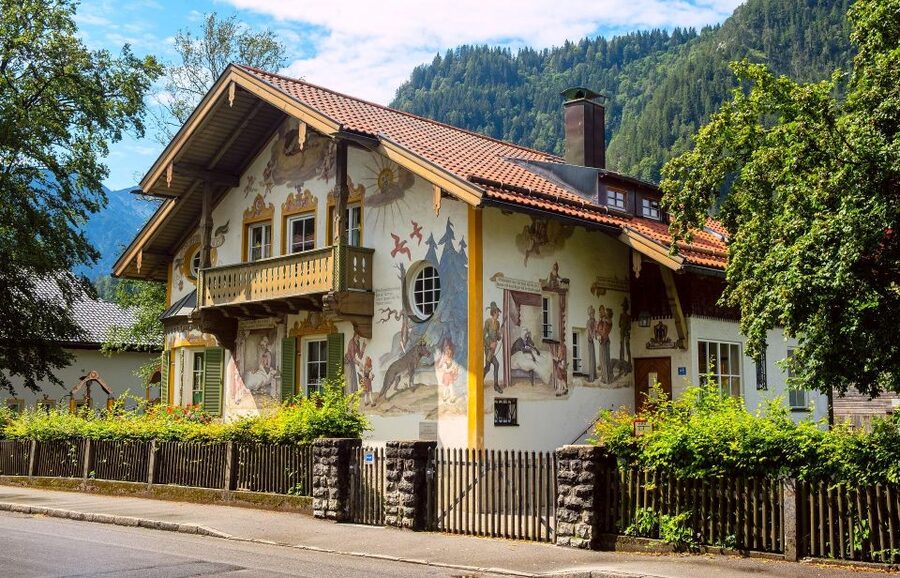
Oberammergau is easy to stroll through on your own, but its buildings do not explain themselves. A painted façade may show a saint, a fairy tale, or a scene from local tradition. The river Ammer gives the village its name, while the setting in the Ammer valley helped make it a stopping point between Germany and Italy.
That position matters. Oberammergau was not simply an isolated mountain settlement. Pilgrims heading toward Rome passed through the area, bringing money, stories, religious objects, and demand for souvenirs. A guide helps you connect those threads instead of seeing a collection of attractive façades with no clear reason for being there.
I especially like the balance of topics. You are not given one long speech about church history. The walk moves between art, commerce, folklore, disease, performance, and war. That mix gives you a more honest picture of the village.
The private setup makes this easier. You can ask why a certain house is painted, pause over a detail, or request more attention to the Passion Play. With a group of up to 15, the walk is still small enough for direct conversation, though a group of that size will feel less intimate than a party of four.
A few more Germany trips to weigh up
- Discover Berlin Half-Day Walking Tour
★ 5.0 · 9,624 reviews - Berlin: Third Reich and Cold War 2 Hour Walking Tour
★ 4.9 · 6,830 reviews - Munich: Third Reich & WWII Walking Tour
★ 4.6 · 6,181 reviews
Meeting at Eugen-Papst-Straße 9A
The meeting point is in front of the tourist office at Eugen-Papst-Straße 9A, 82487 Oberammergau. That is a useful place to begin because you can get your bearings before the walk starts, and the address is clear for anyone arriving independently.
Plan to arrive ready to walk rather than treating this as a seated presentation. The activity lasts 90 minutes, so a few extra minutes at the meeting point can prevent a rushed start. Since the route is in the village, you should also dress for outdoor conditions in Bavaria and wear shoes you are happy to use on town streets.
The walk is offered in English or German. If you have a strong interest in one subject, raise it at the beginning. The guide can customize the tour on the spot, which is one of the better reasons to choose a private format.
Monastery roots and the road to Ettal
Oberammergau’s story reaches back to the late Bronze Age, but the village as you know it today began with a small monastery in the ninth century. The nearby Ettal Monastery is a key part of the local story, and the tour explains the connection between the two places.
This section gives you a useful foundation. Monasteries were religious centers, but they also affected travel, trade, education, and local work. The village’s relationship with Ettal helps explain why pilgrims passed through and why religious art became such an important part of Oberammergau’s identity.
The experience also covers the elite boarding school connected with Ettal. The supplied details do not promise an entrance to the monastery or school, so think of this as an explanation of the relationship, not a visit inside every institution mentioned.
For you, the value is context. Once you understand the monastery connection, Oberammergau’s religious paintings and Passion Play feel less like separate attractions. They become part of a long local tradition shaped by worship, travel, and the needs of passing pilgrims.
Pilgrims, markets, and the rise of wood carving
From the 14th century onward, Oberammergau became an important center for wood carving. The tour links that craft to pilgrimage routes and markets, a practical explanation that is more useful than simply being told the village is famous for carved figures.
Pilgrims needed objects connected to their faith, and markets gave local artisans a place to sell their work. Oberammergau’s position between Germany and Italy helped bring people through the village, which in turn helped local carving reach a wider audience.
Look for the connection between the craft and the buildings around you. The subject is not only artistic skill. It is also a story about how a rural community found work by serving people who were moving through the region.
I like this part because it shows how culture grows from ordinary needs. Religious art was not made in a vacuum. It was linked to roads, trade, local income, and the steady flow of pilgrims.
The tour does not include entrance fees, and the information provided does not specify a carving museum visit. If you want an indoor collection or a particular workshop, ask your guide what can be added or visited separately.
Same city, a completely different kind of day:
- Berlin: Reichstag, Dome and Government District Guided Tour
★ 4.7 · 18,288 reviews - Berlin: 1-Hour City Tour by Boat with Guaranteed Seating
★ 4.3 · 16,993 reviews - Hamburg: Sex and Crime in St. Pauli Tour for Ages 18+
★ 4.7 · 15,447 reviews - Hamburg: 1.5-Hour Harbor and Speicherstadt Day Cruise
★ 4.6 · 14,200 reviews
Märchenhäuser and the village’s playful side
Oberammergau is known for its Märchenhäuser, or fairy-tale houses. The term points to the painted façades tied to German folklore, including stories gathered by the Brothers Grimm from older oral traditions in the early 19th century.
This is one of the most enjoyable parts of the walk because it shifts the mood. You move from monasteries and pilgrimage to stories, characters, and scenes painted on homes. The village’s identity is not purely sacred. It also has a playful, imaginative side.
A guide adds real value here because the paintings need interpretation. You may recognize the broad idea of a fairy tale, but the local references and history behind the façades are harder to read without help.
Do not expect every Märchenhaus to be a formal museum. The appeal is in seeing the stories as part of the streetscape. The buildings are working pieces of the village, not merely displays arranged behind glass.
This is also a good place to ask for a slower pace. Ninety minutes is enough to introduce the theme, but not enough to linger over every painted detail in depth. If fairy-tale art is your main reason for coming, tell the guide early.
War, plague, and the birth of the Passion Play
The Passion Play is the best-known part of Oberammergau’s story, but the reason it began is grim. The walk explains how the Thirty Years War helped bring the Black Plague back to the village, and how the Passion of Christ play grew from that crisis.
That connection gives the performance more weight. It was not created simply as a show for tourists. It arose from fear, suffering, faith, and a promise tied to the survival of the community.
The guide also explains the play’s unusual cast tradition. Oberammergau’s production is known for its exclusive local cast, a detail that helps you understand why the event is so closely tied to village life. The play is not just something performed in the village. It has shaped the village’s public identity for generations.
The tour focuses on the origins and meaning of the Passion Play rather than promising a performance. No show ticket is included, and the activity itself lasts only 90 minutes. If you are planning around a Passion Play season, confirm the performance schedule and ticket arrangements separately.
I find this historical section more useful than a simple explanation of what the play depicts. You learn why the play exists and why the community treats it as more than a stage production.
The 18th-century frescoes on village homes
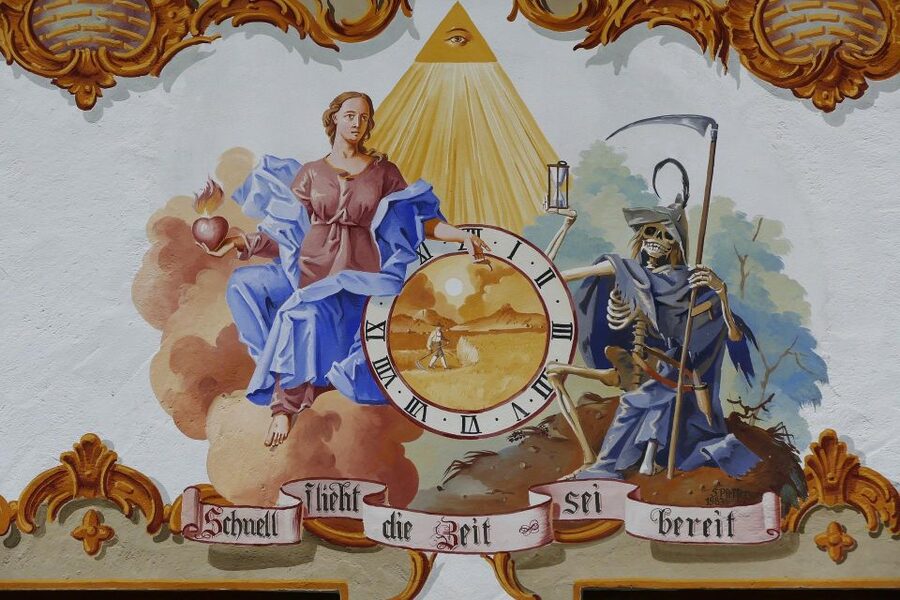
Oberammergau’s 18th-century frescoes are one of the clearest reasons to walk the village with a guide. These paintings give the houses their distinctive character, but their real value comes from understanding the subjects and the period in which they were created.
The façades combine religious scenes with secular and fairy-tale subjects. That mixture reflects the village’s broader character: pilgrimage and local commerce on one side, folklore and daily life on the other.
You should expect to see the exterior art as part of the walking route. The available details do not state that the tour includes admission to a particular church, museum, or private building, so do not book it expecting a series of indoor visits.
This is also where the short duration can feel limiting. Painted façades reward close looking, and a guide may have several stories to tell about each one. A private group can ask questions, but you will still need to keep moving if you want to cover the full historical arc.
WWII secrets beneath the postcard image
The tour does not present Oberammergau as a frozen village of painted houses and religious tradition. It also covers its role during World War II, including a Wehrmacht headquarters and a Messerschmitt factory.
That subject adds an important counterweight to the prettiness of the setting. Alpine villages can look peaceful, but they were not outside the events that shaped modern Germany. Learning about military administration and industrial production helps you see Oberammergau in its 20th-century setting.
The details provided do not promise access to the former headquarters or factory. The practical expectation is a guided explanation of those sites and their place in the village’s past.
I appreciate the inclusion of this material. A good walking tour should not only point out attractive buildings. It should also address the harder chapters that complicate the picture.
What the private format is really worth
The price is $280 per group of up to 15 people. That is a flat group price, not a charge per person. A full group would pay less than $19 per person, while a group of four would pay $70 per person.
That makes the tour most attractive for families, friends, or a small organized group that wants a private guide. For one or two people, the cost is harder to justify unless you place a high value on personal attention and the ability to shape the conversation.
The guide is with your group only, and customizing is possible during the walk. That is the key value, not simply the number of facts covered. You are paying for a conversation tailored to your interests, rather than a fixed commentary delivered to a crowd.
The tradeoff is that the tour lasts only 90 minutes. If you want a long museum visit, a full-day historical program, or extensive time inside attractions, this is not that kind of experience. It works best as an introduction that helps you understand Oberammergau before exploring more on your own.
The 4.7 rating from five ratings is encouraging, and the most specific praise concerns a personal, lively approach. Ekaterina is described as bringing the village alive for a group of four through clear stories and historical notes. Guide quality matters greatly on a short walking tour, so that detail is worth considering when you book.
Who should book this Oberammergau walk?
I would recommend it to you if you want the main story of Oberammergau in one focused session. It suits first-time visitors, history-minded walkers, people interested in the Passion Play, and anyone curious about why the houses are painted in such a distinctive way.
It is also a good match for families or friends who prefer asking their own questions. The fairy-tale houses may appeal to children, while the plague, war, and monastery material gives adults plenty to discuss.
You might skip it if you only want to browse shops or take photographs. You might also prefer to explore independently if you already know the village well and do not need historical interpretation.
For most people, the best plan is to take the tour early in your visit. The guide can give you a framework for the houses, carving tradition, Ettal connection, and Passion Play. You can then return to the subjects that interest you most.
Practical details before you reserve
The tour is private, with a maximum group size of 15, and the guide speaks English or German. It begins at the tourist office and runs for 90 minutes.
Entrance fees are not included. The supplied information does not list specific admissions, so ask before booking if you want to add a paid site or museum to the walk.
You can cancel up to 24 hours in advance for a full refund, and you can reserve now and pay later. Those terms are useful if your Bavarian schedule is still changing.
The experience is provided by Travmonde OÜ. Since starting times depend on availability, check the schedule for your date rather than assuming the walk runs at a fixed hour.
Should you book it?
Book this tour if you want a personal introduction to Oberammergau, not a long attraction-by-attraction visit. Its best features are the private guide, flexible discussion, and unusual range of subjects, from Ettal and wood carving to plague, fairy tales, the Passion Play, and WWII.
The value depends on your group size. At $280, it is sensible for a larger party and less compelling for a solo visitor or couple unless private guiding is important to you. The 90-minute limit also means you should see it as a well-focused orientation.
For a first visit, I think the balance is strong. You get the stories that make Oberammergau more than a pretty Alpine stop, and you can decide afterward which places deserve more of your own time.
FAQ
Where does the Oberammergau walking tour meet?
The meeting point is in front of the tourist office at Eugen-Papst-Straße 9A, 82487 Oberammergau, Germany.
How long does the tour last?
The walking tour lasts 90 minutes.
How much does the private tour cost?
The price is $280 per group of up to 15 people.
Is the tour private?
Yes. It is offered as a private group experience, with a guide assigned to your group only.
Which languages are available?
The live guide is available in English or German.
Are entrance fees included?
No. Entrance fees are not included in the tour price.
Can the tour be customized?
Yes. Possible customization with your local guide is available during the tour.
What is the cancellation policy?
You can cancel up to 24 hours in advance for a full refund.
Can I reserve now and pay later?
Yes. The reserve now and pay later option lets you book without paying immediately.
Just added around Germany
- Aachen old town tour – GERMAN (public)★ 5.0 · 24 reviews
- Aachen Private Walking Tour With A Professional Guide★ 5.0 · 11 reviews
- Cologne Highlights: Exclusive Private Tour★ 5.0 · 5 reviews
- Explore Cologne’s best Street Art Quarter★ 4.5 · 4 reviews
- Bremen Private Walking Tour With A Professional Guide★ 5.0 · 7 reviews
- Private Walking Tour through the Fascinating Bremen’s City Center★ 5.0 · 5 reviews
- Bremen Exploration Private Game and City Tour on your Phone★ 4.5 · 7 reviews
- e-Scavenger hunt Bremen: Explore the city at your own pace★ 4.0 · 24 reviews
Walking Tours, compared.





Berlin’s Best: 2 Hour Walking Tour Third Reich and the Cold War
Read our review →

