
Reviewed · NUREMBERG TOURS
Nürnberg: Mörder, Fälscher, Messerstecher
Nuremberg’s Old Town looks handsome today, but this tour asks you to see it through a darker lens. Starting at the Hangman’s House, you follow stories of murder, forgery, knife attacks, witch hunts, prison life, and public punishment through the city center. The most memorable figure is Franz Schmidt, Nuremberg’s famous hangman, whose work gives the tour a very human link to the city’s justice system.
I like the way the route connects ordinary squares with difficult subjects, especially the Hauptmarkt and Fleischbrücke, places you might otherwise pass without thinking about crime or punishment. I also like the practical two-hour length and the fact that the tour stays on foot, moving through several important Old Town landmarks without requiring a separate museum ticket.
The main limitation is language: the live tour is in German only, and entry to the Hangman’s House, town hall, and medieval dungeons is not included. The tour is also not suitable for people with mobility impairments, so you should be ready for a steady walk over historic city streets.
In This Review
- Key points at a glance
- Why Nuremberg’s crime history makes a good walking tour
- Starting at the Hangman’s House
- Weinmarkt and the story of witch hunts
- Old City Hall and Nuremberg’s justice system
- The Lochgefängnisse and the grim logic of medieval prisons
- Hauptmarkt, Christkindlesmarkt, and public death
- Fleischbrücke and corporal punishment
- Findelgasse and the story of Peter Henlein
- Ending at the Schuldturm
- What the two-hour format gives you
- Who should book this Nuremberg walk?
- Should you book it?
- FAQ
- How long does the Nürnberg: Mörder, Fälscher, Messerstecher tour last?
- What language is the tour conducted in?
- Where does the tour begin?
- Where does the tour finish?
- Are museum and landmark entry fees included?
- Is the tour suitable for people with mobility impairments?
Key points at a glance
- Franz Schmidt and the Hangman’s House: Begin with Nuremberg’s most famous executioner and the difficult place he occupied in city life.
- Witch hunts at Weinmarkt: Hear how suspicion and accusations shaped medieval justice in Nuremberg.
- Medieval dungeons: Learn what the Lochgefängnisse were used for and what prison conditions could mean.
- Crime at Hauptmarkt: Connect Nuremberg’s famous Christmas market square with public justice and the death penalty.
- Punishment at Fleischbrücke: Discover how corporal punishment worked in the Middle Ages.
- A compact Old Town route: Finish near the Schuldturm after a walk of about two hours, with only short distances between most stops.
Why Nuremberg’s crime history makes a good walking tour
Nuremberg is often presented through grand churches, imperial connections, the Christkindlesmarkt, and twentieth-century history. Those subjects matter, but this walk offers a different way to read the city. It focuses on the rules that governed daily life and on what happened when people broke them.
That approach works especially well in a walking tour because the locations are not sealed away in a single museum. A square, bridge, tower, or town hall becomes part of the story. You hear what a place was used for, then look at the same stones with a less romantic eye.
The subject is serious, but the tour is not simply a list of grim facts. The route also introduces people and professions, including the watchmaker Peter Henlein and the city’s executioner Franz Schmidt. That wider view helps you understand how work, status, fear, and public reputation shaped life in medieval Nuremberg.
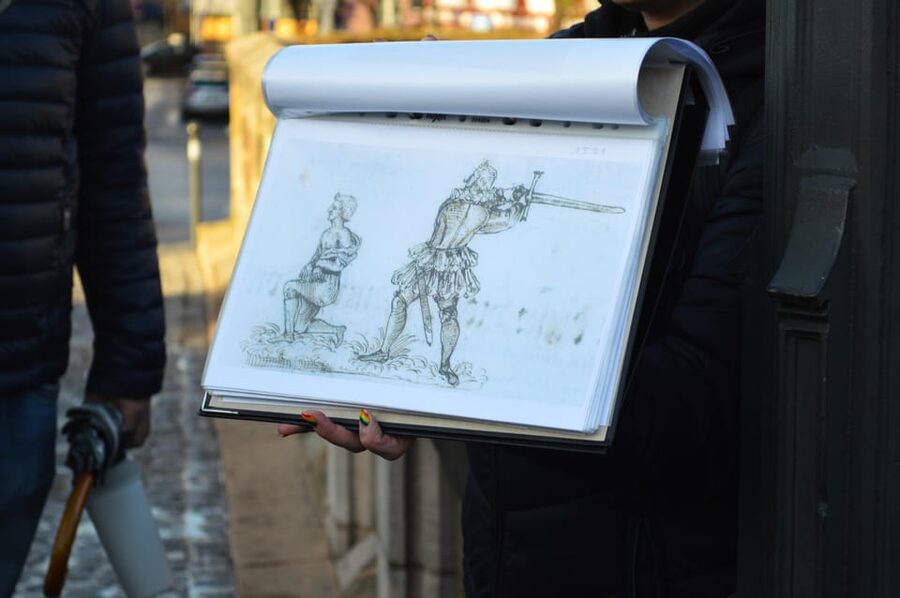
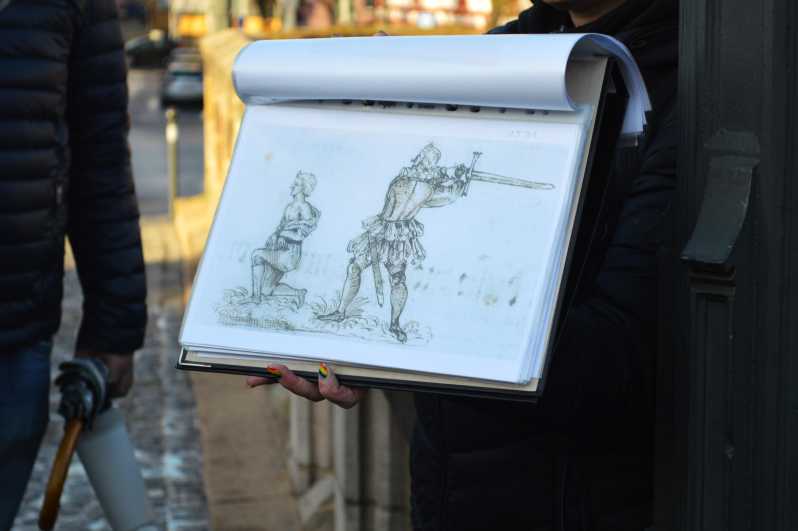
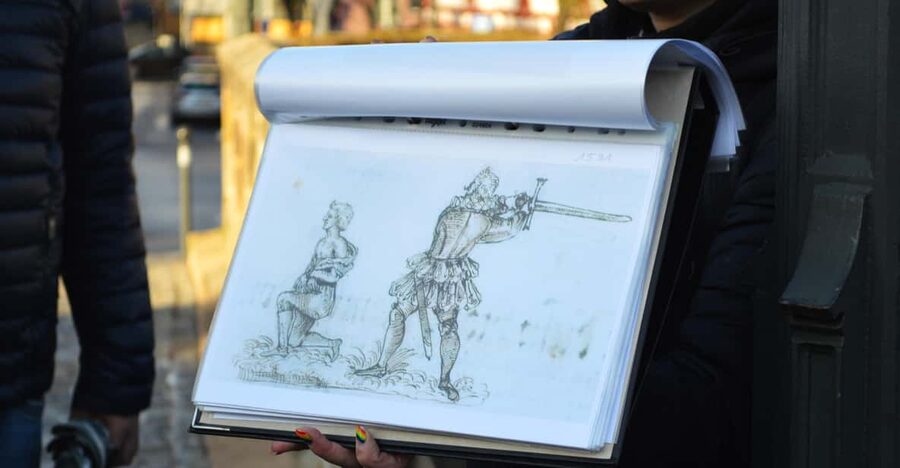
This is a guided tour with a qualified German-speaking guide from Geschichte Für Alle e.V. The guide meets you outside the entrance to the Henkerhaus, carrying a picture folder and a green name tag marked Geschichte Für Alle. That detail matters at a busy meeting point, particularly if you do not know the Old Town well.
Other Nuremberg days worth putting on the list:
- Nuremberg: City Tour with the Bimmelbahn Train
★ 4.4 · 2,475 reviews - Nuremberg: Old Town Guided Walking Tour
★ 4.6 · 2,416 reviews - Nuremberg: Tunnels and Secret Passages in the City Wall Tour
★ 4.8 · 2,334 reviews
Starting at the Hangman’s House
The tour begins at the Henkerhaus Museum, also called the Hangman’s House. You do not pay museum admission as part of the walk, so the opening discussion takes place outside unless you arrange a separate visit.
The building gives the tour an immediate sense of place. Instead of beginning with a general talk about medieval crime, your guide starts with the person responsible for carrying out the city’s most severe punishments. Franz Schmidt is the central figure here, and his story gives you a clearer idea of how an executioner could be both necessary to the authorities and socially separated from the wider community.
I find this an effective opening because it avoids treating the past as a string of shocking anecdotes. The hangman was part of the official justice system. His work tells you something about the city’s government, its laws, and the public nature of punishment.
The museum itself may interest you if you have extra time, but admission is not included. Check your budget and schedule before assuming the tour provides entry. The walking portion is designed to explain the building and its place in Nuremberg’s crime history, not to replace a museum visit.
Weinmarkt and the story of witch hunts
From the Hangman’s House, the group walks for about four minutes to Weinmarkt. This is a short move, so the tour keeps its pace without a long transfer between subjects.
At Weinmarkt, the focus turns to witch hunts. This part adds an important warning to the broader story of medieval justice. Crime was not always based on a clear act witnessed by authorities. Fear, rumor, accusation, and religious belief could also bring people under suspicion.
You will hear about witch hunts in Nuremberg and how the city dealt with this kind of accusation. The subject can be unsettling, but it helps explain why legal systems need evidence and fair procedures. It also shows how a community could turn anxiety into punishment.
The square is useful as a setting because it keeps the discussion grounded in an everyday part of the city. You are not studying an abstract legal code. You are standing in the Old Town while learning how public beliefs could affect real people.
The tour does not promise a theatrical performance, and that is a strength for many visitors. The emphasis is on explanation, context, and questions. Strong feedback has focused on guides who explain a great deal in an interesting way and respond carefully when people ask for more detail. If you understand German well, this is likely one of the more worthwhile sections of the walk.
Old City Hall and Nuremberg’s justice system
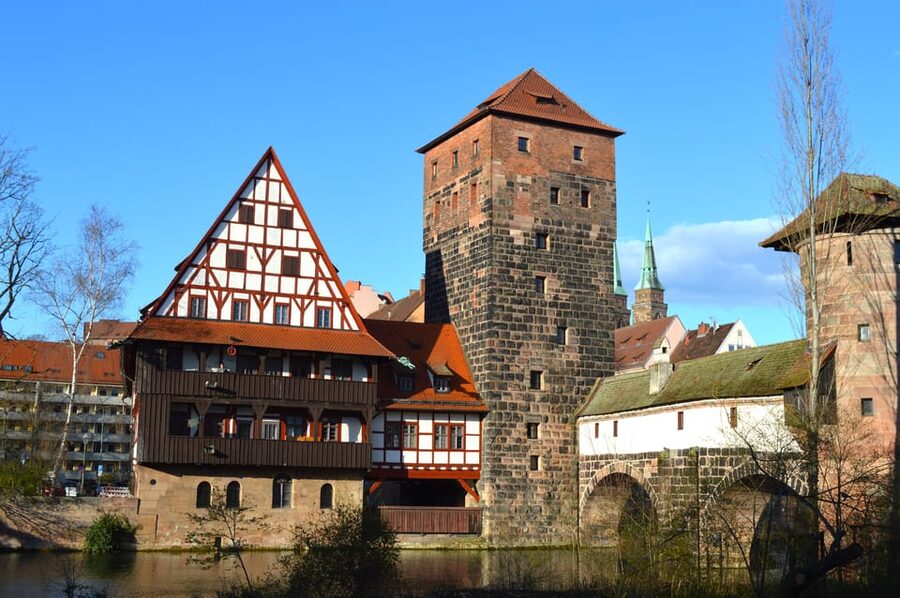
After Weinmarkt, you walk roughly three minutes to the Old City Hall. The stop connects the stories of crime and punishment with the people who made and enforced the rules.
The town hall is an important setting because justice was not separate from civic government. Here, you learn more about Nuremberg’s medieval justice system and how the city handled legal matters. The focus is not only on criminals. It is also on the officials, customs, and institutions that decided what counted as wrongdoing and what punishment followed.
Entry to the town hall is not included. The guide’s explanation takes place as part of the outdoor walking route, so you should not expect an interior tour of the building. That is a fair trade at this price, but it is worth knowing if you hoped to see the rooms inside.
I like this stop because it gives the tour structure. The opening at the Hangman’s House introduces punishment from the person who carried it out. At the town hall, you move toward the authority behind the system. The two locations make more sense together than they would as isolated sights.
Same city, a completely different kind of day:
- Nuremberg: Medieval Dungeons Guided Tour
★ 4.8 · 1,726 reviews - Nuremberg: Walking Tour of Former Nazi Party Rally Grounds
★ 4.7 · 1,665 reviews - Medieval Tour in Nuremberg in Spanish
★ 5.0 · 1,374 reviews - Nuremberg: Historischer Kunstbunker WWII Art Bunker Tour
★ 4.8 · 921 reviews
The Lochgefängnisse and the grim logic of medieval prisons
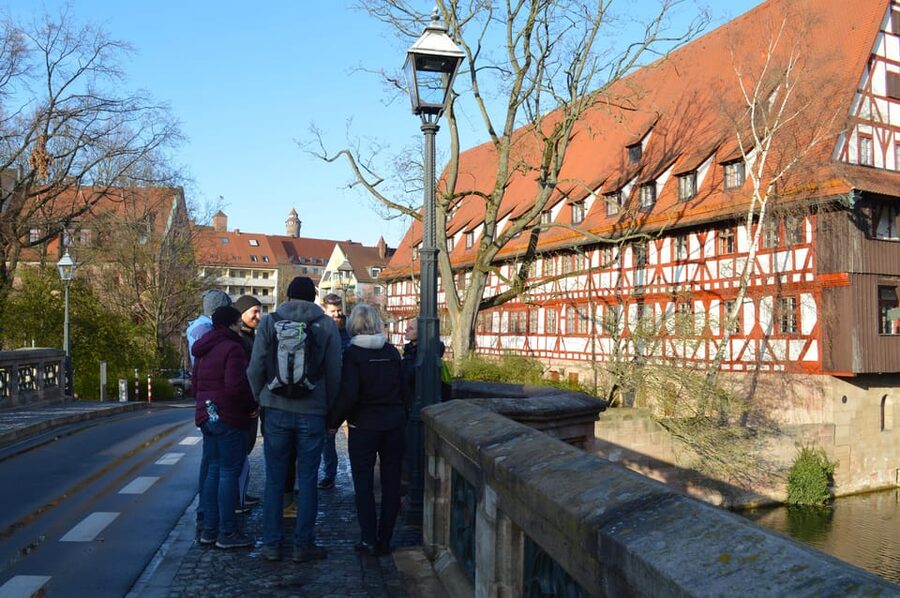
Next comes the Lochgefängnisse, the medieval dungeons. The German name refers to the prison complex beneath the Old City Hall. This is one of the tour’s most distinctive stops because it deals with detention rather than public punishment.
Your guide explains the purpose of the prison and the conditions inmates faced. The stop gives you a chance to consider an important difference between modern legal systems and medieval ones. A dungeon was not simply a place where someone served a sentence in the way we understand prison today. It could also be part of holding, interrogation, and legal process.
Admission to the medieval dungeons is not included. The tour still gives you the historical explanation, but you need a separate ticket if you want to enter. If the dungeons are a priority, allow time and money for that extra visit rather than treating it as part of the $15 walking-tour price.
You should also think about comfort. The tour is not suitable for people with mobility impairments, and historic prison spaces may be difficult for anyone who has trouble with stairs or uneven surfaces. The route itself is manageable for people who can walk normally, but it is not designed as an accessible tour.
Hauptmarkt, Christkindlesmarkt, and public death
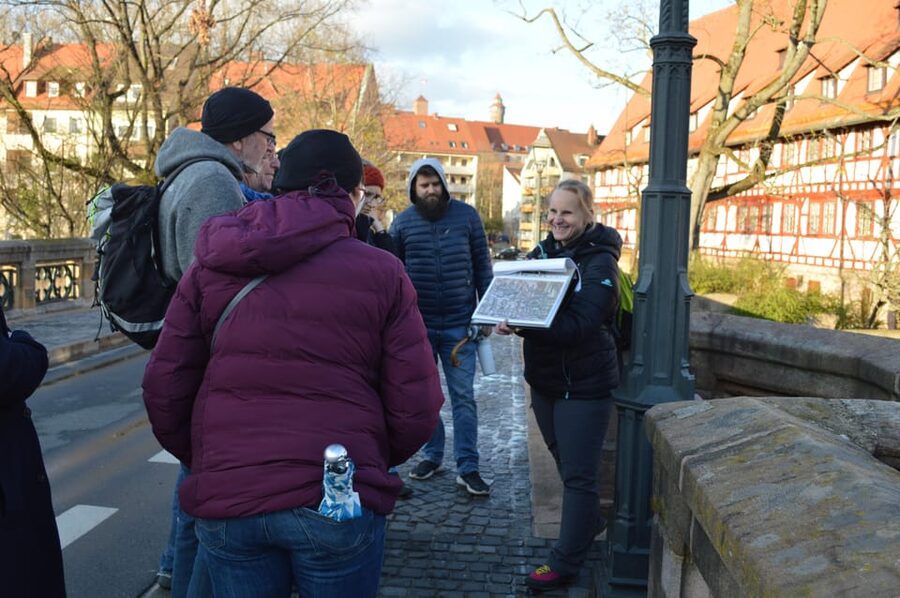
A one-minute walk brings you to Hauptmarkt, Nuremberg’s famous main market. In December, this is where the Christkindlesmarkt takes place, making it one of the city’s best-known public spaces.
The tour changes your view of the square by linking it to everyday crime and the death penalty. When the market is full of holiday stalls, lights, and visitors, it is easy to see Hauptmarkt only as a festive destination. This walk asks you to remember that public squares once served other purposes, including the public display of justice and death.
That contrast is one of the best reasons to take the tour. You do not need a special building to understand the past. A familiar square can carry several layers of meaning, depending on what you know about it.
Hauptmarkt may be crowded during the Christmas season. The guide will need to keep the group together and speak clearly above the noise. If you take the tour in December, wear warm clothing and allow extra patience around the market crowds. The setting can be more atmospheric, but it may also make it harder to hear every word.
Fleischbrücke and corporal punishment
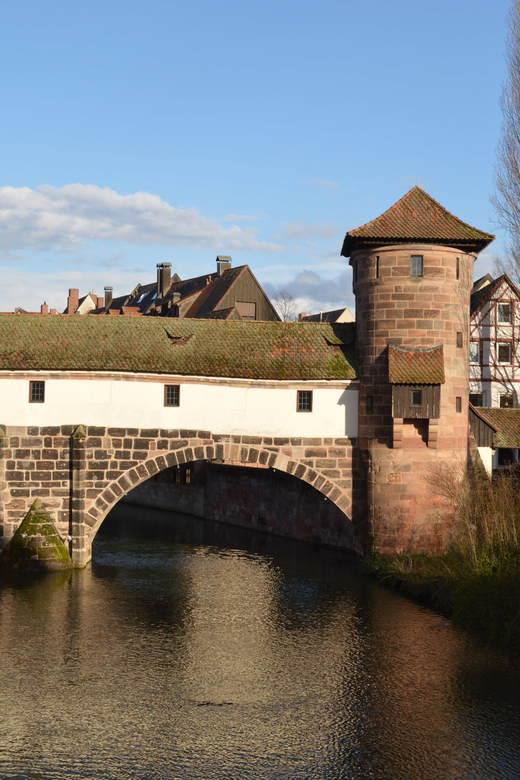
From Hauptmarkt, the group walks about two minutes to Fleischbrücke. Here, the topic is corporal punishment in the Middle Ages.
This section helps explain how punishment was meant to work in public. It was not only about removing a person from society. It could also serve as a warning to everyone watching. The location lets you consider how bridges, markets, and other shared spaces became stages for authority.
The subject can be hard to hear, particularly if you prefer tours that focus on architecture or food. Still, it fits the theme well and adds detail to the earlier discussion of the death penalty. You learn that medieval justice used a range of punishments, with the severity shaped by the crime, the accused person, and the city’s legal customs.
I appreciate the way the walk places this stop after Hauptmarkt. The sequence moves from the large public square to a more focused discussion of physical punishment. It keeps the tour from becoming a random collection of dark stories.
Findelgasse and the story of Peter Henlein
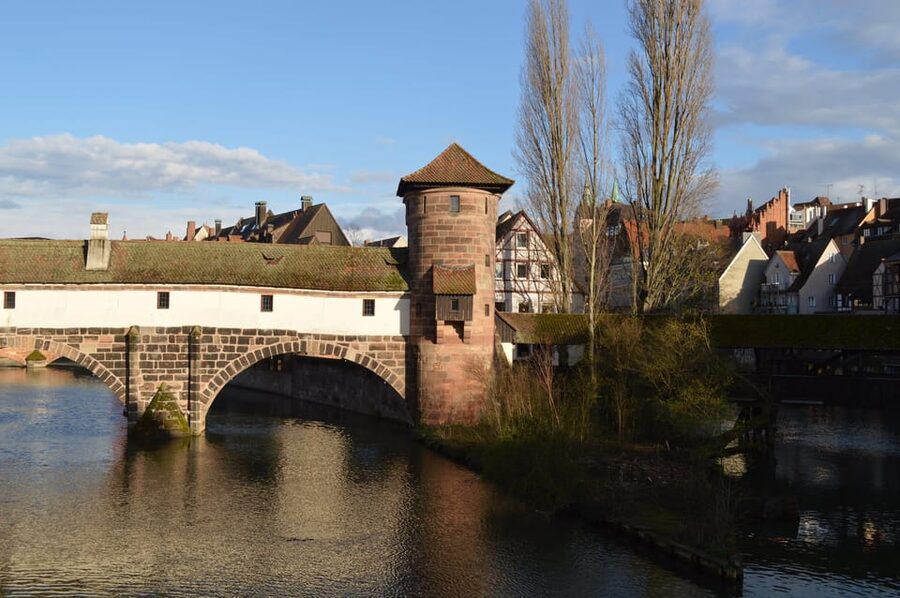
The route then continues toward Findelgasse, with about five minutes of walking. Here, the subject shifts from punishment to a famous craftsperson, the watchmaker Peter Henlein.
This change of topic is useful. A tour about crime could become one-note if every stop involved executions, prisons, or violence. Peter Henlein’s story brings you back to work and invention in the medieval city. It also shows that the route is about more than sensational crime. It looks at the people and trades connected to the city’s social order.
The supplied details do not specify a separate entry or interior visit at Findelgasse. Treat it as an outdoor stop where the guide tells Henlein’s story. You will want comfortable shoes because the route keeps moving through the Old Town rather than pausing in one building for the entire tour.
Ending at the Schuldturm
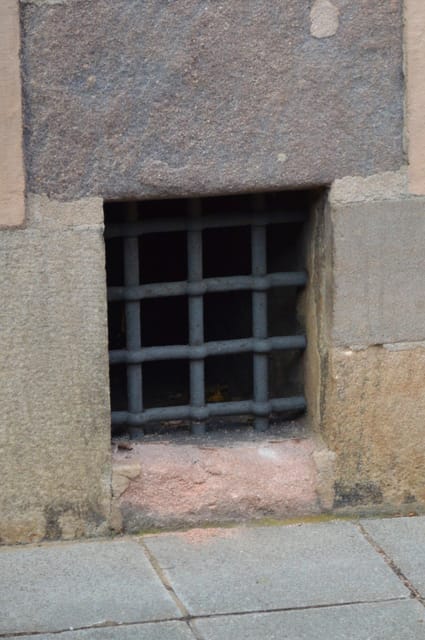
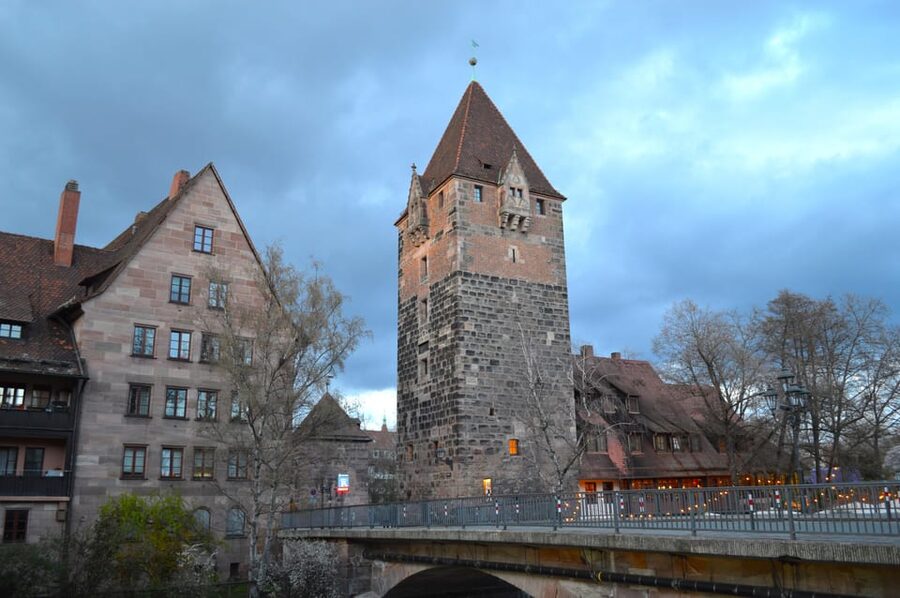
The final stop is in front of the Schuldturm, near Vordere Insel Schütt. The guide explains the tower’s purpose and the inmates associated with it.
The name points to debt, so this ending broadens the tour’s idea of wrongdoing once again. Not every person confined by the authorities was accused of murder or physical violence. Debt and social obligations could also lead to imprisonment, showing how legal pressure reached into ordinary economic life.
Finishing at the Schuldturm gives the walk a useful closing point. You have moved from the hangman and witch hunts to civic justice, dungeons, public punishment, craft, and debt. The route ends with a reminder that medieval law affected many parts of life, not just the spectacular crimes that make the best stories.
The finish is not back at the starting point. You should plan your next stop from Vordere Insel Schütt rather than assuming you will return to the Henkerhaus. That is a small but useful detail when arranging dinner, a museum visit, or another activity.
What the two-hour format gives you
At $15 per person, this is a good-value introduction to Nuremberg’s darker past. You receive a two-hour guided walk and a qualified guide, while three possible admissions remain separate. The price works best if you want context and orientation rather than a series of paid indoor visits.
The compact route also makes sense for a first day in Nuremberg. You cover several central sights while learning what to look for later. After the walk, you may decide to return to the Hangman’s House or medieval dungeons with a better understanding of why they matter.
The pace is helped by short transfers: four minutes to Weinmarkt, three minutes to the town hall, one minute to Hauptmarkt, two minutes to Fleischbrücke, and five minutes toward the final section. Even with those brief walks, you should wear comfortable shoes and dress for the weather. The experience runs outdoors for much of its two hours.
The tour is offered in German, with no other language listed. That is the most important booking decision. If you are comfortable following a detailed German explanation, the subject matter should reward your effort. If you need English, this is not the right choice based on the available information.
Feedback has been especially strong on the guides’ clear delivery, broad command of the subject, and willingness to answer questions. A 4.8 rating from 53 reviews supports that picture, but the practical point is more useful than the number: this tour depends heavily on the guide’s storytelling and your ability to follow German. It has also worked in rain and darkness, but you should still prepare for changing weather.
Who should book this Nuremberg walk?
I would choose this tour if you have already seen the main Old Town sights and want a new way to understand them. It suits adults and older teenagers who can handle serious subjects and who prefer social history, law, and unusual local stories to a standard highlights walk.
It also suits repeat visitors. One particularly useful feature is that the route can make familiar places feel less familiar. Even if you know Nuremberg’s center, the link between Hauptmarkt, public punishment, and the Christkindlesmarkt may give you a new way to read the square.
I would be cautious if you want a light sightseeing outing, need step-free access, or do not speak German. The tour deals with executions, witch hunts, imprisonment, and corporal punishment. Those topics are central, not a small part of the experience.
For groups of 10 or more, contact Geschichte Für Alle e.V. by email at [email protected]. The listed price is $15 per person, with free cancellation up to 24 hours before the start and a reserve-now, pay-later option. A booking confirmation serves as proof of payment, and invoices are not issued for bookings made through GetYourGuide.
Should you book it?
Book this walk if you want Nuremberg’s Old Town explained through crime, law, and punishment rather than only through grand buildings and holiday traditions. The route is short, central, affordable, and packed with specific places: the Hangman’s House, Weinmarkt, Old City Hall, Lochgefängnisse, Hauptmarkt, Fleischbrücke, Findelgasse, and Schuldturm.
Skip it if you need an English tour, interior admission to the main sites, or an accessible route. For German-speaking visitors who enjoy thoughtful local stories and do not mind a grim subject, this is a strong use of two hours and a practical way to see familiar Nuremberg sights from a different angle.
FAQ
How long does the Nürnberg: Mörder, Fälscher, Messerstecher tour last?
The walking tour lasts two hours.
What language is the tour conducted in?
The live tour is conducted in German.
Where does the tour begin?
Meet the guide in front of the entrance to the Henkerhaus Museum, also known as the Hangman’s House. The guide carries a picture folder and wears a green Geschichte Für Alle name tag.
Where does the tour finish?
The tour ends in front of the Schuldturm at Vordere Insel Schütt, 90403 Nürnberg-Mitte, Germany.
Are museum and landmark entry fees included?
No. Entry to the Hangman’s House, town hall, and medieval dungeons is not included in the walking-tour price.
Is the tour suitable for people with mobility impairments?
No. The experience is listed as unsuitable for people with mobility impairments. Comfortable shoes and weather-appropriate clothing are recommended.
Just added around Nuremberg
- Tour en español al Campo Zeppelin★ 5.0 · 8 reviews
- Stein: Public guided tour of the “Old Mine” museum★ 4.5 · 18 reviews
- “Rotes Bier” and “Blaue Zipfel”. A historical-culinary walk★ 4.4 · 190 reviews
- Nuremberg: Old Town Guided Tour By Bus★ 4.4 · 198 reviews
- Nürnberg kennenlernen: Highlights in der Altstadt★ 4.7 · 189 reviews
- Nuremberg: Bar and Club Tour with Free Shots and Free Entry★ 3.8 · 23 reviews
- Nürnberg Bachelor(ette) Party with Night PubCrawl★ 4.2 · 5 reviews
- Nuremberg: WWII Tour, Courtroom 600 and 3rd Reich Sites★ 4.6 · 94 reviews
Nuremberg Tours, compared.
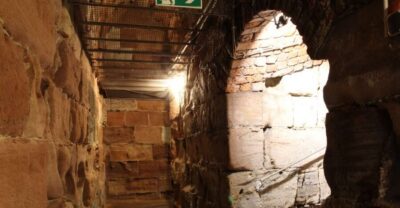
Tunnels and Secret Passages in the City Wall Tour
Read our review →
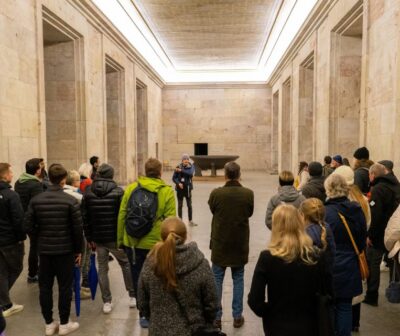
Walking Tour of Former Nazi Party Rally Grounds
Read our review →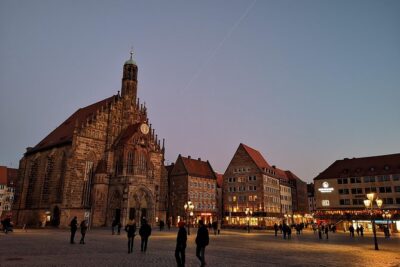
Browse the lists this tour appears in