
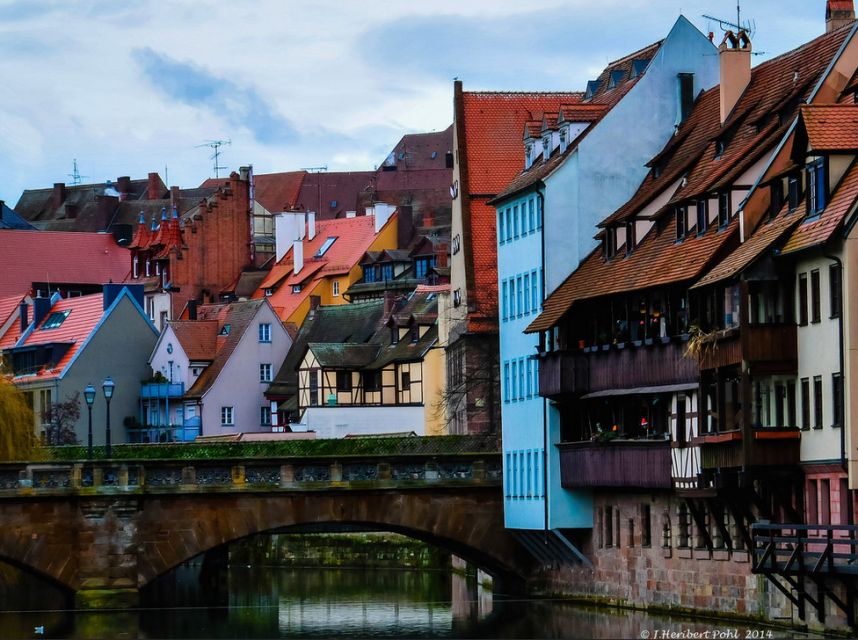
Reviewed · NUREMBERG TOURS
Nuremberg: 1.5-Hour Medieval Tour
Nuremberg’s medieval center is compact, layered, and easy to read on foot. This 1.5-hour walking tour links the castle, Albrecht Dürer’s house, and the two historic halves of town, so you get a useful first look without giving up half a day.
I like the clear route and the focus on people, not just buildings. I also like that the guide connects Nuremberg with Italian influence, a detail many quick city walks skip. The main catch is that the tour runs in German, requires at least 10 participants, and includes no admissions.
In This Review
- Key Points at a Glance
- Why This Short Nuremberg Walk Works
- Meeting at Schöner Brunnen on Hauptmarkt
- Nuremberg Castle and the Burgfreiung
- Following Albrecht Dürer Through His Home City
- The Sebalder and Lorenzer Altstadt
- Venetian Nuremberg and Italian Influence
- Guide Style and Group Size
- Is $23 a Fair Price?
- Who Should Book This Tour?
- Practical Tips Before You Go
- Should You Book It?
- FAQ
- Where does the Nuremberg medieval tour start?
- Where does the tour end?
- How long does the tour last?
- What language is the tour offered in?
- Are entrance fees, food, or public transportation included?
- Is the tour suitable for wheelchair users?
Key Points at a Glance
- Castle and Burgfreiung: Begin near Nuremberg Castle and hear how the fortified area shaped the city.
- Albrecht Dürer’s house: Learn about the artist’s life, work, and difficult times outside a major museum visit.
- Two historic old towns: Walk through the Sebalder and Lorenzer Altstadt, which give Nuremberg its distinct medieval structure.
- Italian connections: The tour explains the influence of Italians on German history and Nuremberg’s development.
- Strong guide feedback: Claudia is praised for bringing history to life and making the route feel personal.
- Simple meeting point: Start and finish at the Schöner Brunnen fountain on Hauptmarkt.
Why This Short Nuremberg Walk Works
Nuremberg can feel like a collection of grand sights until someone explains how the pieces fit together. The castle sits above the old town, Dürer’s house marks the city’s artistic life, and the Sebalder and Lorenzer districts reflect different sides of historic Nuremberg.
This tour gives you that framework in 90 minutes. You are not signing up for a long museum program or a full-day excursion. Instead, you get a brisk introduction to the city’s medieval development, with stories about artists, local personalities, living conditions, and foreign influence.
I like this format for a first afternoon in Nuremberg. You can use the walk to decide where to spend more time later. It also works well if you have limited time and want more than a quick photograph at the castle.
The route is guided in German, so you should be comfortable following a German-speaking explanation. The activity information does not list an English option. A private group is available, but the standard tour requires a minimum of 10 participants, so check the selected date carefully before building your plans around it.
Other Nuremberg days worth putting on the list:
- Nuremberg: City Tour with the Bimmelbahn Train
★ 4.4 · 2,475 reviews - Nuremberg: Old Town Guided Walking Tour
★ 4.6 · 2,416 reviews - Nuremberg: Tunnels and Secret Passages in the City Wall Tour
★ 4.8 · 2,334 reviews
Meeting at Schöner Brunnen on Hauptmarkt
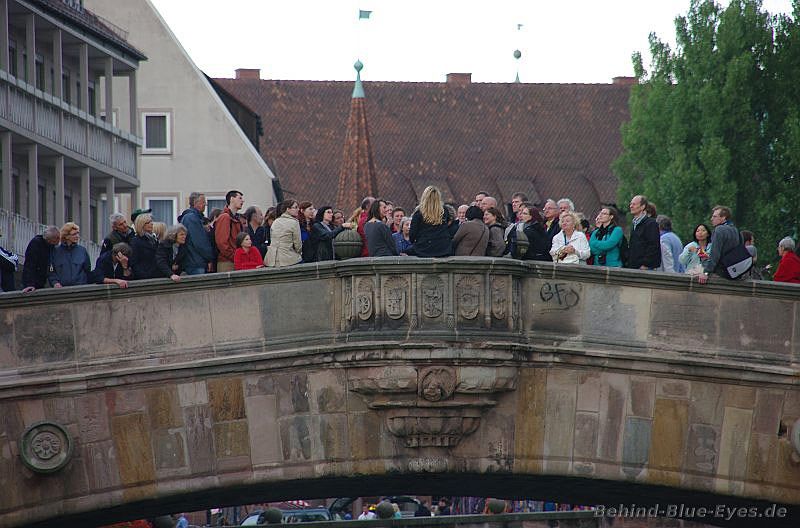
The tour begins at the Schöner Brunnen fountain on Hauptmarkt, one of the easiest central meeting points in Nuremberg. Hauptmarkt gives you a practical place to gather because the fountain is a clear landmark and the route returns here at the end.
Arrive with comfortable shoes and a little spare time. The walk covers historic streets and includes the approach to the castle area, so this is a better fit for people who enjoy moving through a city than for anyone seeking a seated history talk.
Because the start and finish are the same, you can leave luggage plans and onward transport simple. Public transportation is not included, though no transport is needed during the activity itself. You begin in the central old town and stay on foot.
The meeting point also makes the tour easy to pair with your own plans. Afterward, you can continue around Hauptmarkt or use the route as a map for returning to a sight that caught your attention.
Nuremberg Castle and the Burgfreiung
The first major subject is Nuremberg Castle. From the old town, the castle gives the tour a strong opening because it represents the city’s political and defensive importance.
You will hear about the Burgfreiung, the area around the castle. The value here is not simply seeing stone walls and towers. A guide can explain how the castle area related to the city below and why this high point mattered in medieval Nuremberg.
The tour does not include entrance fees, so do not expect an interior castle visit as part of the $23 price. That is worth noting if you want rooms, exhibitions, or tower access. This experience is built around the outside setting and the story told while you walk.
I see that as a reasonable trade for a short city tour. You get the castle as part of a wider route rather than spending the full 90 minutes in one complex. If the castle is your main reason for visiting, you may want to return later and investigate admission options on your own.
The castle stop also helps you understand Nuremberg’s physical shape. From here, the walk turns back toward the streets where famous residents worked and where ordinary people lived. The shift from fortified height to urban lanes gives the tour a natural flow.
Following Albrecht Dürer Through His Home City
Next comes Albrecht Dürer’s house, one of the most personal stops on the route. Dürer is central to Nuremberg’s cultural identity, and the tour uses his home to explain both his work and his life.
You will hear stories about his career, his difficult periods, and the way he fit into Nuremberg’s wider medieval world. That human angle matters. Instead of treating Dürer as a name on a plaque, the guide places him among the personalities, trades, and social pressures of the city.
The tour does not include an entrance fee to the house. You should think of this stop as an exterior visit and a guided explanation unless your guide tells you otherwise. If you want a museum-style look at Dürer’s home and work, plan a separate visit.
I like the choice of Dürer’s house because it breaks up the political story. The castle tells you about power. Dürer’s home shifts the focus to art, reputation, and personal life. In a short tour, those changes of subject help keep the walk from becoming a list of dates.
One named guide associated with the experience is Claudia. Her approach receives especially warm praise for making history feel alive and creating a distinctive tour. You cannot assume Claudia will lead every departure, but her presence suggests the experience can depend strongly on the individual guide.
Same city, a completely different kind of day:
- Nuremberg: Medieval Dungeons Guided Tour
★ 4.8 · 1,726 reviews - Nuremberg: Walking Tour of Former Nazi Party Rally Grounds
★ 4.7 · 1,665 reviews - Medieval Tour in Nuremberg in Spanish
★ 5.0 · 1,374 reviews - Nuremberg: Historischer Kunstbunker WWII Art Bunker Tour
★ 4.8 · 921 reviews
The Sebalder and Lorenzer Altstadt
The walk continues through the Sebalder Altstadt and Lorenzer Altstadt. These are not just labels for a map. They help you understand that historic Nuremberg developed in distinct parts on either side of the river.
The tour explains how the city changed over time and how daily living conditions differ from modern life. That practical social history is one of the best reasons to choose a guided walk. Buildings can survive, but it takes explanation to picture how people used the streets, homes, work areas, and public spaces.
You will also hear about personalities who lived and worked in Nuremberg during the Middle Ages. The supplied information does not name all of them, so expect a range of local stories rather than a fixed list you can preview in advance.
I appreciate this focus because it gives the city more depth without turning the tour into a formal lecture. You move from one district to another while the guide explains how Nuremberg developed. The streets become evidence of change rather than a backdrop for photographs.
The short duration does mean the treatment will be selective. You will not get every church, guild, ruler, or wartime chapter in 90 minutes. That is not a flaw, but you should book this as an overview. Readers seeking an exhaustive study of Nuremberg will need additional tours, museums, or independent reading.
Venetian Nuremberg and Italian Influence
The final part introduces Venetian Nuremberg and the influence of Italians on German history. This is an unusual angle for a basic medieval city walk, and it gives the tour a point of difference.
Nuremberg’s story is not presented as isolated from the rest of Europe. The Italian connection shows how trade, ideas, people, and cultural influence could cross borders in the medieval world. The supplied details do not spell out every example, so the exact emphasis will depend on the guide.
For you, this is a useful reminder to listen for connections rather than only famous names. The tour is not limited to castle walls and local legends. It places Nuremberg within a wider European story.
This section also rounds out the route. You begin with the castle and local power, move to Dürer and cultural life, then finish with outside influence and the city’s wider role. That is a smart structure for a short walk because each part adds a new layer.
Guide Style and Group Size
The strongest praise centers on the guide’s ability to make history understandable and lively. Claudia is singled out by name, with particular appreciation for the way she brought the subject to life and made the experience feel unique. Another comment stresses that a good guide can communicate more in person than a person can pick up from reading alone.
That tells you what to value here. You are paying for interpretation, not admission tickets or transport. The buildings are free to see from the street, but the connections between them are the product you are buying.
The activity is offered in German. If your German is limited, you may miss details, jokes, or names, especially when the guide moves quickly between locations. A private group option may give you a more tailored setting, but the standard details do not confirm a different language or a different route for private bookings.
The minimum group size is 10 people. This matters more than it might first appear. A small party may not be enough to run the tour, so confirm that your chosen date has the required number before relying on it. The available rating of 4.6 from 33 reviews points to a generally strong experience, while the minimum group rule remains the practical issue to watch.
Is $23 a Fair Price?
At $23 per person, the tour is reasonably priced if you want a guided introduction to Nuremberg’s old town. The fee covers the guide, route, and historical explanation. It does not cover food, drinks, public transportation, or admission fees.
The value depends on how you use the 90 minutes. If you would otherwise wander past the castle, Dürer’s house, and the old town without context, the guide can add real value. If you only want to photograph the main sights, you can see much of the route without paying for a tour.
I would compare this with the cost of a longer experience before booking. A 1.5-hour format keeps the price modest and the commitment low, but it also limits the amount of detail. You are buying orientation, not a full study of Nuremberg.
The return to Hauptmarkt helps the value. You do not lose time finding your way back to a distant end point, and you can continue your own sightseeing from the same central area.
Who Should Book This Tour?
I would choose this walk if you want a compact introduction to medieval Nuremberg, prefer hearing stories while walking, and can follow German. It is also a good option for a first visit because it joins the city’s main historic themes in a single route.
It suits people who want:
- A short activity rather than a half-day program
- A guide-led explanation of the castle and old town
- A focus on Dürer and local personalities
- A route covering both Sebalder and Lorenzer Altstadt
- A European angle through Italian influence
- A central start and finish
I would hesitate if you need an English-language tour, use a wheelchair, or want interior visits included. The tour is not suitable for wheelchair users, and entrance fees are separate.
You should also think about the minimum group of 10. If your schedule is tight, a smaller private arrangement may be worth asking about, but the supplied details do not promise specific private-group conditions.
Practical Tips Before You Go
Wear shoes suited to a 90-minute city walk. The route is on foot, and the castle area adds some walking beyond the flat meeting point at Hauptmarkt.
Keep your expectations clear about included services. This is a guided tour only. Bring your own food and drinks, and plan any castle or Dürer’s house admission separately.
Since the guide speaks German, consider preparing a few names in advance: Nuremberg Castle, Burgfreiung, Albrecht Dürer, Sebalder Altstadt, Lorenzer Altstadt, and Venetian Nuremberg. Knowing those terms will make it easier to follow the route.
Check the departure time when selecting your date. The activity lasts 1.5 hours, but starting times vary by availability. Free cancellation is offered up to 24 hours before the activity, and you can reserve now and pay later, which helps if your Nuremberg schedule is still shifting.
Should You Book It?
Book this tour if you want a focused German-language introduction to Nuremberg that connects the castle, Dürer, the two old-town districts, and Italian influence in one compact route. The $23 price is fair for guided context, especially when Claudia or another strong guide turns the city’s buildings into a connected story.
Skip it if you need English, require step-free access, or want paid interiors included. For everyone else, the tour is a useful way to get your bearings fast, learn what makes Nuremberg more than a pretty old town, and decide where to spend the rest of your visit.
FAQ
Where does the Nuremberg medieval tour start?
The tour starts at the Schöner Brunnen fountain on Hauptmarkt square.
Where does the tour end?
The activity ends back at the meeting point on Hauptmarkt.
How long does the tour last?
The guided walking tour lasts 1.5 hours. Starting times depend on availability.
What language is the tour offered in?
The live tour guide speaks German.
Are entrance fees, food, or public transportation included?
No. The tour includes the guided walk only. Food, drinks, entrance fees, and public transportation are not included.
Is the tour suitable for wheelchair users?
No. The activity is not suitable for wheelchair users.
Just added around Nuremberg
- Tour en español al Campo Zeppelin★ 5.0 · 8 reviews
- Stein: Public guided tour of the “Old Mine” museum★ 4.5 · 18 reviews
- “Rotes Bier” and “Blaue Zipfel”. A historical-culinary walk★ 4.4 · 190 reviews
- Nuremberg: Old Town Guided Tour By Bus★ 4.4 · 198 reviews
- Nürnberg kennenlernen: Highlights in der Altstadt★ 4.7 · 189 reviews
- Nuremberg: Bar and Club Tour with Free Shots and Free Entry★ 3.8 · 23 reviews
- Nürnberg Bachelor(ette) Party with Night PubCrawl★ 4.2 · 5 reviews
- Nuremberg: WWII Tour, Courtroom 600 and 3rd Reich Sites★ 4.6 · 94 reviews
Nuremberg Tours, compared.
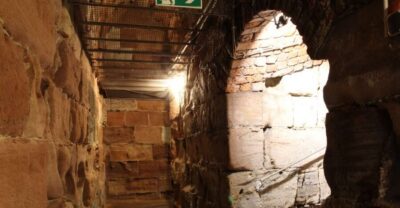
Tunnels and Secret Passages in the City Wall Tour
Read our review →
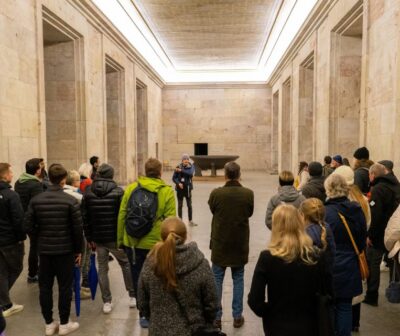
Walking Tour of Former Nazi Party Rally Grounds
Read our review →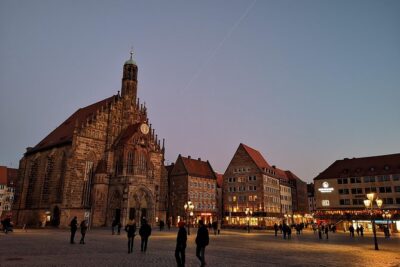
Browse the lists this tour appears in