
Reviewed · BERLIN TOURS
Nazi Berlin and the Jewish Community Tour
Berlin’s Nazi past is not confined to one museum. It is spread across ordinary streets, damaged buildings, former government offices, memorials, and Jewish community sites. This three-hour tour connects those places into one difficult but important story, from Hitler’s rise in 1933 to the deportation of Berlin Jews and Germany’s defeat in 1945.
I like the way the tour links the Nazi headquarters and Operation T4 with the German Resistance Memorial. I also like that it continues into the old Jewish quarter, where the New Synagogue and the Otto Weidt museum show both the long life of Berlin’s Jewish community and the courage of individuals who tried to protect people under Nazi rule.
The main drawback is pace. You cover several areas by public transport and on foot in three hours, so some stops are necessarily brief. You also need an AB public transport ticket in addition to the $27 tour price.
In This Review
- Key points to know before booking
- Why this three-hour route works
- Nazi headquarters and Hitler’s rise in 1933
- Operation T4 and the murder of disabled citizens
- German Resistance Memorial and Operation Valkyrie
- Anhalter Bahnhof and Berlin’s wartime scars
- Varian Fry and the work of rescue
- Entering Berlin’s old Jewish quarter
- Forced labor and the deportation of Berlin Jews
- Otto Weidt’s workshop and the final story
- What the $27 price really covers
- Who should book this Berlin history tour
- Should you book it?
- FAQ
- How long does the Nazi Berlin and Jewish Community Tour last?
- What languages are available?
- Do I need a public transport ticket?
- What is included in the $27 price?
- Is the tour wheelchair accessible?
- Can I cancel the tour for a full refund?
Key points to know before booking
- Operation T4 adds an important but often overlooked subject: You learn how Nazi officials planned the sterilization and murder of disabled people.
- The German Resistance Memorial brings the 20-minute history lesson close to the actual site: This is where Operation Valkyrie was directed.
- The New Synagogue’s golden dome is one of Berlin’s most recognizable sights: The surrounding Jewish quarter adds much-needed historical context.
- Varian Fry’s memorial broadens the story beyond Germany: Fry helped more than 3,000 persecuted Jews escape Nazi-occupied Europe.
- The Otto Weidt museum gives the tour a personal ending: You hear how a workshop owner protected Jewish workers and hid some of them.
- Lorenzo is a guide to look out for: The Italian-speaking guide is described as serious, well prepared, and engaging.
Why this three-hour route works
A good Berlin history tour needs to do more than point at ruins and repeat dates. You need to understand how dictatorship took hold, how ordinary institutions supported persecution, and how individuals resisted or helped others. This route tries to do all three.
The first portion focuses on Nazi power and the machinery behind it. The second shifts toward resistance and the final days of the war. The last portion moves to the Jewish district, where the focus becomes community life, forced labor, deportation, and rescue.
That change in subject is useful. You are not left with a flat story in which Berlin is only a city of Nazi monuments. You see the Jewish community that existed before the dictatorship, the people who fought against Hitler, and the people who found ways to help others despite enormous danger.
The tour is conducted in French or Italian. That matters more than it might seem. The subject includes political terms, military operations, and painful personal stories. Hearing the explanation in a language you understand well can make the difference between following the story and simply looking at memorials.
Other Berlin days worth putting on the list:
- Berlin: Reichstag, Dome and Government District Guided Tour
★ 4.7 · 18,288 reviews - Berlin: 1-Hour City Tour by Boat with Guaranteed Seating
★ 4.3 · 16,993 reviews - Berlin: Boat Tour Along the River Spree
★ 4.4 · 11,252 reviews
Nazi headquarters and Hitler’s rise in 1933
The opening section looks at how Hitler came to power in 1933. The value here is the focus on how the dictatorship became possible, rather than treating it as a sudden event caused by one man alone.
You can expect an explanation of the political shift that allowed the Nazis to take control and the way power was then used to silence opposition. The tour’s references to former Nazi headquarters help place this story in the physical city. Berlin was not just the backdrop. It was the administrative center from which orders were made, carried out, and spread.
This is an important early stop because it gives you a framework for everything that follows. Without it, the later stories of deportation, forced labor, and resistance can feel like separate episodes. Here, you begin to see the links.
The tour also points out historic buildings that still show scars from World War II fighting. These traces are modest compared with Berlin’s large memorials, but they can be more unsettling because they appear on buildings and streets used for daily life.
The first guided stop lasts about 20 minutes. That is enough for a clear explanation, but not enough for every detail. I would listen for the main chain of events and save minor questions for the guide during the transport portions.
Operation T4 and the murder of disabled citizens
One of the tour’s strongest subjects is the command center of Operation T4. Nazi officials planned the forced sterilization and murder of tens of thousands of disabled people through this program.
This is often left out of short city tours, yet it shows how Nazi persecution developed methods, offices, and procedures before the full murder of Europe’s Jews. The subject is grim, but it helps you understand that mass violence relied on paperwork, medical authority, transportation systems, and government offices, not only on battlefield brutality.
The stop is also useful because it widens your view of Nazi persecution. The victims were not targeted for one reason alone. Disabled German citizens were attacked under a racial and social ideology that judged some lives as less valuable. The tour places this policy beside the wider history of dictatorship and state control.
You should expect a serious tone here. This is not a quick photo stop, and it is not presented as a dramatic story for entertainment. The point is to understand a system that turned prejudice into official action.
German Resistance Memorial and Operation Valkyrie
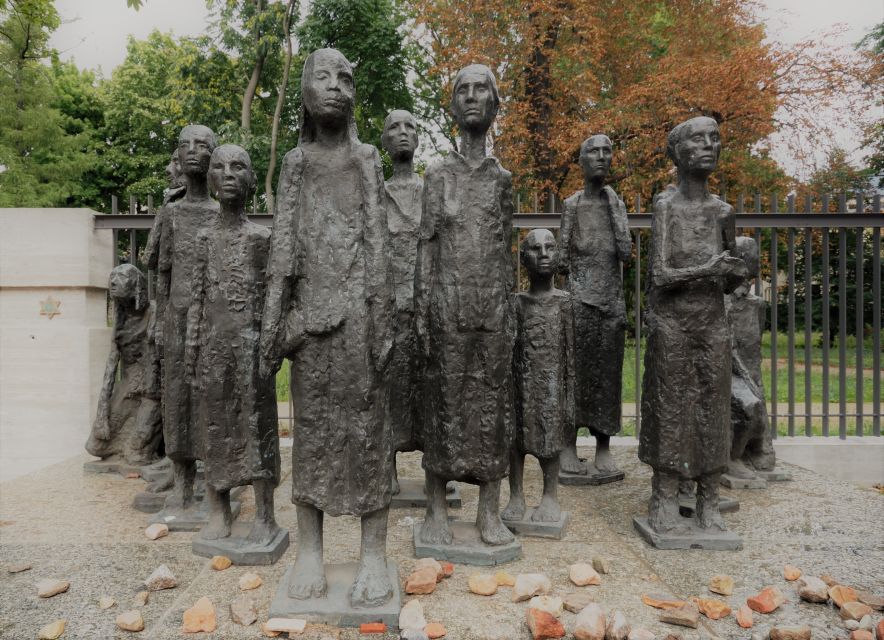
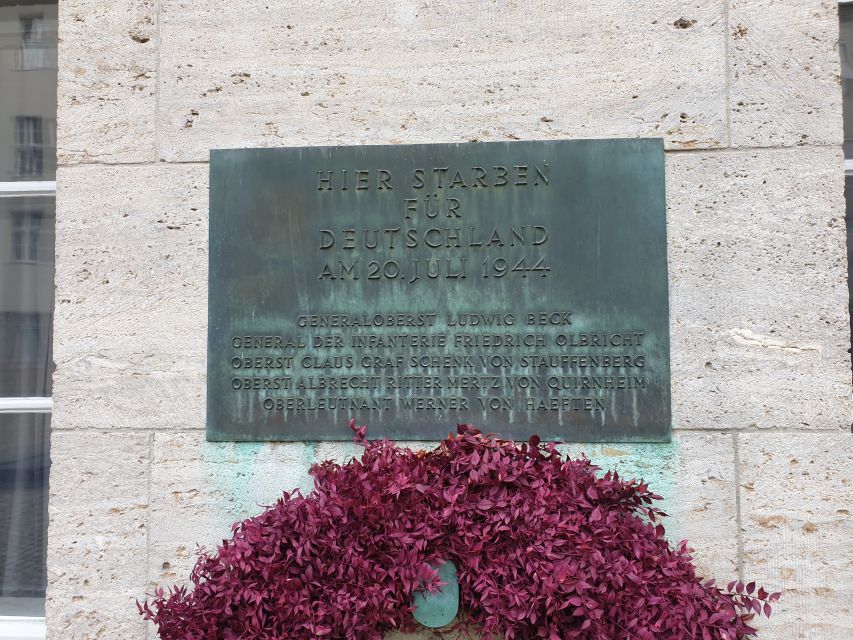
The German Resistance Memorial is another major stop, with about 20 minutes of guided explanation. It honors Germans who opposed and fought against Nazism, including the people connected with Operation Valkyrie.
The site matters because it complicates the easy idea that all Germans supported Hitler. Resistance took many forms, and the tour uses this location to discuss those who tried to bring down the regime from within.
You also learn that Operation Valkyrie was directed from this site. That physical connection gives the subject more weight than a general discussion of the failed attempt to overthrow Hitler. You are standing where plans were made, not simply hearing about them in a distant museum.
Still, it is worth keeping expectations sensible. A 20-minute stop cannot provide a full survey of German resistance. You get an introduction and a sense of the memorial’s purpose. If this is your main interest, plan extra time at the site on another day.
Same city, a completely different kind of day:
- Discover Berlin Half-Day Walking Tour
★ 5.0 · 9,624 reviews - Berlin: Hop-on Hop-off Bus Tour with Live Commentary
★ 4.3 · 8,579 reviews - Berlin: Government District around the Reichstag Guided Tour
★ 4.7 · 8,447 reviews - Berlin: Reichstag, Plenary Chamber, Cupola & Government Tour
★ 4.6 · 8,422 reviews
Anhalter Bahnhof and Berlin’s wartime scars
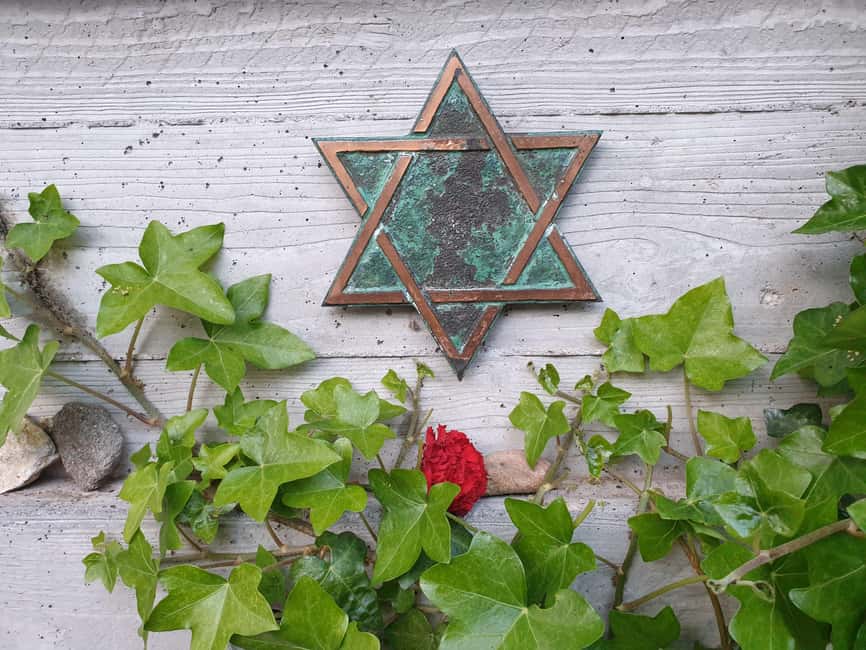
The route continues by bus for about 10 minutes to Anhalter Bahnhof, followed by a guided visit of roughly 10 minutes. The former station is tied to Berlin’s wartime story and helps explain how the city changed during the conflict.
The tour also revisits the final period before Germany surrendered in May 1945. Ruins and damaged structures along the route give you a visual connection to those last weeks.
Anhalter Bahnhof is not presented as a long museum visit. Instead, it works as part of the city walk, linking transportation, war damage, and the collapse of Nazi Germany. The short stop may feel rushed if you want architectural detail, but it keeps the overall route moving toward the Jewish quarter.
The transfer by train takes about 10 minutes. Since you use public transport, your AB ticket is essential. The tour price does not cover that ticket, so buy or arrange it before the start. You will want comfortable shoes as well, since the day combines walking, stations, streets, and standing at outdoor sites.
Varian Fry and the work of rescue
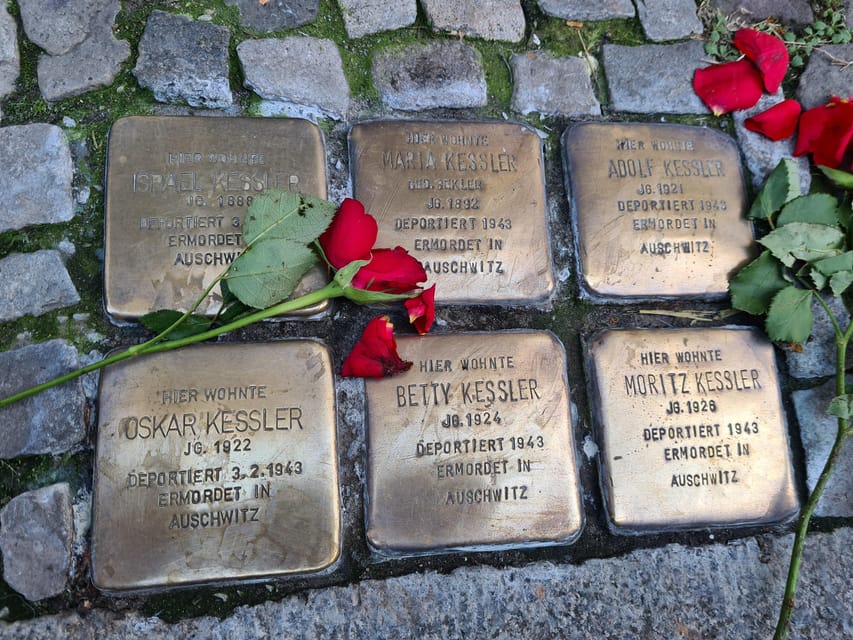
A lesser-known memorial on the route honors Varian Fry, an American journalist who helped more than 3,000 persecuted Jews escape Nazi-occupied Europe. Those aided by his network included painter Marc Chagall, philosopher Hannah Arendt, and writer Heinrich Mann.
This is one of the tour’s most human stops. The broader Nazi story can become overwhelming because the numbers are so large. Fry’s work gives you a way to understand rescue through individual decisions, contacts, documents, and escape routes.
The memorial also reminds you that resistance and rescue did not always look like armed revolt. Some people worked through underground networks, safe places, and border crossings. Their actions still carried serious risk.
The details provided for the route do not specify a separate long visit at this memorial, so expect it to be part of the guided city walk rather than a full museum stop. That is fine for an introduction, though anyone especially interested in Fry should note the name and return for more reading later.
Entering Berlin’s old Jewish quarter
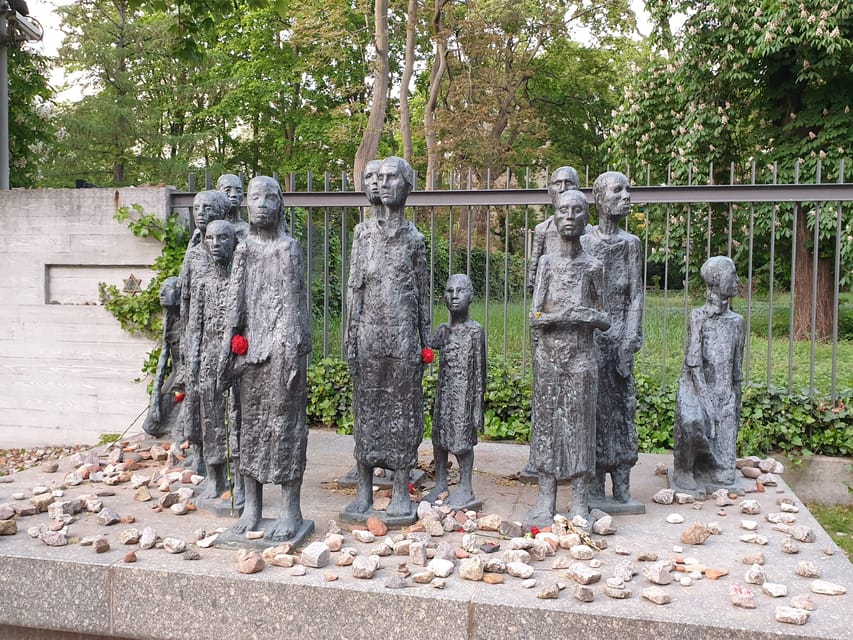
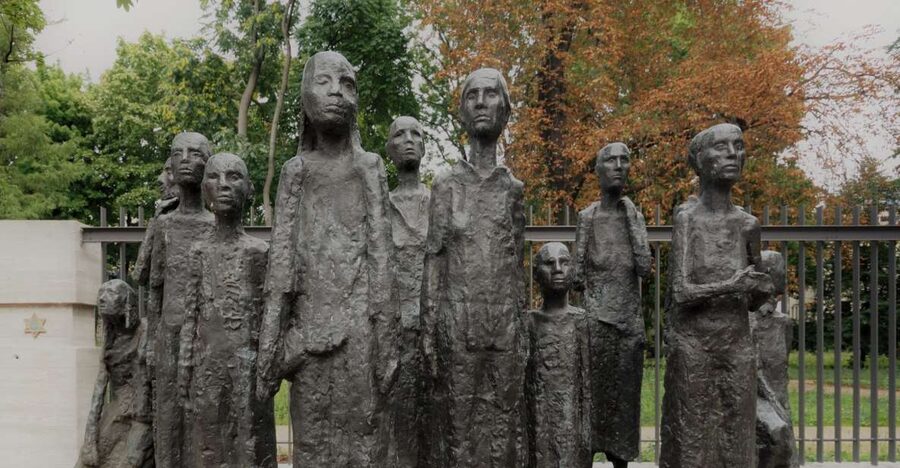
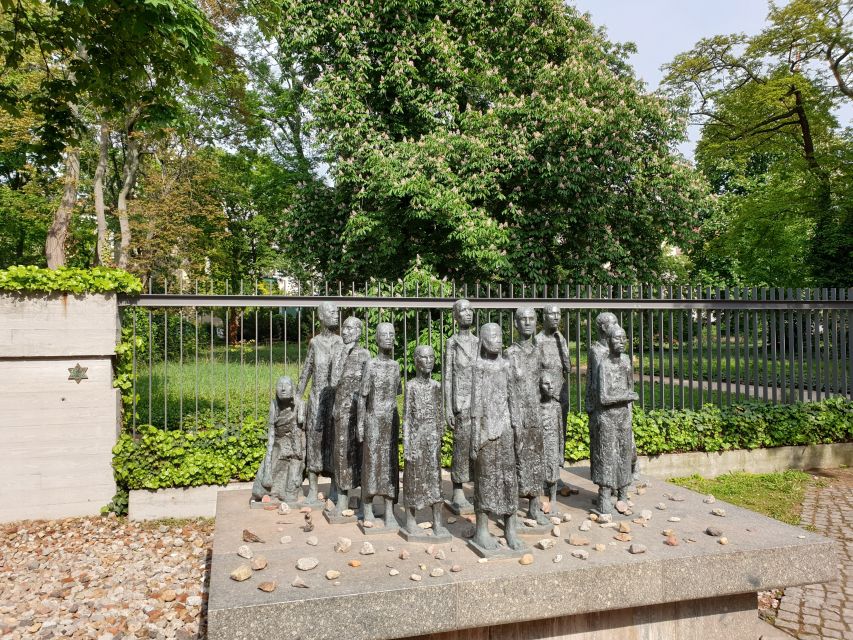
After the Nazi and wartime sites, the tour moves into the historic district of Berlin’s Jewish community. This shift is central to the experience. You learn about Jewish life in the city before the Nazis came to power, then follow the destruction of that community through forced labor and deportation.
The route includes the oldest Jewish cemetery in Berlin. The cemetery offers a physical reminder that Jewish life in Berlin began long before the 20th-century catastrophe. It helps prevent the common mistake of treating the Jewish community only as a victim of Nazi persecution, rather than as a longstanding part of the city.
You then see the New Synagogue, also known as the Jewish Centre, with its striking golden dome. The building dates from the 19th century and is one of the most memorable sights on the tour.
The guided stop at the New Synagogue lasts about 15 minutes. You may not have time for a full architectural study, but the guide can place the building within the story of Berlin’s Jewish community and the damage done during the Nazi era.
This section is especially useful if you have walked through Berlin’s grand central districts and wondered where Jewish Berlin fits into the city’s story. The answer is here in streets, cemetery grounds, synagogue remains, and memorial traces.
Forced labor and the deportation of Berlin Jews
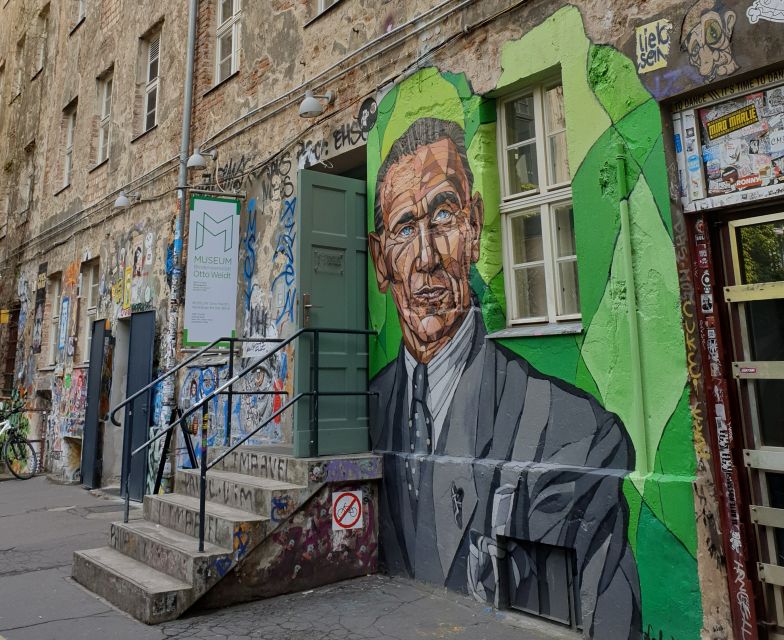
The tour explains the mechanisms of forced labor and the deportation of Berlin Jews during World War II. These subjects can sound abstract in a lecture, but the old Jewish quarter gives them a location.
You learn how persecution moved from discrimination to control, then to forced work and deportation. That progression is one of the most important lessons in the tour. It shows that the Holocaust was not created in one step. Policies became harsher, institutions became involved, and choices that once seemed impossible were normalized through law and administration.
The guide’s role is particularly important here. A French- or Italian-speaking guide must make difficult political and historical material clear without softening it. Lorenzo, when leading the tour, is noted for combining preparation with an engaging manner. That balance suits this subject. You need facts, but you also need a guide who can keep the story connected to real people.
The itinerary includes another guided portion of about 20 minutes in this district. As with the other short stops, you will get a focused introduction rather than every available detail. I would resist trying to photograph everything and instead listen closely to the sequence of events.
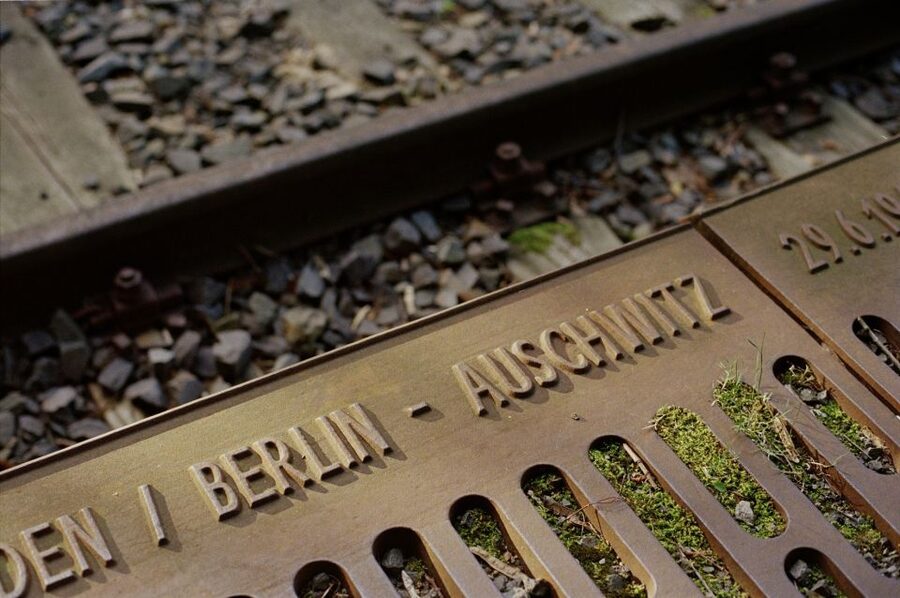
Otto Weidt’s workshop and the final story
The tour ends at the Museum Blindenwerkstatt Otto Weidt, also called the Otto Weidt Workshop for the Blind. This museum tells the story of Otto Weidt, recognized as a Righteous Among the Nations for his efforts to protect Jewish workers from persecution and deportation.
Weidt ran a workshop that employed blind and deaf Jewish people. As the threat grew, he found places for some workers to hide, including spaces on the workshop premises. The museum now tells that story in the setting connected to those efforts.
The final guided visit lasts about 15 minutes. That is brief, but the museum is a fitting ending because it brings the tour down to the scale of one workshop and one person’s decisions. After the large subjects of Nazi administration, war, and deportation, you finish with a story about practical courage.
Do not expect the museum to erase the bleakness of the earlier stops. It should not. Its value is that it shows what protection could look like under pressure: using a workplace, making choices for specific people, and taking risks when the consequences were severe.
Because the tour ends there and returns to the meeting point, you may want to ask the guide about the best way back or about spending more time in the museum. The supplied details do not state how long you can remain after the guided visit, so check on the day if you want a longer visit.
What the $27 price really covers
At $27 per person, this is a reasonably priced introduction to several Berlin history sites. The guide’s service is included, and the route covers subjects that would be hard to connect on your own in only three hours.
The value is strongest if you want a clear overview and help with the public transport route. You are not paying for a single major museum admission or an extended visit at one site. You are paying for interpretation, movement between districts, and a connected account of Nazi power, Jewish Berlin, resistance, and rescue.
Remember to add the cost of an AB all-day public transport ticket. That is a required extra, not a minor optional detail. The tour includes bus and train transfers, so the ticket is part of the basic cost of taking part.
The 4.8 rating from 55 ratings suggests the experience has worked well for many people, and the specific praise for Lorenzo points to the importance of the guide. Since the subject is demanding, a strong guide can make the $27 feel worthwhile. If your guide is less engaging, the short stops and transport changes may feel more noticeable.
Who should book this Berlin history tour
I would recommend this tour to you if you want a serious introduction to Berlin’s Nazi past but do not want to spend the entire day in one museum. It suits first-time Berlin visitors who need the basic map of the city’s memorials and historical districts.
It is also a good fit if you speak French or Italian and want the tour delivered in one of those languages. The mix of outdoor sites, public transport, and museums gives you a fuller sense of Berlin than a single indoor exhibition.
You may want a different plan if you prefer long museum visits, extensive free time, or a slow architectural tour. The schedule is active, and several guided stops last only 10 to 20 minutes. You will move on before every question has been answered.
The wheelchair-accessible format is a useful feature, though the route does include public transport and walking. Ask about the exact meeting point and route details if you need to plan around particular mobility needs.
Should you book it?
Book this tour if you want the Nazi headquarters, German resistance, Jewish Berlin, and Otto Weidt’s rescue story explained as one connected history. The Varian Fry memorial and Operation T4 discussion make it more substantial than a basic Hitler-era sightseeing walk.
Skip it if you want a quiet, museum-heavy day or need lots of time at each location. For most visitors with three hours to spare, $27 plus the required AB ticket is fair value, especially if you are assigned a guide with the clarity and warmth associated with Lorenzo.
FAQ
How long does the Nazi Berlin and Jewish Community Tour last?
The tour lasts three hours. Starting times depend on availability and the option you book.
What languages are available?
The live tour guide is available in French or Italian.
Do I need a public transport ticket?
Yes. You need an AB public transport ticket, and it is not included in the tour price. The route uses both bus and train.
What is included in the $27 price?
The tour guide is included. The required AB public transport ticket is not included.
Is the tour wheelchair accessible?
Yes, the activity is listed as wheelchair accessible.
Can I cancel the tour for a full refund?
You can cancel up to 24 hours in advance for a full refund. You can also reserve now and pay later, according to the booking terms.
Just added around Berlin
- Love and War in Berlin: Self-Guided Story Puzzle Walk★ 5.0 · 7 reviews
- Rickshaw Tours Berlin – Groups of up to 16 people with several rickshaws★ 4.0 · 97 reviews
- Walking on the Wall: 3-Hour Tour in Berlin★ 4.5 · 34 reviews
- eSIM for Germany and 34 European Countries★ 4.5 · 16 reviews
- Warnemuende Shore Excursion: Berlin Private Sightseeing Tour from Rostock★ 5.0 · 4 reviews
- Your ticket to The Wall Museum Berlin★ 3.0 · 60 reviews
- Warnemuende Shore Excursion: Private Berlin Tour★ 4.5 · 27 reviews
- Berlin’s Gay, Lesbian, and Queer Scene Small-Group Walking Tour★ 4.5 · 66 reviews
Berlin Tours, compared.

Reichstag, Dome and Government District Guided Tour
Read our review →
1-Hour City Tour by Boat with Guaranteed Seating
Read our review →


Reichstag, Plenary Chamber, Cupola & Government Tour
Read our review →

