
Reviewed · CONCENTRATION CAMP MEMORIAL TOURS
Munich World War II Sites Including Dachau Concentration Camp
Dachau Concentration Camp Memorial Site is the heart of this long day, but the tour gains force by placing it beside the Munich locations where the Nazi movement first took shape. You travel by public train and bus to Dachau, then walk through central Munich to see the former Gestapo headquarters, Hitler’s early Nazi Party connections, and the site of the 1923 Beer Hall Putsch.
I like the full historical arc, from political agitation in Munich to the machinery of imprisonment at Dachau. I also like the care many guides bring to this difficult subject. Jake, Ian, Scott, Steve, Connie, and others are praised for making the material clear, serious, and human without turning the day into a dry lecture.
The catch is simple: this is an eight-and-a-half-hour day with a lot of standing and walking. Some people find the information intense, and a few feel rushed at Dachau or overwhelmed by the amount of detail. Bring water, dress for the weather, and book this only if you have the energy for a demanding day.
In This Review
- Key points to know before booking
- Why combine Dachau with Munich’s Nazi-era sites?
- Meeting at Munich Central Station at 9 a.m.
- Dachau Memorial Site: photographs, documents, and reconstructed buildings
- The guide makes the Dachau visit matter
- A short break before the Munich walking tour
- Munich’s Third Reich walk through the old town
- Expect a serious amount of walking
- Is $105.21 good value?
- Who should book this experience?
- Final verdict: book it for context, not comfort
- FAQ
- How long does the Munich and Dachau tour last?
- Where does the tour begin?
- How do I get to Dachau?
- Is transportation included?
- How much time do I spend at Dachau?
- What places are covered on the Munich walking tour?
- Is lunch included?
- Can children join the tour?
- What happens if I need to cancel?
Key points to know before booking
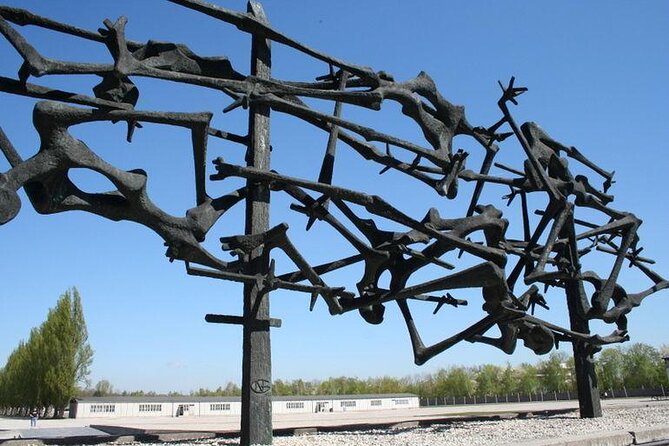
- Dachau comes with a full memorial-site visit: Expect photographs, documents, reconstructed cell blocks, the crematorium, and the former administration area.
- Munich adds the political backstory: The city walk covers Königsplatz, Marienplatz, the former Gestapo headquarters, and the Beer Hall Putsch site.
- Public transport is part of the day: You go by train from München Hauptbahnhof, then continue by bus to Dachau.
- Two tour sections make up one long experience: The Dachau visit and Munich walking tour are separated by a short break for lunch or rest.
- The subject is handled with care: Guides including Jake, Ian, Connie, Scott, Nick, and Steve receive especially strong praise for clear and respectful presentations.
- The tour is for ages 13 and up: The maximum group size is 25, and the tour is offered in English with a mobile ticket.
Why combine Dachau with Munich’s Nazi-era sites?
A visit to Dachau can feel separate from the city unless you understand how Munich became an important center of the Nazi movement. This tour connects the two.
In Munich, you look at the political rise of Adolf Hitler and the Third Reich through streets and buildings in the old town. At Dachau, you confront the results of that ideology in a memorial setting. The combination gives you both the public story of power and the private suffering caused by it.
I find that useful because the Munich portion is not just a sightseeing walk. It explains how a political movement grew, how it used public spaces, and how ordinary buildings became tied to police power, propaganda, and violence. Dachau then gives that story a physical place.
The connection also saves planning time. You do not need to arrange a separate visit to Dachau or work out the train and bus journey yourself. At the same time, this format asks you to absorb a great deal in one day. If you prefer slow museum visits and long pauses, separate half-day tours may suit you better.
More Concentration Camp Memorial Tours in Munich
- Dachau Concentration Camp Memorial Site Tour from Munich by Train
★ 4.5 · 5,637 reviews - From Munich: Dachau Memorial Site Day Tour
★ 4.8 · 2,723 reviews - From Munich: Dachau Memorial Site Half-Day Trip
★ 4.7 · 2,526 reviews
Meeting at Munich Central Station at 9 a.m.
The day begins at the Radius Tours office at Dachauer Str. 4, near München Hauptbahnhof. The meeting time is 9 a.m., so you should allow enough time to find the office and check in before the group leaves.
The central station location is practical. You can reach it easily from other parts of Munich, and it gives the group direct access to the rail network. After meeting the guide, you board a train north toward Dachau.
The transport is public rather than a private coach. You continue from the train to the memorial site by bus, and the bus can become crowded. That is worth knowing if you expect a quiet, door-to-door transfer.
Still, the public route has two useful benefits. It keeps the price at a fairly accessible level, and it shows you how Dachau connects to modern Munich rather than placing the memorial in a sealed tour bubble. The transport arrangements are handled by the tour, so you are not left to work out the tickets and connections alone.
Dachau Memorial Site: photographs, documents, and reconstructed buildings
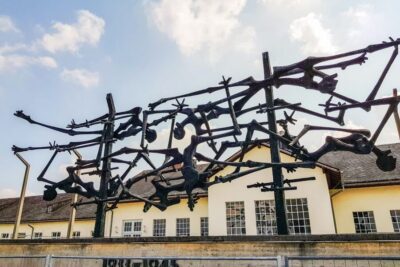
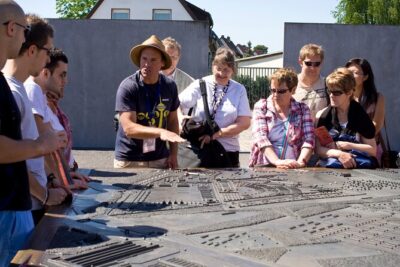
The Dachau portion lasts about two and a half to three hours, with roughly three hours listed for the memorial site. The guide takes you through the camp grounds and museum, explaining the site’s role as the first Nazi concentration camp in Germany and its later use as a model for other camps.
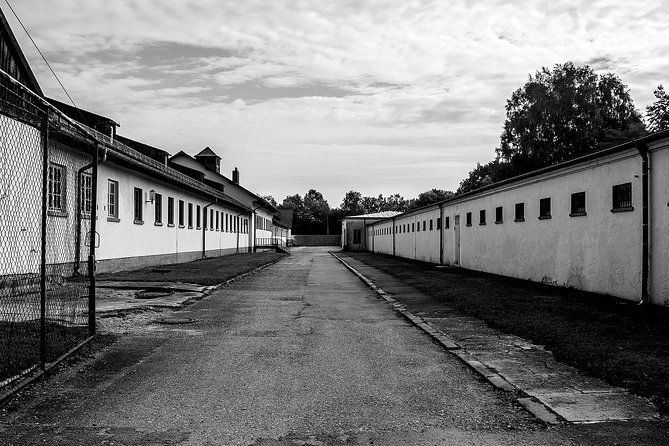
You see photographs and documents, reconstructed cell blocks, the crematorium, and the former administration headquarters. Some buildings and elements have been reconstructed or no longer exist, so this is not an untouched camp frozen in time. That can surprise you if you expect every part of the site to be original.
The museum and remaining structures do important work together. Documents and photographs provide evidence and individual stories, while the buildings help you understand the scale and organization of the camp. The guide fills in the links between what you see and the wider Nazi system.
The experience is not designed as light sightseeing. You will spend time standing, walking outdoors, and listening in places where the subject matter can feel heavy. Connie, for example, is praised for using quotations from people who were imprisoned there and for finding shade and places to sit during hot weather. That kind of attention matters on a site where the emotional weight can easily become exhausting.
The crematorium area is especially difficult for many people. A good guide needs to explain what happened without sensational treatment, and the strongest guide feedback centers on that balance. Jake, Ian, Scott, Emmett, and Nick are all singled out for combining strong subject knowledge with a respectful manner.
You should also expect a set route and a limited amount of time. Three hours gives you a solid introduction, but it may not allow you to read every display at length. If you want to examine every document and sign on your own, a self-guided return visit could make sense.
The guide makes the Dachau visit matter
This is the part of the tour where guide quality matters most. The site contains a great deal of information, and the guide must choose what to explain, what to pause over, and what to leave for the museum displays.
The best reported experiences name guides such as Jake, Ian, Scott, Emmett, Nick, and Connie. They are praised for explaining the history clearly, keeping the group together, answering questions, and treating the site with respect. Emmett is also noted for managing the train and bus connections and providing regular bathroom breaks.
Guide assignments can change, so you should not book on the assumption that one named guide will lead your group. The useful point is that the tour depends heavily on the individual leading it. A strong guide can give you context that is hard to assemble alone. A less engaging presentation may feel like too many facts delivered too quickly.
That unevenness is the main reason I would keep expectations sensible. Most of the guide feedback is highly favorable, but one city walk was described as dull and difficult to hear, while another Dachau visit was considered too rushed. The subject is serious, and the amount of material is large. Your experience will improve if you ask questions and tell the guide when you cannot hear.
Same city, a completely different kind of day:
- From Munich: Neuschwanstein & Linderhof Castle Full-Day Trip
★ 4.5 · 12,494 reviews - Neuschwanstein & Linderhof Castle-Fairytale Day Tour from Munich
★ 4.5 · 7,275 reviews - Munich: Third Reich & WWII Walking Tour
★ 4.6 · 6,181 reviews - Neuschwanstein Castle Tour from Munich
★ 4.5 · 5,117 reviews
A short break before the Munich walking tour
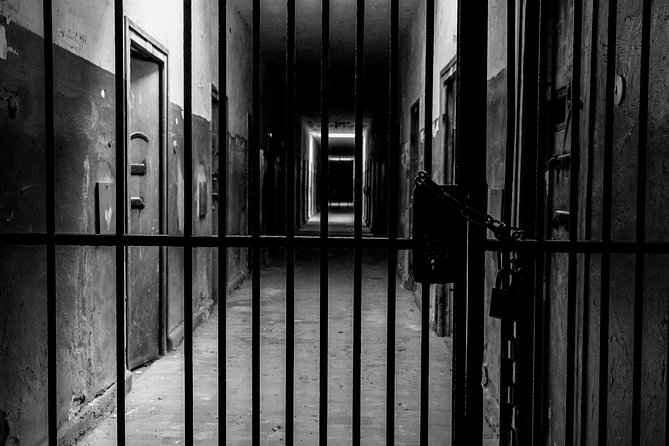
After returning to Munich, the two parts of the day are separated by a brief break. You have time to eat lunch at your own expense, use the facilities, and rest your feet before joining the second guide.
This pause is necessary rather than decorative. By this point, you will have spent hours on public transport, walking, and standing at Dachau. Use the break well. Eat something, refill your water, and bring a layer if the weather is cool.
Food and drinks are not included. Hotel pickup and drop-off are not included either, so you handle your own journey to the morning meeting point and after the tour ends.
Munich’s Third Reich walk through the old town
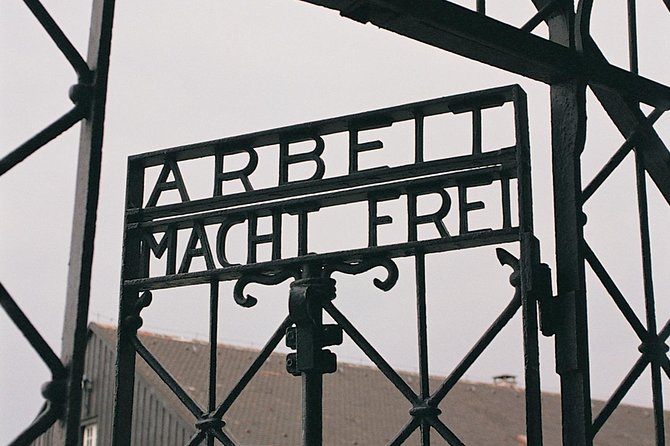
The afternoon walking tour lasts about two and a half hours. It takes you through Munich’s historic center, including Marienplatz and other locations linked to the rise and fall of Nazi Germany.
One important stop is the building where Hitler first joined the Nazi Party. Another is the former Gestapo headquarters, which links the political story to the secret police system. You also visit the place connected with the Beer Hall Putsch, or Munich Putsch, of 1923.
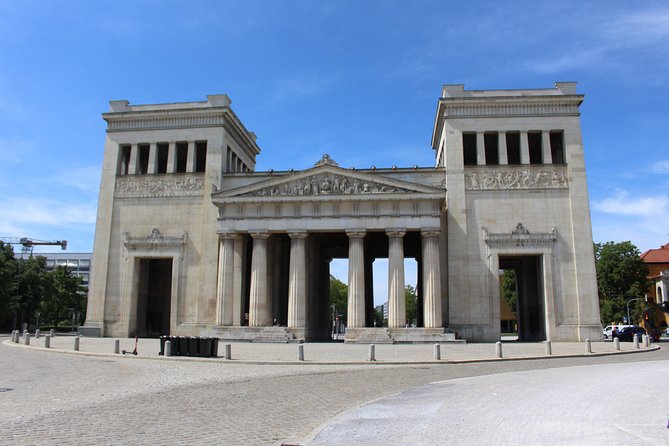
Königsplatz is another major stop. It served as a famous Nazi Party marching ground, and the space helps you understand how architecture and public ceremony were used to project power. The tour ends around Königsplatz, close to Munich Central Station, with the route also described as returning to the Radius Tours office.
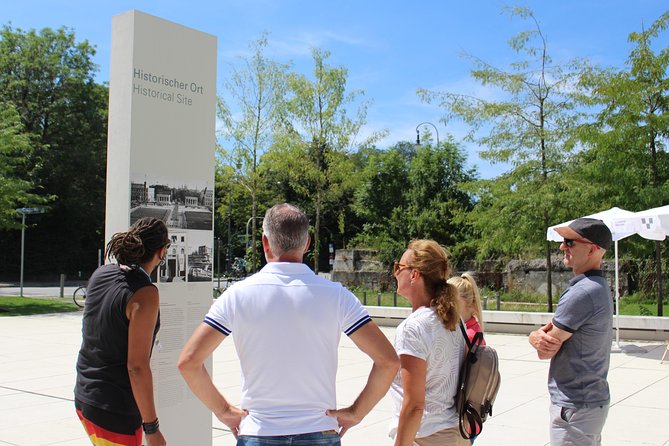
Much of the wartime city has changed. Some buildings were damaged, rebuilt, or stripped of their Nazi-era features. Guides sometimes use old photographs to show the difference between the former appearance and what you see today. That comparison is valuable because it explains why some stops may not look dramatic at first glance.
The walk is less about preserved Nazi architecture than about location and context. You might pass a normal-looking street corner and learn that it once housed a powerful office or witnessed a key political event. Without a guide, many of these connections would be easy to miss.
Expect a serious amount of walking
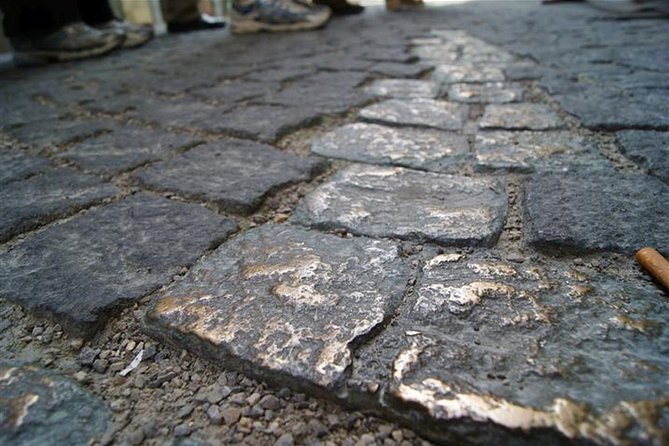
The distance is not given, but the practical warning is clear: you spend much of the day on foot. The Dachau visit includes outdoor walking and standing, and the Munich section moves through the city center for roughly two and a half hours.
The day can be physically demanding in hot, cold, or wet weather. Wear comfortable shoes and clothing suited to the forecast. Carry water and a snack, since food is not included and breaks are limited.
Several people find the pace brisk, particularly during the city tour. If you walk slowly or need frequent sitting breaks, tell the guide early. The group size can reach 25, which may make it harder for everyone to hear or stay close together in busy city areas.
One practical criticism concerns sound. City traffic, echoes, and group movement can make a guide difficult to hear. Stay near the guide and speak up when you miss an explanation. The operator does not list headsets as part of the experience.
Is $105.21 good value?
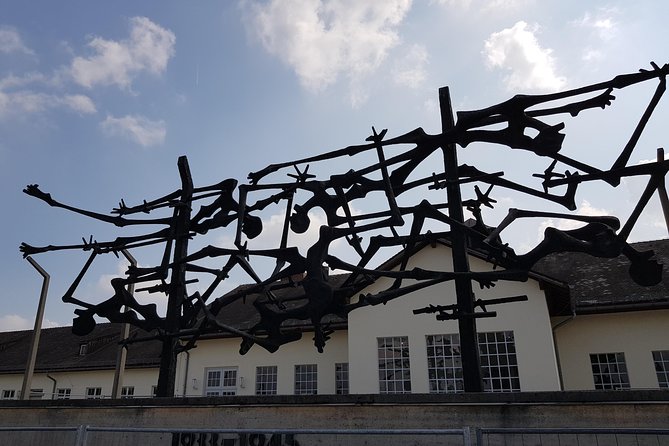
At $105.21 per person, the price is reasonable for a full day that combines two substantial tours, a local guide, and the Dachau visit. You are paying for the organization as much as the commentary: the meeting arrangements, public transport connections, site route, and transition between two separate sections.
The value is strongest if you have limited time in Munich and want a structured introduction to the city’s Nazi-era history. You see key Munich locations and Dachau in one booking, rather than spending time arranging transport and finding the relevant sites yourself.
The value is weaker if you want to read every museum panel, stop frequently for photographs, or explore Dachau at your own pace. The three-hour memorial visit gives you a meaningful overview, but it cannot cover everything in detail.
I would also factor in the physical cost. This is not an easy sightseeing day with long café stops. You should be ready for public transport, outdoor walking, standing, and a dense flow of historical information.
Who should book this experience?
I would recommend it to anyone with a serious interest in World War II, the Holocaust, modern German history, or the growth of extremist politics. It also suits you if you have only one or two days in Munich and want the major Nazi-era sites explained in context.
The age limit matters. Nobody under 13 can attend, and proof of age is required. Most people can participate, but the day is best for anyone comfortable with extended walking and emotionally difficult subject matter.
I would hesitate if you are looking for a relaxed city tour, have limited mobility, or dislike fixed schedules. I would also think twice about combining both sections if you already know the subject well and prefer quiet, independent study.
The strongest reason to choose this tour is the pairing of places. Munich shows how the movement gained ground. Dachau shows the human consequences. That is a difficult lesson, but the structure gives the day purpose.
Final verdict: book it for context, not comfort
Book this tour if you want a serious, efficient introduction to Munich’s Nazi-era history and Dachau, and if you value a guide who can connect documents, buildings, political events, and personal accounts. The best guides, including Jake, Ian, Scott, Steve, Connie, and Nick, are praised for making a painful subject clear and respectful.
Skip it if you want a slow visit or need plenty of sitting time. You may prefer separate tours, with more hours reserved for Dachau’s museum.
For most visitors with a full day available, I consider this a worthwhile use of time. It is long, intense, and not always perfectly paced, but it brings together two parts of the story that are far more meaningful when understood side by side.
FAQ
How long does the Munich and Dachau tour last?
The experience lasts approximately eight hours and 30 minutes, beginning at 9 a.m. and generally finishing around the late afternoon or early evening.
Where does the tour begin?
You meet at the Radius Tours office at Dachauer Str. 4, 80335 Munich, near München Hauptbahnhof.
How do I get to Dachau?
The group travels by public train from Munich’s main railway station and then continues by city bus to the Dachau Concentration Camp Memorial Site.
Is transportation included?
The tour includes the organized train and bus journey to Dachau and back as part of the group experience. Hotel pickup and drop-off are not included.
How much time do I spend at Dachau?
The guided visit to the Dachau Memorial Site lasts about two and a half to three hours.
What places are covered on the Munich walking tour?
The walk includes locations in Munich’s old town, including Marienplatz, Königsplatz, the former Gestapo headquarters, the building where Hitler joined the Nazi Party, and the site of the 1923 Beer Hall Putsch.
Is lunch included?
No. Food and drinks are not included, but the two tour sections are separated by a short break when you can buy lunch.
Can children join the tour?
Only visitors aged 13 and older may attend. Proof of age is required for anyone close to the minimum age.
What happens if I need to cancel?
You can cancel for a full refund up to 24 hours before the experience begins. Changes or cancellations made less than 24 hours before the start time are not accepted for a refund.
Just added around Munich
- Pub crawl incl. Oktoberfest museum guided tour with beer tasting (private)★ 5.0 · 5 reviews
- South Tyrolean specialties and wine tasting★ 5.0 · 5 reviews
- Size Matters Beer Tour Munich★ 4.6 · 105 reviews
- Short & sweet: Tasting the Viktualienmarkt★ 4.8 · 37 reviews
- Secret Food Tours Munich★ 4.8 · 5 reviews
- Munich: Romantic Wine Experience for Two at Viktualienmarkt★ 4.2 · 14 reviews
- Munich: Resistance against Hitler – Historical Walking Tour★ 5.0 · 5 reviews
- Residence of Munich private tour with skip the line ticket★ 5.0 · 4 reviews
Concentration Camp Memorial Tours, compared.
Sachsenhausen Concentration Camp Tour in English
Read our review →
Dachau Concentration Camp Memorial Site Tour from Munich by Train
Read our review →
Sachsenhausen Concentration Camp Memorial Tour
Read our review →
Sachsenhausen Concentration Camp Bus Tour in English from Berlin
Read our review →Sachsenhausen Concentration Camp Tour in English
Read our review →
Sachsenhausen Concentration Camp Memorial Tour (Max. 15 Guests)
Read our review →Browse the lists this tour appears in