
Reviewed · WALKING TOURS
Mannheim, guided walking tour: Pulsating Jungbusch
Jungbusch is where Mannheim’s old working-class roots meet a newer creative scene. This 90-minute walking tour takes you past bars, cafés, galleries, start-ups, and the Popakademie Baden-Württemberg while explaining how the district changed over time.
I like the mix of social history and present-day street life, and I like that the tour can reveal corners you might otherwise pass without a second thought. The main drawback is its short length: one recent participant felt the introduction took too much of the 90 minutes, leaving too little time for everything Jungbusch has to show.
In This Review
- Key points
- What Jungbusch reveals about Mannheim
- Meeting at Teufelsbrücke
- The opening story and the district’s past
- Bars, cafés, and the new Jungbusch
- Popakademie and Mannheim’s creative side
- Galleries, exhibition spaces, and start-ups
- A short tour with a clear limit
- Value at $17 per person
- Weather, shoes, and access
- Who will enjoy this Jungbusch walk
- Final decision: book it for context, not speed
- FAQ
- Where does the Jungbusch walking tour meet?
- How will I identify the guide?
- How long does the tour last?
- What language is the tour conducted in?
- What does the price include?
- Are food and drinks included?
- Is transport to the meeting point included?
- Can I bring a dog?
- Does the tour run in bad weather?
- Is the tour suitable for wheelchair users?
Key points
- Jungbusch’s change: Learn how a working-class district became one of Mannheim’s creative and nightlife centers.
- Culture in plain sight: Pass the Popakademie Baden-Württemberg, galleries, exhibition spaces, and start-ups.
- A German-only walk: The live guide conducts the tour in German.
- Meeting point: Find your guide at Teufelsbrücke, wearing a blue, white, or red polo shirt.
- Short and focused: The walk lasts 1.5 hours, useful for fitting around a day in Mannheim.
- Rain or shine: Bring comfortable shoes and weather-appropriate clothing. Pets are not permitted.
What Jungbusch reveals about Mannheim
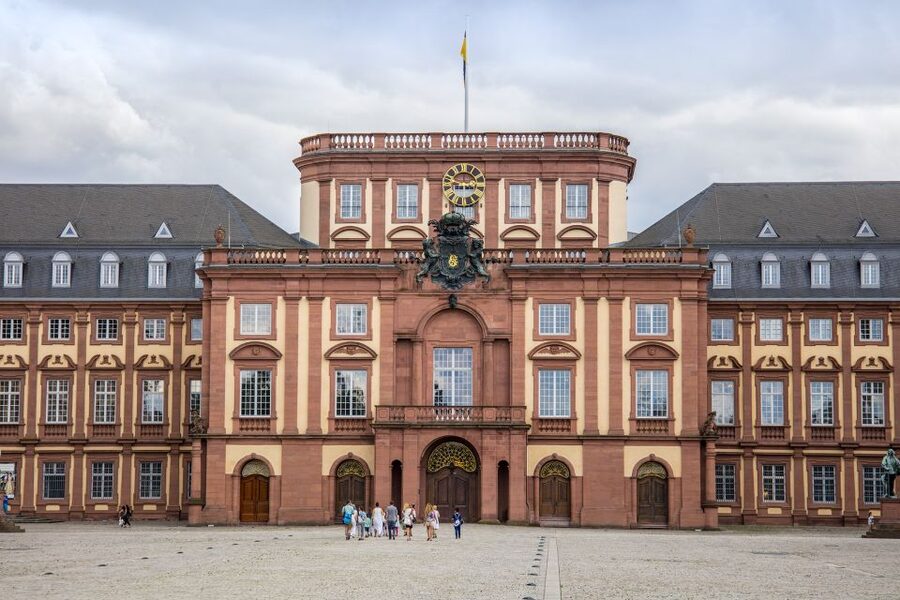
Jungbusch is not presented as a polished museum district. Its appeal comes from the way different parts of Mannheim’s story sit close together. On this walk, you look at a district shaped by working-class life, migration, nightlife, art, education, and newer business ventures.
That mix gives the tour its purpose. You are not simply checking off buildings. You are learning how an urban quarter can change while keeping signs of its earlier identity. The guide explains the living conditions of past and present residents, so the walk has a social angle as well as a sightseeing one.
I find that approach more useful than a tour that only points out attractive façades. Jungbusch’s interest lies in its contrasts. A hip café or gallery means more when you understand the district that came before it.
The tour is conducted in German, so you should be comfortable following spoken German for the full 90 minutes. If you are, the local focus makes this a good choice for seeing Mannheim beyond its best-known sights.
A few more Germany trips to weigh up
- Discover Berlin Half-Day Walking Tour
★ 5.0 · 9,624 reviews - Berlin: Third Reich and Cold War 2 Hour Walking Tour
★ 4.9 · 6,830 reviews - Munich: Third Reich & WWII Walking Tour
★ 4.6 · 6,181 reviews
Meeting at Teufelsbrücke
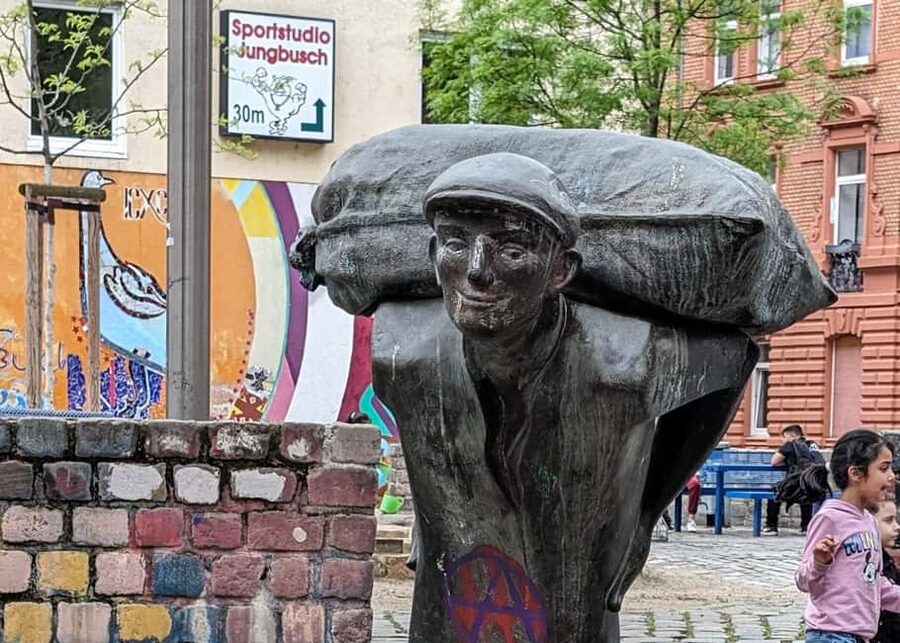
The tour begins at Teufelsbrücke by the bridge. Look for a guide wearing a blue, white, or red polo shirt. That detail matters because the meeting point itself is not described as a staffed office or a large visitor center. Arrive with enough time to identify the guide before the walk begins.
You do not need a transfer from another location as part of the experience. Getting to Teufelsbrücke is your responsibility, and the tour ends as a walking experience rather than a hotel pickup service.
The starting point also sets the tone. You meet in the neighborhood, not in a distant city-center classroom. From there, the guide can move directly into Jungbusch’s streets and explain what you are seeing as the district unfolds around you.
The opening story and the district’s past
Expect the first part to provide context about Jungbusch and its residents. The guide covers the area’s development and the living conditions of people who lived there in the past and those who live there today.
This background is important, but it takes up a meaningful share of a 90-minute tour. One recent participant felt that the opening explanation was too long compared with the time available for the rest of the district. I would keep that tradeoff in mind if you prefer a fast-moving walk with many stops.
Still, the historical framing gives the later sights a point. Without it, the cafés, bars, galleries, and creative businesses could look like a random collection of trendy addresses. With it, you can see Jungbusch as a district in transition.
The walk does not promise a full account of Mannheim’s past. Its focus is narrower and more local: how one quarter moved from a working-class identity toward a modern cultural and nightlife role.
Bars, cafés, and the new Jungbusch
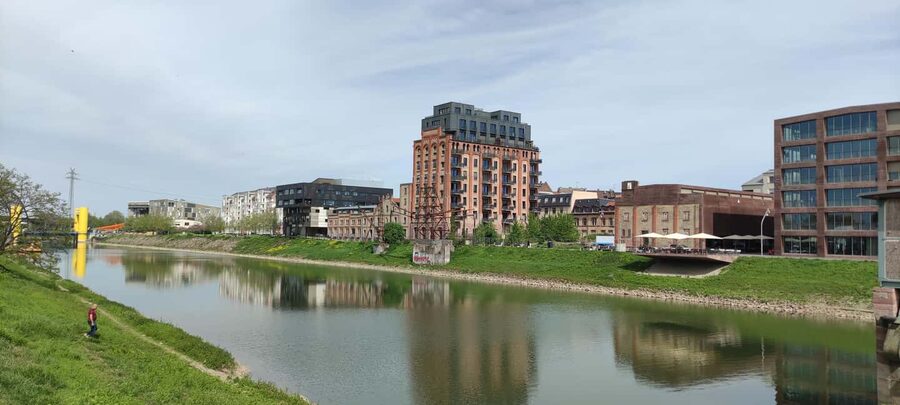
As you continue, the route takes in hip and vintage-style bars, cafés, and restaurants. The point is not a tasting session. Food and drinks are not included, and the tour does not turn into a pub crawl.
Instead, these businesses help show how Jungbusch functions today. They represent the district’s newer public face and give you clues about its creative economy and social life. You can note places that interest you and return later on your own, but the tour itself remains a guided walk.
I like this format because it keeps the cost under control. At $17 per person, the tour offers interpretation without quietly adding the price of a meal or drink. It also lets you decide later which café, restaurant, or bar fits your own budget.
The limitation is just as clear. If you expect included refreshments or time to sit inside the places you pass, this is not that kind of outing. You are paying for the guide and the local explanation, not for admission, transport, or food.
Same city, a completely different kind of day:
- Berlin: Reichstag, Dome and Government District Guided Tour
★ 4.7 · 18,288 reviews - Berlin: 1-Hour City Tour by Boat with Guaranteed Seating
★ 4.3 · 16,993 reviews - Hamburg: Sex and Crime in St. Pauli Tour for Ages 18+
★ 4.7 · 15,447 reviews - Hamburg: 1.5-Hour Harbor and Speicherstadt Day Cruise
★ 4.6 · 14,200 reviews
Popakademie and Mannheim’s creative side
One of the more distinctive sights on the route is the Popakademie Baden-Württemberg. The tour places this school within the wider story of Jungbusch’s creative development, alongside galleries, exhibition spaces, and innovative start-ups.
That combination gives the walk more substance than a simple nightlife tour. You see how music, visual art, exhibitions, and newer businesses all form part of the district’s current identity.
The Popakademie is especially useful as a reference point. It shows that Jungbusch’s creative activity is not limited to evening entertainment. The neighborhood also has links to education and professional creative work.
You should not expect a visit inside every institution or a formal presentation at each stop. The available details describe an outdoor walking tour, so the value comes from seeing the sites in context and listening to the guide’s explanation.
For me, this is one of the strongest reasons to book. If you have already seen Mannheim’s main historic sights, Jungbusch offers a different view of the city, one tied to contemporary culture and neighborhood change.
Galleries, exhibition spaces, and start-ups
The route also passes galleries and exhibition spaces. Their presence helps you read the district as a place where culture is part of everyday street life, not something kept in one large museum.
You may also see innovative start-ups that have chosen Jungbusch as their base. The tour does not provide a detailed list of companies, so I would treat these as examples within the neighborhood’s wider change rather than as individual attractions you need to visit.
This part of the walk works best if you are curious about how cities renew older districts. It gives you a chance to consider both sides of that process. New creative businesses can bring energy and fresh uses for old spaces, but change also raises questions about who can afford to live and work there.
The guide’s discussion of past and present living conditions is therefore valuable. It keeps the tour from becoming a simple celebration of trendy venues. You get a look at the people and conditions behind the district’s changing image.
A short tour with a clear limit
Ninety minutes is easy to fit into a Mannheim itinerary. You can take the walk in the morning or afternoon and still have much of the day available. It also suits you if you want a focused introduction before exploring Jungbusch independently.
The same short duration can feel restrictive. Jungbusch includes nightlife, food, creative businesses, galleries, exhibition spaces, and a complex social story. A guide has to choose what to explain and what to pass by.
One recent booking rated the experience three out of five and felt the walk was too short for all there is to see. That is a fair concern. If you like long tours with plenty of stops and extended discussion, you may leave wanting more.
Another participant described the walk as very informative and easy to follow, while a Mannheim local called it excellent and highly informative. Those comments point to the tour’s main strength: the guide’s explanation can add value even for someone who already knows the city.
I would book it for orientation, not for total coverage. Think of it as a compact introduction to Jungbusch’s past and present, followed by time for you to return to the places that catch your eye.
Value at $17 per person
At $17, the price is reasonable if you want a guided look at a district rather than a general city overview. The fee covers a qualified guide and a 1.5-hour walk. It does not cover food, drinks, or transport to and from Teufelsbrücke.
The value depends heavily on your interest in local context. If you only want attractive streets and photo stops, you may find the tour too talk-heavy. If you want to understand why Jungbusch looks and feels different from a conventional historic quarter, the explanation is the main product.
The German-only format also affects value. German speakers get the full benefit of the guide’s commentary. If you are not comfortable with German, the experience may be difficult to follow, and the tour does not offer another listed language.
The booking terms are helpful for planning. You can reserve now and pay later, and cancellation is free up to 24 hours before the start for a full refund. That gives you some flexibility, though it does not change the need to arrive at the meeting point ready to walk.
Weather, shoes, and access
The tour runs rain or shine. Bring weather-appropriate clothing and comfortable shoes, since the experience takes place outdoors and on foot.
Pets are not allowed on public tours, including dogs. This is worth noting if you are planning a day around a pet-friendly itinerary.
The tour is not suitable for wheelchair users. The supplied information does not give a detailed route description or explain specific pavement conditions, so anyone with mobility concerns should seek more route details before booking.
There is no mention of food, drink, hotel pickup, or a vehicle. Plan on an independent arrival at Teufelsbrücke and on buying any refreshments separately after the walk.
Who will enjoy this Jungbusch walk
I would recommend the tour to you if you want:
- A German-language neighborhood walk rather than a broad Mannheim city tour
- An explanation of how a working-class district changed over time
- A look at creative institutions, galleries, exhibition spaces, and start-ups
- Ideas for places to return to later for food, drinks, or nightlife
- A short activity that fits easily into a larger day
It is also a good pick for anyone who already knows Mannheim’s central sights. The local focus can reveal a side of the city that a standard historic route may leave out.
You may want to skip it if you need an English-language experience, cannot comfortably walk for 90 minutes, require wheelchair access, or want a food-and-drink tour. You should also think twice if you dislike introductions and social history, since the opening explanation is an important part of the experience.
Final decision: book it for context, not speed
I would book the Pulsating Jungbusch tour if I wanted a compact, German-language introduction to one of Mannheim’s changing neighborhoods. Its best qualities are the local focus, the connection between past living conditions and present-day culture, and the chance to see the Popakademie, galleries, exhibition spaces, bars, cafés, restaurants, and start-ups in one guided route.
I would not book it expecting every corner of Jungbusch in detail. The 90-minute limit means the introduction can take a large share of the time, and food, drinks, transport, and entry to venues are not included.
At $17, it is a fair buy for orientation and context. Bring good shoes, check the weather, meet the guide at Teufelsbrücke, and leave time afterward to explore the spots that interest you most.
FAQ
Where does the Jungbusch walking tour meet?
The meeting point is Teufelsbrücke by the bridge.
How will I identify the guide?
The guide will be wearing a blue, white, or red polo shirt.
How long does the tour last?
The walking tour lasts 1.5 hours.
What language is the tour conducted in?
The live tour guide conducts the experience in German.
What does the price include?
The $17 price includes a walking tour with a qualified guide.
Are food and drinks included?
No. Food and drinks are not included.
Is transport to the meeting point included?
No. Transfer to and from the meeting point is not included.
Can I bring a dog?
No. Pets, including dogs, are not allowed on public tours.
Does the tour run in bad weather?
Yes. The tour takes place rain or shine, so bring weather-appropriate clothing.
Is the tour suitable for wheelchair users?
No. The tour is not suitable for wheelchair users.
Just added around Germany
- Aachen old town tour – GERMAN (public)★ 5.0 · 24 reviews
- Aachen Private Walking Tour With A Professional Guide★ 5.0 · 11 reviews
- Cologne Highlights: Exclusive Private Tour★ 5.0 · 5 reviews
- Bremen Private Walking Tour With A Professional Guide★ 5.0 · 7 reviews
- Private Walking Tour through the Fascinating Bremen’s City Center★ 5.0 · 5 reviews
- Explore Cologne’s best Street Art Quarter★ 4.5 · 4 reviews
- Bremen Exploration Private Game and City Tour on your Phone★ 4.5 · 7 reviews
- e-Scavenger hunt Bremen: Explore the city at your own pace★ 4.0 · 24 reviews
Walking Tours, compared.





Berlin’s Best: 2 Hour Walking Tour Third Reich and the Cold War
Read our review →


Third Reich Berlin: Hitler and WWII Walking Tour
Read our review →Browse the lists this tour appears in