
Reviewed · BERLIN TOURS
Kreuzberg Tour – Kriminell und kuschelig
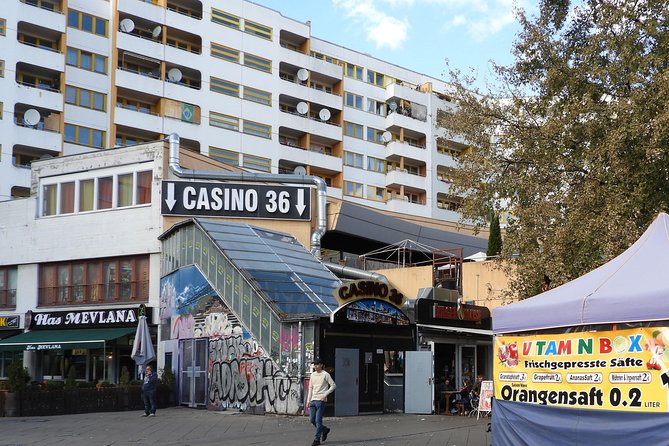
Kreuzberg’s story is written in crowded courtyards, political scars, immigrant life, and streets that keep changing. This two-hour walking tour begins around Kotti, then heads through Oranienstraße and other local streets to explain how a poor 19th-century workers’ district became one of Berlin’s best-known neighborhoods.
I like the strong historical focus and the way the route connects old housing conditions with modern Kreuzberg life. I also like the small-group limit of 25, plus guides such as Sammy, who bring a witty, well-informed style to the walk. The main drawback is simple: this is a public walking tour, so you need to keep up, and food, drinks, and the promised Berliner schnapps are not included.
In This Review
- Key points to know before booking
- Why Kreuzberg makes such a good walking tour
- Starting at Kotti and getting your bearings
- Oranienstraße and the back courtyards
- Politics, protest, and changing Kreuzberg
- Parks, avenues, and side streets
- What the guide adds to the experience
- Timing, group size, and walking demands
- When this tour offers the best value
- Who should book the Kreuzberg walk
- Should you book it?
- FAQ
- How long does the Kreuzberg Tour last?
- Where does the tour start?
- Where does the tour end?
- Is the tour suitable for children?
- How large can the group be?
- Is the tour accessible for people with major walking problems?
- What happens if I cancel?
Key points to know before booking
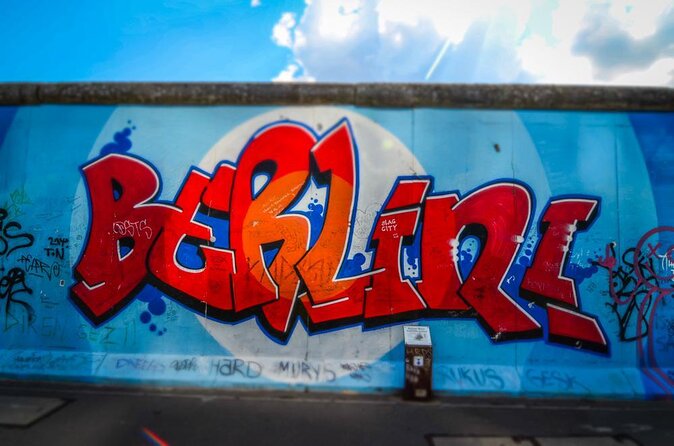
- Kotti sets the tone: The walk begins at one of Kreuzberg’s central meeting points, where your guide introduces the district’s history, culture, and daily life.
- Oranienstraße adds real context: You look beyond postcard Berlin and examine the crowded back courtyards where working-class families once lived.
- Sammy is a strong guide choice: His route combines older history, political change, and recent developments with humor and clear explanations.
- The pace is steady: The tour lasts about two hours and is not designed for anyone with major walking problems.
- You finish at Curfew Bar: The endpoint is on Falckensteinstraße, giving you a practical place to continue your evening, though no drink is included.
- Adults only: The minimum age is 18, and the group can include up to 25 people.
Why Kreuzberg makes such a good walking tour
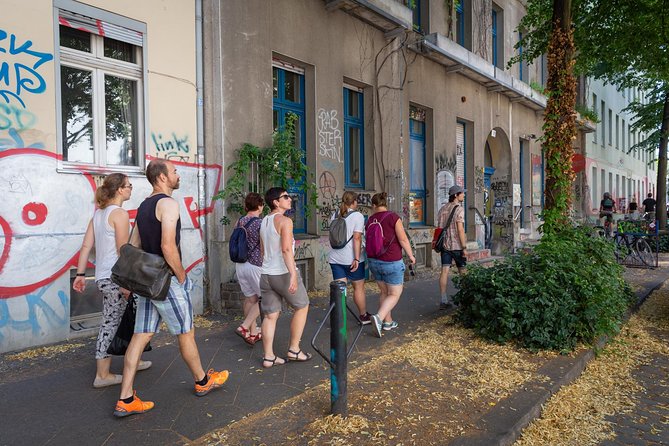
Kreuzberg rewards walking because its story is not contained in a single monument. It is found in the contrast between broad avenues, local parks, old apartment blocks, political meeting places, and narrow backstreets.
You see a neighborhood shaped first by working-class housing, then by migration, protest, division, and urban change. A guide helps you connect those pieces. Without one, you may notice colorful walls, busy streets, and handsome buildings, but miss why the neighborhood developed such a strong political identity.
The tour’s title, Kriminell und kuschelig, hints at Kreuzberg’s mixed personality. It is rough around the edges in places, but also social, creative, and intimate. The point is not to reduce the district to nightlife or street art. It is to understand how ordinary housing and ordinary residents helped create a place with an unusually strong public character.
At $27.27 per person, the price is fair for a two-hour guided walk in central Berlin. You are not paying for admission to a major attraction. You are paying for a local route, interpretation, and the chance to ask questions while the neighborhood is in front of you. If you prefer to explore independently, you can walk Kreuzberg for free. But the guide adds value by explaining the political and social forces behind what you see.
Other Berlin days worth putting on the list:
- Berlin: Reichstag, Dome and Government District Guided Tour
★ 4.7 · 18,288 reviews - Berlin: 1-Hour City Tour by Boat with Guaranteed Seating
★ 4.3 · 16,993 reviews - Berlin: Boat Tour Along the River Spree
★ 4.4 · 11,252 reviews
Starting at Kotti and getting your bearings
The walk starts at Kotti, one of Kreuzberg’s central places. The listed meeting point is Reichenberger Str. 174, 10999 Berlin, so check your booking details carefully and allow enough time to reach the exact starting spot.
Your guide begins with an overview of Kreuzberg’s history, life, and culture. That opening matters because Kreuzberg is easy to misread. A first-time visitor may see a famous Berlin neighborhood and assume its identity has always been tied to cafés, bars, and alternative culture. The introduction sets up a longer story.
You learn about Kreuzberg as a typical working-class district founded in the middle of the 19th century. That background gives the rest of the route a clear purpose. Instead of simply passing old buildings, you begin to read them as evidence of a city built for large numbers of workers.
Kotti is also a useful starting point because it places you in the middle of present-day Kreuzberg rather than at a formal museum or isolated landmark. The tour begins with daily urban life around you. That makes the history feel connected to the streets instead of sealed away in a lecture.
Oranienstraße and the back courtyards
One of the most important parts of the route is Oranienstraße. Here, the guide helps you imagine the old housing pattern, including huge building complexes with several courtyards behind the street frontage.
Some residents lived in a fifth or sixth backyard. That phrase sounds almost abstract until you picture how far people could be from open air and daylight. The tour uses these courtyards to explain the crowded conditions faced by working-class residents.
The point is not simply that the buildings were large. It is that density affected every part of life. Fresh air was hard to find, privacy was limited, and many people did not rent a full apartment or even a private room. The route explains the practice of renting a mattress for an eight-hour stay, a stark detail that shows how housing pressure shaped daily routines.
I find this section especially valuable because it gives you a physical way to understand social history. You are not just hearing that Kreuzberg was poor. You are seeing the kind of architecture that made poverty and overcrowding part of the neighborhood’s structure.
This is also where the tour may feel most different from a standard Berlin highlights walk. You are not being rushed from one famous sight to another. You are pausing over courtyards, streets, and building layouts that could easily be overlooked.
The drawback is that the subject matter can be sobering. If you want a light stroll focused only on cafés, street art, and nightlife, this tour may feel more serious than expected. Its strength is the same thing that makes it less casual: it asks you to look closely at difficult living conditions.
Politics, protest, and changing Kreuzberg
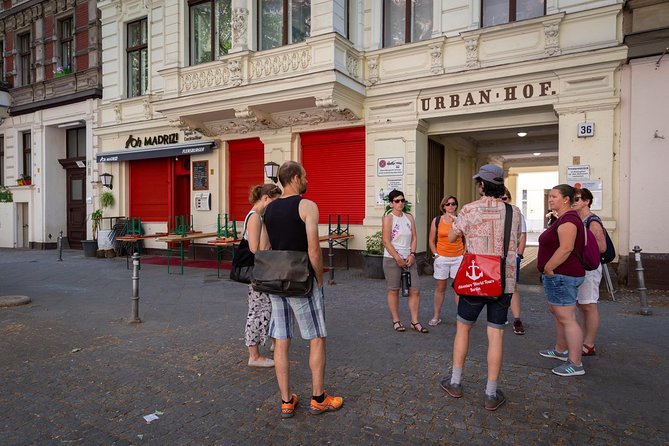
Kreuzberg’s working-class population developed strong political views, often on the radical left. The tour connects those views to the neighborhood’s wider political identity and to the changes that followed.
This part of the experience is useful for anyone who wants more than a surface-level view of Berlin. Kreuzberg is often treated as a shorthand for alternative culture, but the guide explains why political conflict and social pressure became so central to the district.
The route covers political, historical, and contemporary changes rather than stopping in the 19th century. That wider time span helps you see Kreuzberg as a place that keeps being reshaped. Old housing conditions, political movements, migration, and modern urban life all belong to the same story.
Guides such as Sammy appear to be particularly effective here. His approach combines detailed background with stories from both Kreuzberg’s older past and its more recent changes. The tone is informative but not stiff, and the humor keeps two hours from feeling like a classroom session.
You should still remember that a group tour gives you the guide’s chosen version of the neighborhood. You may not stop at every place that interests you, and the group can be as large as 25 people. If you want an extremely personal discussion of one subject, a private tour would offer more flexibility. For a first introduction, the group format keeps the cost down and gives the route a social feel.
Same city, a completely different kind of day:
- Discover Berlin Half-Day Walking Tour
★ 5.0 · 9,624 reviews - Berlin: Hop-on Hop-off Bus Tour with Live Commentary
★ 4.3 · 8,579 reviews - Berlin: Government District around the Reichstag Guided Tour
★ 4.7 · 8,447 reviews - Berlin: Reichstag, Plenary Chamber, Cupola & Government Tour
★ 4.6 · 8,422 reviews
Parks, avenues, and side streets
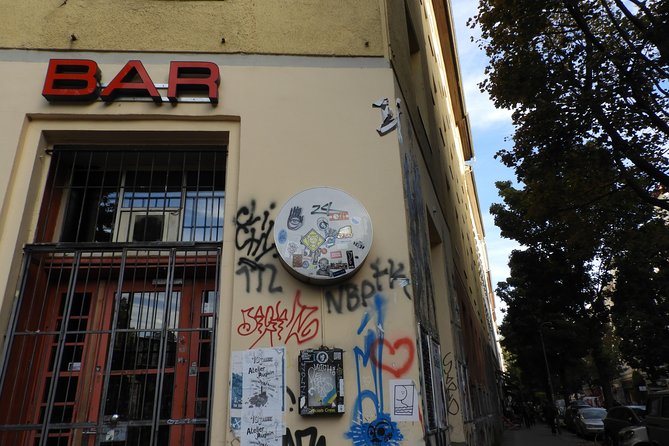
The tour includes parks, iconic avenues, and backstreets. That mix gives you a better sense of Kreuzberg than a route limited to its best-known strip.
Main avenues show how the neighborhood connects to the rest of Berlin. Side streets reveal the smaller-scale character of local life. Parks provide a change of pace and help you see how public space fits into a dense city district.
The route is built around walking rather than transport, so you get time to notice changes from one block to the next. Your guide keeps the group on track while adding recommendations for the rest of your Berlin visit.
That last point is easy to undervalue. A local guide can help you decide where to return later, what areas deserve more time, and how Kreuzberg fits into the city as a whole. The recommendations are likely most useful early in your trip, when you can still adjust your plans.
Because the tour is only about two hours, it gives you an introduction rather than a complete survey. You will not cover every corner of Kreuzberg. Think of it as a focused orientation walk, one that gives you enough context to explore on your own afterward.
What the guide adds to the experience
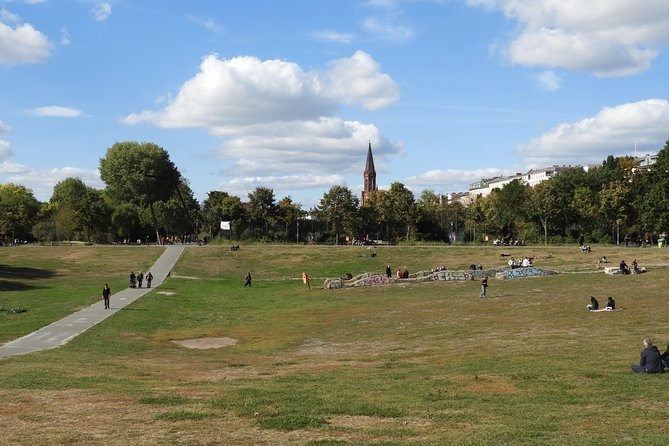
The strongest part of this tour is the guide’s role. The information provided names Sammy, and the comments about his work point to a style that is both engaging and detailed.
You can expect a guide who explains rather than simply points. That means linking a building to a housing system, a street to a political movement, or a current neighborhood change to an older period of Kreuzberg’s history.
The best descriptions of the tour emphasize a good pace. The walk is informative without being raced, and the two hours can pass quickly because the route keeps moving between places and periods. That balance matters. Too much detail can bog down a walking tour, while too little leaves you with a few names and dates but no understanding.
A third-party guide cannot guarantee the same person on every departure, so do not book solely on the assumption that Sammy will lead your date. Still, his name is useful when comparing the experience, since it signals the kind of guide-led storytelling the tour aims to provide.
The 4.7 rating from 22 reviews and 91 percent recommendation rate support the view that the tour is performing well overall. The one less enthusiastic response still found the guide sympathetic, informative, and entertaining, but felt something was missing. In practical terms, that missing item was a typical Berlin schnapps. Since food and drinks are not included, treat the walk as a history tour, not a tasting experience.
Timing, group size, and walking demands
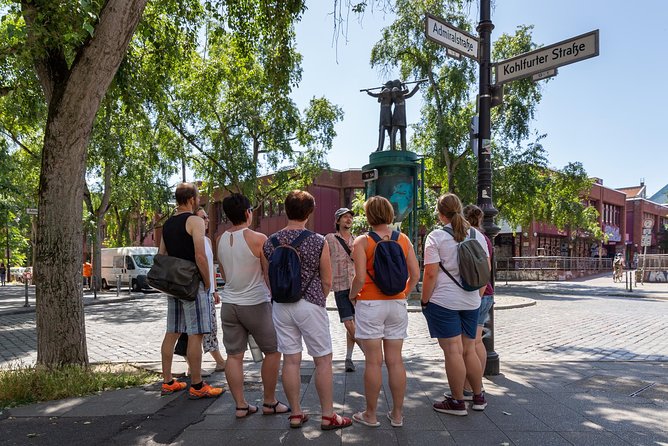
Two hours is a sensible length for Kreuzberg. You get enough time to build a story without committing half a day to one district.
The group limit is 25 people. That is not a private or highly intimate walk, but it is manageable for an urban route if everyone stays together. A smaller group would make it easier to ask questions and hear every aside. The maximum keeps the tour accessible while avoiding the scale of a large sightseeing crowd.
You should wear comfortable shoes and expect to walk continuously. The operator specifically warns that the tour is not recommended for people with major walking problems because you must keep pace with the guide. The information does not state a total distance, so I would not assume this is a short stroll with frequent long breaks.
The tour is near public transportation, which makes it practical to fit into a day of sightseeing. The endpoint is Curfew Bar at Falckensteinstraße 47, 10997 Berlin. Hotel pickup and drop-off are not included, so you make your own way to the start and continue independently from the end.
The minimum age is 18. That makes the experience a better fit for adults interested in political history, urban change, and local culture than for families seeking a general sightseeing walk.
When this tour offers the best value
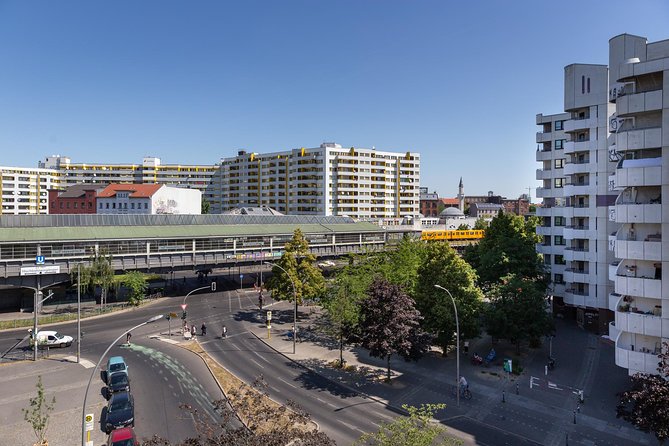
I would place this tour near the beginning of a Berlin visit. The guide’s recommendations can shape the rest of your time, and you may want to return to Oranienstraße or other parts of Kreuzberg after learning what to look for.
It is also a good choice if you have already seen Berlin’s major landmarks. Once you have visited the obvious sights, a neighborhood walk gives you a closer look at the city’s social history.
The $27.27 price works best for you if you value explanation. If you are happy to wander without context, the same streets cost nothing to explore. If you want a guide to explain crowded courtyards, working-class housing, political movements, and current change in one compact route, the fee is reasonable.
The walk includes a motivated guide, detailed background information, and the two-hour tour itself. There is no meal, drink, attraction admission, or transportation bundled into the price. That keeps expectations clear and helps you judge the cost fairly.
Free cancellation is available if you cancel at least 24 hours before the start time. Cancellations inside that window are not refunded, and changes are not accepted. The activity also requires a minimum number of participants, so if the operator cancels for that reason, you are offered another date or experience, or a full refund.
Who should book the Kreuzberg walk
You should book it if you want to understand Kreuzberg rather than simply photograph it. The tour suits adults who enjoy walking, local stories, political history, and the details of ordinary urban life.
It is especially useful for:
- First-time Berlin visitors who want a neighborhood orientation
- Repeat visitors seeking a side of Berlin beyond major landmarks
- People interested in housing, migration, protest, and social change
- Anyone who prefers a guide with humor and a clear route
- Visitors able to walk for two hours at a steady pace
You may want to skip it if you have limited mobility, dislike group tours, or want food and drink included. You should also look elsewhere if your main goal is a broad overview of all Berlin, since this experience stays focused on Kreuzberg.
Should you book it?
Yes, if Kreuzberg’s history and present-day character interest you. At a reasonable price, you get a focused two-hour introduction led by a local guide, with stops that help you understand the neighborhood’s housing, politics, culture, and changing streets.
Book early if your dates are fixed, since the experience is often reserved about 13 days ahead. Check the exact meeting point, arrive ready to walk, and do not expect a pub crawl or included schnapps. For an adult visitor who wants context instead of a quick photo stop, this is a smart way to get to know Kreuzberg.
FAQ
How long does the Kreuzberg Tour last?
The tour lasts approximately two hours.
Where does the tour start?
The listed meeting point is Reichenberger Str. 174, 10999 Berlin, Germany. The walking route begins around Kotti, where the guide gives an introduction to Kreuzberg.
Where does the tour end?
The tour ends at Curfew Bar, Falckensteinstraße 47, 10997 Berlin, Germany.
Is the tour suitable for children?
No. The minimum age is 18.
How large can the group be?
The tour can have a maximum of 25 participants.
Is the tour accessible for people with major walking problems?
It is not recommended for people with major walking problems because this is a public walking tour and you need to keep up with the guide.
What happens if I cancel?
You receive a full refund if you cancel at least 24 hours before the start time. Cancellations or changes made less than 24 hours before the start are not accepted for a refund.
Just added around Berlin
- Love and War in Berlin: Self-Guided Story Puzzle Walk★ 5.0 · 7 reviews
- Rickshaw Tours Berlin – Groups of up to 16 people with several rickshaws★ 4.0 · 97 reviews
- Walking on the Wall: 3-Hour Tour in Berlin★ 4.5 · 34 reviews
- eSIM for Germany and 34 European Countries★ 4.5 · 16 reviews
- Warnemuende Shore Excursion: Berlin Private Sightseeing Tour from Rostock★ 5.0 · 4 reviews
- Your ticket to The Wall Museum Berlin★ 3.0 · 60 reviews
- Warnemuende Shore Excursion: Private Berlin Tour★ 4.5 · 27 reviews
- Berlin’s Gay, Lesbian, and Queer Scene Small-Group Walking Tour★ 4.5 · 66 reviews
Berlin Tours, compared.

Reichstag, Dome and Government District Guided Tour
Read our review →
1-Hour City Tour by Boat with Guaranteed Seating
Read our review →


Reichstag, Plenary Chamber, Cupola & Government Tour
Read our review →

