
Reviewed · HISTORICAL TOURS
Historical city tour in the African Quarter in Berlin
Berlin’s African Quarter is not a museum behind glass. It is a living neighborhood where street signs still carry the names of African countries, European cities, and German colonial officials. This two-hour walking tour uses those names as starting points for a frank look at Germany’s role in Africa and the decisions made in Berlin in 1884.
I like the way the tour connects local streets to places such as Swakopmund and the Congo. I also like its change-of-perspective approach, which asks you to consider who received power, who was left out, and how public places should be named today. The main drawback is that the subject is serious and the tour is short, so you should expect a focused introduction rather than a full study of German colonial history.
In This Review
- Key points to know before you go
- Why Berlin’s African Quarter matters
- Starting at Swakopmunder Straße
- Anna-Mungunda-Allee and the question of Petersallee
- Manga-Bell-Platz and Gustav Nachtigal
- Kongostraße and the Berlin Conference of 1884
- A short walk with a serious purpose
- What the $33.57 price buys you
- The tone: direct, thoughtful, and not light sightseeing
- Who should book this African Quarter walk
- Booking and cancellation details that matter
- Should you book it?
- FAQ
- How long does the African Quarter tour last?
- Where does the tour begin?
- Where does the tour end?
- What places are included on the route?
- What history does the tour cover?
- How many people can join the tour?
- Can I cancel for a full refund?
Key points to know before you go
- The streets are the exhibits: Swakopmunder Straße, Anna-Mungunda-Allee, Manga-Bell-Platz, and Kongostraße each open a different historical question.
- The tour lasts about two hours: The route begins at Swakopmunder Str. 44 and ends in Rehberge.
- The focus is Germany’s colonial past: You will discuss Namibia, Gustav Nachtigal, Petersallee, and the 1884 Congo Conference.
- The group is limited to 20 people: That gives the walk a more manageable size than a large city sightseeing tour.
- The price is $33.57 per person: For two hours of specialist history, the value depends on how much you want context rather than famous sights.
- Free cancellation is available until 24 hours before departure: Poor weather or too few bookings can also lead to a new date or a full refund.
Why Berlin’s African Quarter matters
Many Berlin visitors spend their time around Museum Island, the Brandenburg Gate, or the former Wall. Those places matter, but the African Quarter offers a different kind of history lesson. Here, the evidence is built into ordinary streets and public spaces.
The area is described as a monument made up of 22 streets. Their names point to African countries, European cities, and figures connected with German colonial rule. That mix is important. It shows how a neighborhood can preserve not only a memory of places, but also the political views of the people who named them.
You are not simply walking past signs and hearing dates. You are being asked what those names mean now. Should a street connected to colonial officials keep its name? Should it be renamed? Who gets to decide? Those questions give the walk a present-day purpose without losing its historical focus.
I find this useful because colonial history can feel distant when it is presented only as a chapter in a book. In the African Quarter, it is tied to addresses, maps, and the physical layout of Berlin. The past becomes easier to discuss because you can see where its memory still appears.
A few more Berlin trips to weigh up
- Berlin: Natural History Museum Entrance Ticket
★ 4.6 · 3,382 reviews - Berlin: World Heritage Cruise to Potsdam
★ 4.5 · 1,435 reviews - Berlin Historical Highlights Walking Tour
★ 4.9 · 657 reviews
Starting at Swakopmunder Straße
The tour begins at Swakopmunder Str. 44, in the 13351 Berlin postal area. Your first stop asks what Swakopmund has to do with Berlin and what role Germany played in Namibia.
That is a smart place to begin. A street name may look harmless if you do not know the place it refers to. Once Namibia enters the discussion, the name becomes a link between Berlin and Germany’s colonial activity in southwest Africa.
The stop is scheduled for about five minutes. That means the guide will likely use the street as a concise introduction rather than offer a long lecture. You should listen for the basic connection between the city name and Germany’s colonial period, then carry that question with you as the walk continues.
I like this opening because it starts with geography. You may know Berlin well but know little about Swakopmund, or the other way around. The tour uses that gap in your knowledge to show how far the effects of Berlin’s decisions could reach.
The stop also sets the tone. This is not a general African Quarter walk with a few historical comments added along the way. The main subject is the relationship between German power and African countries during the colonial period, with the street names acting as prompts.
Anna-Mungunda-Allee and the question of Petersallee
The second stop is Anna-Mungunda-Allee. Here the tour asks who Petersallee was named after and whether the street should have been renamed.
This is one of the most useful parts of the walk for visitors interested in how cities handle difficult memorials. A name on a street sign is a public choice. It gives a person or idea a place in daily life, and it can continue doing so long after the original political system has ended.
The stop links Petersallee with the question of renaming. You are not only learning a biographical detail. You are considering how Berlin should deal with names associated with colonial rule and how a new name can change the meaning of a public space.
Anna Mungunda’s name also gives the tour a chance to move beyond the people who held power. The stop title itself signals a different viewpoint from the names of colonial officials. That shift matters, since colonial accounts often center European administrators and leave African voices in the background.
The scheduled discussion here is about five minutes. As with the other stops, that brevity keeps the walk moving but limits how far the guide can go. If this question interests you, make a mental note of the names and issues so you can continue exploring them after the tour.
Manga-Bell-Platz and Gustav Nachtigal
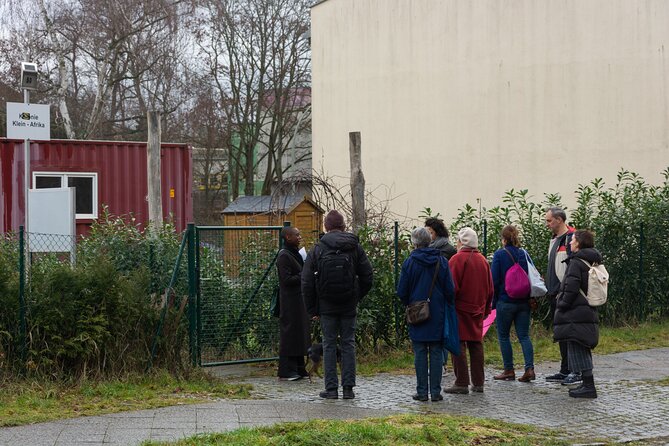
At Manga-Bell-Platz, the focus turns to Gustav Nachtigal. The guide explains who he was and why the central square of the African Quarter received his name.
This stop is particularly helpful because it shows how a person can be remembered through a prominent public place. A central square carries more weight than a minor side street. Its name becomes part of the neighborhood’s identity, and that makes the question of historical responsibility harder to ignore.
The tour uses Nachtigal’s name to explain more about the colonial period. You should expect a short, focused account rather than a long biography. The value comes from connecting the individual to the wider system: exploration, imperial ambition, territorial claims, and the way Berlin helped shape policy involving Africa.
Manga-Bell-Platz is also a reminder that names can flatten complicated history. A sign may present a person without explaining what that person did or why the name was chosen. This walk supplies the missing context.
The stop lasts about five minutes, so the experience will suit you best if you enjoy drawing larger conclusions from a few clear examples. It is less suitable if you want a detailed account of every person, event, and political dispute connected with the quarter.
Same city, a completely different kind of day:
- Berlin: Reichstag, Dome and Government District Guided Tour
★ 4.7 · 18,288 reviews - Berlin: 1-Hour City Tour by Boat with Guaranteed Seating
★ 4.3 · 16,993 reviews - Berlin: Boat Tour Along the River Spree
★ 4.4 · 11,252 reviews - Discover Berlin Half-Day Walking Tour
★ 5.0 · 9,624 reviews
Kongostraße and the Berlin Conference of 1884
Kongostraße brings the most important international event on the route into view. The guide asks what happened in Berlin in 1884, what the Congo Conference was, and why no one from Africa was present.
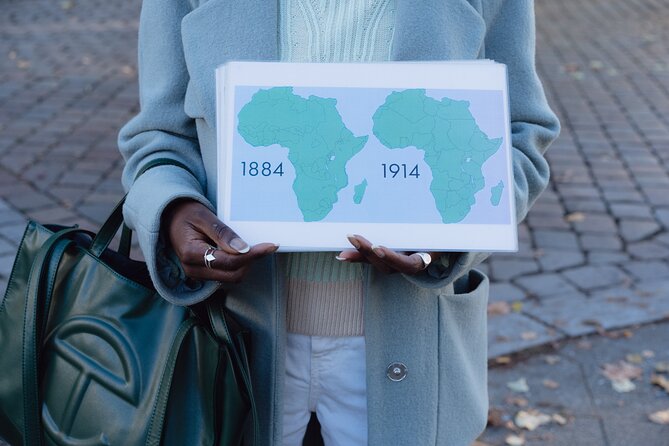
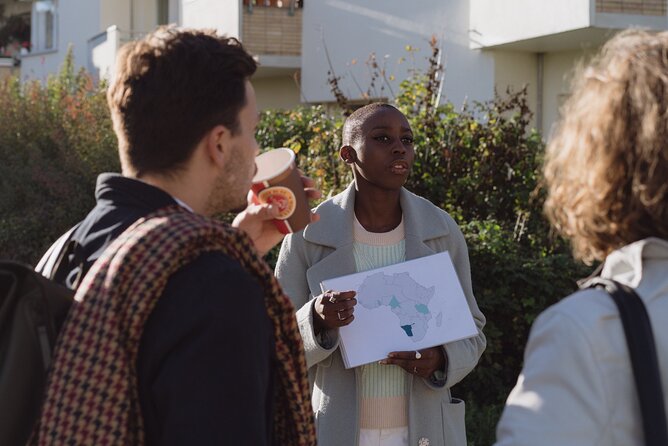
This is the point where the neighborhood’s street names connect directly with European imperial decision-making. You will see a map of Africa before and after the Berlin conference, which helps make the political changes easier to grasp.
The absence of African representatives is central to the discussion. It highlights the unequal power structure behind the conference and gives you a clear way to understand why the event still matters. The tour does not treat the meeting as a remote diplomatic detail. It presents it as a decision-making process that affected African countries without African participation.
For me, the map is an especially useful teaching tool. Dates and names can blur together during a walking tour, while a visual comparison gives you something concrete to remember. You can see how European powers changed the political picture and then connect that image to the names found on Berlin’s streets.
This is still a five-minute stop, so do not expect a complete account of every outcome of the conference. Instead, consider it the central framework for the tour. The earlier stops give you individual names and local examples. Kongostraße shows how those examples fit into a much larger European project.
A short walk with a serious purpose
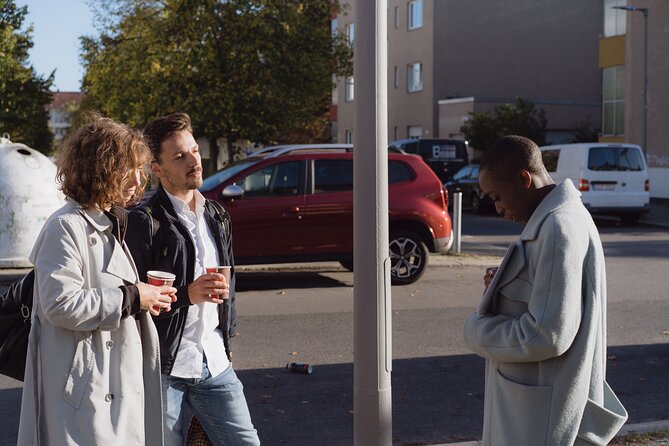
The four named stops are each listed at about five minutes, but the whole experience lasts approximately two hours. The remaining time is used for walking, explanation, and connections between the stops.
That pace should be comfortable for most people who can take part in a normal walking tour. It also gives the guide room to move from one topic to another without turning every stop into a long classroom session.
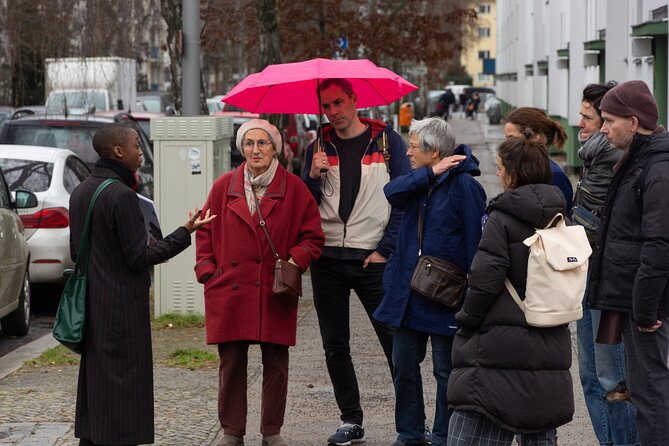
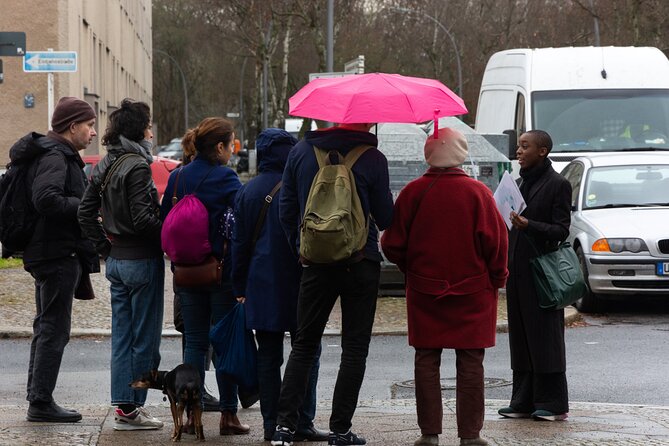
The group can contain up to 20 people. That is small enough to feel more personal than a large sightseeing procession, though it is not a private tour. If you want to ask questions, a group of this size gives you a reasonable chance to do so, depending on the guide and the pace of the discussion.
The route starts on Swakopmunder Straße and ends in Rehberge at the address listed as 13349 Berlin. Since the end point is different from the start, you should plan your onward journey from Rehberge rather than assume you will return to the meeting point.
The tour is near public transportation, which makes the start and finish easier to manage. A mobile ticket is provided, so you can keep the booking on your phone. The meeting point is specifically Swakopmunder Str. 44, not simply the general African Quarter, so check the address before setting out.
What the $33.57 price buys you
At $33.57 per person, this is not the cheapest way to spend two hours in Berlin. You are paying for a specialist subject, a planned route, interpretation at four locations, and a guide who can connect local street names with German and African history.
The value is strongest if you would otherwise walk through the quarter without understanding what the names mean. In that case, the tour adds the context that turns an ordinary neighborhood stroll into a history lesson.
The price is less attractive if you want a broad introduction to Berlin or a long list of major sights. You will not be touring the city’s best-known landmarks, and the walk concentrates on one subject. It is best compared with a museum visit or a focused historical lecture, not with a general city highlights tour.
The limited group size helps support the price. A maximum of 20 people is not intimate in the private-guide sense, but it keeps the experience from becoming unwieldy. The tour’s value also depends on the guide’s ability to explain sensitive subjects clearly and keep the discussion moving.
One strong point is that the experience deals with a part of German-African history that is often given less attention than Berlin’s twentieth-century conflicts. If you want to understand how German history reaches beyond the familiar stories of the Nazi era, the cost is easier to justify.
The tone: direct, thoughtful, and not light sightseeing
The most positive response connected with this experience describes it as a must-do historical tour in Germany and praises the guide for being engaging and well informed. That matches the format: the walk depends more on explanation and questions than on grand buildings or dramatic views.
You should come ready for serious material. The tour discusses colonial rule, unequal power, naming disputes, and the exclusion of African voices from a major European conference. It is not designed as a light break between shopping and dinner.
That does not mean the experience must feel gloomy. The change-of-perspective idea gives it energy. You are encouraged to look at Berlin from a position that is often absent from standard city tours, then think about what the city should carry into the future.
The overall public score is 3.7 from six ratings, so I would keep expectations measured. The strong praise for the historical focus is encouraging, but the small number of ratings means you should not treat the score as a final judgment. Your enjoyment will depend heavily on your interest in colonial history and on how much you value discussion over spectacle.
Who should book this African Quarter walk
I would recommend this experience to you if you like urban history, public memory, or tours that ask difficult questions. It is also a good choice if you have already seen Berlin’s major sights and want a subject that reaches beyond the usual visitor route.
Students, teachers, and anyone interested in Germany’s relationship with Africa may find the structure helpful. The walk gives you several names and events to use as starting points for further reading, while the map at Kongostraße provides a clear visual anchor.
It may also suit you if you prefer a small group and a short commitment. Two hours is enough time to gain a solid framework without giving up an entire day.
I would be more cautious if you want a relaxed sightseeing walk with lots of architecture, photo stops, or entertainment. The experience is built around historical explanation, and the subject deserves attention. You may find it demanding if you are expecting a casual neighborhood tour.
The tour requires good weather, and it can be canceled if the minimum number of bookings is not met. If that happens, you are offered another date or experience, or a full refund. Service animals are allowed, and most people can participate, but the format remains a walking tour, so plan accordingly.
Booking and cancellation details that matter
You receive confirmation when you book, and the experience is usually reserved about 21 days ahead of the date. That booking pattern suggests you should avoid leaving it until the last moment if the walk is important to your schedule.
You can cancel for a full refund up to 24 hours before the local start time. Cancellations or changes made less than 24 hours before departure are not accepted for a refund.
Because weather can affect the experience, leave some flexibility in your Berlin plans if possible. A poor-weather cancellation results in an alternative date or a full refund, rather than forcing you to take the walk in unsuitable conditions.
Should you book it?
Book this African Quarter tour if you want a focused, two-hour explanation of Berlin’s colonial connections, not a standard city sightseeing route. The strongest reasons are the street-level setting, the discussion of Swakopmund and Namibia, the questions around Petersallee and Anna Mungunda-Allee, and the map-based explanation of the 1884 Congo Conference.
At $33.57, it offers fair value for a specialist historical walk, especially if you care about how public places preserve and challenge old political ideas. Skip it if you want famous landmarks or a breezy introduction to Berlin. For readers willing to give serious history their attention, this is a useful way to see the city from a less familiar angle.
FAQ
How long does the African Quarter tour last?
The walking tour lasts approximately two hours.
Where does the tour begin?
It begins at Swakopmunder Str. 44, 13351 Berlin, Germany.
Where does the tour end?
The tour ends in Rehberge, at the listed location in the 13349 Berlin postal area.
What places are included on the route?
The route includes Swakopmunder Straße, Anna-Mungunda-Allee, Manga-Bell-Platz, and Kongostraße.
What history does the tour cover?
It covers Germany’s colonial role in Africa, Germany’s connection with Namibia, Gustav Nachtigal, Petersallee, the question of renaming streets, and the 1884 Congo Conference.
How many people can join the tour?
The maximum group size is 20 people.
Can I cancel for a full refund?
Yes. You can cancel at least 24 hours before the experience starts for a full refund. Cancellations made less than 24 hours before the local start time are not refunded.
Just added around Berlin
- Love and War in Berlin: Self-Guided Story Puzzle Walk★ 5.0 · 7 reviews
- Rickshaw Tours Berlin – Groups of up to 16 people with several rickshaws★ 4.0 · 97 reviews
- eSIM for Germany and 34 European Countries★ 4.5 · 16 reviews
- Walking on the Wall: 3-Hour Tour in Berlin★ 4.5 · 34 reviews
- Warnemuende Shore Excursion: Berlin Private Sightseeing Tour from Rostock★ 5.0 · 4 reviews
- Your ticket to The Wall Museum Berlin★ 3.0 · 60 reviews
- Warnemuende Shore Excursion: Private Berlin Tour★ 4.5 · 27 reviews
- Berlin’s Gay, Lesbian, and Queer Scene Small-Group Walking Tour★ 4.5 · 66 reviews
Historical Tours, compared.

City History Canal Sightseeing Tour on a Motorboat
Read our review →






Browse the lists this tour appears in