
Reviewed · MUSEUM & GALLERY TICKETS
Heusenstamm:tour of the Depot of the museum of communication
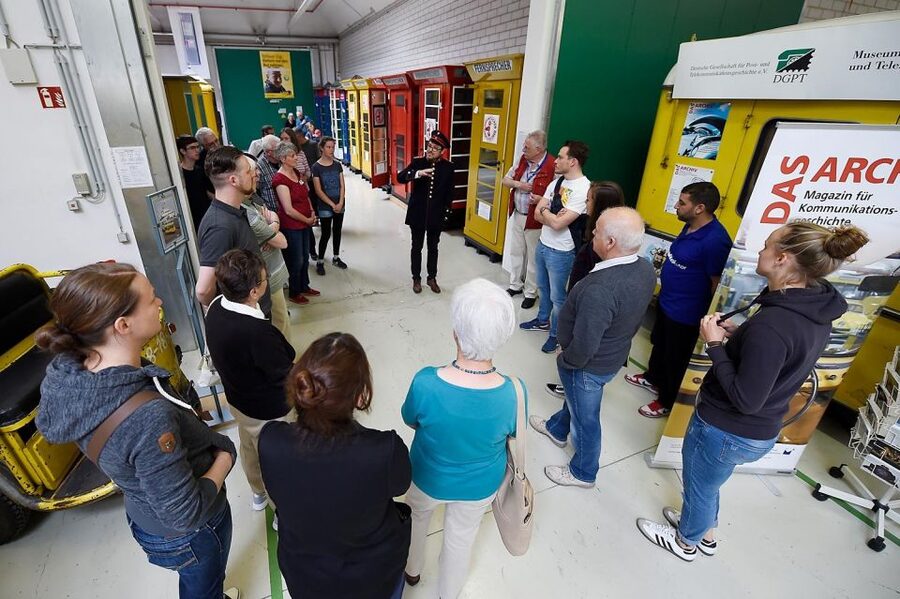
The most surprising part of this tour is its sheer scale. In Heusenstamm, you see the working collection behind the Museum of Communication, including 1930s television sets, design classics from radio history, telephone boxes, buses, and sleighs. The depot gives you a far wider look at communication than a normal museum display can.
I like two things in particular: the chance to photograph yourself beside rare historic vehicles, and the guided look at the world’s largest telephone collection. The tour also includes entry to the Frankfurt Museum of Communication, which makes the $16 price especially appealing.
The main drawback is time. Ninety minutes is not enough to take in 375,000 objects, and the tour is conducted in German only. Plan carefully for the journey to Heusenstamm, especially on a Friday afternoon when traffic can be heavy.
In This Review
- Key points to know before you book
- Why Heusenstamm is different from a normal museum visit
- From tube receivers to internet radio
- The world’s largest telephone collection
- Sleighs, buses, and the photo-friendly side of the depot
- More than machines: the 300-plus works of art
- What the 90-minute route can really deliver
- The added Frankfurt museum ticket
- Is $16 a fair price?
- Getting to Heusenstamm without a rushed start
- Who will enjoy this tour most?
- Should you book the Heusenstamm depot tour?
- FAQ
- How long does the Heusenstamm depot tour last?
- What language is the tour conducted in?
- What is included in the $16 price?
- Are food and drinks included?
- Can I cancel the booking for a refund?
- Can I reserve now and pay later?
Key points to know before you book
- A working museum collection, not just a small display: Heusenstamm holds about 375,000 objects from the history of communication.
- Rare large objects: Sleighs, buses, and telephone boxes give the tour a strong visual side and make good photo subjects.
- Telephones take center stage: The depot includes the world’s largest collection of telephones.
- Technology changes before your eyes: The tour traces the path from tube receivers to internet radio and global networking.
- German is the only tour language: You need enough German to follow the guide’s explanations.
- The Frankfurt museum is included: Use the separate museum admission to see the public-facing side of the collection.
Why Heusenstamm is different from a normal museum visit
The Museum of Communication in Frankfurt presents selected objects in a polished public setting. The Heusenstamm depot gives you access to the much larger store of material behind that display. That difference matters.
A normal museum asks you to follow a chosen story. A depot lets you sense the size of the story itself. You see how many objects have been saved, classified, and kept for study, even when only a small portion can fit into a city museum.
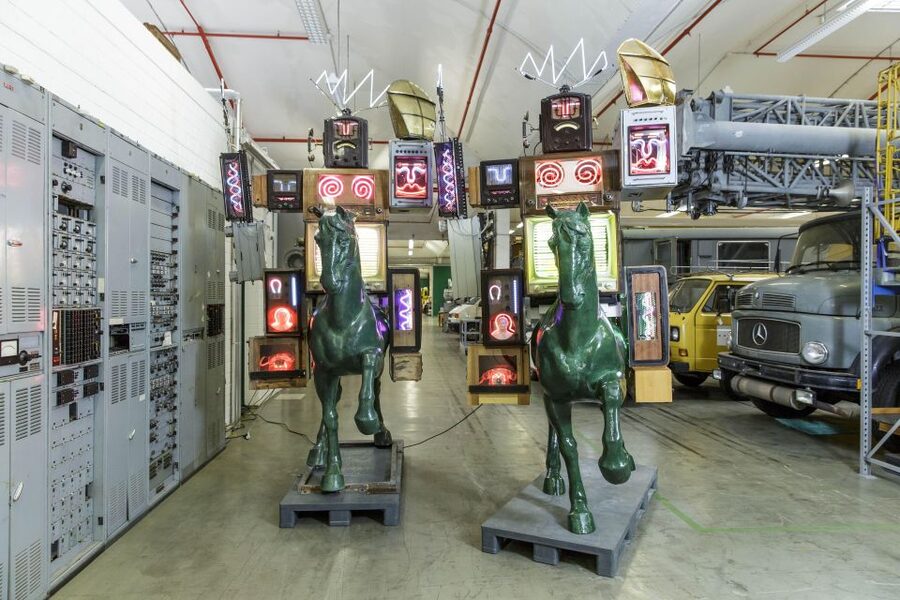
The collection covers communication in a broad sense. It is not limited to telephones or post office equipment. You can expect television, radio, vehicles, telephone boxes, works of art, and objects linked to the growth of worldwide communication networks.
That variety is the tour’s great strength. One moment you are looking at an early receiver, and the next you are standing near a large historic vehicle. The objects help show that communication has always depended on more than wires and machines. It also needed transport, design, public services, and changing ideas about how people connect.
More museum & gallery tickets in Germany:
- Berlin: Jewish Museum Berlin Entrance Ticket
★ 4.5 · 8,393 reviews - Berlin: DDR Museum Tickets
★ 4.3 · 3,443 reviews - Berlin: Natural History Museum Entrance Ticket
★ 4.6 · 3,382 reviews
From tube receivers to internet radio
The technology section offers one of the clearest reasons to take the guided tour. The development from tube receivers to internet radio is a compact lesson in how quickly domestic technology can change.
Early tube equipment can look bulky and unfamiliar today. It also shows how much space and technical hardware once went into receiving a signal. Later designs from radio history often became smaller, cleaner, and more intentional in appearance.
I like the fact that the tour includes both function and design. Some radio objects are important because of what they did. Others matter because their shape, materials, and styling influenced everyday life. The collection’s design icons help you see radio as both a household tool and a cultural object.
The move toward internet radio connects the older equipment to your own habits. You do not need to be a technology specialist to follow the basic story. The point is not only that machines became newer. It is that communication became more portable, more personal, and more closely tied to worldwide networks.
Because the tour lasts only 1.5 hours, the guide has to keep the story moving. You will not get every technical detail about every device. If you enjoy studying labels at length, you may wish for more free time. The benefit is a focused route that gives you a useful outline of the collection without leaving you to sort through 375,000 objects alone.
The world’s largest telephone collection
For many people, the telephone section will be the heart of the visit. The depot holds the world’s largest collection of telephones, making it possible to see the changes in calling equipment across a long period.
Telephone design tells a very human story. A phone can reveal where it was used, who it was made for, and how much space it occupied in a home or public building. The collection also helps you understand the shift from fixed equipment to the mobile and networked systems that shape daily life now.
Telephone boxes add a strong visual link to public communication. They are large, familiar objects, but seeing them within a depot filled with other communication equipment gives them a different role. They become part of a broader story about access, public services, and the way communication moved beyond the private home.
The guide is important here. A large collection can easily become a line of objects without a clear purpose. The tour’s value comes from learning why certain examples matter and how they fit into the development of communication.
You should not expect to see every telephone in detail. The collection is simply too large. Instead, expect selected examples and background that help you understand why the depot is much bigger than the Frankfurt exhibition.
Sleighs, buses, and the photo-friendly side of the depot
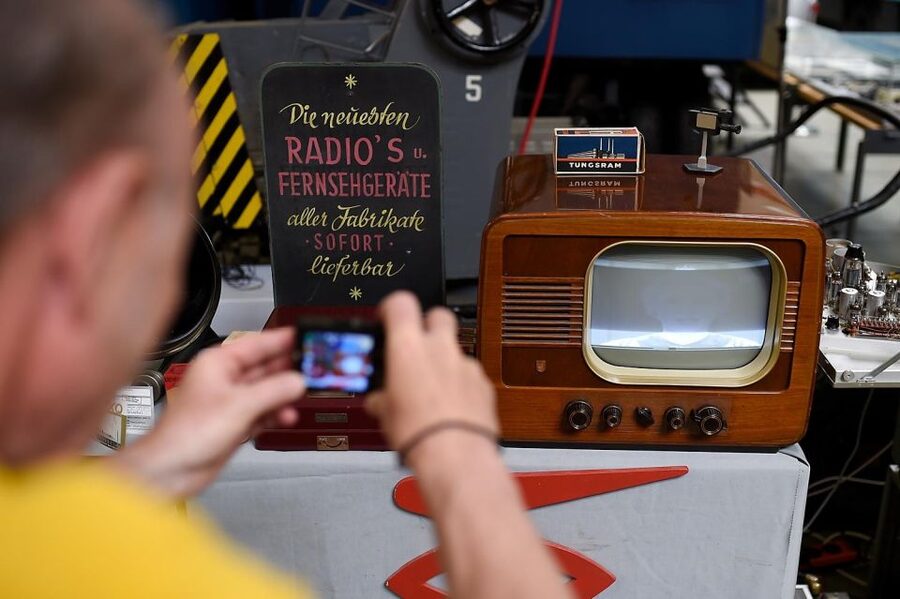
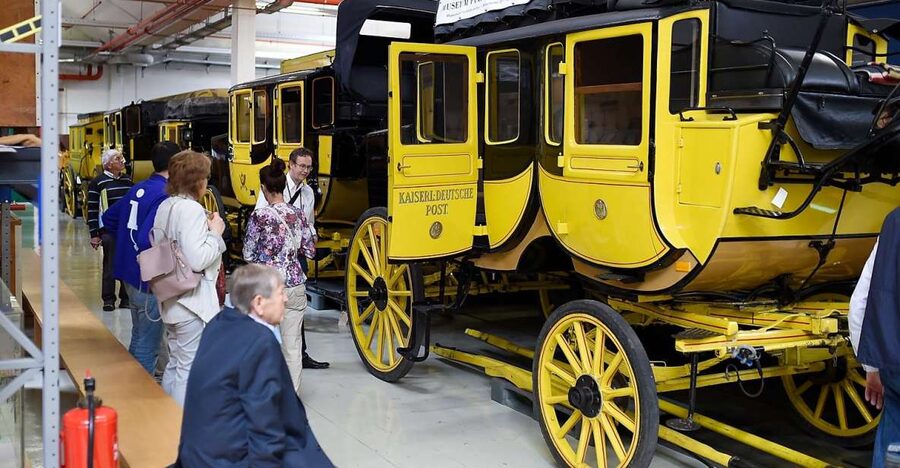
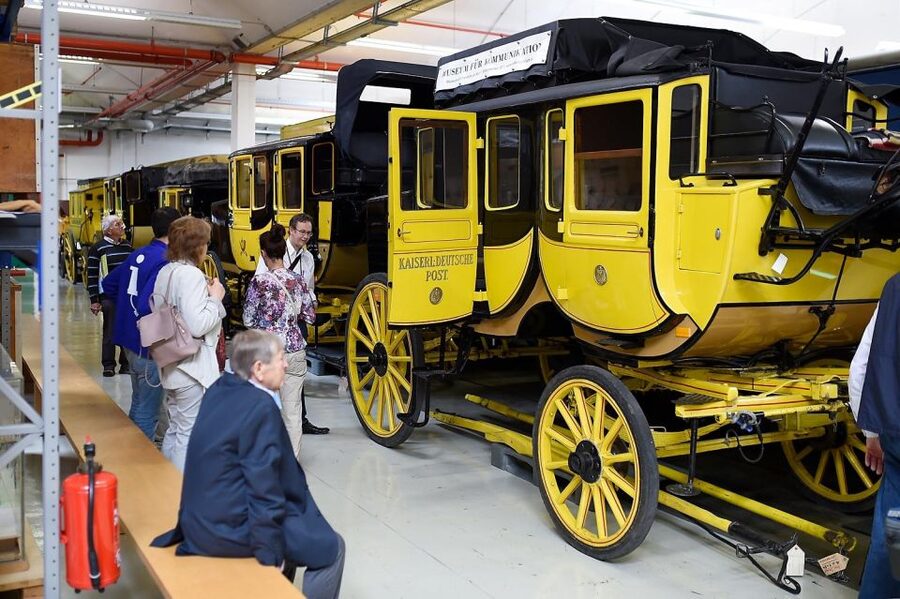
The large objects give this experience a welcome change of pace. Sleighs, buses, and telephone boxes are easier to grasp at a glance than a technical device with a complicated inner mechanism.
These objects also show that communication systems relied on movement. Messages, mail, equipment, and people had to travel. A sleigh or bus can therefore tell part of the story even if it is not a communication device in the narrow sense.
The vehicles are also the best place to bring a camera. The experience specifically highlights the chance to photograph yourself with rare historic vehicles. That makes the tour more appealing to families and anyone who prefers an active, visual museum visit over a room full of small objects.
Still, keep your expectations sensible. The available information does not promise a hands-on vehicle experience or a chance to enter every vehicle. Think of them as preserved collection pieces and striking photo subjects.
A few more Germany trips to weigh up
- Berlin: Neues Museum Entry Ticket
★ 4.6 · 3,261 reviews - Cologne: Chocolate Museum Entrance Ticket
★ 4.4 · 2,790 reviews - Dresden: Church of Our Lady Guided Tour of Gallery
★ 4.7 · 2,421 reviews - Skip-the-Line: Berlin Wall Museum at Checkpoint Charlie
★ 4.1 · 2,041 reviews
More than machines: the 300-plus works of art
The depot’s art collection adds another layer. It includes more than 300 paintings, dating from the 17th century through contemporary works.
This may surprise you if you expect only radios, phones, and transport equipment. The art collection widens the meaning of communication. Paintings can show how people presented themselves, recorded events, exchanged ideas, and understood the world around them.
The time span also helps place the collection in a broader setting. A 17th-century painting and a contemporary work belong to very different communication cultures. The objects around them then show how tools for sending information changed across the same long period.
Do not expect the tour to cover every painting. With only 90 minutes and such a large collection, the guide must select. If art is your main interest, the depot may leave you wanting a slower, dedicated visit. If you enjoy connections between art, design, and technology, the mix makes the tour more rewarding.
What the 90-minute route can really deliver
The tour is best understood as an introduction to a very large collection. It gives you a sense of scale, points out memorable objects, and explains the main stages in communication technology.
A guide-led route is especially useful because the depot can otherwise feel overwhelming. The collection includes so many categories that you could easily spend your time looking at whatever happens to catch your eye. A guide helps turn the visit into a story.
At the same time, ninety minutes creates a firm limit. You will not inspect every radio, phone, painting, or vehicle. You will also not get a complete history of communication in one visit. One recent German assessment described the collection as far too large for the allotted time, which is the right way to approach it.
I would treat the tour as a first visit. Use it to identify the parts that interest you most, then return if possible. The depot works well for repeat visits because the collection offers more than one route through its material: telephones, radio, television, transport, art, or global networking.
The guide’s background is a major part of the value. The tour is conducted in German, so you should be comfortable listening to a live explanation in that language. There is no language option listed for the guided tour, and no guide name is provided, so do not book expecting an English-language presentation.
The added Frankfurt museum ticket
Entry to the Museum of Communication Frankfurt is included with the Heusenstamm depot tour. This changes the value calculation in a useful way.
The depot shows the breadth of the stored collection. The Frankfurt museum lets you see how selected objects are arranged for a public museum visit. Taken together, the two experiences provide a clearer picture than either one alone.
You can visit the Frankfurt museum before or after the depot tour, but the supplied details do not specify a time limit or a required order. Check the current booking information when you reserve so you know how the included admission is handled.
The extra ticket also helps soften the main weakness of the depot tour. If 1.5 hours leaves you wanting more, the Frankfurt museum gives you another chance to explore communication history at a more manageable pace.
Is $16 a fair price?
At $16 per person, this is a strong value if you are interested in museums, design, transport, technology, or German cultural history. You receive the Heusenstamm entry, a 1.5-hour guided walking tour, and admission to the Frankfurt Museum of Communication.
The price is less compelling if you only want a quick look at a few old telephones. The depot’s scale is the reason to go, and that scale rewards curiosity. You are paying not just for objects, but for access to a collection that is far larger than the normal exhibition.
Food and drinks are not included. Plan to eat separately, and do not count on the tour as a full half-day program. The scheduled part lasts 90 minutes, with travel time to Heusenstamm added on.
The booking terms are flexible: you can cancel up to 24 hours before the activity for a full refund, and you can reserve now while paying later. Those conditions are useful if your Frankfurt plans are still shifting.
Getting to Heusenstamm without a rushed start
Give yourself extra time to reach the depot. The location is in Heusenstamm, outside Frankfurt, and the practical warning is clear: Friday afternoon roads can be crowded.
The entrance may also be partly hidden by an agricultural sales stand. That is an unusually specific detail, but it can save you a frustrating few minutes. Look carefully for the entrance rather than assuming it will be obvious from the road.
The supplied information does not specify a train connection, parking arrangement, or exact meeting-point directions. Check those details before leaving Frankfurt. Arriving early matters because a late arrival could cut into a short 90-minute tour.
This is not the kind of activity to squeeze between two tightly scheduled appointments. Build in travel time, especially if you are driving on a Friday afternoon.
Who will enjoy this tour most?
I would recommend the depot to anyone who likes seeing how ordinary technology changed over time. You do not need specialist knowledge. Curiosity is enough, especially if you enjoy comparing old household equipment with the devices you use now.
It is also a good match for:
- People interested in telephone and radio design
- Families who like large vehicles and strong photo opportunities
- Museum visitors who prefer behind-the-scenes collections
- Anyone planning to visit the Frankfurt Museum of Communication
- German speakers who want a guided cultural outing near Frankfurt
- Visitors who enjoy art alongside technology
You may want to skip it if you need an English tour, dislike guided schedules, or want to examine each object at length. The German-only format and tight timing are real limits.
Should you book the Heusenstamm depot tour?
Book it if you want to see the broad collection that cannot fit into the Frankfurt museum. The rare televisions, huge telephone holdings, radio design, paintings, telephone boxes, sleighs, and buses create a varied 90-minute visit, and the included Frankfurt admission adds clear value at $16.
Go with the right plan: arrive early, allow extra time for Friday traffic, and accept that you will see highlights rather than everything. If you can follow German and enjoy large collections with expert guidance, this is a smart addition to a Frankfurt itinerary.
FAQ
How long does the Heusenstamm depot tour last?
The guided walking tour lasts 1.5 hours.
What language is the tour conducted in?
The live guided tour is conducted in German. German is the only language listed for the experience.
What is included in the $16 price?
The price includes entry to the Museum Depot in Heusenstamm, the 1.5-hour guided walking tour, and entry to the Museum of Communication Frankfurt.
Are food and drinks included?
No. Food and drinks are not included.
Can I cancel the booking for a refund?
Yes. You can cancel up to 24 hours in advance for a full refund.
Can I reserve now and pay later?
Yes. The booking option allows you to reserve your place and pay later.
Just added around Germany
- Aachen old town tour – GERMAN (public)★ 5.0 · 24 reviews
- Aachen Private Walking Tour With A Professional Guide★ 5.0 · 11 reviews
- Cologne Highlights: Exclusive Private Tour★ 5.0 · 5 reviews
- Bremen Private Walking Tour With A Professional Guide★ 5.0 · 7 reviews
- Private Walking Tour through the Fascinating Bremen’s City Center★ 5.0 · 5 reviews
- Explore Cologne’s best Street Art Quarter★ 4.5 · 4 reviews
- Bremen Exploration Private Game and City Tour on your Phone★ 4.5 · 7 reviews
- e-Scavenger hunt Bremen: Explore the city at your own pace★ 4.0 · 24 reviews
Museum & Gallery Tickets, compared.






Skip-the-Line: Berlin Wall Museum at Checkpoint Charlie
Read our review →
Browse the lists this tour appears in