
Reviewed · WALKING TOURS
Hamburg: Guided Walking Tour in Danish
Hamburg’s story comes together neatly on this two-hour Danish walking tour, moving from the city center to Speicherstadt and HafenCity. You’ll see the Townhall, the St. Nikolai Memorial, the old warehouse district, and the Elbphilharmonie, while learning how a Saxon marketplace became a major port city.
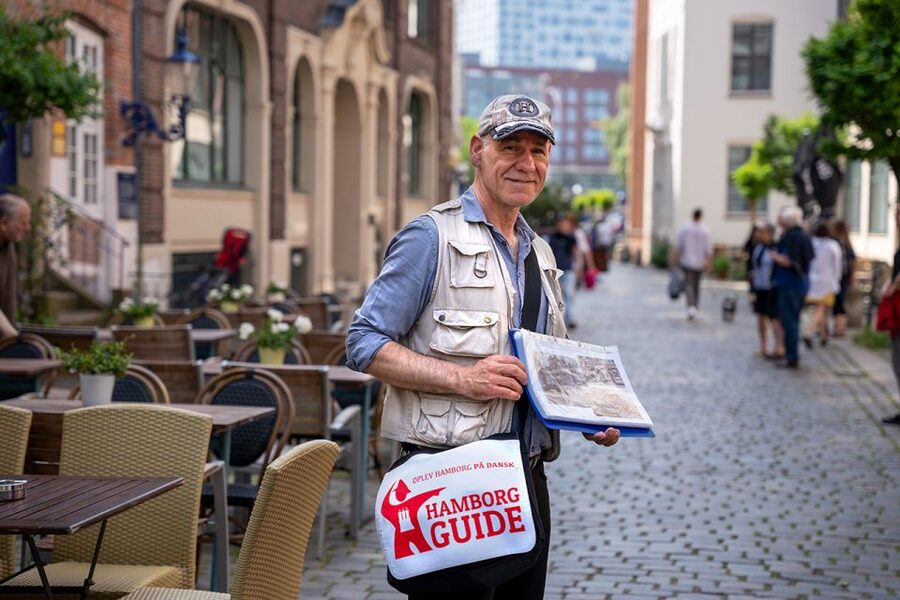
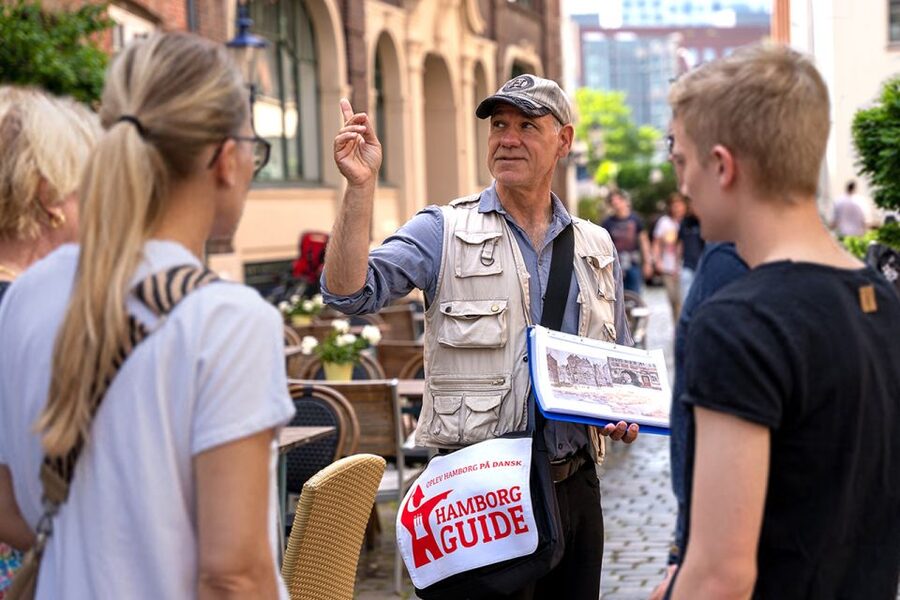
I like the way the route connects medieval trade, wartime destruction, and modern architecture rather than treating Hamburg as a string of unrelated sights. I also like the chance to hear the city’s story in Danish, with guide Christian Meyer-Pedersen singled out for his lively, well-organized presentations and strong command of local history and culture.
The main consideration is pace. Two hours covers a lot of ground, and the tour takes place rain or shine. It is not suited to children under six, wheelchair users, people with mobility impairments, or people with hearing or visual impairments.
In This Review
- Key points to know before you book
- Why this Danish walk gives Hamburg a clear shape
- Starting at Jungfernstieg and the Townhall
- Deichstraße and the city shaped by fire
- The Patriotic Society and Hamburg’s civic story
- St. Nikolai Memorial and the memory of 1943
- Laeiszhof and the world of Hamburg commerce
- Speicherstadt, Hamburg’s brick warehouse district
- HafenCity and a city still being remade
- Finishing at the Elbphilharmonie
- What $280 means for your group
- Who will get the most from this walk
- Practical advice for a smoother two hours
- Should you book this Hamburg tour?
- FAQ
- How long does the Danish walking tour last?
- What language is the tour conducted in?
- Who is the named guide for this experience?
- Where does the tour begin?
- Where does the tour finish?
- Which major sights are included?
- Is the Elbphilharmonie Plaza included in the guided tour?
- What does the price include?
- Is the tour suitable for wheelchair users?
- What should I bring?
Key points to know before you book
- The route crosses three distinct parts of Hamburg: the central city, historic Speicherstadt, and the newer HafenCity district.
- The tour is led in Danish: Christian Meyer-Pedersen is one named guide associated with the experience.
- History is the main attraction: expect stories about the Hanseatic League, Hamburg’s fires, World War II, and the port’s growth.
- The walk ends at the Elbphilharmonie: you can continue to its Plaza and public viewing platform afterward on your own.
- The price works best for a group: $280 covers up to 30 people, making it costly for one or two people but reasonable when shared.
- Come prepared for weather and walking: wear comfortable shoes and clothes, and carry some cash.
Why this Danish walk gives Hamburg a clear shape
Hamburg can feel scattered at first. The Townhall sits inland, the old warehouse district lies closer to the water, and HafenCity pushes the modern city farther east. This route gives you a useful thread through all three areas.
The central idea is Hamburg’s change over roughly 1,200 years. You begin with the city’s early roots as a Saxon marketplace, move into its medieval role in the Hanseatic League, and finish with the port and cultural center you see today.
That broad time span is useful because Hamburg’s appearance can be misleading. Much of what looks old is not as old as you might expect. Fire played a major part in reshaping the city, and the Old Town is in fact largely newer than its name suggests.
A Danish-speaking guide can also make a difference if you prefer to ask questions and follow a detailed explanation in your own language. This is not a sightseeing walk built around quick photo stops. The historical links are the point, so you should choose it if you want context as well as landmarks.
A few more Hamburg trips to weigh up
- Hamburg: Guided Walking Tour for Magic Fans
★ 4.8 · 1,992 reviews - Reeperbahn Walking Tour with St. Pauli Local
★ 4.8 · 577 reviews - Hamburg: Speicherstadt Walking Tour with Coffee Tasting
★ 4.6 · 360 reviews
Starting at Jungfernstieg and the Townhall
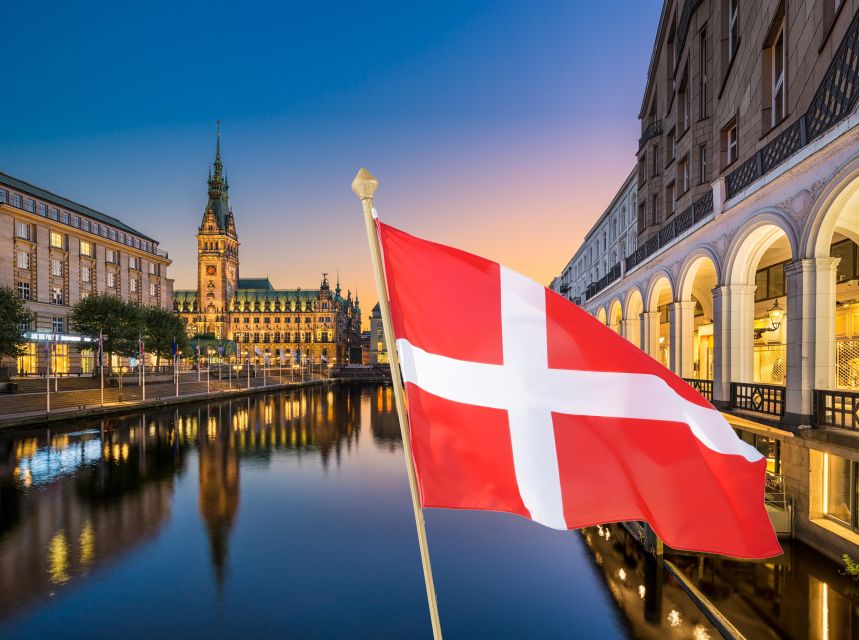
The meeting point is in front of the Swatch shop at the corner of Jungfernstieg and the Alsterarkaden. That gives you a central starting place, close to one of Hamburg’s best-known urban settings.
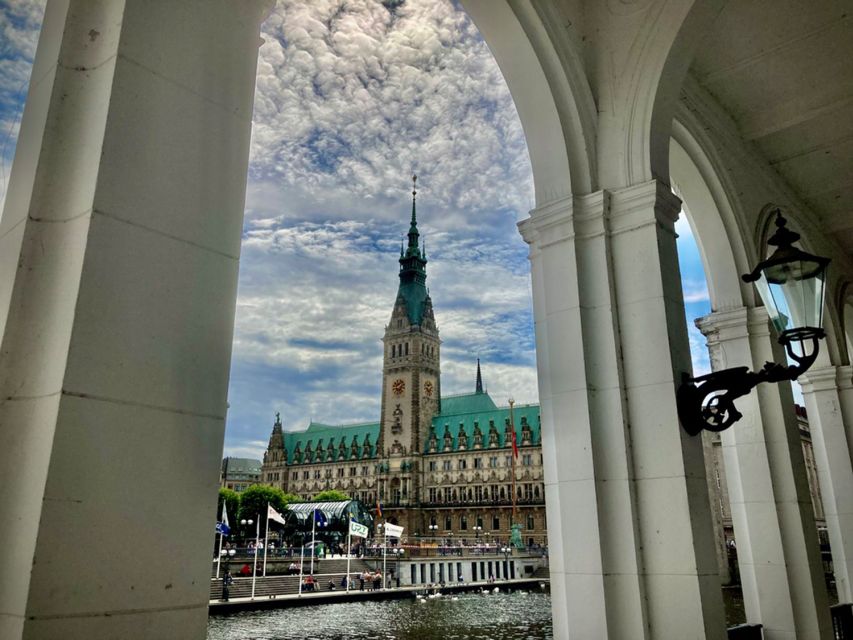
From there, the walk reaches Hamburg’s Townhall, where about 20 minutes are set aside for a guided visit. The building is an obvious first major stop, but its value here is not just its grand exterior. It helps introduce Hamburg as a city with political and commercial power, shaped by its place in northern European trade.
You should expect this part of the tour to set the tone rather than provide a full architectural study. The guide uses historical visual aids, which can help you picture earlier stages of the city and follow changes that are difficult to see from the street.
I like beginning here because it gives you an anchor. You are not thrown straight into the port story. Instead, you first get a sense of Hamburg as a civic center before following its growth toward the river and warehouses.
Deichstraße and the city shaped by fire
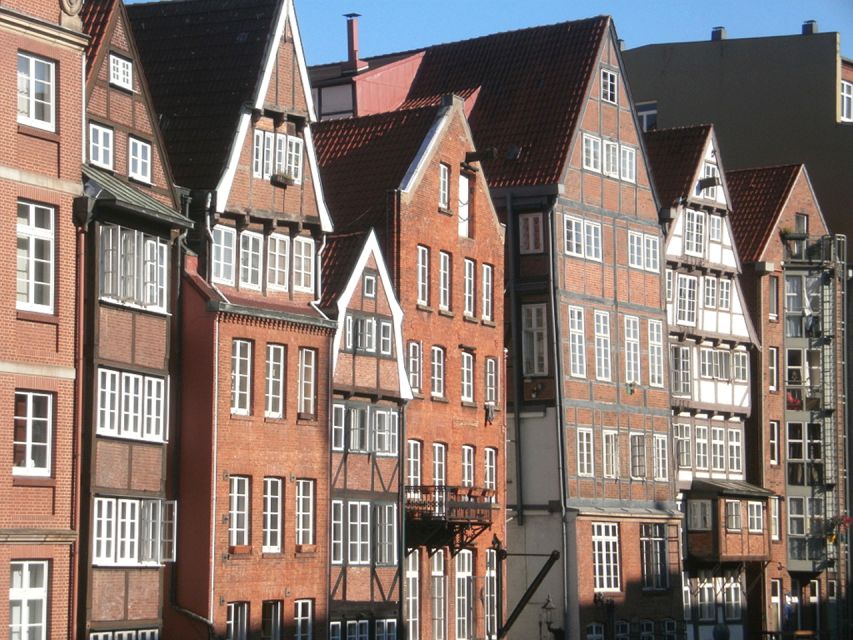
The next stop is Deichstraße, with around 15 minutes of guided commentary. This area is important for understanding Hamburg’s older urban form and the effect of repeated fires.
Fire is one of the tour’s central themes. It helps explain why Hamburg’s Old Town can feel historic while containing so much later rebuilding. The guide’s job here is to show how disasters changed the city, not simply point out attractive façades.
For you, this is one of the more useful stops because it adds a practical question to the city’s history: why does Hamburg look the way it does? Streets, buildings, and districts are not random. Fire, rebuilding, trade, and changing business needs all left their mark.
The stop is fairly short, so do not expect a long architectural inspection. It works best as a compact explanation that prepares you for the memorial sites and warehouse district ahead.
The Patriotic Society and Hamburg’s civic story
The route then pauses for about 10 minutes at the Patriotic Society of 1765. This stop gives the walk another angle on Hamburg’s development, shifting attention from trade and disaster to civic life.
That matters because a port city is more than ships and cargo. Hamburg’s identity also grew through local institutions, public discussion, and the work of people trying to shape the city’s future.
The guide’s historical visual aids should be especially helpful here. Buildings and organizations can be hard to understand if you only hear a name, but images and a clear explanation can show how the city’s institutions fit into the larger story.
This is a short stop, so you will not get a full tour of the organization. Think of it as one piece in the larger account of how Hamburg became an economic and cultural center.
Same city, a completely different kind of day:
- Hamburg: Sex and Crime in St. Pauli Tour for Ages 18+
★ 4.7 · 15,447 reviews - Hamburg: 1.5-Hour Harbor and Speicherstadt Day Cruise
★ 4.6 · 14,200 reviews - Hamburg: 90-Minute Evening Lights Harbor Cruise
★ 4.5 · 7,728 reviews - Hamburg: 2-Hour XXL Port of Hamburg Cruise Tour
★ 4.7 · 6,979 reviews
St. Nikolai Memorial and the memory of 1943
The St. Nikolai Memorial receives around 15 minutes. The church was bombed by Allied forces during Operation Gomorrah in 1943, and the remains now house a World War II memorial and museum.
This is likely the most sobering part of the walk. The damaged church is not presented as a simple old building. It is a place where Hamburg’s wartime destruction remains visible, and the stop gives the city’s modern history a human weight that medieval trade stories cannot provide.
I appreciate that the route includes this memorial rather than skipping from attractive historic streets to the shiny Elbphilharmonie. Hamburg’s past includes both commercial success and severe destruction. Seeing the ruins helps you understand why the city contains so much rebuilding and why memory remains part of its public spaces.
The 15-minute allocation means the stop will be focused. If you want a long museum visit, you will need to return on your own at another time. During the tour, listen for the connection between Operation Gomorrah, the damaged church, and the wider story of Hamburg’s wartime experience.
Laeiszhof and the world of Hamburg commerce
The walk continues to Laeiszhof for about 15 minutes. This stop brings the focus back to commerce, business, and the people whose wealth was tied to Hamburg’s port.
Placed between the memorial and Speicherstadt, Laeiszhof helps bridge two sides of the city. Hamburg was not only a place where historic events happened. It was also a working commercial center, with firms, shipping interests, and business districts that helped drive its growth.
This is where the tour’s structure makes sense. You have heard about the city’s origins, fires, civic institutions, and wartime destruction. Laeiszhof reminds you that Hamburg’s economic story continued through all of those changes.
The guide may use this stop to explain how business shaped the streets around you. Since the total time is limited, expect the main ideas rather than a detailed account of every building.
Speicherstadt, Hamburg’s brick warehouse district
Speicherstadt receives another 15 minutes, and this is one of the route’s major visual highlights. It is described as the world’s largest warehouse district, a place built for storage and trade near the port.
The long brick buildings and waterways give Speicherstadt a very different feel from the civic center. Here, the architecture reflects Hamburg’s commercial purpose. Warehouses were designed to handle goods, connect with transport routes, and support the port economy.
I like this part of the route because it turns an economic history lesson into something you can see. You are not just hearing that Hamburg became a major port. You are walking through the district that helped make that possible.
The stop is still only about 15 minutes, so you should not expect to explore every lane or museum. The tour offers an introduction and a framework. If you want more photographs or time inside a particular attraction, plan to return after the walk.
Speicherstadt is also a good place to notice the contrast between old commerce and HafenCity’s new offices and apartments. That change arrives quickly, and the guide can help you read it as part of Hamburg’s ongoing development.
HafenCity and a city still being remade
HafenCity is given about 15 minutes. This residential and business district represents a newer Hamburg, built around the city’s continuing relationship with the harbor and waterfront.
After the older streets and warehouses, HafenCity can feel like a sharp change. That contrast is useful. It shows that Hamburg’s port story is not locked in the past. The city keeps adapting its waterfront for housing, offices, culture, and public space.
You will not be taking a separate transport connection between these stops. This is a walking route, so comfortable shoes matter. The city-center streets, warehouse district, and HafenCity sections add up to a steady two-hour outing.
HafenCity is also the point where the tour’s historical arc reaches the present. You can compare the practical brick warehouses of Speicherstadt with newer buildings designed for modern city life. The guide’s role is to explain why these areas look so different and how they fit into the same port city.
Finishing at the Elbphilharmonie
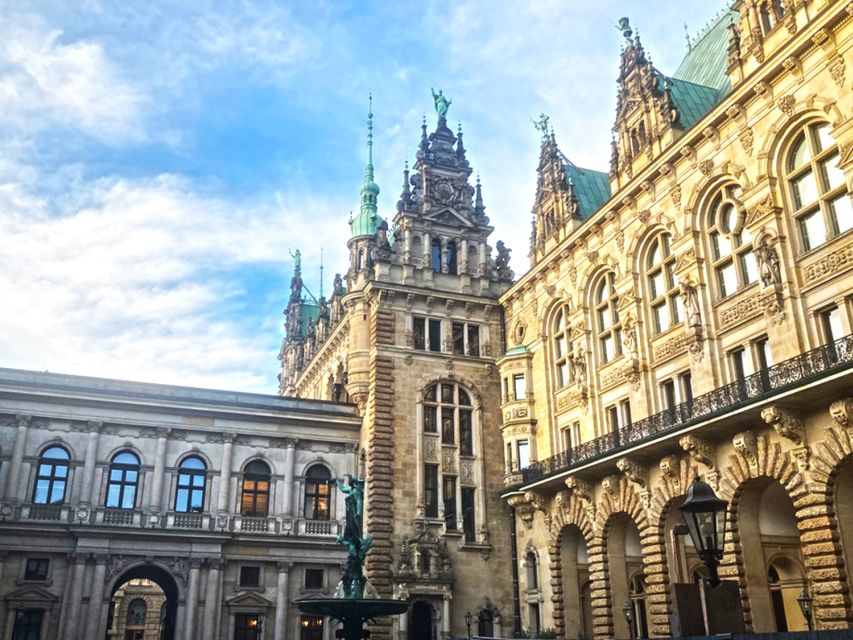
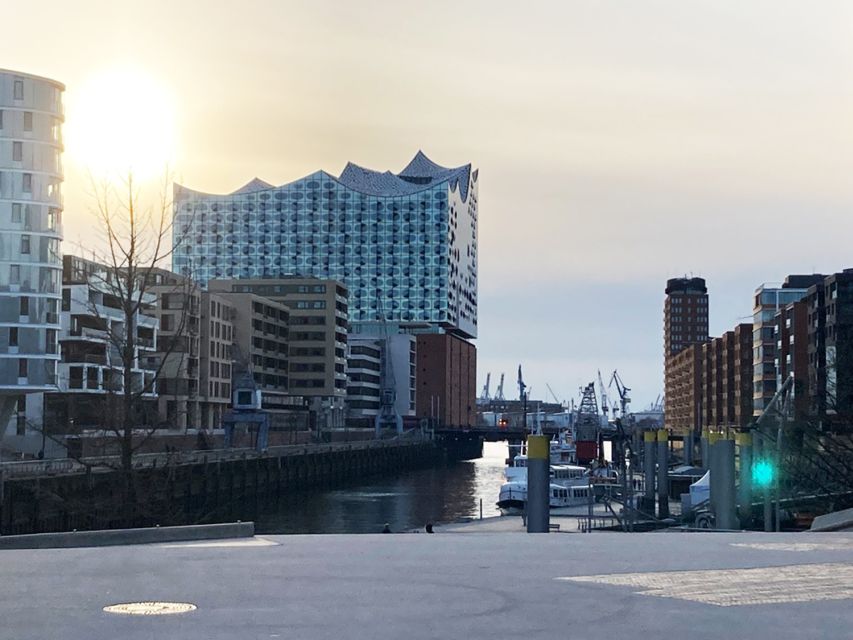
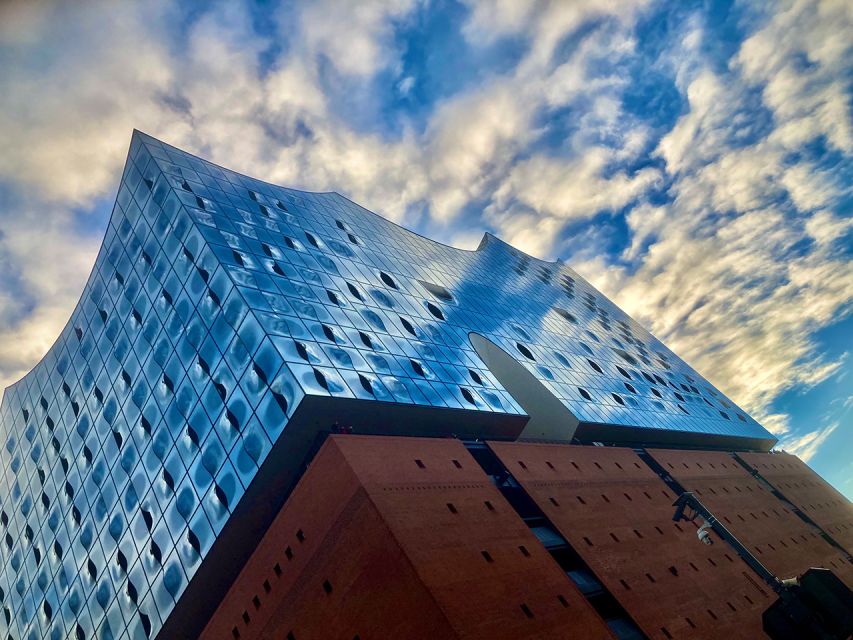
The final major stop is the Elbphilharmonie, with around 15 minutes of guided attention. This grand concert hall is one of Hamburg’s most recognizable modern buildings and a fitting endpoint for a route about change.
The building represents Hamburg’s cultural ambitions as well as its connection to the waterfront. Ending here lets you see the city not only as a port and business center, but also as a place with a major cultural presence.
The tour finishes at Platz der Deutschen Einheit, near the Elbphilharmonie. This is useful because the walk does not end in an arbitrary street. You can continue to the Elbphilharmonie Plaza and public viewing platform on your own after the guide departs.
That extra option adds value, though the Plaza and viewing platform are not part of the guided tour itself. You should treat the walk as an introduction and plan separate time if you want to explore the building’s public areas.
What $280 means for your group
The price is $280 per group of up to 30 people. That makes the value depend heavily on your party size.
For a couple, the cost is high compared with a standard shared walking tour. You are paying for a private group format, a licensed guide, Danish-language instruction, and a route that covers several central districts in two hours.
For a larger Danish-speaking family, club, school group, or organized party, the calculation changes. At the maximum group size, the per-person cost becomes modest. Even with a smaller group, the ability to have the experience in Danish may be worth more than a cheaper general-language walk.
The price includes the walking tour, licensed guide, and historical visual aids. Food and drinks are not included, so plan those separately. Bringing cash is also recommended.
This tour is strongest when you want a guided overview at the beginning of a Hamburg stay. It helps you decide where to spend more time later, especially at Speicherstadt, the St. Nikolai Memorial, or the Elbphilharmonie.
Who will get the most from this walk
I would choose this tour for Danish-speaking adults who want a clear introduction to Hamburg’s past and present without spending a full day on formal sightseeing.
It suits you especially well if:
- You want explanations in Danish rather than relying on written information.
- You are interested in how trade, fire, war, and redevelopment shaped the city.
- You prefer walking through several districts instead of visiting one museum.
- You are traveling in a group large enough to make the private group price sensible.
- You want to finish near the Elbphilharmonie and continue exploring there.
It is less suitable if you need a slow pace, step-free access, or extensive time inside museums. The experience is not suitable for wheelchair users, people with mobility impairments, people with visual impairments, or people with hearing impairments. Children under six cannot join.
The weather also matters. The walk runs rain or shine, and one Danish-language review described a very cold outing that was still worthwhile. That is a useful warning: check the forecast, wear proper clothes, and do not treat this as a sheltered museum visit.
Practical advice for a smoother two hours
Meet at the Swatch shop in front of Jungfernstieg and the Alsterarkaden. Arrive with comfortable shoes, comfortable clothing, and cash.
The route has several 15-minute stops and one 20-minute Townhall segment. That gives you a useful overview, but not much spare time for long photographs or browsing. If a particular place matters most to you, note it during the walk and return later.
Ask questions if you can. A Danish guide can explain local terms and historical connections more naturally than a written sign. Christian Meyer-Pedersen is specifically associated with the experience, and the available feedback highlights his lively, well-arranged accounts of Hamburg’s history and culture.
The tour can be canceled up to 24 hours before departure for a full refund, and you can reserve while paying later. Starting times vary, so check availability before setting other plans around it.
Should you book this Hamburg tour?
Book it if you want Hamburg explained in Danish and you value a connected story more than a long stop at any single sight. The combination of the Townhall, Deichstraße, St. Nikolai Memorial, Speicherstadt, HafenCity, and the Elbphilharmonie gives you a strong first look at the city’s major themes.
The best value comes with a group. At $280 for up to 30 people, it is difficult to recommend for only one or two people on price alone, but it can be a sensible choice for a larger party that wants a licensed Danish-speaking guide.
Skip it if you need an accessible route, dislike walking in poor weather, or want detailed interior visits. For everyone else, this is a focused way to understand why Hamburg looks both old and new, and why its port remains central to the city’s identity.
FAQ
How long does the Danish walking tour last?
The tour lasts two hours.
What language is the tour conducted in?
The live tour is conducted in Danish.
Who is the named guide for this experience?
Christian Meyer-Pedersen is a named Danish-speaking guide associated with the tour.
Where does the tour begin?
Meet in front of the Swatch Shop at the corner of Jungfernstieg and Alsterarkaden.
Where does the tour finish?
The walk finishes at Platz der Deutschen Einheit, 20457 Hamburg, near the Elbphilharmonie.
Which major sights are included?
The route includes Hamburg’s Townhall, Deichstraße, the Patriotic Society of 1765, the St. Nikolai Memorial, Laeiszhof, Speicherstadt, HafenCity, and the Elbphilharmonie.
Is the Elbphilharmonie Plaza included in the guided tour?
The tour ends near the Elbphilharmonie and gives you the opportunity to visit the Plaza and public viewing platform on your own. Those visits are not part of the guided walking tour.
What does the price include?
The $280 group price includes the walking tour, a licensed guide, and historical visual aids. Food and drinks are not included.
Is the tour suitable for wheelchair users?
No. The tour is not suitable for wheelchair users or people with mobility impairments.
What should I bring?
Bring comfortable shoes, comfortable clothes, and cash. The tour runs rain or shine, so dress for the weather.
Just added around Hamburg
- Hamburg: Historical Tour of the St. Pauli Sex Work District★ 4.4 · 215 reviews
- Hamburg: St. Pauli Food and Bier Tour★ 4.7 · 5 reviews
- Hamburg: Private Tour Red Light District Walking Tour★ 4.7 · 227 reviews
- St. Pauli Tour: Drag-Attack with Barbie Stupid & Lee Jackson★ 4.8 · 280 reviews
- St. Michael’s, Elbe Tunnel & Harbor 2-Hour Hamburg Tour★ 4.9 · 21 reviews
- Satt Pauli – der kulinarische Rundgang durch St. Pauli★ 4.8 · 12 reviews
- Hamburg: Safari tour in St. Pauli★ 4.9 · 11 reviews
- Hamburg: Reeperbahn Comedy Club★ 4.3 · 53 reviews
Walking Tours, compared.





Berlin’s Best: 2 Hour Walking Tour Third Reich and the Cold War
Read our review →


Third Reich Berlin: Hitler and WWII Walking Tour
Read our review →Browse the lists this tour appears in