
Reviewed · WALKING TOURS
Füssen: Private Guided Walking Tour
Füssen’s best feature is that its history is packed into a town you can cross on foot. In 90 minutes, this private walk links Roman beginnings, medieval alleys, and Bavarian Baroque with the High Castle and St. Mang’s monastery. It also explains why Füssen became tied to the Romantic Road and the nearby Neuschwanstein visit.
I like the private format, since your guide can adjust the pace and answer your group’s questions. I also like the useful regional context: Sandra, who has guided this walk, helped visitors connect Füssen’s story with a Neuschwanstein day and even offered food suggestions afterward. The main drawback is that entrance fees are not included, and one poor experience shows that the quality of the history talk can depend on the guide assigned.
In This Review
- Key points to know before booking
- A 90-minute introduction to Füssen
- Roman roots and the meaning behind Füssen
- St. Mang’s monastery and Füssen’s Christian beginnings
- High Castle and the prince-bishops of Augsburg
- The Treaty of Füssen and the end of imperial ambition
- From town wall to Romantic Road
- The river, churches, and everyday Füssen
- Why the private format changes the experience
- How the Neuschwanstein connection helps
- What the guide quality means for your decision
- Booking value, timing, and practical limits
- Should you book the Füssen walking tour?
- FAQ
- How long is the Füssen private walking tour?
- Where does the tour meet?
- How much does the tour cost?
- Which languages are available?
- Are entrance fees included?
- Is the tour suitable for wheelchair users?
- Can the tour be customized?
Key points to know before booking
- High Castle anchors the walk: Learn how the former summer residence of the prince-bishops of Augsburg shaped Füssen’s skyline and status.
- Füssen’s name has a walking connection: The town’s name is linked to the idea of feet, fitting a compact center made for exploring on foot.
- St. Mang adds ninth-century depth: The Benedictine monastery brings the town’s Christian beginnings into the story.
- Private groups get flexibility: Your local guide can adjust the tour on the spot for a group of up to 15.
- Sandra has earned especially warm praise: Her clear explanations, friendly manner, and ability to step in at short notice made a strong impression.
- Bring sensible shoes: Cobblestones, historic lanes, and the town’s walking-focused route make comfortable footwear essential.
A 90-minute introduction to Füssen
This is not a castle-transfer excursion. It is a short, private orientation walk through Füssen, the closest town to Neuschwanstein. That distinction matters. If you have arranged a visit to the famous hilltop palace, this tour gives you the setting and regional background that can otherwise get lost in the rush from train station to shuttle bus to castle.
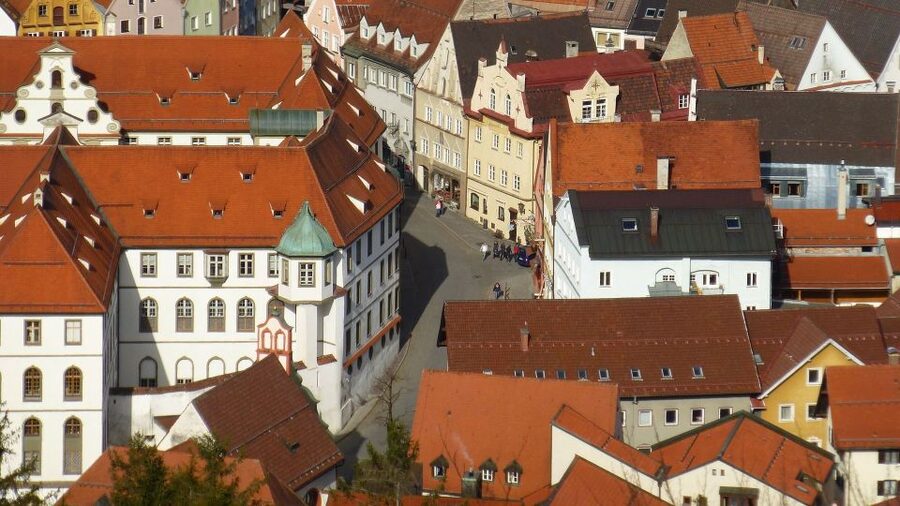
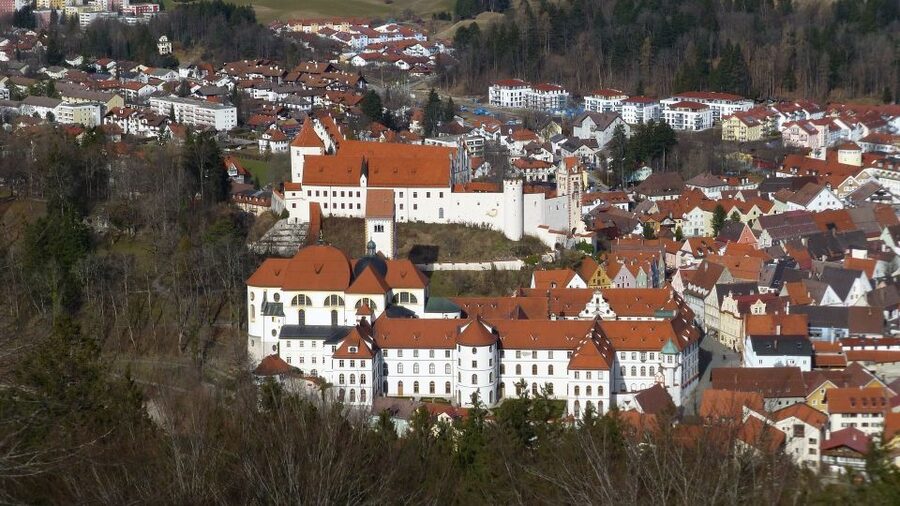
The meeting point is Schrannenplatz, at Schrannengasse 10. From there, the walk presents Füssen as a compact old town with a surviving medieval character. You can expect cobbled lanes, pastel-toned buildings, sections of town wall, churches, museums, and the turquoise river running through the center.
The route is designed to be read as a story rather than as a list of monuments. Roman roots lead into the town’s Christian beginnings. St. Mang’s Benedictine tradition points to the ninth century. High Castle brings in the prince-bishops of Augsburg, while the Treaty of Füssen connects this small Bavarian town to the end of major imperial ambitions.
That is a lot for an hour and a half. The advantage is focus. You get a useful first look instead of trying to absorb every church, square, and museum in town. The tradeoff is that the tour cannot give every sight a long visit. Think of it as a strong framework for your own later wandering.
A few more Germany trips to weigh up
- Discover Berlin Half-Day Walking Tour
★ 5.0 · 9,624 reviews - Berlin: Third Reich and Cold War 2 Hour Walking Tour
★ 4.9 · 6,830 reviews - Munich: Third Reich & WWII Walking Tour
★ 4.6 · 6,181 reviews
Roman roots and the meaning behind Füssen
The Roman chapter gives the town an older foundation than its medieval walls suggest. Your guide introduces Füssen’s Roman roots, helping you see the place as part of a long route through the Alpine region rather than simply a pretty stop near Neuschwanstein.
The tour also explains the town’s name and its connection to feet. That small detail makes the walk feel more personal and practical: Füssen is a place best understood at street level, with your own feet carrying you from lane to lane.
I like this kind of opening because it keeps the story tied to the ground beneath you. Instead of beginning with dates alone, the guide can show how the town’s location and name fit its role as a place people have passed through for centuries.
The available information does not promise archaeological displays or a dedicated Roman site visit, so do not book this expecting a museum-style Roman tour. The value is the context, especially if you know little about Füssen before arriving.
St. Mang’s monastery and Füssen’s Christian beginnings
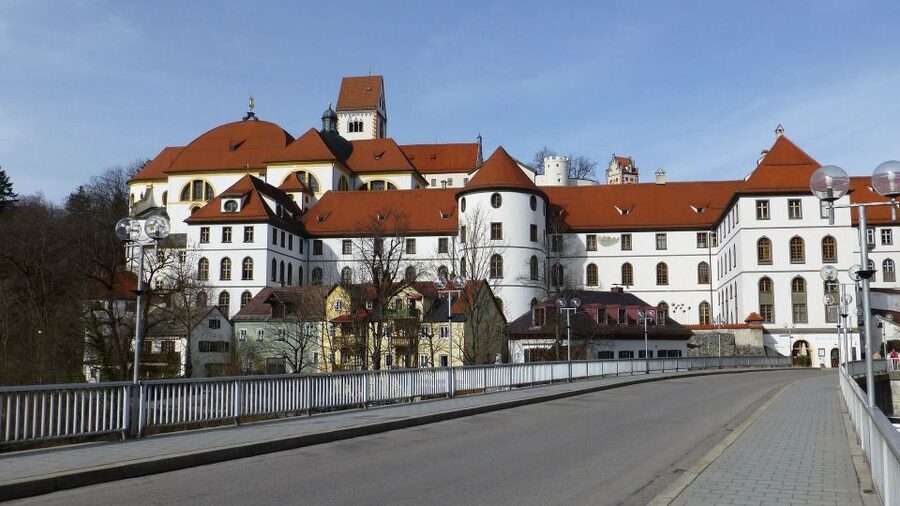
St. Mang’s Benedictine monastery supplies the spiritual center of the walk. Its history reaches back to the ninth century, and the tour connects it with the Christian beginnings of Füssen.
The monastery also introduces Magnus of Füssen, the town’s patron saint. Learning about Magnus gives the town a local figure around whom religious tradition and civic identity developed. It is a more human way to approach church history than simply admiring a façade.
The church and monastery area are important because Füssen’s old town is not just a collection of attractive painted buildings. Its appearance grew from institutions that shaped work, worship, education, and local power. Your guide’s job is to make those links clear while you move through the streets.
The tour information does not include an entrance ticket, and entrance fees are specifically excluded. Ask your guide what can be seen from the route and what would require separate admission. If you want extended interior time, this 90-minute walk may need to be paired with your own visit afterward.
High Castle and the prince-bishops of Augsburg
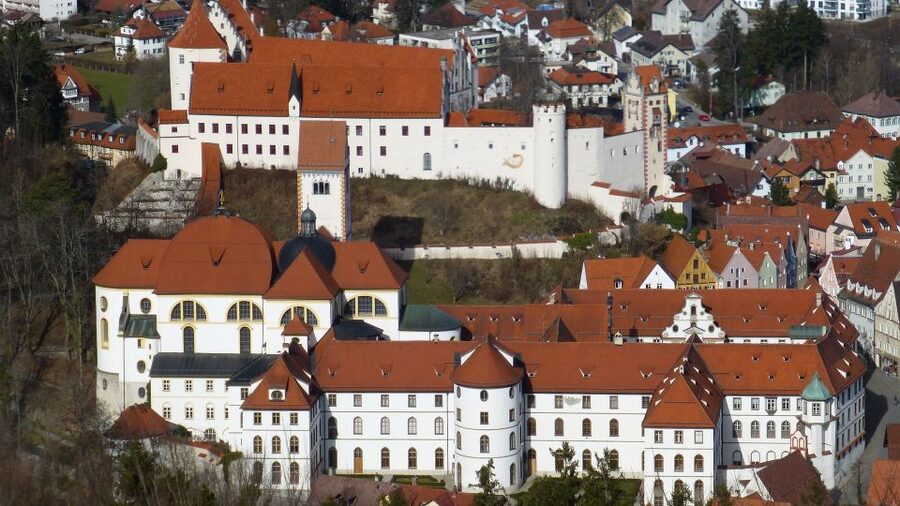
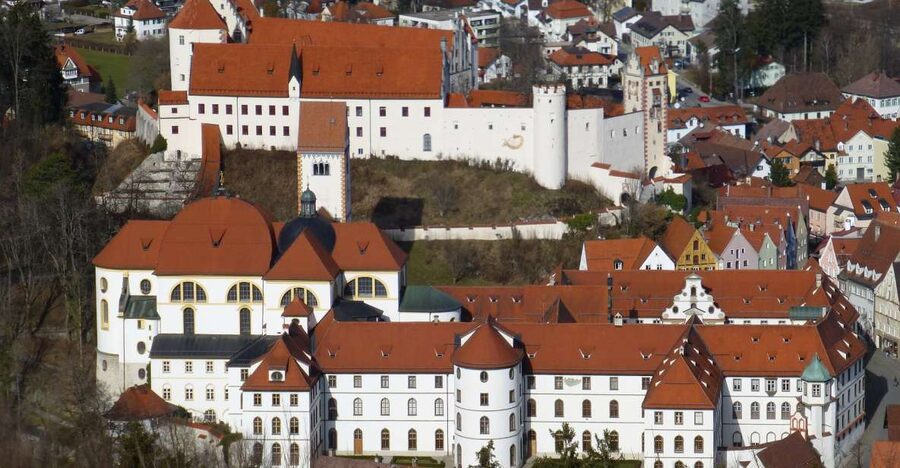
High Castle is the architectural star of the tour. Once the summer residence of the prince-bishops of Augsburg, it shows how much influence could gather in a town of Füssen’s size.
The title of summer residence tells you something useful. This was not merely a defensive shell. It was also a place of status, comfort, and display for powerful church leaders. The castle helps explain the layers of authority that shaped the town: religious, political, and regional.
Your guide will put the building into the wider story of Bavaria and the prince-bishops. The setting also gives the walk a change of scale. Narrow lanes and shopfronts make Füssen feel intimate, while High Castle reminds you that the town once served important rulers.
Do not assume that the private walking fee includes entry to every castle or museum. The tour price covers the local guide, not entrance fees. If seeing the interiors is a priority, check the day’s admission arrangements before booking and leave time after the walk if needed.
The practical benefit of visiting High Castle with a guide is the explanation. Without context, you may see a handsome historic complex and move on. With the political story, the building becomes a key to understanding Füssen’s place in the region.
Same city, a completely different kind of day:
- Berlin: Reichstag, Dome and Government District Guided Tour
★ 4.7 · 18,288 reviews - Berlin: 1-Hour City Tour by Boat with Guaranteed Seating
★ 4.3 · 16,993 reviews - Hamburg: Sex and Crime in St. Pauli Tour for Ages 18+
★ 4.7 · 15,447 reviews - Hamburg: 1.5-Hour Harbor and Speicherstadt Day Cruise
★ 4.6 · 14,200 reviews
The Treaty of Füssen and the end of imperial ambition
The Treaty of Füssen gives the walk an unexpected political turn. The guide explains how the agreement ended imperial ambitions, bringing European power struggles into the streets of this small Bavarian town.
You do not need to be an expert in German or European politics to appreciate this stop. The point is that Füssen was not isolated from major events. Its location and connections brought it into negotiations that affected the balance of power far beyond the town walls.
This is also where a good guide matters most. Dates and names can pass quickly if they are not tied to a clear explanation. One guide, Sandra, was praised for explaining Bavarian and Füssen history in a friendly, accessible way. Another account described especially clear treatment of medieval dates and the Christian beginnings of the town.
There is one reason to keep expectations measured. One booking received a very poor rating because the information felt thin, despite the rain not being a problem. That warning is worth taking seriously: this experience depends on the person leading it. The private setup gives you room to ask questions, but it cannot guarantee the same depth from every guide.
From town wall to Romantic Road
Füssen’s medieval walls and old lanes are not background decoration. They give you the physical sense of a town shaped before modern traffic and large-scale development.
As you walk, look for the contrast between the old structure and present-day life. Pastel shops, museums, churches, and everyday services now share space with cobblestones and historic buildings. That mix is part of Füssen’s appeal. You get an old-world setting without being cut off from cafés, shops, and other useful services.
The Romantic Road connection adds another layer. Füssen is commonly treated as the southern endpoint or gateway for this well-known route through Bavaria, and the tour traces that role. The guide can help you understand why the town fits the route’s appeal: medieval architecture, church art, walls, and a setting near the Alps.
Keep the focus on what is promised. This is a Füssen walking tour, not a full Romantic Road excursion. There is no transport between towns, and the 90-minute duration is too short for a broader regional itinerary. It works best as a local walk before or after your other plans.
The river, churches, and everyday Füssen
The turquoise river through the center gives the route a welcome natural pause. Its color and movement contrast with the hard edges of walls and cobblestones, and it helps you understand how the town is arranged.
The tour also takes in Bavarian architecture and Baroque churches. These details matter because Füssen’s visual character comes from several periods at once. Medieval town planning, religious buildings, pastel façades, and later civic life all sit close together.
I would use the walk to notice small changes in the streets rather than rushing from one major sight to the next. A guide can point out why a building matters, how the old town developed, or how a church fits the local story. After the tour, you can return to the places that caught your eye.
The route is not suitable for people with mobility impairments or wheelchair users. That restriction is important here, since cobbled lanes and historic streets can make movement harder. Everyone else should wear comfortable shoes, as requested, and expect a genuine walking tour rather than a brief photo stop.
Why the private format changes the experience
The group can include up to 15 people, but the price is charged per group rather than per person. At $310, that can be fair for a larger family or group of friends. Split among 10 people, it works out to $31 each. Split among two people, it becomes $155 per person for 90 minutes, which is a much harder value to defend.
The private format has three clear benefits. Your guide is with your group only, the pace can be adjusted, and the route may be customized on the spot. A family interested in local saints can ask for more religious history. A group headed to Neuschwanstein can focus on how Füssen fits into the region. Someone short on time can ask the guide to keep the walk moving.
Time flexibility has proved useful. A guide was able to start early for a group with tight plans, and even brought umbrellas in wet weather. That suggests some practical goodwill, but do not treat an early start as guaranteed. Confirm the time you need when arranging the tour.
The language options are English and German. If your group has mixed language needs, check that the selected guide can handle your preferred language before you finalize the booking.
How the Neuschwanstein connection helps
Füssen is the nearest town to Neuschwanstein, so many people arrive with the castle as their main goal. That is understandable, but it can leave Füssen feeling like a staging area. This walk corrects that imbalance.
A tour before Neuschwanstein can help you understand the region before you reach the palace. One visitor found the sequence especially useful, then followed the walk with lunch and dinner based on Sandra’s recommendations. You should not expect meals to be part of the tour, but you can use the private setting to ask for local suggestions.
The timing works best when your Füssen walk is not squeezed between strict transport connections. Ninety minutes is enough for a strong introduction, but the tour does not include the castle visit itself, admission, or transport to Neuschwanstein. Plan those separately.
If your entire day is already packed with castle tickets and transfers, the tour may feel like one more appointment. If you have a free morning, afternoon, or evening in Füssen, it gives the town a proper place in your itinerary.
What the guide quality means for your decision
The overall rating is 4.6 from seven ratings, with several full marks. The strongest praise centers on clear history, a friendly manner, flexibility, and useful local advice. Sandra receives particular credit for stepping in at short notice and still delivering a well-organized walk.
That positive pattern tells me what to expect from the best version of the experience: a guide who explains medieval dates without turning the walk into a lecture, links religious history to buildings you can see, and responds to your group’s interests.
The low score supplies the necessary caution. A guide who gives thin explanations can reduce the value of a history-focused tour, especially when there are no included interior admissions or other paid features to carry the experience. You are paying mainly for interpretation.
Before the walk begins, tell the guide what matters to you. Mention if you have already booked Neuschwanstein, if you want more architecture than politics, or if you need food advice afterward. A private tour gives you a better chance of getting the kind of explanation you want.
Booking value, timing, and practical limits
The $310 group price makes the most sense for a family, reunion, or group of friends who would otherwise need several separate tickets or want a guide devoted to them. For a couple, the price is high for 90 minutes, particularly since entrance fees are extra.
The short duration can also be a strength. You get a useful introduction without giving up half a day. That makes it easy to fit around a castle booking, train arrival, or meal.
Free cancellation up to 24 hours before the tour and reserve-now, pay-later booking add flexibility. Those terms help if your Bavarian plans are still moving, though you still need to check the available start times before committing.
The meeting point is in central Füssen, at Schrannenplatz. Bring comfortable shoes. English and German are offered, and the group is private. People using wheelchairs or those with mobility impairments should not book this activity because it is not designed for them.
Should you book the Füssen walking tour?
Book it if you want Füssen to be more than a quick stop before Neuschwanstein. It is a good fit for history-minded visitors, first-time guests, families who want a private pace, and groups that value local questions and flexible emphasis.
The strongest reasons to book are the compact route, the High Castle and St. Mang’s connections, the Treaty of Füssen story, and the chance to place Neuschwanstein within the wider town and region. Sandra’s strong performance also shows what the tour can offer when the guide brings warmth and clear explanations.
Skip it if you only want castle interiors, need wheelchair access, or are traveling as a couple on a tight budget. You should also think twice if you already know Füssen well and prefer to wander without historical commentary.
For a larger group with time to walk, the price can work. For a small group, compare it with exploring independently and paying only for any attractions you choose to enter. My practical choice would be to book the tour before a Neuschwanstein visit, then use the rest of the day to return to the church, castle, river, or lane that made you curious.
FAQ
How long is the Füssen private walking tour?
The tour lasts 90 minutes.
Where does the tour meet?
The meeting point is Schrannenplatz, Schrannengasse 10, 87629 Füssen, Germany.
How much does the tour cost?
The price is $310 per private group of up to 15 people.
Which languages are available?
The live guide options are English and German.
Are entrance fees included?
No. Entrance fees are not included in the tour price.
Is the tour suitable for wheelchair users?
No. The activity is not suitable for wheelchair users or people with mobility impairments.
Can the tour be customized?
Yes. The local guide can make possible customizations on the spot for your private group.
Just added around Germany
- Aachen old town tour – GERMAN (public)★ 5.0 · 24 reviews
- Aachen Private Walking Tour With A Professional Guide★ 5.0 · 11 reviews
- Cologne Highlights: Exclusive Private Tour★ 5.0 · 5 reviews
- Bremen Private Walking Tour With A Professional Guide★ 5.0 · 7 reviews
- Private Walking Tour through the Fascinating Bremen’s City Center★ 5.0 · 5 reviews
- Explore Cologne’s best Street Art Quarter★ 4.5 · 4 reviews
- Bremen Exploration Private Game and City Tour on your Phone★ 4.5 · 7 reviews
- e-Scavenger hunt Bremen: Explore the city at your own pace★ 4.0 · 24 reviews
Walking Tours, compared.





Berlin’s Best: 2 Hour Walking Tour Third Reich and the Cold War
Read our review →


Third Reich Berlin: Hitler and WWII Walking Tour
Read our review →Browse the lists this tour appears in