
Reviewed · WALKING TOURS
Flensburg: Private Guided Walking Tour
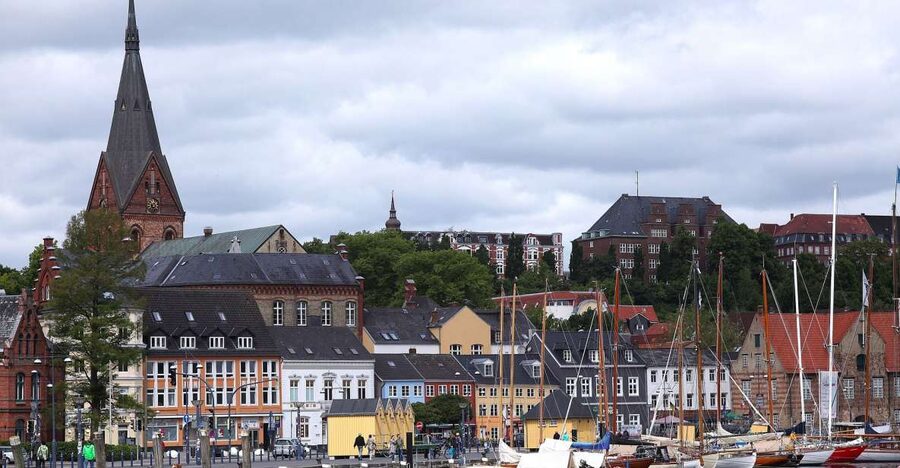
Flensburg is a border town with two voices. Its streets reflect more than 400 years under the Danish crown, while later ties to Prussia and Germany add another layer. I like that this private walk treats the town as a meeting place between cultures, not just another pretty northern German stop. I also like the chance to connect Flensburg’s old buildings with its role as a rum-trading port.
The private format is a real plus: your guide is with your group only, and you can ask for adjustments as you go. A German-language tour in July was praised for stories away from the main hotspots, while a November group got a useful warning to prepare for the cold. The main drawback is mobility: this is a walking tour for people who can manage a historic town on foot, and the advertised duration is 90 minutes, even though the description also refers to two hours.
In This Review
- Key points at a glance
- Starting at Saint Nikolai Church
- Flensburg’s Danish roots and changing rule
- Reading the architecture instead of just photographing it
- The harbor and Flensburg’s rum-trade past
- War, politics, and the Battle of Flensburg
- The Danish minority and modern German-Danish relations
- A 90-minute private walk for up to 15 people
- Weather, shoes, and walking comfort
- Who will get the most from this experience
- Booking flexibility and meeting details
- Should you book the Flensburg walking tour?
- FAQ
- Where does the Flensburg walking tour meet?
- How long does the tour last?
- How much does the private tour cost?
- How many people can join one group?
- Is the tour available in English?
- Is this a private tour?
- Can the route be customized?
- Are entrance fees included?
- What should I bring?
- Is the tour suitable for wheelchair users?
Key points at a glance
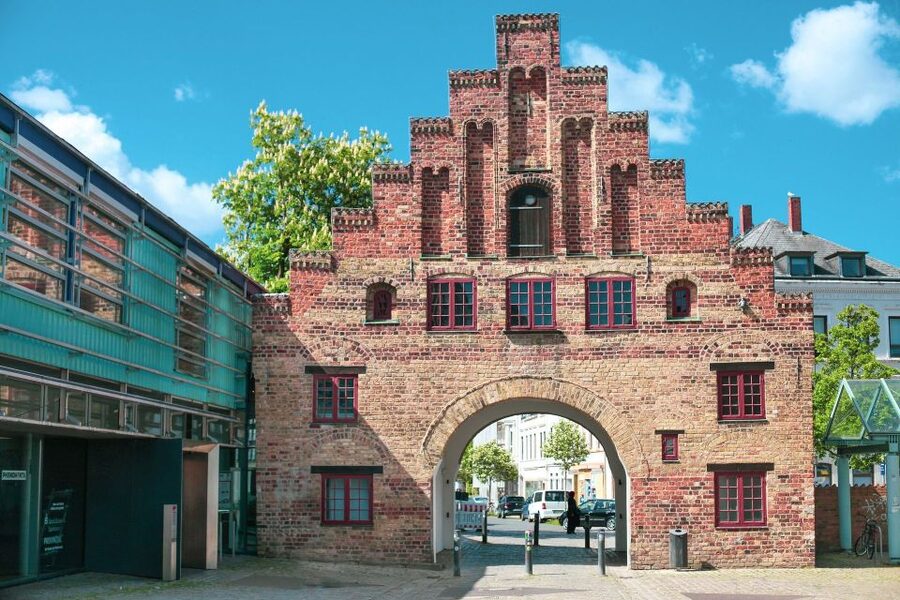
- Danish beginnings: Learn how Danes founded Flensburg in the Middle Ages and shaped its early identity.
- A borderland story: Follow the town’s changing ties to the Danish crown, the Duchy of Schleswig, and Prussia.
- Rum and the harbor: Connect Flensburg’s 18th-century nickname, The City of Rum, with its port and Caribbean trade.
- Preserved architecture: See historic buildings from different periods because Flensburg escaped major destruction in World War II.
- Private attention: Travel with your own group of up to 15 and discuss possible route changes with the guide.
- Practical limits: Wear comfortable shoes, expect outdoor walking, and note that the route is not suitable for wheelchair users or people with mobility impairments.
Starting at Saint Nikolai Church
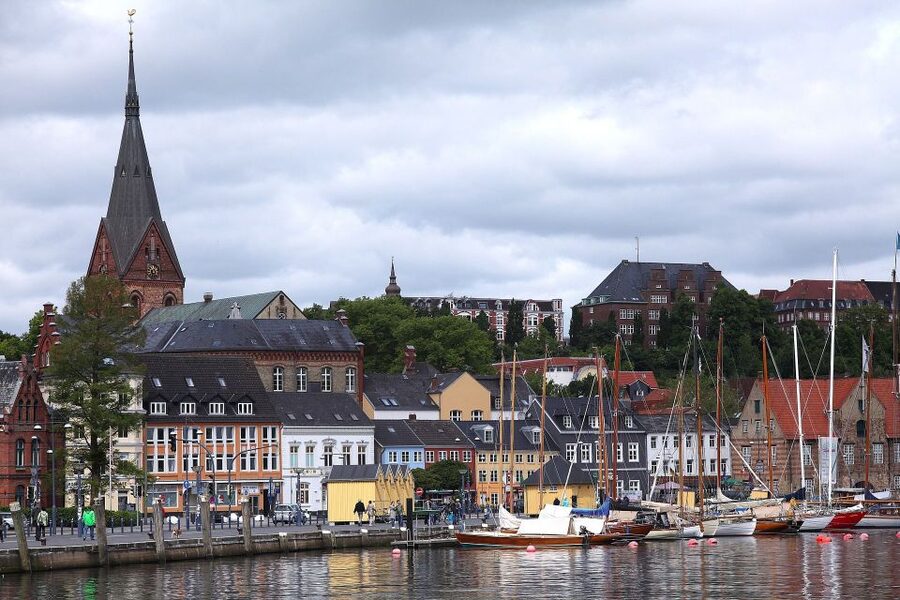
Your meeting point is in front of Saint Nikolai Church at Nikolaikirchhof 8, in the center of Flensburg. This is a sensible place to begin because you are already among the old town’s historic streets rather than starting at a modern transport hub or an outlying attraction.
The opening setting should help you get your bearings quickly. From here, the guide can place Flensburg’s buildings into a wider story: the town’s Danish foundation, its long connection to the Danish king, and the later political changes that brought Schleswig and Prussia into the picture.
The tour is private, so you do not have to keep pace with a large mixed group. That matters in an old town, where narrow streets and busy corners can make a big group feel awkward. It also gives you a better chance to ask about details that catch your eye, such as a doorway, facade, sign, or harbor building.
The meeting point is specific, but you should still allow a little time to find Nikolaikirchhof 8. The experience does not include transportation, so plan to arrive under your own power.
A few more Germany trips to weigh up
- Discover Berlin Half-Day Walking Tour
★ 5.0 · 9,624 reviews - Berlin: Third Reich and Cold War 2 Hour Walking Tour
★ 4.9 · 6,830 reviews - Munich: Third Reich & WWII Walking Tour
★ 4.6 · 6,181 reviews
Flensburg’s Danish roots and changing rule
The central theme is the unusual blend of German and Danish culture. Flensburg was founded by Danes in the Middle Ages, and the city remained under the Danish king for more than 400 years. That long period helps explain why the town cannot be understood through a single national story.
Your guide will connect Flensburg with the Duchy of Schleswig and the Kingdom of Prussia. These political links are useful because they show how border identity changes over time. The town was not simply Danish one day and German the next. Its language, trade, architecture, and local culture developed through overlapping influences.
This is where a private guide can add value. A map or short history book can give you dates, but a walk can show you how those changes appear in the streets. You can ask how the Danish minority fits into present-day Flensburg, or how German-Danish relations still shape the town.
The tour is offered in English or German. If you speak German, you may find the language especially natural for local names and historical terms. English speakers can still follow the main story without needing to arrange a separate translator.
Reading the architecture instead of just photographing it
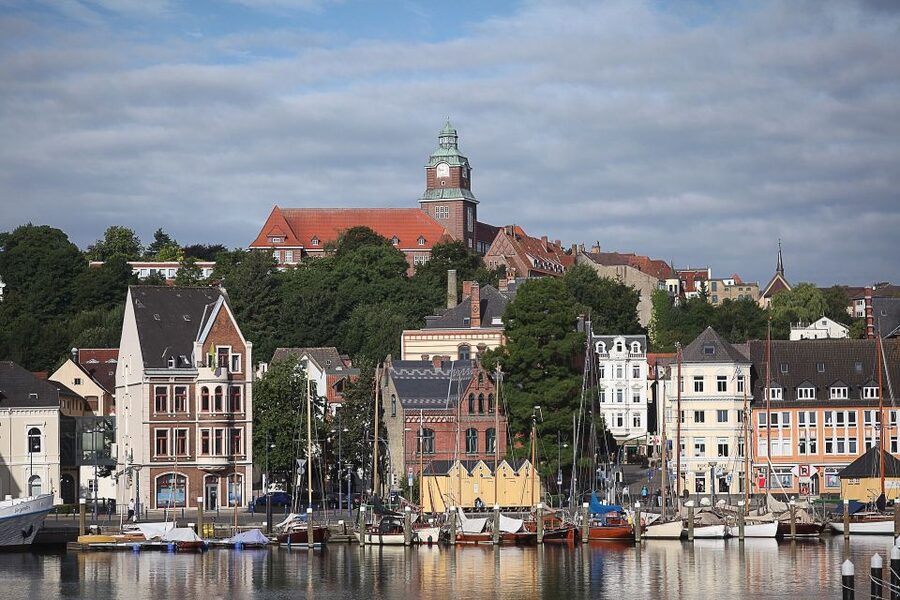
Flensburg is one of the few German towns that was not destroyed during World War II. As a result, the old town retains buildings from several periods. That makes the walk more than a sequence of attractive facades. You get the chance to compare styles and see how the town grew over many generations.
The supplied details do not name individual buildings or promise interior visits, so you should expect an exterior architecture walk. The guide’s job is to explain what you are seeing and connect it with Danish influence, trade, and political change.
I like this approach because architecture becomes evidence. A building may reveal the town’s wealth, its trading connections, or the culture of the people who lived there. You do not need to know architectural terms in advance. The useful thing is having someone explain why a street or building matters.
There is also a practical limit. If you want to enter churches, museums, or other sights, entrance fees are not included. The experience is primarily a guided walk, so budget separately for any admissions you choose to make.
The harbor and Flensburg’s rum-trade past
During the 18th century, Flensburg was known as The City of Rum. Its trade with the Caribbean islands helped shape the town’s economy and left a mark on the harbor area. This is one of the most distinctive parts of the story because it links a northern European port with faraway colonial trade routes.
The harbor gives that history a physical setting. Rather than hearing only about merchants and cargo, you can connect the trade story with the waterfront where goods once moved through the town. The information provided does not promise a boat ride or a harbor cruise, so expect to see and discuss the area on foot.
This stop will likely appeal to you if you enjoy social and commercial history. It explains how a town’s prosperity can influence its buildings, streets, and public identity. It also keeps the tour from becoming only a discussion of kings, borders, and wars.
The rum story deserves a careful reading. The tour presents it as part of Flensburg’s past, not as a tasting experience. Do not book this expecting distillery visits, drinks, or a food stop. The value is the connection between harbor trade and the town’s identity.
Same city, a completely different kind of day:
- Berlin: Reichstag, Dome and Government District Guided Tour
★ 4.7 · 18,288 reviews - Berlin: 1-Hour City Tour by Boat with Guaranteed Seating
★ 4.3 · 16,993 reviews - Hamburg: Sex and Crime in St. Pauli Tour for Ages 18+
★ 4.7 · 15,447 reviews - Hamburg: 1.5-Hour Harbor and Speicherstadt Day Cruise
★ 4.6 · 14,200 reviews
War, politics, and the Battle of Flensburg
The tour also covers the Thirty Years’ War and the Battle of Flensburg. These subjects add a harder edge to the walk. Flensburg’s story includes commerce and elegant buildings, but it was also shaped by conflict and changing power.
The supplied information does not give a detailed battle route or identify a specific battlefield stop. You should therefore expect the guide to explain the conflict in relation to Flensburg and its wider political setting, rather than visit a separate military site.
This section may be most useful if you have already seen a little of northern Germany or Schleswig-Holstein. The terms can become confusing, especially when Danish royal rule, the Duchy of Schleswig, and Prussian authority enter the same story. A live guide can make those changes easier to follow in the place where they mattered.
The tour’s 90-minute length keeps the history moving. You will not get a full academic account of the wars, but you should get the key connections needed to understand why Flensburg developed as it did.
The Danish minority and modern German-Danish relations
Flensburg’s Danish minority is another reason this walk has more depth than a standard old town stroll. The guide will discuss the cultural influence of the Danish community and the long story of German-Danish relations.
This is important for you because the border is not just a line on a map. Flensburg’s identity comes from interaction between neighboring cultures. The tour helps you see the town as a place where language, memory, and political history overlap.
The private format is particularly useful here. You can ask questions about what remains Danish in Flensburg today, how the minority fits into local life, or how the town differs from other German cities near the border. The exact route and depth may depend on your guide and your interests, but customization is possible on the spot.
A July group praised its guide for telling interesting stories away from the main hotspots. That suggests the experience can offer more than a standard list of famous viewpoints. It also means you should tell the guide what interests you early, since the route can be shaped around history, architecture, trade, or local culture.
A 90-minute private walk for up to 15 people
The price is $280 per group, with up to 15 people included. For one or two people, that is a high per-person cost. For a larger family or group of friends, the calculation changes quickly, especially because the guide is reserved for your party.
At full capacity, the cost works out to about $18.67 per person. With six people, it is about $46.67 each. With two people, it is $140 each. That makes this option best suited to a group that values a private guide and wants to share the expense.
The tour is listed as 90 minutes, though the description also says two hours. Treat 90 minutes as the safer planning figure and confirm the exact duration when you check available start times. This matters if you are fitting the walk around a train, cruise departure, meal, or another booking.
A private group of up to 15 is large enough for a family reunion or friends traveling together, but not so large that the guide has to manage an entire coach party. You still need to stay together and listen outdoors, but you can ask questions without competing with strangers.
Weather, shoes, and walking comfort
Comfortable shoes are essential. Flensburg’s historic center is best understood on foot, and the tour is not designed for wheelchair users or people with mobility impairments. The available information does not describe the paving or slope of every street, so you should be ready for ordinary old-town walking rather than assume a fully accessible route.
Weather also matters. A November group was specifically advised to account for the cold. That is good practical advice for any northern German walking tour. Bring warm layers in late autumn and winter, and consider rain protection in unsettled weather.
In summer, the tour may feel easier physically, but you are still outside for the entire walk unless the route includes an optional interior stop at your own expense. Ask your guide about adjustments if weather or personal interests make one part of the route less appealing.
Who will get the most from this experience
I would choose this tour if you want history explained in place rather than read from plaques. It suits first-time visitors who want a clear introduction to Flensburg, as well as repeat visitors who would like more context for the old town and harbor.
It is a strong choice for:
- Families and friends who can divide the group price
- Couples who prefer a private guide to a large scheduled group
- History fans interested in borders, war, trade, and royal rule
- Architecture lovers who want buildings explained rather than simply photographed
- English or German speakers
- Visitors curious about Danish influence in northern Germany
You may want a different plan if you need wheelchair access, cannot walk comfortably, or mainly want museum interiors and formal attractions. Entrance fees are not included, and there is no promise of a tasting, boat trip, or extended museum visit.
Booking flexibility and meeting details
You can cancel up to 24 hours before the start for a full refund. The reserve-now, pay-later option lets you hold a place without paying immediately, which is useful when your Flensburg plans may change.
Check the available start times because the tour does not list one fixed departure time. Meet the guide in front of Saint Nikolai Church, Nikolaikirchhof 8, 24937 Flensburg, Germany.
The experience is provided by Travmonde OÜ. The guide will speak German or English, and the group remains private. Since the guide can discuss possible changes on the spot, arrive with a short list of interests rather than expecting a rigid route.
Should you book the Flensburg walking tour?
Book it if you want Flensburg’s Danish-German identity explained by a local guide and you can share the $280 group price. The strongest reasons are the private format, the preserved old town, the harbor’s rum-trade connection, and the chance to ask about the Danish minority and border relations.
Skip it if your group cannot manage an outdoor walk or if you want guaranteed museum entry. Also confirm whether the actual schedule is 90 minutes or closer to two hours. For the right group, this is a useful, focused introduction to a town whose most interesting stories are written across its streets, harbor, and border culture.
FAQ
Where does the Flensburg walking tour meet?
Meet the guide in front of Saint Nikolai Church at Nikolaikirchhof 8, 24937 Flensburg, Germany.
How long does the tour last?
The activity information lists a duration of 90 minutes. The description also refers to two hours, so confirm the exact timing when checking availability.
How much does the private tour cost?
The price is $280 per private group of up to 15 people.
How many people can join one group?
A private group can include up to 15 people.
Is the tour available in English?
Yes. The live guide can conduct the tour in English or German.
Is this a private tour?
Yes. The guide is with your group only.
Can the route be customized?
Possible changes can be discussed with your local guide during the tour.
Are entrance fees included?
No. Entrance fees are not included in the tour price.
What should I bring?
Bring comfortable shoes for walking. In cold weather, dress warmly, as a November tour included advice to prepare for low temperatures.
Is the tour suitable for wheelchair users?
No. The activity is not suitable for wheelchair users or people with mobility impairments.
Just added around Germany
- Aachen old town tour – GERMAN (public)★ 5.0 · 24 reviews
- Aachen Private Walking Tour With A Professional Guide★ 5.0 · 11 reviews
- Cologne Highlights: Exclusive Private Tour★ 5.0 · 5 reviews
- Bremen Private Walking Tour With A Professional Guide★ 5.0 · 7 reviews
- Private Walking Tour through the Fascinating Bremen’s City Center★ 5.0 · 5 reviews
- Explore Cologne’s best Street Art Quarter★ 4.5 · 4 reviews
- Bremen Exploration Private Game and City Tour on your Phone★ 4.5 · 7 reviews
- e-Scavenger hunt Bremen: Explore the city at your own pace★ 4.0 · 24 reviews
Walking Tours, compared.





Berlin’s Best: 2 Hour Walking Tour Third Reich and the Cold War
Read our review →

