
Reviewed · HISTORICAL TOURS
Explore Berlin Tour: History and Highlights
Berlin packs centuries of power, war, guilt, division, and renewal into a surprisingly compact center. This three-hour walking tour links the city’s major sights in one thoughtful route, from the Brandenburg Gate and Reichstag to Checkpoint Charlie, Bebelplatz, and Museum Island.
I like the way it connects famous monuments to the events around them, rather than treating each stop as a photo opportunity. I also like the historian-led approach, with guide Al praised for adjusting his explanations to the group and adding material beyond the usual guidebook facts. The main caution is pace: one guest found the commentary too long and wanted more time for photos and independent looking.
In This Review
- Key points at a glance
- Starting beside the Brandenburg Gate
- Brandenburg Gate and Reichstag: symbols of a changing capital
- The Holocaust Memorial and Hitler’s bunker site
- The Finance Ministry and the Topography of Terror
- Checkpoint Charlie and Berlin’s divided streets
- Gendarmenmarkt and Bebelplatz
- Unter den Linden and Museum Island
- How the three-hour format really works
- Guide style and the value of the history
- Is $31 a fair price?
- Who should book this Berlin walking tour?
- Should you book Explore Berlin Tour: History and Highlights?
- FAQ
- Where does the Berlin history tour start?
- How long does the tour last?
- What language is the tour conducted in?
- Which major Berlin sights are included?
- Is the tour wheelchair accessible?
- What is included in the price?
Key points at a glance
- A full sweep of Berlin’s past: Follow the city from medieval beginnings and Prussian power through the First and Second World Wars, Nazi rule, the Berlin Wall, and reunification.
- Major sights in one route: See the Brandenburg Gate, Reichstag, Holocaust Memorial, Checkpoint Charlie, Gendarmenmarkt, Bebelplatz, Unter den Linden, and Museum Island.
- A guide-led history lesson: The English-speaking guide puts each place into political and human context, with Al praised for personalizing the tour.
- A useful first-day orientation: You’ll learn how Berlin’s central districts fit together and how to get around after the walk.
- A serious look at difficult history: The route includes Hitler’s bunker site, the Topography of Terror, and the Memorial to the Murdered Jews of Europe.
- Good value at $31: For three hours with an expert guide, the price is reasonable if you want context rather than a simple list of sights.
Starting beside the Brandenburg Gate
The meeting point is outside Hopfingerbräu at Ebertstrasse 24, right beside the Brandenburg Gate. That is a practical place to begin because you are already in the historic center, close to the Reichstag and the Tiergarten edge.
Arrive a few minutes early and look for the guide clearly. One group had trouble finding the guide because there was no flag or other obvious marker. That is a small but real concern, especially if you are unfamiliar with Berlin or arrive at a busy time. If you do not see the group, check directly outside Hopfingerbräu rather than wandering around the gate.
The opening discussion sets up the whole walk. Berlin’s story is not a smooth rise from old town to modern capital. It is a story of political power, destruction, division, and rebuilding. That broad frame helps the later stops make sense.
A few more Berlin trips to weigh up
- Berlin: Natural History Museum Entrance Ticket
★ 4.6 · 3,382 reviews - Berlin: World Heritage Cruise to Potsdam
★ 4.5 · 1,435 reviews - Berlin Historical Highlights Walking Tour
★ 4.9 · 657 reviews
Brandenburg Gate and Reichstag: symbols of a changing capital
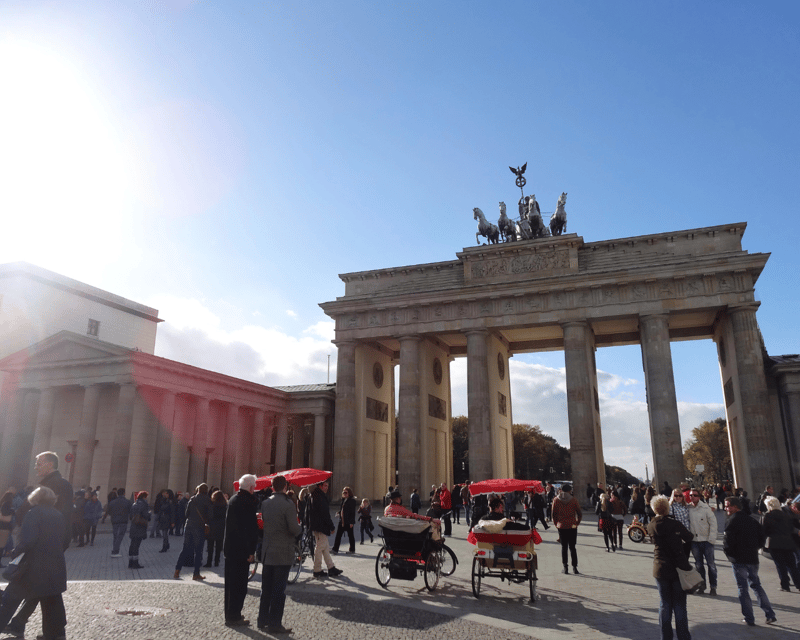
The Brandenburg Gate receives about 20 minutes of guided attention. It was once a formal entrance to Berlin, later became a symbol of Prussian authority, and during the Cold War sat beside the divided city. Today, its open passage feels normal, but the gate’s meaning changed sharply when Berlin was split.
Your guide can help you read the structure as more than an attractive neoclassical monument. Look at its place in the surrounding streets, the open space in front of it, and the way modern Berlin uses it as a national symbol.
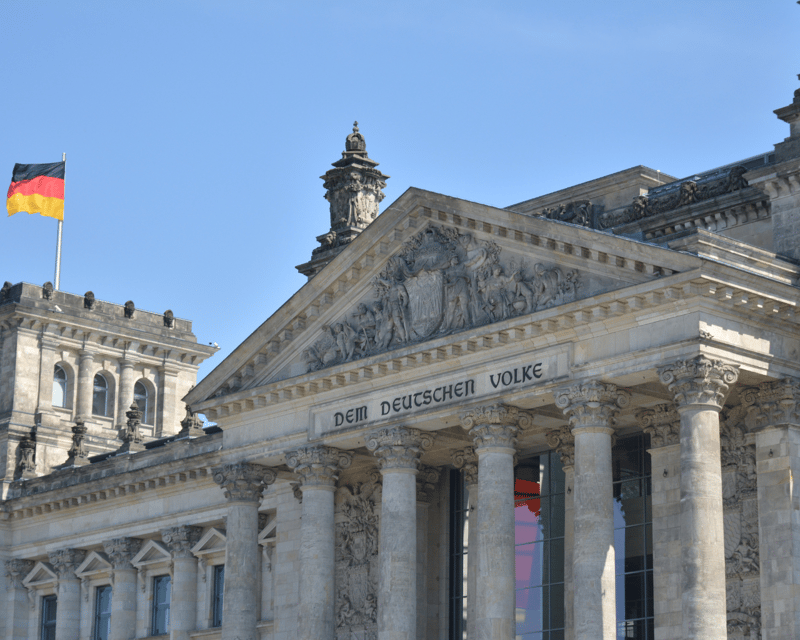
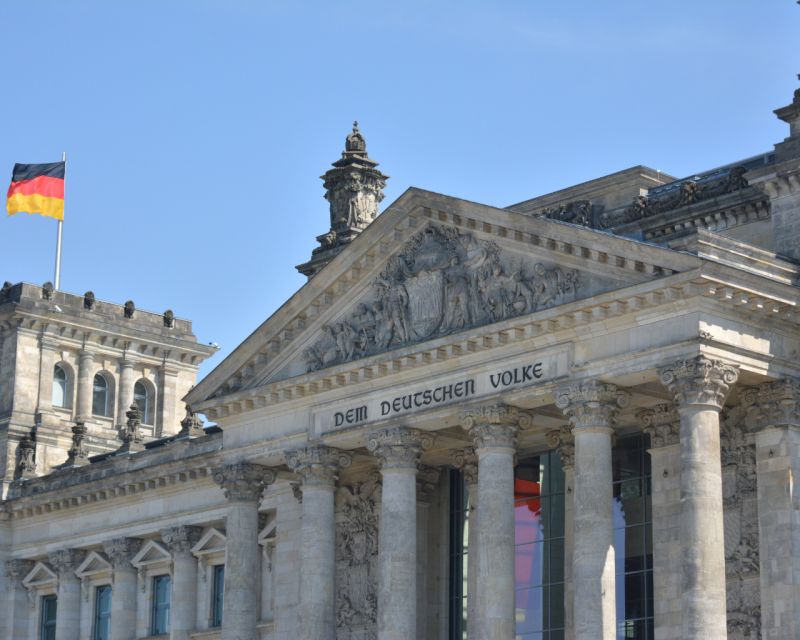
The nearby Reichstag gets another 20 minutes for sightseeing. The building connects imperial Germany, parliamentary government, the Nazi period, war damage, division, and reunification. Even without entering the building, its exterior and location tell you why this part of Berlin became such a powerful center of government.
Do not expect a full Reichstag interior visit on this walk. The time here is for orientation and explanation. If you plan to visit the dome separately, you will need to arrange that outside the tour.
The Holocaust Memorial and Hitler’s bunker site
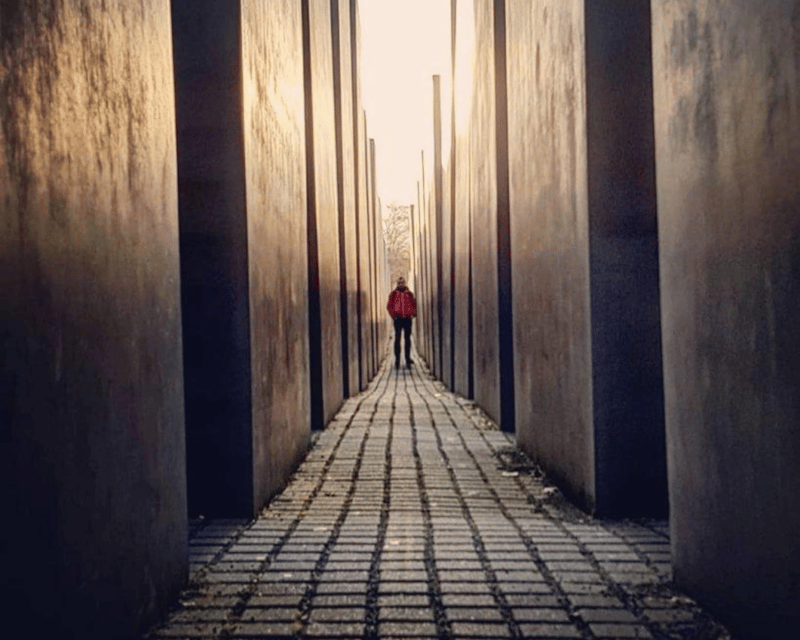
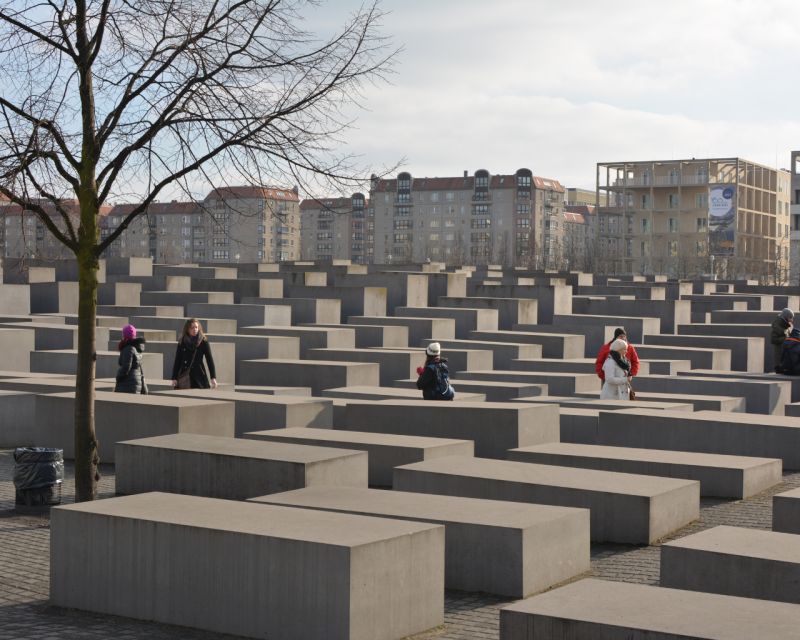
The tour then moves to the Memorial to the Murdered Jews of Europe, usually called the Holocaust Memorial. Its field of concrete blocks creates a serious, unsettled space in the middle of the city. The guide spends about 15 minutes here, enough to explain its purpose and help you consider how memorial design shapes memory.
This is a place where you should allow yourself a little quiet. The route is guided, but the memorial is also meant to be encountered personally. If you prefer extra time to walk among the blocks and think, the schedule may feel short.
The stop at Hitler’s bunker site follows. The bunker itself is not open as a historic attraction, and the value of this stop comes from understanding the location and its place in the final days of Nazi rule. Berlin has deliberately avoided turning the site into a shrine. A guide is useful here because the location can otherwise look like an ordinary part of the city.
These two stops work well together. One addresses the murder of Europe’s Jews through a public memorial. The other points to the physical place where the Nazi regime ended. You get both the human cost and the political collapse, without treating either as entertainment.
The Finance Ministry and the Topography of Terror
The German Finance Ministry receives about 15 minutes of sightseeing. The building is linked to the former Nazi government district and later to East Germany. Its changing use reflects the larger story of Berlin, where buildings often passed from one political system to another.
Next comes the Topography of Terror, with about 20 minutes of guided explanation. This site examines the institutions of Nazi persecution and terror. It is one of the more important stops for understanding how dictatorship operated, not only who led it.
The tour’s promotional material emphasizes hidden history and uncovered ruins, but you should expect a fast outdoor introduction rather than a long museum visit. If you want to read every display or study the full exhibition, return on your own with more time.
I like this part of the route because it moves beyond famous leaders and grand buildings. You begin to see how offices, agencies, police forces, and administrative systems helped carry out state violence. That is harder history, but it gives the city’s monuments a more honest setting.
Same city, a completely different kind of day:
- Berlin: Reichstag, Dome and Government District Guided Tour
★ 4.7 · 18,288 reviews - Berlin: 1-Hour City Tour by Boat with Guaranteed Seating
★ 4.3 · 16,993 reviews - Berlin: Boat Tour Along the River Spree
★ 4.4 · 11,252 reviews - Discover Berlin Half-Day Walking Tour
★ 5.0 · 9,624 reviews
Checkpoint Charlie and Berlin’s divided streets
Checkpoint Charlie gets around 20 minutes. This was the best-known crossing between East and West Berlin and has become one of the city’s most recognizable Cold War locations.
The modern scene can feel theatrical, with souvenir shops and photo opportunities close by. That commercial side is part of the area today, but it can also distract from the danger that once surrounded the crossing. Your guide’s job is to separate the real history from the postcard version.
This stop is especially helpful if you are new to Berlin’s division. You can learn how the Wall split neighborhoods, families, workplaces, and transport routes. The guide also helps explain why Checkpoint Charlie mattered symbolically, even though it was only one crossing among several.
The route does not appear to include a lengthy visit to a Wall museum. Think of this as a historical stop and street-level explanation. If the Cold War is your main interest, you will want to set aside another period for Berlin Wall sites beyond this central walk.
Gendarmenmarkt and Bebelplatz
Gendarmenmarkt receives about 15 minutes of guided attention. The square is known for its grand architecture and the French and German cathedrals facing the Konzerthaus. It offers a sharp contrast to the nearby sites of Nazi terror and Cold War conflict.
This is a good reminder that Berlin is not only a city of memorials. It was also a center of royal power, culture, religion, and public ceremony. The square’s beauty makes the political history around it easier to overlook, so listen for the explanation of how the space served different governments and eras.
At Bebelplatz, the tour spends another 15 minutes. The square is tied to Nazi book burnings, and its memorial gives the site a quiet, unsettling character. This is one of those Berlin places where the ground beneath a handsome public square carries a heavy story.
The schedule gives you enough time to understand the event and see the memorial, but not necessarily to linger. If you want photographs, take them quickly and stay close to the group. The earlier criticism about extended talks matters here: a strong explanation is useful, but the guide needs to leave room for people to look.
Unter den Linden and Museum Island
Unter den Linden provides a broad avenue through Berlin’s historic core. The tour allows about 20 minutes for guided commentary, linking royal Berlin, public institutions, monuments, and the modern capital.
This stretch is less about one single sight and more about how the city is arranged. You will see why the avenue matters as a route between major buildings and why it remains one of the best places to understand central Berlin on foot.
The final major stop is Museum Island, with about 20 minutes of sightseeing. The island holds several major museums and sits at the heart of Berlin’s old civic and royal district. The tour will not give you time to visit the museum collections, but it helps you decide if you want to return later.
Alexanderplatz is also named among the key Berlin sights connected with the experience, although the timed route lists Museum Island as the final sightseeing stop before returning to Ebertstrasse. Confirm the exact route and starting time when you book if Alexanderplatz is important to you.
The return to Ebertstrasse completes a large loop through the historic center. It is a useful ending because you finish near the Brandenburg Gate, a convenient point for continuing your day.
How the three-hour format really works
The stated duration is three hours, and the route includes many stops. The individual stop times add up quickly, so some of the movement between locations is clearly folded into the schedule. You should expect a steady walk with regular pauses, not a leisurely outing with long breaks at every monument.
Wear comfortable shoes and bring water. Food and drinks are not included, and there is no meal stop built into the walk. Berlin’s central districts offer plenty of places to eat before or after, but you should not count on stopping for a full meal during the tour.
The experience is wheelchair accessible, which is useful for many visitors. Still, the practical feel of an accessible city walk can depend on the exact streets, crowds, and time spent standing. If you need specific assistance, ask the provider before booking.
The group size is not stated. One past outing had only three participants, which can make it easier to ask questions and hear the guide. It can also make a guide’s long explanations feel more noticeable, since there is less movement or group energy to break them up.
Guide style and the value of the history
The strongest reason to book is the guide work. Al, an Irishman who has lived in Berlin for many years, is described as well informed, relaxed, and attentive to the group. He checked on people’s well-being and kept everyone updated on progress, details that matter during a three-hour walk.
The guide team is presented as a group of professional history guides, with research behind the route. The useful test is not how many facts you hear, but whether those facts help you understand what you are seeing. On this route, the best explanations connect a monument to a wider political change.
The possible weakness is also guide style. One guest found the commentary too much like a classroom lecture, with too little time for photos and looking around. That does not make the tour poor, but it tells you what kind of experience this is likely to be: story-led, serious, and information-heavy.
If you enjoy asking questions and want a strong introduction to Berlin, that approach may suit you. If you prefer wandering, quiet observation, and short explanations, you may feel hurried or talked at. You can help by telling the guide early that you would like brief pauses for photographs.
Is $31 a fair price?
At $31 per person, the tour offers solid value for a three-hour introduction to central Berlin. You are paying for a live English-speaking guide, a carefully connected route, and context at places that can be confusing when visited alone.
The value is highest if this is your first time in Berlin or your first full day in the city. You can see where the main historic areas sit, learn the basic timeline, and then choose which museums or memorials deserve a longer return visit.
The value is lower if you already know Berlin well or mainly want interior access. The price does not include food, drinks, museum admission, or a private visit inside the Reichstag. It is a walking history lesson, not an all-inclusive sightseeing package.
Free cancellation up to 24 hours ahead and the option to reserve now and pay later make it easier to fit into a changing schedule. Starting times vary, so check availability before you plan the rest of your day.
Who should book this Berlin walking tour?
I would recommend it to first-time visitors, history-minded adults, families with older children, and anyone who wants the city’s major events explained in one sitting. A 21-year-old joined one outing and found the experience suitable for the whole family, which suggests the content can work across age groups when the guide adapts it well.
It is also a good choice if you want to learn how to get around Berlin. The route gives you a mental map of the central district, even though it does not cover every famous neighborhood.
I would be more cautious if you need lots of free time at each stop, dislike long spoken explanations, or have limited walking stamina. The itinerary is ambitious for three hours, and the tour’s success depends heavily on the guide balancing detail with movement.
Should you book Explore Berlin Tour: History and Highlights?
Book it if you want a serious, efficient introduction to Berlin’s major historic sites and are happy to listen while walking. The route covers an impressive range, from Prussian grandeur to Nazi crimes, Cold War division, and reunification.
Before you go, arrive early at Hopfingerbräu, confirm how to identify the guide, wear comfortable shoes, and tell the guide if you need photo time. At $31, it is a sensible first-day purchase for a visitor who wants the city’s story explained clearly, not just pointed out.
FAQ
Where does the Berlin history tour start?
It starts outside Hopfingerbräu at Ebertstrasse 24, 10117 Berlin, right next to the Brandenburg Gate.
How long does the tour last?
The walking tour lasts three hours.
What language is the tour conducted in?
The tour is conducted in English with a live guide.
Which major Berlin sights are included?
The route includes the Brandenburg Gate, Reichstag, Holocaust Memorial, Hitler’s bunker site, German Finance Ministry, Topography of Terror, Checkpoint Charlie, Gendarmenmarkt, Bebelplatz, Unter den Linden, and Museum Island. Alexanderplatz is also identified among the key sights connected with the experience.
Is the tour wheelchair accessible?
Yes. The activity is listed as wheelchair accessible.
What is included in the price?
The $31 price includes the three-hour walking tour with an expert guide. Food and drinks are not included.
Just added around Berlin
- Love and War in Berlin: Self-Guided Story Puzzle Walk★ 5.0 · 7 reviews
- Rickshaw Tours Berlin – Groups of up to 16 people with several rickshaws★ 4.0 · 97 reviews
- eSIM for Germany and 34 European Countries★ 4.5 · 16 reviews
- Walking on the Wall: 3-Hour Tour in Berlin★ 4.5 · 34 reviews
- Warnemuende Shore Excursion: Berlin Private Sightseeing Tour from Rostock★ 5.0 · 4 reviews
- Your ticket to The Wall Museum Berlin★ 3.0 · 60 reviews
- Warnemuende Shore Excursion: Private Berlin Tour★ 4.5 · 27 reviews
- Berlin’s Gay, Lesbian, and Queer Scene Small-Group Walking Tour★ 4.5 · 66 reviews
Historical Tours, compared.

City History Canal Sightseeing Tour on a Motorboat
Read our review →






Browse the lists this tour appears in