Reviewed · BERLIN TOURS
Explore Berlin: See All The Iconic Sights & Some Hidden Gems
Berlin’s past is the real attraction here. In three hours, you move from the Palace of Tears and Museum Island to Checkpoint Charlie, the former Hitler bunker site, the Holocaust Memorial, the Reichstag, and Brandenburg Gate. It is a brisk walk through the places where Germany’s 20th-century story unfolded.
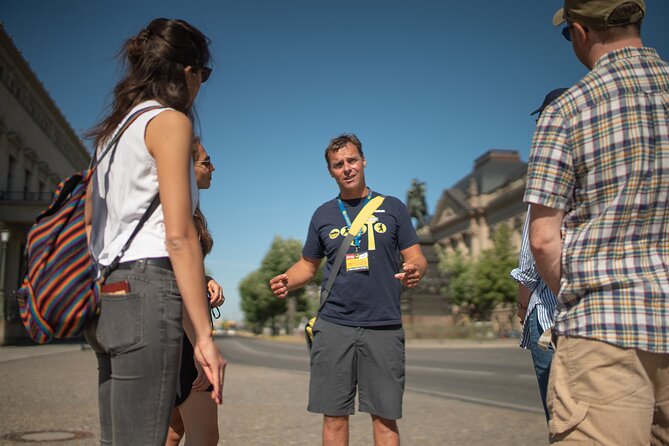
I like the clear focus on Nazi and Cold War history, with time also given to Berlin’s older architecture and royal past. I also like the chance to ask questions as you go. Guides such as Joseph, Klaus, Tina, Jimmy, Hannah, Jef, and Paul have been praised for making difficult subjects understandable, adding humor when suitable, and keeping the pace moving.
The main drawback is the distance. You may walk about three miles, often stopping for only five or ten minutes at a sight. One person also had trouble keeping up with the group, while another found the meeting point unclear, so arrive 15 minutes early and make sure you can hear and see your guide.
In This Review
- Key points to know before booking
- A strong first look at Berlin’s difficult past
- Starting near Friedrichstrasse and the Palace of Tears
- Museum Island and Berlin’s older layers
- Bebelplatz and the book-burning memorial
- Gendarmenmarkt and the city’s religious tolerance
- Checkpoint Charlie and the mechanics of a divided city
- The Berlin Wall and the Topography of Terror
- The former Air Ministry and the bunker site
- The Holocaust Memorial and the weight of the subject
- Reichstag and the government quarter
- Brandenburg Gate and Pariser Platz
- How the pace and group size affect the experience
- What $24.07 buys you
- Practical advice for a better walk
- Should you book this Berlin history walk?
- FAQ
- How long is the Berlin walking tour?
- How much does the tour cost?
- What language is the tour offered in?
- Where does the tour start and end?
- Are museum admission tickets included?
- Can I cancel for a full refund?
Key points to know before booking
- Three miles of central Berlin in three hours: This is a brisk orientation walk, not a slow museum visit.
- Hitler’s bunker site and the Holocaust Memorial: The tour handles Berlin’s darkest history directly and respectfully.
- Checkpoint Charlie and the Berlin Wall: You see the former crossing point and a 200-meter section of Wall near the Topography of Terror.
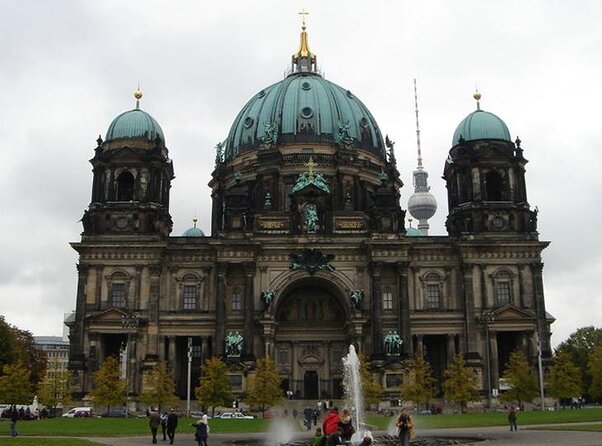
- Museum Island from the outside: You hear about the Pergamonmuseum, Neues Museum, Altes Museum, Berliner Dom, and Humboldt Forum, but entry tickets are not included.
- A maximum of 25 people: The group is limited, though a clear meeting point and attentive listening still matter.
- $24.07 for an English tour: The price is good for a broad first look at central Berlin, especially early in your stay.
A strong first look at Berlin’s difficult past
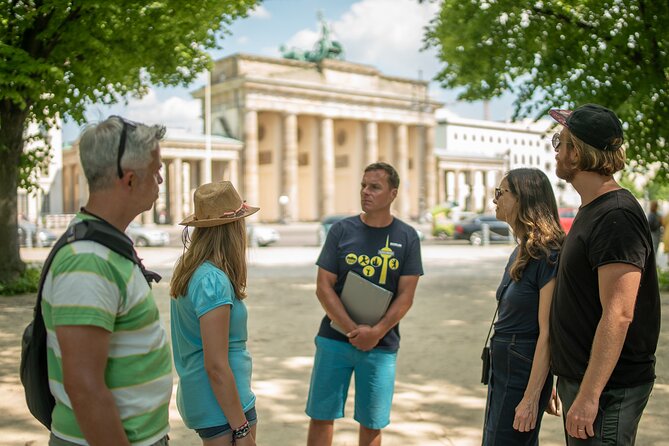
This walking tour works best as a first introduction. It gives you the city’s main landmarks, but its real strength is the connection between places and events. You do not simply see Brandenburg Gate, then move on. You learn how it became a symbol of division before turning into a sign of unity.
The route also puts Germany’s Nazi and Cold War eras in the same three-hour story. You hear about the Third Reich, the destruction caused by Nazi rule, Berlin’s division after the war, and the daily realities of life on both sides of the Wall.
That is a lot to cover. The short stops mean you should not expect a full lecture at every location. Instead, the guide gives you the essential context, then points you toward places worth returning to on your own.
Other Berlin days worth putting on the list:
- Berlin: Reichstag, Dome and Government District Guided Tour
★ 4.7 · 18,288 reviews - Berlin: 1-Hour City Tour by Boat with Guaranteed Seating
★ 4.3 · 16,993 reviews - Berlin: Boat Tour Along the River Spree
★ 4.4 · 11,252 reviews
Starting near Friedrichstrasse and the Palace of Tears
The walk begins in central Berlin near Friedrichstrasse Station. The supplied meeting information gives Reichstagufer 17 as the start point, while the tour description refers to a meeting outside Friedrichstrasse Station. Because those details are not identical, check your booking confirmation carefully and arrive at least 15 minutes early.
The first stop is the Palace of Tears, or Tränenpalast. This former border checkpoint handled departures between East and West Berlin. Its name comes from the farewells that took place there, since people leaving East Berlin often said goodbye to family and friends under tense conditions.
You get about five minutes here, enough for the guide to explain the site and its role in the divided city. If you want to visit the interior afterward, plan a separate visit. This walking tour does not include admission.
Museum Island and Berlin’s older layers
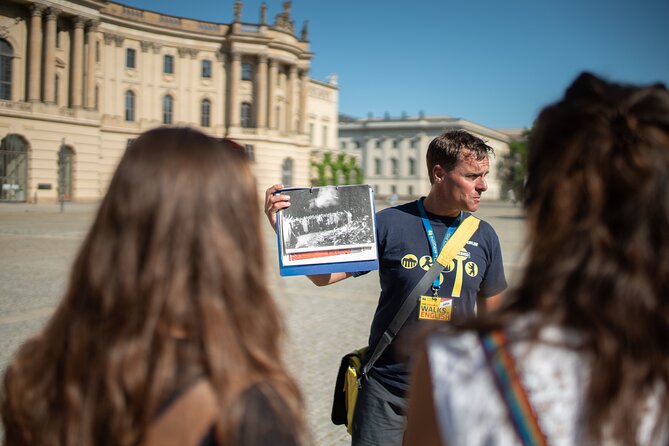
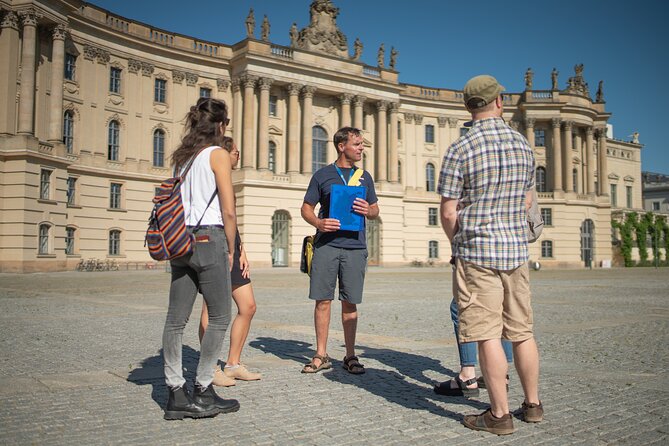
The route then moves through a cluster of major cultural and architectural sights. At Humboldt University, you hear about figures connected with the institution, including Marx, Engels, and Einstein. The stop is brief, but it helps show Berlin as a center of education and ideas long before the 20th-century dictatorships.
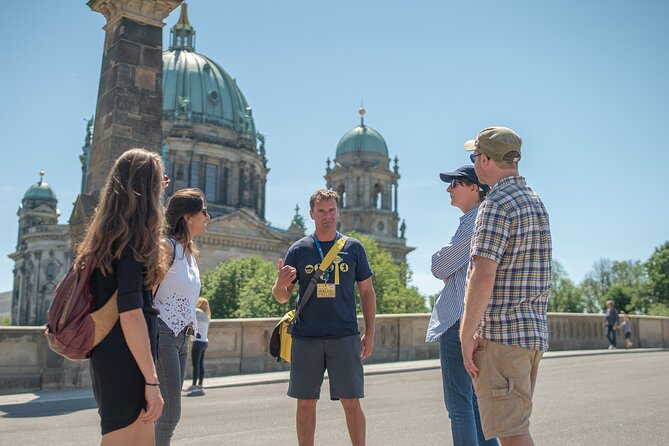
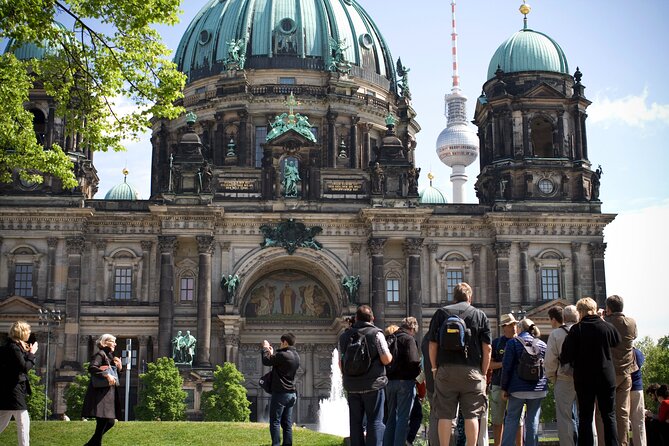
The Berliner Dom, Lustgarten, City Palace, and Humboldt Forum form another useful group of stops. The cathedral is Berlin’s largest church, while the rebuilt City Palace now houses the Humboldt Forum. From outside, you can see how the area combines imperial architecture, postwar change, and modern reconstruction.
Museum Island follows. The guide introduces the Pergamonmuseum, Neues Museum, and Altes Museum, with notes on Islamic art, the Ishtar Gate, the Market Gate of Miletus, ancient Egypt, and architect Karl Schinkel.
This section can feel fast. You are not touring the museum collections, and admission is not included. Still, it is a practical way to decide where to spend another half-day. If the Pergamonmuseum or Neues Museum is high on your list, treat this walk as a preview rather than a substitute.
Bebelplatz and the book-burning memorial
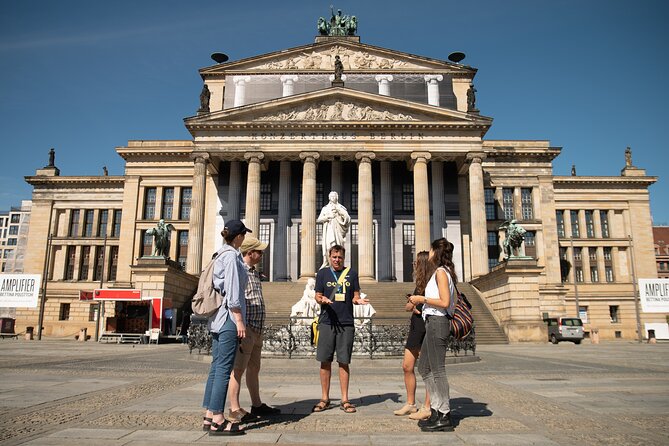
Bebelplatz is one of the tour’s most striking stops because its beauty contrasts with what happened there. The square is surrounded by impressive 18th-century buildings, including the Staatsoper, built under Frederick the Great in 1743, and the Konzerthaus, completed in 1821.
Below the square is a memorial to the Nazi book burning of 1933. Tens of thousands of books were burned there, and the memorial’s design encourages you to look down into an empty library beneath the pavement.
The guide also connects the square to Berlin’s broader intellectual and political life. This is one place where a short explanation can change the way you see an otherwise elegant plaza. Give yourself a moment to take in the contrast.
Same city, a completely different kind of day:
- Discover Berlin Half-Day Walking Tour
★ 5.0 · 9,624 reviews - Berlin: Hop-on Hop-off Bus Tour with Live Commentary
★ 4.3 · 8,579 reviews - Berlin: Government District around the Reichstag Guided Tour
★ 4.7 · 8,447 reviews - Berlin: Reichstag, Plenary Chamber, Cupola & Government Tour
★ 4.6 · 8,422 reviews
Gendarmenmarkt and the city’s religious tolerance
Gendarmenmarkt provides a change of mood. The square is framed by the French Cathedral and German Cathedral, reflecting Berlin’s period of religious tolerance. The Konzerthaus completes the setting.
The stop lasts around ten minutes. You have time to look around, take a few pictures, and hear how the square fits into Berlin’s architectural story. It is also a useful reminder that the city is not defined only by war and dictatorship.
The tour keeps moving, though, so do not expect a long photography break. If you want detailed pictures of the facades, note the location and return later.
Checkpoint Charlie and the mechanics of a divided city
Checkpoint Charlie is one of Berlin’s most famous Cold War sites. It was a civilian and military crossing between East and West Berlin, and in 1961 it was the scene of a tense tank confrontation between American and Soviet forces.
Today, the area is busy and heavily visited. The tour’s value comes from explaining what the checkpoint meant when crossing the city could involve permits, scrutiny, fear, and long separations. You learn how Germany was divided and what everyday life was like before and after the Wall went up.
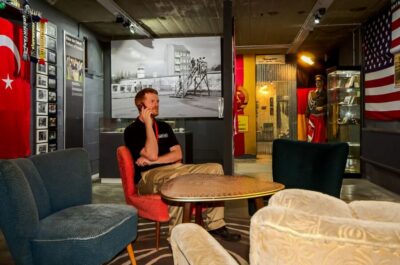
The stop lasts about ten minutes. That is enough for the main story, but you will need extra time if you want to study nearby displays or explore the area at length. Checkpoint Charlie works best when you understand the political stakes, not when you treat the checkpoint booth as a complete historic site by itself.
The Berlin Wall and the Topography of Terror
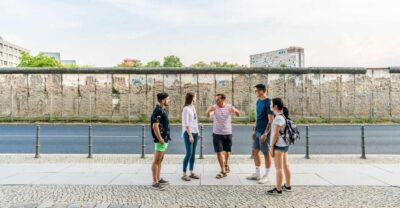
Near the Topography of Terror, you see a roughly 200-meter section of the Berlin Wall. This is one of the more useful Wall encounters because the nearby documentation connects Nazi terror with the later history of dictatorship and repression.
The Topography of Terror site occupies the former headquarters area of Nazi security institutions. The walking tour gives you an introduction from outside, but it does not include entry. You may want to return later if you want a slower look at the exhibits.
The Wall section gives you a physical sense of the barrier, yet it is only one small remnant. The guide helps explain how the Wall divided neighborhoods and families, rather than treating it as a free-standing monument with no context.
The former Air Ministry and the bunker site
The former Aviation Ministry is another place where one building carries several chapters of Berlin’s past. It was linked to Hermann Göring’s air force ministry, later served as the East German House of Ministers, and now houses Germany’s Finance Ministry.
The stop is brief, but the building shows how political power can change hands while the structure remains. You are looking at an ordinary working building with an unusually heavy past.
Next comes the former Führerbunker site. You stand above the location where Adolf Hitler spent the final days of the Second World War. There is no grand ruin to explore. The site is intentionally plain, and the guide explains its location and historical role rather than turning it into a shrine.
That approach matters. The bunker stop is about understanding the final collapse of the Nazi regime, not hunting for a dramatic underground attraction.
The Holocaust Memorial and the weight of the subject
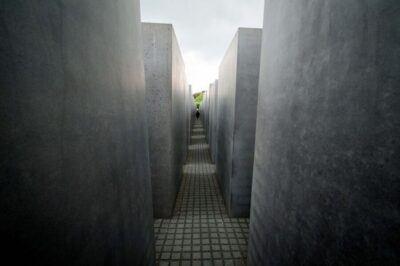
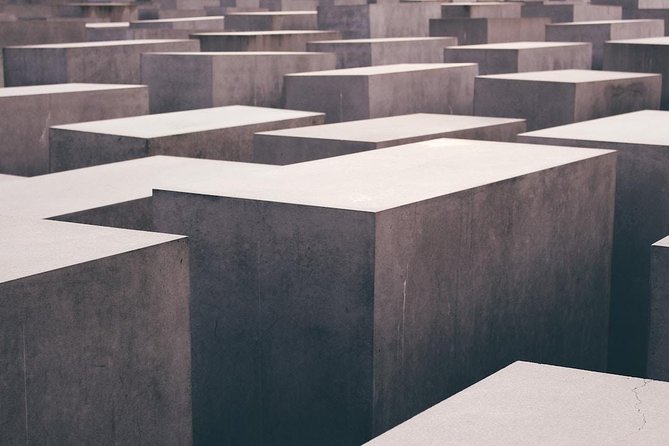
The Memorial to the Murdered Jews of Europe is one of the tour’s most important stops. You walk among the large concrete blocks, where the changing ground creates a feeling of uncertainty and disorientation.
The guide discusses the Holocaust with care and places the memorial within Berlin’s effort to confront the crimes of Nazi Germany. One guide, Grayson, was specifically praised for his thoughtful treatment of this subject. Other guides, including Tina and Ru, have been praised for making difficult ideas clear without reducing them to simple slogans.
Expect a serious moment here. The memorial is not a place for hurried sightseeing, though the tour allows about ten minutes. You can return later to walk through it at your own pace and visit the underground information center if you choose.
Reichstag and the government quarter
The route continues toward the German Parliament and the government quarter. The Reichstag Building is where the German Parliament meets, and its location helps tie the city’s political past to its present government.
The tour ends in this area, near Brandenburg Gate and Pariser Platz. The exact ending information identifies Brandenburg Gate, Pariser Platz, 10117 Berlin. This is a useful finish because you are left near several major sights and public transport connections.
Do not confuse this walk with a tour of the Reichstag interior or dome. No interior visit is included in the stated plan. If you want to visit, arrange that separately and check the current entry rules.
Brandenburg Gate and Pariser Platz
Brandenburg Gate is the natural final image. Built as a city gate, it later became a symbol of Berlin’s division during the Cold War. Today it represents German unity and peace.
Pariser Platz adds the setting: the American Embassy, French Embassy, Hotel Adlon, and Academy of Fine Arts sit around or near the square. The guide helps you read the space as a political stage, not just a photogenic monument.
You receive about ten minutes at the gate and another ten at Pariser Platz. That is enough for orientation and pictures, but you may want to linger after the group ends. The location is also convenient for continuing toward the Reichstag, the Tiergarten, or nearby memorials.
How the pace and group size affect the experience
This is a walking tour with a maximum of 25 people. That limit is more manageable than a huge street group, but it does not guarantee that every person will hear every sentence. One person found the guide too quiet and said the group was not always gathered before explanations began.
You can help yourself by staying near the guide, especially at crossings and crowded corners. If you cannot hear, speak up quickly. A guide cannot adjust the pace or volume if the problem is only mentioned after the group has moved on.
The pace has clear benefits. Guides such as Hannah have been praised for keeping a steady rhythm with short stops, which can be helpful in cold weather. Jimmy, Peter, Jorg, Brian, Georgia, Rohan, Artie, Tom T, Jasper, and Jef have also been praised for clear explanations, humor, patience, and a willingness to answer questions.
The tour may suit you if you enjoy walking and want a broad introduction. It may not suit you if you need frequent sitting breaks, want long photo stops, or prefer to explore each sight indoors.
What $24.07 buys you
At $24.07 per person, this is a good-value orientation walk. You are paying for three hours with an English-speaking local guide who links more than 20 places into one story. That can save you time and help you choose which sites deserve a longer visit.
The value is strongest at the Nazi and Cold War locations. Without a guide, it is easy to pass the former bunker site, the Wall, or the Palace of Tears without grasping what happened there. The architecture stops also add useful background at no extra admission cost.
The price does not include museum tickets, and the tour does not replace a full visit to the Pergamonmuseum, Neues Museum, Holocaust Memorial information center, or Topography of Terror. Think of it as a city walk with historical interpretation, not an admission package.
Free cancellation is available if you cancel at least 24 hours before the start time. Changes or cancellations within 24 hours are not refunded.
Practical advice for a better walk
Wear comfortable shoes. The route covers about three miles, and the pavement, weather, and stop-and-start rhythm can make the distance feel longer than a casual stroll.
Bring water and dress for the season. The tour runs outdoors, with short pauses rather than long indoor breaks. In cold weather, those brief stops can be welcome, but you should still plan for exposure.
Arrive 15 minutes before the scheduled start. Since the meeting instructions refer both to Friedrichstrasse Station and Reichstagufer 17, use the precise details on your confirmation rather than relying only on the general description.
The tour is offered in English and uses a mobile ticket. Service animals are allowed, the route is near public transportation, and most people can participate. If you have mobility concerns, ask before booking because the walk is long and the supplied information does not promise a fully step-free route.
Should you book this Berlin history walk?
I would book it if you are new to Berlin and want the main sights explained in one efficient outing. The route gives you Brandenburg Gate, Checkpoint Charlie, the Wall, the Holocaust Memorial, the bunker site, Museum Island, Gendarmenmarkt, and the Reichstag area without wasting your first day figuring out the city map.
I would also book it early in your stay. The guide’s suggestions and the museum previews can help you plan the following days. The strongest guides make complex subjects understandable and leave you with a better sense of how Berlin’s events connect.
Skip it if you want a slow, photo-heavy stroll or a museum tour with interior access. For most first-time visitors who can comfortably walk three miles, the $24.07 price makes this a sensible and serious introduction to Berlin.
FAQ
How long is the Berlin walking tour?
The tour lasts approximately three hours.
How much does the tour cost?
The listed price is $24.07 per person.
What language is the tour offered in?
The tour is offered in English and includes an English-speaking local guide.
Where does the tour start and end?
The supplied meeting information lists Reichstagufer 17 in Berlin as the start point, while the general description refers to the area outside Friedrichstrasse Station. The tour ends at Brandenburg Gate, Pariser Platz. Check your booking confirmation for the exact meeting instructions.
Are museum admission tickets included?
No. Admission to places such as the Berliner Dom, Pergamonmuseum, Neues Museum, Altes Museum, and Aviation Ministry is not included in the tour price.
Can I cancel for a full refund?
Yes, if you cancel at least 24 hours before the experience start time. Cancellations or changes made less than 24 hours before the start time are not refunded.
Just added around Berlin
- Love and War in Berlin: Self-Guided Story Puzzle Walk★ 5.0 · 7 reviews
- Rickshaw Tours Berlin – Groups of up to 16 people with several rickshaws★ 4.0 · 97 reviews
- Walking on the Wall: 3-Hour Tour in Berlin★ 4.5 · 34 reviews
- eSIM for Germany and 34 European Countries★ 4.5 · 16 reviews
- Warnemuende Shore Excursion: Berlin Private Sightseeing Tour from Rostock★ 5.0 · 4 reviews
- Your ticket to The Wall Museum Berlin★ 3.0 · 60 reviews
- Warnemuende Shore Excursion: Private Berlin Tour★ 4.5 · 27 reviews
- Berlin’s Gay, Lesbian, and Queer Scene Small-Group Walking Tour★ 4.5 · 66 reviews
Berlin Tours, compared.
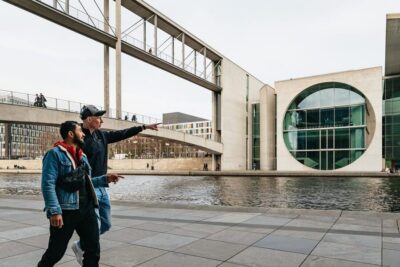
Reichstag, Dome and Government District Guided Tour
Read our review →
1-Hour City Tour by Boat with Guaranteed Seating
Read our review →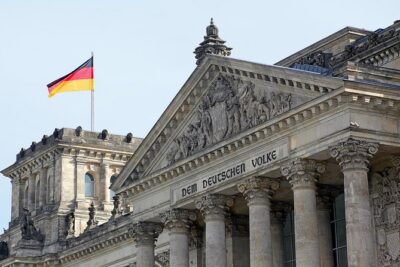
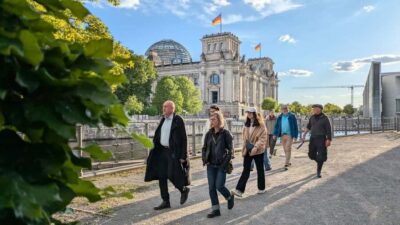
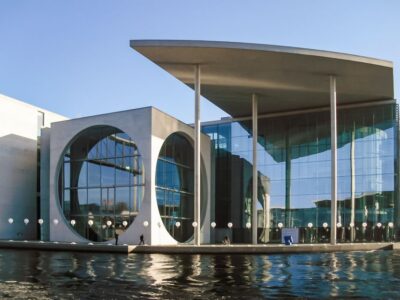
Reichstag, Plenary Chamber, Cupola & Government Tour
Read our review →