
Reviewed · WALKING TOURS
Eisenach: Private Guided Walking Tour
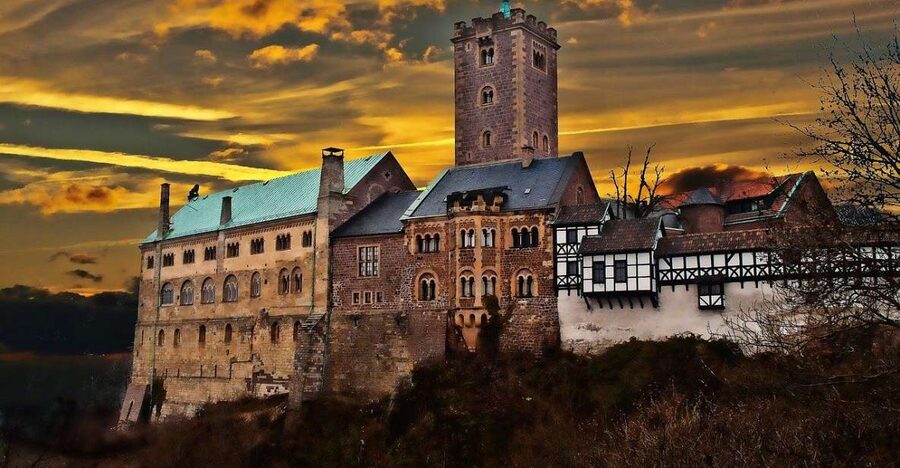
Eisenach’s big surprise is how many major names fit into one compact hill town. In 90 minutes, you connect Wartburg Castle, Martin Luther, Johann Sebastian Bach, and Saint Elizabeth of Thuringia through streets, churches, museums, and old town corners.
I like the private format, which lets your guide adjust the conversation on the spot. I also like the unusual mix of sacred history and industry, from Bach’s baptismal church to the first BMW cars built here. The main drawback is time: 90 minutes gives you a strong introduction, not a full visit to every museum or Wartburg Castle.
In This Review
- Key points at a glance
- Why Eisenach works so well on foot
- Starting at Bach House on Frauenplan
- St. George’s Church, where several stories meet
- Luther’s school years in Eisenach
- The Preachers’ Church and Eisenach’s school tradition
- Wartburg Castle above the town
- Wagner, the Reuter-Wagner Museum, and a less expected story
- The automobile story and the first BMW
- The Tiny House and other small-scale sights
- What the private format is worth
- Timing, walking conditions, and practical limits
- Who will get the most from this walk
- Should you book the Eisenach private walking tour?
- FAQ
- Where does the Eisenach walking tour meet?
- How long does the tour last?
- Is the tour private?
- What languages are available?
- Are entrance fees included?
- Is the tour suitable for wheelchair users?
Key points at a glance
- A remarkable concentration of history: Luther, Bach, Saint Elizabeth, Goethe, Wagner, and Eisenach’s car industry all enter the story.
- Bach House meeting point: Begin at Frauenplan 21, an easy place to connect with the town’s most famous musician.
- St. George’s Church connects three eras: Bach was baptized here, Luther sang as a choirboy, and Saint Elizabeth married here at age 14.
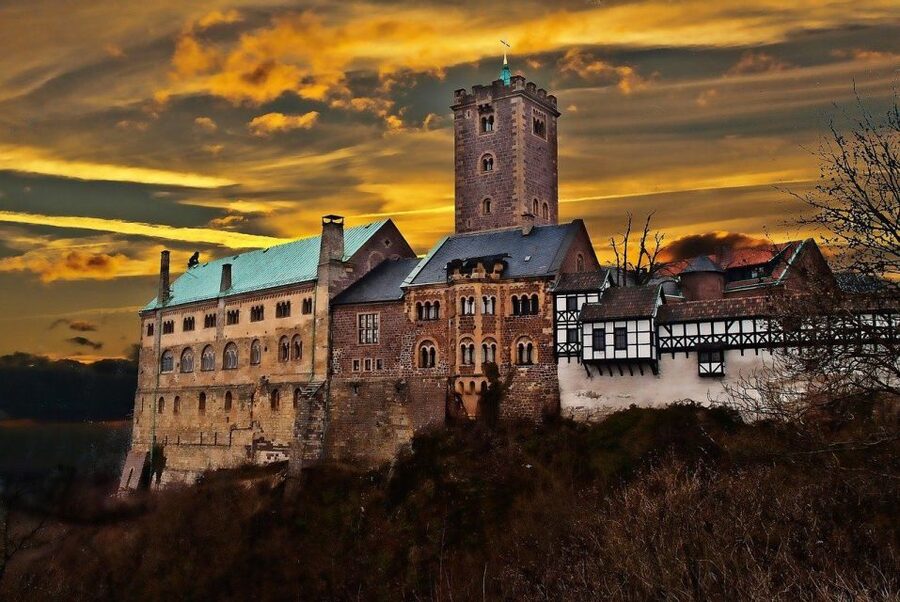
- Wartburg Castle sets the scene: You walk below the UNESCO World Heritage site, with its strong link to Luther and medieval Thuringia.
- Private and adaptable: Your local guide leads only your group, with possible changes to the route or emphasis.
- Small details reward attention: Look for the narrow Tiny House, only 6 feet 8 inches wide, and the town’s long automobile tradition.
Why Eisenach works so well on foot
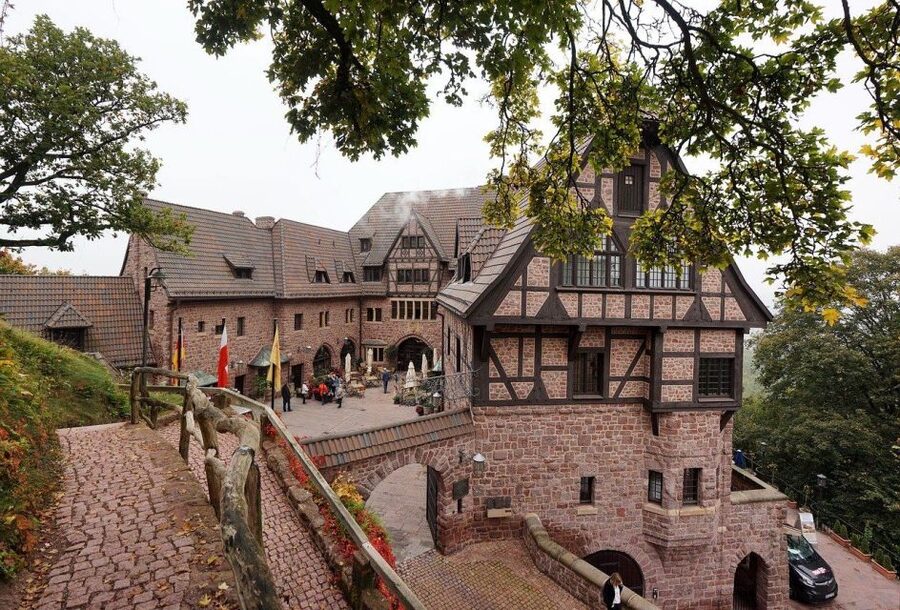
Eisenach is a small, hilly town at the foot of Wartburg Castle. That setting matters. The castle is not an isolated sight on a distant ridge. It is part of the town’s daily character, appearing above the streets and giving the walk a clear sense of place.
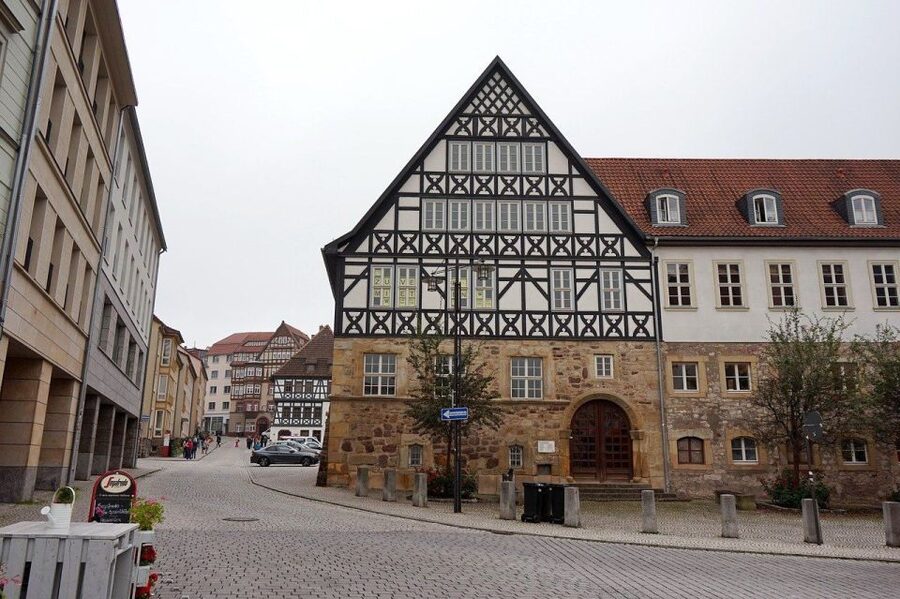
Goethe called Eisenach a marvelous place, and you can see why the town has drawn musicians, religious figures, writers, and rulers. The old streets connect personal stories to real buildings. You are not simply hearing that Luther lived here or that Bach was born here. You are being shown the church, school, home, and public places tied to them.
The walk lasts 90 minutes, so expect a brisk introduction rather than a slow museum tour. That length is useful if you have a short stop in Eisenach, want context before visiting Wartburg Castle, or prefer a focused orientation before exploring alone.
Because the tour is private, your group can ask questions without competing for the guide’s attention. The guide may also adjust the emphasis. A music lover can spend more time on Bach and Wagner, while a history-minded group can give more attention to Luther and Saint Elizabeth.
A few more Germany trips to weigh up
- Discover Berlin Half-Day Walking Tour
★ 5.0 · 9,624 reviews - Berlin: Third Reich and Cold War 2 Hour Walking Tour
★ 4.9 · 6,830 reviews - Munich: Third Reich & WWII Walking Tour
★ 4.6 · 6,181 reviews
Starting at Bach House on Frauenplan
The meeting point is in front of Bach House at Frauenplan 21. This is a fitting start, since Eisenach is Johann Sebastian Bach’s birthplace and the town where he attended school.
Bach’s connection here is more than a line in a biography. He was baptized in St. George’s Church in 1685, and members of the Bach family served as church organists for 132 years. That long family link helps you picture Eisenach as a working musical community, not just a place that later claimed a famous son.
The Bach House itself is an important museum, but entrance fees are not included in the walking tour. Your guide can place the building and Bach’s early years in context, while you decide if you want to return for a separate visit.
That distinction is important for planning. If you expect a museum visit during the 90 minutes, ask your guide at the start what can realistically fit. The activity is primarily a guided walk, and paid admissions remain your responsibility.
St. George’s Church, where several stories meet
St. George’s Church is likely to be the historical center of the route. It brings together Bach, Luther, and Saint Elizabeth in one medieval setting.
Bach was baptized here in 1685. Martin Luther was a choirboy here, linking his Eisenach school years to the same church where music shaped Bach’s early life. Luther later preached in the church while traveling to and from the Diet of Worms in 1521.
Saint Elizabeth’s connection is striking for a different reason. She married here in 1221 at the age of 14. That detail gives the church a human scale. Medieval dynastic marriage can sound abstract in a textbook, but a church where a young Elizabeth was married makes the social world of the period easier to grasp.
The building is also a reminder that Eisenach’s stories overlap across centuries. You move from medieval religious life to Reformation politics, then to the musical traditions that produced one of Europe’s great composers.
You should not assume that every interior is included or open during your visit. Since admission costs are separate, confirm with the guide what you will see from the outside and what may require an additional ticket.
Luther’s school years in Eisenach
Martin Luther’s connection to Eisenach began when he was still a teenager. From 1498 to 1501, he stayed with the Cotta family while attending school in town.
The Luther Museum occupies the house associated with those years. Two rooms where he lived have been restored to their original condition. That makes this stop especially useful for understanding Luther before he became the central figure of the Reformation.
You see a young student rather than only the famous reformer. His Eisenach story includes school, music, lodging, and the routines of a town that helped shape him. The guide’s job here is to connect the restored rooms and the street outside with the later Luther you know from history.
The museum is another place where admission is separate. If you want to enter, allow for the fact that a 90-minute walk has limited time. The best approach is to treat the tour as a framework, then return to the museum afterward if it catches your interest.
Luther’s church connection adds another layer. He sang as a choirboy at St. George’s Church and later preached there on his journeys in 1521. In a town this compact, the distance between his school, church, and later public role becomes part of the story.
Same city, a completely different kind of day:
- Berlin: Reichstag, Dome and Government District Guided Tour
★ 4.7 · 18,288 reviews - Berlin: 1-Hour City Tour by Boat with Guaranteed Seating
★ 4.3 · 16,993 reviews - Hamburg: Sex and Crime in St. Pauli Tour for Ages 18+
★ 4.7 · 15,447 reviews - Hamburg: 1.5-Hour Harbor and Speicherstadt Day Cruise
★ 4.6 · 14,200 reviews
The Preachers’ Church and Eisenach’s school tradition
Eisenach is also linked to Bach through the school he attended at the Preachers’ Church. The building was once a 13th-century cloister, giving you another example of how religious buildings were reused as places of education and community life.
This stop helps balance the better-known church and castle stories. Eisenach was not simply a backdrop for famous people. It was a place where children studied, choirs practiced, clergy preached, and families built careers over generations.
For Bach, school and church were closely connected. His musical education grew within the religious world of the town, and the family’s long service as church organists shows how strongly music was rooted here.
The walk does not promise a full musical performance or a specialist concert experience. Its value is in the setting and the connections. If you already know Bach well, you may want to ask your guide for more detail about his Eisenach years. If you know little about him, the route gives you a clear starting point.
Wartburg Castle above the town
Wartburg Castle is the landmark that gives Eisenach its shape. It is one of Germany’s best-known castles and a UNESCO World Heritage site, rising above the town at the foot of the hill country.
The walking tour highlights the castle and its connections, but entrance fees are not included. Read the experience as an introduction to Wartburg rather than a castle tour unless your guide confirms otherwise.
That can be an advantage. A short town walk lets you understand why Wartburg matters before you spend more time there. The castle’s medieval setting, Saint Elizabeth’s story, and Luther’s association all make more sense once you have seen the town below it.
If Wartburg Castle is your main reason for coming to Eisenach, plan extra time beyond the 90-minute walk. The activity description does not include transportation to the castle or admission, so you should treat those as separate parts of the day.
The castle also gives the town a useful visual anchor. Even while discussing music, churches, or cars, you remain aware of Eisenach’s position beneath one of Germany’s major historic sites.
Wagner, the Reuter-Wagner Museum, and a less expected story
Eisenach’s cultural range does not end with Bach and Luther. The Reuter-Wagner Museum holds the largest exhibit of Richard Wagner memorabilia, including his death mask.
That is an unusual addition to a walk focused on Eisenach’s better-known connections. Wagner gives the town another musical thread, though a very different one from Bach. The museum can appeal to serious Wagner enthusiasts, but the death mask and memorabilia also make it memorable for visitors who are not specialists.
Again, admission is separate. The guide can explain why the museum belongs in Eisenach’s cultural story, but you should not count on a full museum visit within the 90 minutes.
I like this part of the route because it keeps the town from becoming a simple Luther and Bach checklist. Eisenach has several cultural chapters, and Wagner shows how the town continued to attract attention long after the medieval and Reformation periods.
The automobile story and the first BMW
Eisenach also has a strong industrial identity. The town’s factory produced cars for more than 100 years, and the first BMW rolled off its assembly line in 1929.
This is a useful change of pace after churches, castles, and composers. It shows Eisenach as a working town with a modern economic story, not just a preserved historical setting.
You may find this especially interesting if you enjoy transport history or want something beyond the usual religious and musical highlights. The automobile connection also helps explain why Eisenach remains important to German manufacturing history.
The information provided does not promise a factory visit or a dedicated car museum admission. Think of this as part of the town walk’s wider narrative. Your guide points out how the automobile industry fits into Eisenach’s identity, alongside its older cultural traditions.
The Tiny House and other small-scale sights
The Tiny House is one of the walk’s most charming details. It is described as Germany’s narrowest inhabited half-timbered house, measuring only 6 feet 8 inches, or 2 meters, across.
A sight like this gives the tour some welcome texture. Large historical subjects can blur together, but a house barely wide enough to believe makes the old town feel immediate and human. It is also the kind of detail you might miss if you simply walk from the station to the castle without a guide.
The Tiny House shows why a local walk can add value even when you already have a map. A guide can point out the odd, easy-to-overlook features that do not always appear in a standard sightseeing plan.
The route’s appeal comes from this mix: major landmarks such as Wartburg Castle and St. George’s Church, plus smaller places and facts that make Eisenach feel like a real town.
What the private format is worth
The price is $294 per group of up to 15 people. At the maximum group size, that works out to about $19.60 per person, which is a fair rate for a private 90-minute tour with a professional local guide.
The calculation changes for smaller groups. Two people pay the full group price, so the tour is a better value for families, friends, or organized groups than for a solo visitor or couple. The benefit is privacy, flexible discussion, and a guide focused only on your party.
The ability to customize the tour on the spot matters here. Eisenach offers more subjects than can fit into 90 minutes, so your guide can help decide what deserves attention. You might ask for more Luther, more Bach, more architecture, or more on the automobile tradition.
The strongest praise for this experience centers on the guide’s ability to explain facts clearly and bring people into the story through conversation. One German-speaking group of 10 found the 90 minutes passed too quickly, a useful warning for anyone who wants extensive interior visits. Plan to choose your priorities before you arrive.
Timing, walking conditions, and practical limits
Wear comfortable shoes. Eisenach is hilly, and this is a walking tour rather than a vehicle-based overview.
The activity is not suitable for wheelchair users or people with mobility impairments. The combination of hills, historic streets, and a 90-minute walk makes that limitation important to consider before booking.
English and German are available. You should select the language that lets your group ask questions easily, especially because the private format is built around conversation.
The meeting point is in front of Bach House, Frauenplan 21, 99817 Eisenach. Arriving there with a little time to spare gives you a chance to identify the building and begin without rushing.
Cancellation is flexible up to 24 hours before the start for a full refund, and you can reserve now while paying later. Those policies are useful if your Germany plans are still shifting, but they do not change the main planning issue: this is a short walking introduction, and museum or castle admissions cost extra.
Who will get the most from this walk
I would choose this tour for a first visit to Eisenach, especially if you want the town’s main stories explained in one sitting. It suits history fans, classical music lovers, church architecture enthusiasts, and anyone planning to visit Wartburg Castle.
It also works well for a private family or friend group. The guide can keep the pace and subject matter suited to your party, rather than delivering a fixed talk to strangers.
You will get less from it if your goal is a long museum session or a full Wartburg Castle visit. The tour can point you toward those places, but the 90-minute format and separate entrance fees mean you need additional time and budget.
The four available ratings are all five out of five, with praise for clear explanations, strong subject knowledge, and an engaging conversational approach. That is encouraging, but the most practical takeaway is simpler: book it for context and connections, not for a day-long examination of every sight.
Should you book the Eisenach private walking tour?
Book it if you want Eisenach to make sense quickly. The route links the castle above town with Luther’s school years, Bach’s baptism and birthplace, Saint Elizabeth’s early marriage, Wagner’s memorabilia, the BMW factory tradition, and the Tiny House.
The price is easiest to justify when shared among a larger private group. For one or two people, compare the privacy and flexibility with a standard group walk or self-guided visit. For a family or group of up to 15, the per-person cost becomes much more attractive.
I would also book it early in your Eisenach day, then use the guide’s orientation to choose what you want to enter afterward. Bring comfortable shoes, keep your expectations focused on a lively 90-minute overview, and allow extra time for Wartburg Castle or museums.
FAQ
Where does the Eisenach walking tour meet?
Meet your guide in front of Bach House at Frauenplan 21, 99817 Eisenach, Germany.
How long does the tour last?
The walking tour lasts 90 minutes.
Is the tour private?
Yes. It is a private group experience, and the local professional guide is with your group only.
What languages are available?
The tour is available in English and German.
Are entrance fees included?
No. Entrance fees are not included in the tour price.
Is the tour suitable for wheelchair users?
No. The activity is not suitable for wheelchair users or people with mobility impairments. Comfortable shoes are recommended.
Just added around Germany
- Aachen old town tour – GERMAN (public)★ 5.0 · 24 reviews
- Aachen Private Walking Tour With A Professional Guide★ 5.0 · 11 reviews
- Cologne Highlights: Exclusive Private Tour★ 5.0 · 5 reviews
- Bremen Private Walking Tour With A Professional Guide★ 5.0 · 7 reviews
- Private Walking Tour through the Fascinating Bremen’s City Center★ 5.0 · 5 reviews
- Explore Cologne’s best Street Art Quarter★ 4.5 · 4 reviews
- Bremen Exploration Private Game and City Tour on your Phone★ 4.5 · 7 reviews
- e-Scavenger hunt Bremen: Explore the city at your own pace★ 4.0 · 24 reviews
Walking Tours, compared.





Berlin’s Best: 2 Hour Walking Tour Third Reich and the Cold War
Read our review →

