
Reviewed · CITY TOURS
East Berlin: City of Shadows Walking Tour
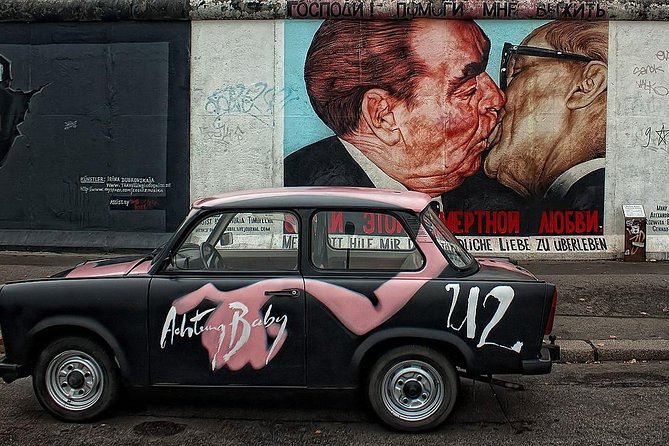
East Berlin’s past is easiest to grasp when you connect the grand buildings with the human cost behind them. This three-hour tour follows that story from the Brandenburg Gate and the former Soviet Embassy to the Berlin Wall, the Stasi headquarters, and Alexanderplatz, where mass protests helped bring Communist rule to an end. I like the small group of up to eight and the way public transport links places spread across the city. I also like the focus on ordinary life, not just speeches and monuments.
The main drawback is that this is primarily an outdoor walking and orientation tour. You will see the Stasi Museum and other important sites, but admission to museums is not included, and a few stops receive only about 10 to 15 minutes. At $156.53 per person, the value depends on how much you want a historian’s framework rather than a series of full museum visits.
In This Review
- Key Points About the East Berlin Tour
- Starting at the Brandenburg Gate and the Soviet Embassy
- The Palace of Tears at Friedrichstrasse Station
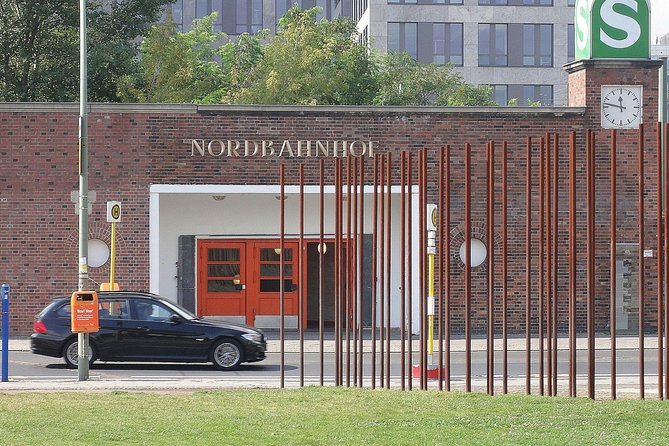
- Ghost Stations at Park am Nordbahnhof
- Karl-Marx-Allee and the Socialist Ideal
- Walking Beside the Berlin Wall Memorial
- The Stasi Headquarters and the Cost of Surveillance
- Alexanderplatz and the Fall of Communist Rule
- What the Three-Hour Format Really Gives You
- Is $156.53 a Fair Price?
- Who Will Get the Most From This Experience?
- Should You Book the East Berlin City of Shadows Tour?
- FAQ
- How long does the East Berlin City of Shadows tour last?
- What language is the tour offered in?
- How many people can join the group?
- Is public transportation included?
- Are museum admissions included?
- Where does the tour begin?
- Is hotel pickup available?
Key Points About the East Berlin Tour
- A clear Cold War route: Follow Berlin’s division from the Brandenburg Gate through the Wall Memorial and former East Berlin.
- A local historian leads the way: The guide explains political decisions, surveillance, protest, and daily life under Communist rule.
- Only eight people per group: The small size should make it easier to hear explanations and ask questions.
- Public transport is part of the experience: You will use Berlin’s buses or trains several times because the stops are too far apart to walk comfortably.
- Important sites, brief visits: The route gives you a strong introduction, but museum entry and extended indoor time are not included.
- A useful first look at East Berlin: The tour helps you decide which places deserve a longer return visit.
Starting at the Brandenburg Gate and the Soviet Embassy
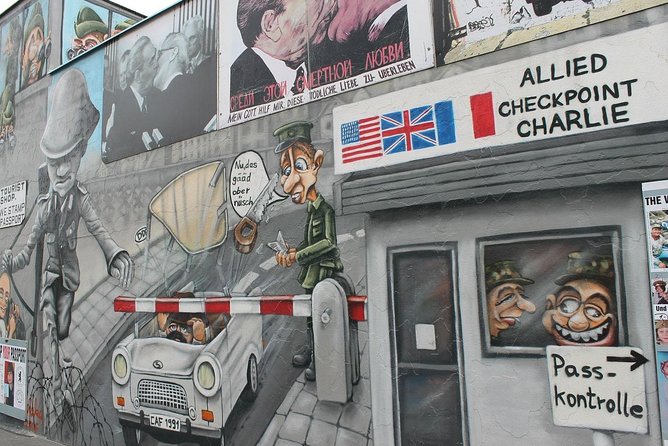
The tour begins at Unter den Linden 42, near the Brandenburg Gate. This is a smart starting point because the gate is not only Berlin’s best-known landmark. It also became one of the most famous symbols of the Cold War.
Your historian sets the modern city around you against the political struggle that shaped it. In June 1987, President Ronald Reagan called for the Berlin Wall to be torn down near this spot. The speech is familiar, but the setting gives it more weight. The gate sat beside a divided city, with an international border running through Berlin and families separated by political force.
Close by, the former Soviet Embassy helps explain the Soviet Union’s ambitions after World War II. Built in 1945 amid the rubble, its grand scale was meant to send a message about Soviet power and control. The stop also introduces the postwar division of Germany into four occupation zones, a decision that created the conditions for decades of tension.
You spend about 20 minutes here, with no admission fee. That timing works well for orientation, though you should not expect a long architectural tour of the Brandenburg Gate or the embassy. The value is in the explanation of how these buildings fit into the larger political story.
A few more Berlin trips to weigh up
- Discover Berlin Half-Day Walking Tour
★ 5.0 · 9,624 reviews - Berlin: Third Reich and Cold War 2 Hour Walking Tour
★ 4.9 · 6,830 reviews - Berlin: Discover Berlin Walking Tour
★ 4.9 · 5,998 reviews
The Palace of Tears at Friedrichstrasse Station
From the Brandenburg Gate, the route continues to Friedrichstrasse train station. During the division of Berlin, this station served as a crossing point between East and West.
The station became a painful place for families. East Germany’s strict rules on movement meant that relatives could meet and then face forced goodbyes, often with no clear idea when they would see each other again. The former border-control area became known as the Palace of Tears, a name that says more than any formal description could.
You spend around 15 minutes here. That is enough for a focused explanation of the station’s role, but not enough for a lengthy museum visit. If the emotional side of divided Berlin matters most to you, make a note to return to the Palace of Tears on your own if the relevant indoor space is open during your visit.
This stop is especially useful because it shifts the subject from national politics to family life. Berlin’s division was not only a matter of walls, checkpoints, and military power. It affected marriages, parents, children, and simple visits between relatives.
Ghost Stations at Park am Nordbahnhof
The next stop, Park am Nordbahnhof, deals with one of Berlin’s strangest Cold War features: ghost stations.
Several West Berlin subway lines crossed beneath or near East German territory. Some stations were closed, heavily guarded, and passed by trains that did not stop. For passengers in the West, these stations appeared only as dark, forbidden spaces outside the train windows.
This is a short stop of about 10 minutes, so the guide’s explanation is important. Without context, a closed platform or modern station can look ordinary. With the Cold War story in place, it becomes evidence of how the border cut through the city in ways that were both visible and oddly hidden.
You will not spend much time inside a museum here, and the stop does not offer a large monument. Its strength is the unusual detail. It shows how division affected transportation and the daily rhythm of the city, not just the major border crossings.
Karl-Marx-Allee and the Socialist Ideal
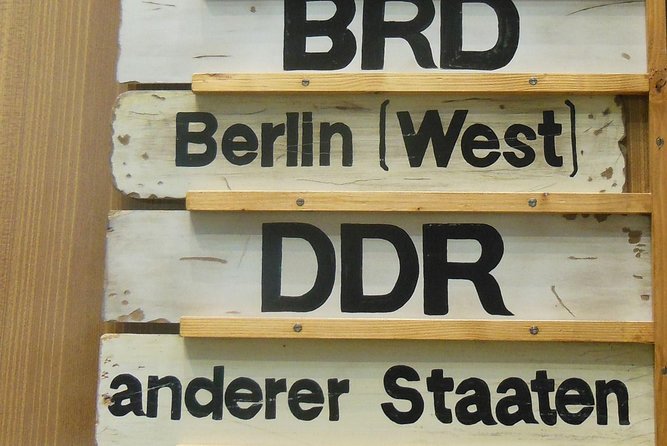
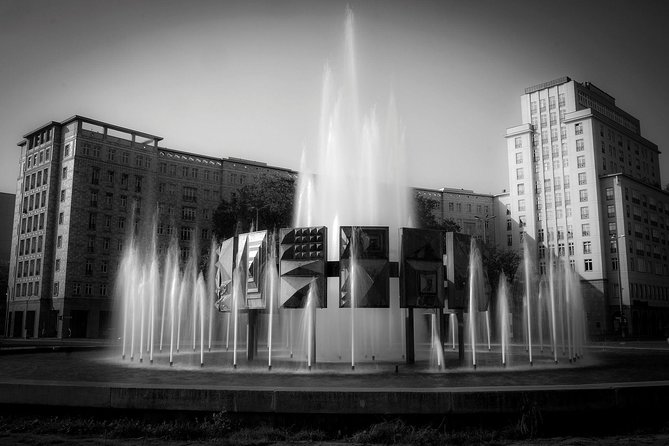
Karl-Marx-Allee brings you into the architectural heart of East Berlin. The broad, mile-long housing complex was designed to present a confident image of socialism.
The buildings were intended to show that the Communist state could provide dignified homes for its citizens. Their scale and formal design reflected a government eager to display order, progress, and a new social ideal. Yet the promise of a Socialist paradise collided with shortages, limited freedom, and growing public frustration.
The guide uses the avenue to explain that contradiction. Grand buildings can tell one story, while the lives of the people who lived in them tell another. That is one reason I like this route. It does not treat East German architecture as either simple propaganda or a curiosity. It asks you to consider what the buildings promised and what the system actually delivered.
The visit here lasts about 10 minutes. That is enough to understand the purpose of the avenue, but you will not receive a full architectural survey. If you have a special interest in postwar design, you may want to return later for a slower walk.
Same city, a completely different kind of day:
- Berlin: Reichstag, Dome and Government District Guided Tour
★ 4.7 · 18,288 reviews - Berlin: 1-Hour City Tour by Boat with Guaranteed Seating
★ 4.3 · 16,993 reviews - Berlin: Boat Tour Along the River Spree
★ 4.4 · 11,252 reviews - Berlin: Hop-on Hop-off Bus Tour with Live Commentary
★ 4.3 · 8,579 reviews
Walking Beside the Berlin Wall Memorial
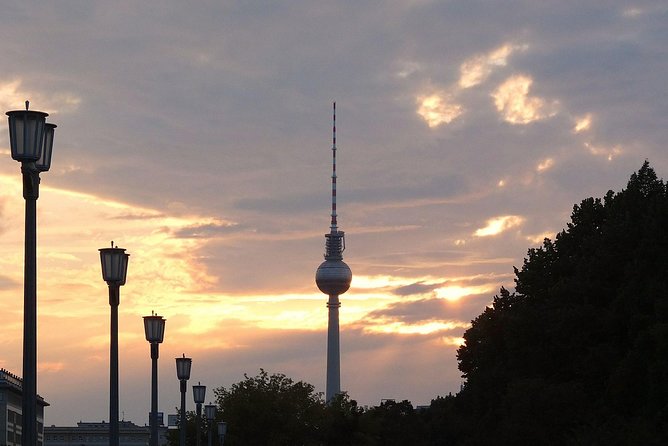
The Berlin Wall Memorial provides the most direct look at the border system itself. Here, you can experience part of the former Death Strip and hear how escape attempts ended in tragedy for some East Berliners.
The memorial is valuable because it preserves the physical arrangement of the border rather than presenting only a section of painted wall. You can better understand the multiple barriers, open zones, and controlled spaces that made escape so dangerous.
The guide’s stories give the site a human scale. Political terms such as suppression and surveillance can feel abstract when read in a book. At the memorial, they connect to individual decisions and the risks people took to leave East Germany.
You spend about 15 minutes here. That is a useful introduction, though the memorial deserves much longer if you want to read all its displays and absorb the site quietly. This is one place where the tour’s brief format may leave you wanting more, which is not a bad result if you have time to return.
The Stasi Headquarters and the Cost of Surveillance
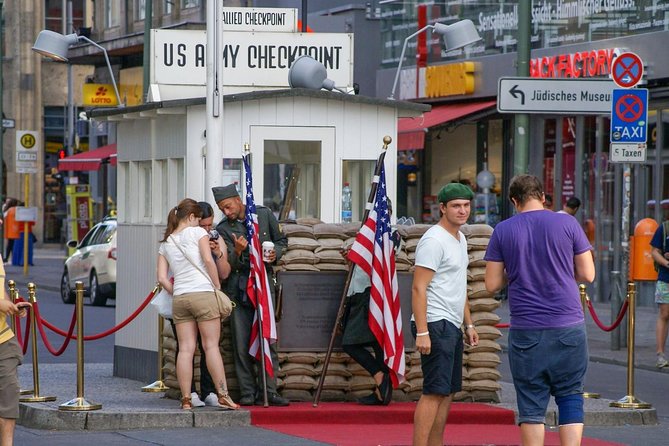
The route then turns to the Stasi, East Germany’s secret police. At the former Stasi headquarters, you learn how the agency recruited a huge network of informants and encouraged neighbors, friends, and even family members to spy on one another.
The guide also explains the methods used by Erich Mielke, the Stasi leader, and the agency’s organized approach to surveillance. The important point is not only that the state watched people. It is that suspicion could enter ordinary relationships, making trust itself a political risk.
The stop lasts about 10 minutes, and admission to the Stasi Museum is not included. This is the clearest limitation in the route. You will receive the historical setup, but you should not expect time to explore the museum’s rooms and displays during the tour.
If the Stasi is your main interest, plan a separate visit. The tour gives you a reason to go and a basic framework for understanding what you see there. Without that background, the former headquarters could feel like just another institutional building. With it, the location becomes one of the most important stops in the story of East Germany.
Alexanderplatz and the Fall of Communist Rule
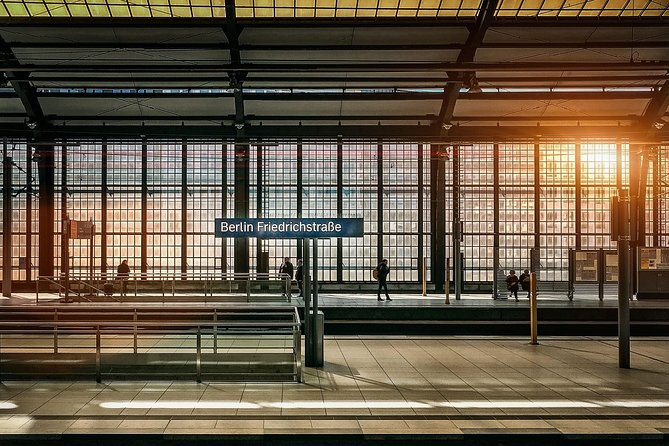
The final major stop is Alexanderplatz, the center of public life in East Berlin. The area was rebuilt in the 1960s with bold symbols of East German modernity, including the TV Tower and a futuristic parliament building.
These structures were designed to express confidence in the Communist system. Yet Alexanderplatz later became the setting for enormous demonstrations in 1989. The same public center that displayed state power became a gathering place for people demanding change.
This ending gives the tour a strong sense of movement. You begin with the postwar division of Berlin, pass through border controls and surveillance, and finish at the public protests that helped end 40 years of Communist rule. The political system did not fall simply because of one speech or one building. The guide connects years of frustration with the events that finally made mass opposition impossible to ignore.
You spend about 10 minutes here. The stop works best as a final overview rather than a detailed tour of Alexanderplatz’s architecture. It also places you in a useful part of central Berlin for continuing your own sightseeing.
What the Three-Hour Format Really Gives You
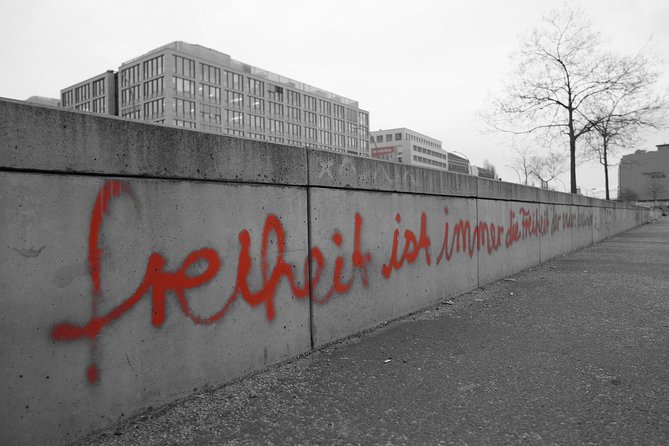
This tour covers a lot of ground in a short time. The route includes seven major locations, and several of them are separated by distances that would make a fully walking tour tiring and inefficient.
You will use public transportation a few times. A Berlin AB day ticket costs 7 euros for one person, with a senior rate of 4.70 euros. A single AB ticket costs 2.80 euros, with a senior rate of 1.70 euros. If you do not already have a visitor transit pass, the guide can help you buy a ticket at the first station.
That transit element is practical, but it also adds a small planning task. Have suitable shoes, allow time for station transfers, and keep your ticket ready. The route is not a gentle stroll confined to one compact neighborhood.
A moderate level of physical fitness is recommended. The tour is offered in English, and the group is limited to eight people. That small number is one of the better features for a subject with this much detail. You are more likely to hear the guide clearly and ask a question without holding up a large crowd.
Pickup is offered from hotels or accommodations in Berlin, though the published details also say hotel pickup and drop-off are not included. Confirm the exact pickup arrangement when booking so you know where the tour begins. The stated meeting point is Unter den Linden 42.
Is $156.53 a Fair Price?
At $156.53 per person, this is not a low-cost sightseeing walk. You are paying for a private-feeling small group, a three-hour route, and a historian-led explanation of places that can otherwise be hard to interpret.
The price makes more sense if you are new to Berlin, have limited time, or want the Communist-era story organized by a local expert. It is less attractive if you already know the history, plan to visit the museums independently, or prefer to explore at your own pace.
Food, drinks, museum admissions, and public transportation are extra. The transit cost is modest compared with the tour price, but museum visits can add more if you return to the Stasi Museum or the Palace of Tears afterward.
The experience has a 4.8 rating from 11 reviews, with 91 percent recommending it. Those numbers suggest strong satisfaction, but the small sample means I would treat them as a helpful signal rather than a guarantee. One useful criticism is that the tour offers a brief overview of several places, while museum interiors require a separate visit. That is the right way to view the experience: a connected introduction, not a full museum day.
Who Will Get the Most From This Experience?
I would choose this tour if you want the basic Cold War story explained through actual places. It suits first-time visitors, history-minded couples, families with older children, and anyone who wants a clear introduction before visiting Berlin’s museums.
It is also useful early in a Berlin stay. The route gives you a working map of the city and helps you understand why the Brandenburg Gate, Wall Memorial, Karl-Marx-Allee, Stasi headquarters, and Alexanderplatz matter.
You may want a different plan if you dislike frequent movement, need long periods indoors, or want to spend serious time at each museum. The tour’s short stops are designed to connect the sites, not replace independent visits.
Free cancellation is available if you cancel at least 24 hours before the start time. Changes or cancellations made later are not accepted for a refund.
Should You Book the East Berlin City of Shadows Tour?
Book it if you want a compact, serious introduction to East Berlin’s Communist past, especially with a small group and a historian guiding the route. The strongest parts are the connections between grand public buildings, border controls, surveillance, and the human stories behind them.
Do not book it expecting admission to every museum or a slow examination of each location. Budget for public transit and possible return visits to the Stasi Museum and Palace of Tears.
For the right visitor, the tour’s real value is not the number of stops. It is the thread joining them together, from Soviet power and divided families to ghost stations, the Death Strip, and the protests at Alexanderplatz. That context can make the rest of your Berlin sightseeing far more meaningful.
FAQ
How long does the East Berlin City of Shadows tour last?
The tour lasts approximately three hours.
What language is the tour offered in?
The tour is offered in English.
How many people can join the group?
The tour has a maximum of eight travelers.
Is public transportation included?
Transportation to and from the attractions is not included. You will need to use public transportation several times because some stops are too far apart to walk. A Berlin AB day ticket costs 7 euros, with a senior rate of 4.70 euros.
Are museum admissions included?
No. Admission to museums, including the Stasi Museum, is not included.
Where does the tour begin?
The stated meeting point is Unter den Linden 42, 10117 Berlin, Germany.
Is hotel pickup available?
Pickup is offered from hotels or accommodations in Berlin. The tour information also says hotel pickup and drop-off are not included, so confirm the exact arrangement when booking.
Just added around Berlin
- Rickshaw Tours Berlin – Groups of up to 16 people with several rickshaws★ 4.0 · 97 reviews
- Love and War in Berlin: Self-Guided Story Puzzle Walk★ 5.0 · 7 reviews
- Walking on the Wall: 3-Hour Tour in Berlin★ 4.5 · 34 reviews
- eSIM for Germany and 34 European Countries★ 4.5 · 16 reviews
- Warnemuende Shore Excursion: Berlin Private Sightseeing Tour from Rostock★ 5.0 · 4 reviews
- Your ticket to The Wall Museum Berlin★ 3.0 · 60 reviews
- Warnemuende Shore Excursion: Private Berlin Tour★ 4.5 · 27 reviews
- Berlin’s Gay, Lesbian, and Queer Scene Small-Group Walking Tour★ 4.5 · 66 reviews
City Tours, compared.

1-Hour City Tour by Boat with Guaranteed Seating
Read our review →
City History Canal Sightseeing Tour on a Motorboat
Read our review →

Browse the lists this tour appears in