
Reviewed · WALKING TOURS
Duisburg: Guided Walking Tour through the inner harbour
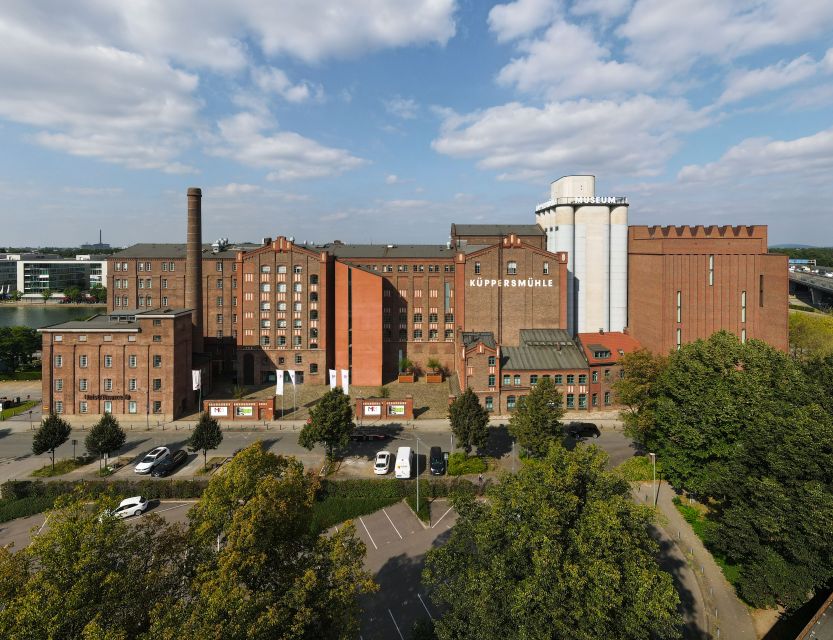
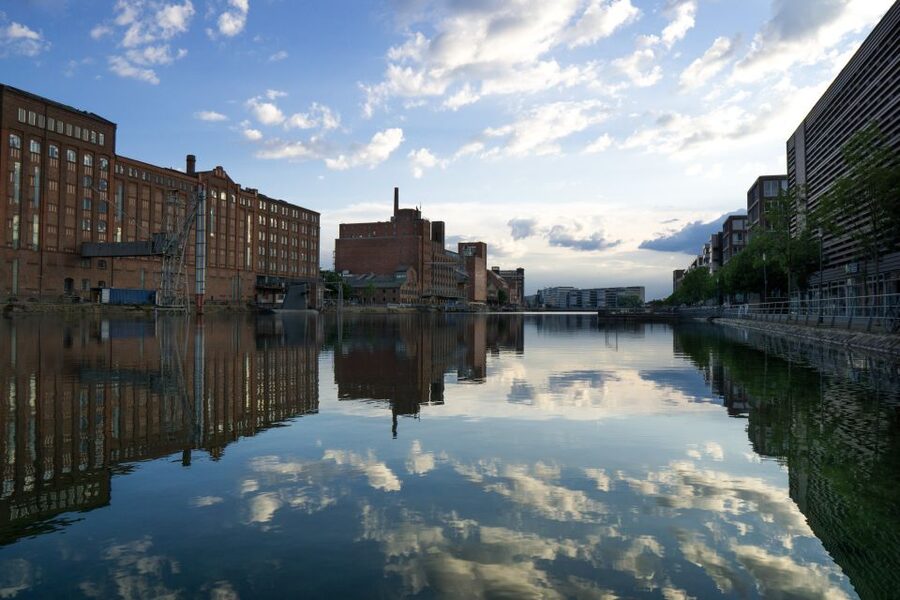
Duisburg’s inner harbour tells a sharp story of industrial change. Once the Ruhr area’s bread basket, it handled huge amounts of grain. Today, yachts sit where freighters once loaded cargo, and old warehouse rows share the waterfront with the modern Five Boats complex, museums, and restaurants.
I like the clear link between architecture and economics here. I also like the compact 90-minute format, which gives you a useful introduction without taking over your day. The main limitation is language: the live tour is in German, so you will get the most from it if you understand German well.
- See a former grain port transformed into a waterfront district, with warehouses, offices, yachts, and restaurants replacing much of the old cargo activity.
- Learn about Sir Norman Foster’s redevelopment plan, which helped shape the inner harbour from the mid-1990s.
- Pass the Five Boats, marina, museums, and waterside restaurants during a walk built around the area’s modern identity.
- Meet at the Mercator Fountain by Duisburg Town Hall, a straightforward central starting point.
- Expect a German-language tour, with a duration of 1.5 hours and wheelchair access.
- Add a museum visit afterward, especially at the Küppersmühle Museum of Modern Art or the Cultural and Urban History Museum.
In This Review
- Duisburg’s inner harbour, from grain port to city district
- Starting at the Mercator Fountain near Town Hall
- The first big idea: structural change you can see
- The Five Boats and the new waterfront architecture
- The marina, restaurants, and a Mediterranean mood
- Museums that make a good follow-up
- What the 1.5-hour timing means for your day
- Rain does not cancel the harbour story
- Who will get the most from this walk
- Booking flexibility and useful planning points
- Should you book the Duisburg inner harbour tour?
- FAQ
- Where does the Duisburg inner harbour walking tour begin?
- How long does the tour last?
- What language is the tour in?
- What does the tour include?
- Is the tour wheelchair accessible?
- Does the tour run when it rains?
- What is the price?
- Can I cancel the booking for a refund?
Duisburg’s inner harbour, from grain port to city district
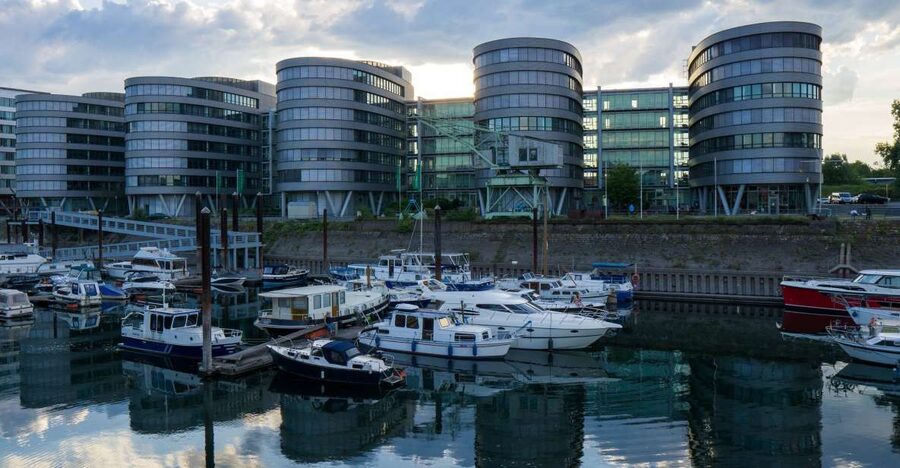
The best reason to take this tour is the contrast. Duisburg’s inner harbour is not simply an old dock with a few renovated buildings. It is a working example of what happens when an industrial port loses its main purpose and a city has to decide what comes next.
For decades, grain made this harbour important. Huge quantities moved through the docks and mills, earning the area its nickname as the bread basket of the Ruhr area. When the grain mills declined at the end of the 1960s, the harbour’s old role faded with them.
That left Duisburg with a difficult problem. Warehouses, loading areas, and water channels had been built for trade, not leisure or office work. Once the cargo business weakened, the inner harbour risked becoming a leftover corner of the city.
The guided walk explains how that change took place. From the mid-1990s, a plan connected with British architect Sir Norman Foster helped reshape the area. The goal was not simply to remove the old harbour, but to give it a new purpose while keeping parts of its industrial character.
That idea is easy to grasp when you see the waterfront in person. A yacht marina occupies space once used by cargo vessels. Restaurants face the water. Modern office buildings rise near older warehouse structures. The result feels less like a preserved industrial relic and more like a district that has found a second life.
Starting at the Mercator Fountain near Town Hall
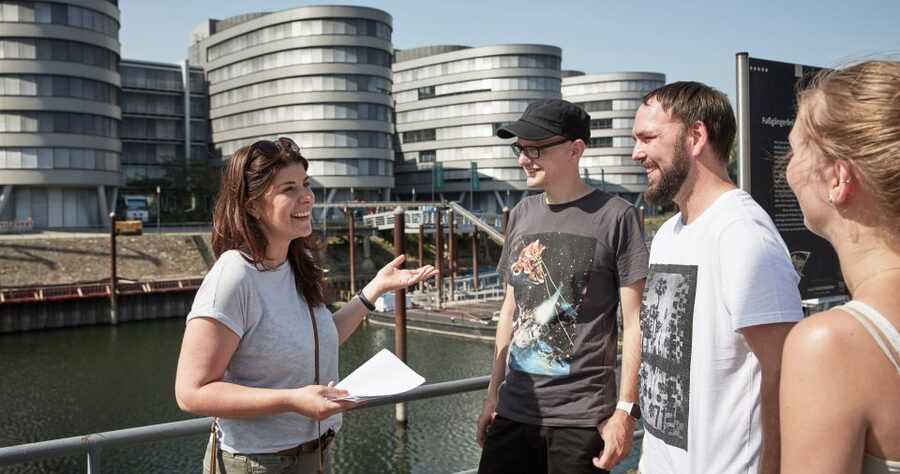
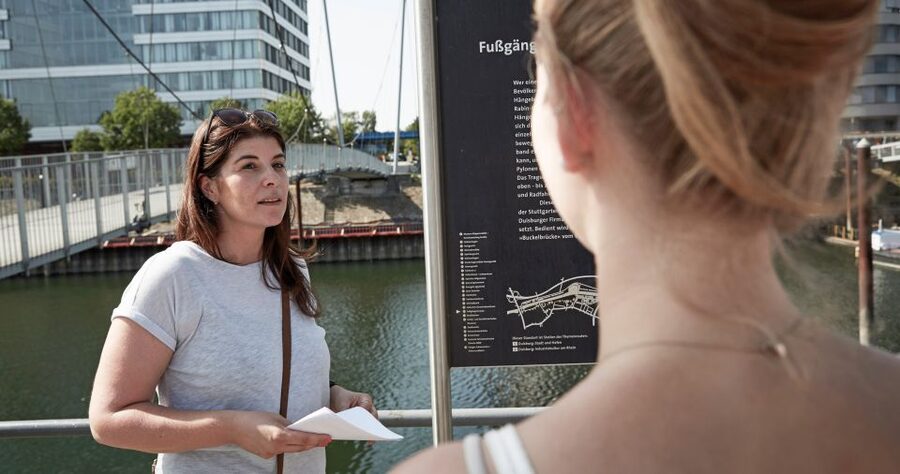
Your meeting point is in front of the Mercator Fountain, beside Duisburg Town Hall. This is useful for planning because the tour begins in a clear city-center location rather than at an obscure dock or private entrance.
Your guide waits there before the walk begins. The tour is conducted in German, so check your comfort with spoken German before booking. The subject matter includes urban planning, architecture, and economic change, and those details matter more when you can follow the explanations as they unfold.
The starting point also helps put the harbour story in context. You are not being dropped into a waterfront attraction with no sense of its place in Duisburg. The walk connects the harbour to the city around it, then follows the changes toward the water.
The exact route can depend on the guide and local conditions, so you should think of the tour as a guided orientation rather than a rigid checklist of every building. Its value comes from understanding how the pieces fit together.
A few more Germany trips to weigh up
- Discover Berlin Half-Day Walking Tour
★ 5.0 · 9,624 reviews - Berlin: Third Reich and Cold War 2 Hour Walking Tour
★ 4.9 · 6,830 reviews - Munich: Third Reich & WWII Walking Tour
★ 4.6 · 6,181 reviews
The first big idea: structural change you can see
The inner harbour offers a rare advantage for a short city tour. The main subject is visible all around you. You do not need to imagine a lost industrial age from a few plaques or old photographs. The water, warehouses, new buildings, marina, and restaurants show the change directly.
A guide helps you read those elements in the right order. Without context, you might see a pleasant waterfront with attractive architecture. With context, you can understand why the waterfront looks so different from the port that once moved grain through the Ruhr area.
This is the practical strength of the experience. It is not only a walk past attractive buildings. It explains the decisions behind the redevelopment and shows how a former industrial district became a place for offices, culture, dining, and leisure.
The story also avoids the usual postcard version of a city. You get a look at Duisburg as a place shaped by industry and adaptation. That makes the walk especially useful if you want to understand the Ruhr area beyond its best-known images.
The Five Boats and the new waterfront architecture
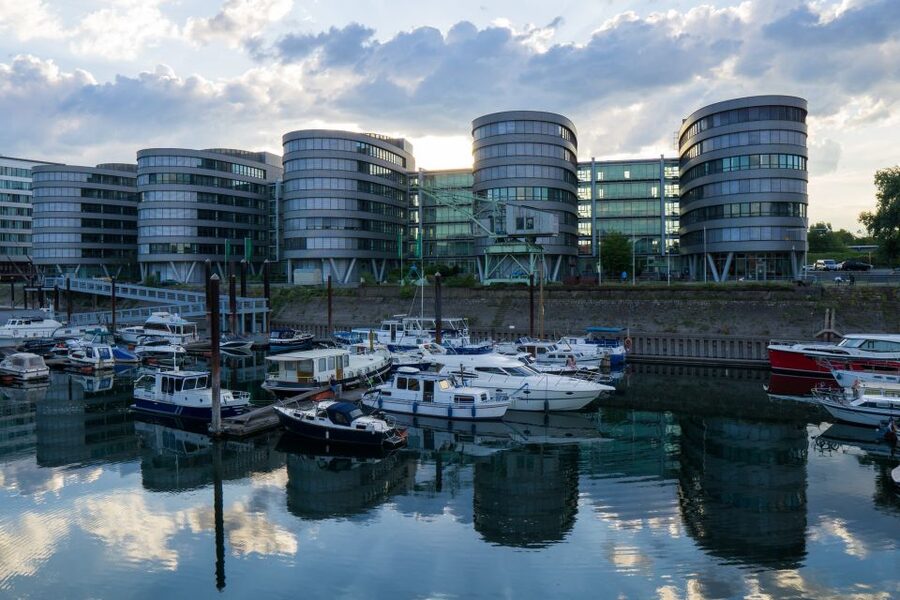
One of the notable modern sights is the Five Boats complex. Its name and design give the waterfront a contemporary focal point, and the building represents the newer side of Duisburg’s inner harbour.
You will also see other examples of modern architecture as the route moves through the district. These buildings sit beside older warehouse rows, creating the visual tension that makes the harbour interesting. The contrast is not hidden or smoothed away. New offices and renovated structures share the same setting.
I like this part of the walk because it gives you something concrete to look at while the guide explains the redevelopment. Architecture here is not decoration alone. It reflects the change in how the harbour is used.
Still, anyone hoping for an untouched historic port should adjust expectations. Much of the appeal comes from the mixture of old and new, not from a perfectly preserved industrial scene. The harbour is a changed place, and the tour is about that change.
The marina, restaurants, and a Mediterranean mood
The marina gives the former cargo district a very different feel. Yachts now lie at anchor where loading and unloading once defined the waterfront. That simple change in use helps you understand how far the harbour has moved from its commercial past.
Waterside restaurants add to the relaxed atmosphere. You might find the area especially appealing after the tour, when you can sit near the water and take in the contrast between boats, old storage buildings, and modern offices.
The Mediterranean comparison comes from the combination of water, outdoor dining, and leisure activity. It does not mean Duisburg has become a southern European port. The Ruhr setting and industrial architecture remain part of the picture.
That mix is exactly why the area works well for a short guided walk. You can study the urban change, then pause for food or a drink without leaving the district. The tour gives you the background; the restaurants give you time to enjoy the setting at your own pace.
Same city, a completely different kind of day:
- Berlin: Reichstag, Dome and Government District Guided Tour
★ 4.7 · 18,288 reviews - Berlin: 1-Hour City Tour by Boat with Guaranteed Seating
★ 4.3 · 16,993 reviews - Hamburg: Sex and Crime in St. Pauli Tour for Ages 18+
★ 4.7 · 15,447 reviews - Hamburg: 1.5-Hour Harbor and Speicherstadt Day Cruise
★ 4.6 · 14,200 reviews
Museums that make a good follow-up
The inner harbour has enough cultural attractions to make the tour more than a standalone walk. The Küppersmühle Museum of Modern Art is particularly worth considering before or after the tour. Its presence fits the district’s broader change from industrial worksite to cultural and public space.
The Cultural and Urban History Museum offers a different angle. If the walking tour explains the harbour’s physical redevelopment, a museum visit can help you place Duisburg’s urban story in a wider setting.
You do not need to visit both museums to justify the tour. The walking experience works on its own, especially if you have only a short time in Duisburg. But adding one museum makes the inner harbour a stronger half-day plan.
The order depends on your interests. Start with the walk if you want the guide’s explanation before seeing the museums. Visit a museum first if you prefer to gather background and then look at the waterfront with that information in mind.
What the 1.5-hour timing means for your day
Ninety minutes is a sensible length for this subject. It allows enough time to move through the district and hear the main story without turning a simple introduction into a tiring outing.
You should not expect a full-day architectural study or an exhaustive history of every building. Instead, you get a focused look at the inner harbour’s main transformation, including the old grain trade, the loss of the mills, the Foster redevelopment plan, and the district’s present use.
The short duration also makes the tour easy to combine with other plans. You can visit the harbour before lunch, follow it with a museum, or use it as an introduction before exploring Duisburg independently.
At $16 per person, the value is strong if you want context rather than just a stroll. You are paying for a live German-speaking guide and an organized explanation of an unusual urban story. If you only want to photograph the water and buildings, you can walk around without booking. The fee makes sense when you want to understand what you are seeing.
Rain does not cancel the harbour story
The tour takes place in rainy weather, so pack for the conditions rather than waiting for a perfect forecast. Water can make the harbour look atmospheric, but an open waterfront is less comfortable when you are cold or wet.
Wear shoes suited to a city walk and bring rain protection. The tour is wheelchair accessible, which is important for visitors who need a route designed with access in mind. The provided information does not specify the exact surface conditions or any steep sections, so you may want to confirm those details if you have particular mobility needs.
Bad weather does not erase the main subject. The port’s transformation remains visible in the buildings and waterfront layout. Still, your enjoyment will depend on being prepared, especially because the tour lasts 1.5 hours outdoors.
The guide’s attitude can matter on a wet day. One recent participant specifically praised the good humor of the tour leader despite poor weather. Another described the walk as informative and humorous, which suggests the tone is not strictly formal or dry.
Who will get the most from this walk
I would choose this tour for anyone interested in architecture, city planning, industrial history, or the Ruhr area’s changing identity. It is also a good first activity in Duisburg because it gives you a readable map of the inner harbour and points you toward museums and restaurants.
German speakers are the clearest audience. Since the live guide language is German, people with limited German may miss the explanations that make the tour worthwhile. The visual sights are still available, but the central benefit is the guide’s account of why the district changed.
Families and mixed-age groups may appreciate the manageable length. The waterfront, boats, modern buildings, and restaurants give the walk variety, while the 90-minute schedule avoids the commitment of a long historical tour.
I would be less likely to recommend it to someone who wants a deep look at Duisburg’s medieval past, a boat trip, or a tour focused on nightlife. This is a walking tour about one district and its redevelopment, not a complete survey of the city.
Booking flexibility and useful planning points
You can cancel up to 24 hours before the tour for a full refund, and you can reserve now while paying later. That flexibility is helpful if your Duisburg plans depend on weather or changing train connections.
Check the available starting times when you choose a date. The meeting point is the Mercator Fountain in front of Town Hall, and the guide is identified by the tour provider there.
Plan extra time if you want to eat at a waterside restaurant or visit a museum. The tour itself lasts 1.5 hours, but the harbour works best when you are not forced to rush away immediately afterward.
The experience provider is Duisburg Kontor GmbH. The current rating is 4.3 out of 5 based on six ratings, with especially strong praise for the informative and humorous approach and for the value at the price.
Should you book the Duisburg inner harbour tour?
Book it if you want a short, affordable explanation of how an industrial port became a modern waterfront district. The strongest part is the clear story: grain handling declined, the old harbour lost its purpose, and a redevelopment plan reshaped the area with offices, culture, dining, and leisure.
The tour is a particularly good choice before visiting the Küppersmühle Museum of Modern Art or the Cultural and Urban History Museum. It also suits a rainy-day itinerary because it still runs in wet weather, though you should dress properly.
Skip it if you do not understand German well or if you want a general Duisburg city tour. For German speakers with an interest in urban change, the $16 price and 90-minute format make this an easy recommendation.
FAQ
Where does the Duisburg inner harbour walking tour begin?
The guide meets you in front of the Mercator Fountain, in front of Duisburg Town Hall.
How long does the tour last?
The guided walking tour lasts 1.5 hours.
What language is the tour in?
The live tour guide conducts the experience in German.
What does the tour include?
It includes a 1.5-hour guided tour through Duisburg’s inner harbour.
Is the tour wheelchair accessible?
Yes, the tour is listed as wheelchair accessible.
Does the tour run when it rains?
Yes, the tour also takes place in rainy weather.
What is the price?
The listed price is $16 per person.
Can I cancel the booking for a refund?
Yes. You can cancel up to 24 hours in advance for a full refund.
Just added around Germany
- Aachen old town tour – GERMAN (public)★ 5.0 · 24 reviews
- Aachen Private Walking Tour With A Professional Guide★ 5.0 · 11 reviews
- Cologne Highlights: Exclusive Private Tour★ 5.0 · 5 reviews
- Bremen Private Walking Tour With A Professional Guide★ 5.0 · 7 reviews
- Private Walking Tour through the Fascinating Bremen’s City Center★ 5.0 · 5 reviews
- Explore Cologne’s best Street Art Quarter★ 4.5 · 4 reviews
- Bremen Exploration Private Game and City Tour on your Phone★ 4.5 · 7 reviews
- e-Scavenger hunt Bremen: Explore the city at your own pace★ 4.0 · 24 reviews
Walking Tours, compared.





Berlin’s Best: 2 Hour Walking Tour Third Reich and the Cold War
Read our review →


Third Reich Berlin: Hitler and WWII Walking Tour
Read our review →Browse the lists this tour appears in