

Reviewed · BERLIN TOURS
Delicious Deutsch: Learn German while creating German Breakfast
Berlin’s German lesson with a fork is the real attraction here. You meet Kit at Goltzstraße 36, visit a local outdoor market, work with fresh ingredients, and prepare an elaborate Frühstück, the leisurely German breakfast that can be as much a social ritual as a meal. The language comes through every task, from naming produce to following a recipe.
I like the practical teaching method, since you are not memorizing detached phrases from a worksheet. I also like the private format, which lets Kit adjust the pace for your group, include children, and discuss food, sustainability, and Berlin culture as you cook. The main caution is the listed start time of 9:30 pm, which does not fit a breakfast class, so confirm the time before paying.
In This Review
- Key things to know
- Why a German breakfast makes a good language lesson
- Starting at Goltzstraße 36 in Berlin
- The market visit and choosing ingredients
- Cooking German in Kit’s home
- What you actually learn while preparing breakfast
- Eating the breakfast you helped create
- What the $110 price buys you
- Who will enjoy this private Berlin class
- A few practical points before booking
- Should you book Delicious Deutsch?
- FAQ
- Where does the activity start?
- Where does the activity end?
- How long does the experience last?
- What time does the activity start?
- How much does the experience cost?
- Is breakfast included?
- Is transportation included?
- Is this a private activity?
- What German levels are suitable?
- Is the experience refundable?
Key things to know
- German through real kitchen tasks: You learn words and phrases while handling, preparing, cooking, and tasting food.
- A local market begins the experience: The outing includes selecting fresh ingredients and talking about seasonal products.
- Kit hosts the private session: She leads the market visit and cooking class in a warm, personal setting.
- Breakfast is included: You eat the meal you help prepare, rather than paying extra for the finished food.
- Good for beginner to intermediate German: The class is built for practical speaking at these levels.
- Plan around the details: It lasts about three hours, costs $110, ends at the meeting point, and does not include private transport.
Why a German breakfast makes a good language lesson

A cooking class gives German words somewhere to land. You do not simply hear a noun and hope it sticks. You see the ingredient, touch it, handle it, and use it in a real task. That connection can make words easier to recall later.
You may learn food names, recipe terms, cooking instructions, and simple conversational phrases as the meal takes shape. The sensory side matters here. Sight, sound, touch, smell, and taste all join the lesson, giving your memory more than a spoken definition to hold on to.
The focus is German for beginner to intermediate speakers. That makes this a better fit for someone who wants to practice basic communication in a relaxed setting than for someone seeking advanced grammar instruction or a formal language course.
I like the fact that the class places language inside modern German culture. Frühstück is not treated as a quick plate grabbed on the way to work. You are exploring how food, shopping, preparation, and conversation fit together in Berlin life.
Other Berlin days worth putting on the list:
- Berlin: Reichstag, Dome and Government District Guided Tour
★ 4.7 · 18,288 reviews - Berlin: 1-Hour City Tour by Boat with Guaranteed Seating
★ 4.3 · 16,993 reviews - Berlin: Boat Tour Along the River Spree
★ 4.4 · 11,252 reviews
Starting at Goltzstraße 36 in Berlin
The meeting point is Goltzstraße 36, 10781 Berlin, and the activity returns there at the end. The location is near public transportation, but private transportation is not included, so you need to arrange your own way to the start.
One practical detail needs attention. The supplied schedule gives a 9:30 pm start, while the experience is described as a morning breakfast activity lasting about three hours. That may be a data error, but you should not assume. Confirm the start time directly before booking, especially if you are building the class into a busy Berlin morning.
The mobile ticket is useful for keeping your booking on your phone. Confirmation is provided when you book. Since the activity is private, only your group participates, which means you are not joining a large class of strangers or waiting for a common group to reach the same language level.
The market visit and choosing ingredients
The first part takes you to an outdoor market or farmers market. This is more than a shopping stop. You begin discussing what you will prepare, what interests your group, and which ingredients make sense for the meal.
Kit has relationships with vendors and can point out ingredients she likes to cook with, along with seasonal treats. That gives the market visit a personal angle. Instead of racing past stalls while someone recites facts, you have a reason to examine the food and talk about it in German.
This is where the lesson can feel especially useful. You might practice the names of fruits, herbs, meats, and other produce while seeing the actual items in front of you. You can also learn words connected with buying food, describing quality, discussing seasons, and making choices.
The market portion also brings in wider food questions. The experience includes discussion of fresh, local, and sustainable meat and produce. Those subjects give you more natural conversation than a string of isolated vocabulary drills.
You should allow for the possibility that the market portion will vary. Seasonal products change, and the exact ingredients depend on what is available. That is a benefit if you like flexible cooking, but less ideal if you want a fixed menu announced in advance.
Cooking German in Kit’s home
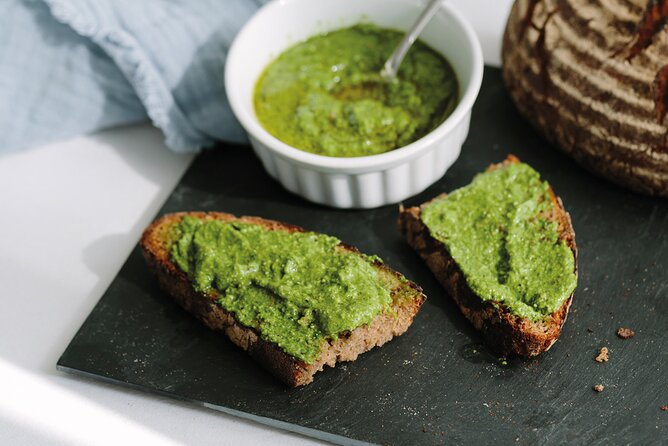
After selecting the food, you continue to Kit’s home to prepare the meal. The cooking session covers recipes, techniques, and ingredients, with German practice built into each step.
The setting is personal rather than institutional. You are not sitting at a desk under fluorescent lights, and you are not watching a chef work from across a demonstration counter. You help prepare the food, which creates repeated chances to listen, respond, and ask for clarification.
The host’s home is part of the appeal, but it also sets a clear expectation. This is a home-based cultural activity, not a restaurant meal or a professional culinary school. If you enjoy informal contact with local life, that should feel natural. If you prefer a polished commercial kitchen, it may feel more casual than expected.
Kit can make the session work for different ages. A child in one family was included and made to feel part of the activity, an encouraging sign for parents considering this as a family experience. Still, no age range is specified, so families should confirm suitability for younger children before booking.
Dietary needs deserve a similar check. Kit has accommodated dietary restrictions in the past, but the details of what can be handled are not provided. Tell the operator about your needs before the class rather than arriving with an assumption.
Same city, a completely different kind of day:
- Discover Berlin Half-Day Walking Tour
★ 5.0 · 9,624 reviews - Berlin: Hop-on Hop-off Bus Tour with Live Commentary
★ 4.3 · 8,579 reviews - Berlin: Government District around the Reichstag Guided Tour
★ 4.7 · 8,447 reviews - Berlin: Reichstag, Plenary Chamber, Cupola & Government Tour
★ 4.6 · 8,422 reviews
What you actually learn while preparing breakfast
The strongest part of the class is the link between action and speech. You may hear a recipe explained, identify an ingredient, follow a cooking instruction, and then perform the task yourself. That sequence gives you several chances to meet the same German word.
A beginner can use the class to build confidence with basic food vocabulary and simple instructions. An intermediate speaker can push further by asking questions, explaining preferences, and discussing cooking methods or local food habits.
The lesson is not limited to kitchen language. Conversation can move into German food culture and Berlin history, making the class more than a vocabulary session. Those extra topics are useful because they show how words work in a normal conversation rather than in a carefully isolated exercise.
You should also keep your expectations measured. The activity lasts about three hours, so it cannot replace a full German course. You will get practical speaking time and cultural context, but the value comes from using language in a memorable setting, not from covering a large amount of formal material.
Eating the breakfast you helped create
Breakfast is included in the $110 price. You are not only paying for instruction, then buying a separate meal afterward. The food you select and help prepare becomes part of the experience.
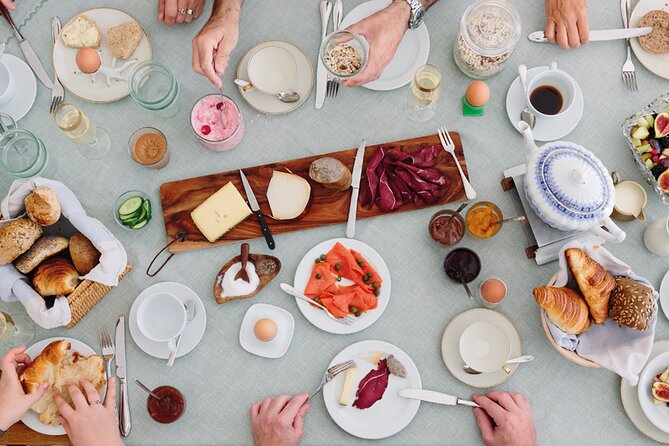
A German breakfast can be an elaborate affair, and that gives the meal a social purpose. You have time to talk about the food, compare ingredients, and continue using German after the cooking is finished. The final meal is the payoff, but it is also another stage of the lesson.
The menu is not specified, so you should not book expecting a named dish or a guaranteed list of ingredients. The market and seasonal approach suggest that the food may reflect what is available and what interests your group.
The meal also adds value for anyone who wants cultural understanding rather than a generic cooking demonstration. You are learning how a local host thinks about breakfast, shopping, fresh food, and shared preparation.
What the $110 price buys you
At $110, this is not a cheap breakfast. The price makes more sense when you count the private format, the market visit, the German instruction, the cooking session, and the included meal.
A group that values personal attention may find the cost reasonable. You are paying for a host who can adjust the conversation to beginner or intermediate ability, respond to your interests, and make the session work for your own group. A private class also avoids the common problem of being paired with people who have very different language levels.
The value is weaker if you mainly want to eat German food or take a standard sightseeing tour. This activity earns its price through participation and conversation. If you do not want to cook, speak, or handle ingredients, much of what you are paying for will be wasted.
The market component adds another layer. You are seeing how ingredients are selected and discussing local and seasonal food, rather than receiving a meal with no context. For a visitor who wants a closer look at everyday Berlin culture, that can justify the higher cost.
Who will enjoy this private Berlin class
I would recommend this to a couple, family, or small group that wants a shared activity with a clear cultural purpose. It is especially suitable if at least one person has beginner or intermediate German and wants a reason to speak without the pressure of a formal classroom.
It also fits people who enjoy food markets, home cooking, and conversation. The experience has enough flexibility to include interests in sustainability, local produce, food traditions, and Berlin history.
Families may find the private setup helpful because children can be included rather than expected to keep up with a large group. The activity is also a good choice for visitors staying in Berlin longer, since the language practice may be more useful when you have several days to keep using the words.
I would be less likely to choose it for a short, tightly scheduled morning if the timing remains unclear. I would also skip it if you want a fixed menu, a professional chef-led demonstration, or transportation included from your hotel.
A few practical points before booking
The activity is non-refundable and cannot be changed for any reason after booking. That makes confirming the time, food requirements, meeting point, and group needs especially important.
Service animals are allowed, and the meeting point is near public transportation. The activity is private, with only your group participating. It ends back at Goltzstraße 36.
The experience requires a minimum number of participants. If the operator cancels because that minimum is not reached, you will be offered another date or experience, or receive a full refund.
The listed duration is about three hours. The descriptions of earlier food sessions include longer outings, but this breakfast experience should be planned around the stated three-hour length unless Kit confirms otherwise.
Should you book Delicious Deutsch?
Book it if you want to learn German by doing something real. The combination of a local market, fresh ingredients, home cooking, and a shared breakfast gives you practical language practice with a strong cultural link.
The best reasons to choose it are the private format, Kit’s personal hosting, the chance to include children, and the ability to discuss food traditions, sustainability, and Berlin culture while you work. The main reasons to pause are the $110 price, the non-refundable terms, the unspecified menu, and the strange 9:30 pm start time.
Confirm that schedule before making payment. If the class is held at a sensible breakfast hour and you enjoy cooking with other people, this is a thoughtful way to turn a German lesson into a meal you will remember.
FAQ
Where does the activity start?
It starts at Goltzstraße 36, 10781 Berlin, Germany.
Where does the activity end?
The activity ends back at the meeting point at Goltzstraße 36.
How long does the experience last?
The listed duration is approximately three hours.
What time does the activity start?
The supplied details list a 9:30 pm start time. Because the experience centers on breakfast, confirm this time before booking.
How much does the experience cost?
The listed price is $110.
Is breakfast included?
Yes. Breakfast is included in the experience.
Is transportation included?
No. Private transportation is not included. The meeting point is near public transportation.
Is this a private activity?
Yes. Only your group participates.
What German levels are suitable?
The program is designed for beginner to intermediate German language levels.
Is the experience refundable?
No. It is non-refundable and cannot be changed for any reason. If the operator cancels because the minimum number of participants is not reached, you can be offered another date or experience, or receive a full refund.
Just added around Berlin
- Love and War in Berlin: Self-Guided Story Puzzle Walk★ 5.0 · 7 reviews
- Rickshaw Tours Berlin – Groups of up to 16 people with several rickshaws★ 4.0 · 97 reviews
- Walking on the Wall: 3-Hour Tour in Berlin★ 4.5 · 34 reviews
- eSIM for Germany and 34 European Countries★ 4.5 · 16 reviews
- Warnemuende Shore Excursion: Berlin Private Sightseeing Tour from Rostock★ 5.0 · 4 reviews
- Your ticket to The Wall Museum Berlin★ 3.0 · 60 reviews
- Warnemuende Shore Excursion: Private Berlin Tour★ 4.5 · 27 reviews
- Berlin’s Gay, Lesbian, and Queer Scene Small-Group Walking Tour★ 4.5 · 66 reviews
Berlin Tours, compared.

Reichstag, Dome and Government District Guided Tour
Read our review →
1-Hour City Tour by Boat with Guaranteed Seating
Read our review →


Reichstag, Plenary Chamber, Cupola & Government Tour
Read our review →

