
Reviewed · BERLIN TOURS
Clash of Titans: Battle for Seelow Heights WW2 tour
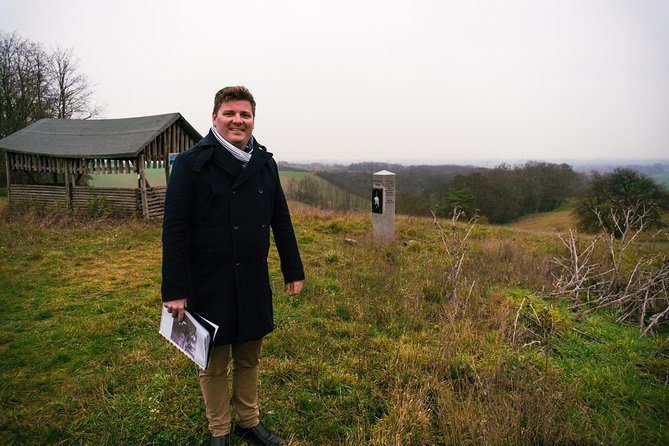
The most striking part of this tour is that the Battle of Seelow Heights is not treated as a distant story. You visit the forest trenches, the remains of Marshal Zhukov’s command position, German defensive sites, and the fields where the final fighting unfolded. The battlefield itself becomes your map.
I like the small group, capped at seven, because guides such as Matt, Matthew, or Steve can answer detailed questions and adjust the pace. I also like the way the tour moves in the same general direction as the 1945 Soviet advance, turning a complicated operation into a clear sequence of places and events.
The main consideration is the distance from Berlin and the rougher walking. You spend about seven hours on the outing, with a short forest excursion over uneven ground. Wear sturdy footwear, bring weather-appropriate clothing, and remember that lunch is not included.
In This Review
- Key points to know before booking
- Why Seelow Heights matters to a Berlin history itinerary
- The Seelow Heights memorial and museum
- Reitwein and the Soviet starting point
- Forest trenches and Zhukov’s command position
- Dolgelin railway station and the shooting gallery
- Lietzen cemetery and medieval traces
- Jahnsfelde and the artillery battalion’s last stand
- What the drive adds to the tour
- Timing, walking, food, and the real cost
- Who will get the most from this battlefield day
- Should you book the Seelow Heights tour?
- FAQ
- Where does the Seelow Heights tour begin?
- What time does the tour start?
- How long does the tour last?
- How many people can join the tour?
- Is transportation included?
- Is museum admission included?
- Is lunch included?
- What should I wear?
- Can most people participate?
- What happens if bad weather cancels the tour?
- What is the cancellation policy?
Key points to know before booking
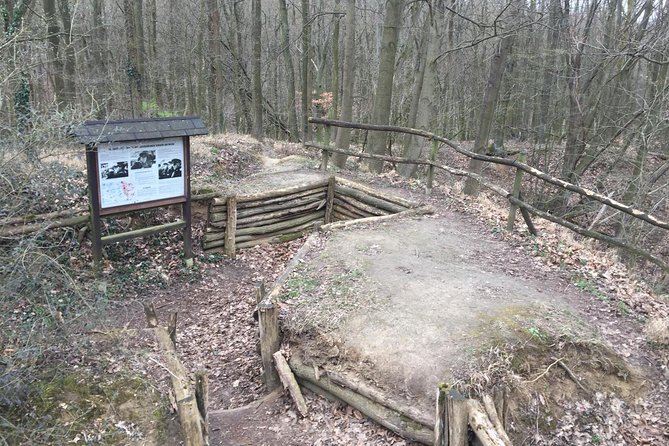
- Walk through surviving trenches and bunker remains near Reitwein, including the area linked to Zhukov’s command post.
- Use the Seelow Heights museum first, where a 3D model explains the trench system you later visit.
- Follow the Soviet advance in order, from Reitwein through Dolgelin, Lietzen, and Jahnsfelde.
- Travel in a maximum group of seven, useful for questions and personal attention.
- Spend most of the day outside Berlin, with woodland paths, open fields, memorial sites, and village stops.
- Plan for lunch separately, since food is not part of the $167.74 price.
Why Seelow Heights matters to a Berlin history itinerary
Berlin is full of World War II sites, but many focus on the city itself, the Nazi government, or the final days in the ruins of the capital. Seelow Heights gives you a different view. This was the major German defensive position east of Berlin, and the fighting here opened the route toward the city in April 1945.
The scale was enormous. The Soviet 1st Belorussian Front assembled about 768,000 infantry, including 78,556 soldiers from the Polish 1st Army, along with 3,059 tanks, 16,934 artillery pieces and mortars, and 3,279 combat aircraft. Opposing them were German forces dug into the heights and surrounding ground.
Numbers like these can become dry when read in a book. The value of this outing is that your guide connects the figures to hills, roads, woods, railway lines, and defensive positions. You begin to see why the attack did not simply roll forward, despite the Red Army’s enormous strength.
The guides are a major part of the experience. Matt, also identified as Matthew Menneke, is praised for a lively, well-prepared presentation, while Steve is noted for his enthusiasm and willingness to answer questions. The style is serious but conversational, so you do not need to be an expert on the Eastern Front to follow the story.
Other Berlin days worth putting on the list:
- Berlin: Reichstag, Dome and Government District Guided Tour
★ 4.7 · 18,288 reviews - Berlin: 1-Hour City Tour by Boat with Guaranteed Seating
★ 4.3 · 16,993 reviews - Berlin: Boat Tour Along the River Spree
★ 4.4 · 11,252 reviews
The Seelow Heights memorial and museum
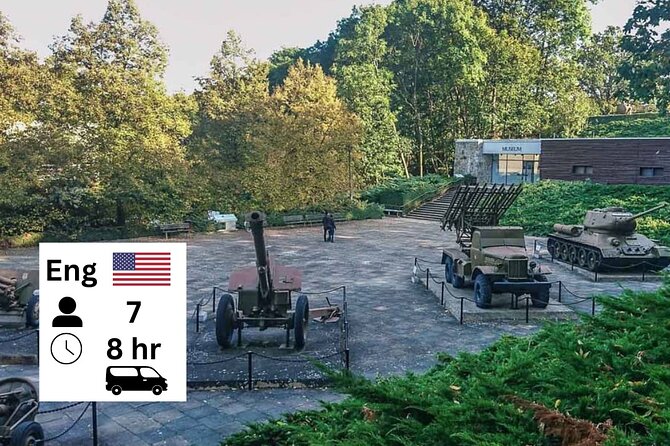
The first stop is the Gedenkstätte Seelower Höhen, the memorial and museum dedicated to the battle. You receive an introduction to the Berlin-Seelow offensive before exploring the exhibits on your own for about 40 minutes.
This is a smart beginning. The museum gives you a framework before you enter the countryside. In particular, a 3D model shows the Soviet 1st Belorussian Front bunker and trench network. Later, when you walk through the woods near Reitwein, you can match the model to the remains on the ground.
The museum visit is included in the price. It is not just a quick photo stop, and you should pay attention to the opening explanation because it helps make sense of the scattered sites that follow.
The drawback is that 40 minutes passes quickly. If you enjoy reading every panel in a museum, you may need to choose carefully. The tour is built around seeing the actual ground, so the schedule gives more weight to outdoor interpretation than to a long indoor visit.
Reitwein and the Soviet starting point
A short drive brings you to Reitwein, a modest town with an important wartime role. From here, the Soviet assault on Seelow began, and the town also lay along the route toward Berlin.
You spend about 20 minutes getting the broad picture. The guide explains how the Soviet and Polish forces were gathered and how the offensive developed from this area. This stop is useful because it makes the army’s movement feel less abstract. You are not looking at an isolated memorial. You are tracing the opening phase of an operation that continued west toward Berlin.
The village itself is quiet and ordinary today. That contrast is part of the lesson. A place that now appears calm once served as a launch point for a huge military attack. You may find the stop less visually dramatic than the trench walk, but it supplies essential context.
Forest trenches and Zhukov’s command position
A short walk from Reitwein takes you into the forest, where remnants of trenches and bunker systems can still be seen. The visit lasts about 30 minutes, although the timing can feel longer or shorter depending on the group’s pace and questions.
This is one of the strongest parts of the day. Standing near the remains associated with Marshal Zhukov’s command bunker and observation point gives you a direct sense of how the Soviet attack was directed. Your guide can use the museum model and maps to explain where forces were placed and how the terrain affected the battle.
The site is not presented as a polished military attraction. You are walking through woodland and remnants, not along a fully paved memorial route. That makes the setting feel more immediate, but it also means you should expect uneven paths and possibly muddy conditions. One guide was careful to accommodate the slowest walker in the group, yet you should still be comfortable with a short off-road walk.
This is where sturdy boots matter most. Comfortable city shoes are not the best choice for the forest section.
Same city, a completely different kind of day:
- Discover Berlin Half-Day Walking Tour
★ 5.0 · 9,624 reviews - Berlin: Hop-on Hop-off Bus Tour with Live Commentary
★ 4.3 · 8,579 reviews - Berlin: Government District around the Reichstag Guided Tour
★ 4.7 · 8,447 reviews - Berlin: Reichstag, Plenary Chamber, Cupola & Government Tour
★ 4.6 · 8,422 reviews
Dolgelin railway station and the shooting gallery
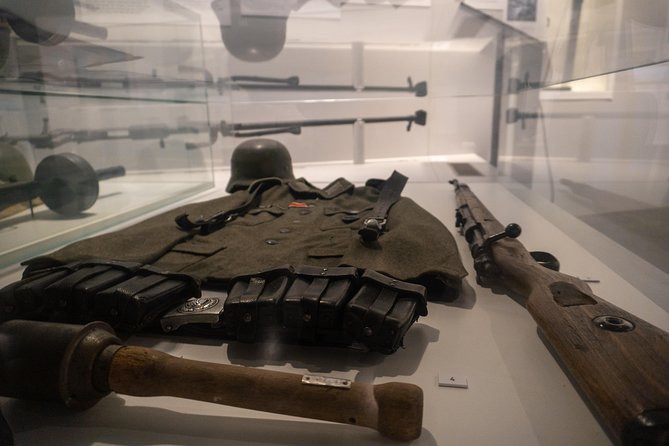
The route continues to Dolgelin Railway station, where Colonel Scheunemann, commander of the 303rd Infantry Division, established a German command post. You spend about 20 minutes here examining the defensive position and discussing the problems faced by the attacking troops.
The tour explains why the ground ahead was so difficult to cross. German positions turned the approach into what the guide describes as a shooting gallery, with Soviet and Polish troops exposed as they tried to move through the defenses.
The railway stop also helps you understand that this battle was not fought on one single ridge. Roads, railways, villages, fields, and woods all shaped movement. Your guide’s timeline is important here. The fighting took place over several days, and each stop marks a different stage rather than repeating the same story.
Do not expect a large monument at every location. Some stops are simple places where the significance comes from the explanation, the view, and the position on the route.
Lietzen cemetery and medieval traces
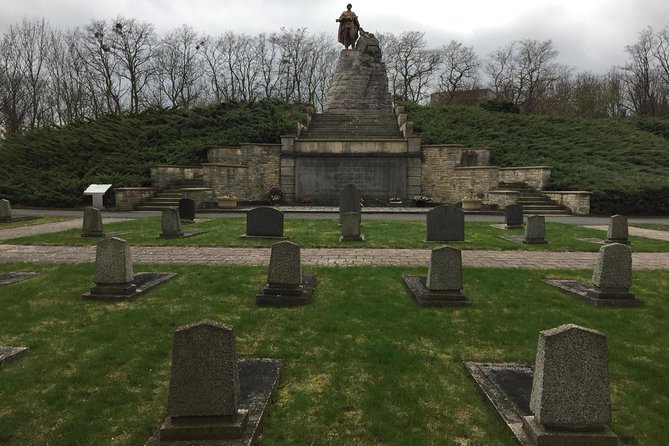
The return journey follows the original direction of the Soviet advance. In Lietzen, the tour pauses for about 30 minutes at a German field cemetery.
This is a sober part of the day. The cemetery has been expanded since German reunification as newly discovered remains are added to the wartime graves. It reminds you that the battle’s human cost did not end when the front moved west, and that the ground still yields evidence of the fighting.
Lietzen also offers a surprising change of subject. The town includes what is described as Germany’s oldest barn and a manor house connected with the Knights Templar, dating from 1252. These older traces help place the war in a much longer local story. The area was not created by the battle, and it did not disappear afterward.
You should allow the cemetery stop to set the tone. This is not a place for hurried sightseeing. The tour treats it with the seriousness it deserves.
Jahnsfelde and the artillery battalion’s last stand
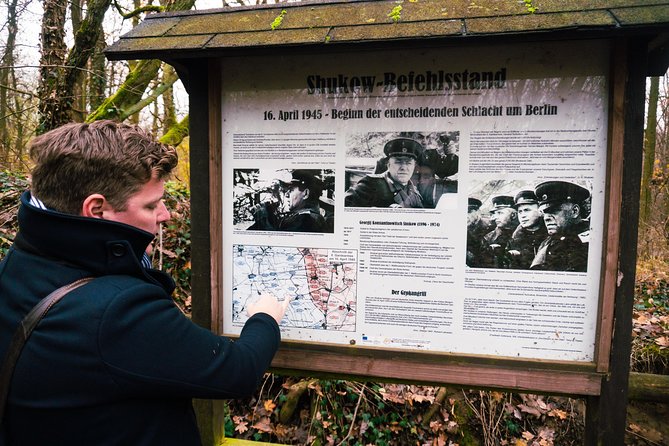
The final battlefield stop is Jahnsfelde, where a sports field occupies the former site of a German field hospital. The hospital was attacked by Soviet aircraft despite its Red Cross markings, according to the account presented during the tour.
The stop also covers the last stand of the 3rd Battalion of Artillery Regiment 18. During the German withdrawal, Soviet armor reached a crossroads, and the battalion hastily formed defensive positions. It reportedly destroyed about 100 tanks, but at a terrible cost: eight officers and more than 160 men were killed, more than two-thirds of the battalion were wounded, and every gun was lost.
This is a powerful way to end the battlefield sequence because it shows both the destructive force of the Soviet advance and the desperation of the German retreat. The site today may look like an ordinary field or sports ground, so the guide’s maps and explanation do the work of restoring the wartime frame.
I find these ordinary modern settings more affecting than a grand monument can be. You are asked to imagine the fighting without being separated from the present day. That can be difficult, but it is exactly why the stop carries weight.
What the drive adds to the tour
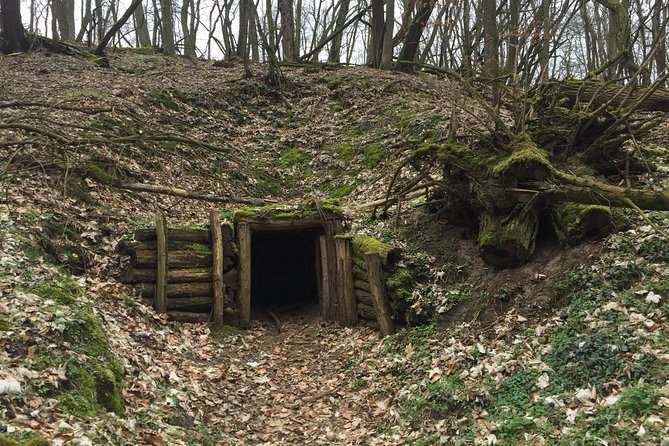
The air-conditioned vehicle is more than a comfortable way to get around. Seelow Heights is spread across villages, woodland, roads, and fields that are not practical to connect by public transport in one day.
The drive also lets the guide explain events between stops. You are not simply transported from one attraction to the next. The route follows the broad direction of the Soviet advance, which gives the day a natural structure.
The published meeting point is at Alexanderplatz, Dircksenstraße 2, with a 9:15 am start. The tour ends back at the meeting point or at a central drop-off point of your choosing. The description also refers to two-way hotel transfers, while one booking arranged hotel pickup for an additional cost, so confirm the pickup arrangement when you reserve.
The vehicle includes Wi-Fi and a small bottle of water. Guides have also supplied extra water and simple snacks such as fruit and cookies on some outings, but those extras should not be treated as guaranteed inclusions.
Timing, walking, food, and the real cost
The price is $167.74 per person for about seven hours. That is not a budget half-day outing, but the value improves if you want a focused battlefield visit rather than a general Berlin excursion.
Your fee covers the vehicle, museum admission, Wi-Fi, and a small bottle of water. It also buys a small-group format with no more than seven people. That limit matters here because the subject benefits from questions, maps, and repeated explanations at different locations.
Lunch is not included. Several outings have included a highly regarded traditional German restaurant stop, but you pay for your own meal. Build that cost into your budget, and ask your guide about the expected meal timing if you need to plan around dietary needs.
The day can run seven to eight hours according to the pace of the group. Bathroom stops are available along the way, and guides have shown flexibility about food stops. Still, this is not a tour where every minute is tightly packaged around major attractions. You spend time in small towns and outdoor sites, and the value comes from the interpretation.
Free cancellation is available up to 24 hours before the start time. If poor weather causes cancellation, you are offered another date or a full refund. The same applies if the minimum group size is not met. Because the tour requires suitable weather, check the forecast and avoid booking it as your only fixed plan for the final day of a short Berlin visit.
Who will get the most from this battlefield day
You will get the most from this outing if you have a strong interest in World War II, military history, battlefield archaeology, or the Eastern Front. It also works for someone with only a basic background, because the guides build a timeline and explain the battle in plain terms.
The small group is especially useful for solo participants, couples, and families with an older child who enjoys history. Guides have made an effort to include everyone, including people who want detailed military answers and those who are new to the subject.
You should be comfortable spending much of the day outside. The walking is not described as extreme, and most people can participate, but the forest section goes away from paved paths. Good footwear is essential, especially in wet weather.
This is not the best choice if you want a relaxed sightseeing day close to central Berlin, a long museum visit, or a tour with lunch included. It is also a poor fit if you dislike discussing the grim realities of war. The guide does not reduce the battle to heroic anecdotes. Civilian suffering, heavy casualties, failed attacks, and the cost of the advance are part of the story.
Should you book the Seelow Heights tour?
I would book this tour if you want to understand how the final Soviet advance on Berlin actually unfolded. The combination of the museum model, real trenches, command positions, cemeteries, village sites, and open battlefield ground gives you much more than a standard city war-history walk.
The best reason to choose it is the quality of the guiding. Matt, Matthew, and Steve are described as enthusiastic, prepared, and willing to adjust their explanations to the group. That matters because Seelow Heights can be hard to understand from maps alone.
Book it with sturdy shoes, a weather check, money for lunch, and enough energy for a full day away from Berlin. Skip it only if you want a short, easy city tour. For anyone interested in the Battle of Berlin and the Eastern Front, this is a serious, personal, and unusually direct way to see the ground where the war’s final battles were fought.
FAQ
Where does the Seelow Heights tour begin?
The published meeting point is Alexanderplatz at Dircksenstraße 2, 10179 Berlin, Germany.
What time does the tour start?
The tour starts at 9:15 am.
How long does the tour last?
The scheduled duration is approximately seven hours. Some outings may take seven to eight hours depending on the pace and stops.
How many people can join the tour?
The maximum group size is seven people.
Is transportation included?
An air-conditioned vehicle is included, with transport between the scattered sites. The experience description also refers to two-way hotel transfers, but hotel pickup may involve an additional cost, so confirm the arrangement when booking.
Is museum admission included?
Yes. Admission to the Gedenkstätte Seelower Höhen museum is included.
Is lunch included?
No. Lunch is not included, although the route may include a stop at a traditional German restaurant.
What should I wear?
Wear sturdy footwear suitable for a short walk through woodland and surviving trench areas. Weather-appropriate clothing is also important because several stops take place outdoors.
Can most people participate?
Most people can participate, and service animals are allowed. The tour includes walking on uneven ground near the trenches, so you should be comfortable with that type of route.
What happens if bad weather cancels the tour?
If the experience is canceled because of poor weather, you are offered a different date or a full refund.
What is the cancellation policy?
You can cancel for a full refund up to 24 hours before the experience starts. Cancellations or changes made less than 24 hours before the start time are not refunded or accepted.
Just added around Berlin
- Love and War in Berlin: Self-Guided Story Puzzle Walk★ 5.0 · 7 reviews
- Rickshaw Tours Berlin – Groups of up to 16 people with several rickshaws★ 4.0 · 97 reviews
- Walking on the Wall: 3-Hour Tour in Berlin★ 4.5 · 34 reviews
- eSIM for Germany and 34 European Countries★ 4.5 · 16 reviews
- Warnemuende Shore Excursion: Berlin Private Sightseeing Tour from Rostock★ 5.0 · 4 reviews
- Your ticket to The Wall Museum Berlin★ 3.0 · 60 reviews
- Warnemuende Shore Excursion: Private Berlin Tour★ 4.5 · 27 reviews
- Berlin’s Gay, Lesbian, and Queer Scene Small-Group Walking Tour★ 4.5 · 66 reviews
Berlin Tours, compared.

Reichstag, Dome and Government District Guided Tour
Read our review →
1-Hour City Tour by Boat with Guaranteed Seating
Read our review →


Reichstag, Plenary Chamber, Cupola & Government Tour
Read our review →

