
Reviewed · CITY TOURS
Charlottenburg: 2-Hour City Walking Tour
Charlottenburg is more than a palace stop. This two-hour walk traces the district from its medieval village core to its grand Prussian avenues, with stops at old schools, working-class streets, cafés, and museum buildings. The route shows how Berlin grew, rather than simply pointing out its most famous sights.
I like the focus on places many Berlin tours skip, especially the old village square and Klausener Kiez. I also like the guide’s history-first approach, which has earned this experience a 4.8 rating from 47 reviews and repeated praise for clear explanations and an easy walking speed. The main consideration is that the tour is conducted in German, and museum interiors, food, and drinks are not included.
In This Review
- Key points to know before you go
- Why Charlottenburg makes a fine two-hour walk
- Starting at Rathaus Charlottenburg
- Finding the medieval village inside modern Berlin
- Heinrich Zille, the Stadtbad, and working-class Berlin
- Luisenkirche and the logic of 18th-century planning
- The 1786 schoolhouses and pre-war city building
- Klausener Kiez at Nehringstraße and Christstraße
- Villa Oppenheim and Schlossstraße’s museum quarter
- Finishing at Charlottenburg Palace
- What the $23 price buys you
- Who should book this walk
- How to make the most of your two hours
- Should you book the Charlottenburg walk?
- FAQ
- Where does the Charlottenburg walking tour begin?
- How long does the tour last?
- What is the price?
- What language is the tour conducted in?
- Is Charlottenburg Palace admission included?
- Are food and drinks included?
- Is the route wheelchair accessible?
- What happens if it rains?
Key points to know before you go
- Charlottenburg City Hall starts the story: Meet at the grand Rathaus Charlottenburg, a fitting symbol of one of Germany’s prosperous communities.
- The route covers 800 years: You move from the medieval village center through Prussian planning and pre-war city building.
- Klausener Kiez feels local: Cafés, thrift stores, and corner shops offer a look at everyday Charlottenburg.
- Art and social history share the route: Near the old Stadtbad, you learn where Heinrich Zille found subjects for his wry drawings of working-class Berlin.
- The grand finish is Charlottenburg Palace: The walk ends among the palace, its dome-topped Stüler buildings, and nearby museums.
- The guide is the main attraction: Expect a professional museum expert, historical anecdotes, and time for questions.
Why Charlottenburg makes a fine two-hour walk
Central Berlin gets most of the attention. The Brandenburg Gate, Museum Island, and Berlin Wall sites are essential, but they can make the city seem like a string of major monuments. Charlottenburg gives you another Berlin: polished but lived-in, grand but still tied to village streets and ordinary shops.
I find this route appealing because it connects buildings to the people who used them. You are not only shown an impressive façade. You learn why the street is there, what kind of residents lived nearby, and how the district changed as Berlin expanded.
The tour covers about 800 years of local history in only two hours. That is an ambitious span, so you should expect a brisk sequence of stories rather than a long stop at every building. The guide’s job is to make those changes clear, and recent feedback points to especially strong historical knowledge, friendly delivery, and explanations that stay lively instead of becoming a lecture.
A few more Berlin trips to weigh up
- Discover Berlin Half-Day Walking Tour
★ 5.0 · 9,624 reviews - Berlin: Third Reich and Cold War 2 Hour Walking Tour
★ 4.9 · 6,830 reviews - Berlin: Discover Berlin Walking Tour
★ 4.9 · 5,998 reviews
Starting at Rathaus Charlottenburg
Your meeting point is directly in front of the main entrance to Rathaus Charlottenburg, or Charlottenburg City Hall. This is not a minor civic building tucked away on a side street. Its imposing presence makes an immediate point about the district’s former wealth and importance.
Starting here gives the tour a useful frame. Charlottenburg developed as an independent community and became one of Germany’s prosperous urban districts before its incorporation into greater Berlin. The city hall represents that civic pride, while the rest of the walk shows what lay behind it: older village roots, planned streets, public buildings, and private homes.
Give yourself enough time to find the main entrance. The meeting instructions are simple, but a large city hall can have several approaches. Comfortable shoes are essential, and you should dress for the forecast because the walk operates in rain or shine.
Finding the medieval village inside modern Berlin
From the city hall, the route continues toward Charlottenburg’s old village square, the medieval nucleus of the district. This is one of the tour’s most useful stops because it resets your sense of scale.
Berlin often feels like a modern capital built around broad roads and large monuments. The old square shows a smaller settlement underneath that later city. You can better understand Charlottenburg once you see that the district did not appear fully planned from the start. It grew in stages, with older paths and village forms later joined by formal streets and grander construction.
I like this part for the contrast. The city hall speaks in a civic, official voice. The old village square gives you a more human beginning. Your guide can connect the two without asking you to study a map or read a long museum panel.
The route is also a good choice if you have already seen Berlin’s major central sights. Instead of repeating the familiar imperial story, it shows how a separate community became part of the larger capital.
Heinrich Zille, the Stadtbad, and working-class Berlin
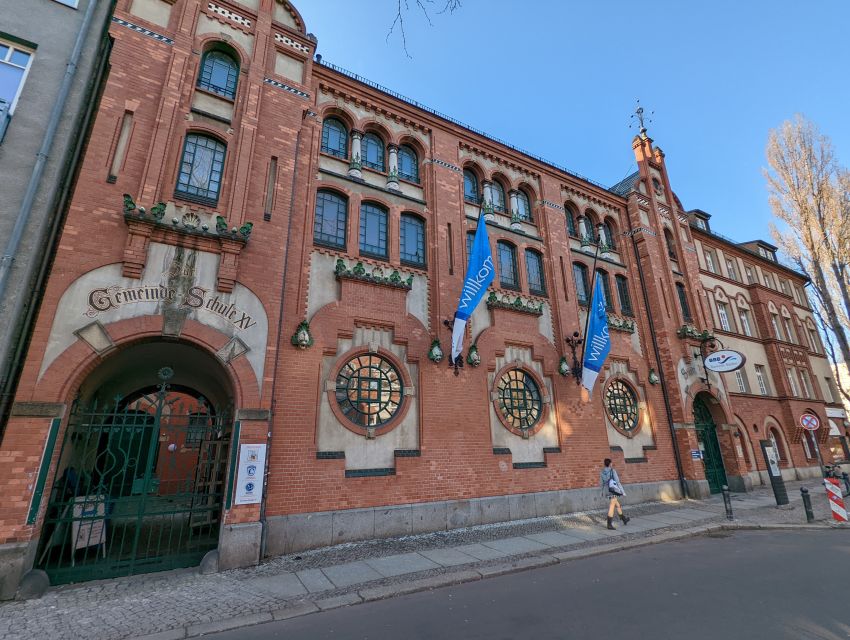
Near the historic Stadtbad, the guide introduces Heinrich Zille and the Berlin working class. Zille was famous for affectionate, ironic depictions of everyday Berlin life, and Charlottenburg provided some of the settings and subjects for his work.
This stop adds social history to the architecture. Fine façades can make a district look wealthy from a distance, but cities are shaped just as much by workers, families, bathers, schoolchildren, and shopkeepers. Zille’s connection helps you think about the people behind the buildings.
The Stadtbad also gives the walk a practical public-service angle. A historic swimming facility is not simply another old structure. It points to changing ideas about public health, leisure, and municipal life. The guide uses this area to show that Charlottenburg’s past was not limited to palaces and grand homes.
If you prefer social history to royal biography, this should be one of the more rewarding sections. The drawback is that the tour only has two hours, so you will not get an extended study of Zille’s art or a full visit inside the Stadtbad. The value comes from the setting and the explanation.
Same city, a completely different kind of day:
- Berlin: Reichstag, Dome and Government District Guided Tour
★ 4.7 · 18,288 reviews - Berlin: 1-Hour City Tour by Boat with Guaranteed Seating
★ 4.3 · 16,993 reviews - Berlin: Boat Tour Along the River Spree
★ 4.4 · 11,252 reviews - Berlin: Hop-on Hop-off Bus Tour with Live Commentary
★ 4.3 · 8,579 reviews
Luisenkirche and the logic of 18th-century planning
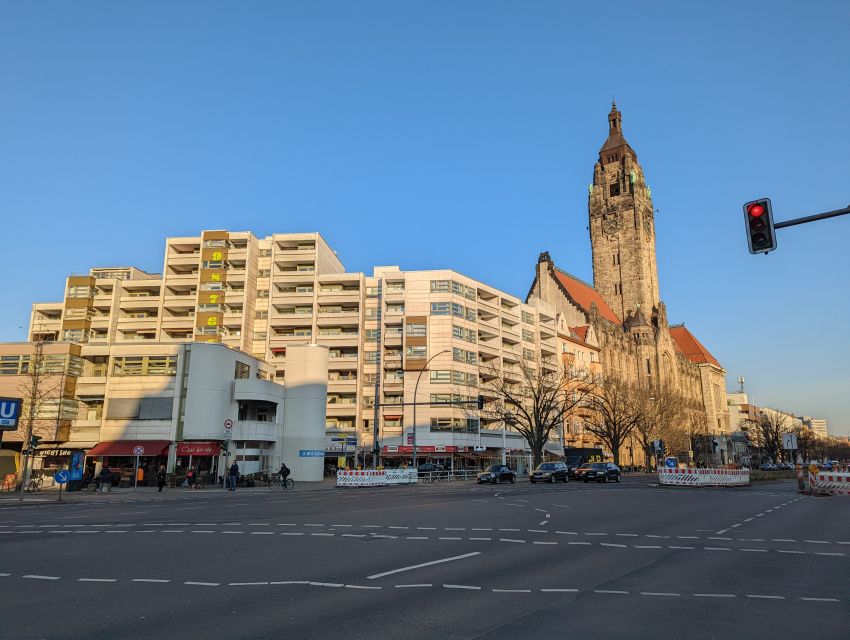
The walk then reaches Luisenkirche, where the focus shifts to architecture and urban planning. Here, the guide explains how 18th-century ideas helped shape Charlottenburg’s streets and buildings.
This is where a good guide can make a big difference. Urban planning can sound dry when reduced to dates and styles. On the street, though, you can look at the arrangement of roads, housing, and public buildings and see that the city was being ordered with a purpose.
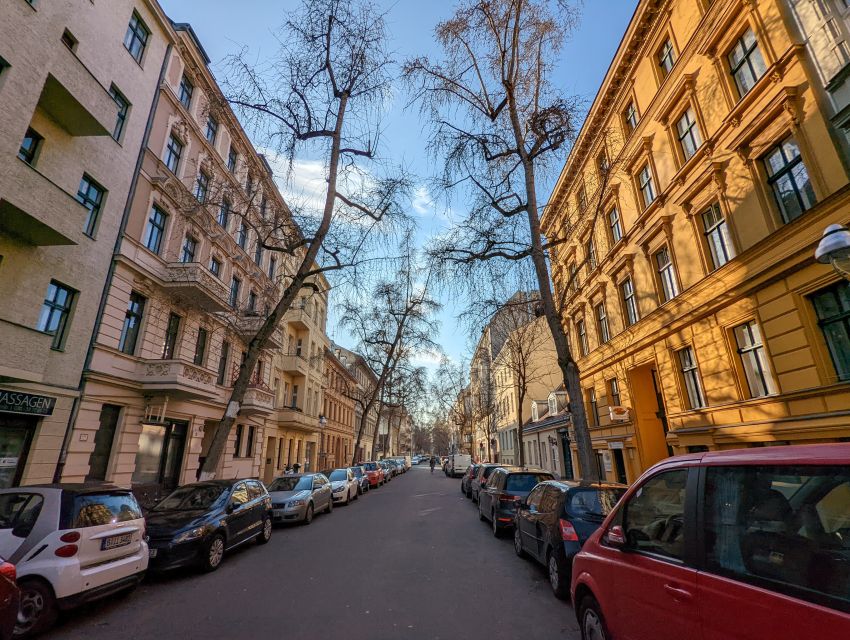
You will also see examples of the housing styles that still define much of Berlin. The point is not that every building looks the same. It is that repeated forms, block layouts, and older façades create the character of the city. The guide helps you read those details instead of treating them as background scenery.
A pleasant feature of this section is its scale. You are not standing in front of one isolated monument. You are considering a group of buildings and the way they shape daily movement. For visitors interested in architecture, this may be the most useful part of the walk.
The 1786 schoolhouses and pre-war city building
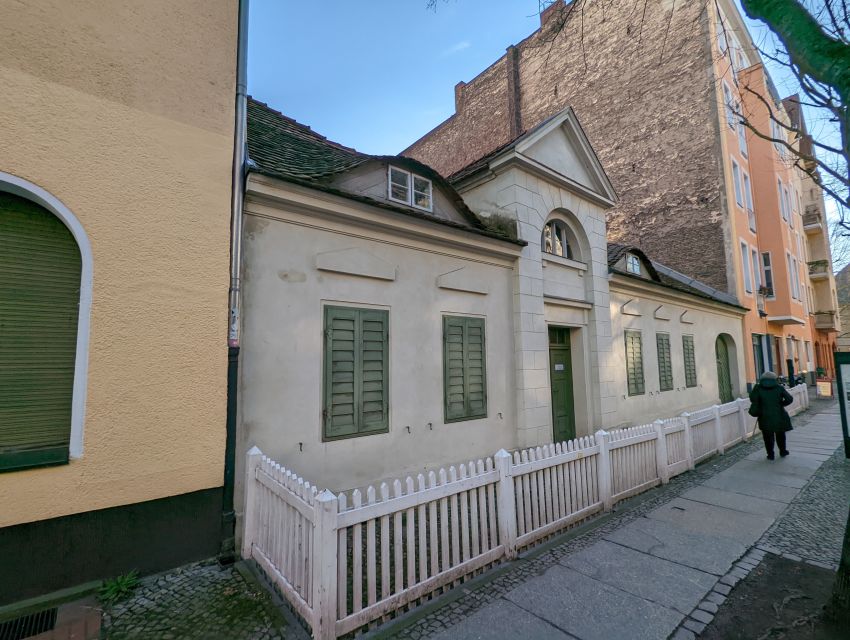
The itinerary includes preserved schoolhouses dating from 1786, along with strong examples of pre-war urban development. These stops add a welcome layer of ordinary institutional history.
A schoolhouse can tell you plenty about a city. Its age points to long-running public investment, while its design shows how education was given a place within the growing community. You get a glimpse of how Charlottenburg served residents, not just rulers and wealthy property owners.
The pre-war buildings are equally useful for understanding Berlin’s cityscape. They show the district before the destruction and rebuilding that altered so much of the capital. The emphasis is on what remains visible, so you can compare older forms with the modern life around them.
This portion may appeal most to people who enjoy streets more than ticketed attractions. You do not need to enter a museum to gain something from it. Still, if your main goal is interior decoration or palace rooms, this walking tour will feel more like an introduction than a complete sightseeing day.
Klausener Kiez at Nehringstraße and Christstraße
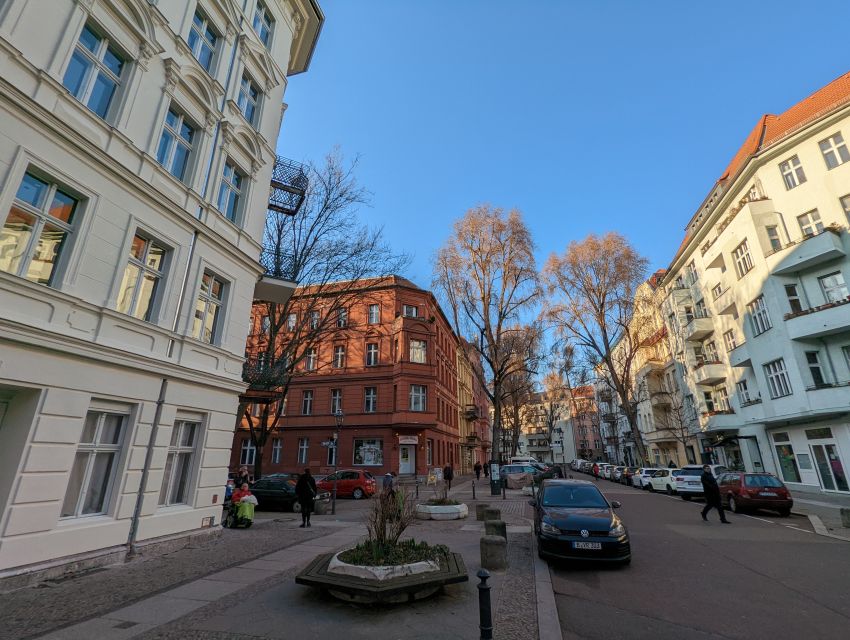
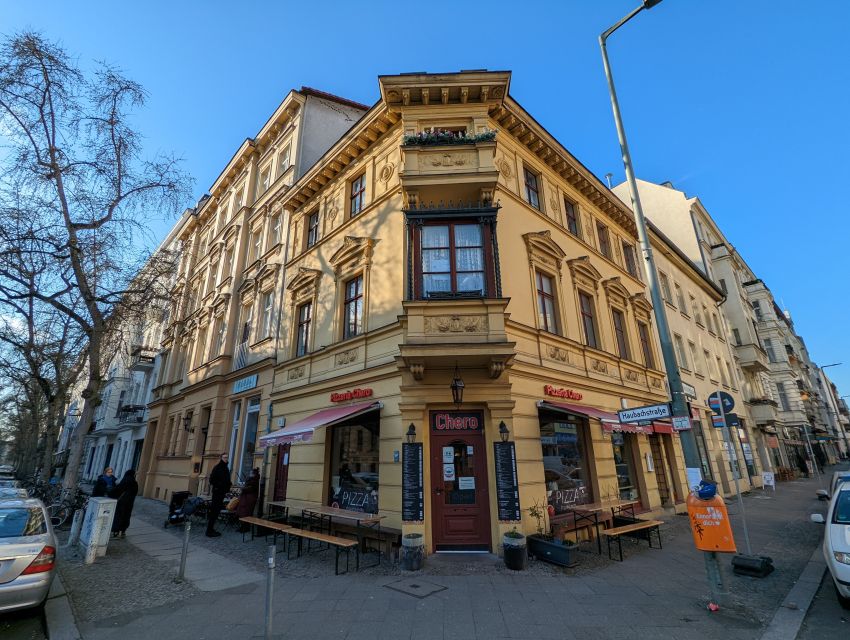
One of the most appealing parts of the route comes at the corner of Nehringstraße and Christstraße, in the Klausener Kiez. This is described as one of Charlottenburg’s quaintest areas, with cafés, thrift stores, and corner shops where local life carries on.
Here, the tour steps away from formal history and lets you watch the neighborhood function. You may find a café worth returning to, spot a secondhand shop, or simply enjoy the change from monumental buildings to familiar street life. The guide explains how the area fits into Charlottenburg while giving you room to notice its present-day character.
I especially like this stop because it helps prevent the tour from becoming a parade of old façades. Berlin is not a museum city, and Klausener Kiez makes that clear. The district’s identity lives in small businesses and everyday encounters as much as in Prussian buildings.
You should not expect a scheduled café break or included refreshment. Food and drinks are not part of the price, so note a place for later rather than assuming you will stop for a snack during the walk. The tour’s purpose here is observation and context.
Villa Oppenheim and Schlossstraße’s museum quarter
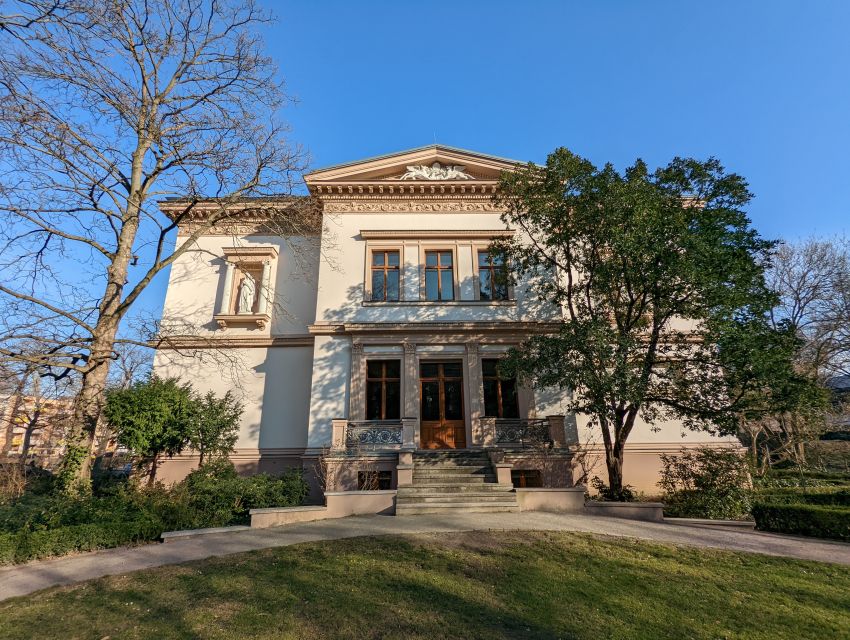
The walk continues to Villa Oppenheim and the magnificent Schlossstraße. Villa Oppenheim offers another change of scale, moving from neighborhood streets to a grand residence with a more polished architectural presence.
Schlossstraße now contains world-class museums, making this section useful for planning the rest of your day. The walking tour does not include museum admission, but your guide can help you understand why this stretch matters and what kind of cultural area you are seeing.
That separation between the walk and the museums is worth keeping in mind when judging the $23 price. You are paying for a guided introduction, not for entry to several attractions. If you want a palace interior and museum collections, budget separately. If you want to understand the district before choosing where to spend your afternoon, the tour can save you time and help you make a better plan.
I would treat Villa Oppenheim and Schlossstraße as a bridge between local Charlottenburg and its major cultural sights. The route gives you context first, then leaves the choice of museum visits to you.
Finishing at Charlottenburg Palace
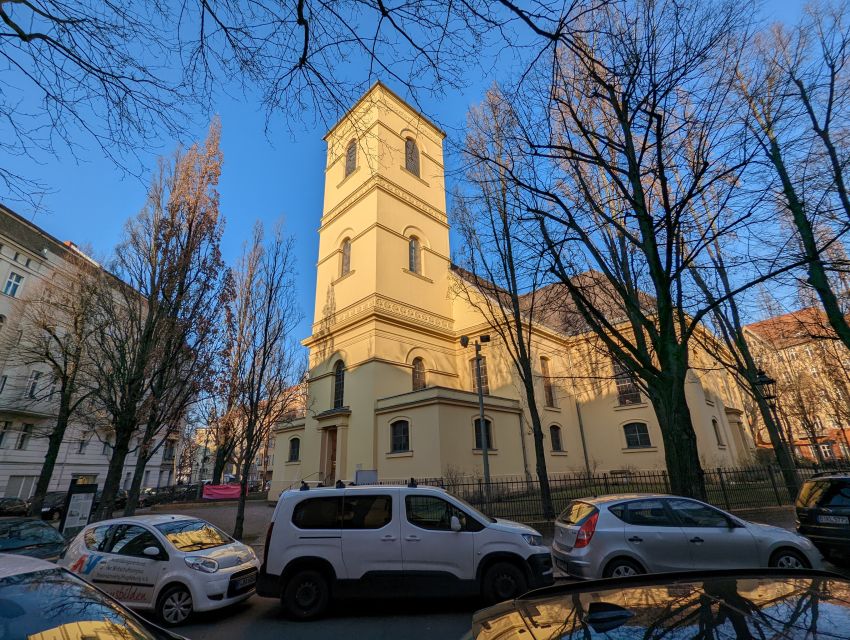
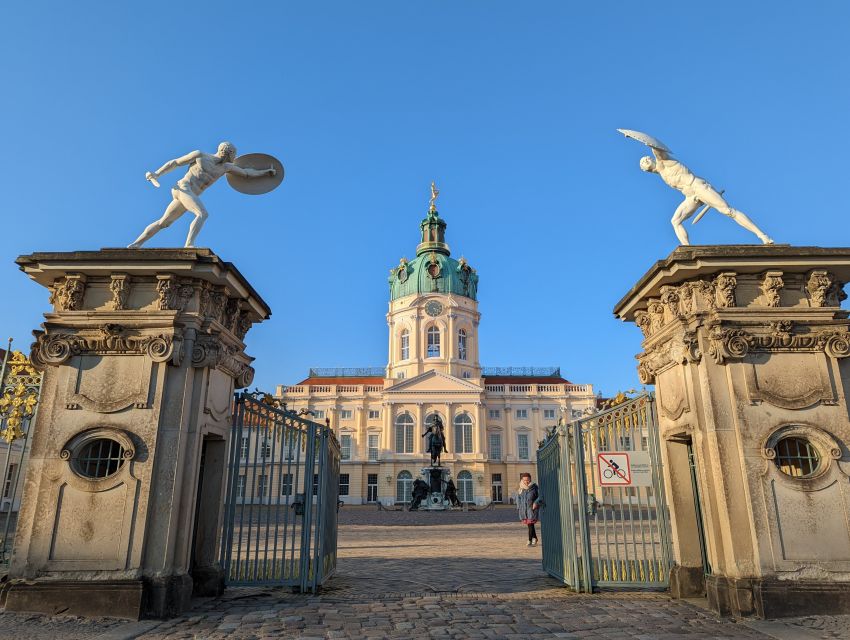
The final stop is Charlottenburg Palace, the district’s grandest sight and former Prussian power center. After the village streets, schools, working-class references, and cafés, the palace arrives with a deliberate sense of ceremony.
The ending works well because the route has already shown you the community around the palace. You can see the building not only as a beautiful royal residence, but also as the center of a larger district shaped by Prussian ambitions and later urban growth.
The palace is lined by magnificent Stüler buildings with dome-topped forms. Their scale gives the last stretch a formal finish, and the contrast with Klausener Kiez is striking. Within a short walk, Charlottenburg shifts from corner shops and thrift stores to royal architecture and major museums.
The tour does not include a museum visit, so you will finish outside rather than touring the palace rooms with this booking. That is not a flaw if you want a neighborhood walk. It is important, though, if your main reason for coming is to see the palace interior. You will need a separate plan for that.
What the $23 price buys you
At $23 per person, this is a reasonable price for a two-hour guided walk led by a professional museum expert. The value comes from the connections: medieval Charlottenburg, Prussian planning, Heinrich Zille, public buildings, local shops, Villa Oppenheim, and the palace all become part of one story.
A self-guided walk would cost less, of course. You could also see many of the streets without paying anything. What you cannot easily reproduce is the guide’s ability to explain why the buildings matter, answer questions, and point out details you might otherwise pass without noticing.
The strongest praise has focused on the guide’s broad historical and urban knowledge, friendly manner, sensible pace, and clear storytelling. People who already lived in Charlottenburg have still found unfamiliar corners on the route, which suggests that the tour avoids the district’s best-known tourist areas.
That makes the price easiest to justify for first-time visitors, architecture fans, and Berlin residents showing the city to friends. It is less useful for someone who wants only a quick photo at Charlottenburg Palace or a full museum visit.
Who should book this walk
I would choose this tour if you like understanding how a city took shape. It suits you especially well if you have already seen central Berlin and want a quieter district with more local texture.
It also works for visitors who enjoy:
- Architectural details and city planning
- Prussian and neighborhood history
- Public buildings and pre-war housing
- Working-class social history
- Cafés, small shops, and ordinary streets
- Guided storytelling with time for questions
The tour is wheelchair accessible, which makes it a practical option for many visitors. You should still wear comfortable shoes and prepare for changing weather because the walk takes place outdoors in all conditions.
The language is the clearest limitation. The live guide conducts the tour in German, so you need enough German to follow historical explanations and anecdotes. If you do, the format offers a focused way to explore Charlottenburg without the crowds and broad generalities of a central Berlin tour.
How to make the most of your two hours
Arrive at the main entrance of Rathaus Charlottenburg with comfortable shoes and weather-ready clothing. Since the meeting point is specific, check that you are at the main entrance rather than simply somewhere near the city hall.
Try to think of the walk as a neighborhood introduction. You will cover many points, but you are not meant to linger inside each one. Note the cafés, shops, museums, and palace areas that deserve a second look after the guide finishes.
Keep the final stop in mind when planning the rest of your day. Because the walk ends at Charlottenburg Palace and does not include museum admission, you can continue with your own palace or museum visit if opening times and tickets suit your schedule.
The tour allows free cancellation up to 24 hours before the start, and you can reserve now and pay later. That flexibility is useful when Berlin plans depend on weather, rail connections, or a crowded sightseeing schedule.
Should you book the Charlottenburg walk?
Book it if you want Charlottenburg explained as a living district, not just a palace address. The route offers strong value for $23, especially because it links 800 years of history with cafés, schools, housing, art, and urban planning.
Skip it if you need an English tour, want extensive time inside museums, or prefer to spend two hours at one major monument. For everyone else, this is a smart way to see a less obvious side of Berlin, with a professional guide, a manageable pace, and a grand palace finish.
FAQ
Where does the Charlottenburg walking tour begin?
Meet your guide directly in front of the main entrance to Rathaus Charlottenburg.
How long does the tour last?
The walking tour lasts two hours.
What is the price?
The tour costs $23 per person.
What language is the tour conducted in?
The live tour guide conducts the experience in German.
Is Charlottenburg Palace admission included?
No. Museum visits are not included, so palace or museum entry must be arranged separately.
Are food and drinks included?
No. Food and drinks are not included in the tour price.
Is the route wheelchair accessible?
Yes, the activity is listed as wheelchair accessible.
What happens if it rains?
The tour takes place rain or shine. Bring weather-appropriate clothing and comfortable shoes.
Just added around Berlin
- Love and War in Berlin: Self-Guided Story Puzzle Walk★ 5.0 · 7 reviews
- Rickshaw Tours Berlin – Groups of up to 16 people with several rickshaws★ 4.0 · 97 reviews
- Walking on the Wall: 3-Hour Tour in Berlin★ 4.5 · 34 reviews
- eSIM for Germany and 34 European Countries★ 4.5 · 16 reviews
- Warnemuende Shore Excursion: Berlin Private Sightseeing Tour from Rostock★ 5.0 · 4 reviews
- Your ticket to The Wall Museum Berlin★ 3.0 · 60 reviews
- Warnemuende Shore Excursion: Private Berlin Tour★ 4.5 · 27 reviews
- Berlin’s Gay, Lesbian, and Queer Scene Small-Group Walking Tour★ 4.5 · 66 reviews
City Tours, compared.

1-Hour City Tour by Boat with Guaranteed Seating
Read our review →
City History Canal Sightseeing Tour on a Motorboat
Read our review →


Browse the lists this tour appears in