
Reviewed · HISTORICAL TOURS
Charité Hospital Walking Tour: Exploring Berlin’s Medical History
Berlin’s Charité hospital is more than a grand medical complex. It is a place where Robert Koch’s germ discoveries, Rudolf Virchow’s social medicine, wartime crimes, and Cold War escape attempts all meet within a short walk. This tour connects those events so you see Berlin’s medical past as a human story, not just a list of names.
I like the compact two-hour format and the small group, capped at 15 people. The six stops give you a clear route through Charité without taking half a day. The main consideration is that the tour stays outdoors. You will not enter buildings where clinical or university work is still under way, and poor weather can lead to a cancellation or date change.
In This Review
- Key points to know
- Why Charité makes an unusual Berlin walking tour
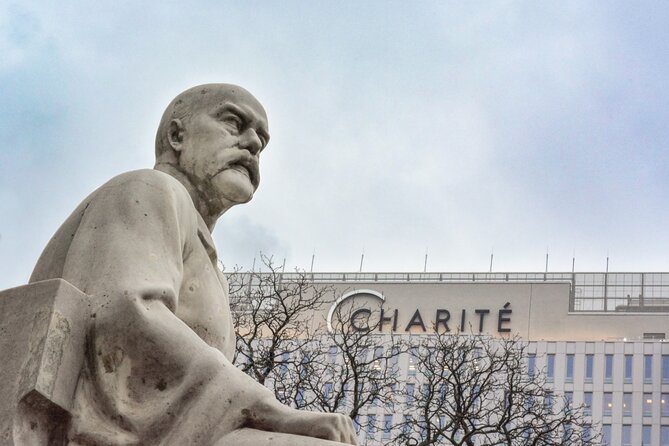
- Robert Koch Denkmal sets the scientific tone
- Tieranatomisches Theater reveals medicine before modern science
- Rudolf Virchow connects pathology with public welfare
- Albrecht von Graefe marks a turning point in eye surgery
- Charité Campus Mitte brings the hardest history
- Humboldthafen shows Charité during socialism and division
- How the two-hour format works for your day
- Meeting point, transport, and practical planning
- Who will get the most from this Charité walk
- Is $30.12 a fair price?
- Should you book this tour?
- FAQ
- Where does the Charité Hospital Walking Tour begin?
- Where does the tour end?
- How long does the tour last?
- What language is the tour offered in?
- How many people can join the tour?
- Are hospital and university buildings included?
- Can I cancel for a refund?
Key points to know
- Robert Koch’s monument opens the story: Learn how Charité began in the 18th century and why Koch’s work changed modern medicine.
- Six stops fit neatly into two hours: Each location receives about 20 minutes, making this a useful choice for a tight Berlin schedule.
- The focus reaches beyond medical breakthroughs: The tour covers Nazi-era medical abuse, doctors who resisted it, socialism, and escape attempts across the Berlin canal.
- A small group keeps the history personal: With no more than 15 participants, you should have a better chance to hear the guide and ask questions.
- The route ends near Berlin Central Station: The final stop at Humboldthafen is about a 10-minute walk from the station.
- Outdoor access shapes the experience: You see monuments, façades, and public spaces, but not active hospital or university interiors.
Why Charité makes an unusual Berlin walking tour
Many Berlin tours focus on royal buildings, the Berlin Wall, or the Nazi and Cold War landmarks that dominate the city’s visitor routes. Charité offers a different thread. Here, the subject is medicine, but the setting also reveals how politics, science, war, and public welfare shaped Berlin.
The hospital was established in the 18th century and is described as the oldest hospital in Berlin. That long timeline gives the guide plenty to work with. You move from early medical practice to laboratory science, then to modern pathology, eye surgery, medical ethics, and life under two very different German governments.
I like that the tour does not treat doctors as a single group of heroes. It makes room for discoveries that saved lives, as well as medical abuse during the Third Reich. You also hear about doctors who continued helping people without discrimination until the final days of World War II. That contrast gives the tour moral weight without requiring a visit to a formal museum exhibit.
At $30.12 per person, the tour costs more than simply walking past the Charité campus on your own. The value comes from the storytelling and the order of the route. You get a guide for roughly two hours, all fees and taxes included, and a focused introduction to people and events that can be hard to understand from plaques alone.
A few more Berlin trips to weigh up
- Berlin: Natural History Museum Entrance Ticket
★ 4.6 · 3,382 reviews - Berlin: World Heritage Cruise to Potsdam
★ 4.5 · 1,435 reviews - Berlin Historical Highlights Walking Tour
★ 4.9 · 657 reviews
Robert Koch Denkmal sets the scientific tone
The first stop is the Robert Koch monument at Robert-Koch-Platz. Allow about 20 minutes here. The guide explains why Charité was created in the 18th century and places the hospital within Berlin’s changing approach to disease.
Robert Koch is a useful starting point because his work helped move medicine toward laboratory-based science. He discovered the causes of tuberculosis, anthrax, and cholera, three diseases that once carried enormous fear. The tour also covers a less flattering part of his career: Koch was tied to the first pharmaceutical scandal in medical history.
That detail matters. It prevents the story from becoming a simple celebration of famous scientists. Medical progress can save lives, but new treatments also need testing, oversight, and honesty. The Koch stop gives you that balance right away.
The monument itself is free to see, as are the other outdoor stops. You do not need to budget for admission tickets along the route. Because the tour begins outside, arrive ready to walk and listen rather than expecting a formal museum entrance.
Tieranatomisches Theater reveals medicine before modern science
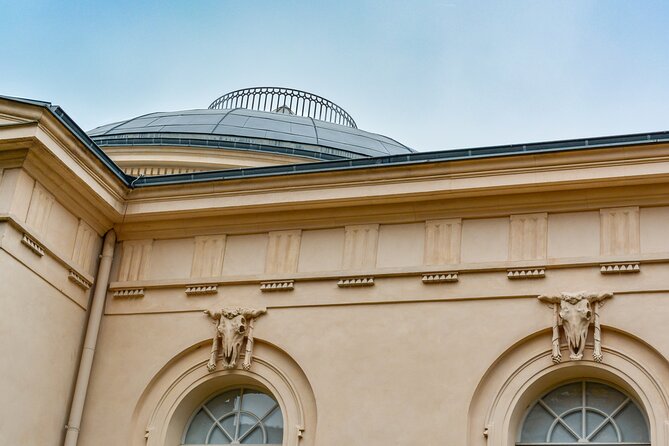
The second stop, Tieranatomisches Theater, takes you to an 18th-century neoclassical building. It is the oldest surviving academic building in Berlin, and its original purpose gives the stop a strong visual and historical link to the medical theme.
Here, the guide explains how veterinarians studied animal diseases and how illness was treated before science developed its modern tools. The building helps you picture a period when observation, tradition, and guesswork often stood in for laboratory proof.
This is one of the places where the guide’s role matters most. A neoclassical façade alone tells you very little. With context, it becomes evidence of changing ideas about education, anatomy, and disease. You might find this stop especially useful if you enjoy the history of science but do not want a technical lecture filled with medical terms.
The tour gives the site about 20 minutes. That is enough for a clear explanation and a look at the building, but not enough for an extended architectural visit. Since entry into operational buildings is not included, treat this as an exterior stop.
Rudolf Virchow connects pathology with public welfare
At the monument to Rudolf Virchow, the subject shifts from individual disease causes to the wider conditions that make people sick. Virchow is presented as the father of modern pathology and the founder of social medicine.
That combination makes him central to the tour’s larger message. Pathology examines disease in the body, while social medicine asks how housing, work, poverty, and public systems affect health. You hear about both sides at the monument rather than studying them in a classroom.
I like this stop because it broadens the definition of medical history. The story is not only about microscopes and surgical techniques. It is also about who receives care, what causes illness in a population, and how doctors view their responsibility to society.
The 20-minute format keeps the discussion moving. If you already know Virchow’s work, this may feel brief. If the name is new to you, it offers a useful introduction without taking you too far from the route.
Same city, a completely different kind of day:
- Berlin: Reichstag, Dome and Government District Guided Tour
★ 4.7 · 18,288 reviews - Berlin: 1-Hour City Tour by Boat with Guaranteed Seating
★ 4.3 · 16,993 reviews - Berlin: Boat Tour Along the River Spree
★ 4.4 · 11,252 reviews - Discover Berlin Half-Day Walking Tour
★ 5.0 · 9,624 reviews
Albrecht von Graefe marks a turning point in eye surgery
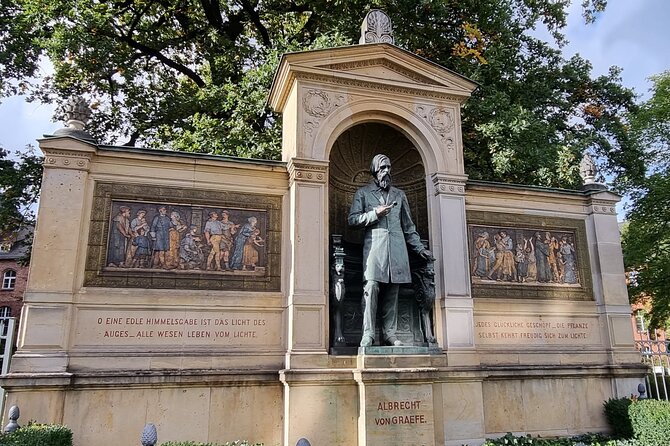
The fourth stop is the monument to Albrecht von Graefe, a groundbreaking ophthalmologist. The guide explains why this was the first monument in Berlin dedicated to a scientist.
That fact gives the stop two layers. You learn about von Graefe’s work in eye medicine, but you also see how Berlin began publicly honoring scientists as important civic figures. The monument reflects a change in how the city valued medical research and professional achievement.
This is a good reminder that monuments are not neutral decoration. They reveal who a society chooses to honor. In this case, the city gave a scientist a place in its public memory, a notable move at the time.
Again, expect about 20 minutes. The tour is designed to tell the essential story, not to provide a full biography. If you want more detail on ophthalmology, you would need separate reading or a museum visit.
Charité Campus Mitte brings the hardest history
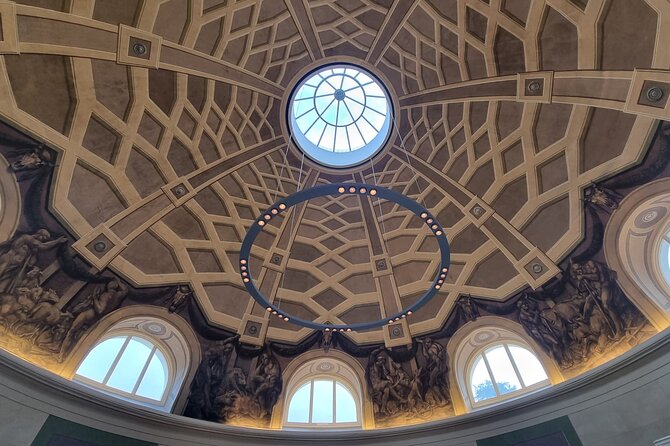
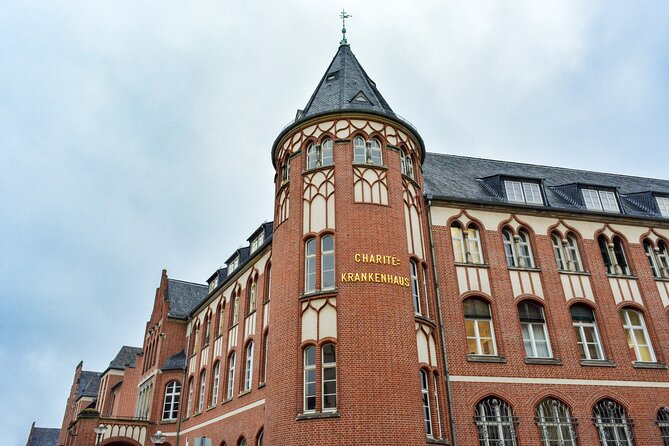
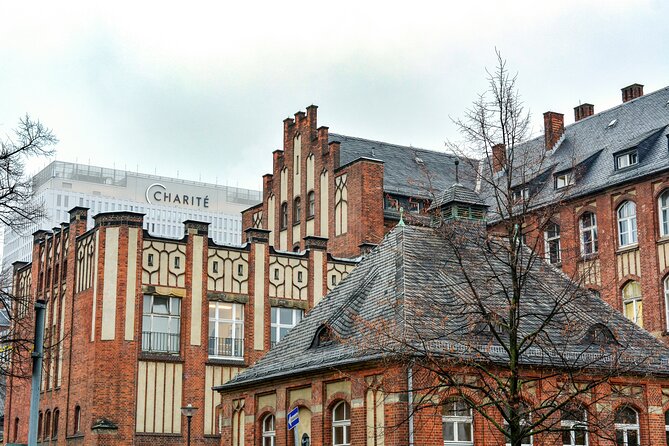
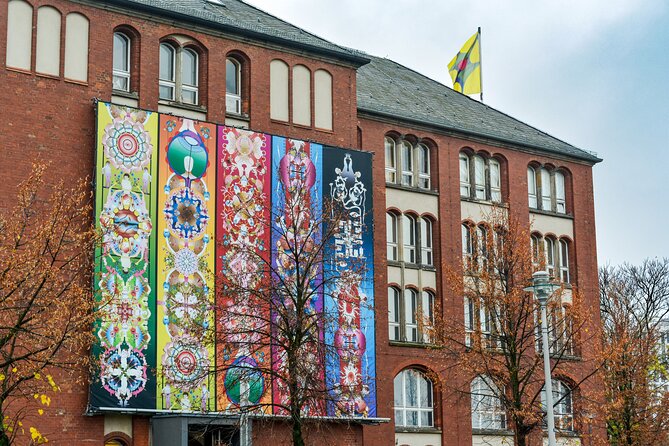
The fifth stop, Charité Campus Mitte, is likely to be the most serious part of the walk. The campus is known for its neogothic red-brick buildings, but the tour looks beyond the architecture to the moral failures and acts of courage connected with the hospital.
You learn how some doctors abused medicine during the Third Reich. You also hear about doctors who helped everyone without discrimination until the last days of World War II. That contrast deserves careful attention because it shows how professional skill does not automatically produce ethical behavior.
For me, this is where the tour becomes more than a sequence of scientific milestones. A hospital can be a place of care, but it can also be used by a government or institution that abandons basic human rights. The guide’s job is to explain how those choices affected people and how individual doctors responded.
The campus exterior gives the discussion a strong sense of place. At the same time, you should not expect to enter hospital wards, research areas, or university rooms. Clinical and academic operations continue on the site, so the tour remains in public outdoor areas.
Humboldthafen shows Charité during socialism and division
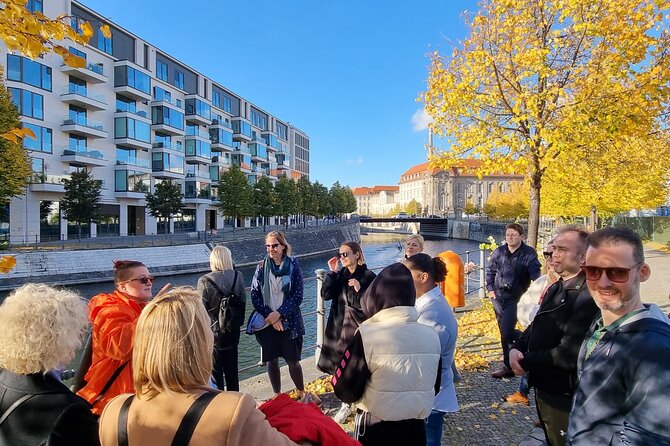
The final stop is near the Humboldthafen canal, close to Design Offices Berlin Humboldthafen. The route ends by a stretch of water where several East Berliners attempted to escape to the West by swimming across the city canal just outside the Charité campus.
This changes the scale of the tour once again. You move from the history of individual doctors to the risks faced by ordinary people living in a divided city. The canal is not presented merely as scenery. It becomes part of the story of surveillance, restricted movement, and the desperate choices created by the Berlin Wall era.
The guide also covers life in the hospital during the socialist period and after the Wall fell. That brings Charité’s story into more recent times and helps explain how the institution changed along with Berlin.
The end point is practical. Alexanderufer is about a 10-minute walk from Berlin Central Station, making it easy to continue your sightseeing or catch a train. The route does not return to the starting point, so plan your day around a one-way walk.
How the two-hour format works for your day
Six stops at roughly 20 minutes each create a tidy structure. You are not asked to spend a full morning in one building or sit through a long lecture. Instead, the tour moves from monument to monument, with each location adding a new chapter.
That short format suits you if you want a focused activity between other Berlin plans. It also works well if medical history is one interest among several, rather than the main purpose of your trip.
The tradeoff is depth. A specialist may want more time at each monument, and someone expecting a hospital tour may be disappointed by the lack of indoor access. The experience is best understood as a guided outdoor history walk centered on Charité, not as a tour of hospital departments.
The group limit of 15 is another plus. A smaller group usually makes it easier to follow the guide in outdoor spaces and ask questions during transitions. The experience is offered in English, with a mobile ticket, so you can keep your booking details on your phone.
Meeting point, transport, and practical planning
You start at Robert-Koch-Platz, 10115 Berlin, and finish at Alexanderufer, 10117 Berlin. The final location is by the Humboldthafen canal and roughly a 10-minute walk from Berlin Central Station.
Public transportation is nearby, and most people can take part. Service animals are allowed. The activity is weather dependent, so check the forecast and wear shoes suited to a city walk. Since the route is outdoors, rain or poor conditions can affect the experience.
The tour is generally booked about 19 days ahead. That does not mean you must reserve exactly that early, but it is a useful sign that you should not leave it until the last morning if your schedule is fixed.
You receive confirmation at booking. Cancellation is free up to 24 hours before the start time for a full refund. Changes made less than 24 hours ahead are not accepted, and late cancellations are not refunded. If poor weather causes the operator to cancel, you can choose another date or receive a full refund.
Who will get the most from this Charité walk
I would recommend this tour to you if you enjoy:
- Medical discoveries and the people behind them
- Berlin history outside the usual major landmarks
- Questions about ethics, public health, and social responsibility
- Short guided walks with a clear beginning and end
- Small groups rather than large coach tours
- Seeing how the Nazi and socialist periods affected one institution
It is also a good match for repeat visitors who have already seen the Brandenburg Gate, Reichstag, and Wall memorials. Charité offers a different angle on the city and links science to political history.
You may want to skip it if you need indoor shelter, want access to active hospital buildings, or prefer a long architectural tour. The walk gives you context, but it does not include museum admission or a visit to working clinical spaces.
Is $30.12 a fair price?
At $30.12, the tour is fairly priced for a two-hour English-language walk with a guide, taxes, and fees included. You are paying for interpretation rather than entry tickets. Since every stop is free to view, the tour’s worth depends on how much you value the stories and connections.
For an independent visitor who has already read about Koch, Virchow, and Charité, the price may feel less attractive. You can see the monuments without paying for access. But finding the correct sites, understanding their significance, and connecting them to Nazi-era medicine and the Cold War takes time.
The small group improves the value. A 15-person maximum is far more manageable than a large street tour, especially around a hospital campus and canal. The compact route also lets you fit the experience into a busy day without giving up several hours.
Should you book this tour?
Book it if you want a focused medical history walk with strong links to Berlin’s political past. The best reasons are the range of subjects, the small group, the efficient two-hour route, and the final canal story about East Berlin escape attempts.
Think twice if you are looking for indoor hospital access or a traditional architecture tour. For most curious visitors, though, the $30.12 fee buys something you cannot get from the monuments alone: a clear explanation of how science, medicine, power, and human choices shaped Charité over three centuries.
FAQ
Where does the Charité Hospital Walking Tour begin?
The tour begins at Robert-Koch-Platz, 10115 Berlin, Germany.
Where does the tour end?
It ends at Alexanderufer, 10117 Berlin, beside the Humboldthafen canal. The end point is about a 10-minute walk from Berlin Central Station.
How long does the tour last?
The tour lasts approximately two hours. It includes six stops, with about 20 minutes at each location.
What language is the tour offered in?
The tour is offered in English.
How many people can join the tour?
The maximum group size is 15 travelers.
Are hospital and university buildings included?
No. The tour does not include visits to buildings where clinical or university operations take place.
Can I cancel for a refund?
Yes. You can cancel at least 24 hours before the start time for a full refund. Poor weather cancellations may result in another date or a full refund.
Just added around Berlin
- Love and War in Berlin: Self-Guided Story Puzzle Walk★ 5.0 · 7 reviews
- Rickshaw Tours Berlin – Groups of up to 16 people with several rickshaws★ 4.0 · 97 reviews
- Walking on the Wall: 3-Hour Tour in Berlin★ 4.5 · 34 reviews
- eSIM for Germany and 34 European Countries★ 4.5 · 16 reviews
- Warnemuende Shore Excursion: Berlin Private Sightseeing Tour from Rostock★ 5.0 · 4 reviews
- Your ticket to The Wall Museum Berlin★ 3.0 · 60 reviews
- Warnemuende Shore Excursion: Private Berlin Tour★ 4.5 · 27 reviews
- Berlin’s Gay, Lesbian, and Queer Scene Small-Group Walking Tour★ 4.5 · 66 reviews
Historical Tours, compared.

City History Canal Sightseeing Tour on a Motorboat
Read our review →






Browse the lists this tour appears in