
Reviewed · BERLIN TOURS
Berlín y el Nacionalsocialismo. Group Tour in Spanish
Berlin’s Nazi past is not confined to a single museum. It is spread across ordinary streets, government buildings, memorials, and empty spaces where the Third Reich once planned to reshape the city. This four-hour Spanish-language walk connects those places, from the Treaty of Versailles and the Weimar Republic to Hitler’s final days beneath the ruined Führer Chancellery.
I like the clear historical timeline, which helps you understand how Hitler rose to power rather than treating the subject as a string of grim landmarks. I also like the route’s focus on real locations, including Wilhelmstrasse, the former Luftwaffe Ministry, the Italian and Japanese embassies, and the Memorial to the Sinti and Roma Victims of National Socialism. The main consideration is that four hours on foot is a serious commitment, and public transport in zones AB is not included.
In This Review
- Key points to know before you go
- Why this four-hour walk matters in Berlin
- Meeting at the Fernsehturm in Alexanderplatz
- Starting with Versailles and the Weimar Republic
- The Memorial to the Sinti and Roma Victims
- Germania and the Nazi vision for Berlin
- The Berlin, Rome, and Tokyo Axis
- Wilhelmstrasse, the Luftwaffe Ministry, and propaganda
- Finishing at Hitler’s bunker and the Führer Chancellery site
- The guide makes the Spanish format worthwhile
- Who will get the most from this tour
- Is $29 a fair price?
- Should you book Berlín y el Nacionalsocialismo?
- FAQ
- What language is the tour conducted in?
- How long does the tour last?
- How much does the tour cost?
- Where is the meeting point?
- Do I need a public transport ticket?
- Is public transport included in the booking?
- Is the tour wheelchair accessible?
- What is the cancellation policy?
Key points to know before you go
- Start at Alexanderplatz: Meet beside the only entrance to the Fernsehturm, next to the Espresso House and the green tours en español flag.
- Follow the political story: The guide begins with Versailles and the Weimar Republic before explaining Hitler’s rise and Nazi rule.
- See the former power center: Walk along Wilhelmstrasse to the Luftwaffe Ministry and the former Propaganda Ministry.
- Connect Berlin to the Axis: Learn about Germany’s alliance with Italy and Japan outside their embassies.
- End at Hitler’s bunker site: The walk finishes at the exact place where the Führer Chancellery once stood.
- Book in Spanish: Guides such as Sam, Martín, and Celia have been praised for strong explanations, patience, and attentive service.
Why this four-hour walk matters in Berlin
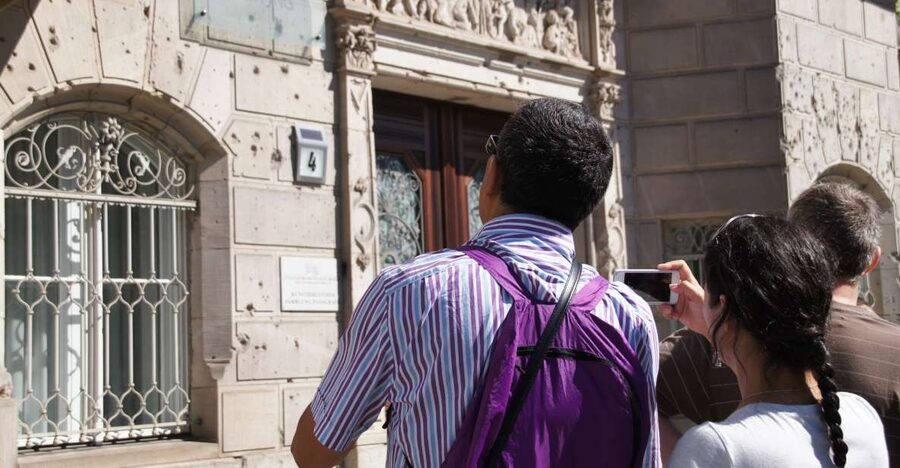
I find this subject easier to understand when the history is tied to streets and buildings. Berlin’s Third Reich story involved military planning, propaganda, diplomacy, racial persecution, and the attempt to rebuild the capital as Germania, a future world capital in Nazi plans.
This tour gives you that broad frame. It does not begin with Hitler’s bunker, which is a useful choice. Instead, you start with the conditions that allowed National Socialism to grow, including the aftermath of the Treaty of Versailles and the Weimar Republic. That opening gives the rest of the walk a cause-and-effect structure.
You then move through the role of Hitler and leading figures such as Joseph Goebbels. The focus on propaganda is especially useful because Nazi power did not rely only on military force. The tour explains Goebbels’ propaganda programs as part of the machinery that shaped public life under National Socialism.
You should come prepared for serious material. This is not a light sightseeing stroll with a few dramatic stories added for atmosphere. The main value lies in understanding how political ideas, state power, propaganda, war, and persecution occupied the same city.
Other Berlin days worth putting on the list:
- Berlin: Reichstag, Dome and Government District Guided Tour
★ 4.7 · 18,288 reviews - Berlin: 1-Hour City Tour by Boat with Guaranteed Seating
★ 4.3 · 16,993 reviews - Berlin: Boat Tour Along the River Spree
★ 4.4 · 11,252 reviews
Meeting at the Fernsehturm in Alexanderplatz
The meeting point is beside the only entrance to the television tower, or Fernsehturm, in Alexanderplatz. Look for a green flag marked tours en español. It is between the television tower and Alexanderplatz train station, next to the Espresso House.
Alexanderplatz is a practical starting point because it is easy to identify, but give yourself enough time to find the precise spot. The area includes a major station, the tower, and several busy pedestrian routes. The green flag is the detail that matters most.
You need a public transport ticket for zones AB, and that ticket is not included in the $29 price. The tour information specifically asks you to bring a public transport ticket, so arrange it before meeting the guide. The cost is otherwise straightforward: $29 per person for four hours with a Spanish-speaking guide.
That works out to a modest price for a half-day city tour, especially if you want historical interpretation rather than simply passing the buildings on your own. The extra AB ticket is a small but important budget detail. If you are comparing this with a short two-hour walk, the longer format gives the guide room to set up the political story and explain several locations properly.
Starting with Versailles and the Weimar Republic
The opening section covers the Treaty of Versailles and the Weimar Republic. This is one of the tour’s most useful choices because it gives you the setting for Hitler’s rise instead of presenting him as an isolated figure.
You will hear how the guide interprets the political path from postwar Germany to National Socialism. The tour then examines Hitler’s rise to power and the part played by leading Nazi figures. That structure should help you keep track of the difference between the broader political climate and the actions of individuals within the regime.
For you, the advantage is clarity. Nazi Berlin can become confusing when every site is treated as equally important. A chronological introduction helps you understand why the later stops matter. You are not simply looking at a former ministry and being told that it was important. You first hear about the system that gave these ministries their power.
The guide speaks Spanish throughout. This matters for a topic filled with political terms, names, institutions, and difficult moral questions. A strong explanation in your preferred language can make the difference between following the argument and merely recognizing a few famous places.
The Memorial to the Sinti and Roma Victims
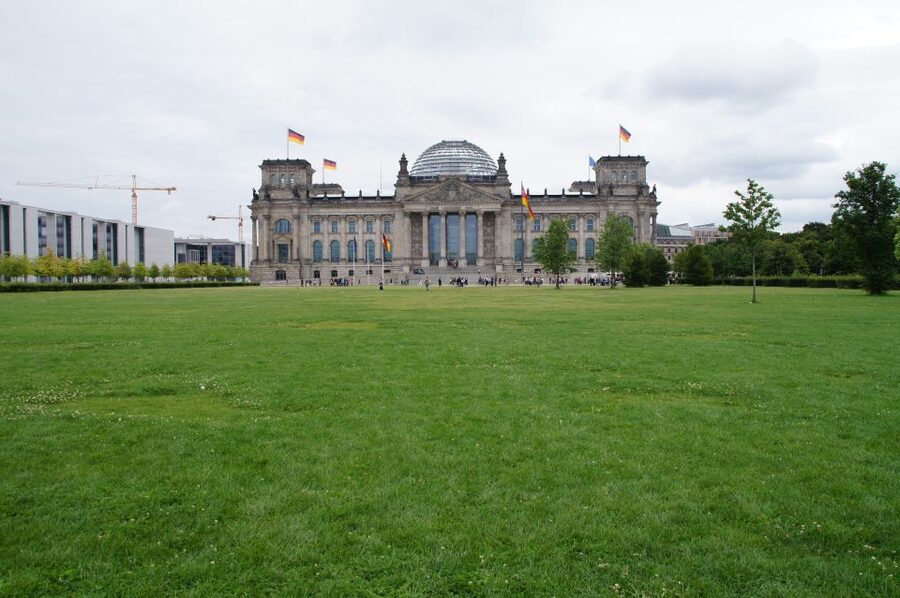
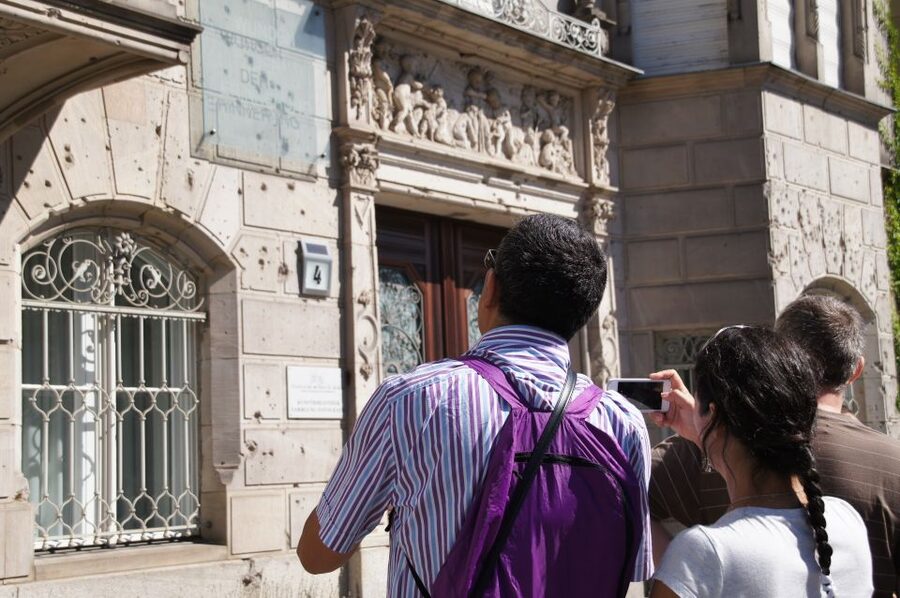
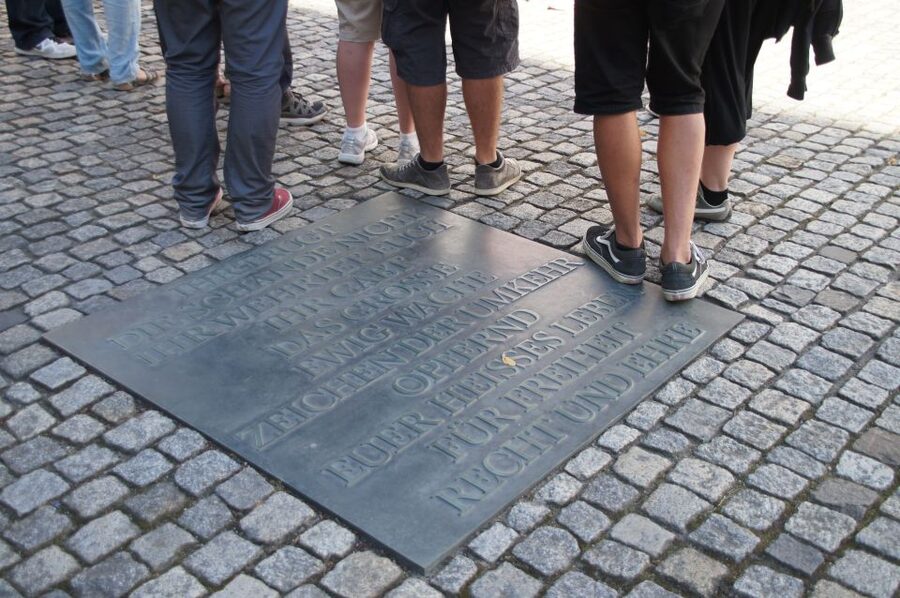
The route passes the Memorial to the Sinti and Roma Victims of National Socialism. This stop brings the Nazi persecution of minority communities into the walk and keeps the focus from narrowing only to Hitler, military offices, and government buildings.
I consider this an important part of the route because it adds a human dimension to the political history. The tour’s subject is not just how the Nazi state was organized. It is also about the people targeted by that state.
Expect the guide to place the memorial within the wider story of National Socialism and its plans for Germany. The memorial is one of the stops where a respectful pace matters more than a quick photo. Since the tour covers heavy material, you may appreciate having the guide explain what you are seeing rather than leaving you to guess at its meaning.
The supplied information does not promise a long stop or a specific memorial presentation, so keep your expectations practical. It is part of a larger walking route, not a separate museum visit.
Same city, a completely different kind of day:
- Discover Berlin Half-Day Walking Tour
★ 5.0 · 9,624 reviews - Berlin: Hop-on Hop-off Bus Tour with Live Commentary
★ 4.3 · 8,579 reviews - Berlin: Government District around the Reichstag Guided Tour
★ 4.7 · 8,447 reviews - Berlin: Reichstag, Plenary Chamber, Cupola & Government Tour
★ 4.6 · 8,422 reviews
Germania and the Nazi vision for Berlin
The tour also examines Nazi plans for Germania, intended to make Berlin the capital of the world. This is a revealing subject because it shows how the regime imagined architecture and urban planning as tools of power.
You will learn about the grand future the Nazis wanted for the city. The point is not simply that they had large building plans. It is that the proposed city expressed their political ambition and their desire to present Germany as the center of a new world order.
This section gives the walk a useful visual idea to carry with you as you move through central Berlin. Some places on the route may look ordinary or heavily altered today. The explanation of Germania helps you consider what the regime wanted those spaces to represent.
Do not expect every planned structure to survive as a visible monument. The value is in learning to read the city through the plans, institutions, and locations connected to the Third Reich.
The Berlin, Rome, and Tokyo Axis
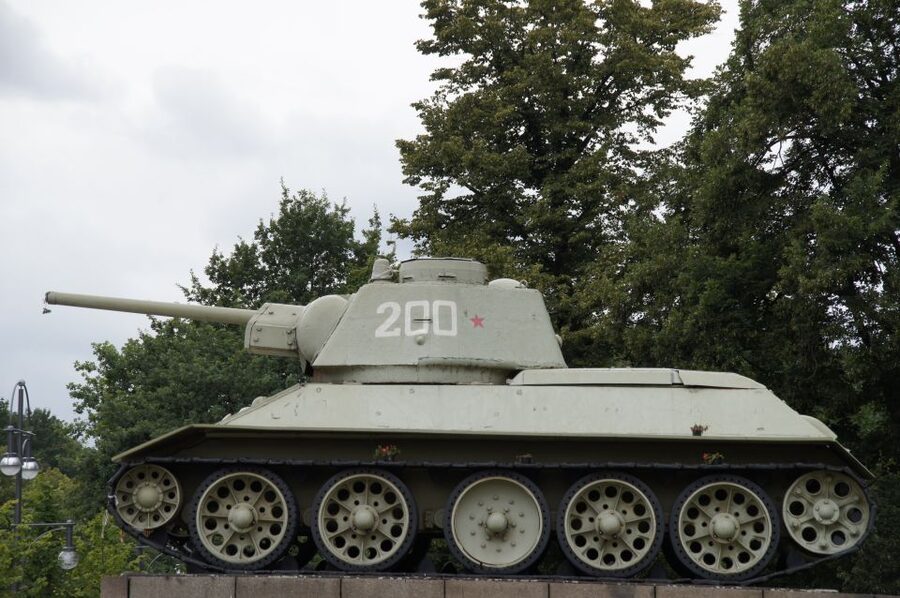
In front of the Italian and Japanese embassies, the guide explains Germany’s Axis with Italy and Japan. This is one of the more unusual features of the walk because it links Berlin’s domestic Nazi history with its international alliances.
The location gives the topic a clear setting. You are not hearing about the Axis in an abstract classroom. You are standing near the diplomatic buildings associated with two of Germany’s partners.
For me, this stop helps break up the political story. The tour moves from Hitler’s rise and internal Nazi programs to international strategy and diplomacy. That makes the walk feel broader than a Hitler biography.
The embassies are working diplomatic sites, so treat them as places to view from the public street. The experience is about the explanation outside, not an embassy visit or interior tour. The guide’s Spanish commentary is the central part of the stop.
Wilhelmstrasse, the Luftwaffe Ministry, and propaganda
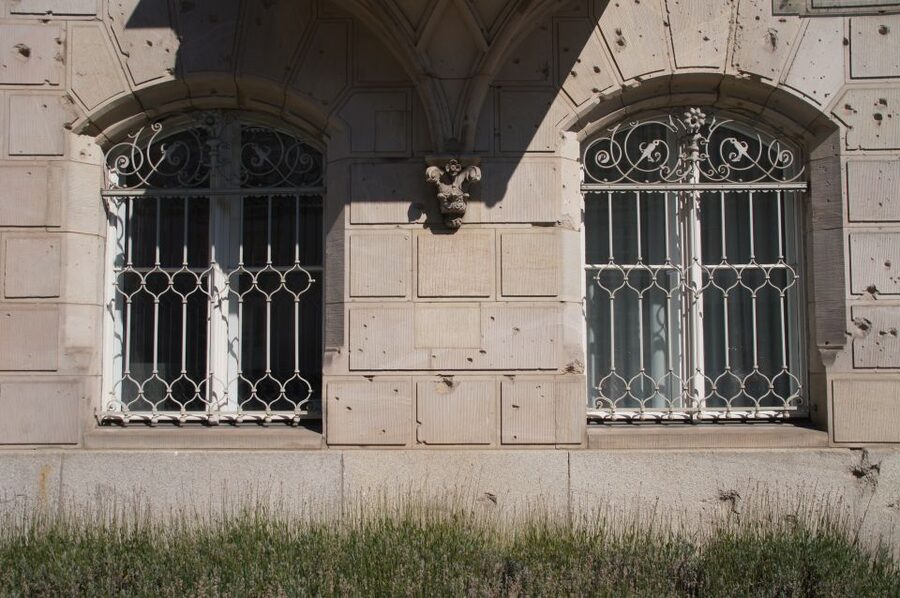
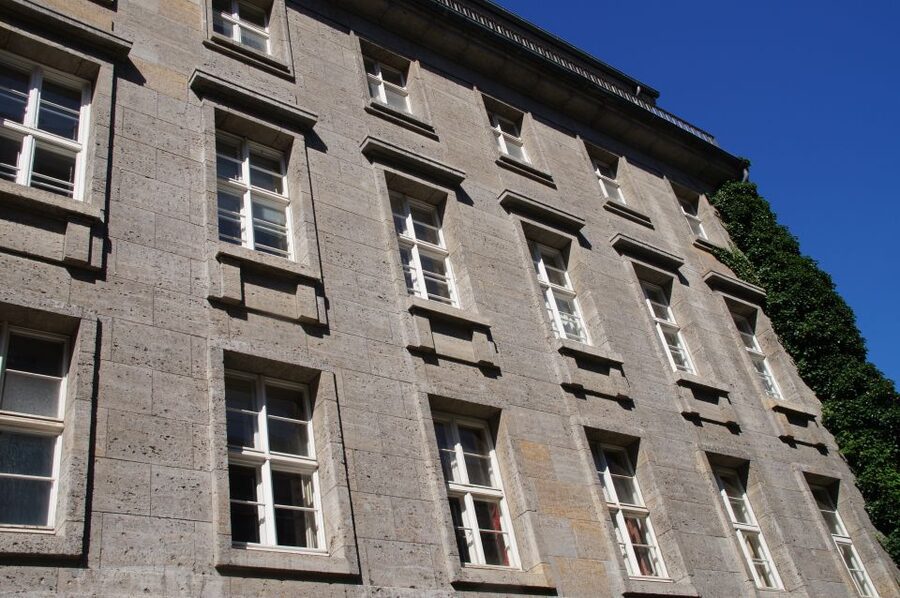
The walk continues along Wilhelmstrasse to the Luftwaffe Ministerium, or Air Defense Ministry. This stretch is one of the strongest parts of the route for understanding how Nazi power operated through government offices.
A former ministry building can look like just another large institutional structure if you do not know its role. With the guide’s explanation, Wilhelmstrasse becomes a route through the regime’s administration and military organization.
The tour also addresses the former Nazi Propaganda Ministry. That pairing is useful: the Luftwaffe Ministry points to military power, while the Propaganda Ministry points to the control of messages and public opinion. Together, the stops show two different tools of the regime.
The information provided does not promise interior access to either building, so plan on viewing these places from outside. That is not a major weakness for this kind of tour. The point is to place the institutions on the map and understand their function in the wider system.
You should also expect some pauses along the way. One review described the pauses as unnecessary, so if you prefer a brisk pace, this is worth keeping in mind. On a four-hour historical walk, though, pauses can also help with a subject that requires concentration. The best approach is to expect a measured walking rhythm rather than a nonstop march.
Finishing at Hitler’s bunker and the Führer Chancellery site
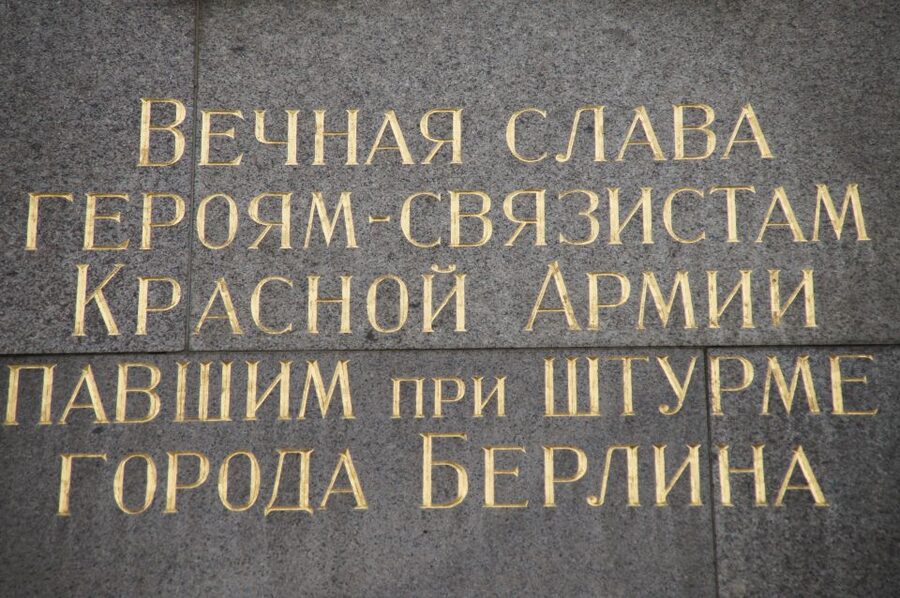
The final stop is the exact spot where the Führer Chancellery once stood, with an explanation of Hitler’s final days in his famous bunker. This gives the tour a dramatic ending, but the real strength is the contrast between the historical importance of the place and what you see there now.
The tour does not present the bunker as a preserved attraction. Instead, you learn where the chancellery stood and where Hitler ended his days. That distinction matters. The location is historically significant, but the experience depends on the guide’s interpretation rather than on a grand surviving structure.
Ending here also completes the timeline. You begin with the political conditions that helped bring Hitler to power and finish with the collapse of his regime. The route connects ambition, administration, propaganda, war, and defeat in one walk through central Berlin.
If you are hoping for a dramatic bunker interior, this is not that experience. If you want to understand the location and its place in the final days of the Third Reich, the stop is more useful.
The guide makes the Spanish format worthwhile
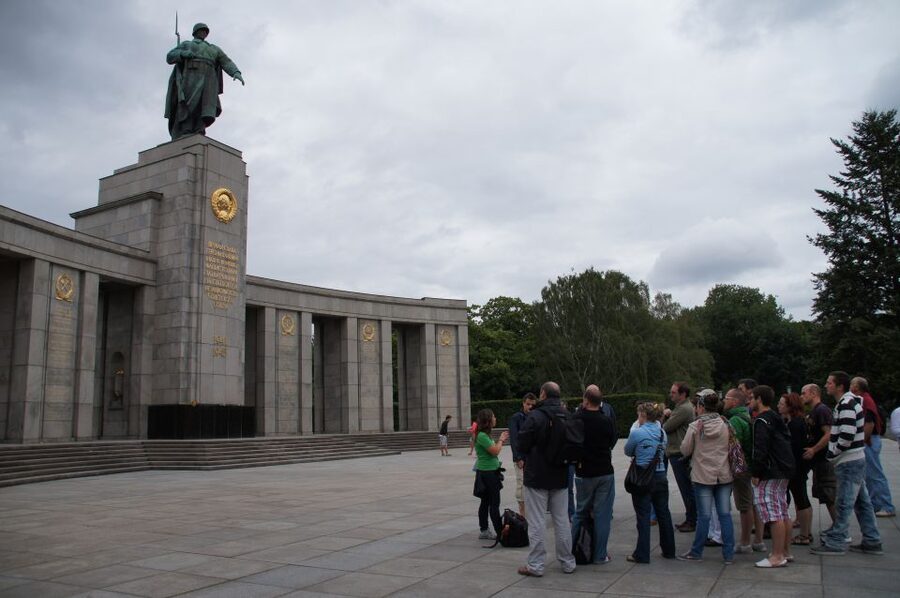
The tour is led in Spanish, and the named guides associated with this experience include Sam, Martín, and Celia. Sam has been praised for exceptional attention and information, Martín for excellent guiding, and Celia for patience, knowledge, and willingness to help.
Those comments point to the qualities that matter most on a history walk: clear delivery, patience with questions, and the ability to keep a complicated story moving. Celia’s patience is particularly useful if your group includes people with different levels of background knowledge.
You should not book this expecting an audio guide or a self-guided route. The value comes from the live Spanish commentary and the guide’s ability to connect one stop with the next. Because the subject includes unfamiliar institutions and several historical stages, personal explanation is a real advantage.
The rating of 4.8 from 36 reviews suggests a consistently strong experience, but I would still keep the one practical criticism in mind: the pacing may include pauses that some people find unnecessary. Your enjoyment will depend partly on how much you like discussion and context during a walking tour.
Who will get the most from this tour
I would choose this tour if you want a serious introduction to the Third Reich in Berlin and prefer to learn in Spanish. It suits first-time visitors who want the main sites connected by a clear explanation rather than visited as isolated points.
It is also a good fit for anyone interested in political history, propaganda, military administration, diplomacy, or the way governments use architecture and public space. The route covers all of those subjects without requiring a full day.
You may want something else if you mainly want preserved interiors, museum collections, or a fast list of famous Nazi locations. The route is outdoors and place-based. Much of what you see is explained from streets and public spaces.
Four hours requires comfortable clothing and sensible walking shoes. The tour is listed as wheelchair accessible, and you still need to arrange the required AB transport ticket. Since the activity starts at Alexanderplatz and ends at the former Führer Chancellery site, the guide connects several parts of Berlin rather than keeping you in one small area.
Is $29 a fair price?
At $29, I see this as good value for a four-hour guided walk, particularly because the route covers several subjects and locations. You get a Spanish-speaking guide, a chronological introduction, and access to an interpretation of places that can be difficult to understand on your own.
The price does not include public transport for zones AB. That is the main extra cost to remember. Even so, the tour remains reasonably priced if you value live explanation and want to cover the Third Reich’s Berlin locations in half a day.
The value is strongest when you listen closely and ask questions. A building viewed without context is just a building. The guide’s role is to explain the institutions, alliances, propaganda programs, memorials, and final sites that give the route meaning.
Should you book Berlín y el Nacionalsocialismo?
Book it if you want a Spanish-language history walk that goes beyond Hitler’s bunker and explains how the Nazi state developed, operated, and collapsed. The combination of Versailles, the Weimar Republic, Goebbels’ propaganda, the Sinti and Roma memorial, Germania, the Axis embassies, Wilhelmstrasse, and the former chancellery site gives you a well-shaped four-hour route.
I would especially recommend it for Spanish speakers who want a guide to handle the names, dates, political systems, and difficult subject matter. Sam, Martín, and Celia have each been praised for qualities that help on this kind of tour, including information, patience, and attentive service.
Skip it if you want a short sightseeing walk or guaranteed access inside historic buildings. You will spend four hours walking and listening, with public transport zones AB paid separately. For the right visitor, $29 buys a thoughtful way to read Berlin’s streets and understand why these locations still matter.
FAQ
What language is the tour conducted in?
The tour is conducted in Spanish with a live Spanish-speaking guide.
How long does the tour last?
The tour lasts four hours.
How much does the tour cost?
The listed price is $29 per person.
Where is the meeting point?
Meet beside the only entrance to the Fernsehturm in Alexanderplatz, between the television tower and Alexanderplatz train station, next to the Espresso House. Look for the green tours en español flag.
Do I need a public transport ticket?
Yes. You need a public transport ticket for zones AB, and it is not included in the tour price.
Is public transport included in the booking?
No. Public transport tickets for zones AB are not included.
Is the tour wheelchair accessible?
Yes. The activity is listed as wheelchair accessible.
What is the cancellation policy?
You can cancel up to 24 hours in advance for a full refund. You can also reserve now and pay later.
Just added around Berlin
- Love and War in Berlin: Self-Guided Story Puzzle Walk★ 5.0 · 7 reviews
- Rickshaw Tours Berlin – Groups of up to 16 people with several rickshaws★ 4.0 · 97 reviews
- eSIM for Germany and 34 European Countries★ 4.5 · 16 reviews
- Walking on the Wall: 3-Hour Tour in Berlin★ 4.5 · 34 reviews
- Warnemuende Shore Excursion: Berlin Private Sightseeing Tour from Rostock★ 5.0 · 4 reviews
- Your ticket to The Wall Museum Berlin★ 3.0 · 60 reviews
- Warnemuende Shore Excursion: Private Berlin Tour★ 4.5 · 27 reviews
- Berlin’s Gay, Lesbian, and Queer Scene Small-Group Walking Tour★ 4.5 · 66 reviews
Berlin Tours, compared.

Reichstag, Dome and Government District Guided Tour
Read our review →
1-Hour City Tour by Boat with Guaranteed Seating
Read our review →


Reichstag, Plenary Chamber, Cupola & Government Tour
Read our review →

