
Reviewed · HISTORICAL TOURS
Berlin Uncensored: A History of Sex & Freedom
Berlin’s sexual past is not a side note. It is a sharp way to understand the city’s politics, art, medicine, queer life, and long habit of challenging authority. This 210-minute walk follows that story from the uninhibited 1920s through Nazi repression, the Cold War, the AIDS crisis, and today’s club culture.
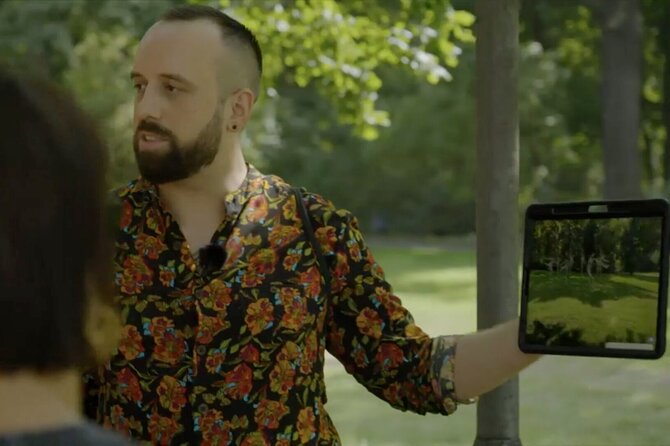
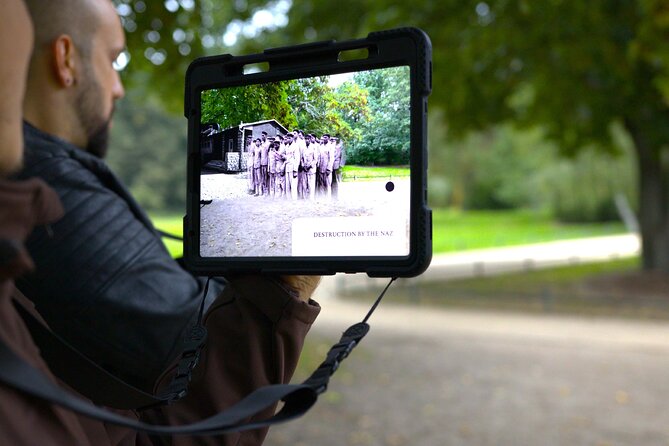
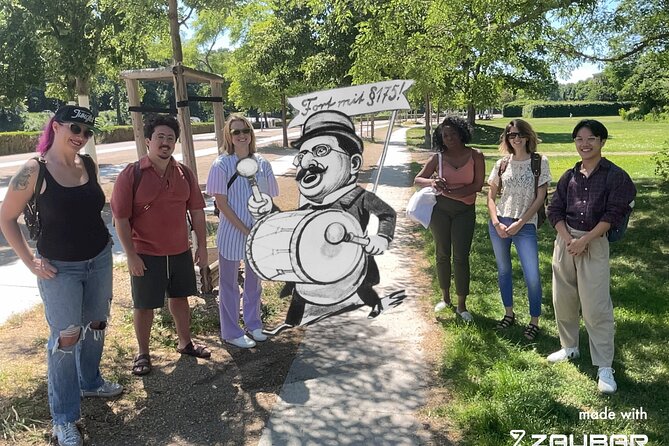
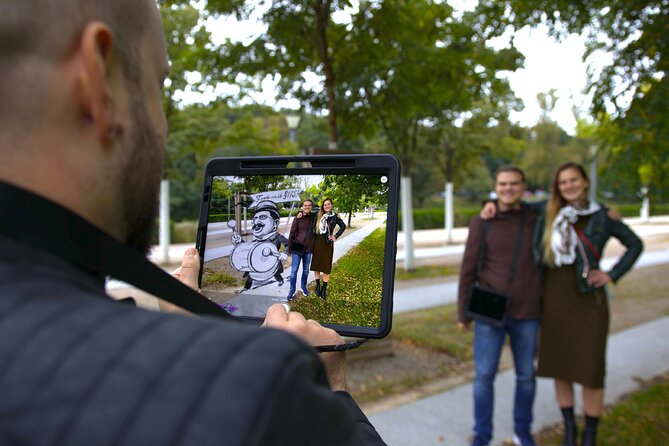
I like the small group of no more than 10, which gives Jeff room to explain sensitive subjects and keep a real discussion going. I also like the smart use of Augmented Reality, with old photographs, films, sound clips, and recreated locations appearing through his iPad instead of leaving you to imagine vanished clubs and institutes.
The main drawback is that you spend much of the tour outside former sites rather than entering them. Three and a half hours is also a long time without a planned refreshment stop, so bring water and dress for Berlin weather.
In This Review
- Key points to know before you book
- Why this is a different kind of Berlin history tour
- Meeting Jeff at Nollendorfplatz
- Magnus-Apotheke and Berlin’s early sex research
- The memorial and the Nazi attack on sexual freedom
- Kurfürstenstraße and the working city
- Denns BioMarkt and the city beneath the modern street
- Prinz Eisenherz and the queer publishing world
- Metropol and the final look at Berlin nightlife
- How the Augmented Reality works
- Timing, comfort, and accessibility
- Who gets the best value for $81
- Should you book Berlin Uncensored?
- FAQ
- Where does the tour begin?
- How long does the tour last?
- What language is the tour in?
- Who leads the tour?
- Is the tour suitable for children?
- Is public transport included?
- Is the route wheelchair accessible?
- Can visual material be described for people with visual disabilities?
- Are the videos subtitled?
- Can I cancel for a refund?
Key points to know before you book
- The route connects sex, politics, and medicine, not just nightlife. You’ll learn about contraception, sexual science, censorship, queer persecution, and changing social rules.
- Jeff leads the tour in English as a sociologist, certified sex educator, and journalist who has studied Berlin’s sexual past for more than a decade.
- The AR material adds real value when it shows lost clubs, historic figures, archival footage, and old streetscapes beside the modern city.
- The walk is adults-only, with content about sex work, persecution, kink, queer life, and the AIDS crisis.
- The route is wheelchair accessible, though some paths may be bumpy. Accessible toilets can be arranged if requested.
- The $81 price is reasonable for a specialist tour, especially if you care about social history and want more than a standard city walk, but it is not a bargain sightseeing stroll.
Why this is a different kind of Berlin history tour
Most Berlin walks focus on the Wall, the Nazi period, or grand museums. This one uses sexuality as the main thread, then shows how laws and social attitudes shaped everyday life.
That approach gives the city a human scale. A discussion of condoms becomes a story about public health and invention. A former cabaret becomes a lesson in censorship. A nightclub becomes evidence of changing ideas about gender, performance, desire, and personal freedom.
The subject is frank, but the purpose is educational. You should expect open discussion, provocative quotations, and material that may be unsuitable for anyone under 18. The tone can be funny, surprising, and serious within the same hour.
Jeff’s background matters here. As a sociologist and certified sex educator, he can put the stories into context rather than simply point out famous clubs. His journalistic experience also helps keep the walk moving through a large amount of material.
A few more Berlin trips to weigh up
- Berlin: Natural History Museum Entrance Ticket
★ 4.6 · 3,382 reviews - Berlin: World Heritage Cruise to Potsdam
★ 4.5 · 1,435 reviews - Berlin Historical Highlights Walking Tour
★ 4.9 · 657 reviews
Meeting Jeff at Nollendorfplatz
The tour begins in front of the Alnatura organic supermarket at Else-Lasker-Schüler-Straße 18, near Nollendorfplatz. Look for the entrance of the store rather than expecting a museum or formal tour office.
You will spend about three and a half hours walking and stopping for explanations. The group is limited to 10 people, a useful size for quizzes and conversation. If you enjoy asking questions, this format should feel much better than a large group clustered around a guide.
Bring a public transport ticket. It is not included, although the route itself is on foot. Comfortable shoes are important, and rain protection is wise. One group continued in rainy weather after Jeff arranged a different plan, but bad weather can still affect how pleasant the walk feels.
Magnus-Apotheke and Berlin’s early sex research
The first substantial stop is Magnus-Apotheke, where you spend about 20 minutes. This section introduces Berlin’s early role in contraception and sexual health.
Berlin is presented here as a place where practical medical questions met changing social habits. You learn about the invention of the first rubber condom, made in Berlin, and about attempts to discuss sex in a more open and scientific way.
That is a useful beginning because it moves the subject beyond nightlife. Sex education, contraception, public health, and relationships all depend on access to information. The tour shows that Berlin’s sexual reputation grew from institutions and ideas as well as from clubs.
Expect archival images and explanatory material through Jeff’s iPad. The visual material helps you connect the modern street with an earlier period, though you are still viewing the site from outside. If you hoped to enter an original historic interior, adjust your expectations now.
The memorial and the Nazi attack on sexual freedom
After a short walk, the route reaches the Memorial to the Homosexuals Persecuted Under Nazism. The guided stop lasts about 15 minutes.
This is where the tour’s lighter stories give way to its most painful subject. You learn how the Nazi regime criminalized forms of desire, shut down erotic magazines and cabarets, and persecuted sexual minorities. The treatment of sex workers and the regime’s double standards also enter the discussion.
The memorial gives this part a proper sense of place. It is not simply an abstract lecture about policy. You are standing at a site devoted to people persecuted because of their sexuality, and that makes the cost of censorship plain.
This section is handled as part of a broader story about freedom and repression. The point is not to claim that Berlin moved in a straight line from sexual openness to modern tolerance. The city’s past includes sharp reversals, fear, and deliberate destruction of institutions that had once led international discussions about sexuality.
Same city, a completely different kind of day:
- Berlin: Reichstag, Dome and Government District Guided Tour
★ 4.7 · 18,288 reviews - Berlin: 1-Hour City Tour by Boat with Guaranteed Seating
★ 4.3 · 16,993 reviews - Berlin: Boat Tour Along the River Spree
★ 4.4 · 11,252 reviews - Discover Berlin Half-Day Walking Tour
★ 5.0 · 9,624 reviews
Kurfürstenstraße and the working city
The walk then continues to Kurfürstenstraße for around 20 minutes. Here the focus shifts toward prostitution, sex work, and the ways authorities and society have tried to control sexual commerce.
This stop helps you see that Berlin’s sexual past was not only made by artists, intellectuals, and famous clubs. It also involved working people, policing, public morality, and the economic realities of the city.
From Kurfürstenstraße, you continue to Schwerinstraße for about 15 minutes, then Nollendorfstraße for another 10 minutes. The streets form a connected route through stories of queer life, lesbian bars, sex work, and liberation movements.
One particularly striking detail from the tour’s wider material is the role of churches in setting up prostitution huts. That kind of example complicates easy ideas about respectable and disreputable Berlin. It shows how moral institutions could condemn sexual behavior in public while also responding to it in practical, sometimes contradictory ways.
These stops are street-based. You may be looking at an ordinary building or pavement while Jeff uses images and recordings to show what has disappeared. That can feel less dramatic than entering a preserved club, but it is also honest. Berlin’s past is often hidden under regular shops, apartments, and modern storefronts.
Denns BioMarkt and the city beneath the modern street
The stop at Denns BioMarkt lasts about 15 minutes. On paper, a supermarket may seem like an odd place in a tour about sex and freedom. In practice, it underlines one of the walk’s strongest ideas: important locations do not always remain visually important.
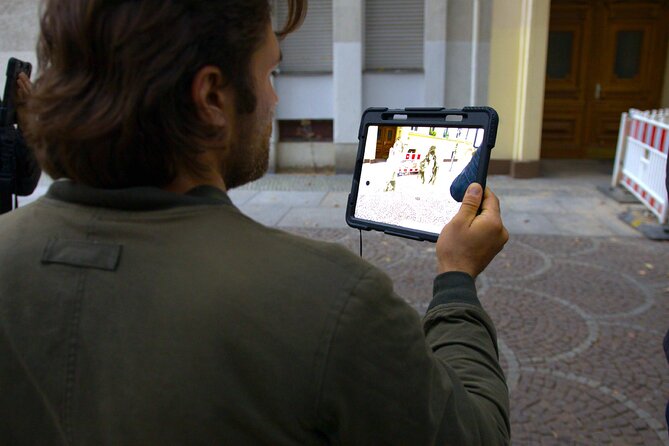
This is a good moment to let the AR material do its work. Old photographs, videos, audio recordings, and provocative quotations can show you a vanished setting that the present-day street no longer reveals.
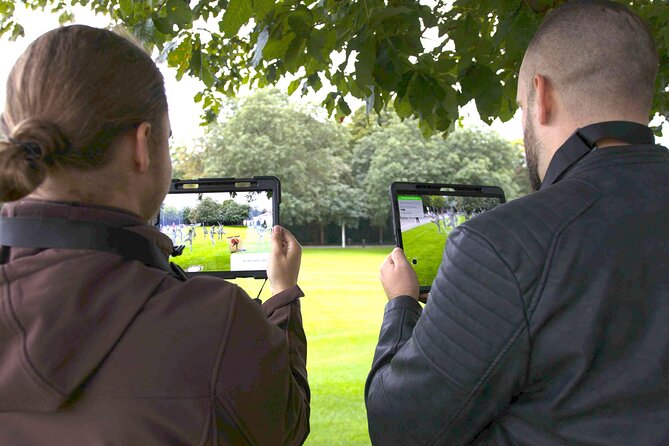
The technology is not meant to replace the guide. It works best when Jeff uses the iPad to support a story, then explains why the image matters. One participant expected the AR to become tiresome but found that it strengthened the presentation. That is a useful distinction. You are not walking around staring at a screen for three hours. The device is used at selected points to add evidence and atmosphere.
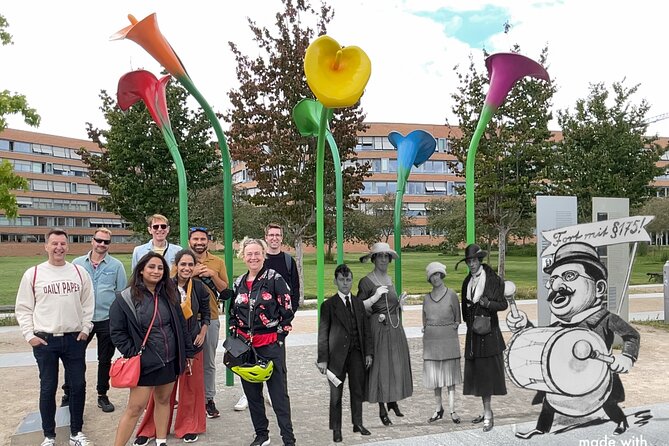
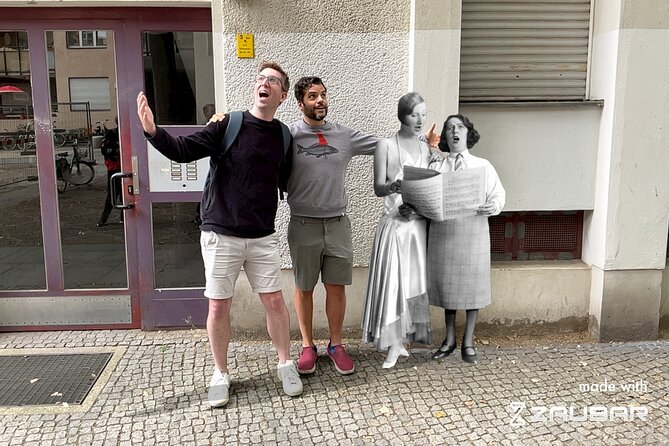
You can also take personalized AR photos, called Mixies, with historical elements added to your image. These are a playful extra, though the serious value comes from seeing the past placed against the current city.
Prinz Eisenherz and the queer publishing world
At Prinz Eisenherz, the group spends about 20 minutes. This stop brings the story toward queer culture, books, activism, and the public sharing of ideas.
The name is closely tied to Berlin’s queer community, and the location gives the tour a chance to discuss how identities and movements are represented, organized, and defended. It also connects earlier sexual science and liberation movements with the role of printed material and community spaces.
This part should appeal to anyone interested in feminist and queer history, not only club culture. The tour covers lesbian bars and liberation movements alongside the better-known stories of male nightlife, which gives the subject more balance.
The route also places Berlin’s sexual past within international changes. You hear how the city’s communities responded to censorship, war, division, and the AIDS crisis. Those subjects can easily become a list of dates. Jeff’s questions and quizzes help turn them into a group discussion instead.
Metropol and the final look at Berlin nightlife
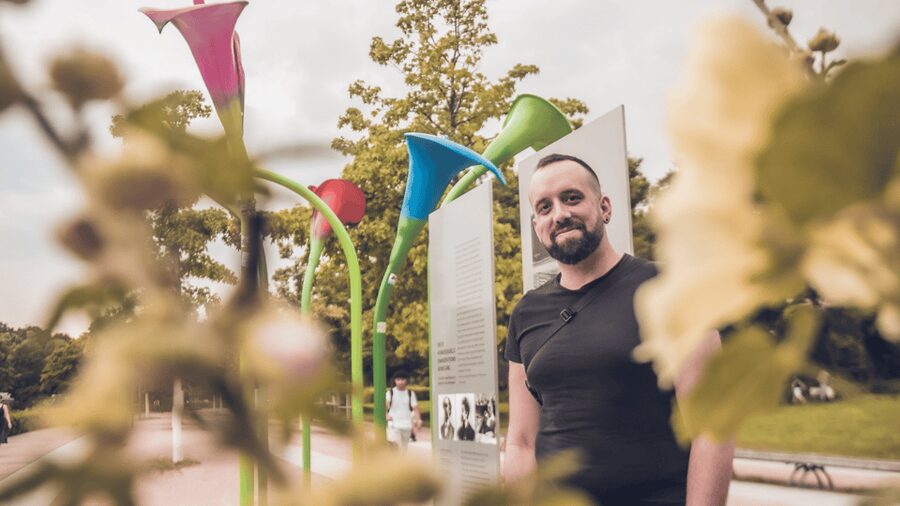
The final major stop is Metropol, with about 20 minutes of guided discussion before you return to Alnatura.
Here the story reaches Berlin’s modern club and fetish culture. You learn about places such as KitKat Club, Berghain, and Lab.Oratory, as well as Folsom Europe, described as Europe’s largest fetish festival. The discussion also touches on electronic music, underground kink culture, and the sex-positive scene that gives Berlin its current reputation.
It is important to understand what this means in practical terms. This is not a club-entry tour, and you should not expect access to Berghain, KitKat, Lab.Oratory, or a private nightlife event. Instead, you get historical context and insider tips about modern venues, scenes, and events.
That may be more useful than a quick peek inside one club. Berlin nightlife changes, while the reasons for its appeal are older: experimentation, community, privacy, performance, and the ability to build a life outside conventional rules.
The tour returns to the starting point, so you finish where you began. From there, you can use Jeff’s suggestions to plan your own evening, although the activity itself does not include entry, drinks, meals, or a public transport ticket.
How the Augmented Reality works

The AR is one of the tour’s defining features, but it is best understood as a visual aid rather than a separate attraction.
Jeff uses an iPad to bring up more than 200 photographs, films, audio recordings, and quotations. You might see a lost club, compare an old street view with the present scene, or hear material that gives a former venue a human voice.
The strongest use of AR comes at locations where little survives. A normal walking tour might say that a club or institute once stood nearby. Here, you receive something to look at while the guide explains the context.
There are limits. One person expected a more advanced effect and felt that standing outside former sites did not match the idea of visiting them. That is fair. If you want interactive museum displays or full digital reconstructions, this may feel modest.
I see the technology as a bonus, not the reason to book. If Jeff’s stories and historical framing interest you, the AR should make the walk clearer and more memorable. If you mainly want a virtual reality spectacle, you may find it less impressive.
Timing, comfort, and accessibility
The tour lasts 210 minutes, with many walking sections and stops of 10 to 20 minutes. There is no formal meal or refreshment break, so eat beforehand and carry water.
The pace includes short walks of about five and 10 minutes between locations. Still, the full length can feel demanding, especially in rain or cold. The advantage is that the long format gives room for the Nazi period, divided Berlin, sexual science, and modern nightlife without reducing each subject to a few lines.
The route is wheelchair accessible, although some paths may be bumpy. Detailed descriptions of visual material can be provided for people with visual disabilities. Videos have English, German, or both language options, and accessible toilets can be arranged upon request.
Some parts take place in high-stimulation settings with strong sensory input. If you need a lower-stimulation experience or indoor mask use, discuss that with the provider in advance.
Who gets the best value for $81
At $81 per person, this costs more than a basic public walking tour. The price makes sense if you want a specialist guide, a very small group, archival material, and a focused subject that standard city tours rarely cover.
You are paying for interpretation as much as for walking. Jeff brings together medicine, nightlife, censorship, queer politics, sex work, and the Cold War, then uses images and questions to connect them. That is a strong package for visitors who have already seen Berlin’s major memorials and want a different way to understand the city.
The value is weaker if you want a short introduction, a conventional sightseeing route, or entry into historic buildings. You will spend time outside former locations, and the tour has no included meal or drink.
The score of 4.9 from eight ratings reflects a clear pattern: people especially praise Jeff’s warmth, subject knowledge, energy, and ability to use the visual material without making the technology annoying. A group of friends also found the walk engaging in the rain, with quizzes helping keep the discussion lively.
Should you book Berlin Uncensored?
Book it if you are an adult who wants Berlin’s story told through sexual science, queer life, repression, and nightlife, rather than only through kings, wars, and architecture. It is a particularly good choice for people interested in sociology, LGBTQ+ history, feminism, public health, or the cultural roots of Berlin’s clubs.
Go in expecting a serious walking seminar with playful moments, not a bar crawl or a club pass. Wear good shoes, bring water, carry a public transport ticket, and allow for three and a half hours outside.
I would choose this tour for its unusual subject and the quality of its guide-led discussion. I would skip it only if you dislike frank sexual topics, need frequent scheduled breaks, or expect to enter the historic venues themselves.
FAQ
Where does the tour begin?
It begins directly in front of the entrance to the Alnatura Super Natur Markt at Else-Lasker-Schüler-Straße 18, 10783 Berlin, near Nollendorfplatz.
How long does the tour last?
The experience lasts 210 minutes, or three and a half hours.
What language is the tour in?
The live tour is conducted in English.
Who leads the tour?
Jeff leads the experience. He is a sociologist, certified sex educator, and journalist who has studied Berlin’s sexual history for more than a decade.
Is the tour suitable for children?
No. The tour is not suitable for children under 18.
Is public transport included?
No. You need to bring your own public transport ticket.
Is the route wheelchair accessible?
Yes. The tour is wheelchair accessible, although some paths may be bumpy.
Can visual material be described for people with visual disabilities?
Yes. Detailed descriptions of the visual material can be provided.
Are the videos subtitled?
Yes. Videos have English subtitles, German subtitles, or both.
Can I cancel for a refund?
Yes. You can cancel up to 24 hours in advance for a full refund. You can also reserve now and pay later.
Just added around Berlin
- Love and War in Berlin: Self-Guided Story Puzzle Walk★ 5.0 · 7 reviews
- Rickshaw Tours Berlin – Groups of up to 16 people with several rickshaws★ 4.0 · 97 reviews
- Walking on the Wall: 3-Hour Tour in Berlin★ 4.5 · 34 reviews
- eSIM for Germany and 34 European Countries★ 4.5 · 16 reviews
- Warnemuende Shore Excursion: Berlin Private Sightseeing Tour from Rostock★ 5.0 · 4 reviews
- Your ticket to The Wall Museum Berlin★ 3.0 · 60 reviews
- Warnemuende Shore Excursion: Private Berlin Tour★ 4.5 · 27 reviews
- Berlin’s Gay, Lesbian, and Queer Scene Small-Group Walking Tour★ 4.5 · 66 reviews
Historical Tours, compared.

City History Canal Sightseeing Tour on a Motorboat
Read our review →






Browse the lists this tour appears in