
Reviewed · MUSEUM & GALLERY TICKETS
Berlin: Tickets for the BODY WORLDS Museum in Berlin
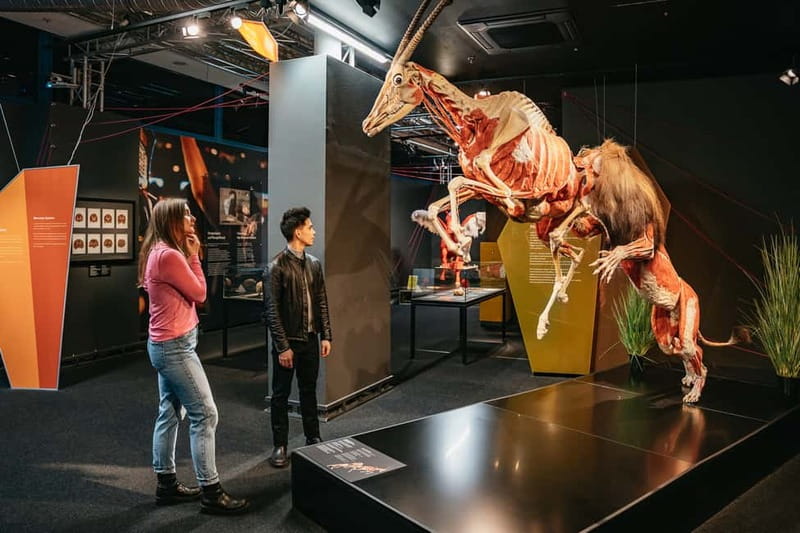
Berlin’s BODY WORLDS Museum puts the real human body at the center of your Berlin sightseeing day. Instead of relying on drawings or plastic models, the exhibition uses whole-body plastinates and preserved organs to show how bones, muscles, blood vessels, nerves, and internal organs work together.
I like the way the displays turn difficult medical subjects into something you can understand without a medical background. I also like the range of topics, from the skeleton and digestive system to embryonic development, stress, happiness, and long-term health. The main drawback is that the exhibition can feel fairly quick if you only walk from case to case, and some displays may look a little tired.
In This Review
- Key points to know before you go
- What BODY WORLDS shows you about your own body
- Start with the skeleton and muscular system
- Follow the digestive system from food to energy
- Look at embryo development and the beginning of life
- Study the heart, blood vessels, and lungs
- See the nervous system and the body under stress
- The displays are educational, but the tone is serious
- How long you should allow at Panoramastraße
- What is included, and what costs extra
- Who will get the most from this museum
- Practical tips for a smoother visit
- Should you book BODY WORLDS Berlin?
- FAQ
- Where is the BODY WORLDS Museum in Berlin?
- How much does admission cost?
- How long is the ticket valid?
- What are the opening hours?
- What time is the last admission?
- Is the museum open on December 24?
- What does the ticket include?
- Is an audio guide included?
- Are lockers available?
- Is the museum wheelchair accessible?
- Can I cancel my booking?
- Can I reserve now and pay later?
Key points to know before you go
- Real human plastinates: See whole-body preparations and individual organs arranged to explain body functions and common diseases.
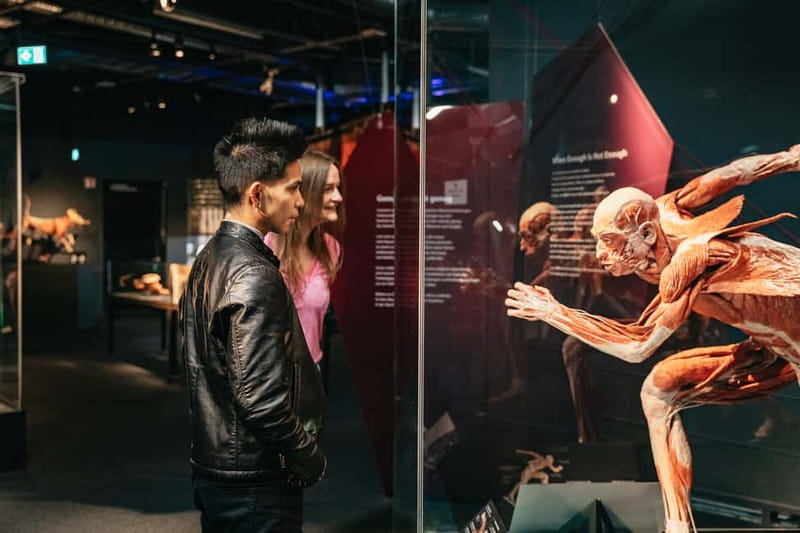
- A clear tour through the body: The exhibition covers the skeleton, muscles, digestion, embryo development, heart and blood vessels, lungs, and nervous system.
- More than anatomy: Displays also ask how stress, happiness, excess, moderation, and daily habits affect your life.
- Useful phone and audio support: An interactive guide on your phone is available, while a separate audio guide is not included in the ticket.
- Easy central location: The museum is at Panoramastraße 1a, 10178 Berlin, making it simple to fit into a day in central Berlin.
- Allow a thoughtful visit: Some people move through quickly, but you will get more from the $22 ticket if you stop to read and compare the displays.
What BODY WORLDS shows you about your own body
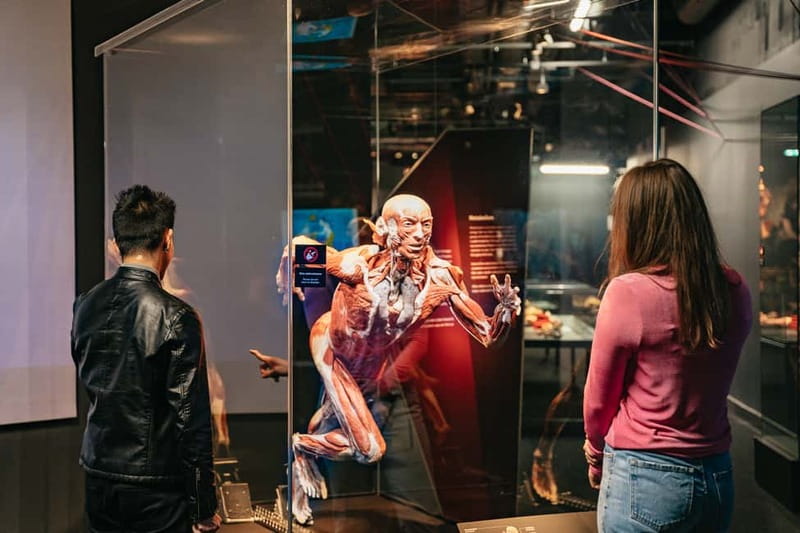
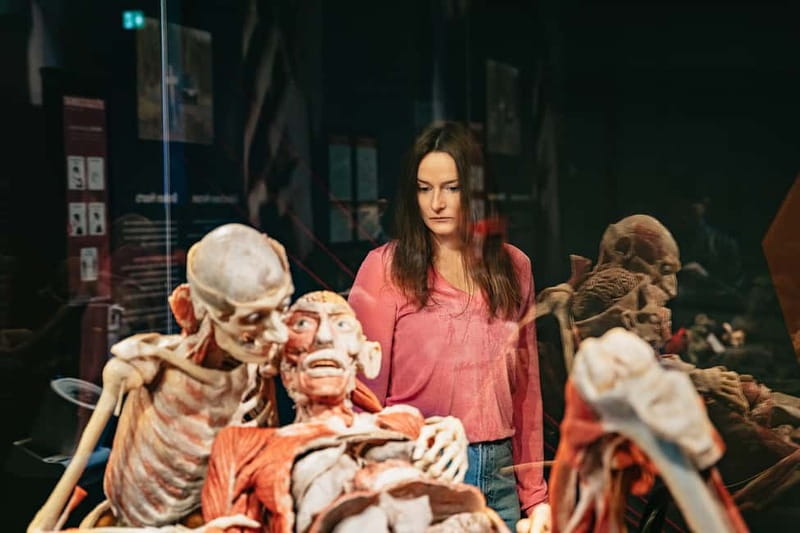
The first thing to understand is that this is not a standard science museum filled with diagrams. The main objects are real human preparations preserved through plastination, a process associated with Dr. Gunther von Hagens. Whole bodies are arranged in positions that reveal the connection between bones, muscles, blood vessels, and organs.
That can be startling. It also gives the exhibition its force. A drawing can show you where the heart sits, but a plastinate lets you see the heart in relation to the ribs, spine, lungs, and major vessels. You begin to understand the body as a working structure rather than a list of separate parts.
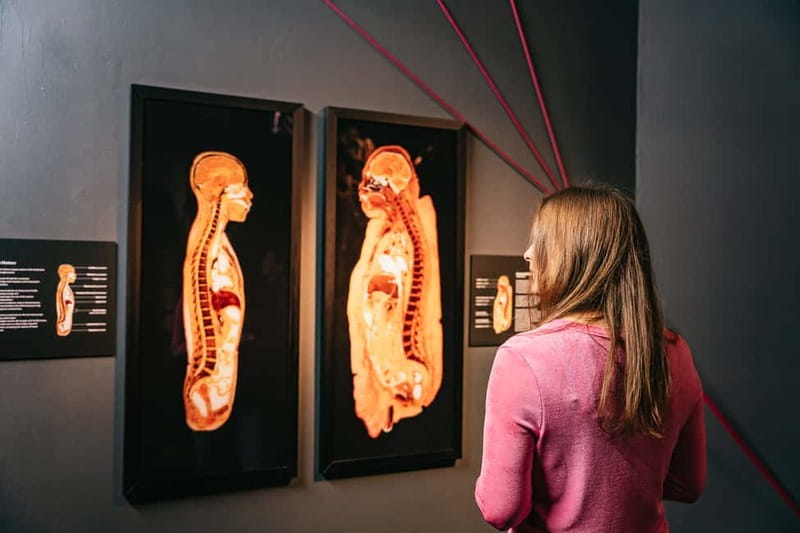
The museum presents these subjects in an accessible way. You do not need specialist training to follow the explanations, and the displays are designed to connect structure with function. You can see not just what an organ looks like, but how it works and what can happen when disease affects it.
This makes the museum especially useful for anyone who has ever wondered how the body fits together. It can also help families and older children put school lessons into a physical context, though the material is more serious than a playful children’s attraction.
More museum & gallery tickets in Germany:
- Berlin: Jewish Museum Berlin Entrance Ticket
★ 4.5 · 8,393 reviews - Berlin: DDR Museum Tickets
★ 4.3 · 3,443 reviews - Berlin: Natural History Museum Entrance Ticket
★ 4.6 · 3,382 reviews
Start with the skeleton and muscular system
The skeleton provides the basic framework for the exhibition. You see how the bones support the body, protect vital organs, and allow movement. The displays then build on that framework by showing the muscles that work with the skeleton.
This section is valuable because it corrects the simple picture many of us carry in our heads. Muscles are not just isolated shapes attached to bones. They form layers, connect through tendons, and work in groups. The arrangements make movement easier to understand, especially when you can compare a skeleton with the surrounding muscular system.
The whole-body preparations are the strongest part here. They show proportion and connection in a way that a textbook cannot. You can see how a large muscle relates to the pelvis, shoulder, arm, or leg, then look closer at the smaller structures underneath.
Take your time in this area. If you hurry, the bodies can become a sequence of unusual shapes. If you pause and read, they become lessons in balance, movement, and physical structure.
Follow the digestive system from food to energy
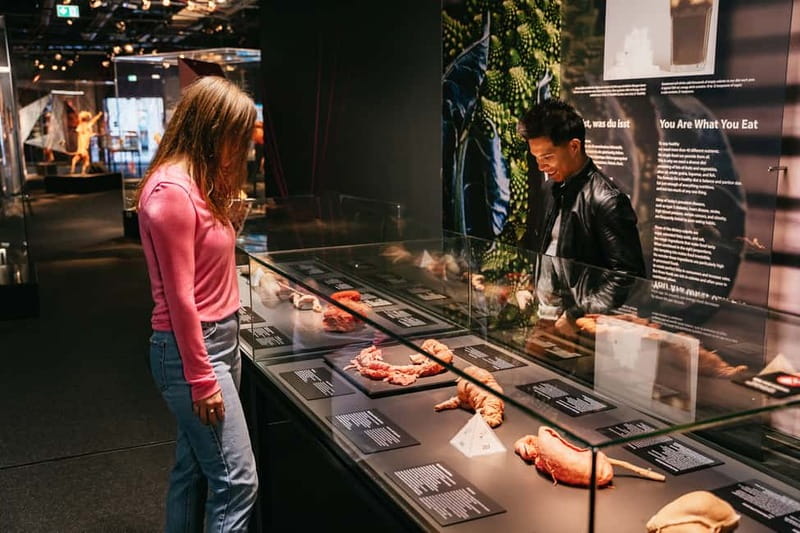
The digestive system section brings the body’s internal work into view. You can see the organs involved in processing food and consider how they fit into the rest of the abdomen.
This part is less immediately dramatic than the full-body displays, but it is one of the clearest examples of the museum’s purpose. The digestive organs can seem abstract when shown in a textbook. Here, you can see their size, position, and relationship to nearby structures.
The exhibition also uses the body to discuss habits and health. It asks you to think about the middle ground between excess and modesty, and about what the body needs for a long life. The point is not simply to show organs. It is to connect anatomy with the choices you make every day.
You will get more out of this section if you read the explanatory panels rather than treating it as a quick walk-through. The displays are visual, but the written context explains why the organs matter.
Look at embryo development and the beginning of life
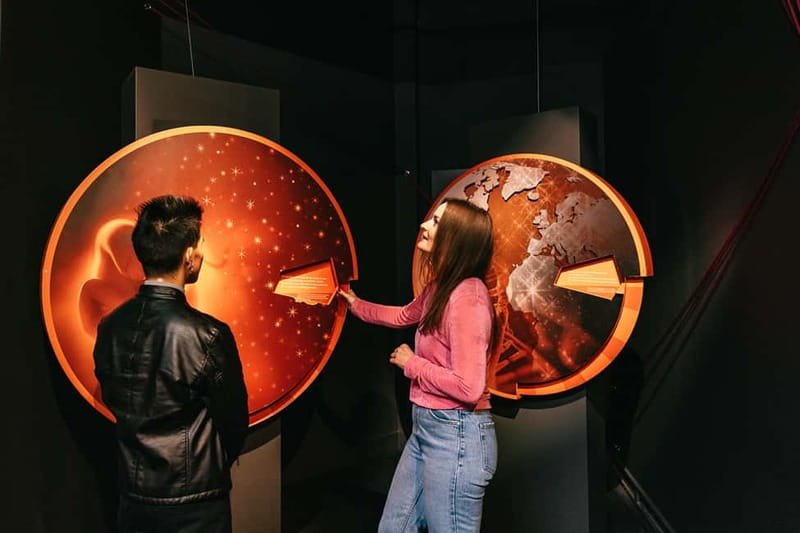
One of the museum’s more distinctive subjects is the development of an embryo in the womb. This gives the exhibition a different rhythm, moving from the adult body to the earliest stages of human development.
The display helps you think about how complicated the body becomes over time. It also adds a human dimension to the anatomy on show. The skeleton, organs, and nervous system are not presented as fixed objects only. They are part of a process that begins before birth.
This section may feel more reflective than the muscle and organ displays. It asks you to consider how the body forms and changes, rather than only how it operates once fully grown.
If you are visiting with children or teenagers, use your judgment about how much detail feels suitable. The museum is educational, but the real human material and subject matter may require a more mature approach.
A few more Germany trips to weigh up
- Berlin: Neues Museum Entry Ticket
★ 4.6 · 3,261 reviews - Cologne: Chocolate Museum Entrance Ticket
★ 4.4 · 2,790 reviews - Dresden: Church of Our Lady Guided Tour of Gallery
★ 4.7 · 2,421 reviews - Skip-the-Line: Berlin Wall Museum at Checkpoint Charlie
★ 4.1 · 2,041 reviews
Study the heart, blood vessels, and lungs
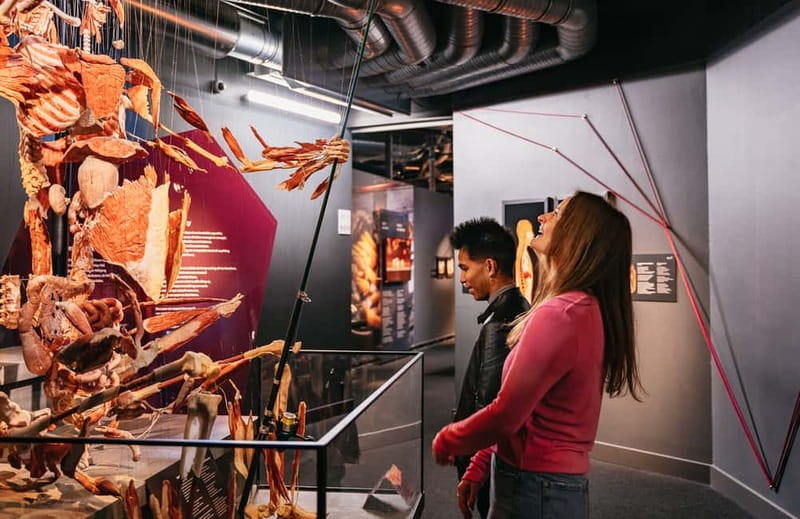
The cardiovascular system is one of the exhibition’s most visually striking subjects. The heart is only one part of the system. The blood vessels spread through the body in a network that can be difficult to picture until you see it preserved and displayed.
These preparations show how the body carries blood to its organs and tissues. They also make the scale of the system easier to grasp. The heart may be familiar, but the vessels surrounding it and extending throughout the body reveal how much work the system does.
The respiratory section follows naturally. You can learn about the organs used for breathing and see how they relate to nearby structures. This is where the exhibition’s use of real preparations has particular impact. Lungs, airways, blood vessels, and the rib cage are connected in a way that makes the mechanics of breathing easier to follow.
Disease displays add a serious note. You can see how common illnesses change organs and body systems. The material is presented for education, but it can still be unsettling, particularly if you are sensitive to medical subjects.
See the nervous system and the body under stress
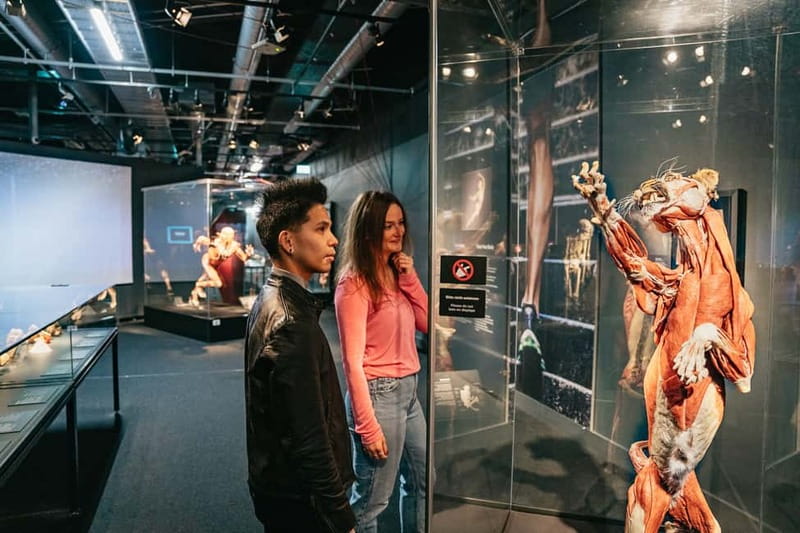
The nervous system section deals with one of the body’s most complex networks. It gives you a chance to think about how the brain, nerves, and the rest of the body communicate.
The exhibition does not stop at physical structure. It also explores less visible parts of human life, including stress and happiness. These displays shift the visit from anatomy lesson to personal reflection. You are encouraged to consider how your body responds to pressure and what supports a long, healthy life.
That wider focus is one of the museum’s strengths. You are not simply memorizing organs. You are looking at the relationship between physical systems, behavior, and daily life.
Still, do not expect a full psychology exhibition or an interactive health workshop. The museum raises questions and supplies information, but the amount of hands-on material is limited. One useful interactive phone guide is available, yet some people will want more activities that let them test or explore the information directly.
The displays are educational, but the tone is serious
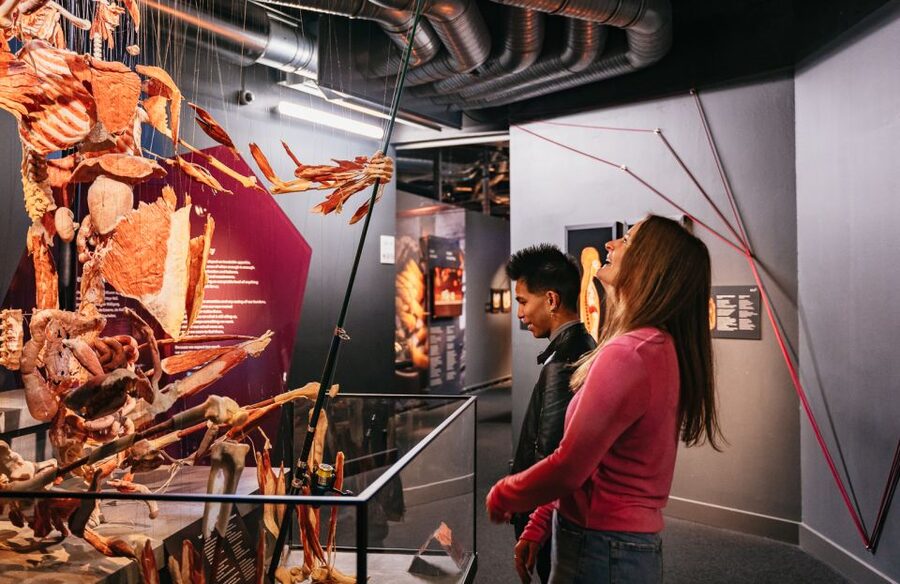
BODY WORLDS is unusual because the exhibits are real human preparations. That gives the museum an honesty that replicas cannot match, but it also means the visit is not right for everyone.
You may find the full-body plastinates fascinating, thought-provoking, or uncomfortable. All three reactions are reasonable. The museum asks you to look closely at the body, including disease and physical decline, rather than keeping those subjects at a polite distance.
The educational material is available in English, and the English translations on the displays are clear. An audio guide exists, but it is not included with the entrance ticket. If you like listening rather than reading, check the audio arrangements when you arrive. A few audio exhibits may be out of order, and the audio points may not always be easy to find.
The phone-based interactive guide can be helpful. Bring a charged phone if you plan to use it, though the supplied information does not specify its exact format or whether every part of the exhibition is covered.
How long you should allow at Panoramastraße
Your ticket is valid for one day, with opening hours from 10 a.m. to 7 p.m. The last admission is at 6 p.m., and the museum is closed on December 24.
There is no fixed guided route or timed tour described for the visit. You enter at Panoramastraße 1a and finish at the same location. Check the available starting times when booking, then plan enough room to read the material instead of rushing from one display to the next.
Some people move through the museum quickly. That is possible, but it reduces the value of the visit. At $22 per person, the ticket is not a bargain basement admission, so I would give yourself at least enough time to study the major body systems and the health sections.
Your exact pace will depend on how closely you read, how comfortable you are with the exhibits, and whether you use the phone or audio material. A school group can also affect the atmosphere. You may encounter children moving quickly through the rooms, so a quieter time may suit you better if you prefer a calm visit.
What is included, and what costs extra
The ticket includes entrance to the BODY WORLDS exhibition. It does not include the cloakroom, lockers, or an audio guide.
Lockers are available for a charge. If you plan to carry bags around Berlin, check the storage arrangements before settling into the exhibition. Keeping your hands free will make it easier to read panels and use any interactive material.
The $22 price makes the most sense if you enjoy museums that explain how things work, or if you are traveling with someone studying biology, medicine, health, or human development. It is less compelling if you want a fast, light attraction with lots of hands-on entertainment.
The strong point is the quality and rarity of the main exhibits. Real human plastinates offer a view you cannot get from an ordinary anatomy display. The weaker point is that some equipment and displays can feel dusty or slightly worn, and the amount of interactivity is modest.
Who will get the most from this museum
I would recommend BODY WORLDS to adults, older children, teenagers, students, and anyone curious about anatomy. It works particularly well for people who learn by looking at real structures rather than reading a long explanation.
Families should decide in advance how their children may react. The museum can be highly educational, but it is not a toy-filled science center. The subjects include disease, death, organs, and the human body in a very direct form.
It also suits a repeat visit if you saw a BODY WORLDS exhibition elsewhere years ago. The central idea remains familiar, but the experience can still be interesting because the displays bring the body into focus in such a direct way.
You may want to skip it if you are uncomfortable with human remains or if medical imagery is likely to spoil your day. The exhibition’s power comes from its realism, and that realism is also its main limitation.
Practical tips for a smoother visit
- Read the first explanations carefully: They help you understand how the plastinates were prepared and how to interpret the displays.
- Use the museum’s sections as a route: Move from skeleton and muscles to digestion, embryo development, the cardiovascular system, lungs, and nervous system.
- Do not rush the health displays: The sections on stress, happiness, moderation, and longevity add meaning beyond basic anatomy.
- Check audio options on arrival: The audio guide is not included, and some audio stations may be difficult to locate or temporarily unavailable.
- Plan for paid storage: Cloakroom service and lockers are not included in the admission price.
- Remember the last entry: Doors are open from 10 a.m. to 7 p.m., but you must arrive by 6 p.m.
- Choose your timing with care: If you want a quieter experience, avoid times when school groups may be present.
- Keep an open mind: The museum can be fascinating and unsettling in the same room.
Should you book BODY WORLDS Berlin?
Book it if you want an unusual, serious look at the human body and you are comfortable seeing real human preparations. The museum explains bones, organs, muscles, circulation, breathing, nerves, disease, and human development in a way that diagrams alone cannot match.
I especially like it for curious adults and older students because it joins anatomy with practical questions about health and daily life. The English displays are useful, the central location is convenient, and the one-day ticket gives you flexibility.
Think twice if you want a highly interactive museum or a quick attraction that requires little reading. Some displays may look worn, a few audio points may not work, and a fast walk-through can leave the $22 ticket feeling expensive.
You can cancel up to 24 hours before the experience for a full refund, and a reserve-now-pay-later option keeps the booking flexible. With wheelchair access available, the museum is practical for many visitors, but the most important decision is personal: are you ready for an honest look inside the human body?
FAQ
Where is the BODY WORLDS Museum in Berlin?
The museum is at Panoramastraße 1a, 10178 Berlin, Germany.
How much does admission cost?
The listed price is $22 per person.
How long is the ticket valid?
The ticket is valid for one day. Check availability for the starting times offered when you book.
What are the opening hours?
The museum is open Monday through Sunday from 10 a.m. to 7 p.m.
What time is the last admission?
Last admission is at 6 p.m.
Is the museum open on December 24?
No. The museum is closed on December 24.
What does the ticket include?
The ticket includes entrance to the BODY WORLDS exhibition.
Is an audio guide included?
No. An audio guide is not included in the ticket price.
Are lockers available?
Yes. Lockers are available, but they are subject to a charge. Cloakroom service is also not included.
Is the museum wheelchair accessible?
Yes. The activity is wheelchair accessible.
Can I cancel my booking?
Yes. You can cancel up to 24 hours in advance for a full refund.
Can I reserve now and pay later?
Yes. A reserve-now-pay-later option is available, allowing you to keep your plans flexible.
Just added around Germany
- Aachen old town tour – GERMAN (public)★ 5.0 · 24 reviews
- Aachen Private Walking Tour With A Professional Guide★ 5.0 · 11 reviews
- Cologne Highlights: Exclusive Private Tour★ 5.0 · 5 reviews
- Bremen Private Walking Tour With A Professional Guide★ 5.0 · 7 reviews
- Private Walking Tour through the Fascinating Bremen’s City Center★ 5.0 · 5 reviews
- Explore Cologne’s best Street Art Quarter★ 4.5 · 4 reviews
- Bremen Exploration Private Game and City Tour on your Phone★ 4.5 · 7 reviews
- e-Scavenger hunt Bremen: Explore the city at your own pace★ 4.0 · 24 reviews
Museum & Gallery Tickets, compared.




Skip-the-Line: Berlin Wall Museum at Checkpoint Charlie
Read our review →
Browse the lists this tour appears in