
Reviewed · BERLIN TOURS
Berlin: The Feuerle Collection Meditation Experience
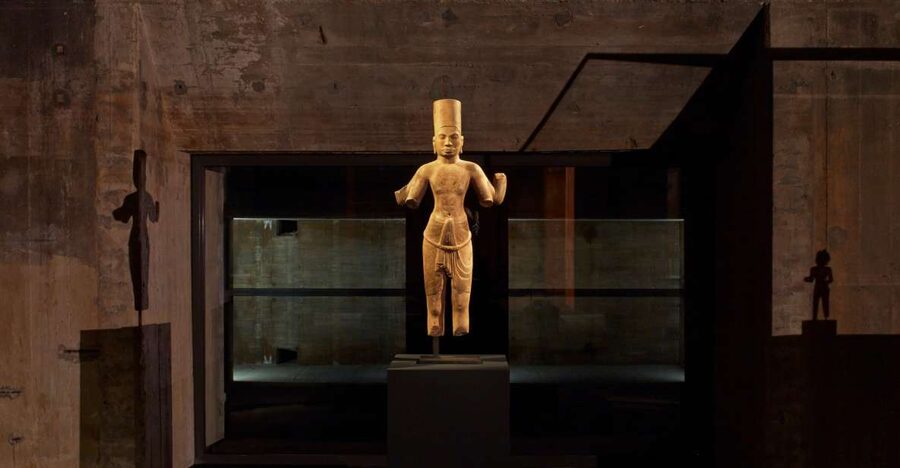
The Feuerle Collection asks you to look at art without the usual museum chatter, phone checks, or quick march from room to room. For one hour, you move through the Sound Room and underground Lake Room, stopping to sit, think, or simply look at Khmer sculpture, Chinese furniture, and contemporary works.
I like the firm mobile detox, which makes this feel more like a pause than a standard museum visit. I also like the unusual mix of centuries: early Khmer works from the 7th to 13th centuries, Imperial and Scholar Chinese furniture from the 2nd century B.C. to the 17th century A.D., and pieces by Anish Kapoor, Cristina Iglesias, Adam Fuss, Zeng Fanzhi, James Lee Byars, and Nobuyoshi Araki.
The main drawback is clear: this is not a guided tour. The collection is open for meditation only, so you will not receive explanations about the artists or objects. If you want museum context and a lively host, spend your $25 elsewhere.
In This Review
- Key points to know before you book
- Why this feels unlike a normal Berlin museum visit
- Entering the Sound Room
- The underground Lake Room and the art around it
- Khmer sculpture across the centuries
- Imperial and Scholar Chinese furniture
- Contemporary works in an ancient setting
- How the one-hour meditation works
- Who will get the most from this experience
- Is $25 a fair price?
- Practical advice for a calm visit
- Should you book the Feuerle Collection meditation experience?
- FAQ
- How long does the Feuerle Collection meditation experience last?
- Is meditation required?
- Is this a guided tour?
- What artworks can I see?
- Does the experience include the Sound Room?
- Can I visit the underground Lake Room?
- Are mats and blankets provided?
- Are children allowed?
- Is the experience wheelchair accessible?
- Can I cancel for a refund?
- Do I have to pay when I book?
Key points to know before you book
- One hour of deliberate silence: This is a timed meditation experience, not a normal drop-in museum visit.
- The mobile detox is part of the point: Put your phone away and expect a quiet setting with no casual conversation.
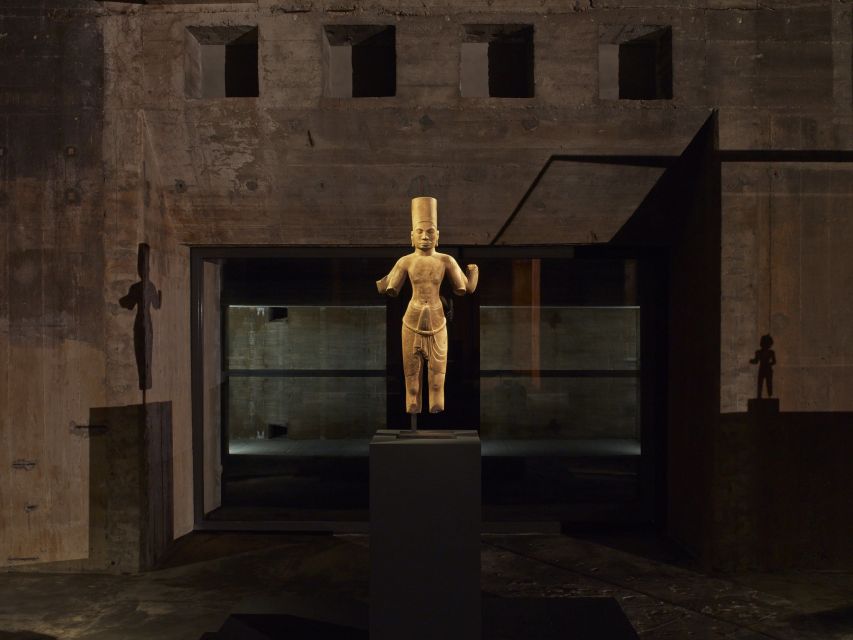
- Three very different art traditions meet: Khmer sculptures, Imperial and Scholar Chinese furniture, and modern works share the experience.
- The underground Lake Room is a central stop: The route includes both the Sound Room and this unusual lower-level space.
- Meditation is optional: You may sit on the provided mat, use a blanket, or walk quietly and look at the art.
- The $25 price buys atmosphere, not instruction: You are paying for access to a tightly controlled hour of silence, not a lecture or guided interpretation.
Why this feels unlike a normal Berlin museum visit
Most museum visits reward movement. You enter, read labels, take photographs, compare galleries, and keep going. The Feuerle Collection asks you to do less. The reduced pace changes what you notice, especially if you are willing to sit in front of one object for more than a few minutes.
The experience is built around silence and a break from your phone. That may sound simple, but it is a useful travel service in a city packed with sights, transport decisions, restaurant choices, and messages. You get one hour with no pressure to cover a large collection.
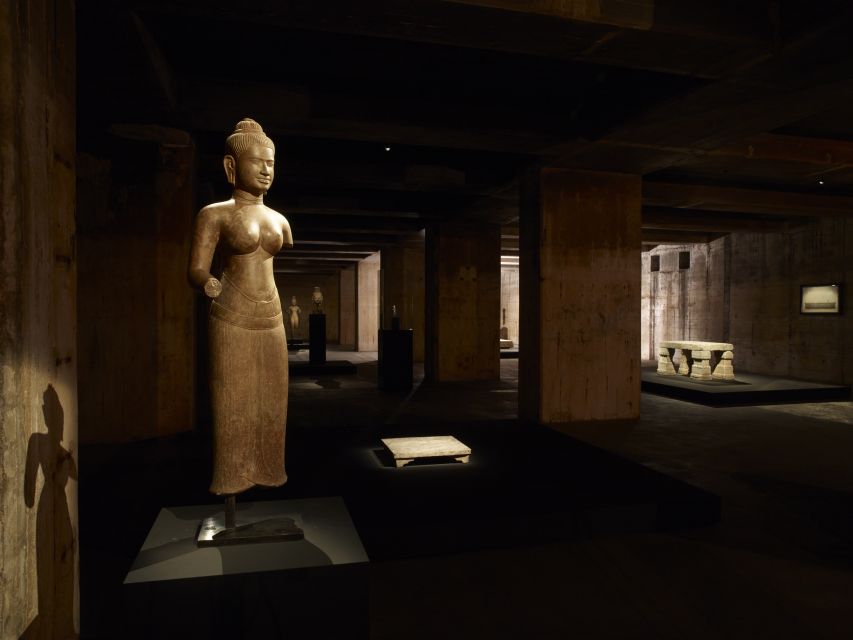
The art also creates a striking set of contrasts. Early Khmer sculptures carry a long Asian artistic tradition. Imperial and Scholar Chinese furniture brings a different sense of material, design, and use. Contemporary works by artists such as Anish Kapoor, Cristina Iglesias, Adam Fuss, Zeng Fanzhi, James Lee Byars, and Nobuyoshi Araki change the tone again.
You are not given a lecture explaining how these pieces connect. Instead, the collection presents the juxtapositions and lets you make your own links. I find that appealing if you enjoy open-ended looking. It can feel less satisfying if you need historical background before an artwork starts to make sense.
Other Berlin days worth putting on the list:
- Berlin: Reichstag, Dome and Government District Guided Tour
★ 4.7 · 18,288 reviews - Berlin: 1-Hour City Tour by Boat with Guaranteed Seating
★ 4.3 · 16,993 reviews - Berlin: Boat Tour Along the River Spree
★ 4.4 · 11,252 reviews
Entering the Sound Room
The route begins with a passage through the Sound Room. The supplied information does not describe a performance or give details about what you will hear, so it is best to think of this as part of the collection’s controlled sensory setting rather than a scheduled concert.
The room matters because it helps separate the outside world from the quiet period that follows. You are not simply walking into another gallery and starting a normal museum circuit. The passage prepares you to slow down and pay attention to the change in surroundings.
This is also where the rules become important. The experience is intended to remain silent, and the phone-free element is not a minor suggestion. Keep your device away so the hour does not turn into a series of small interruptions.
You may find the transition calming, or you may find it more formal than expected. There is no guide to introduce the collection or tell you what to notice. The experience depends on your willingness to accept the silence and move at a restrained pace.
The underground Lake Room and the art around it
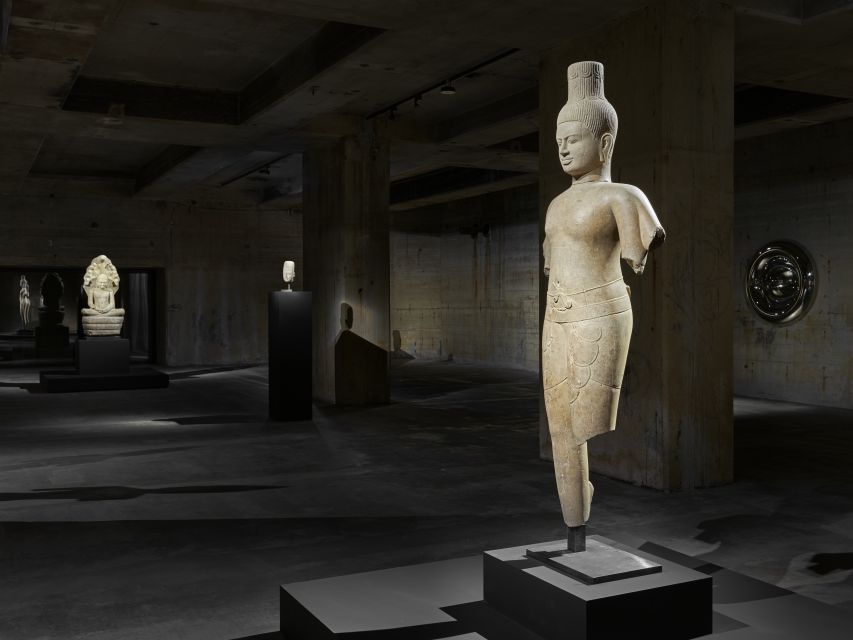
The Lake Room is the experience’s most unusual setting. It is underground, and you walk through it as part of the meditation visit. The name alone suggests a different mood from a conventional white-walled gallery, but the available details do not promise a particular visual effect or water display, so keep your expectations sensible.
What you can count on is a change in atmosphere and a chance to stop among the works. The setting encourages contemplation rather than quick inspection. You can sit with a mat and blanket, look at a sculpture, or continue walking quietly.
The room is especially useful for visitors who enjoy art through mood and space. The collection is not asking you to memorize dates or follow a lecturer’s argument. It gives you time to notice how objects feel in relation to their surroundings.
There is a trade-off. Without a guide, you may not know why a particular object is placed where it is, or how the Khmer, Chinese, and contemporary works relate to one another. If you want answers, note the collection’s name and the artists you see, then arrange separate research later. During this hour, the focus stays on quiet attention.
Khmer sculpture across the centuries
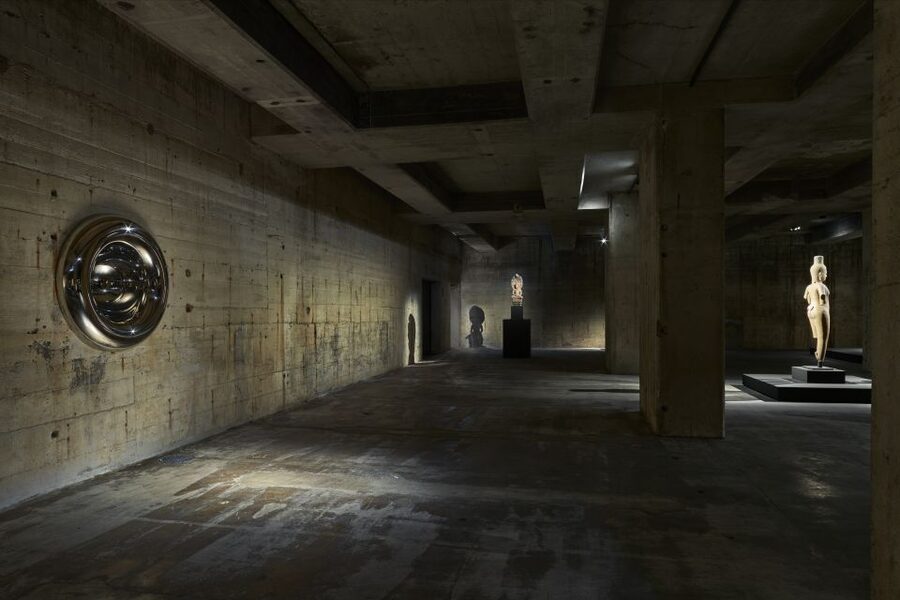
The Khmer sculptures date from the 7th to the 13th century A.D. That broad period gives the collection a long historical reach, even though the visit itself is only an hour.
For you, the value is not just the age of the objects. Ancient sculpture can reward slow looking because details become more visible when you stop rushing. You might notice posture, facial expression, surface, or the way a figure occupies the room. The meditation format gives those details more time than a typical pass through a museum gallery.
Still, the experience does not supply a guided explanation of Khmer culture, religion, or artistic development. You will need to bring your own interest, or simply respond to the forms in front of you. That open approach suits someone who likes personal observation. It is less suitable if you want a clear timeline and background talk.
The collection’s quiet rules can help here. A sculpture that might receive only a brief glance during a busy museum visit becomes a possible anchor for your hour. You do not have to force a meditation exercise. Sitting calmly and looking is enough.
Same city, a completely different kind of day:
- Discover Berlin Half-Day Walking Tour
★ 5.0 · 9,624 reviews - Berlin: Hop-on Hop-off Bus Tour with Live Commentary
★ 4.3 · 8,579 reviews - Berlin: Government District around the Reichstag Guided Tour
★ 4.7 · 8,447 reviews - Berlin: Reichstag, Plenary Chamber, Cupola & Government Tour
★ 4.6 · 8,422 reviews
Imperial and Scholar Chinese furniture
The Chinese furniture covers a very wide period, from the 2nd century B.C. through the 17th century A.D. The inclusion of both Imperial and Scholar furniture adds another layer to the visit, since these objects are not simply decorative items. Furniture can suggest use, status, craftsmanship, and the habits of the people who lived with it.
You might find that furniture asks for a different kind of attention than sculpture. Look at its structure, materials, proportions, and signs of careful making. The meditation setting lets you consider an object as a complete form rather than as a label in a display case.
Again, there is no lecturer to spell out the difference between Imperial and Scholar traditions. That is both a strength and a weakness. The strength is freedom: you can respond to the objects without being told what your response should be. The weakness is that a first-time visitor may miss useful historical context.
If Chinese art and furniture already interest you, the $25 fee becomes easier to justify. You are not just paying for a brief look at one art category. You are getting a quiet setting in which several periods and forms can be considered together.
Contemporary works in an ancient setting
The contemporary names are a major reason to choose this experience. The collection includes works by Anish Kapoor, Cristina Iglesias, Adam Fuss, Zeng Fanzhi, James Lee Byars, and Nobuyoshi Araki.
These works give the older Khmer and Chinese pieces a modern counterpoint. The result is not a standard chronological museum display. Instead, the collection creates a conversation between ancient objects, historic furniture, and recent art.
You may enjoy the sense of surprise. A contemporary work can change how you look at the older objects, while an ancient sculpture can make a modern piece feel different from how it might appear in a conventional gallery. The experience is built on these juxtapositions.
The range also means the visit will not appeal equally to everyone. If you prefer a single period, nation, or style, the mix may feel scattered. If you like art that sets up questions instead of offering one tidy story, the combination is a good reason to go.
One point deserves care: the collection includes art associated with erotic themes, a detail reflected in visitor feedback. If that subject makes you uncomfortable, check your own preferences before booking. The supplied information does not identify which works contain such material, so I would not assume the visit is suitable for anyone seeking strictly family-oriented content.
How the one-hour meditation works
This is an open meditation experience lasting one hour. Meditation is not mandatory, but the collection is open only for meditation and quiet looking. That means you can choose your own level of participation without treating the space like a normal exhibition.
You may sit on the provided yoga mat and use the blanket if you want extra comfort. You may also walk around quietly and look at the works. The important part is not a particular pose or technique. It is the quiet behavior that protects the atmosphere for everyone in the room.
I would arrive ready to do less than usual. Do not plan to photograph every object, read a long set of labels, or ask a guide to explain the collection. No guided tour is included, and no guide leads the hour.
The small-group feel mentioned in the feedback may appeal to you, but the supplied details do not give a fixed group size. You should not book expecting a private session. The practical promise is a silent visit with a controlled pace.
For some people, an hour will feel generous. For others, it may feel short once they have settled. The length works well as a calm pause between other Berlin plans, provided you do not treat it as a full museum afternoon.
Who will get the most from this experience
I would recommend this to you if you enjoy art without needing a full explanation. It is a good match for anyone who wants a quiet break, likes unusual presentation, or is curious about combining historic Asian art with contemporary work.
It also suits people who want a mobile detox but do not want to commit to a formal meditation class. Since sitting is optional, you can take the experience at a gentle pace without needing prior meditation practice.
The format is less suitable for children under 16, who are not permitted. It is also a poor choice if you want a standard exhibition visit, a talk from a specialist, or plenty of time to move independently from room to room.
The collection is wheelchair accessible, which makes the experience available to more people, although the provided information does not describe the route in further detail. If you need specific access arrangements, confirm them before booking.
Is $25 a fair price?
At $25 per person, this is not the cheapest way to see art in Berlin. The fee makes sense only if you value the format as much as the objects.
You are paying for one hour in a silent setting, a mobile-free pause, access to the Sound Room and underground Lake Room, and the chance to sit among a distinctive mix of works. A yoga mat and blanket are included, which saves you from bringing your own equipment.
You are not paying for a guide, a talk, or a long museum visit. That distinction is crucial. If you mainly want information about Khmer sculpture, Chinese furniture, or the named contemporary artists, the experience may feel expensive because you will have to supply your own context.
I see the value most clearly for people who are already interested in meditation, quiet art viewing, or a sensory change from ordinary sightseeing. The price is harder to defend for a casual visitor who simply wants to see as much art as possible.
Flexible booking helps reduce the risk. You can cancel up to 24 hours in advance for a full refund, and the reserve-now, pay-later option lets you hold a place without paying immediately. Starting times vary, so check availability before building the rest of your day around it.
Practical advice for a calm visit
Treat the hour as a scheduled quiet period, not as an open-ended museum stop. Plan enough space around it that you are not worrying about your next appointment while sitting in the Lake Room.
Put your phone away before the experience begins. The mobile detox is one of the main reasons to book, and checking messages would undercut the whole idea.
Wear something comfortable enough for quiet sitting, though you can also walk around. Mats and blankets are supplied, so you do not need to bring yoga equipment.
Keep your expectations clear. You will encounter Khmer sculpture, Imperial and Scholar Chinese furniture, and contemporary art, but you will not receive a guided explanation. If you want to understand the works in greater detail, make a note of the artists and periods for later reading.
Finally, do not feel pressured to meditate perfectly. The experience allows quiet walking and looking. A calm hour with one artwork may be more useful to you than trying to follow a formal technique.
Should you book the Feuerle Collection meditation experience?
Book it if you want a rare pause from Berlin’s busy sightseeing rhythm and you are comfortable letting the art speak without a guide. The best reasons to go are the silence, mobile detox, underground Lake Room, and unusual mix of ancient and contemporary works.
Skip it if you need a museum lecture, a conventional exhibition route, or a family activity for younger children. At $25, the value depends on your interest in quiet attention. For the right visitor, it is an unusual and memorable hour. For everyone else, it may feel like too little explanation for the price.
FAQ
How long does the Feuerle Collection meditation experience last?
The open meditation experience lasts one hour.
Is meditation required?
No. You may meditate, walk around quietly, or simply look at the art. The collection is open for this quiet meditation experience rather than a standard guided visit.
Is this a guided tour?
No. A guided tour is not included, and no guide leads the exhibition visit.
What artworks can I see?
The collection includes Khmer sculptures from the 7th to 13th century A.D., Imperial and Scholar Chinese furniture from the 2nd century B.C. to the 17th century A.D., and contemporary works by Anish Kapoor, Cristina Iglesias, Adam Fuss, Zeng Fanzhi, James Lee Byars, and Nobuyoshi Araki.
Does the experience include the Sound Room?
Yes. The visit includes passage through the Sound Room.
Can I visit the underground Lake Room?
Yes. Walking in the underground Lake Room is part of the experience.
Are mats and blankets provided?
Yes. A yoga mat and blanket are included.
Are children allowed?
No. The experience is not suitable for children under 16.
Is the experience wheelchair accessible?
Yes. The activity is listed as wheelchair accessible.
Can I cancel for a refund?
Yes. You can cancel up to 24 hours in advance for a full refund.
Do I have to pay when I book?
No. The reserve-now, pay-later option allows you to reserve a place and pay later. Check the available starting times when booking.
Just added around Berlin
- Love and War in Berlin: Self-Guided Story Puzzle Walk★ 5.0 · 7 reviews
- Rickshaw Tours Berlin – Groups of up to 16 people with several rickshaws★ 4.0 · 97 reviews
- Walking on the Wall: 3-Hour Tour in Berlin★ 4.5 · 34 reviews
- eSIM for Germany and 34 European Countries★ 4.5 · 16 reviews
- Warnemuende Shore Excursion: Berlin Private Sightseeing Tour from Rostock★ 5.0 · 4 reviews
- Your ticket to The Wall Museum Berlin★ 3.0 · 60 reviews
- Warnemuende Shore Excursion: Private Berlin Tour★ 4.5 · 27 reviews
- Berlin’s Gay, Lesbian, and Queer Scene Small-Group Walking Tour★ 4.5 · 66 reviews
Berlin Tours, compared.

Reichstag, Dome and Government District Guided Tour
Read our review →
1-Hour City Tour by Boat with Guaranteed Seating
Read our review →


Reichstag, Plenary Chamber, Cupola & Government Tour
Read our review →

