
Reviewed · SEGWAY TOURS
Berlin Small Group Segway Adventure: Explore in 2 Hours!
Berlin is a big city with its sights spread across a wide area, and this two-hour Segway tour lets you cover far more ground than you could on foot. You glide from Museum Island to Alexanderplatz, then across the central districts to Brandenburg Gate, the Reichstag, Tiergarten, Potsdamer Platz, and Checkpoint Charlie.
I like the quick city overview and the brief stops for photos. I also like that beginners get training before setting off, and that guides such as Morgan and Nachiket have been praised for keeping a steady pace and adding useful stories. The main caution is that the experience can vary: some departures have lasted about 90 minutes, and one was much shorter, while traffic, cold weather, and guide style can affect the ride.
In This Review
- Key points to know before you book
- A fast way to get your bearings in Berlin
- Learning the Segway before Berlin traffic
- Museum Island and Bebelplatz: Berlin’s grand opening chapter
- Brandenburg Gate, the Reichstag, and Bellevue Palace
- Victory Column and the Tiergarten ride
- The Holocaust Memorial: a stop that deserves respect
- Potsdamer Platz and Checkpoint Charlie: two versions of modern Berlin
- Gendarmenmarkt and Alexanderplatz to finish
- Guide style can shape the whole outing
- Timing, weather, and practical value
- Should you book the Berlin Segway Adventure?
- FAQ
- Where does the Segway tour begin and end?
- How long does the experience last?
- Is Segway training included?
- What language is the tour offered in?
- How many people can join one booking?
- What is not included in the price?
Key points to know before you book
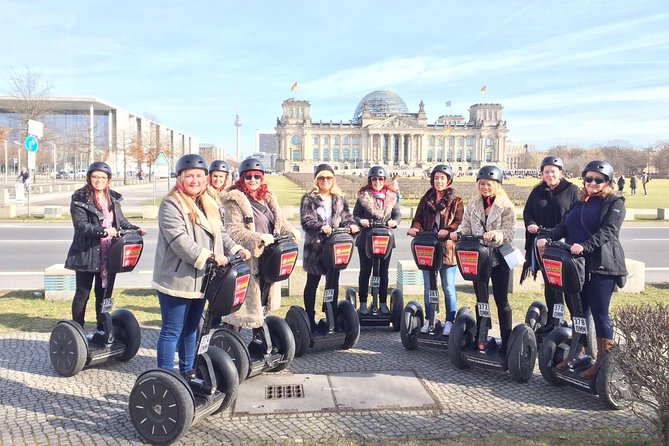
- You cover 11 central Berlin sights: The route links Museum Island, Bebelplatz, Brandenburg Gate, the Reichstag, Bellevue Palace, the Victory Column, the Holocaust Memorial, Potsdamer Platz, Checkpoint Charlie, Gendarmenmarkt, and Alexanderplatz.
- Training is included: You receive instruction, a Segway, helmet, and insurance before riding into the city.
- The group limit is 15 people: That is smaller than a large coach outing, though the riding experience can still depend on how confident and attentive everyone is.
- The route is best for orientation: You get a useful first look at Berlin, but five-minute stops leave little time for detailed museum visits or long historical talks.
- English is the tour language: You should advise your preferred departure time when booking and bring a current valid passport on the day.
- Weather matters: Cold temperatures and rain can make a two-hour outdoor ride feel long, so gloves and a sensible weather check are worthwhile.
A fast way to get your bearings in Berlin
The strength of this experience is its coverage. Berlin is not a compact old town where every major sight sits around one square. The Segway lets you move between former East and West Berlin, grand royal-era buildings, Cold War sites, memorials, and newer commercial districts without spending most of your time walking between them.
You begin at Claire-Waldoff-Straße 6, near public transportation, and return there at the end. After a short practice session, you follow the guide through city streets and open areas. The route is designed for a broad overview, not a slow visit inside each attraction.
I would choose this early in your Berlin stay. It helps you decide where to return later, especially if you want more time at the Reichstag, the Holocaust Memorial, Museum Island, or Checkpoint Charlie. One of the most useful comments from the experience is that it can give you an idea of which parts of the city deserve a longer visit.
The $84.68 price is not cheap for two hours, but the value depends on how you use it. You are paying for the machine, training, helmet, insurance, guide, and the ability to connect distant sights in one outing. If your alternative is several hours of walking or multiple public transport changes, the price may feel fair. If you mainly want detailed history, the same money may be better spent on a specialist walking tour or museum visit.
More Segway Tours in Berlin
- Berlin 2-Hour Segway Tour
★ 4.6 · 238 reviews - Berlin: 2-Hour Premium Segway Tour
★ 4.5 · 157 reviews - 2-Hour Segway Discovery Tour Berlin
★ 5.0 · 154 reviews
Learning the Segway before Berlin traffic
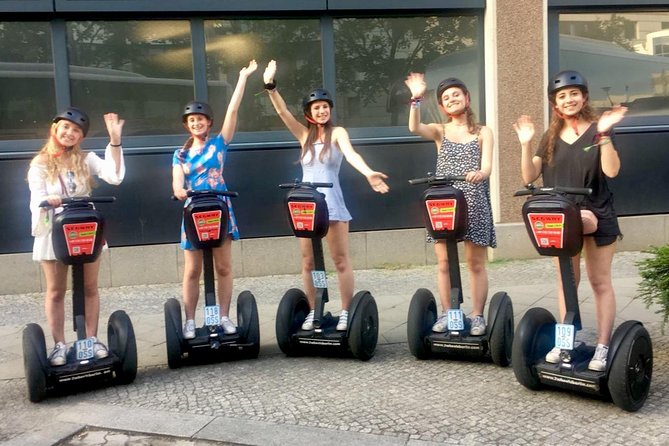
You do not need to arrive as an expert rider. Training is included, and the experience is designed to teach you how to control the Segway before you join the route. Several riders found it easy to learn, while one participant who could not manage the Segway was given an electric bike without an extra charge.
That backup is useful, but you should still take the practice seriously. A Segway is simple to operate once you understand it, yet it is a motorized vehicle moving through streets shared with bicycles, pedestrians, and cars. One rider described a fall after a quick change of direction and contact with another Segway. No serious injury was reported, but the incident is a reminder to leave space and watch the guide closely.
A maximum of 15 people is stated for each booking. A smaller group can make it easier to hear explanations and stay together, but it does not remove the need for safe riding. If you are nervous, tell the guide during training. Morgan was specifically praised for looking after a less confident rider, and that kind of attention can make a real difference.
The activity is not recommended for pregnant women or people with heart complaints or other serious medical conditions. Most people can participate, but you should be comfortable balancing, steering, stopping, and riding outdoors for the duration of the outing.
Museum Island and Bebelplatz: Berlin’s grand opening chapter
The first stop is Museum Island, where you see the outside of five major museums grouped along the Spree. The buildings provide a strong introduction to Berlin’s place as a European center for art and archaeology, while the river adds a pleasant setting for photographs.
This is an exterior visit. Admission is free because you are not entering the museums, so do not book this tour expecting time with the collections. The guide can explain what the institutions contain and why the island has UNESCO World Heritage status, but the five-minute stop is mainly for context and pictures.
At Bebelplatz, the mood changes. The square is known for the memorial to the Nazi book burning of 1933, a quiet reminder of how quickly public culture can be attacked. The nearby State Opera House and other grand buildings make the square beautiful, but the memorial gives the stop its weight.
You will likely get a short explanation rather than a full treatment of Nazi Germany. That is typical of a route covering 11 places in two hours. I appreciate that Bebelplatz is included because it keeps the tour from being only a parade of pretty buildings, but anyone wanting a careful account of Berlin under the Nazis should plan a separate visit.
Brandenburg Gate, the Reichstag, and Bellevue Palace
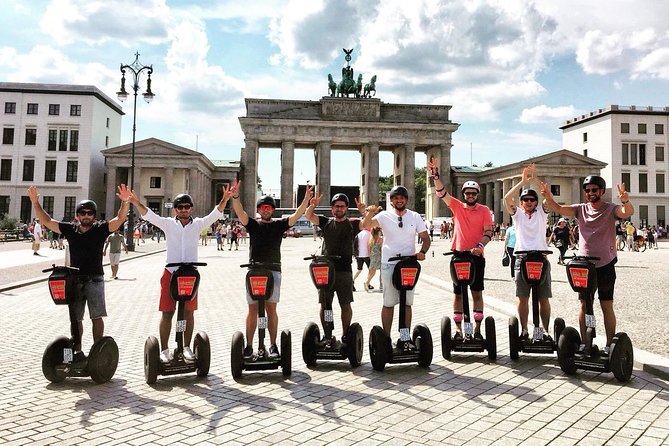
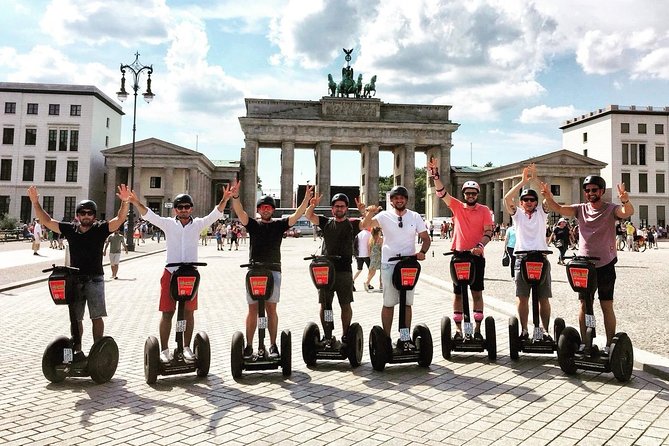
Brandenburg Gate is the tour’s most familiar stop. Its neoclassical columns and position at the edge of Pariser Platz make it one of the clearest symbols of Berlin. A guide can place it within the city’s changes, from imperial power and wartime destruction to the division and reunification of Germany.
You get time to admire the gate and take photographs, but admission is not included. In practice, the value here is the approach and explanation rather than an indoor visit, since the monument is primarily viewed from outside.
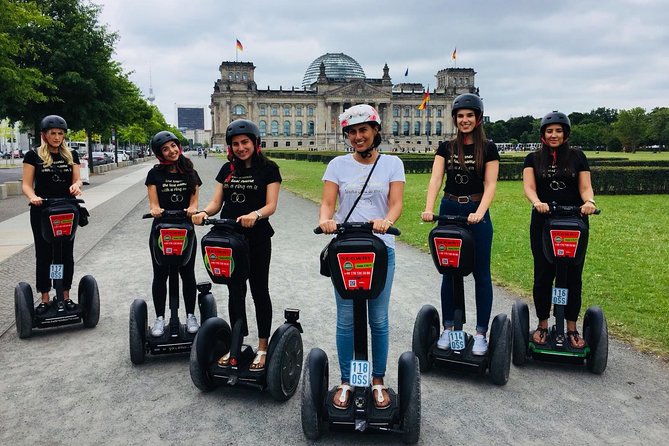
The nearby Reichstag gives you a different angle on German public life. The building houses the German Parliament and has a striking glass dome, but this outing focuses on the exterior and surrounding gardens. You should not assume that the dome visit is part of the booking. The stop offers a useful introduction to the building’s difficult past and its role after German reunification.
Bellevue Palace follows as a look at modern Germany’s ceremonial side. It is the official residence of the German President, with an elegant façade and gardens. This is a less obvious stop than Brandenburg Gate, and it adds variety to the route by showing where the presidency fits into the country’s political system.
These three stops work well together. Brandenburg Gate represents national symbolism, the Reichstag represents Parliament, and Bellevue Palace represents the presidency. The five-minute format means you will hear the outline, not a lecture, so make a note of anything you want to explore later.
Same city, a completely different kind of day:
- Berlin: Reichstag, Dome and Government District Guided Tour
★ 4.7 · 18,288 reviews - Berlin: 1-Hour City Tour by Boat with Guaranteed Seating
★ 4.3 · 16,993 reviews - Berlin: Boat Tour Along the River Spree
★ 4.4 · 11,252 reviews - Discover Berlin Half-Day Walking Tour
★ 5.0 · 9,624 reviews
Victory Column and the Tiergarten ride
The Victory Column rises in the Tiergarten, a large central park. Its golden figure at the top is easy to spot, and the monument commemorates Prussian military victories. That subject can be treated simply as a photo stop, but it also opens a useful conversation about the older military traditions that shaped Berlin before the modern republic.
The surrounding park gives you a break from dense streets and heavy architecture. You can look toward the column, take photographs, and enjoy a more open stretch of the city. The route still requires attention, though. A previous rider found city traffic uncomfortable in places, and another reported a collision after a sudden turn.
This is one reason I would favor a departure with good weather and reasonable visibility. The operator has sometimes adjusted timing around bad rain, but the tour remains outdoors. Cold weather can also affect the length of the ride. Bring gloves if temperatures are low, since your hands are exposed while steering.
The Holocaust Memorial: a stop that deserves respect
The Memorial to the Murdered Jews of Europe consists of 2,711 concrete slabs of varying heights. The design creates narrow paths and shifting views, giving the site a quiet, serious character in the middle of central Berlin.
You may walk through part of the memorial during the stop, but five minutes is not enough for a long visit or careful reading. The guide can explain its purpose and encourage reflection, yet the memorial is best experienced at your own pace later if it speaks to you.
Treat this stop differently from the photo stops. The concrete forms are visually striking, but they are not simply a backdrop. You should avoid loud behavior and give other people space. The memorial is one of the places where a fast sightseeing route needs a little personal thought afterward.
Potsdamer Platz and Checkpoint Charlie: two versions of modern Berlin
Potsdamer Platz shows how quickly Berlin changed after reunification. Once divided and heavily damaged, the area became a major commercial center with modern buildings, shops, restaurants, and the Sony Center. The contrast with the older squares is part of the point.
You will not have time to shop or eat here. Instead, you get a short look at the architecture and a reminder that Berlin’s recent past is visible in its rebuilt city center. This is a useful stop for understanding why Berlin can feel like several different cities joined together.
Checkpoint Charlie takes you back to the Cold War. The former crossing point between East and West Berlin is now surrounded by displays and commercial activity. You can see the guard shack and hear about the attempted escapes, the tensions between the two sides, and the way this crossing became a symbol of divided Berlin.
The site can feel more theatrical than solemn, with souvenir shops and people posing for photographs. Still, the historical setting matters. The guide may also point out common street scams in the area, including a dice game used to collect money from passersby. Keep your wallet secure and do not get drawn into games offered around the checkpoint.
Gendarmenmarkt and Alexanderplatz to finish
Gendarmenmarkt is one of central Berlin’s most elegant squares. The German Cathedral and French Cathedral face the Concert Hall, creating a balanced group of buildings that makes for excellent photographs.
This stop is about architecture and civic life. It is a welcome change after the more difficult subjects at Bebelplatz and the Holocaust Memorial. Admission is not included, so the tour gives you the outside view and a short explanation rather than entry to the buildings.
Alexanderplatz finishes the route with a very different mood. It is a major public square filled with shops, restaurants, street performers, and the TV Tower. The area began as a marketplace and developed into one of Berlin’s key urban centers, especially during the East German period.
The tower is not part of the tour admission, so you will only see it from ground level. If you want panoramic views, plan a separate visit. By this point, the Segway has done its main job: connecting the old royal center, Cold War sites, government buildings, memorials, and modern commercial Berlin in one broad circuit.
Guide style can shape the whole outing
The guide is central to the experience. Morgan has been praised for handling traffic well, adjusting around weather, and helping riders who were less sure of themselves. Nachiket, also referred to as Nachi, has been praised for adding historical, geographic, and cultural details and answering questions in depth.
That level of commentary is possible, but it should not be guaranteed as a full academic tour. One rider found the explanations too brief, with some stops reduced to identifying a building and its basic function. Another felt that the activity gave more attention to riding than to Berlin’s politics and past.
You should think of this as a guided introduction with history along the way. If you want the most from it, ask questions at each stop. Ask why a site matters, what changed after reunification, or how East and West Berlin shaped the area. A good guide can make the short pauses much more useful.
There was also one serious service problem involving a late start, a changed route, and an unexpected break for a hot drink. The operator apologized and said the private tour had been upgraded at no charge. This appears to be an exception rather than the normal plan, but it shows why you should confirm the route and expected length before setting off.
Timing, weather, and practical value
The stated duration is about two hours, but the actual ride may vary. Some outings have lasted around 90 minutes, while one ended after 55 minutes, with the guide explaining that cold weather played a part. If the full duration matters to you, confirm it at the start.
The tour is offered in English, and you should give your preferred departure time when booking. Confirmation is issued at booking, and free cancellation is available up to 24 hours before the start time. Changes or cancellations inside that window are not accepted for a refund.
Food and drinks are not included, and hotel pickup and drop-off are not provided. Wear clothes suited to the forecast, especially gloves in cold weather. A current valid passport is required on the day, so do not leave it locked at your hotel.
I would also avoid booking this as your only history experience in Berlin. It is excellent for orientation and efficient sightseeing, but the Memorial, Bebelplatz, Checkpoint Charlie, and the Nazi and Cold War stories deserve more time than a five-minute stop can offer.
Should you book the Berlin Segway Adventure?
Book it if you want a fast, enjoyable first look at Berlin, are comfortable riding outdoors, and value seeing major sights without walking long distances. It suits active couples, friends, and families with participants who can ride safely. The small-group limit, included training, and possible help from attentive guides such as Morgan or Nachiket add real value.
Skip it if you want long museum visits, detailed political history, or a slow and quiet memorial tour. You should also think twice if you dislike city traffic, cold weather, or motorized sightseeing.
For the best result, schedule it near the start of your stay, choose a mild day, wear gloves if needed, ask for historical detail, and confirm the expected route and length before departure. At $84.68, it is a worthwhile orientation tool for many visitors, but not a substitute for spending real time inside Berlin’s museums and memorials.
FAQ
Where does the Segway tour begin and end?
It begins at Claire-Waldoff-Straße 6, 10117 Berlin, Germany, and ends back at the same meeting point.
How long does the experience last?
The advertised duration is approximately two hours. Actual times can vary, with some outings lasting about 90 minutes and one reported as 55 minutes.
Is Segway training included?
Yes. Training, a Segway, helmet, insurance, and a professional local guide are included.
What language is the tour offered in?
The tour is offered in English.
How many people can join one booking?
The maximum is 15 people per booking.
What is not included in the price?
Food and drinks are not included unless specified. Hotel pickup and drop-off are also not included, and admissions to attractions are not part of the experience.
More 2-Hour Experiences in Berlin
- Berlin: Third Reich and Cold War 2 Hour Walking Tour
★ 4.9 · 6,830 reviews - Berlin’s Best: 2 Hour Walking Tour Third Reich and the Cold War
★ 5.0 · 5,486 reviews - Berlin: 2-Hour Lake Oberhavel Cruise from Tegel
★ 4.4 · 577 reviews - East Berlin and the Berlin Wall 2-Hour Walking Tour
★ 5.0 · 228 reviews
Just added around Berlin
- Love and War in Berlin: Self-Guided Story Puzzle Walk★ 5.0 · 7 reviews
- Rickshaw Tours Berlin – Groups of up to 16 people with several rickshaws★ 4.0 · 97 reviews
- Walking on the Wall: 3-Hour Tour in Berlin★ 4.5 · 34 reviews
- eSIM for Germany and 34 European Countries★ 4.5 · 16 reviews
- Warnemuende Shore Excursion: Berlin Private Sightseeing Tour from Rostock★ 5.0 · 4 reviews
- Your ticket to The Wall Museum Berlin★ 3.0 · 60 reviews
- Warnemuende Shore Excursion: Private Berlin Tour★ 4.5 · 27 reviews
- Berlin’s Gay, Lesbian, and Queer Scene Small-Group Walking Tour★ 4.5 · 66 reviews
Segway Tours, compared.
Heidelberg & Neckar Valley: Segway Tour – 360 Degrees
Read our review →
Munich 3-Hour Segway Tour: Nazi Munich & Royal Architecture
Read our review →

Browse the lists this tour appears in