
Reviewed · HISTORICAL TOURS
Berlin Protest History Tour: Rebels, Resistance, and Revolution
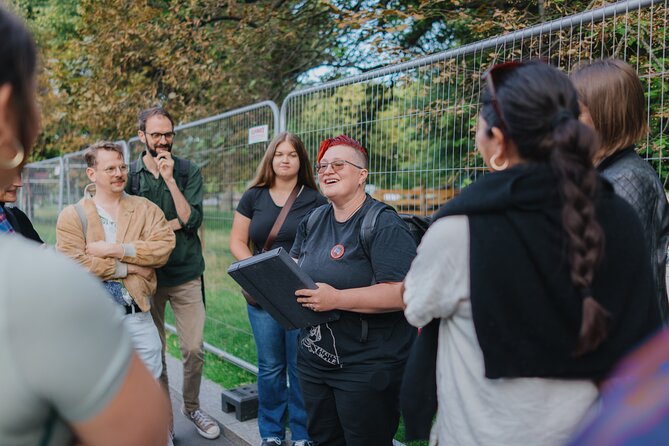
Berlin’s protest story comes alive in the spaces between its famous sights. This two-hour walk links medieval unrest, the March Revolution of 1848, Nazi-era resistance, and the East German Peaceful Revolution of 1989. You do not just look at monuments. You learn what happened around them, and why ordinary people took great risks to oppose power.
I especially like the small group limit of 15, which should make it easier to ask questions, and the route’s focus on lesser-known details. The Rosenstraße protest and the 1989 T-shirt action are the kind of stories that can disappear behind Berlin’s grand landmarks. The main drawback is that the tour is discussion-led rather than ticketed sightseeing, so anyone hoping to enter several major buildings may find the experience light on interiors.
I also like the clear east-central route, which covers about 2 kilometers without asking you to cross the whole city. Guides Martina and Simone are associated with this thoughtful approach, and the tour suits people who want more than the standard Berlin Wall and Brandenburg Gate narrative.
In This Review
- Key points at a glance
- Why this route tells Berlin’s story so well
- Starting at the Red Town Hall and medieval Berlin
- Nikolaiviertel and the remains of socialist Berlin
- Gasthaus Mutter Hoppe and the history East Germany left out
- Marx, Engels, and the argument over public monuments
- The Humboldt Forum and the March Revolution of 1848
- Rosenstraße and one of Berlin’s most courageous protests
- St. Mary’s Church and Martin Luther King Jr. in Berlin
- The 1989 T-shirt protest at the Fountain of Friendship
- Finishing at the World Time Clock in Alexanderplatz
- What $30.04 buys you
- Practical details before you book
- Who should take this Berlin protest tour?
- Should you book it?
- FAQ
- How long is the Berlin Protest History Tour?
- Where does the tour start?
- Where does the tour end?
- Is the tour offered in English?
- How many people can join the tour?
- Can I cancel for a full refund?
Key points at a glance
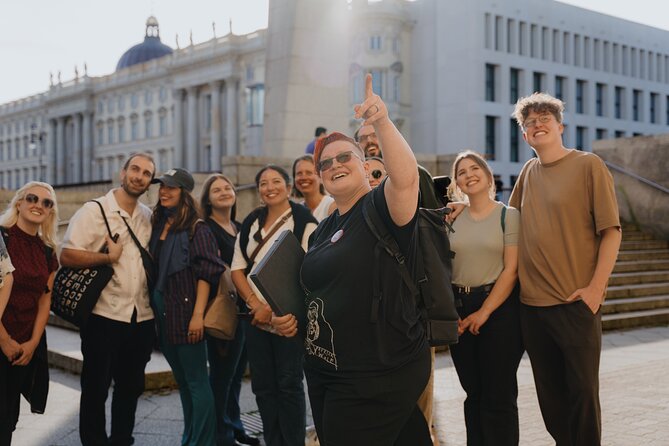
- A 2-kilometer route through central Berlin: Walk from the Red Town Hall to the World Time Clock in about two hours.
- History told through public spaces: See where political power, protest, religion, and daily life met in Berlin’s center.
- Unusual stories: Learn about the women of Rosenstraße and the young East German oppositionists behind the 1989 T-shirt protest.
- A sharp look at East Germany: Compare official socialist images with the events and omissions behind them.
- A small English-speaking group: The maximum group size is 15, with an expert guide included.
- Good value for history fans: At $30.04, the cost is mainly for interpretation and context, not admissions.
Why this route tells Berlin’s story so well
Many Berlin tours move from one famous monument to the next. This one works differently. It uses a compact section of the historic center to show how protest changed form over time.
You begin at the Red Town Hall, move through the medieval Nikolaiviertel, pass socialist monuments and reconstructed buildings, then finish at Alexanderplatz. The route covers centuries, but the focus remains clear: who held power, who challenged it, and how the city remembered those conflicts.
That approach is useful because Berlin’s past is not neatly separated into periods. A medieval uprising, a 19th-century revolution, Nazi persecution, and the fall of East German rule all took place in or near the same central district. As you walk, the city becomes a set of overlapping political stories rather than a row of unrelated sights.
The tour is offered in English and includes an expert guide. With only free-admission stops listed, your payment goes toward the guide’s research, explanation, and ability to connect details that are easy to miss when walking alone.
A few more Berlin trips to weigh up
- Berlin: Natural History Museum Entrance Ticket
★ 4.6 · 3,382 reviews - Berlin: World Heritage Cruise to Potsdam
★ 4.5 · 1,435 reviews - Berlin Historical Highlights Walking Tour
★ 4.9 · 657 reviews
Starting at the Red Town Hall and medieval Berlin
The meeting point is the Sculpture Aufbauhelferin near the Red Town Hall on Jüdenstraße. This is a practical central starting place, close to public transportation and surrounded by some of Berlin’s oldest urban stories.
The Red Town Hall gets about 15 minutes. Its terracotta reliefs form a timeline around the building, showing key moments in Berlin’s past. You will look for the city’s early origins and the cause of an important uprising in Berlin’s medieval history.
This opening stop does useful work. Before hearing about modern dictatorships and divided Germany, you get a reminder that public protest is not a recent Berlin habit. The city has long had tensions between authority and its residents.
The reliefs are also a good lesson in how governments present history. A timeline carved into a civic building is never just decoration. It selects events, gives them meaning, and tells you what a city wants remembered. Your guide can help turn the stonework into a discussion rather than a quick photo stop.
Nikolaiviertel and the remains of socialist Berlin
The walk continues into Nikolaiviertel, a district that can feel old at first glance but includes a major socialist reconstruction. You will see an example of what the tour calls socialist kitsch, built for Berlin’s 750th anniversary.
That phrase points to an important part of the city’s visual culture. East Berlin often rebuilt historic-looking spaces for modern political reasons. The result was neither a simple survival of the old city nor a fully modern district. It was a carefully designed version of the past.
You will also see the last remnants of the Palace of the Republic. The building once housed the East German parliament and served as one of the most famous entertainment venues in socialist East Berlin. Its double role matters. The palace was both a seat of government and a place where people went for an evening out.
This stop lasts about 10 minutes, so expect a focused explanation rather than a long architectural study. If you want to explore the district at length, plan to return later. During the tour, the point is to understand how East Germany used buildings, leisure, and historic settings to shape public life.
Gasthaus Mutter Hoppe and the history East Germany left out
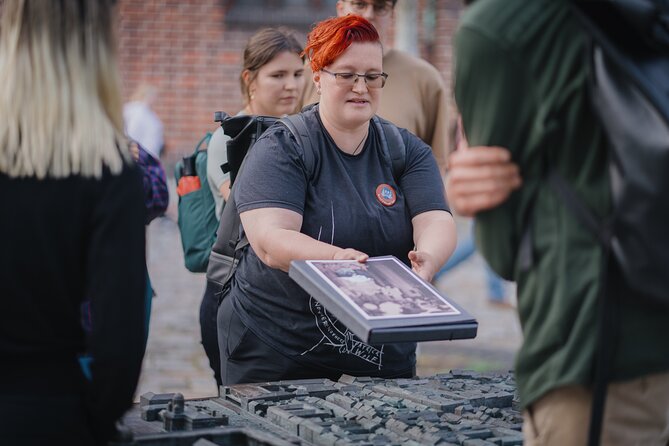
At Gasthaus Mutter Hoppe, the tour examines an East German answer to the Red Town Hall’s terracotta timeline. This version presents the main moments of the socialist country.
The interesting detail is not only what appears on the timeline, but what does not. The construction of the Berlin Wall is suspiciously absent. That omission gives you a direct way to think about official memory in East Germany.
A public history display can praise progress while avoiding the events that expose fear, division, or failure. Seeing two timelines near each other lets you compare how different political systems tell their own stories. It is a short stop of about five minutes, but it may be one of the most pointed moments of the walk.
Because the stop is connected to a restaurant, this is not a planned meal break. The tour information does not include food or drink, so do not count on eating here. Think of it as a visual and political stop.
Same city, a completely different kind of day:
- Berlin: Reichstag, Dome and Government District Guided Tour
★ 4.7 · 18,288 reviews - Berlin: 1-Hour City Tour by Boat with Guaranteed Seating
★ 4.3 · 16,993 reviews - Berlin: Boat Tour Along the River Spree
★ 4.4 · 11,252 reviews - Discover Berlin Half-Day Walking Tour
★ 5.0 · 9,624 reviews
Marx, Engels, and the argument over public monuments
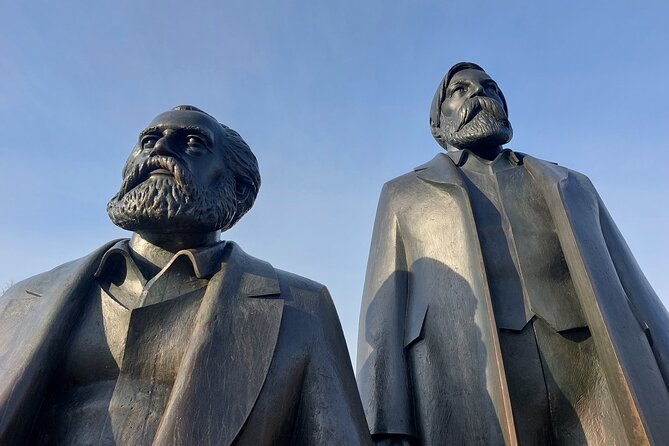
The Marx-Engels-Forum takes about 15 minutes. Here you meet the two authors of The Communist Manifesto, Karl Marx and Friedrich Engels, in statue form.
The monument has been debated for years, and that debate is part of its value. A statue does not remain politically neutral simply because the people it depicts are long dead. In Berlin, monuments linked to socialism raise questions about ideology, dictatorship, memory, and the difference between political theory and the governments that claimed to follow it.
I like this stop because it avoids a simple good-versus-bad reading. You can recognize Marx and Engels as major political thinkers while also examining the legacy of regimes that used communist language to justify one-party rule. The guide’s role is especially important here, since a statue on its own tells you very little.
This is also a strong point for questions. If you are curious about why the monument remains, how its setting has changed, or how Berlin handles uncomfortable symbols, this is a natural place to ask.
The Humboldt Forum and the March Revolution of 1848
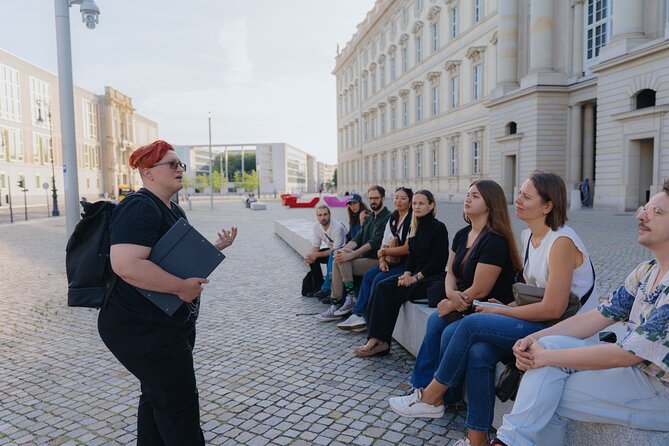
The Humboldt Forum brings you to the reconstructed Berlin Palace. Allow about 20 minutes here, the longest stop on the route.
The palace’s history is tied to several protests and revolutions, especially the March Revolution of 1848. That uprising helped plant the seeds of democracy in Germany, making the building more than a grand architectural reconstruction. It becomes a setting for the long, uneven struggle over representation and political rights.
The reconstruction itself gives this stop another layer. You are looking at a new building connected to an old royal site, then hearing how the original palace witnessed demands for political change. That contrast makes the stop useful for thinking about how Berlin rebuilds places while still arguing over what they mean.
The tour does not list entry to the Humboldt Forum, so expect to view and discuss it from the route rather than take an included museum visit. If you want to see the collections inside, arrange that separately and do not assume the two-hour walk leaves time for it.
Rosenstraße and one of Berlin’s most courageous protests
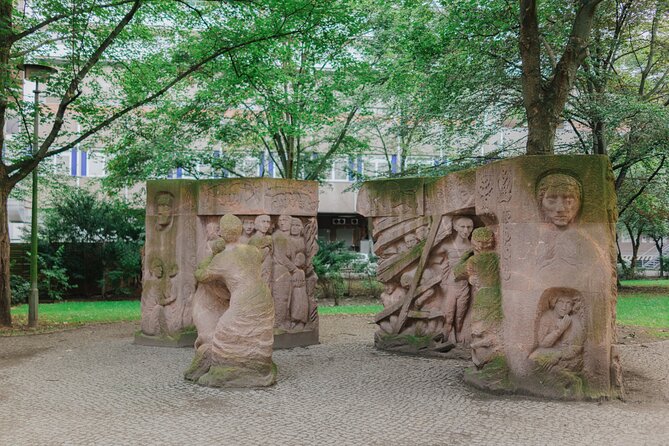
Rosenstraße may be the emotional center of the tour. The stop lasts about 15 minutes and focuses on the monument to women who protested in the bitter winter of 1943.
These women staged a courageous act of civil disobedience while Jewish men were being held nearby. The story also opens a window onto Jewish life under Nazi rule and the foundations of Berlin’s oldest synagogue.
The tour presents this as the only protest by Germans against the Final Solution, a claim that needs to be understood in the context of the regime’s terror and the many forms of resistance that existed. The key point is the risk involved. Public protest under Nazi rule was not a symbolic gesture. It could bring arrest, punishment, and death.
I value the stop because it puts individual action at the center of a period often taught through dates and military events. The women of Rosenstraße were not generals or famous politicians. Their protest shows how family ties, community pressure, and courage could challenge the machinery of persecution, even under extreme conditions.
The synagogue foundations also make the story physical. You are not hearing only about a vanished community. You are seeing traces of where Jewish life existed in the city.
St. Mary’s Church and Martin Luther King Jr. in Berlin
St. Mary’s Church is one of Berlin’s oldest churches, and the tour allows about 10 minutes here. Its place on the route broadens the idea of protest beyond party politics and street demonstrations.
The church is remembered for Martin Luther King Jr.’s sermon to a huge crowd in 1964. That visit connects Berlin to the wider struggle for civil rights and gives the building a modern political meaning alongside its religious and architectural past.
This stop may appeal to you if you like history that crosses national borders. King’s presence in divided Berlin offered a different way to think about justice, faith, and public life during the Cold War. The contrast between an old church and a 20th-century civil rights leader is exactly the kind of unexpected connection that makes a walking tour worthwhile.
The tour also points out Berlin’s Television Tower along the way. The tower is a city landmark and a symbol of communist power. It helps shift the story back toward East Berlin’s public image, where monumental architecture carried political messages.
The 1989 T-shirt protest at the Fountain of Friendship
Near the Brunnen der Völkerfreundschaft, or Fountain of Friendship Among Peoples, you turn to the Peaceful Revolution of 1989. This stop takes about 15 minutes.
The guide traces the events that led to the fall of the Berlin Wall, then focuses on young East German oppositionists who staged a T-shirt protest at the fountain in autumn 1989. The detail is memorable because it shows how protest could use ordinary clothing and public space when open political opposition was dangerous.
You may know the broad story of 1989: demonstrations grew, the East German government weakened, and the Wall fell. This stop helps fill in the human scale. The revolution was not only a dramatic television moment. It was built from smaller acts, shared ideas, and people testing what they could say in public.
The fountain is a useful setting because it was part of an official socialist city center. A place designed to express friendship and state power became connected with opposition. That change in meaning is one of the tour’s strongest themes.
Finishing at the World Time Clock in Alexanderplatz
The route ends at the Weltzeituhr, or World Time Clock, in Alexanderplatz. You spend about 15 minutes at this rotating clock, which displays the time in 148 cities around the world.
The clock is one of East Berlin’s best-known meeting places. Its practical purpose and distinctive design made it a natural landmark, but its location also links it to the public life of socialist Berlin.
Ending here works well. You have moved from historic civic buildings to monuments, churches, protest sites, and Cold War symbols. The clock turns your attention outward, toward a world larger than the divided city. It also gives you a clear endpoint by the Alexanderplatz station area.
The finish is not near the starting point, so you should be comfortable with a one-way walk. The stated distance is about 2 kilometers, making this a manageable route for most people, but you will be on your feet for roughly two hours.
What $30.04 buys you
At $30.04 per person, this is a fair price if you want a guided interpretation of central Berlin rather than admission to attractions. Every listed stop is free to visit, so the value comes from the connections among them.
I would compare this cost with the price of a standard sightseeing tour, but also with the time you would spend trying to research these stories yourself. The tour gathers medieval history, socialism, Nazi persecution, civil rights, and the 1989 revolution into one compact walk. That is useful on a short Berlin visit.
The value is strongest for history-minded people who already know the major headlines and want lesser-known details. It is less compelling if you mainly want panoramic views, interior visits, or a fast checklist of famous sights.
The maximum group size is 15. That is small enough to keep the walk personal without making it a private tour. A mobile ticket keeps the booking simple, and confirmation is provided at booking.
Practical details before you book
The tour is offered in English and starts at the Aufbauhelferin sculpture near the Red Town Hall on Jüdenstraße. It ends by the World Time Clock at Alexanderplatz.
You should allow about two hours and expect roughly 2 kilometers of walking. The route is near public transportation, and most people can participate. Service animals are allowed.
Because the experience requires good weather, check the forecast before setting out. If poor weather cancels the tour, you are offered another date or a full refund. You can also cancel for a full refund up to 24 hours before the start time. Cancellations or changes made later are not refunded or accepted.
Who should take this Berlin protest tour?
I would choose this walk if you want Berlin explained through political conflict and public memory. It is especially well suited to:
- First-time visitors who want a serious historical framework for central Berlin
- Repeat visitors looking for stories beyond the usual Wall and Nazi-era landmarks
- People interested in East Germany, socialism, and the events of 1989
- History students and readers who value careful local detail
- Berlin residents who want to see familiar streets differently
- Anyone who prefers a short walking route to a full-day excursion
I would think twice if you need a wheelchair-specific route plan, since detailed accessibility information is not provided. I would also skip it if rain is likely or if your main goal is to visit museum interiors.
Should you book it?
Book this tour if the idea of reading Berlin through its protests appeals to you. The route is short, the group is limited, and the stories reach well beyond the city’s standard talking points.
The best reason to go is the mix of scale. You get major events such as the 1848 revolution and the fall of the Wall, but also small details such as an omitted date on a socialist timeline and a T-shirt protest by young East Germans. Those details help you understand how power works in everyday places.
At $30.04, it is a sound buy for an English-speaking history walk with no entry fees to manage. Just arrive ready to listen, walk from the Red Town Hall to Alexanderplatz, and treat the buildings as evidence rather than scenery.
FAQ
How long is the Berlin Protest History Tour?
The tour lasts approximately two hours and covers about 2 kilometers on foot.
Where does the tour start?
It starts at the Sculpture Aufbauhelferin near the Red Town Hall on Jüdenstraße in Berlin.
Where does the tour end?
The tour ends at the World Time Clock, or Weltzeituhr, in Alexanderplatz.
Is the tour offered in English?
Yes. English is the listed language for the experience.
How many people can join the tour?
The maximum group size is 15 participants.
Can I cancel for a full refund?
Yes. You must cancel at least 24 hours before the experience start time for a full refund. If poor weather causes the tour to be canceled, you will be offered another date or a full refund.
Just added around Berlin
- Love and War in Berlin: Self-Guided Story Puzzle Walk★ 5.0 · 7 reviews
- Rickshaw Tours Berlin – Groups of up to 16 people with several rickshaws★ 4.0 · 97 reviews
- Walking on the Wall: 3-Hour Tour in Berlin★ 4.5 · 34 reviews
- eSIM for Germany and 34 European Countries★ 4.5 · 16 reviews
- Warnemuende Shore Excursion: Berlin Private Sightseeing Tour from Rostock★ 5.0 · 4 reviews
- Your ticket to The Wall Museum Berlin★ 3.0 · 60 reviews
- Warnemuende Shore Excursion: Private Berlin Tour★ 4.5 · 27 reviews
- Berlin’s Gay, Lesbian, and Queer Scene Small-Group Walking Tour★ 4.5 · 66 reviews
Historical Tours, compared.

City History Canal Sightseeing Tour on a Motorboat
Read our review →






Browse the lists this tour appears in