
Reviewed · BERLIN TOURS
Berlin: Modernist Architecture Tour in the Hansaviertel
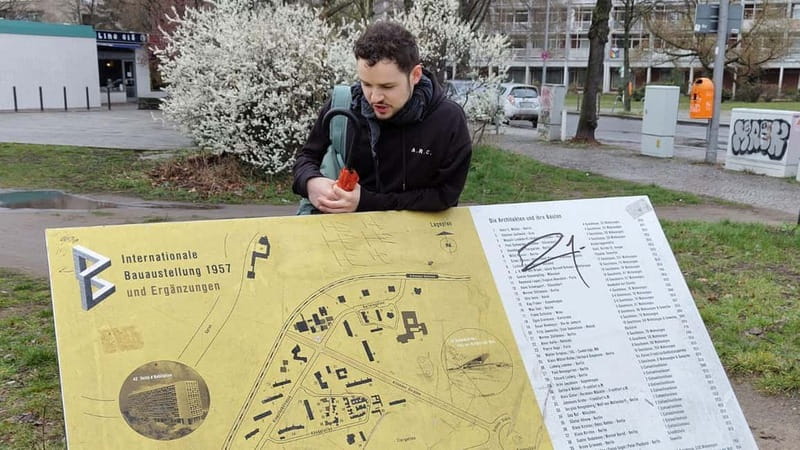
Hansaviertel is where Berlin’s Cold War argument was built in concrete, glass, and open space. This two-hour walk takes you from 19th-century villas and Jewish history to the remarkable modernist housing created for Interbau 1957. I like the sharp change of mood, from quiet streets and gardens to buildings by Walter Gropius, Oscar Niemeyer, and Alvar Aalto. I also like that the tour asks how architecture shaped daily life, rather than treating famous buildings as photo stops.
The main consideration is pace. You will walk and stand for about two hours, with plenty of historical explanation, so this suits curious visitors aged about 14 and up better than young children looking for quick sightseeing. The route is wheelchair accessible, but it is still worth confirming the exact path and finish point when booking, since the details describe both Hansaplatz and the original meeting point as the end.
In This Review
- Key points of the Hansaviertel walk
- Why Hansaviertel makes such a good Berlin walk
- Starting beside the Tiergarten S-Bahn station
- Hansaviertel before the war
- A quiet memorial to Jewish life
- Interbau 1957 and the Cold War city
- Meeting Gropius, Niemeyer, Aalto, and more
- What the two-hour format gives you
- Price, access, and practical details
- Who should book the Hansaviertel tour?
- Should you book it?
- FAQ
- Where does the Hansaviertel tour start?
- Where does the tour finish?
- How long does the tour last?
- What languages are available?
- Is the tour wheelchair accessible?
- Is food included?
- What age is the tour suitable for?
- Can I cancel for a refund?
Key points of the Hansaviertel walk
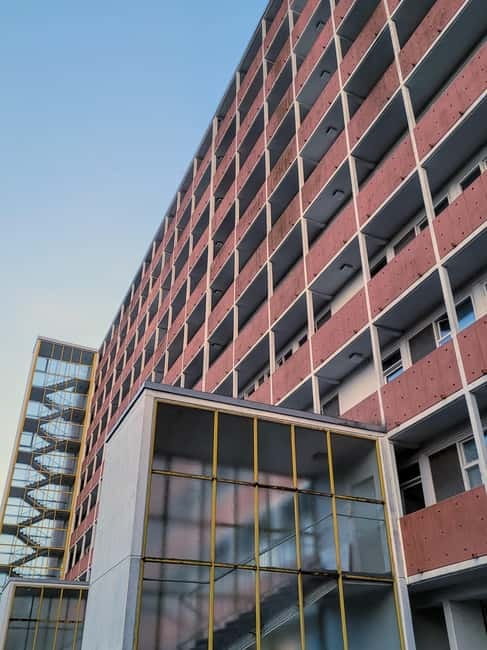
- Interbau 1957 turned war-damaged ground into a Cold War showcase, using housing and public space to present a hopeful West Berlin.
- Architectural names come thick and fast, including Walter Gropius, Oscar Niemeyer, and Alvar Aalto.
- The older Hansaviertel adds human scale, with 19th-century villas, gardens, and connections to Rosa Luxemburg, Nelly Sachs, and Käthe Kollwitz.
- A Jewish memorial site gives the tour moral weight, showing what Nazi persecution and wartime destruction erased.
- Guide Morgan explains the story in a lively, flexible way, with room for questions and side discussions.
- The $23 price is fair for a focused two-hour walking tour, especially if modern architecture is high on your Berlin list.
Why Hansaviertel makes such a good Berlin walk
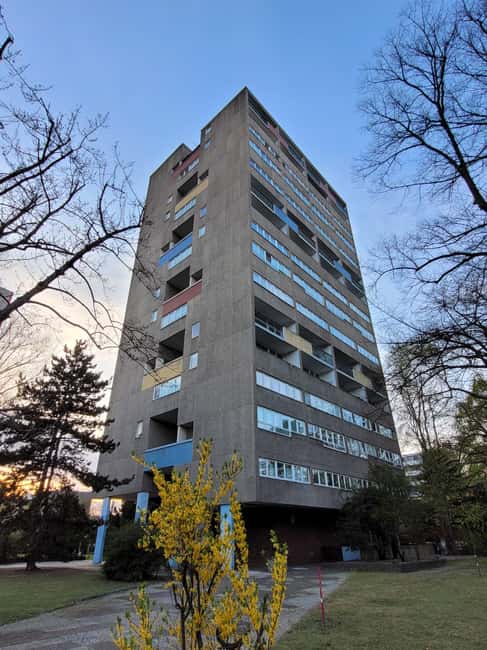
Berlin has plenty of grand monuments, but Hansaviertel offers something different. It is not a single building or famous square. It is a whole district where changes in politics, society, and design are written into the streets.
The neighborhood sits between the Spree and the Tiergarten, close to central Berlin but removed from the usual sightseeing circuit. Its leafy setting matters. You can see why planners once imagined it as a civilized modern district, yet you are never far from reminders that this calm was rebuilt after violence and loss.
I like the way the tour starts before the modernist buildings appear. That choice prevents Hansaviertel from becoming a dry architecture lesson. You first learn what the area was like when Berlin was expanding rapidly in the late 19th century, then see how war and ideology changed it.
Other Berlin days worth putting on the list:
- Berlin: Reichstag, Dome and Government District Guided Tour
★ 4.7 · 18,288 reviews - Berlin: 1-Hour City Tour by Boat with Guaranteed Seating
★ 4.3 · 16,993 reviews - Berlin: Boat Tour Along the River Spree
★ 4.4 · 11,252 reviews
Starting beside the Tiergarten S-Bahn station
The meeting point is in front of the Berlin-Tiergarten S-Bahn station, at the Siegmunds Hof and Bachstraße exit, next to Biergarten der Tiergartenquelle. Look for the guide with the orange umbrella.
This is a practical starting point. The S-Bahn puts the district within easy reach of central Berlin, and the nearby beer garden gives you a clear landmark. Food and drinks are not included, so you can arrive with water or make your own plans before or after the walk.
The opening stop is not a formal attraction. It is a gathering place that helps you get oriented before moving into the neighborhood. Wear comfortable shoes, since the tour is entirely on foot and includes standing while the guide explains buildings and events.
Hansaviertel before the war
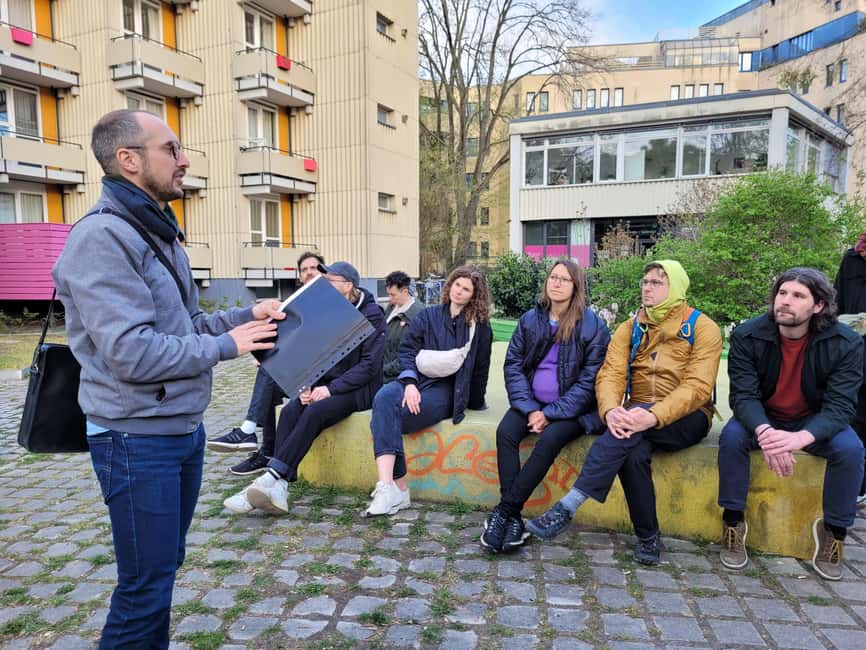
The first part of the walk looks at the district as a 19th-century middle- and upper-class quarter. Berlin’s population was growing fast, and Hansaviertel developed as an attractive residential enclave with villas, gardens, and elegant façades.
This earlier layer is easy to miss if you come only for Interbau. The older buildings and street pattern help you understand that the area was not an empty building site waiting for modernism. It had its own social life and identity before the war.
The tour also connects Hansaviertel to notable residents such as Rosa Luxemburg, Nelly Sachs, and Käthe Kollwitz. These names place the district in Berlin’s wider cultural and political story. You are not simply looking at architectural styles. You are considering who lived here, what kind of city they inhabited, and how much was later lost.
The old Hansaviertel also provides a useful contrast. Villas suggest privacy, status, and individual ownership. The postwar buildings nearby were planned around shared open space and a more collective idea of urban living. That contrast is one of the tour’s strongest teaching tools.
A quiet memorial to Jewish life
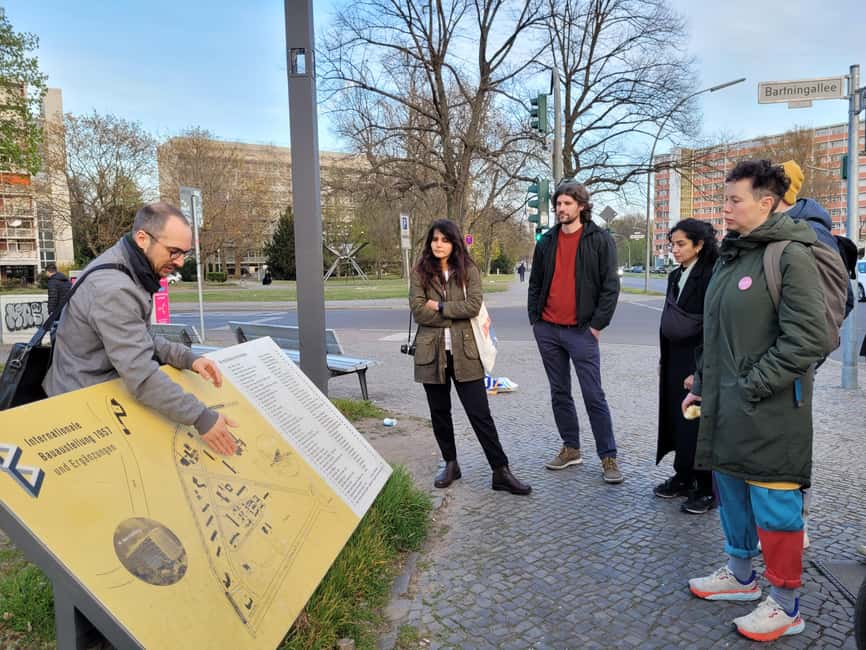
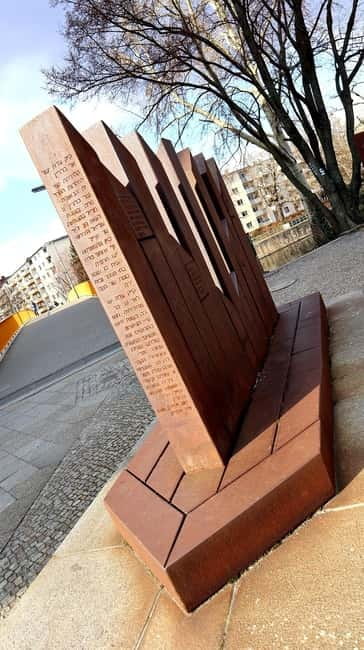
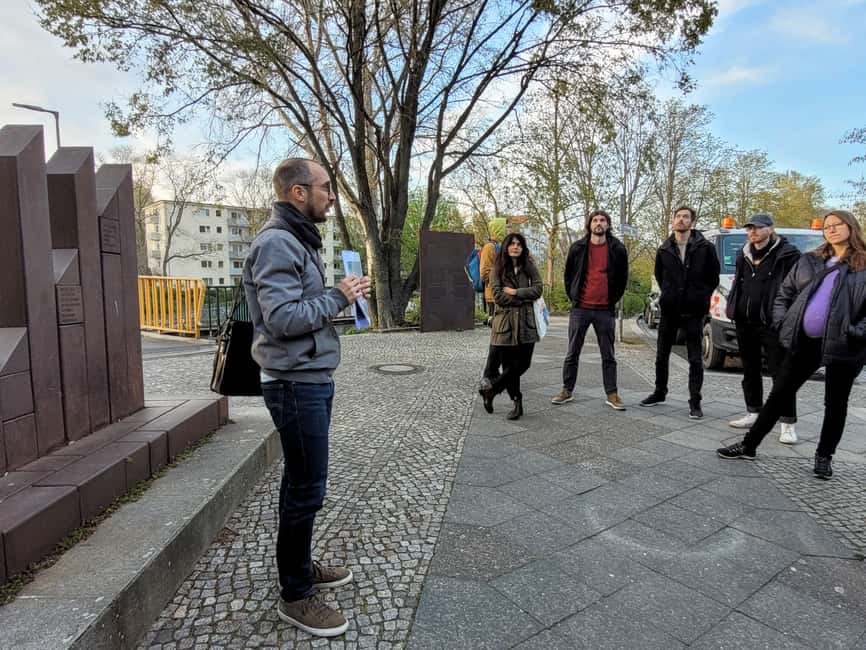
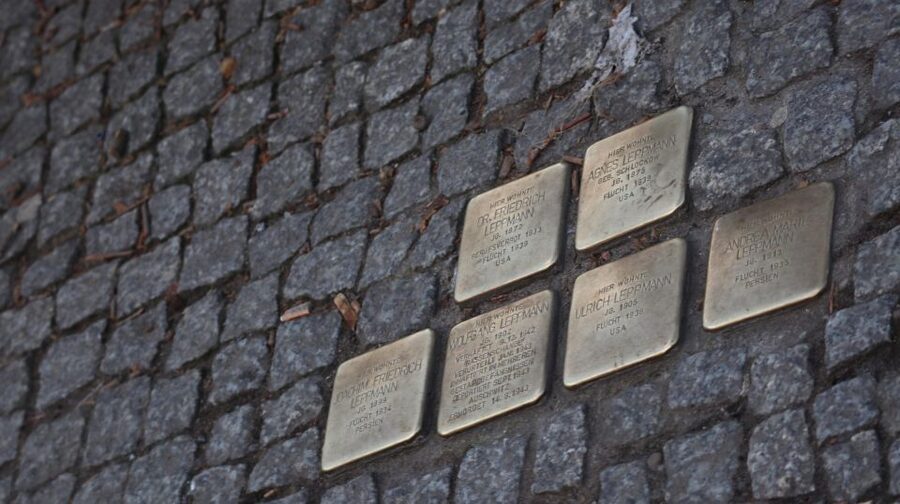
The walk then reaches a memorial at the site of one of Berlin’s significant Jewish communities. The neighborhood was destroyed socially by Nazi persecution and physically by a combination of war damage and Allied bombing.
This stop changes the tone of the tour. It keeps the modernist story from becoming a cheerful tale of new buildings rising from rubble. Hansaviertel was not just a blank canvas for architects. Real communities had lived there, and the destruction had both human and physical costs.
I value this part because it gives the later architecture a necessary context. The postwar rebuilding of West Berlin carried hope, but it also took place among absences. A sleek apartment block can represent progress while still occupying ground marked by persecution and loss.
The supplied information does not specify entry to a museum or monument, and admission is not included. Think of this as an outdoor history stop, with the guide providing the context as you walk.
Same city, a completely different kind of day:
- Discover Berlin Half-Day Walking Tour
★ 5.0 · 9,624 reviews - Berlin: Hop-on Hop-off Bus Tour with Live Commentary
★ 4.3 · 8,579 reviews - Berlin: Government District around the Reichstag Guided Tour
★ 4.7 · 8,447 reviews - Berlin: Reichstag, Plenary Chamber, Cupola & Government Tour
★ 4.6 · 8,422 reviews
Interbau 1957 and the Cold War city
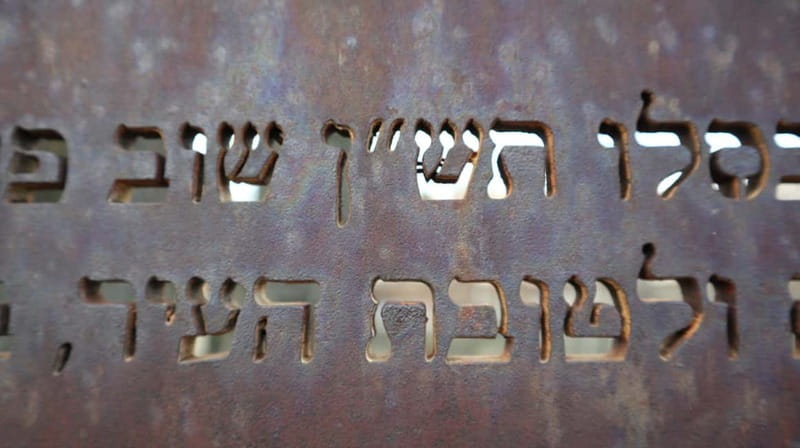
The centerpiece is Interbau 1957, an international architecture exhibition that reshaped Hansaviertel after World War II. West Berlin used the project to show how a modern democratic city might live, grow, and present itself.
Architecture was political here. Across the divided city, competing systems were offering different visions of the future. Hansaviertel became a showcase for West Berlin, using new housing, open areas, and striking designs to make a public argument about modern life.
The buildings were not meant only to look unusual. They were intended to offer a different way of living, with light, space, fresh air, and a break from the dense blocks associated with older industrial cities. The guide explains the ideas behind the buildings and asks whether those promises still make sense today.
That question makes the walk more useful than a quick list of famous architects. You will consider what modernism wanted to fix, what it may have overlooked, and how residents experienced the results. Some designs feel elegant and calm. Others can seem bold or provocative. Seeing them together lets you judge the district as a working neighborhood rather than a museum display.
Meeting Gropius, Niemeyer, Aalto, and more
Hansaviertel’s great attraction is the chance to see work by several major 20th-century architects in one compact area. Walter Gropius, Oscar Niemeyer, and Alvar Aalto are among the names connected to the project.
Each architect brought a different answer to the same basic problem: how should people live in a city rebuilt after catastrophe? The value of a guide becomes clear here. Without context, you may notice curved forms, balconies, towers, or open lawns but miss the debate behind them.
A strong guide can point out how buildings relate to one another, how open space was used, and how the district differed from older Berlin housing. The tour information describes the architecture as elegant, experimental, and sometimes provocative. Those are useful categories, but you will get more from the walk if you pay attention to the practical question: would you actually want to live in these buildings?
Morgan has led the tour and is described as taking participants through the old and modern parts of Hansaviertel in a lively way. The feedback specifically notes that Morgan handles a wide range of questions and can follow interesting side conversations without losing the thread. That matters on a tour like this, because architecture often raises personal questions about comfort, privacy, beauty, and public space.
The tour is offered in English or German. If you care about a particular guide, check the available date and language rather than assuming Morgan will lead every departure.
What the two-hour format gives you
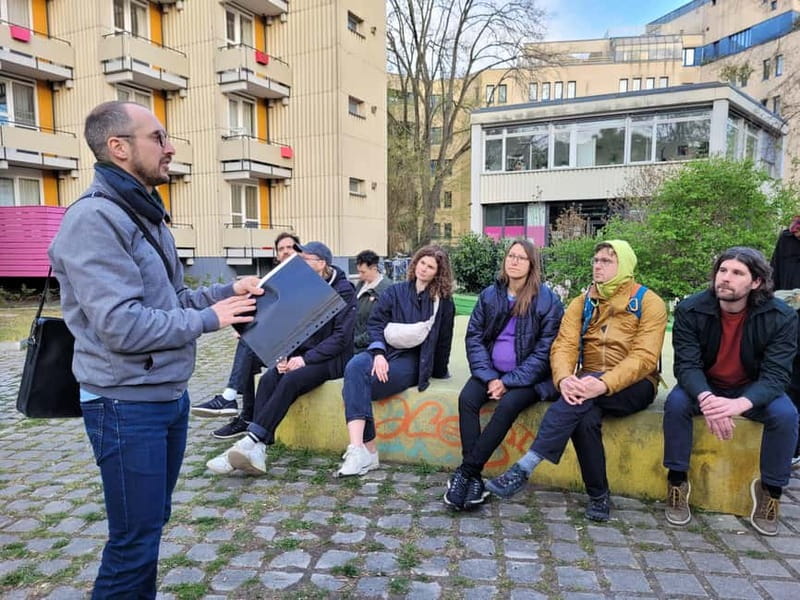
Two hours is enough to form a clear picture of Hansaviertel without consuming half your day. You get the district’s older character, the Jewish memorial, the wartime and Cold War context, and a substantial look at Interbau’s buildings.
The tradeoff is that the tour cannot provide a full architectural survey. You should not expect detailed interior access, extended museum visits, or a room-by-room study of each building. Entry to museums and monuments is not included, and the emphasis is on outdoor interpretation.
For most visitors, that is a sensible format. Hansaviertel makes sense as a walking district, and the buildings are best understood in relation to their streets, gardens, and neighbors. You will come away with a framework for looking at the area on your own afterward.
The historical content is serious. The recommended age is 14 and up, and all minors must be accompanied by an adult. I would follow that advice. Teenagers interested in cities, design, politics, or 20th-century history may find it rewarding, but younger children may struggle with the long explanations and difficult subject matter.
Price, access, and practical details
At $23 per person, this is a reasonably priced specialist tour. You are paying for an expert local guide rather than entrance tickets, transport, food, or drinks. If you already plan to visit Berlin’s major museums and monuments, this walk adds a different kind of value: guided access to an entire district that costs nothing to enter but is easy to misunderstand on your own.
The tour is wheelchair accessible, though a walking route can still involve uneven surfaces, pauses, and standing. The supplied information does not give a group size or detailed surface information, so ask ahead if you need specific mobility arrangements.
You can cancel up to 24 hours before the activity for a full refund, and the reserve-now, pay-later option keeps your schedule flexible. Those policies are useful in Berlin, where weather and changing plans can affect how much walking you want to do.
Bring water and comfortable shoes. There is no stated meal stop, and food and drinks are not included. The meeting point is easy to identify by the orange umbrella, but check the end location carefully. The route is described as finishing at Hansaplatz, while the meeting information also says the activity ends back at the meeting point.
Who should book the Hansaviertel tour?
I would recommend this walk if you want to see a side of Berlin beyond the Brandenburg Gate, Reichstag, and Museum Island. It is especially useful if modern architecture interests you, but you do not want a tour that talks only about façades and dates.
It also suits anyone who wants to understand how the Cold War shaped everyday urban life. Hansaviertel shows that political competition was not confined to speeches and border crossings. It appeared in apartment design, public space, housing policy, and the image a city wanted to project.
History-focused visitors will appreciate the Jewish memorial and the discussion of Nazi persecution and wartime destruction. The tour does not separate architecture from human history, which gives the subject greater weight.
I would think twice if you want a short, highly visual photo walk with little commentary. The route is built around explanation and discussion. You should also reconsider if two hours of walking and standing feels too demanding, or if your children are under 14 and unlikely to engage with serious historical material.
Should you book it?
Book this tour if you want Berlin explained through one neighborhood rather than a parade of famous sights. For $23, you get a focused route through villas, memory sites, and internationally important modernist buildings, with the Cold War tying the story together.
The strongest reason to go is the range. In two hours, Hansaviertel gives you social history, Jewish history, wartime destruction, modern design, and the politics of divided Berlin. Check the guide, language, and finish point when choosing a departure, then bring water and shoes suited to walking. If you do that, this is a smart addition to a Berlin itinerary.
FAQ
Where does the Hansaviertel tour start?
It starts in front of the Berlin-Tiergarten S-Bahn station, at the Siegmunds Hof and Bachstraße exit, next to Biergarten der Tiergartenquelle. Look for the guide with the orange umbrella.
Where does the tour finish?
The route is described as ending at Hansaplatz. The meeting information also says the activity ends back at the meeting point, so confirm the exact finish location when booking.
How long does the tour last?
The activity lasts two hours. The guided Hansaviertel portion is listed as approximately one and a half hours within the overall activity time.
What languages are available?
The live tour guide is available in English or German. Check the language offered for your chosen departure.
Is the tour wheelchair accessible?
Yes, the activity is listed as wheelchair accessible. Because it is a walking tour with standing, you may still want to confirm route details if you have specific mobility needs.
Is food included?
No. Food and drinks are not included, so bring water and make separate plans for refreshments.
What age is the tour suitable for?
There is no strict age restriction, but it is recommended for ages 14 and up because of the historical content. All minors must be accompanied by an adult.
Can I cancel for a refund?
Yes. You can cancel up to 24 hours in advance for a full refund. The reserve-now, pay-later option also lets you book without paying immediately.
Just added around Berlin
- Love and War in Berlin: Self-Guided Story Puzzle Walk★ 5.0 · 7 reviews
- Rickshaw Tours Berlin – Groups of up to 16 people with several rickshaws★ 4.0 · 97 reviews
- Walking on the Wall: 3-Hour Tour in Berlin★ 4.5 · 34 reviews
- eSIM for Germany and 34 European Countries★ 4.5 · 16 reviews
- Warnemuende Shore Excursion: Berlin Private Sightseeing Tour from Rostock★ 5.0 · 4 reviews
- Your ticket to The Wall Museum Berlin★ 3.0 · 60 reviews
- Warnemuende Shore Excursion: Private Berlin Tour★ 4.5 · 27 reviews
- Berlin’s Gay, Lesbian, and Queer Scene Small-Group Walking Tour★ 4.5 · 66 reviews
Berlin Tours, compared.

Reichstag, Dome and Government District Guided Tour
Read our review →
1-Hour City Tour by Boat with Guaranteed Seating
Read our review →


Reichstag, Plenary Chamber, Cupola & Government Tour
Read our review →

