
Reviewed · HISTORICAL TOURS
Berlin: Historic Center Walking Tour with a Real Berliner
Berlin’s story comes into focus on foot. In two hours, this walk connects the small trading settlement around the Spree with the royal capital of Prussia, the divided Cold War city, and today’s reunited Germany. You will not just tick off landmarks. You will see how one part of Berlin grew layer by layer.
I like the route’s strong sense of place and its useful sequence. Starting at St. Nicholas’ Church, you move through the oldest core of Berlin before reaching Museum Island, Unter den Linden, and Brandenburg Gate. I also like that the walk gives attention to more than World War II, a point that matters in Berlin, where the city’s medieval, royal, Nazi, Communist, and modern chapters all compete for attention.
The main consideration is pace. Two hours is enough for an excellent introduction, not for museum interiors or long stops at every monument. You will be outdoors in all weather, and the route is best enjoyed in comfortable shoes. The tour costs $44 per person, which is reasonable if you want historical context and orientation early in your stay, but less appealing if you prefer to explore each site independently.
In This Review
- Key points at a glance
- Why this two-hour Berlin walk works
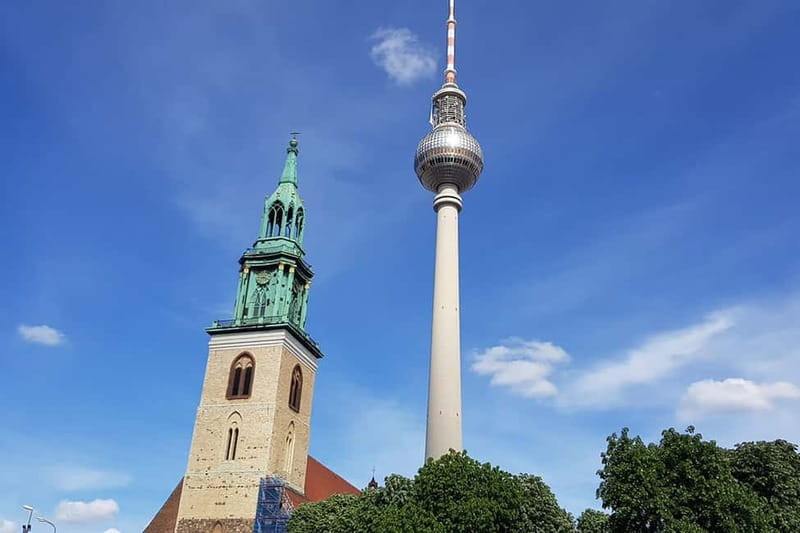
- Starting in Nikolaiviertel and at St. Nicholas’ Church
- Along the Spree to Museum Island
- The Humboldt Forum and the reconstructed palace
- Crossing the Palace Bridge into royal Berlin
- Unter den Linden, Berlin’s grand central avenue
- Arriving at Brandenburg Gate
- What the $44 price buys you
- Who should book this experience?
- Practical advice before you go
- FAQ
- How long does the Berlin historic center walking tour last?
- Where does the tour begin?
- Which sights are included on the route?
- Is the tour offered in English?
- Is the walking tour wheelchair accessible?
- What happens if it rains?
- Should you book the Berlin historic center walk?
Key points at a glance
- Begin at Berlin’s oldest core: Meet outside the main entrance of the St. Nicholas’ Church Museum in Nikolaiviertel.
- Follow a carefully layered route: The walk moves from medieval Berlin to Prussian grandeur, then to the symbols of reunification.
- See major landmarks from outside: Museum Island, Berlin Cathedral, Humboldt Forum, State Opera, Humboldt University, and Brandenburg Gate all feature along the way.
- Hear more than wartime stories: The guide covers Berlin’s rise from a Spree-side trading village to the capital of a reunited Germany.
- Expect a personal guiding style: Carlo is one guide associated with this experience and is praised for clear explanations, warmth, and patience with questions.
- Useful for a first day: The route helps you understand the central districts and get your bearings without needing public transportation between stops.
Why this two-hour Berlin walk works
Berlin can be difficult to read at first. Important places are spread across a large city, and many buildings carry several layers of meaning. A good introductory walk gives you a framework, so later visits to the museums, memorials, and former Wall sites make more sense.
This experience keeps its focus on Mitte, the central district. That makes the route manageable and gives you a coherent story rather than a quick survey of disconnected sights. You walk beside the Spree, cross the historic center, follow Unter den Linden, and finish at Brandenburg Gate.
The guide speaks English, and the tour is described as led by a professional, certified, multilingual city guide. Carlo is named in several comments connected with the experience. If he is leading your walk, you can expect a guide who explains complicated events in plain language, welcomes questions, and may help you find onward transportation after the tour.
The small-group experience can also feel personal. One booking became a private walk when only two people had reserved, and another person received the full tour alone rather than having it canceled. Group size can vary, so do not assume every departure will be private, but the operator has shown a willingness to run the walk with very few people.
A few more Berlin trips to weigh up
- Berlin: Natural History Museum Entrance Ticket
★ 4.6 · 3,382 reviews - Berlin: World Heritage Cruise to Potsdam
★ 4.5 · 1,435 reviews - Berlin Historical Highlights Walking Tour
★ 4.9 · 657 reviews
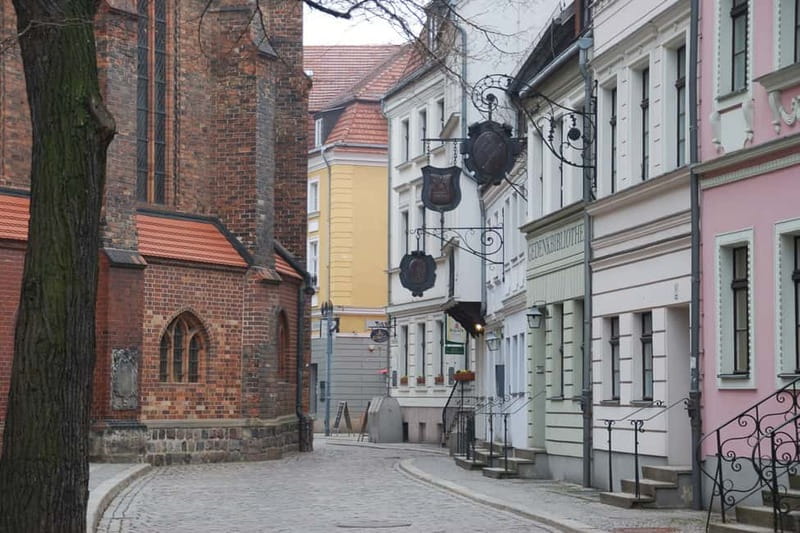
Starting in Nikolaiviertel and at St. Nicholas’ Church
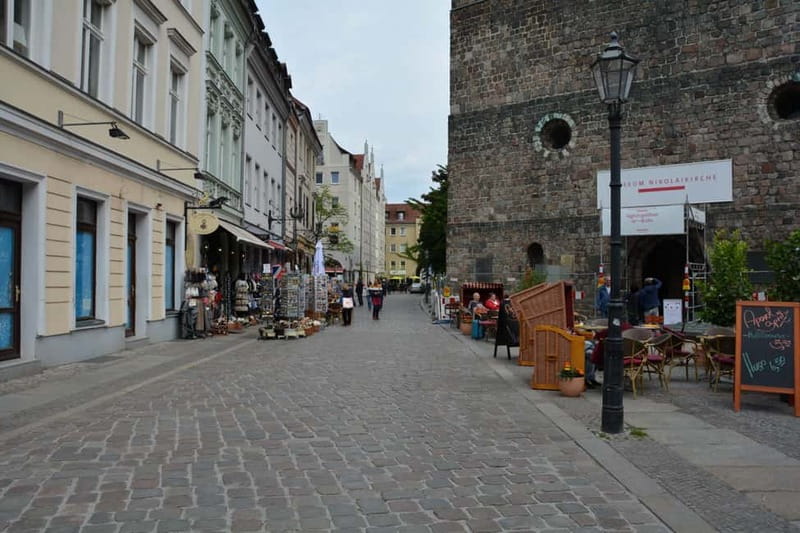
Your meeting point is in front of the main entrance of the Nikolaikirche Museum, or St. Nicholas’ Church Museum. Look for the guide with the Get Your Guide, You in Berlin flag.
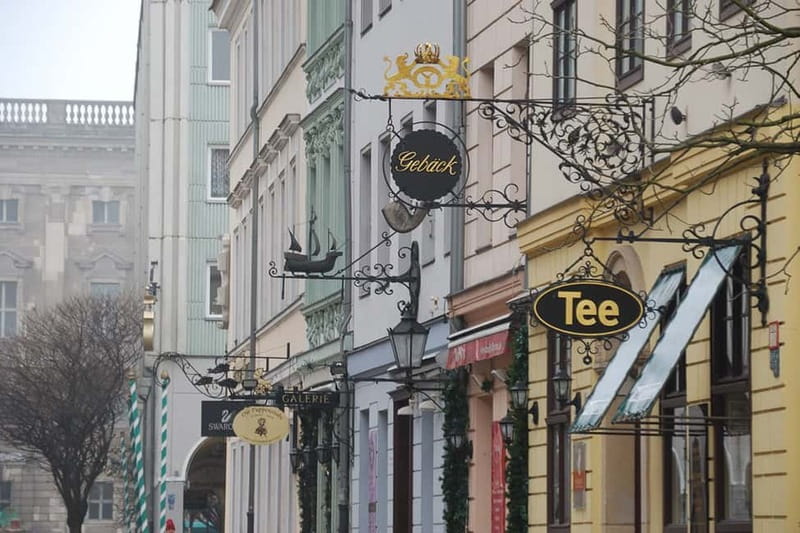
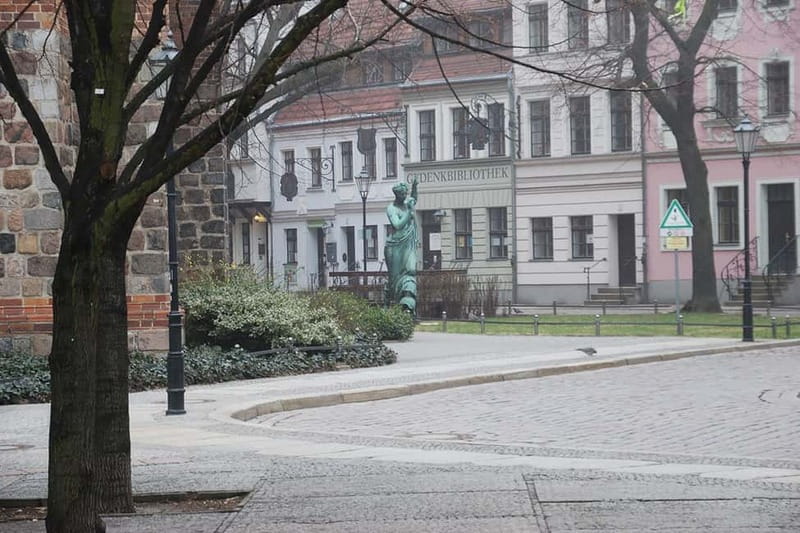
This is a fitting place to begin. Nikolaiviertel is tied to the origins of Berlin, and the area helps you picture the city before royal avenues and monumental government buildings took over the center. The church itself is part of the story of Berlin’s early development.
The opening section is not simply a warm-up walk. It establishes the basic question behind the tour: how did a small settlement on the River Spree become a major European capital? Your guide can place the older neighborhood within the wider story before the route moves toward the grander buildings of the monarchy.
You should arrive ready to walk right away. The tour does not include hotel pickup, food, or drinks, so plan those separately. Since the walk runs in all weather and on public holidays, bring weather-appropriate clothing and shoes that can handle two hours on city streets.
Along the Spree to Museum Island
From the historic center, the route follows the Spree toward Museum Island. This part gives you a pleasant change of scale. The older streets and reconstructed buildings around Nikolaiviertel give way to a major cultural district shaped by royal ambition and state power.
Museum Island is home to some of Berlin’s best-known museums, but this walking tour focuses on the exterior setting and the story around it. You see the Berlin Cathedral, the Old Museum, and the Humboldt Forum. The guide explains why this small island became such an important center for art, scholarship, and public culture.
The Berlin Cathedral is one of the most recognizable buildings in central Berlin. Its large dome and formal setting make it an easy landmark for orientation, while its location beside the river shows how closely Berlin’s public buildings are tied to the Spree.
The Old Museum adds another piece to the picture. Its classical design reflects the taste of the Prussian court and the way rulers used architecture to present Berlin as a serious European capital. You get useful context from the outside, but you should not expect time to tour the museum collections during this walk.
That limitation is worth keeping in mind. If you want to visit the museums, treat this tour as a preview and return later with a separate admission ticket and several hours available.
The Humboldt Forum and the reconstructed palace
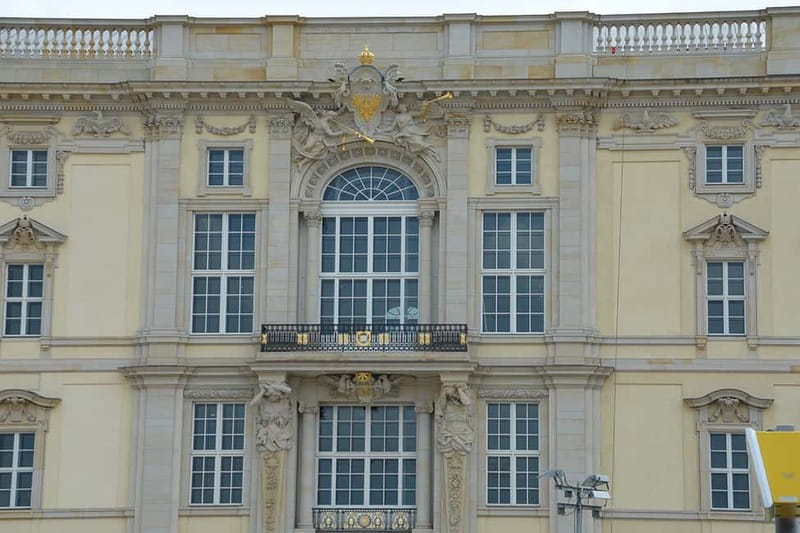
The Humboldt Forum is one of the most debated and visually striking buildings on the route. It occupies the site associated with the former Berlin City Palace and presents a reconstructed baroque exterior, while its modern interior serves new cultural purposes.
The building gives your guide a chance to explain how Berlin handles a difficult past. The city has repeatedly rebuilt, removed, and reinterpreted its central monuments. Here, royal architecture has been recreated in a modern city that also wants to confront the legacies of empire, war, dictatorship, and division.
You will see the reconstructed Berlin City Palace rather than enter it as part of the walking tour. That is enough to understand its importance in the streetscape, but anyone especially interested in the building’s collections or design should schedule a separate visit.
I find this stop especially useful because it prevents Berlin from becoming a city story told only through ruins and memorials. The capital also contains deliberate reconstructions, arguments about national identity, and modern efforts to decide what belongs in the historic center.
Same city, a completely different kind of day:
- Berlin: Reichstag, Dome and Government District Guided Tour
★ 4.7 · 18,288 reviews - Berlin: 1-Hour City Tour by Boat with Guaranteed Seating
★ 4.3 · 16,993 reviews - Berlin: Boat Tour Along the River Spree
★ 4.4 · 11,252 reviews - Discover Berlin Half-Day Walking Tour
★ 5.0 · 9,624 reviews
Crossing the Palace Bridge into royal Berlin
The route continues across the Palace Bridge, or Schlossbrücke. From here, Berlin’s historic center takes on a more formal character. The buildings and avenues reflect the era when Berlin served as the residence city of the Kingdom of Prussia and later the imperial capital.
The bridge itself is a good viewing point. You can look back toward Museum Island and ahead toward the grand axis of Unter den Linden. The change in architecture helps you understand that Berlin was not built all at once. It expanded from a modest river settlement into a capital designed to project authority.
This is where a guide adds real value. On your own, you can photograph the buildings, but it is harder to know why they were placed here, how royal power shaped the city, and how the same spaces were used after the monarchy disappeared.
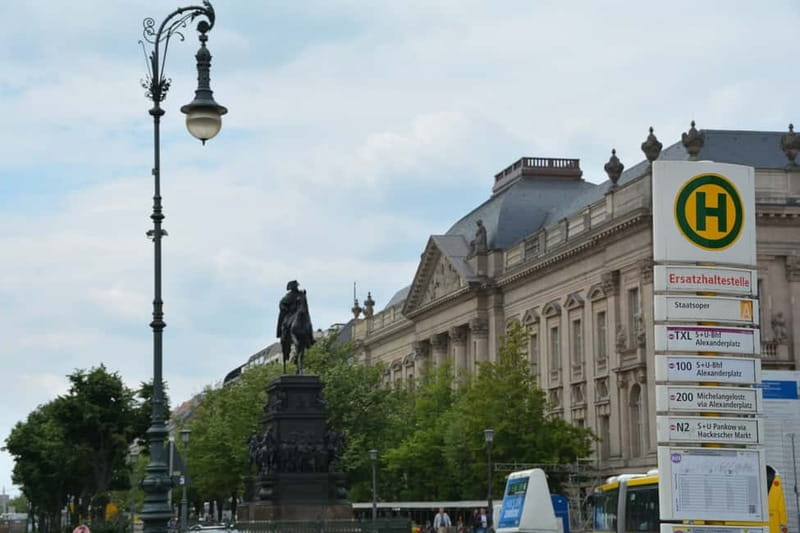
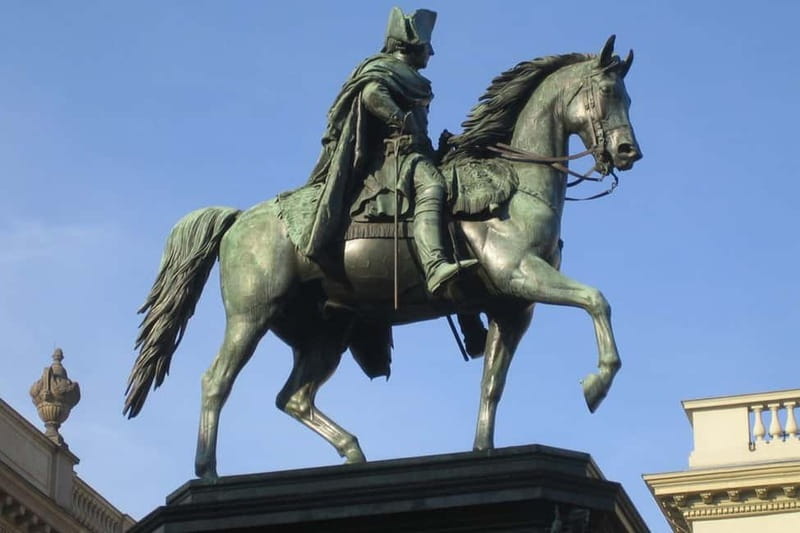
The walk includes the Equestrian Statue of Frederick the Great, a powerful reminder of Prussia’s role in Berlin’s growth. Frederick’s image points to military power, state organization, and the rulers who helped turn Berlin into a major capital.
The tour does not offer a full treatment of every Prussian king, and that is sensible. The aim is to connect the monuments to the city’s development without getting trapped in a long lecture about royal genealogy.
Unter den Linden, Berlin’s grand central avenue
Unter den Linden is Berlin’s oldest boulevard and one of the most rewarding stretches of the route. Its name refers to the linden trees that line the avenue, but the important point for you is its role as a ceremonial and intellectual spine.
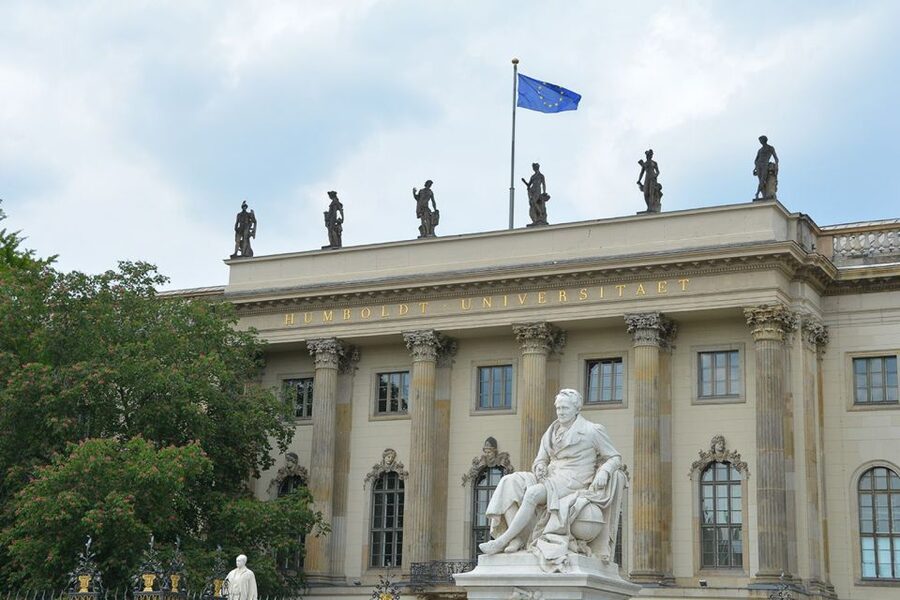
Along the way, you see the Berlin State Opera, Humboldt University, and St. Hedwig’s Cathedral. Together, these buildings show the range of institutions that shaped the capital: court culture, education, music, religion, and public life.
The State Opera brings the royal and cultural sides of Berlin together. The building is part of the grand urban setting that connected the palace with other major institutions. Humboldt University adds the world of scholarship and public debate, while St. Hedwig’s Cathedral gives the avenue a religious landmark with a distinctive place in Berlin’s story.
This section rewards careful listening. The buildings are close together, but their histories are not interchangeable. A good explanation helps you see how the avenue worked as more than a pretty street. It was a showcase for the state and a setting for institutions that helped shape German intellectual and cultural life.
You may also appreciate the guide’s ability to adjust the pace. A comment about the tour describes the guide finding places for participants to sit during the walk, which suggests some flexibility when people need a pause. Still, do not treat this as a seated tour. It remains a two-hour city walk, and comfortable shoes are essential.
Arriving at Brandenburg Gate
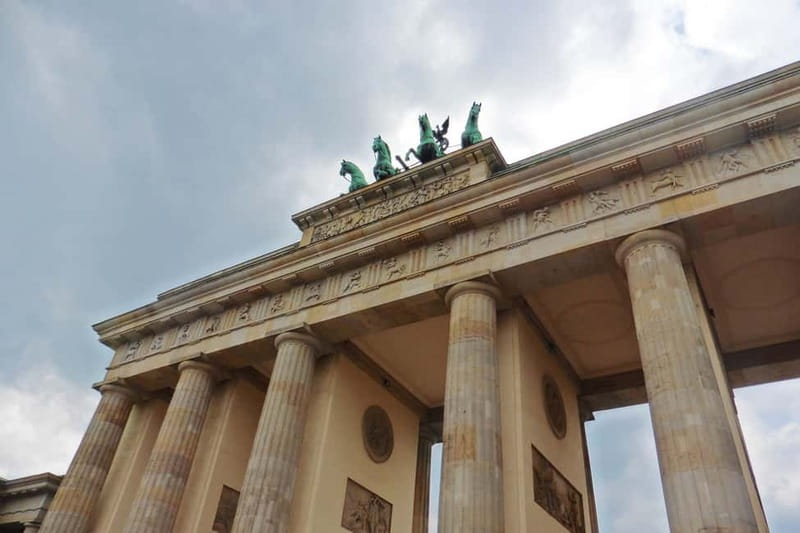
Brandenburg Gate is the route’s final major landmark and the natural place to bring Berlin’s modern political story together. It began as a royal city gate, but its meaning changed dramatically over time.
Your guide explains the gate before, during, and after Berlin’s division. During the Cold War, it stood near the border between East and West Berlin and became a symbol of a city cut in two. In 1990, it became a focal point for reunification, turning an old royal monument into a widely recognized sign of a new political era.
That shift in meaning is one of the strongest parts of the walk. You are not just looking at a famous neoclassical structure. You are standing at a place that has represented monarchy, dictatorship, division, protest, and reunification.
The route information identifies Brandenburg Gate as the final sightseeing stop and finish. The meeting instructions also describe the activity as ending back at the meeting point, so confirm the exact end point when you reserve or meet your guide. Either way, the central route is designed to lead you through Mitte and finish with the city’s best-known symbol.
Do not expect a long private viewing area or an empty photo setting. Brandenburg Gate is a major public landmark, so the space can feel busy. The value here is the explanation of its political meaning, not simply the photograph.
What the $44 price buys you
At $44 per person, this is priced above a basic tip-based walk but below many longer specialist tours. You are paying for a fixed two-hour route, a professional guide, and a clear introduction to Berlin’s central story.
The value is strongest if you are visiting Berlin for the first time. In two hours, you see several landmarks that would otherwise require careful map planning, and you learn how they relate to one another. You also get a mental map of Mitte that can save time during the rest of your stay.
The value is less clear if you already know central Berlin well or intend to spend the entire day inside museums. This is not an admission ticket, museum tour, food walk, or private vehicle tour. You are paying for interpretation and orientation.
I would consider booking it near the start of a Berlin visit. One person took the walk on the first day and found that it helped with both historical understanding and direction. That is exactly when a route like this does its best work: early enough to shape your plans, but not so late that you already know the center.
Who should book this experience?
This walk suits first-time visitors who want a broad introduction without committing to a full-day tour. It is also a good fit for anyone interested in Berlin’s long political story, from Prussia to reunification, rather than a tour focused only on World War II.
Families and mixed-age groups may appreciate the two-hour length. The guide can explain major events without requiring you to spend a whole morning on your feet. The route is wheelchair accessible, and the guide may be able to adjust pauses, though you should still confirm any personal mobility needs before booking.
It is less suitable if you want deep interior access to museums or a specialist history lecture. You will see the main sights from the outside and hear their context, then decide which places deserve a return visit.
The tour is offered in English. The supplied activity details describe the guide as multilingual, but English is the language specified for this departure, so choose another experience if you need a different language.
Practical advice before you go
Wear comfortable shoes and clothing suited to the forecast. The tour runs in all weather and on public holidays, so a wet day or a cold spell will not automatically stop it.
Bring water, since food and drinks are not included. You may also want a small notebook or phone for marking places to revisit, especially the museums on Museum Island and the Humboldt Forum.
Arrive at the St. Nicholas’ Church Museum entrance and look for the Get Your Guide, You in Berlin flag. The route has several famous names, so double-check your starting point rather than heading straight to Museum Island or Brandenburg Gate.
The booking terms allow free cancellation up to 24 hours before the start time, and you can reserve now and pay later. Starting times vary, so check availability for your date.
FAQ
How long does the Berlin historic center walking tour last?
The tour lasts two hours. Starting times vary, so check availability for your chosen date.
Where does the tour begin?
The meeting point is in front of the main entrance of the Nikolaikirche Museum, also called St. Nicholas’ Church Museum. Look for the guide holding the Get Your Guide, You in Berlin flag.
Which sights are included on the route?
The walk includes Nikolaiviertel, Museum Island, the Humboldt Forum, Berlin Cathedral, Humboldt University, the Berlin State Opera, Unter den Linden, and Brandenburg Gate. The listed stops are sightseeing and walking stops, not museum-entry visits.
Is the tour offered in English?
Yes. The activity lists English as the live tour language.
Is the walking tour wheelchair accessible?
Yes, the activity is described as wheelchair accessible. Contact the provider if you need to confirm details for your specific mobility requirements.
What happens if it rains?
The tour takes place in all weather conditions and on public holidays. Bring comfortable clothing and shoes suited to the forecast.
Should you book the Berlin historic center walk?
Book it if you want a clear, human explanation of Berlin’s central sights in a compact two-hour route. The strongest reasons are the logical progression from Nikolaiviertel to Brandenburg Gate, the attention to Berlin’s full story rather than only its twentieth-century tragedies, and the possibility of a very personal walk with a guide such as Carlo.
Skip it if you mainly want museum interiors, extended time at each monument, or a specialist tour devoted to one period. At $44, the price makes sense when historical context and first-day orientation matter to you. For a first visit, I would put this walk near the top of the opening-day list.
Just added around Berlin
- Love and War in Berlin: Self-Guided Story Puzzle Walk★ 5.0 · 7 reviews
- Rickshaw Tours Berlin – Groups of up to 16 people with several rickshaws★ 4.0 · 97 reviews
- Walking on the Wall: 3-Hour Tour in Berlin★ 4.5 · 34 reviews
- eSIM for Germany and 34 European Countries★ 4.5 · 16 reviews
- Warnemuende Shore Excursion: Berlin Private Sightseeing Tour from Rostock★ 5.0 · 4 reviews
- Your ticket to The Wall Museum Berlin★ 3.0 · 60 reviews
- Warnemuende Shore Excursion: Private Berlin Tour★ 4.5 · 27 reviews
- Berlin’s Gay, Lesbian, and Queer Scene Small-Group Walking Tour★ 4.5 · 66 reviews
Historical Tours, compared.

City History Canal Sightseeing Tour on a Motorboat
Read our review →






Browse the lists this tour appears in