
Reviewed · BERLIN TOURS
Berlin during Nazism – Tour in Italian
Berlin’s Nazi past becomes easier to understand when you connect the major events to ordinary streets, former railway stations, Jewish institutions, and places of resistance. This Italian-language tour moves from the German Resistance Memorial Center to the ruins of Anhalter Bahnhof, then into Berlin’s Jewish Quarter, where the story becomes personal and immediate. I especially like the small-group format, capped at 20 people, and the way the route covers both Nazi crimes and acts of courage. Guides such as Lorenzo, Vita, Fabio, and Silvio are noted for clear, passionate explanations.
I also like the practical route, which ends near Hackescher Markt and includes several places that are easy to miss on your own. The main drawback is that three hours includes a lot of walking and public transport, while most stops are brief. You must also buy your own Berlin AB transit pass, and this is a serious history tour, not a light sightseeing stroll.
In This Review
- Key points to know before booking
- Why this route helps explain Nazi Berlin
- Meeting at Potsdamer Platz at 10 a.m.
- The Resistance Memorial Center and the story of July 20
- The T4 memorial and the crime that preceded the Holocaust
- Anhalter Bahnhof and the reality of deportation
- Scheunenviertel, Berlin’s Jewish Quarter
- Otto Weidt’s workshop and quiet acts of rescue
- The New Synagogue and the Old Jewish Cemetery
- Guide quality matters more than usual here
- Price, walking, and the practical trade-offs
- Who should choose this Italian tour?
- Should you book Berlin during Nazism in Italian?
- FAQ
- Where does the tour begin?
- What time does the tour start?
- Where does the tour end?
- How long does the tour last?
- Is the tour conducted in Italian?
- How many people can join the tour?
- Is public transportation included?
- Does the tour operate in bad weather?
- Can I cancel for a full refund?
Key points to know before booking
- An Italian-speaking guide leads the entire three-hour route, with Lorenzo, Vita, Fabio, Federica, and Silvio among the guides praised for preparation and engaging storytelling.
- The route links Nazi persecution with resistance, including the German Resistance Memorial Center and the memorial to victims of the T4 euthanasia program.
- Anhalter Bahnhof offers a stark physical reminder of the deportations carried out by train between 1942 and 1945.
- The Jewish Quarter section lasts about 45 minutes, including the New Synagogue, Moses Mendelssohn’s school, Otto Weidt’s workshop, and the Old Jewish Cemetery.
- Public transport is not included, so plan to buy a Berlin day pass for zones AB before the 10 a.m. meeting time.
- The group can include up to 20 people, and free cancellation is available up to 24 hours before the start.
Why this route helps explain Nazi Berlin
Berlin’s Nazi story is easy to reduce to Hitler, war ruins, and memorials. This tour gives you a broader frame. It begins with the rise of the dictatorship in 1933 and the road toward World War II, then shows how the regime affected disabled people, Jewish families, political opponents, and those who tried to resist.
That range matters. You are not simply shown a series of monuments. You are guided through places that explain how a modern city became the center of a murderous dictatorship, and how Berlin later tried to face that past.
The route also makes useful connections between locations. The German Resistance Memorial Center shows organized opposition. The T4 memorial shows how state violence first targeted people with disabilities and chronic illnesses. Anhalter Bahnhof connects bureaucracy and transportation to mass murder. The Jewish Quarter then brings you face to face with the destruction of a community that had shaped Berlin for generations.
I would not expect every stop to have a large museum display or a dramatic ruin. Several visits are outdoor explanations at memorials or city sites, so your guide’s command of the subject matters greatly. That is one reason the Italian language is such a strong feature here.
Other Berlin days worth putting on the list:
- Berlin: Reichstag, Dome and Government District Guided Tour
★ 4.7 · 18,288 reviews - Berlin: 1-Hour City Tour by Boat with Guaranteed Seating
★ 4.3 · 16,993 reviews - Berlin: Boat Tour Along the River Spree
★ 4.4 · 11,252 reviews
Meeting at Potsdamer Platz at 10 a.m.
The tour begins at Potsdamer Platz 10, close to the Potsdamer Platz S-Bahn and U-Bahn station. Look for the blue bicycle and the Vive Berlin Tours flag. That detail is useful because the plaza is large, modern, and busy with several possible meeting points.
Arrive early enough to find the exact spot without rushing. The tour starts at 10 a.m., and the first stop is only about 10 minutes away in the overall schedule. A mobile ticket is accepted, and confirmation is provided when you book.
From the start, expect a combination of walking and Berlin public transport. Transportation to and from the attractions is not included in the price, so you should purchase a day card for zones AB. This is an important extra cost to factor into the advertised price of $27.87 per person.
The Resistance Memorial Center and the story of July 20
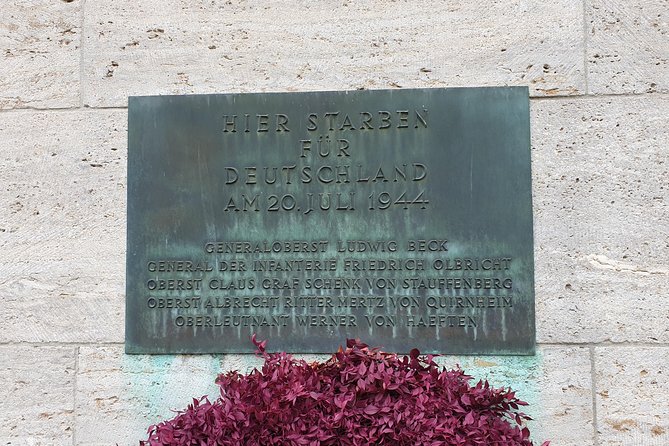
The German Resistance Memorial Center occupies the former site from which Operation Valkyrie was directed. The memorial focuses on people and groups who opposed National Socialism between 1933 and 1945.
You have about 25 minutes here. That is enough for a focused explanation, but not enough for a slow museum visit. The guide’s task is to place the site in the wider story of resistance, including the difficult question of why opposition came from some Germans while many others supported, tolerated, or simply endured the dictatorship.
This stop gives the tour a necessary balance. Nazi Berlin was not only a story of government power and victimhood. Some individuals acted against the regime, though resistance took different forms and often came with severe risks.
If you have already visited the memorial independently, the stop may repeat some material. Even so, the guided context can help you connect the building and its location to the wider route.
The T4 memorial and the crime that preceded the Holocaust
The memorial for the victims of the Nazi euthanasia program is a quieter and more difficult stop. The T4 program was directed from Tiergartenstrasse 4, which gave the operation its name. About 300,000 people were killed because they had mental or physical disabilities, chronic illnesses, or other conditions the Nazi state judged unacceptable.
The tour spends about 15 minutes here. That short time can feel emotionally heavy because the memorial deals with a group of victims often left out of basic accounts of World War II.
The site is also historically important because the T4 program is considered a precursor to the Holocaust. It shows how Nazi policy moved from hateful ideas and forced sterilization toward systematic killing, administrative planning, and the use of methods later applied on a much larger scale.
I appreciate that the route includes this memorial rather than focusing only on better-known sites. It gives you a clearer sense of how persecution developed step by step. It also reminds you that Nazi racial policy was tied to a wider attack on anyone the regime considered physically, mentally, or socially undesirable.
Same city, a completely different kind of day:
- Discover Berlin Half-Day Walking Tour
★ 5.0 · 9,624 reviews - Berlin: Hop-on Hop-off Bus Tour with Live Commentary
★ 4.3 · 8,579 reviews - Berlin: Government District around the Reichstag Guided Tour
★ 4.7 · 8,447 reviews - Berlin: Reichstag, Plenary Chamber, Cupola & Government Tour
★ 4.6 · 8,422 reviews
Anhalter Bahnhof and the reality of deportation
At Anhalter Bahnhof, you see the remains of what was once one of Europe’s largest railway stations. The station was badly damaged during World War II, and today its surviving ruins are an arresting contrast to the grand building that once occupied the site.
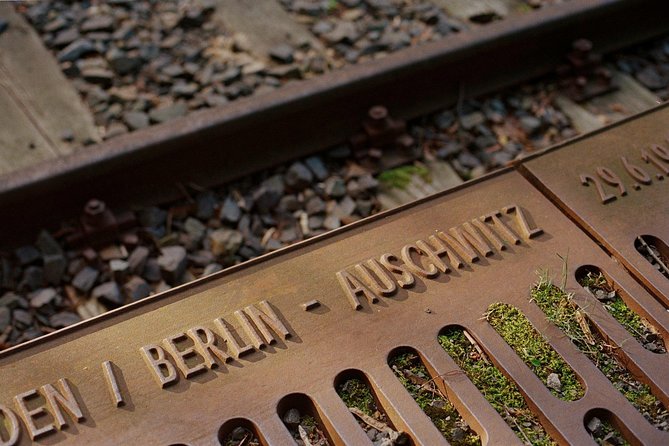
The stop lasts about 10 minutes. Your guide explains that death trains left here between 1942 and 1945, carrying people toward extermination camps. The location makes the machinery of deportation easier to grasp. Victims did not disappear into an abstract system. They were assembled, placed on trains, and sent away through a functioning transport network.
There is not a long museum visit here, so listen closely and let the physical remains do some of the work. You might find the stop especially powerful because the ruin is open to the city around it. It is not separated from everyday Berlin by a large exhibition hall.
This is also a good place to keep your expectations realistic. The station ruins are relatively brief on the schedule, and the value comes from the explanation rather than from exploring a large preserved complex.
Scheunenviertel, Berlin’s Jewish Quarter
The tour then reaches Scheunenviertel, part of Mitte often called Berlin’s Jewish Quarter. This is the longest scheduled section, at about 45 minutes, and it gives the route a change of pace.
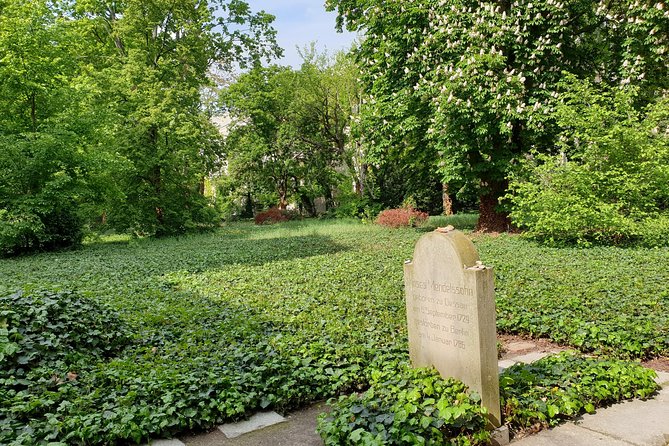
Here you visit important Jewish institutions, including the New Synagogue and the school founded by Moses Mendelssohn, the Enlightenment philosopher and modernizer of Judaism. The focus is not only on persecution. You also learn about the Jewish community that lived, worked, worshiped, and educated its children in Berlin before the Nazi period destroyed so much of that life.
That broader context is essential. If you only study the years of Nazi rule, Jewish Berlin can appear as a story that begins with victims and ends with ruins. Scheunenviertel helps you picture a living community with its own institutions and intellectual traditions.
The 45-minute timing makes this one of the most useful parts of the tour, but it also adds walking on city streets. Wear comfortable shoes. A guide can point out details you might otherwise pass without noticing, but you should not expect every building on the route to be open for a full interior visit.
Otto Weidt’s workshop and quiet acts of rescue
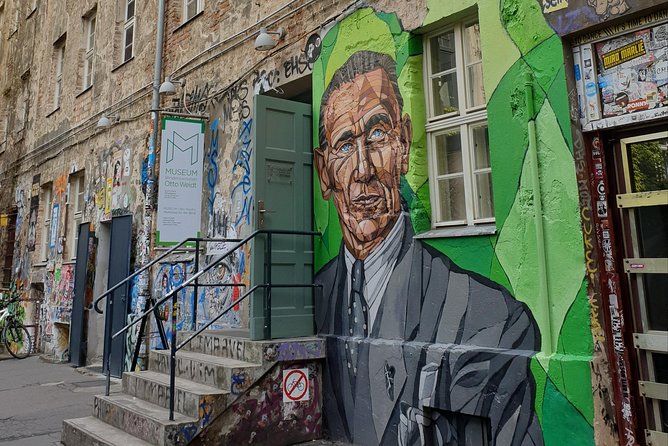
The Museum Blindenwerkstatt Otto Weidt tells the story of a Berlin factory owner who employed Jewish workers, including blind and disabled employees, to help protect them from deportation to Nazi extermination camps.
The museum is located in the original factory space, which gives the story an unusually direct setting. You are not only hearing about Otto Weidt in a general way. You are visiting the place connected with his work and the people he tried to protect.
The stop is scheduled for about 15 minutes. That is enough for an introduction, but anyone wanting a more extended museum visit should plan to return separately if possible. On this tour, the guide supplies the context and links Weidt’s actions to the larger themes of persecution, courage, and individual responsibility.
The comparison to Oskar Schindler is sometimes used for Weidt, but the value of the visit is in Weidt’s own story. The stop also fits the route well because it follows the broader Jewish Quarter section and shows that resistance could take the form of practical help to specific people.
The New Synagogue and the Old Jewish Cemetery
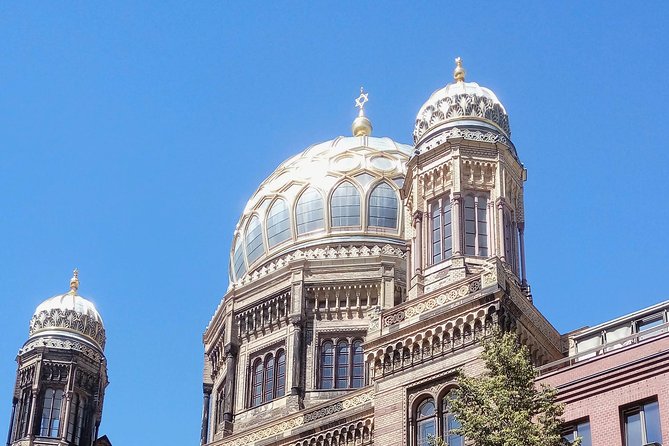
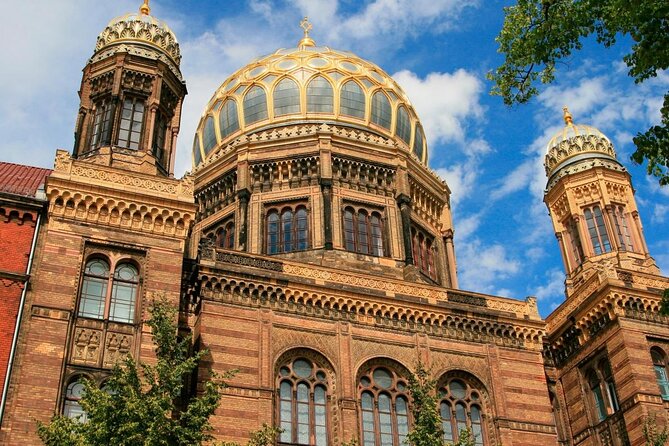
The New Synagogue, or Neue Synagoge, is one of Berlin’s most important Jewish landmarks. Built in 1866, it could seat 3,200 people and served as a symbol of the city’s thriving Jewish community.
The tour allows about 10 minutes at the site. That is enough to understand its importance and see its distinctive presence in the neighborhood, but it is a short visit. If you want a longer look at the building or exhibitions, check the opening arrangements separately.
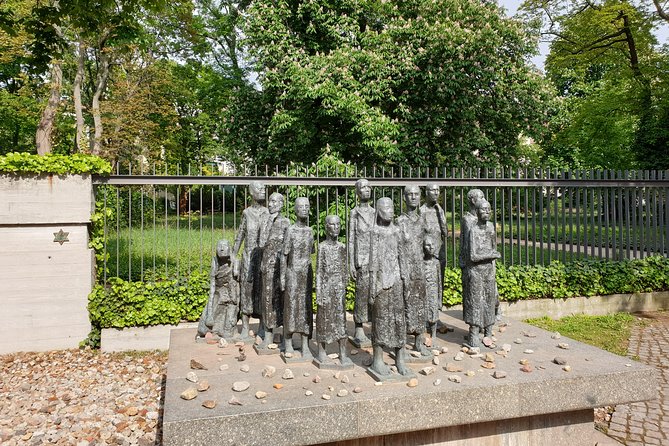
The Old Jewish Cemetery on Hamburger Strasse provides a more subdued ending to the Jewish Quarter portion. It was once the burial place of prominent members of Berlin’s Jewish community and is the oldest recognizable cemetery in the inner city. Very little remains because the Gestapo destroyed the cemetery during the Nazi period.
That absence is the point. You are not looking at a beautifully preserved burial ground. You are seeing what remains after deliberate destruction. The pairing of the New Synagogue and Old Jewish Cemetery helps you understand both the strength of Jewish Berlin before Nazism and the damage inflicted during the dictatorship.
The tour ends near Hackescher Markt, a convenient central location for continuing your day. It does not return to Potsdamer Platz, so think of the ending as part of your onward plans.
Guide quality matters more than usual here
On a subject this difficult, a guide can make the difference between a clear historical explanation and a tiring list of dates. The strongest feedback centers on guides who are prepared, passionate, calm, and able to answer questions without turning the tour into a lecture.
Lorenzo is repeatedly praised for his ability to explain the subject clearly and keep the group involved for the full three hours. Vita is described as prepared, pleasant, and especially good at holding attention, including when families with teenagers joined the tour. Fabio is noted for giving useful information and handling questions well, even in cold and rainy weather.
Names can change with the departure date, so you should not book solely to meet one particular guide. Still, the company’s Italian-speaking team includes several guides who have earned strong praise for preparation and personal warmth. That matters because the route asks you to absorb painful material while moving through a busy capital city.
The group limit of 20 is another advantage. It is not a private tour at the standard price, but it is small enough for questions and closer contact with the guide. Some feedback refers to private tours by the same company, so do not assume this standard departure will have the same intimate feel as a private booking.
Price, walking, and the practical trade-offs
At $27.87 per person, the tour is priced reasonably for three hours with a professional Italian-speaking guide and several important sites. The free admission at the listed stops helps keep the cost down, but you still need to pay for Berlin public transportation and any food or drinks.
I see the value in the route rather than in the number of attractions. A good guide ties together places that would otherwise feel scattered: a resistance center, a disability memorial, a ruined railway station, Jewish institutions, a former workshop, a synagogue, and a destroyed cemetery.
You should budget for walking and changes in transport. The schedule moves quickly, with stops ranging from 10 to 45 minutes. Comfortable shoes are essential, and you should dress for the weather because the tour operates in rain and other conditions.
The tour is near public transportation, and service animals are allowed. Most people can participate, but the pace, outdoor sections, and public transit make it sensible to consider your own stamina before booking.
The experience is generally booked about 56 days ahead. That does not mean you must reserve that far in advance, but it suggests that planning early is wise during popular travel periods. Free cancellation is available until 24 hours before the start time. After that, the amount paid is not refunded, and last-minute changes are not accepted.
Who should choose this Italian tour?
I would choose this tour if you want serious historical context in Italian and prefer seeing real locations rather than spending three hours inside one museum. It suits adults, history-minded families, and older children who can handle difficult material. One guide’s feedback specifically describes a family with 10- and 17-year-old children finding the experience useful, though the subject remains intense.
It is also a good first history tour in Berlin. The route gives you a working map of Nazi-era sites and ends in a central neighborhood, leaving you better prepared for later visits to museums and memorials.
You may want something else if you prefer a slower pace, long museum visits, or a tour focused only on Hitler’s headquarters and wartime architecture. You should also avoid packing another demanding activity immediately afterward. The subject is heavy, and three hours of walking and listening takes energy.
If you have already visited the German Resistance Memorial Center or the Jewish Quarter on your own, the tour can still add useful connections. Just expect some familiar material, especially if you have already taken another Berlin tour covering Nazism.
Should you book Berlin during Nazism in Italian?
Book it if you want a focused, serious introduction to Nazi Berlin led in Italian, with a route that includes both victims and resistance. The strongest reasons are the range of sites, the modest price, the small maximum group size, and the care shown by guides such as Lorenzo, Vita, Fabio, Federica, and Silvio.
Skip it if you want a relaxed sightseeing walk or a tour with extensive time inside museums. Bring a Berlin AB transit pass, wear comfortable shoes, and prepare for difficult subjects. For the right audience, this is a useful way to see how Berlin’s streets, institutions, and ruins still carry the evidence of the Nazi period.
FAQ
Where does the tour begin?
The tour begins at Potsdamer Platz 10, 10785 Berlin, near the Potsdamer Platz S-Bahn and U-Bahn station. Look for the blue bicycle and the Vive Berlin Tours flag.
What time does the tour start?
The scheduled start time is 10 a.m.
Where does the tour end?
The tour ends near Hackescher Markt at 10178 Berlin.
How long does the tour last?
The tour lasts approximately three hours.
Is the tour conducted in Italian?
Yes. A professional guide leads the tour in Italian.
How many people can join the tour?
The maximum group size is 20 people.
Is public transportation included?
No. Transportation to and from the attractions is not included. You should buy a Berlin public transportation day card for zones AB.
Does the tour operate in bad weather?
Yes. It operates in all weather conditions, so dress appropriately.
Can I cancel for a full refund?
Yes, if you cancel at least 24 hours before the experience start time. Cancellations made less than 24 hours before the start are not refunded.
Just added around Berlin
- Love and War in Berlin: Self-Guided Story Puzzle Walk★ 5.0 · 7 reviews
- Rickshaw Tours Berlin – Groups of up to 16 people with several rickshaws★ 4.0 · 97 reviews
- Walking on the Wall: 3-Hour Tour in Berlin★ 4.5 · 34 reviews
- eSIM for Germany and 34 European Countries★ 4.5 · 16 reviews
- Warnemuende Shore Excursion: Berlin Private Sightseeing Tour from Rostock★ 5.0 · 4 reviews
- Your ticket to The Wall Museum Berlin★ 3.0 · 60 reviews
- Warnemuende Shore Excursion: Private Berlin Tour★ 4.5 · 27 reviews
- Berlin’s Gay, Lesbian, and Queer Scene Small-Group Walking Tour★ 4.5 · 66 reviews
Berlin Tours, compared.

Reichstag, Dome and Government District Guided Tour
Read our review →
1-Hour City Tour by Boat with Guaranteed Seating
Read our review →


Reichstag, Plenary Chamber, Cupola & Government Tour
Read our review →

