
Reviewed · BERLIN TOURS
Berlin: DIY & Subculture Sightseeing in a 1972 Ford Van!
Berlin’s underground story is best told from inside an old van, not from behind a museum case. This small-group ride begins at East Side Gallery and heads through Friedrichshain and Kreuzberg, linking the Berlin Wall with squats, riot sites, improvised bars, music rooms, backyards, and basements. The 1972 Ford Econoline is part of the experience, not just transport.
I like two things right away: the group is limited to six people, so you can ask questions without shouting across a coach, and the tour looks behind shop fronts at the less polished side of the city. Guide Flo has been praised for explaining Berlin’s suburbs and stories with real detail. The free drink and T-shirt add a little fun, too.
The main consideration is comfort. The van has no air conditioning, only a fan, and the tour runs in rain or shine. The advertised length also varies between about 1.5 and 2 hours, so check the exact time shown when you book.
In This Review
- Key points about the Ford van tour
- Starting beside East Side Gallery
- Inside the 1972 Ford Econoline
- Friedrichshain, Kreuzberg, and Berlin’s unofficial side
- Backyards, basements, and places behind the glass
- From Bowie to Beatsteaks
- What the small group changes
- The price and what you receive
- Timing, comfort, and useful preparation
- Who will enjoy this most
- Should you book Get In The Van Berlin?
- FAQ
- Where does the tour begin?
- Where does the tour end?
- How long does the tour last?
- What languages are available?
- How many people can join?
- Is the tour wheelchair accessible?
- What should I bring?
- Does the tour operate in bad weather?
- Can I cancel for a refund?
Key points about the Ford van tour
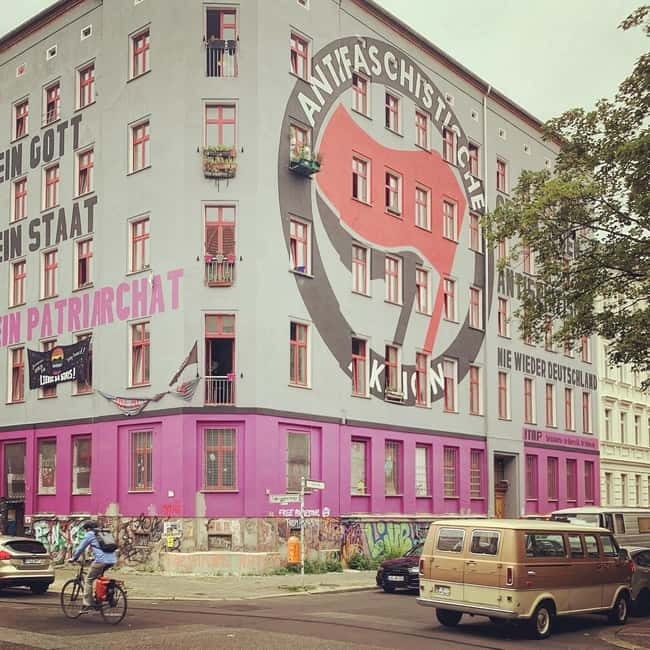
- A 1972 Ford Econoline provides the setting: You ride in a beige or brown vintage van with a window seat, turning a standard sightseeing route into a rolling piece of Berlin culture.
- East Side Gallery starts the story: The tour begins beside the Spree River at the longest remaining section of the Berlin Wall.
- Kreuzberg and Friedrichshain are the focus: You hear about May 1 riots, squats, DIY clubs, bars, restaurants, shops, artists, and bands.
- You look beyond the street front: Backyards and basements reveal places that normal city tours often pass without explanation.
- Your smartphone matters: Photos and videos from earlier periods help you compare Berlin then and now.
- The price depends on where you book: The listed price is $85 per person, while direct booking through getinthevanberlin.com is stated as 59 euros.
Starting beside East Side Gallery
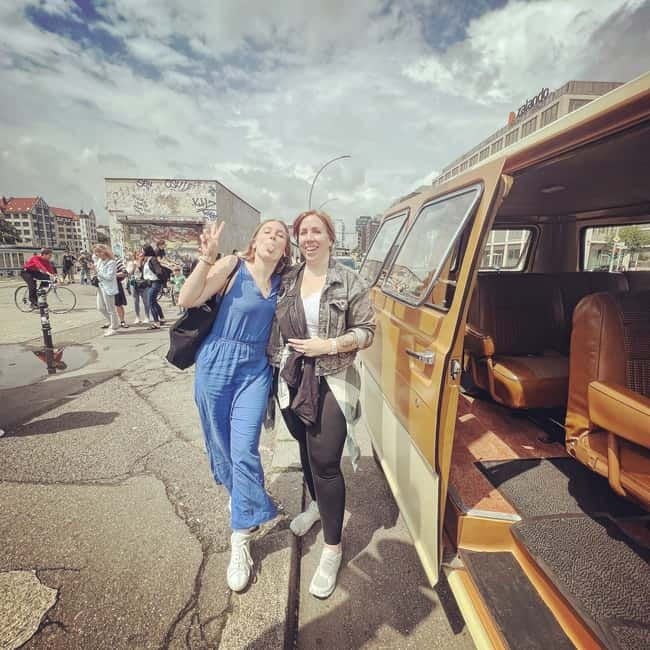
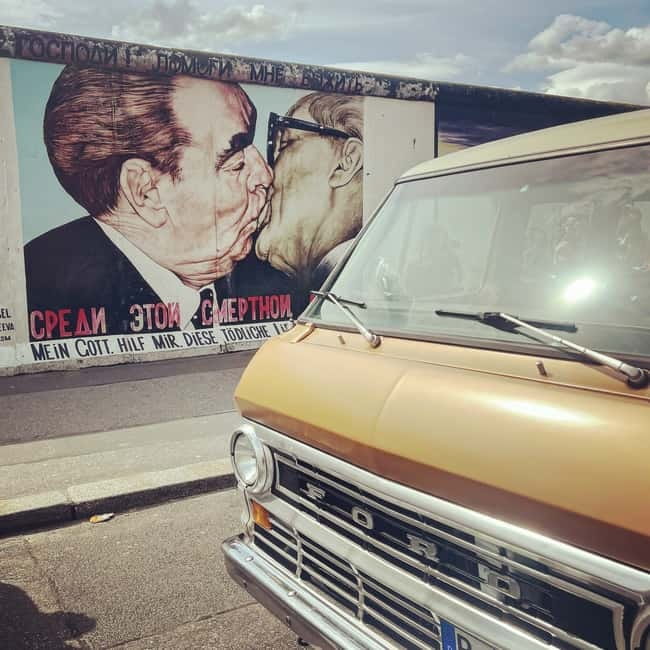
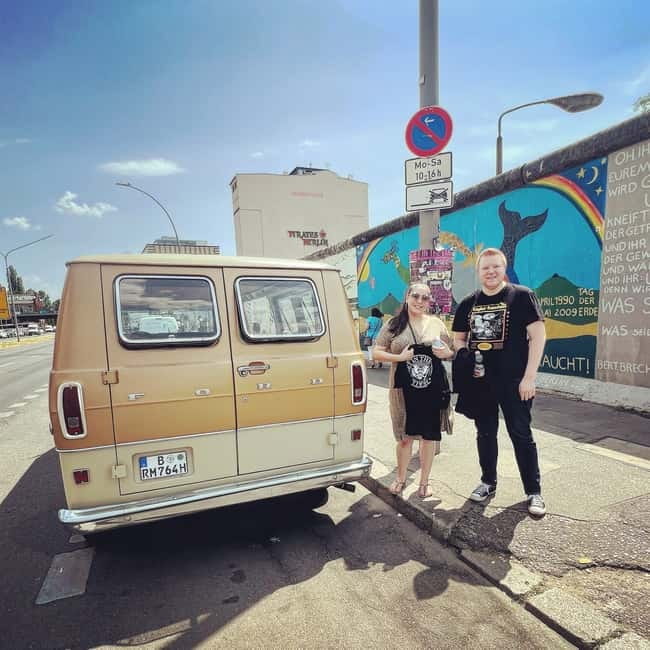
Your meeting point is the van itself, a beige or brown 1972 Ford Econoline. Arrive 15 minutes early so you can find the vehicle without a last-minute scramble. The departure point is East Side Gallery, beside the Spree River and between Friedrichshain and Kreuzberg.
This is a useful place to begin because Berlin’s wall story and its alternative culture story meet here. East Side Gallery is the longest remaining section of the Berlin Wall, but this experience uses it as more than a photo stop. You start thinking about how a divided city created empty spaces, rough edges, and room for people to make their own places.
You are not being taken through a long list of major monuments. The point is to understand how Berlin’s DIY spirit grew around neighborhoods, buildings, clubs, and people who worked outside the usual cultural system. That makes the starting point especially fitting. The wall is a famous symbol, but the route quickly moves toward the less official Berlin that grew around it.
Other Berlin days worth putting on the list:
- Berlin: Reichstag, Dome and Government District Guided Tour
★ 4.7 · 18,288 reviews - Berlin: 1-Hour City Tour by Boat with Guaranteed Seating
★ 4.3 · 16,993 reviews - Berlin: Boat Tour Along the River Spree
★ 4.4 · 11,252 reviews
Inside the 1972 Ford Econoline
The van gives the tour its character. You sit in a vehicle old enough to feel connected to the period being discussed, rather than moving through the city in a modern minibus. With only six participants, the ride should feel more like a conversation than a formal group outing.
Each participant gets a window seat, which matters on a route built around street views and sudden stops. The vehicle will pull up outside various sites so you can take pictures and spend time hearing what happened there. You should bring a charged smartphone, since background material includes old photos and videos shown through your phone.
There is no food allowed in the van. You do receive one free drink per person and an exclusive Get In The Van T-shirt. Those extras are pleasant, but the real value is the access to stories and places that are easy to miss if you only follow a standard sightseeing map.
The van has no air conditioning. It has a fan, and the tour runs in all weather. On a warm day, this could be the deciding factor for you, especially when the vehicle is full. On a rainy day, the ride still goes ahead, so dress for the forecast and do not treat this as a weather-dependent outing.
Friedrichshain, Kreuzberg, and Berlin’s unofficial side
The route centers on Friedrichshain and Kreuzberg, two parts of Berlin strongly linked with nightlife, political action, music, art, and alternative living. The tour is not simply a neighborhood drive. It connects the physical places with the people and activities that gave them meaning.
You hear about the May 1 riots around Görlitzer Bahnhof and the squats of Kreuzberg. These subjects help explain why Berlin’s DIY culture is not only about unusual bars or colorful street art. It also grew from conflict over housing, public space, politics, and who gets to decide what a neighborhood becomes.
The value of this section depends on the guide. A good explanation can help you see the difference between a place that looks ordinary now and the role it played in earlier decades. Flo has been praised for showing different suburbs and adding stories that are not easy to find in a general guidebook. That is an important strength for anyone who wants context rather than a quick list of addresses.
You should also expect the story to include change. Berlin’s alternative districts are not frozen in the 1970s or 1980s. Shops close, clubs move, buildings are renovated, and former squats can become part of a more commercial neighborhood. The contrast between then and now is central to the experience.
Backyards, basements, and places behind the glass
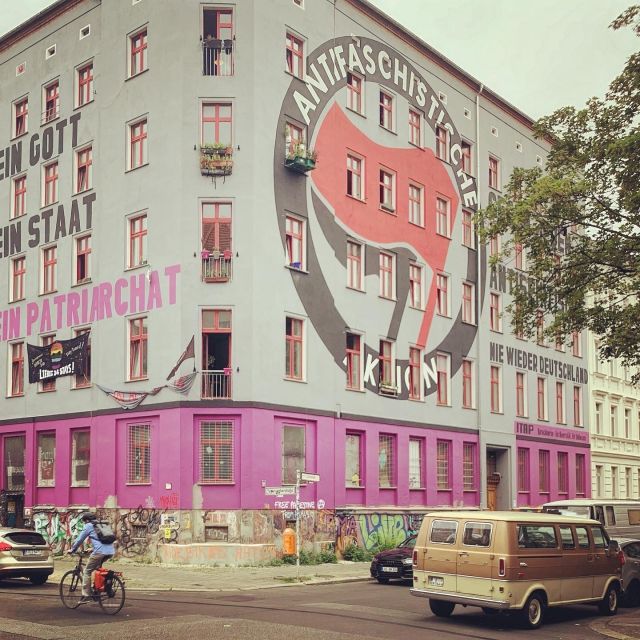
One of the strongest ideas on this tour is the invitation to look behind shop windows. Berlin’s DIY culture often developed in spaces that were not designed as polished cultural venues. Backyards, basements, improvised bars, rehearsal rooms, and small clubs could become important meeting places.
You will stop in front of several locations for pictures and explanations. The supplied details do not promise entry into every site, so think of this as a guided look at the places and their stories rather than a guaranteed backstage visit. That distinction matters if you are expecting to walk through each basement or venue.
Still, the format has a clear advantage. A normal walking route may point out a club or restaurant and move on. Here, the guide can explain what stood there before, who used the space, and how its role changed. The old photos and videos on your smartphone make that comparison easier to understand.
This part will suit you best if you enjoy place-based stories. You do not need to know Berlin music or politics in advance. You only need curiosity about how artists, bands, bar owners, squatters, and local communities turned ordinary spaces into places with a following.
Same city, a completely different kind of day:
- Discover Berlin Half-Day Walking Tour
★ 5.0 · 9,624 reviews - Berlin: Hop-on Hop-off Bus Tour with Live Commentary
★ 4.3 · 8,579 reviews - Berlin: Government District around the Reichstag Guided Tour
★ 4.7 · 8,447 reviews - Berlin: Reichstag, Plenary Chamber, Cupola & Government Tour
★ 4.6 · 8,422 reviews
From Bowie to Beatsteaks
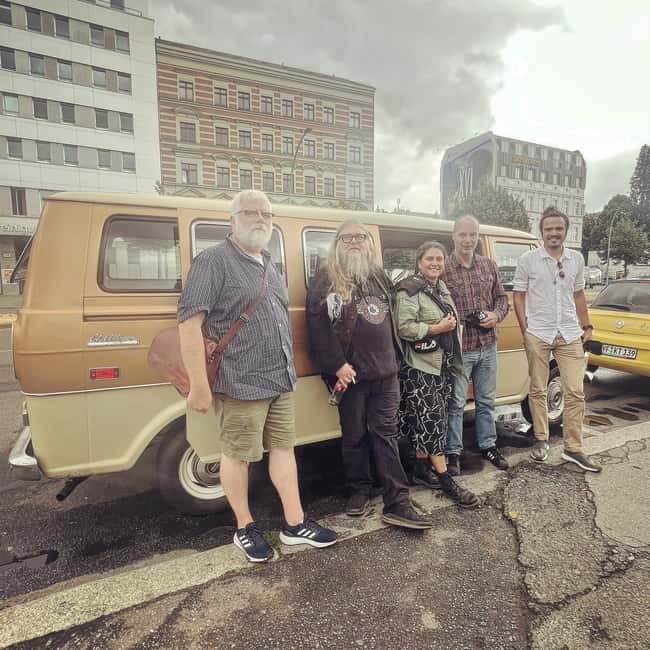
Music is one of the main threads running through the ride. The experience covers Berlin’s art and music scene from the 1970s to the present, with references ranging from David Bowie to Beatsteaks. It also comes from the founders of Ramones Museum Berlin, so the musical focus is not an afterthought.
The tour looks at venues, artists, bands, bars, and shops that helped shape Berlin’s reputation as a place for individual lifestyles and experimental culture. You may hear about legendary performers and locations tied to the city’s wider music story, while also learning about smaller spaces that supported local scenes.
This is where the supplied smartphone material becomes especially useful. Past images and videos can show you how a doorway, courtyard, or street looked during an earlier period. Without that visual help, some of the stories might remain abstract. With it, you can compare the present street with its former use.
The route does not promise a concert, club admission, or live performance. You are getting a guided cultural history in a moving vehicle. If you want nightlife recommendations for later, the tour is designed to point you toward DIY clubs, bars, restaurants, and shops to explore after sunset.
What the small group changes
A six-person limit is a major practical advantage. You can hear the guide more easily, ask about a particular band or neighborhood, and take part in a discussion instead of waiting for a microphone. The van’s small size also fits the subject. Berlin’s DIY culture is easier to discuss in an intimate setting than in a large sightseeing bus.
The tradeoff is that seats are limited. You should arrive on time, and you may want to reserve ahead if your Berlin schedule is tight. The tour is offered in English and German, with a live guide in your selected language.
Wheelchair accessibility is listed, which is useful information when comparing this with older-vehicle tours. Because the vehicle is a 1972 model, you should confirm any specific mobility requirements before booking if you need more detail than the general accessibility statement provides.
The price and what you receive
The listed price is $85 per person. The experience also states that the price has been adjusted to account for a 25 percent booking fee and that direct booking through www.getinthevanberlin.com costs 59 euros. Check both options before paying, since the difference can be substantial.
For the money, you are paying for a small group, a live English or German guide, a themed route, the vintage vehicle, a free drink, and a T-shirt. The strongest part of the value is not the distance covered. It is the specialist focus and the chance to connect scattered neighborhoods and locations into one story.
That value is highest for a first-time visitor who has already seen Berlin’s major sights and wants to understand the city’s alternative side. It is also useful for repeat visitors who have walked through Kreuzberg or Friedrichshain but never learned why certain places mattered.
The price is less attractive if you mainly want a general introduction to Berlin or a comfortable sightseeing ride. You can see famous landmarks more efficiently on a conventional city tour. This experience earns its cost through its subject, guide, small group, and access to background material.
Timing, comfort, and useful preparation
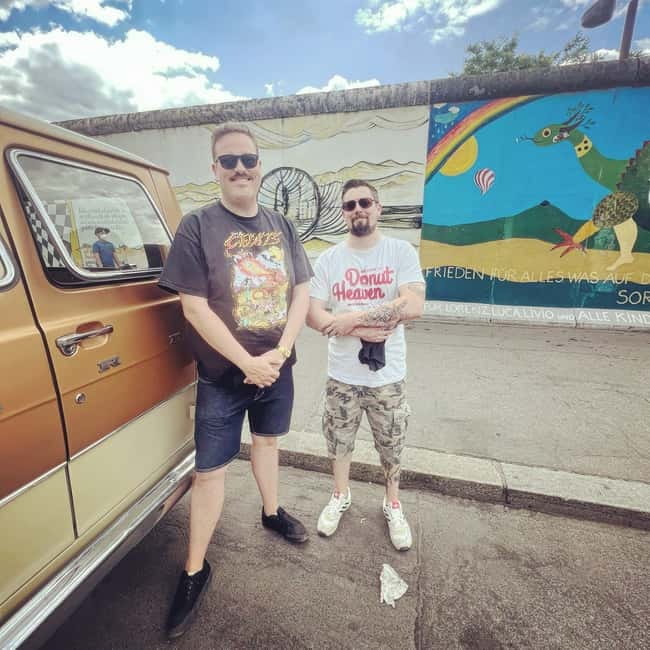
The duration is described in several ways: about 1.5 hours, about 1 hour and 15 minutes, and 2 hours including the full experience. Check the specific departure information when you choose your date. Allow enough time afterward in case the ride runs closer to the longer estimate.
Arrive 15 minutes before departure at the van. Bring a charged smartphone, since you will use it for photos and videos connected with the places on the route. Food is not permitted inside the vehicle, but one free drink per person is included.
Wear clothing that works for the weather. The van has only a fan, so warm conditions may feel stuffy. Since the tour operates rain or shine, a wet forecast does not automatically cancel the plan. A light rain layer and practical shoes make sense, particularly if you want to step out for photo stops.
Free cancellation is available up to 24 hours before the tour for a full refund, and you can reserve now and pay later. Those policies help if your Berlin plans are still shifting, but you should still check the final conditions attached to your booking.
Who will enjoy this most
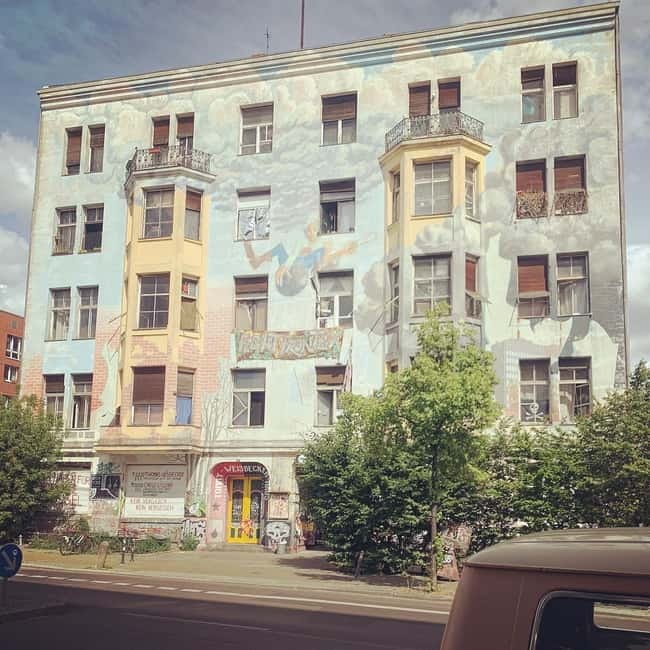
I would choose this for you if you care about music, independent art, political history, squats, nightlife, or the way neighborhoods change. It is especially appealing if you prefer personal stories and unusual places to a checklist of grand buildings.
The tour can also work well for a short Berlin visit. In roughly 1.5 to 2 hours, you get a framework for exploring Friedrichshain and Kreuzberg on your own later. Listen closely to the recommendations, then use the evening to visit the bars, clubs, restaurants, or shops that fit your interests.
It is less suitable if you dislike old vehicles, need air conditioning, or want guaranteed access inside every venue mentioned. The ride is not presented as a standard museum tour, and some of its locations are best understood from the street, through explanation and historical images.
The guide makes a difference. Flo has been specifically praised for explaining suburbs and telling stories that do not appear in ordinary guidebooks. The founders’ connection with Ramones Museum Berlin also signals a clear interest in music and subculture, rather than a generic city tour with a vintage vehicle added for decoration.
Should you book Get In The Van Berlin?
Book it if you want Berlin’s back rooms, old venues, squats, music links, and political stories. The six-person group and 1972 Ford van create a personal format, while the phone-based photos and videos give the past a useful visual connection to the present.
Before booking, compare the $85 price with the stated 59 euro direct rate, check the exact duration, and consider the weather. If those points work for you, this is a focused and unusual way to meet the less official side of Berlin. If you want broad landmark coverage or a cool, polished vehicle, choose a different tour.
FAQ
Where does the tour begin?
The tour begins at East Side Gallery beside the Spree River. Meet the beige or brown 1972 Ford Econoline at the meeting point.
Where does the tour end?
The activity ends back at the original meeting point.
How long does the tour last?
The duration is listed as about 1.5 hours, with another description stating 1 hour and 15 minutes and an included-experience description stating 2 hours. Check the exact timing when you book.
What languages are available?
The live tour guide is available in English and German.
How many people can join?
The group is limited to six participants.
Is the tour wheelchair accessible?
Yes. The activity is listed as wheelchair accessible.
What should I bring?
Bring a charged smartphone. It is used for background information, including historical photos and videos.
Does the tour operate in bad weather?
Yes. The tour takes place rain or shine.
Can I cancel for a refund?
You can cancel up to 24 hours in advance for a full refund. Reserve-now, pay-later booking is also available.
Just added around Berlin
- Love and War in Berlin: Self-Guided Story Puzzle Walk★ 5.0 · 7 reviews
- Rickshaw Tours Berlin – Groups of up to 16 people with several rickshaws★ 4.0 · 97 reviews
- Walking on the Wall: 3-Hour Tour in Berlin★ 4.5 · 34 reviews
- eSIM for Germany and 34 European Countries★ 4.5 · 16 reviews
- Warnemuende Shore Excursion: Berlin Private Sightseeing Tour from Rostock★ 5.0 · 4 reviews
- Your ticket to The Wall Museum Berlin★ 3.0 · 60 reviews
- Warnemuende Shore Excursion: Private Berlin Tour★ 4.5 · 27 reviews
- Berlin’s Gay, Lesbian, and Queer Scene Small-Group Walking Tour★ 4.5 · 66 reviews
Berlin Tours, compared.

Reichstag, Dome and Government District Guided Tour
Read our review →
1-Hour City Tour by Boat with Guaranteed Seating
Read our review →


Reichstag, Plenary Chamber, Cupola & Government Tour
Read our review →

