

Reviewed · BERLIN TOURS
Berlin: David Bowie in 1970s West-Berlin
David Bowie’s Berlin years come alive through places rather than museum displays: the outside wall of Hansa Studios, the old club sites around City West, and the flat where he lived. I like the private format, which lets guide Martin Sauter adjust the pace and answer detailed questions. I also like the route’s mix of music, nightlife, architecture, and Bowie’s own songs.
The main consideration is value. At $288 per person, this is a serious spend for three hours, especially since several stops are exterior views of former venues that no longer exist. You are paying for Martin’s research, storytelling, and personal attention, not for admission to a collection of Bowie interiors.
In This Review
- Key points about Bowie’s West Berlin
- Why Bowie chose West Berlin in the 1970s
- Starting at Martin Gropius Bau and Potsdamer Platz
- Hansa Studios and the sound of Heroes
- City West, KaDeWe, and Bowie’s nightlife
- The final bus ride to Bowie’s Berlin home
- What Martin Sauter adds to the experience
- Three hours, walking, and the bus connection
- Is $288 per person a fair price?
- Who should book this Bowie tour?
- FAQ
- How long does the David Bowie Berlin tour last?
- What is the price of the tour?
- Is the tour private?
- Who is the guide?
- Which languages are available?
- Where does the tour begin?
- Is hotel pickup available?
- Does the tour visit Hansa Studios?
- Does the tour include David Bowie’s home?
- Are food and drinks included?
- Should you book it?
Key points about Bowie’s West Berlin
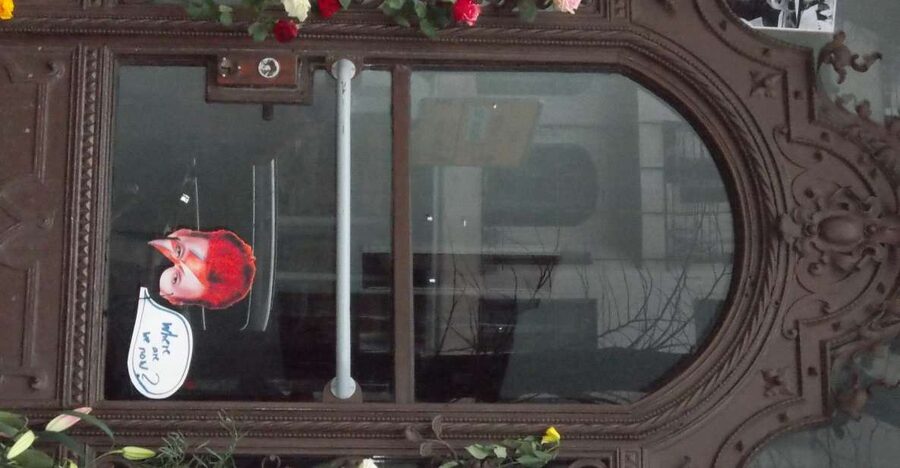
- Hansa Studios: See the building linked with Heroes and Bowie’s celebrated Berlin sound.
- Former nightlife sites: Visit the former locations of Dschungel and Chez Romy Haag, two key names in Bowie’s City West life.
- Bowie’s home: Finish outside the Berlin residence where he lived from 1976 to 1978.
- A route with musical context: Connect Potsdamer Platz and songs such as Where Are We Now? and Neuköln.
- Private guidance: Martin Sauter leads the experience in English, French, or German and can shape the tour around your interests.
- Simple transport plan: Walk through several central areas, then take a bus to Bowie’s home.
Why Bowie chose West Berlin in the 1970s
David Bowie arrived in Berlin after completing Nicolas Roeg’s The Man Who Fell to Earth. He was trying to leave his previous life behind, and West Berlin offered a very different setting from the celebrity world he had known.
The tour begins by explaining the reasons for his move. That background matters, because the city was not just a convenient address. Bowie was interested in new electronic music, and both West Berlin and Düsseldorf were important to the sound taking shape in Germany.
Before he found his own flat, Bowie stayed at the apartment of Edgar Froese, founder of Tangerine Dream. That detail gives the tour a useful starting point. Bowie was not arriving as a tourist looking for famous sights. He was looking for new sounds, new people, and a place where he could work differently.
You will hear how Berlin fed that search for ideas. Songs such as Heroes, Boys Keep Swinging, Yassassin, and Neuköln each carry some connection to this period. The spelling of Neuköln itself was deliberate, and the tour explains how Bowie’s surroundings entered his work.
I like this approach because it avoids treating Bowie’s Berlin years as a simple list of addresses. The point is to understand how a city shaped the music, the habits, and the person behind it.
Other Berlin days worth putting on the list:
- Berlin: Reichstag, Dome and Government District Guided Tour
★ 4.7 · 18,288 reviews - Berlin: 1-Hour City Tour by Boat with Guaranteed Seating
★ 4.3 · 16,993 reviews - Berlin: Boat Tour Along the River Spree
★ 4.4 · 11,252 reviews
Starting at Martin Gropius Bau and Potsdamer Platz
The meeting point is Martin Gropius Bau, the site of the major David Bowie exhibition held in 2014. You find your guide holding a Bowie album, book, or CD, a practical marker in a busy part of Berlin.
Martin Gropius Bau is useful as a starting point because it connects Bowie’s Berlin story with the way his work was later presented to the public. The building itself also gives you a sense of Berlin’s grand architectural past, though the tour’s focus remains Bowie rather than the building tour.
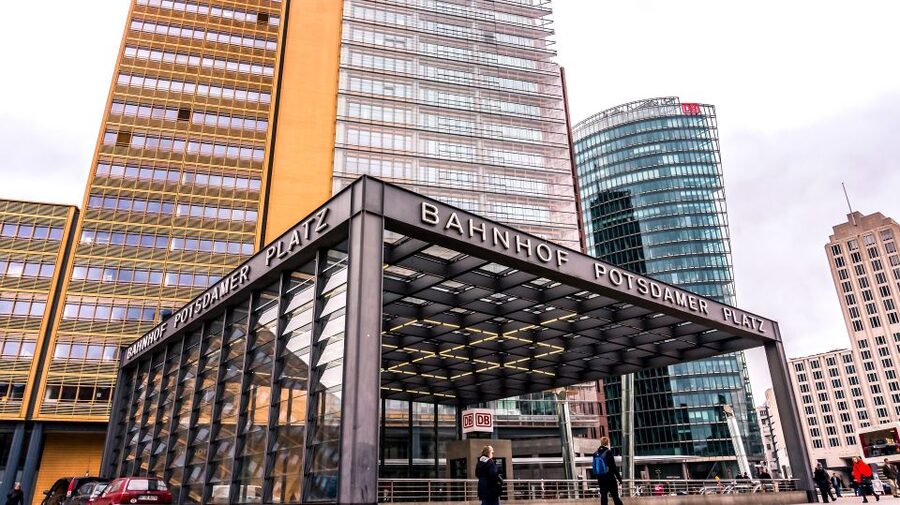
From there, the route continues toward Potsdamer Platz. Bowie later referred to this part of Berlin in Where Are We Now?, released in 2012. That song looks back at the city long after his original Berlin stay, so the stop lets you compare the 1970s city with the Berlin you see today.
You should not expect an elaborate museum visit at Martin Gropius Bau or a concert-style presentation at Potsdamer Platz. These are orientation points. Martin uses them to set the scene, explain Bowie’s connection to the city, and show how Berlin changed around the places Bowie knew.
Hansa Studios and the sound of Heroes
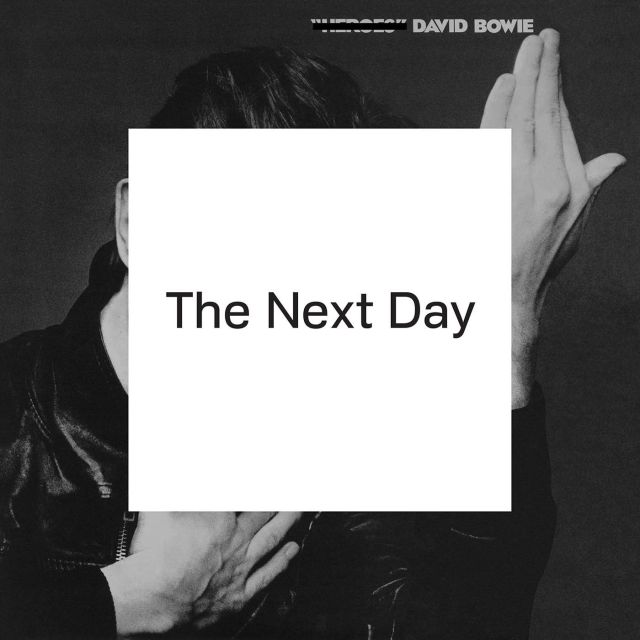
Hansa Studios is the musical center of the tour. You stand outside the building where Bowie worked during his Berlin period, with the chance to connect the physical setting to Heroes and the wider Berlin trilogy.
The tour does not take you inside the studio, so you should set your expectations correctly. This is an exterior stop, but it has real meaning for anyone who listens closely to Bowie’s Berlin recordings. The address is not simply a photo opportunity. It is a place where the city’s atmosphere, the studio’s location, and the music meet.
Hansa Studios helps explain why Bowie’s Berlin work still feels different from much of what came before. The tour places the studio within the city’s creative setting and discusses Bowie’s interest in electronic sounds. That context gives the songs more weight when you hear them later.
For a serious Bowie fan, this may be the strongest part of the afternoon. You can stand at the site while Martin explains the people, music, and period surrounding the recordings. For a casual listener, the value depends more on how much you enjoy music stories than on the building itself.
City West, KaDeWe, and Bowie’s nightlife
After Hansa Studios, the route heads into City West. You pass KaDeWe and other places tied to Bowie’s daily life and social world.
This part of the tour widens the story beyond recording sessions. Bowie’s Berlin was not only studios and apartments. It also included shops, clubs, nightlife, and the fashionable western part of the divided city.
The route includes the former locations of Dschungel and Chez Romy Haag. Chez Romy Haag was an important club connected with the nightlife Bowie encountered in West Berlin. The stop is now about memory and location, since the original club is no longer operating in the form Bowie knew.
That may be a small drawback for some people. You will not walk into the old Dschungel or sit at a preserved Bowie table. Instead, you stand outside the places and use Martin’s account to picture what happened there in the 1970s.
I think that limitation is also part of the point. Berlin has changed, and old clubs disappear. A good guide can help you read the present street rather than pretend it has remained frozen in Bowie’s era. Martin’s style is described as warm, humorous, and highly detailed, which suits these stops better than a dry list of dates.
Same city, a completely different kind of day:
- Discover Berlin Half-Day Walking Tour
★ 5.0 · 9,624 reviews - Berlin: Hop-on Hop-off Bus Tour with Live Commentary
★ 4.3 · 8,579 reviews - Berlin: Government District around the Reichstag Guided Tour
★ 4.7 · 8,447 reviews - Berlin: Reichstag, Plenary Chamber, Cupola & Government Tour
★ 4.6 · 8,422 reviews
The final bus ride to Bowie’s Berlin home
The tour ends at David Bowie’s Berlin home. To reach it, you board a bus after the walking portion through central Berlin and City West.
The bus matters for two reasons. First, it saves time during a three-hour tour. Second, it lets the route cover more than one compact neighborhood without turning the experience into a rushed march.
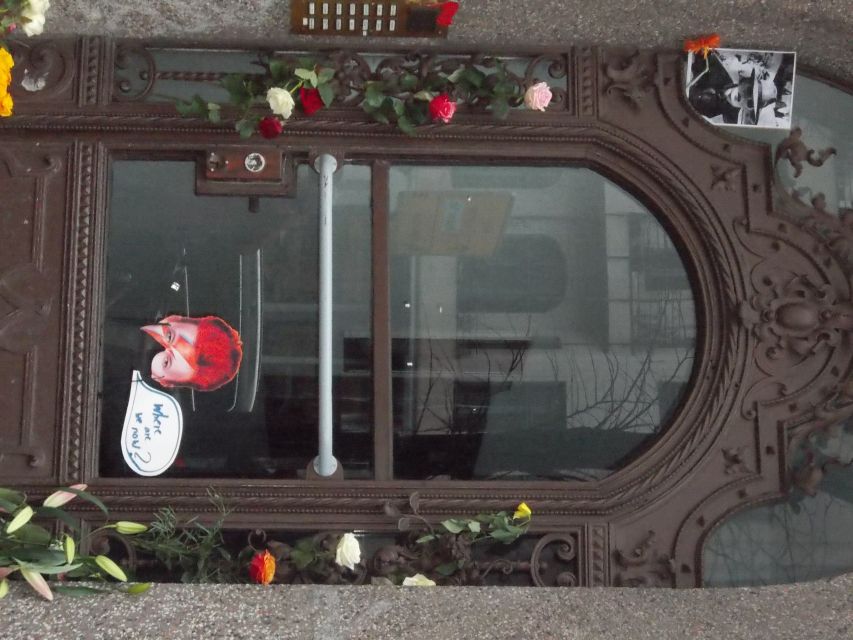
The home is viewed from outside. Its appeal comes from the personal connection: this is where Bowie lived during the period the tour explores, from 1976 to 1978. You can finish by placing the music and nightlife stops against a residential setting.
Because the tour ends here, you should think about your onward plans before booking. The provided details do not give a precise address or a return transfer. Hotel pickup is available if desired, but the end point is described as Bowie’s home rather than your hotel. Ask about the final location when arranging the tour if you need a tight connection afterward.
What Martin Sauter adds to the experience
The guide can make or break a music-location tour. Martin Sauter is the named guide, and the strongest praise attached to this experience focuses on his delivery rather than only on the route.
You can expect a guide who explains Bowie’s life in detail, adds wider Berlin context, and communicates with humor. He is also described as adapting the private tour to individual needs. That flexibility is important when one person wants recording details while another cares more about clubs, Berlin neighborhoods, or the city’s divided past.
Martin also leads the tour in English, French, or German. That makes it easier to ask about small details and follow the more complicated parts of Bowie’s Berlin story.
I would book this with specific questions ready. Ask about Edgar Froese, Bowie’s electronic influences, the connection between Heroes and Hansa Studios, or why Neuköln was spelled that way. A private tour gives you more room for this than a large group outing.
The private setup is also useful for a small group of friends or family members with mixed levels of Bowie interest. You can spend less time on material you already know and more time on the parts that brought you to Berlin.
Three hours, walking, and the bus connection
The experience lasts three hours. That is enough time for a focused introduction, several central stops, the City West route, and the bus ride to the home. It is not enough time for a slow architectural tour of every neighborhood or a long stop inside a museum.
The first part includes walking between sites. Wear comfortable shoes, but do not think of this as a full-day walking tour. The bus section breaks up the route and helps the guide include Bowie’s home without spending the entire afternoon on foot.
Hotel pickup is available if desired. The exact pickup arrangements are not given, so confirm them when booking. The meeting point is otherwise Martin Gropius Bau, where your guide identifies himself with a Bowie album, book, or CD.
Food and drinks are not included. For three hours, this is easy to manage, but you may want to eat before the tour if you prefer not to interrupt the route.
The group is private, which is a major practical advantage. You are not sharing the guide with a large crowd, and you can ask questions without waiting for a whole busload of people to move on.
Is $288 per person a fair price?
At $288 per person, the price is high for a three-hour city experience. There are no listed entry tickets, meals, or special studio access included. If you mainly want photographs outside Hansa Studios, you can visit some Bowie-related locations more cheaply on your own.
The better question is what kind of experience you want. This tour gives you a connected story, private transportation by city bus during the route, a named specialist guide, and access to places that make more sense when explained together.
The value improves if you are a committed Bowie fan, especially if you are traveling with a small private group. Martin’s ability to adjust the tour and spend time on your questions adds something that a self-guided map cannot easily provide.
The price is harder to justify for a casual music listener or a solo visitor on a tight budget. You may see the main sights from outside and find that the locations themselves are less dramatic than expected.
I would also check how many people the quoted price covers before booking. The experience is described as $288 per person and as a private group, but the supplied details do not state a maximum group size. That number will affect the value.
Who should book this Bowie tour?
I would recommend it most strongly to you if Bowie’s Berlin records are part of your regular listening. The tour connects songs, places, and choices in a way that gives the music a physical setting.
It also suits anyone interested in West Berlin during the 1970s. You do not need to know every album title. The route includes nightlife, shopping, residential life, divided-city context, and changing neighborhoods.
This may not be the right choice if you want to enter Hansa Studios, visit a Bowie museum, or see interiors from the old clubs. The experience is built around exterior locations and guided interpretation.
It is also a good fit for a private group that values conversation. Martin’s detailed and personal style is most useful when you engage with it. If you prefer to move quickly between photo stops with little explanation, the tour may feel too talk-heavy.
Free cancellation is available up to 24 hours before the start, and you can reserve now and pay later. Those terms give you some planning room, though the central decision remains the cost and your interest in Bowie’s Berlin story.
FAQ
How long does the David Bowie Berlin tour last?
The tour lasts three hours.
What is the price of the tour?
The listed price is $288 per person.
Is the tour private?
Yes. The experience is offered for a private group.
Who is the guide?
The named guide is Martin Sauter.
Which languages are available?
You can take the tour in English, French, or German.
Where does the tour begin?
It begins at Martin Gropius Bau. Your guide will be holding a David Bowie album, book, or CD.
Is hotel pickup available?
Yes. Hotel pickup is available if desired.
Does the tour visit Hansa Studios?
Yes. You will stand outside Hansa Studios and learn about its connection to Bowie’s Berlin work.
Does the tour include David Bowie’s home?
Yes. The route ends at David Bowie’s Berlin home.
Are food and drinks included?
No. Food and drinks are not included.
Should you book it?
Book this tour if you want the story behind Bowie’s Berlin years, not just a list of addresses. The best reasons are Martin Sauter’s personal guidance, the private format, and the route from Martin Gropius Bau through Hansa Studios and City West to Bowie’s home.
Skip it if $288 feels too high for a three-hour tour built mostly around exterior locations. For serious Bowie fans, though, the chance to connect Heroes, Neuköln, West Berlin nightlife, and Bowie’s own home makes this a focused and worthwhile musical pilgrimage.
Just added around Berlin
- Love and War in Berlin: Self-Guided Story Puzzle Walk★ 5.0 · 7 reviews
- Rickshaw Tours Berlin – Groups of up to 16 people with several rickshaws★ 4.0 · 97 reviews
- Walking on the Wall: 3-Hour Tour in Berlin★ 4.5 · 34 reviews
- eSIM for Germany and 34 European Countries★ 4.5 · 16 reviews
- Your ticket to The Wall Museum Berlin★ 3.0 · 60 reviews
- Warnemuende Shore Excursion: Private Berlin Tour★ 4.5 · 27 reviews
- Warnemuende Shore Excursion: Berlin Private Sightseeing Tour from Rostock★ 5.0 · 4 reviews
- Berlin’s Gay, Lesbian, and Queer Scene Small-Group Walking Tour★ 4.5 · 66 reviews
Berlin Tours, compared.

Reichstag, Dome and Government District Guided Tour
Read our review →
1-Hour City Tour by Boat with Guaranteed Seating
Read our review →


Reichstag, Plenary Chamber, Cupola & Government Tour
Read our review →

