
Reviewed · CITY TOURS
Berlin: City-West Walking Tour with a Real Berliner
Berlin’s City-West is more than a shopping district. On this two-hour walk, you follow the route where grand department stores, Cold War pressure points, roaring-1920s glamour, and everyday West Berlin life all meet. The guide brings the area alive with stories about the city’s former island of freedom.
I like the compact route and the small group, limited to 10 people. I also like the chance to hear from a local guide such as Carlo, who leads in German, English, or Italian and adds personal anecdotes to the city’s political story. The main consideration is pace: two hours gives you a strong introduction, but not much time for extended visits inside the landmarks.
In This Review
- Key points of the City-West walk
- Why Berlin’s western center deserves your time
- Starting at Wittenbergplatz and KaDeWe
- Europa-Center and the city’s western symbol
- Walking Kurfürstendamm through the roaring twenties
- Kaiser Wilhelm Memorial Church and Breitscheidplatz
- Zoologischer Garten and the heart of West Berlin
- Savignyplatz and the softer side of City-West
- Carlo and the value of a local guide
- Is $43 a fair price for two hours?
- Who should book this City-West walk?
- Should you book it?
- FAQ
- Where does the Berlin City-West walking tour start?
- Where does the tour finish?
- How long is the walking tour?
- Which languages are available?
- Is the tour wheelchair accessible?
- What happens if the weather is poor?
Key points of the City-West walk
- Start at Wittenbergplatz: Meet beside the U-Bahn station, a handy beginning in the heart of West Berlin’s shopping district.
- See KaDeWe and Europa-Center: Two famous commercial landmarks help explain the wealth and confidence of West Berlin.
- Walk the full story of Kurfürstendamm: The grand avenue links shopping, culture, nightlife, and the city’s past.
- Pause at Kaiser Wilhelm Memorial Church: Its damaged tower is one of Berlin’s clearest reminders of war.
- Hear Cold War stories from the west: The guide explains why this part of town became West Berlin’s center.
- Finish at Savignyplatz: End in a more relaxed neighborhood setting, with ideas for food and further exploring.
Why Berlin’s western center deserves your time
Many first-time visitors head straight for the Brandenburg Gate, Museum Island, and the former East Berlin. That makes sense, but Berlin’s western center tells a different part of the city’s story.
Here, the city’s identity grew around Kurfürstendamm, often shortened to Ku’damm, and the grand shopping streets near Wittenbergplatz. During the division of Berlin, this area served as the public face of West Berlin. It was a commercial center, a meeting place, and a symbol of life in a city surrounded by East Germany.
That background gives the walk a useful focus. You are not simply moving from one famous building to another. You are seeing how department stores, transport hubs, memorials, hotels, theaters, and cafés helped create a capital on the western side of a divided city.
I especially like this tour for travelers who want history tied to ordinary streets. The guide discusses politics and Cold War tension, but also points you toward typical Berlin food, cultural venues, art, tolerance, lifestyle, and the creative industries that shape the city today.
A few more Berlin trips to weigh up
- Discover Berlin Half-Day Walking Tour
★ 5.0 · 9,624 reviews - Berlin: Third Reich and Cold War 2 Hour Walking Tour
★ 4.9 · 6,830 reviews - Berlin: Discover Berlin Walking Tour
★ 4.9 · 5,998 reviews
Starting at Wittenbergplatz and KaDeWe
The meeting point is at Wittenbergplatz U-Bahn station, at the Tauentzienstrasse exit. Look for the guide holding the Get Your Guide, You in Berlin flag. The location is easy to identify, but Berlin has several busy stations and exits, so allow a little time to get oriented.
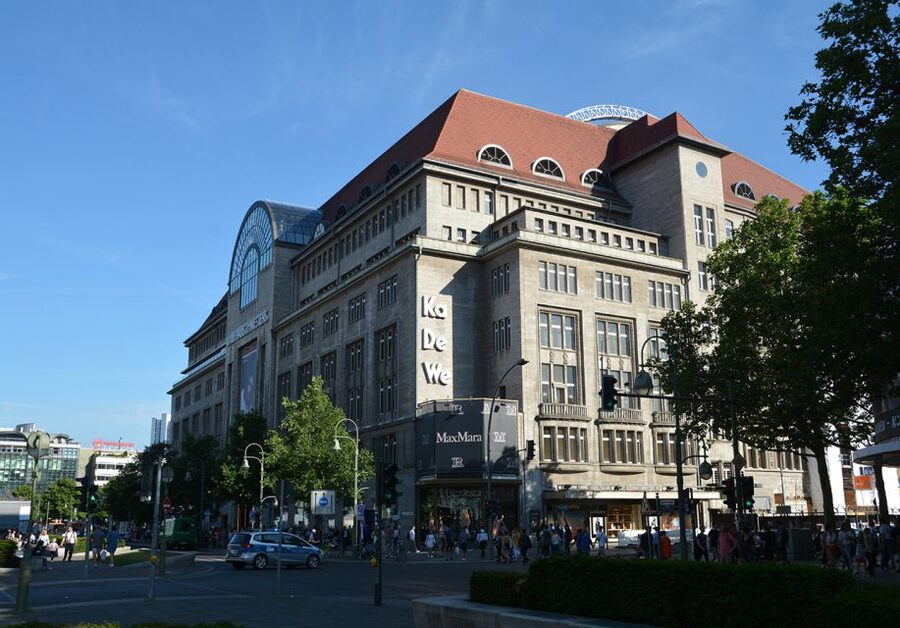
Your first major stop is KaDeWe, short for Kaufhaus des Westens. It is one of Europe’s largest department stores and an important symbol of West Berlin’s consumer culture. The building is not just a place to shop. It represents the way West Berlin used modern commerce, abundance, and international goods to contrast with life behind the Iron Curtain.
The guide gives you the local context instead of asking you to admire the façade and move on. You learn why KaDeWe mattered during the city’s division and how the shopping district became part of West Berlin’s public image.
You should expect a guided look and explanation rather than a long shopping visit. If you want to browse the store, return after the tour. The walk is designed to keep moving, and the two-hour schedule leaves little room for independent retail time.
Europa-Center and the city’s western symbol
From KaDeWe, the route continues toward the Europa-Center. Its tall form and central location make it one of the most recognizable pieces of postwar City-West.
The Europa-Center helps explain the commercial ambitions of West Berlin. Along with KaDeWe and Kurfürstendamm, it formed a center where shopping, business, entertainment, and city life came together. During the Cold War, that western center was not accidental. It was a way to keep Berlin connected to the wider Western world.
I find this kind of stop useful because it adds economic and social context to the political story. Berlin’s division was not only a matter of walls and checkpoints. It also shaped where people shopped, met, worked, and spent their free time.
The guide’s role matters here. A native Berliner can connect a familiar building to the experience of growing up in West Berlin. The tour information specifically centers on personal stories from the period of partition, so you get more than dates and formal history.
Walking Kurfürstendamm through the roaring twenties
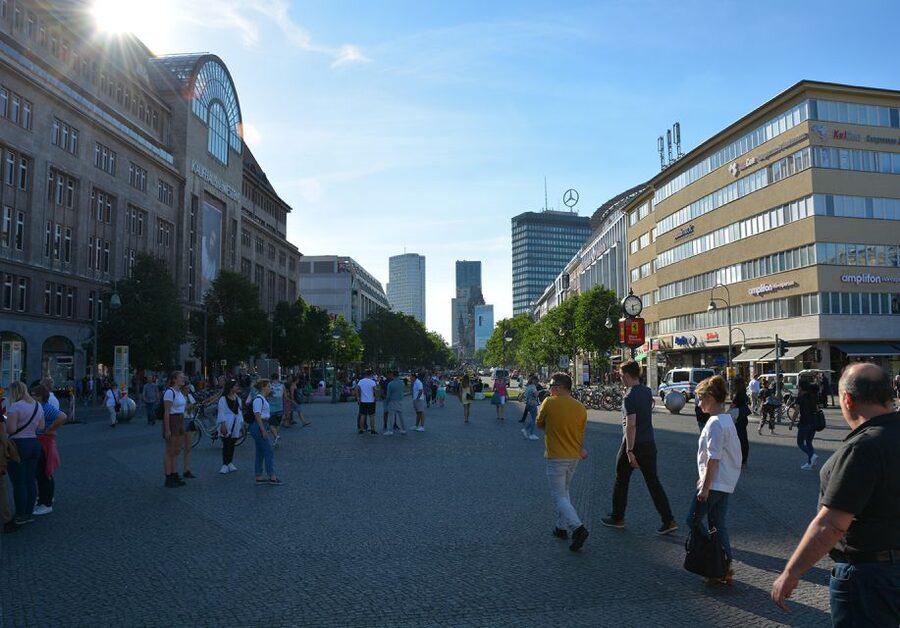
Kurfürstendamm is the grand artery of City-West. The avenue is associated with shops, cafés, restaurants, theaters, hotels, and a long tradition of public life.
The tour looks back to Berlin’s golden twenties, when the city was known for nightlife, art, theater, and social change. That period is important because it helps explain Berlin’s modern reputation as a city of culture and personal freedom. The route shows how the western center carried parts of that identity through war, division, and reunification.
You will be walking along a major urban avenue, not a quiet historic lane. Traffic, shoppers, and city noise are part of the setting. That can make it harder to hear at times, especially if your group is spread out. A small group of no more than 10 helps, but you should stay close to the guide.
Wear shoes and clothing suited to a walking tour. The experience runs in all weather and on public holidays, so check the forecast and prepare accordingly. An evening departure can be appealing in summer, when the later sunset and cooler air make the route more comfortable. One participant specifically found evening walking pleasant, with summer sunset arriving around 9:30 p.m.
Same city, a completely different kind of day:
- Berlin: Reichstag, Dome and Government District Guided Tour
★ 4.7 · 18,288 reviews - Berlin: 1-Hour City Tour by Boat with Guaranteed Seating
★ 4.3 · 16,993 reviews - Berlin: Boat Tour Along the River Spree
★ 4.4 · 11,252 reviews - Berlin: Hop-on Hop-off Bus Tour with Live Commentary
★ 4.3 · 8,579 reviews
Kaiser Wilhelm Memorial Church and Breitscheidplatz
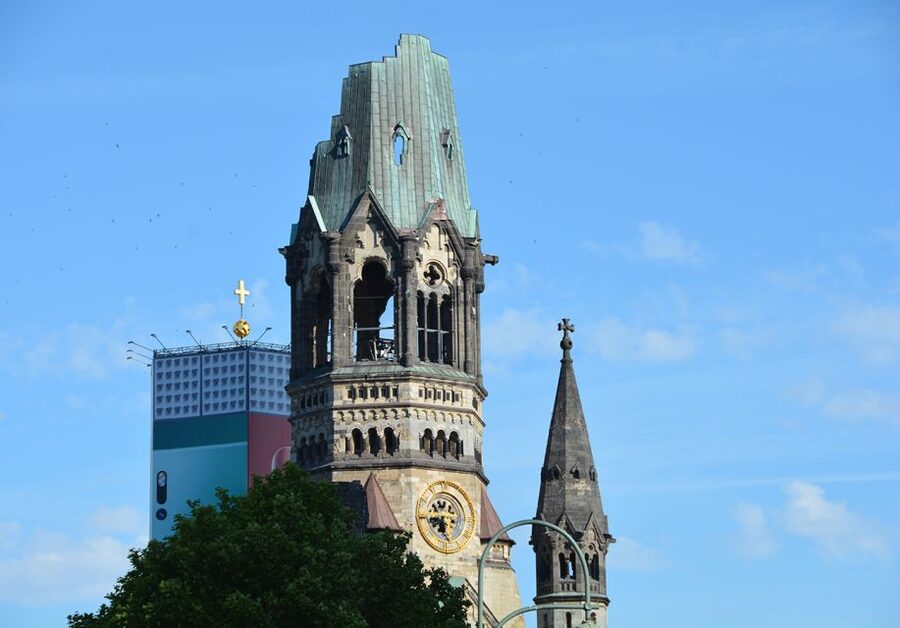
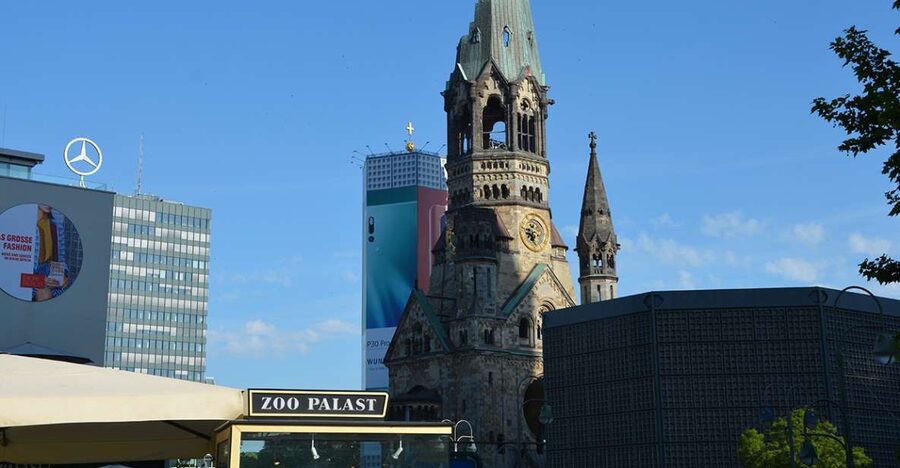
The Kaiser Wilhelm Memorial Church is one of the most powerful sights on the route. Its damaged tower and newer church buildings sit at Breitscheidplatz, a busy square near the center of City-West.
The ruined tower recalls the destruction of World War II. Rather than being fully rebuilt, the damaged structure was preserved as a memorial. That choice gives the site unusual force. You see the physical break in the city’s past while standing in a busy modern commercial district.
The church also provides a pause in the walk. After the broad avenue and large commercial buildings, the memorial changes the tone. It reminds you that Berlin’s present-day energy rests on a difficult twentieth-century past.
The tour includes guided sightseeing here, but the supplied details do not promise a long interior visit or a formal church admission. Think of this as an explained stop along the route, with time to view the site and understand its meaning. If you want a detailed look inside, ask the guide how much time is available during your departure.
Zoologischer Garten and the heart of West Berlin
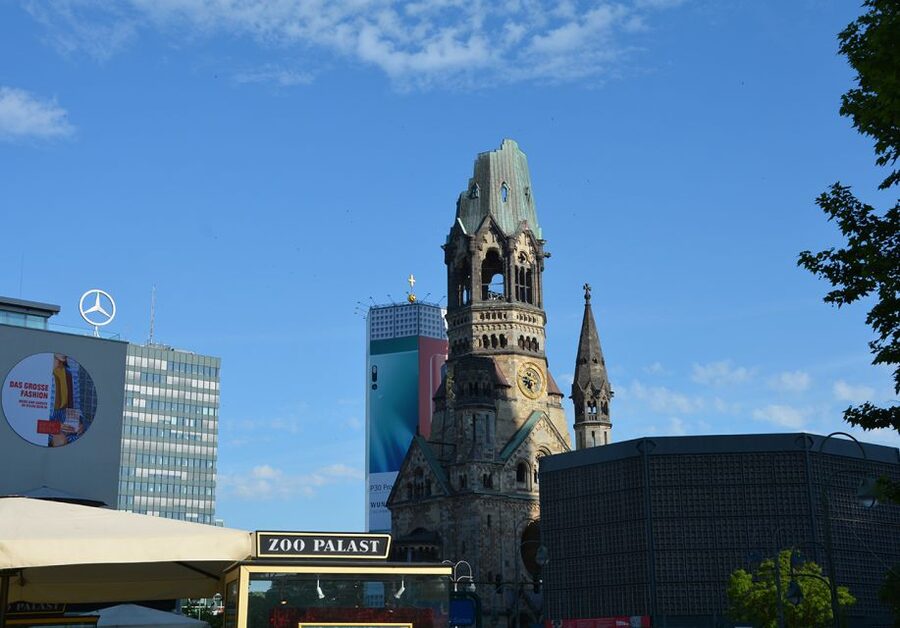
The area around Zoologischer Garten is one of Berlin’s major traffic centers. Trains, buses, pedestrians, and roads converge here, making it a practical hub as well as a historic one.
The guide explains why Zoologischer Garten became so important during the Cold War. With Berlin divided, the western side needed a strong central district, and this area developed into the core of West Berlin. Its transport links helped connect residents to the rest of the western sectors and to daily life in a city cut into separate parts.
This is one of the most useful parts of the route for getting your bearings. You see how transportation helped determine the shape of the city. You also learn why City-West feels different from the grand state buildings and museums farther east.
The area can feel hectic. This is not a quiet historical quarter, and the tour does not try to hide that. I consider the traffic and movement part of the lesson. You are seeing a working city center, not a preserved stage set.
Savignyplatz and the softer side of City-West
The walk finishes at Savignyplatz, at 10629 Berlin. The ending shifts away from the big commercial landmarks and toward a more relaxed part of the western center.
Savignyplatz is useful as a final stop because it connects the historical walk to present-day Berlin. After hearing about division, commerce, war, and the twentieth-century city, you get suggestions for food and further exploring in the west.
The guide can point you toward typical Berlin dishes and places to eat. Specific restaurant names are not provided, so I would treat these as local tips rather than a fixed food stop. This is valuable if you are hungry after walking, but plan to pay separately for any meal or snack.
Finishing here also gives you a practical choice. You can continue exploring City-West, stop for food, or use the area as a jumping-off point for the rest of your evening. The tour does not end back at Wittenbergplatz, so note the change of location when planning your day.
Carlo and the value of a local guide
The guide listed for several departures is Carlo. He leads in German, English, and Italian, and the tour is presented as a walk with a real Berliner rather than a scripted sightseeing circuit.
That distinction matters most in a city with a complicated past. A guide can explain where West Berlin’s center developed, but a local guide can also describe how the division shaped the feel of daily life. Carlo is described as friendly, professional, well prepared, and willing to answer questions. Those traits are useful on a compact tour, where a good explanation can turn a plain building into a meaningful stop.
One participant ended up with what was nearly a private tour because the group was so small. Another person joined as the only participant, and the walk still went ahead. You should not assume every departure will be private, but the 10-person limit keeps the experience personal even when the group is full.
The language choice is another strong point. You can book a guide in German, English, or Italian, but confirm the available language and departure time when you check dates. A tour about personal memories and political history works best when you can follow every detail.
Is $43 a fair price for two hours?
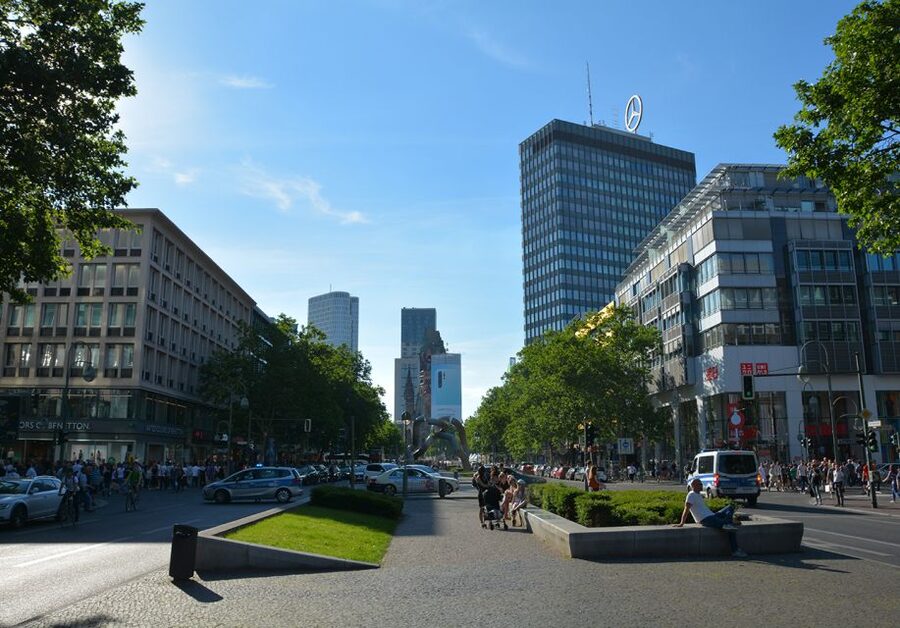
At $43 per person, this is not the cheapest way to see Berlin’s City-West. You are paying for a guided experience, not admission to several attractions or a meal.
The value comes from the route and the explanation. In two hours, you cover KaDeWe, Europa-Center, Kurfürstendamm, Kaiser Wilhelm Memorial Church, the Zoologischer Garten area, and Savignyplatz. You also receive a focused account of West Berlin during the Cold War, along with practical suggestions for food and other sights.
I think the price is reasonable if you want orientation early in your stay or if Berlin’s twentieth-century history feels hard to organize on your own. A guide helps connect the locations into one story.
The value is weaker if you mainly want shopping time, long museum visits, or a private architectural tour. You will see many places, but the schedule is built around walking and commentary. For solo visitors, couples, and people who enjoy asking questions, the small group can make the cost easier to justify.
The booking terms also reduce the risk. You can cancel up to 24 hours before the tour for a full refund, and you can reserve now while paying later. These policies are useful when your Berlin schedule is still changing.
Who should book this City-West walk?
I would recommend it to first-time visitors who want to understand the western half of central Berlin before exploring on their own. It is also a good fit if you have already seen the Brandenburg Gate and central museums and want a different view of the city.
History fans will appreciate the Cold War focus, but you do not need a specialist background. The route uses recognizable buildings and public spaces to explain the story. That makes it accessible for couples, solo travelers, families with older children, and anyone who prefers a moving tour to a lecture indoors.
The experience suits people who enjoy local food advice, city orientation, and personal anecdotes. It is less suitable if walking for two hours is difficult, though the activity is listed as wheelchair accessible. Bring water, wear suitable clothes, and remember that the walk goes ahead in all weather.
The multilingual format also makes it useful for international visitors. If you are comfortable in English, German, or Italian, you can choose the language that lets you get the most from the guide’s stories.
Should you book it?
Book this tour if you want the story of West Berlin told through its streets, shops, memorials, and transport hubs. The strongest reasons are the small group, the focused two-hour route, and the chance to hear a local guide such as Carlo explain what the divided city meant in daily life.
Skip it if your priority is spending time inside KaDeWe, the memorial church, or other buildings. This is a walking and storytelling experience, not an admission-based sightseeing package.
For most visitors, I would schedule it near the start of a Berlin stay. You will leave with a clearer sense of City-West, useful food ideas, and a better understanding of why this part of the city became the center of western Berlin. With a 4.8 rating from 23 bookings, the experience has a strong track record, but its real appeal is simple: it helps you see a familiar-looking shopping district as a place shaped by war, division, freedom, and everyday Berlin life.
FAQ
Where does the Berlin City-West walking tour start?
Meet your guide at Wittenbergplatz U-Bahn station, at the Tauentzienstrasse exit. Look for the guide holding the Get Your Guide, You in Berlin flag.
Where does the tour finish?
The walk finishes at Savignyplatz, 10629 Berlin, Germany.
How long is the walking tour?
The tour lasts two hours. Check the available dates for the specific starting times.
Which languages are available?
The tour is available in German, English, and Italian.
Is the tour wheelchair accessible?
Yes, the activity is listed as wheelchair accessible.
What happens if the weather is poor?
The tour takes place in all weather conditions and on public holidays. Wear suitable clothing for walking and check the forecast before you go.
Just added around Berlin
- Love and War in Berlin: Self-Guided Story Puzzle Walk★ 5.0 · 7 reviews
- Rickshaw Tours Berlin – Groups of up to 16 people with several rickshaws★ 4.0 · 97 reviews
- Walking on the Wall: 3-Hour Tour in Berlin★ 4.5 · 34 reviews
- eSIM for Germany and 34 European Countries★ 4.5 · 16 reviews
- Warnemuende Shore Excursion: Berlin Private Sightseeing Tour from Rostock★ 5.0 · 4 reviews
- Your ticket to The Wall Museum Berlin★ 3.0 · 60 reviews
- Warnemuende Shore Excursion: Private Berlin Tour★ 4.5 · 27 reviews
- Karl-Marx-Allee Tour: Life and Architecture in East Berlin★ 5.0 · 19 reviews
City Tours, compared.

1-Hour City Tour by Boat with Guaranteed Seating
Read our review →
City History Canal Sightseeing Tour on a Motorboat
Read our review →

Browse the lists this tour appears in