
Reviewed · HISTORICAL TOURS
Berlin: Charité Hospital History Walking Tour
Berlin’s Charité began as a simple plague house in 1710, but its story soon moved into bloodletting, mercury treatments, amputations, groundbreaking science, and some of medicine’s darkest crimes. This two-hour walk gives you a close look at how a hospital can reflect the politics and values of an entire city.
I like the visit to the Veterinary Anatomy Theatre, an 18th-century building with a wonderfully odd purpose: doctors once studied the diseases of livestock and cavalry horses there. I also like the human scale of the stories, from Robert Koch and Rudolf Virchow to Rachel Hirsch, the first woman to hold a medical professorship in Prussia.
The main drawback is simple: much of the tour takes place outside, and you will be walking or standing for about two hours. Cold weather can make the experience less comfortable, and the theatre may occasionally close for a private event or public holiday.
In This Review
- Key points to know before booking
- Why Charité makes an unusual Berlin walking tour
- Starting at Robert-Koch-Platz
- Inside the 18th-century Veterinary Anatomy Theatre
- Walking around the neo-Gothic Charité campus
- Robert Koch, Rudolf Virchow, and the human side of science
- Charité under Nazism
- Charité in East Germany
- The real stories behind the Charité television series
- Is $28 a fair price for two hours?
- Practical comfort, weather, and access
- Who should book the Charité walk?
- FAQ
- How long does the Charité Hospital History Walking Tour last?
- Where does the tour begin?
- Where does the tour finish?
- Is the Veterinary Anatomy Theatre included?
- What languages are available?
- Is the tour suitable for children?
- Is the walking tour wheelchair accessible?
- What should I bring?
- Can I cancel the booking?
Key points to know before booking

- A plague house became one of Europe’s major medical centers: The tour follows Charité from its 1710 foundation through modern times.
- The Veterinary Anatomy Theatre is the unusual highlight: You get free admission to Berlin’s oldest surviving academic building.
- Medical history is tied to social change: Rachel Hirsch’s 1913 professorship offers a clear look at women’s changing place in medicine.
- The Nazi and East German periods receive serious attention: You learn how doctors responded to racial ideology, psychiatric murder, and Cold War division.
- The route is mostly outdoors: Wear warm clothes in cold weather and comfortable shoes in every season.
- The guides make the difference: Martina is praised for her engaging delivery, careful planning, and useful extra material.
Why Charité makes an unusual Berlin walking tour

Most Berlin history walks focus on kings, war, walls, and political power. This one uses a hospital to tell the story of the city. That gives you a different route through familiar centuries, one shaped by disease, scientific discovery, social reform, dictatorship, and division.
Charité was first built to protect Berlin from an approaching epidemic. The name itself means charity, a reminder that the institution began with a public purpose rather than as a grand center of research. Early medical care was often harsh by modern standards. Bloodletting, mercury, and amputation were common tools, and doctors had few reliable ways to understand what they were seeing.
That contrast gives the opening part of the tour real force. You are not simply looking at old walls. You are being asked to consider how people once treated illness, what they believed about the body, and how slowly medicine moved from tradition toward tested evidence.
I find this a good choice if you have already seen Berlin’s major political sights and want a quieter but still serious look at the city. It also works well for anyone interested in medicine, science, public health, or the ethical choices made by doctors.
A few more Berlin trips to weigh up
- Berlin: Natural History Museum Entrance Ticket
★ 4.6 · 3,382 reviews - Berlin: World Heritage Cruise to Potsdam
★ 4.5 · 1,435 reviews - Berlin Historical Highlights Walking Tour
★ 4.9 · 657 reviews
Starting at Robert-Koch-Platz
The tour begins at Robert-Koch-Platz, by the statue of Robert Koch. Look for the guide with an orange umbrella. This is a useful meeting point because the statue immediately places you inside the medical story rather than leaving you to wonder where the tour begins.
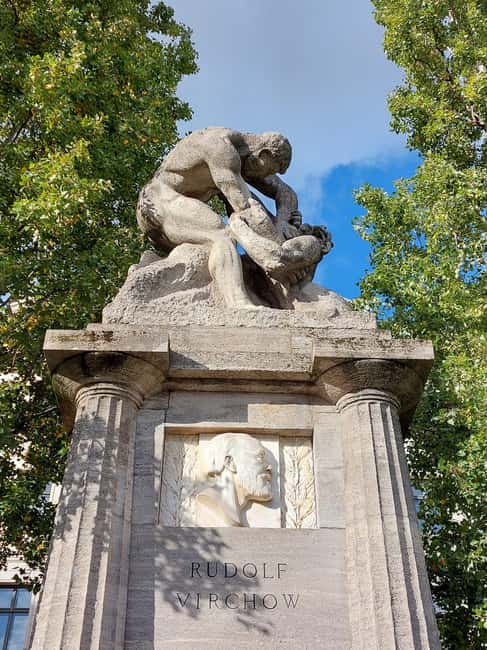
Koch is one of the key names in German medical science, and his work helps frame the shift from older treatments to modern bacteriology. The walk later connects him with other major figures, including Rudolf Virchow. You get a sense of how Charité became a place where research and hospital practice worked side by side.
The opening talk also gives you a foundation for the rest of the route. The guide explains the hospital’s birth as a plague house, then shows how its purpose changed over the centuries. That long time span matters. You can see Charité not as a single historic site, but as an institution repeatedly reshaped by new diseases, new science, and new governments.
The meeting point is outdoors, so arrive dressed for the weather. Since the tour lasts around two hours and includes standing, comfortable shoes are a must. Bring water, too.
Inside the 18th-century Veterinary Anatomy Theatre
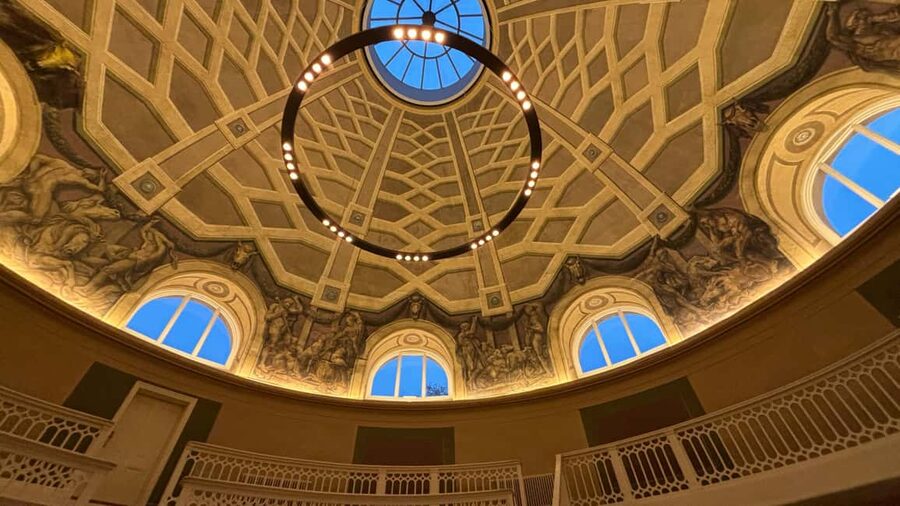
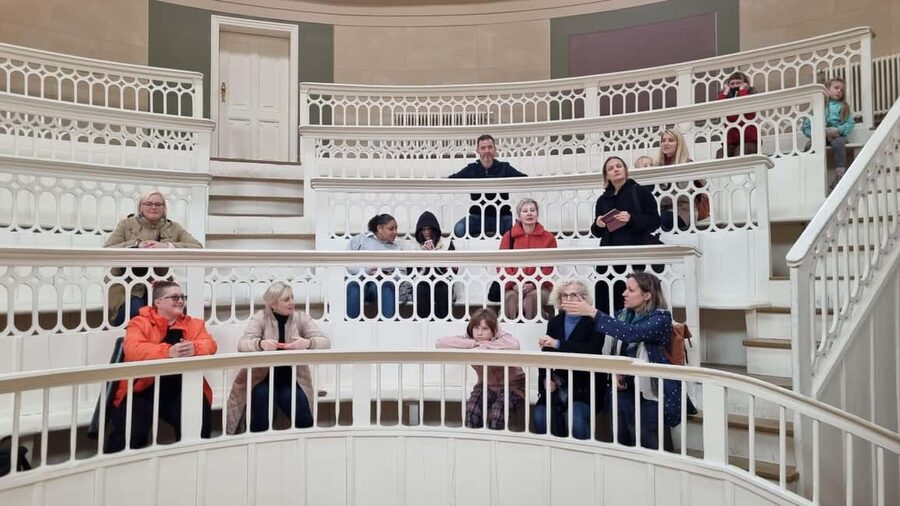
The Veterinary Anatomy Theatre is the clearest physical highlight. Admission is included, and the visit lasts about 15 minutes. The building is described as the oldest academic building still in existence in Berlin, which makes it far more than a quick side stop.
Its purpose was practical. In the 18th century, doctors and scholars studied illnesses affecting livestock and cavalry horses. That tells you something important about the city at the time. Animal health mattered to food supplies, transport, military power, and daily life, so veterinary medicine was closely tied to the wider needs of society.
The building also adds a welcome change of pace. Most of the tour takes place outside, but here you step into a historic academic setting and see where medical learning took place. The subject is unusual enough to keep the tour from becoming a parade of famous names and dates.
The theatre can sometimes be closed for internal events or public holidays. If entering this building is your main reason for booking, check availability and be prepared for a change. The rest of the walk still covers Charité’s history, but the indoor stop is not guaranteed on every departure.
Walking around the neo-Gothic Charité campus
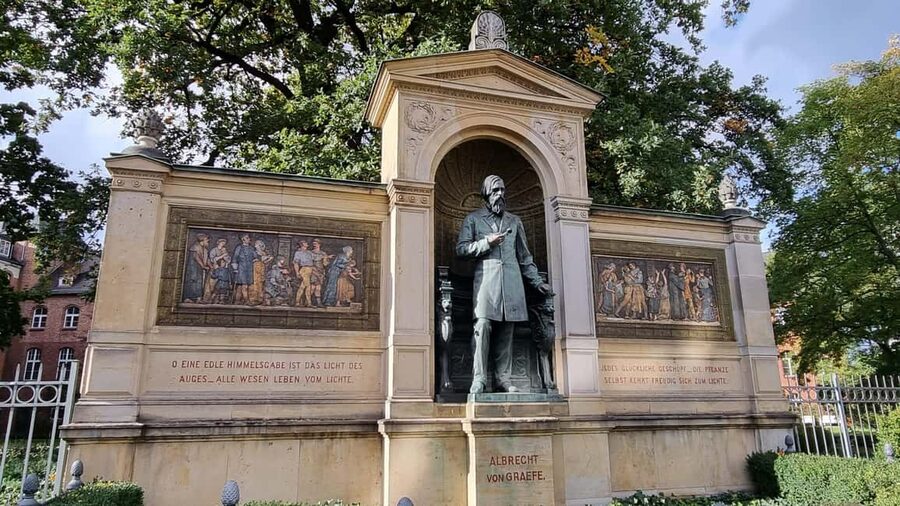
After the theatre, the route circles the historic Charité campus. Several guided portions last about 15 minutes each, giving the walk a clear rhythm: short explanations, a new location, then another chapter in the hospital’s past.
The neo-Gothic architecture gives the campus a strong sense of place. You can admire the buildings while hearing about the people who worked there and the discoveries made within the institution. This is not a tour of hospital interiors. Entry to buildings where hospital or university work continues is not included, and some areas remain restricted.
That limitation is worth understanding before you book. You are seeing the campus from its public and historic spaces, not touring active wards, laboratories, or university rooms. For many people, that is the right balance. You get context without interrupting a working medical center.
Some parts of the Charité grounds may be open for you to explore on your own after the guided walk. Access can vary, so do not plan on seeing every building or courtyard. The guide’s route is designed to show the historical setting while respecting present-day hospital activity.
The neo-Gothic design also helps connect the institution’s past with its current identity. Charité is still a working medical center, not a museum frozen in one period. You will feel that difference throughout the walk.
Same city, a completely different kind of day:
- Berlin: Reichstag, Dome and Government District Guided Tour
★ 4.7 · 18,288 reviews - Berlin: 1-Hour City Tour by Boat with Guaranteed Seating
★ 4.3 · 16,993 reviews - Berlin: Boat Tour Along the River Spree
★ 4.4 · 11,252 reviews - Discover Berlin Half-Day Walking Tour
★ 5.0 · 9,624 reviews
Robert Koch, Rudolf Virchow, and the human side of science

The tour introduces major medical figures, but it does not treat them as names on a plaque. Robert Koch and Rudolf Virchow represent different stages and fields in the development of medical thought, and their work helps you understand why Charité mattered beyond Berlin.
The useful part for you is the link between scientific progress and everyday medical care. Breakthroughs only matter when they change how doctors diagnose, prevent, or treat illness. A guide who explains those links can turn a campus walk into a clear story rather than a list of accomplishments.
The tour also includes Rachel Hirsch, whose appointment in 1913 made her the first woman to hold a medical professorship in Prussia. Her story brings the social history of the institution into focus. Charité could be a place of progress, yet Hirsch still faced resistance inside the institution.
I especially like this part because it avoids presenting medical history as a straight march toward improvement. The same hospital that produced major discoveries could also resist women’s advancement. That tension makes the story more honest and gives you a better sense of the period.
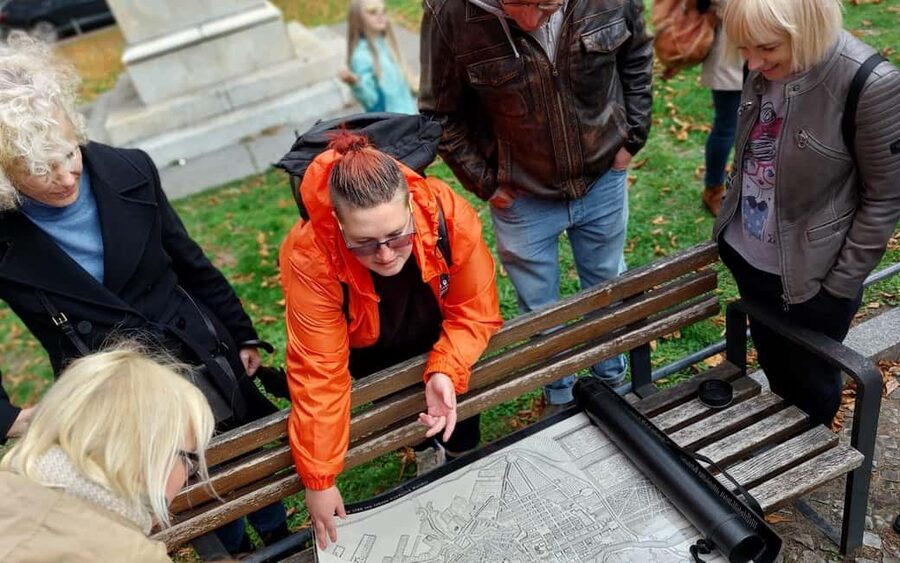
The guides are central here. Martina, one of the guides named in the feedback, is described as warm, lively, and generous with detail. She also used extra material to help explain parts of the story. Those visual aids can be valuable when you are standing outdoors and trying to picture an earlier version of the campus.
Charité under Nazism
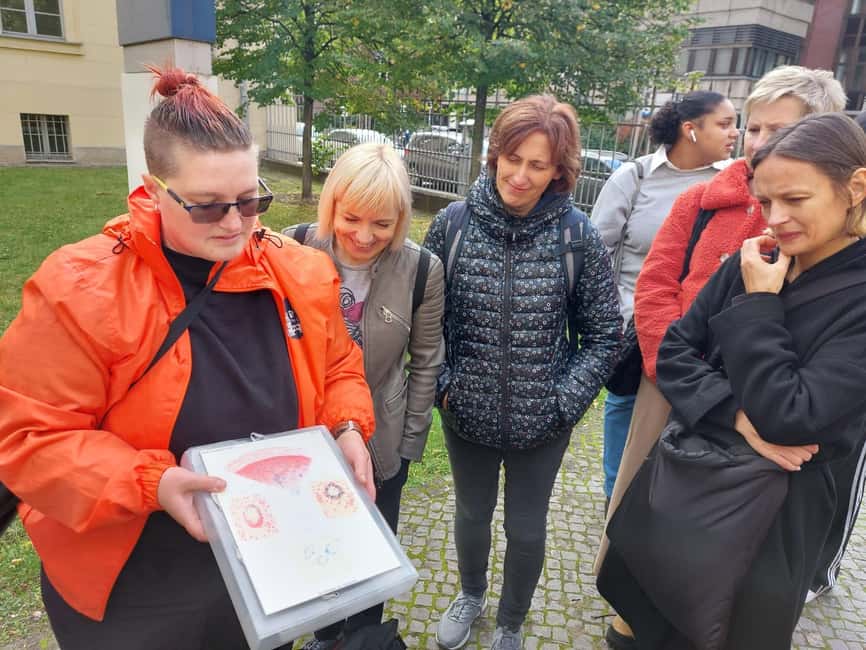
The Nazi period is handled as a serious part of the tour, not a brief footnote. Medical ethics were abandoned, racial hygiene was imposed, and some doctors helped organize the killing of psychiatric patients.
This section is difficult, but it belongs in any honest account of Charité. Hospitals are often associated with healing and care. The Nazi years show how quickly those ideals can be destroyed when doctors accept political ideology over individual human life.
The tour looks at different forms of responsibility. Some doctors stayed quiet. Others took an active role in the extermination of psychiatric patients. That distinction matters because it moves the story beyond a simple claim that medicine was misused. You are shown how silence, cooperation, and organized violence could exist within the same institution.
Expect the tone to become darker here. If you are bringing teenagers, the tour is recommended for ages 14 and up because of the historical depth and difficult subject matter. Minors must be accompanied by an adult.
For me, this is one of the strongest reasons to choose the walk. You are not getting a polished story about famous doctors only. You are also learning how a respected medical institution dealt with power, prejudice, and moral failure.
Charité in East Germany
The postwar story continues into the socialist period. East Germany took pride in Charité’s medical achievements, while some windows facing the capitalist West were bricked up.
That detail says a great deal in very few words. It shows how the hospital became part of Cold War division, not just a place for medicine. The physical changes to the buildings reflected political fear and the separation of Berlin.
This section also helps connect Charité to the city you see today. Berlin’s divisions were not limited to walls and checkpoints. They affected workplaces, institutions, streets, and even what people could see from a window.
The tour’s broad timeline is one of its biggest strengths. In two hours, you move from an epidemic threat in the 18th century to medical science, women’s professional progress, Nazi crimes, and socialist-era politics. The pace is brisk, but the stops give the guide enough time to explain the main ideas.
The real stories behind the Charité television series
If you have watched the Charité television series, this tour adds useful background. The real hospital, its doctors, and its changing political setting provide the basis for many of the themes shown on screen.
You should not expect a film-location tour or a collection of television anecdotes. The emphasis is on the real people and events behind the drama. That makes the experience useful even if you have never seen the series.
For viewers who know the show, the walk can put its medical and social conflicts into a physical setting. You may recognize the names, ideas, or institutional pressures discussed by the guide. For everyone else, the tour still works as a stand-alone account of Charité.
Is $28 a fair price for two hours?
At $28 per person, the tour offers a reasonable value if you want a guided explanation of Charité rather than a quick look at the buildings. The price includes an expert local guide and free admission to the Veterinary Anatomy Theatre.
The value comes from the connections. You are paying for someone to explain how a plague house became a major hospital, how medical pioneers changed their field, and how the institution responded to Nazi and socialist rule. Reading a plaque will not give you that full thread.
The tour is less useful if you mainly want access to hospital interiors. Those areas are not included, and certain campus sections are restricted because Charité remains an active hospital and university site.
Feedback gives the guides especially high marks for clear storytelling, careful planning, enthusiasm, and extra material. Martina is singled out by name in the feedback, and her style sounds suited to people who want more than basic facts. Guide quality can vary by departure, but the experience is built around live explanation, so it remains an important part of the value.
Free cancellation up to 24 hours before the start and the option to reserve now and pay later also make the $28 commitment easier to manage. Those terms are useful if your Berlin plans are still shifting.
Practical comfort, weather, and access
Wear comfortable shoes. You will walk and stand for roughly two hours, and there is no promise of a seat during the outdoor portions.
Dress warmly in cold weather. The tour is mainly outside, and even a mild Berlin day can feel chilly when you pause for several explanations. Water is also recommended.
The activity is listed as wheelchair accessible. Since the tour uses outdoor campus areas and includes a historic building, you may still want to confirm the conditions for your specific departure, particularly if the Veterinary Anatomy Theatre is open or access has changed.
English and German tours are available. The group is advised for ages 14 and older, with all minors accompanied by an adult. The subject matter, especially the Nazi-era material, makes that age guidance sensible.
The route is described as finishing at Alexanderufer near Central Station, while the meeting information also says the activity ends back at the meeting point. Confirm the final arrangement when you book, especially if you are planning a tight connection or another tour afterward. Either way, the location makes it convenient to continue exploring central Berlin.
Who should book the Charité walk?
I would choose this tour if you like social history, medical science, architecture, or Berlin’s difficult 20th-century story. It is also a good choice if you have already seen the Brandenburg Gate and Berlin Wall sites and want a different way to understand the city.
You will get the most from it if you are comfortable with serious subjects and two hours outdoors. The tour is not built around entertainment alone, though a lively guide such as Martina can make dense material easy to follow.
I would skip it if you want a broad sightseeing walk with many major city landmarks, or if you are looking for access to hospital interiors. This is a focused tour about one institution and the people, ideas, and governments that shaped it.
For me, the strongest reason to book is the combination of the Veterinary Anatomy Theatre and the honest treatment of Charité’s darker record. At $28, it offers a thoughtful look at Berlin that is specific, unusual, and grounded in real places.
FAQ
How long does the Charité Hospital History Walking Tour last?
The tour lasts two hours. You should be comfortable walking and standing for approximately that length of time.
Where does the tour begin?
The tour begins at Robert-Koch-Platz, by the Robert Koch statue. Look for a guide holding an orange umbrella.
Where does the tour finish?
The route is described as finishing at Alexanderufer, 10117 Berlin, near Central Station. The meeting information also says the activity ends back at the meeting point, so confirm the final arrangement when booking.
Is the Veterinary Anatomy Theatre included?
Yes. The visit to the Veterinary Anatomy Theatre is included, with free admission. The theatre can sometimes be closed for internal events or public holidays.
What languages are available?
The tour is offered in English and German.
Is the tour suitable for children?
The tour has no strict age restriction, but it is recommended for ages 14 and older because of the historical content. All minors must be accompanied by an adult.
Is the walking tour wheelchair accessible?
The activity is listed as wheelchair accessible. It includes outdoor walking and a visit to the Veterinary Anatomy Theatre when that building is open.
What should I bring?
Bring comfortable shoes and water. In cold weather, wear warm clothing because most of the tour takes place outside.
Can I cancel the booking?
You can cancel up to 24 hours in advance for a full refund. You can also reserve the tour and pay later, which keeps your plans flexible.
Just added around Berlin
- Love and War in Berlin: Self-Guided Story Puzzle Walk★ 5.0 · 7 reviews
- Rickshaw Tours Berlin – Groups of up to 16 people with several rickshaws★ 4.0 · 97 reviews
- Walking on the Wall: 3-Hour Tour in Berlin★ 4.5 · 34 reviews
- eSIM for Germany and 34 European Countries★ 4.5 · 16 reviews
- Warnemuende Shore Excursion: Berlin Private Sightseeing Tour from Rostock★ 5.0 · 4 reviews
- Your ticket to The Wall Museum Berlin★ 3.0 · 60 reviews
- Warnemuende Shore Excursion: Private Berlin Tour★ 4.5 · 27 reviews
- Berlin’s Gay, Lesbian, and Queer Scene Small-Group Walking Tour★ 4.5 · 66 reviews
Historical Tours, compared.

City History Canal Sightseeing Tour on a Motorboat
Read our review →






Browse the lists this tour appears in