
Reviewed · TRAIN EXPERIENCES
Nuremberg: Nuclear Bunker in Main Railway Station
The most striking part of this tour is its location: beneath Nuremberg’s main railway station, where an ordinary commute once met the terrifying logic of the Cold War. You’ll see a bunker built to protect civilians and railway passengers from nuclear, chemical, and biological attacks, then consider what several hundred people would have faced inside.
I like the hands-on sense of scale, especially the chance to sit or lie on a pallet instead of simply looking at photographs. I also like the computer simulation that compares the first atomic bombs with later nuclear warheads. The main drawback is that the tour is in German, and the confined setting is not suitable for people with claustrophobia or mobility limits.
In This Review
- Key points to know before booking
- Why a railway station became a nuclear shelter
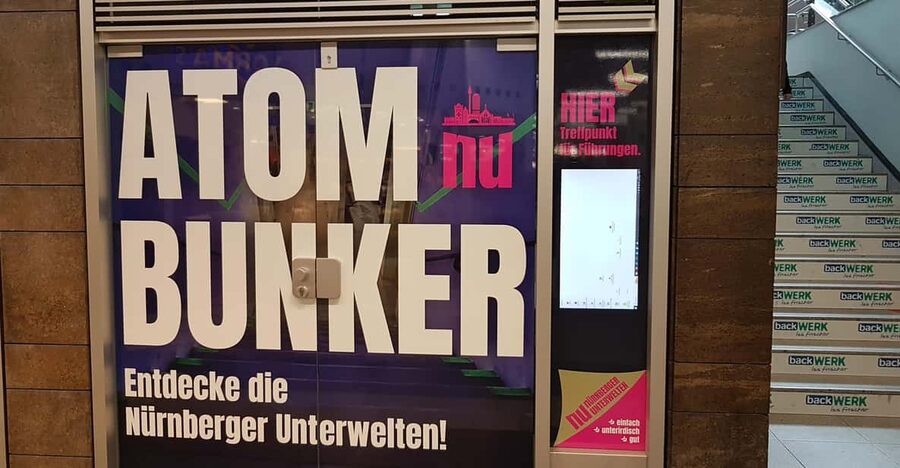
- Finding the entrance under Nuremberg Hauptbahnhof
- The opening story: from atomic bombs to Cold War fear
- Exhibits that make nuclear power easier to grasp
- Sitting on a pallet and imagining bunker life
- What $15 buys you in 75 minutes
- The practical rules that shape the visit
- Who will get the most from this bunker tour
- Should you book the Nuremberg nuclear bunker?
- FAQ
- Where is the nuclear bunker tour located?
- How do I find the meeting point?
- How long does the tour last?
- How much does the tour cost?
- Is the tour available in English?
- What is included in the price?
- Can I bring luggage or food inside?
- Is the bunker suitable for wheelchair users or people with claustrophobia?
Key points to know before booking
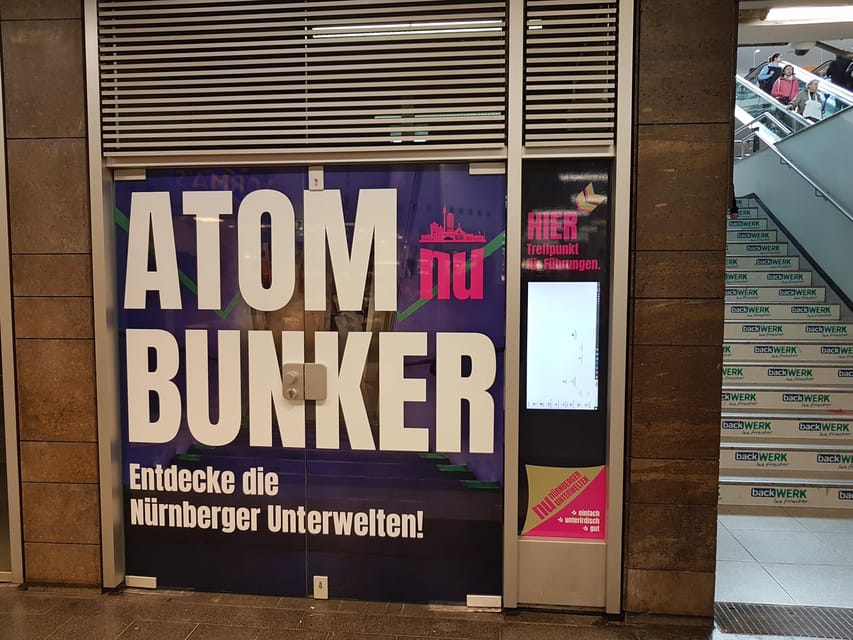
- Beneath the main railway station: The bunker entrance is in the underground Königstorpassage, beside Yorma’s restaurant.
- A 75-minute Cold War lesson: The tour connects World War II, the atomic bombings of Japan, and the later nuclear arms race.
- More than a museum display: You can sit on a pallet and picture life among several hundred people in a sealed shelter.
- A computer simulation of nuclear power: The exhibit shows how destructive capacity grew from the first atomic bombs to modern warheads.
- German-speaking guide only: You’ll need enough German to follow the explanations.
- Strict access rules: Large bags, food, drinks, pets, selfie sticks, and late arrival are not allowed.
Why a railway station became a nuclear shelter
After World War II, the atomic bomb changed the meaning of civilian safety. Nuremberg’s bunker was part of the answer to a frightening question: if nuclear war came, where could ordinary people go?
The location made practical sense. The main railway station already brought large numbers of people into one place, including passengers who might be caught in an attack without access to a home shelter. The facility was intended to protect some Nuremberg residents, but its first concern was acute danger to people in and around the station.
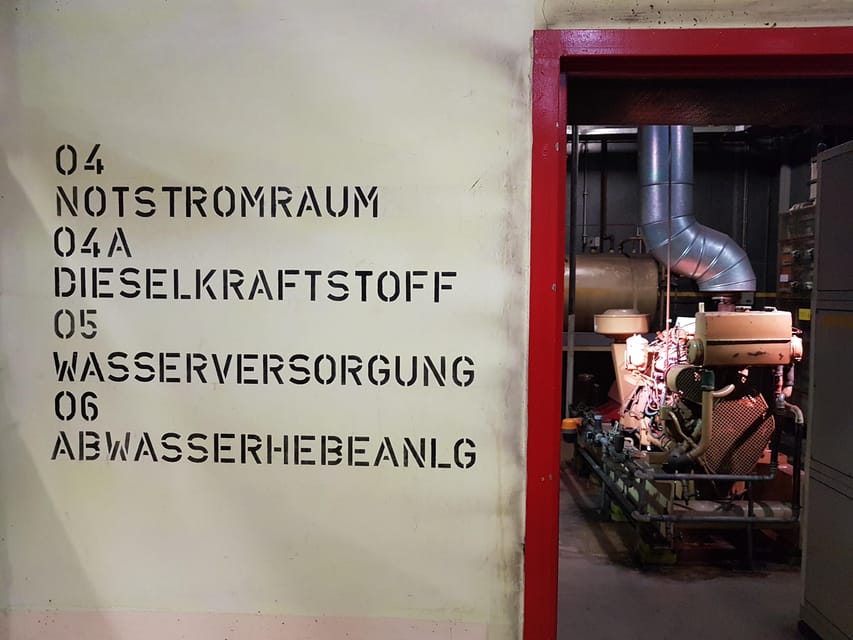
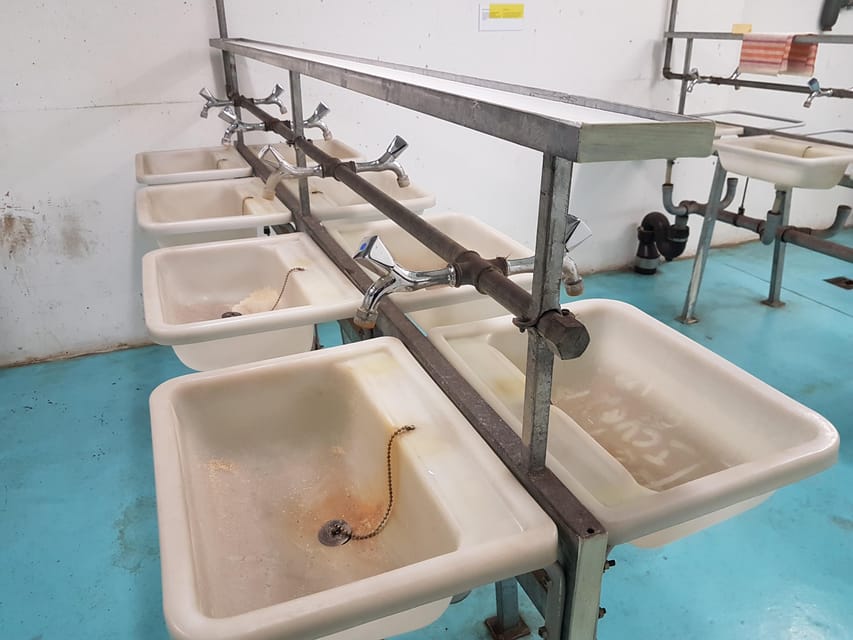
That purpose gives the tour a different feel from a standard military museum. You are not looking at a distant battlefield or a collection of uniforms. You are looking at a place designed for people who had little control over events. The bunker addresses the civilian side of conflict: air, food, crowding, sanitation, chemical danger, radiation, and the problem of deciding who could be protected.
I find that context important. A nuclear bunker can seem like an abstract relic until you consider the people it was meant to hold. The station above was part of normal city life. Below it was a plan for an event that would have shattered normal life completely.
A few more Nuremberg trips to weigh up
- Nuremberg: City Tour with the Bimmelbahn Train
★ 4.4 · 2,475 reviews - Dachau Concentration Camp Memorial Site Tour from Munich by Train
★ 4.5 · 5,637 reviews - Würzburg: City Tour with the Bimmelbahn Train
★ 4.4 · 1,322 reviews
Finding the entrance under Nuremberg Hauptbahnhof
Give yourself extra time to locate the meeting point. The entrance is easy to miss, especially if you are unfamiliar with Nuremberg station.
Enter through the station’s main portal and walk into the main hall. Four escalators lead toward the basement levels. You can take the long escalator down to the shopping arcade, called the Königstorpassage, or use the shorter escalator followed by a step staircase.
At the foot of the escalator or stairs, turn sharply right. The bunker entrance is on the right wall, directly by Yorma’s restaurant. Wait there for the guide and do not assume that a general station information desk will direct you to the exact spot.
This is one of those small details that can make the difference between a calm start and a rushed one. The entrance is not presented as a large, obvious attraction in the main station hall. If you arrive only a few minutes before the start, you may spend your precious time searching instead of getting settled.
There is no entry after the tour begins, so punctuality matters. The tour runs rain or shine, but that is hardly a concern once you are underground. Your bigger concern is finding the correct wall and waiting in the right place.
The opening story: from atomic bombs to Cold War fear
The tour begins with the shift from World War II to the nuclear age. The dropping of atomic bombs on Japan showed the destructive power of a new weapon. After the war, the arms race between major powers made nuclear attack a defining fear of the Cold War.
The bunker offers a way to understand how governments tried to respond. Civilian protection became a serious field, with plans for shelters, emergency systems, and methods to keep people alive after an attack. The displays explain the protective measures considered at the time and the dangers they were meant to address.
The story does not stop with nuclear weapons. The facility was also designed to help shield people from biological and chemical attacks. That broadens the tour beyond the familiar image of a nuclear shelter. You are looking at a system built around several kinds of modern warfare, each with different risks.
A guide leads the visit in German, explaining the purpose of the rooms and exhibits. The tone can include humor and practical common sense, which helps keep the subject approachable without making the dangers seem trivial. If you understand German, you should get far more from the guide’s spoken detail than you would from a quick walk through the rooms alone.
If you do not speak German, this is a real limitation. The tour is not advertised with English guiding, and the main value comes from the explanations. You can still see the bunker itself, but you may miss the connections between the rooms, the protection systems, and the larger Cold War story.
Exhibits that make nuclear power easier to grasp
One of the strongest parts of the visit is the attempt to show scale. People know that nuclear weapons are powerful, but numbers alone are hard to imagine. A computer simulation compares the first atomic bombs with later nuclear warheads and shows how the arsenal developed.
That comparison gives the Cold War arms race a more concrete shape. The first bombs were already catastrophic, yet later weapons could be far more destructive. You are not simply told that technology advanced. You are shown the ominous direction of that progress.
The simulation is especially useful because it links the bunker’s physical limits with the limits of civilian protection. A shelter might protect people from certain effects under certain conditions, but no bunker turns nuclear war into a manageable event. The exhibit encourages you to think about the difference between a protective plan and genuine safety.
Other displays explain the methods imagined for civilian defense. Their purpose was not only to protect against blast. They also dealt with contamination and other consequences of nuclear, biological, and chemical attack.
The exhibits are best approached as historical evidence of Cold War thinking. They show how officials tried to plan for a disaster that was almost impossible to control. For you, that makes the tour useful as both a history lesson and a study in public policy.
Same city, a completely different kind of day:
- Nuremberg: Old Town Guided Walking Tour
★ 4.6 · 2,416 reviews - Nuremberg: Tunnels and Secret Passages in the City Wall Tour
★ 4.8 · 2,334 reviews - Nuremberg: Medieval Dungeons Guided Tour
★ 4.8 · 1,726 reviews - Nuremberg: Walking Tour of Former Nazi Party Rally Grounds
★ 4.7 · 1,665 reviews
Sitting on a pallet and imagining bunker life
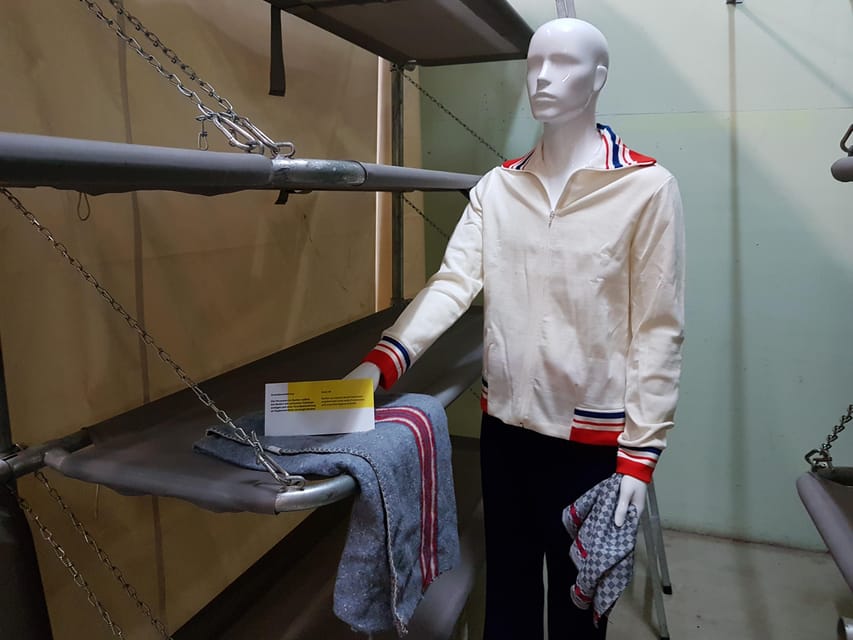
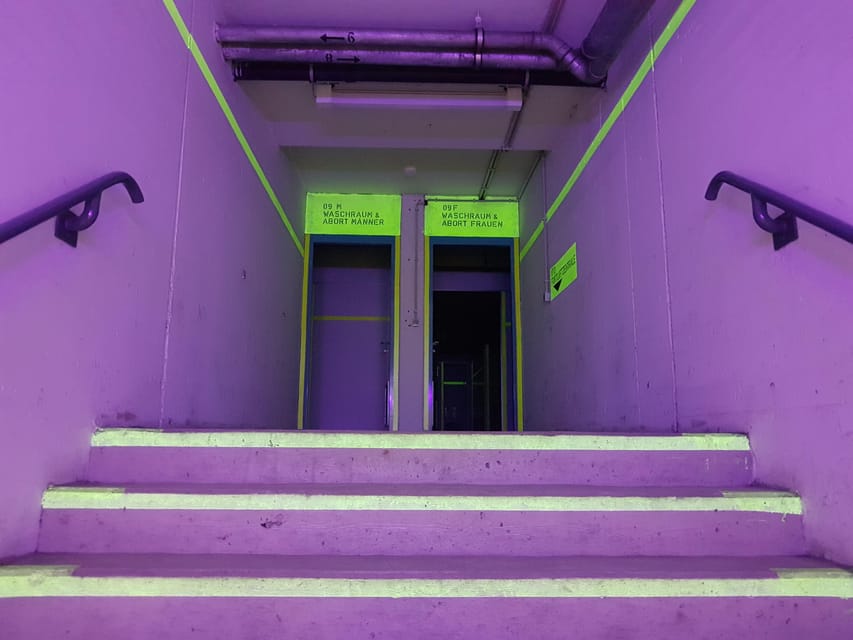
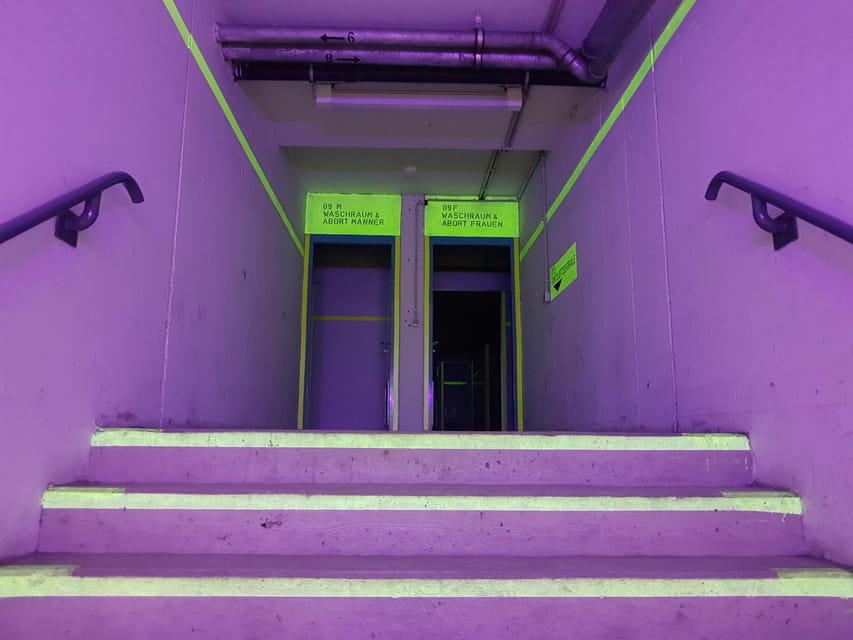
The tour becomes more personal when you are invited to sit or lie down on a pallet. This is not a staged entertainment feature. It is a simple way to understand the physical reality of the shelter.
Imagine several hundred people packed into the same underground facility. You would have limited personal space, little privacy, and no easy way to step outside. The pallet makes that idea physical. Instead of hearing only about capacity, you can see how little room an individual might have.
This part also explains why the tour may not suit everyone. The bunker is a confined setting, and the experience asks you to think about being enclosed with a large crowd. If tight spaces make you uncomfortable, the subject matter and the surroundings could work against each other.
For people interested in the human side of history, this is one of the most effective details. A display case can explain policy. A pallet can make you picture a body, a family, and a long wait in a sealed room.
The tour does not promise a recreated emergency or theatrical effects. Its force comes from the actual setting and the plain question of preparedness: if an attack happened, what would you do, and what could the authorities realistically provide?
What $15 buys you in 75 minutes
At $15 per person, this is a reasonably priced specialist tour. The fee includes entry to the nuclear bunker and a live guide, while transportation and food or drinks are not included. Since the bunker sits under the central station, you do not need a separate excursion or a long transfer to reach it.
The value depends heavily on your interests and language skills. If you enjoy Cold War history, military technology, public safety, or unusual places beneath cities, the price is modest for a guided 75-minute visit. The tour combines a real historic facility, explanatory exhibits, and a physical activity that helps you understand the cramped conditions.
If you are hoping for a broad overview of Nuremberg’s famous World War II sites, this is too narrow. The focus is the postwar nuclear age and civilian protection, not a general city history tour. It works best as a focused addition to a visit, especially if you are already using the railway station.
The tour is also a good choice when the weather is poor. It takes place rain or shine, and its underground location gives you a useful indoor activity. You will still need to walk through the station and use escalators or stairs to reach the meeting area.
A 4.7 rating from 262 bookings suggests that the format works well for many people, but the practical restrictions matter more than the number. A German-only guide, a strict no-late-entry rule, and a confined setting can turn a good match into a poor one if you overlook them.
The practical rules that shape the visit

You cannot bring luggage or large bags into the bunker. That makes this a poor activity for arriving at Nuremberg with suitcases in hand, even though the meeting point is inside the station. Plan to store your bags elsewhere before the tour.
Food and drinks are not allowed inside. Smoking is also prohibited. Pets cannot enter, although assistance dogs are allowed. Selfie sticks are not permitted, and you must not touch the exhibits.
These rules are easy to follow, but they tell you something about the character of the place. This is a protected historic interior, not a casual station attraction. The restrictions also help keep the rooms clear and protect the displays.
The tour is not suitable for children under eight. People with mobility impairments and wheelchair users should not book it, since the route includes escalators and a step staircase and is not designed for wheelchair access.
If you have claustrophobia, think carefully before booking. The experience depends partly on the feeling of enclosure, and the chance to imagine hundreds of people in a bunker may be unsettling rather than interesting.
Who will get the most from this bunker tour
I would recommend this experience to you if you like focused history rather than a long list of city highlights. It suits people who want to understand how the Cold War affected ordinary civilians, not only politicians and soldiers.
It is also a strong pick for anyone interested in nuclear technology, emergency planning, civil defense, or the history of public shelters. The computer simulation and the civilian protection exhibits give the tour more substance than a simple walk through an empty basement.
Families with older children may find the topic useful, but the minimum age is eight and the German language requirement remains. Young children who need movement, bright displays, or a relaxed pace may not enjoy the enclosed rooms.
You should also book if you want an activity that fits neatly into a station-centered day. The location is convenient, but convenience does not remove the need to find the entrance early. Arrive with no large bag, no food or drink, and enough time to reach Yorma’s restaurant.
Should you book the Nuremberg nuclear bunker?
Book it if you want a serious, unusual look at civilian life during the nuclear age, and you can follow a German-speaking guide. The $15 fee is fair for a guided 75-minute visit that includes a real bunker, historical exhibits, a nuclear weapons simulation, and a chance to experience the cramped pallet arrangements.
Skip it if you dislike enclosed spaces, need wheelchair access, are carrying luggage, or want an English-language tour. The entrance takes some effort to find, and late arrival means no entry.
For the right audience, this is a thoughtful stop beneath an ordinary railway station. It leaves you with more than facts about weapons. It asks how much protection a city can offer, how little space people might have, and how prepared anyone can really be.
FAQ
Where is the nuclear bunker tour located?
The bunker is beneath Nuremberg’s main railway station in Bavaria, with the entrance in the underground Königstorpassage.
How do I find the meeting point?
Enter the station through the main portal and go to the main hall. Take the long escalator to the Königstorpassage, or use the shorter escalator and step staircase. At the bottom, turn sharply right and look for the entrance on the right wall beside Yorma’s restaurant.
How long does the tour last?
The tour lasts 75 minutes.
How much does the tour cost?
The price is $15 per person.
Is the tour available in English?
The live tour guide language is German. No English guide is specified.
What is included in the price?
The price includes entry to the nuclear bunker and a guide.
Can I bring luggage or food inside?
No. Large bags, luggage, food, and drinks are not allowed. Smoking, selfie sticks, and touching the exhibits are also prohibited.
Is the bunker suitable for wheelchair users or people with claustrophobia?
No. The tour is not suitable for wheelchair users, people with mobility impairments, or people with claustrophobia. Children under eight are also not permitted.
Just added around Nuremberg
- Tour en español al Campo Zeppelin★ 5.0 · 8 reviews
- Stein: Public guided tour of the “Old Mine” museum★ 4.5 · 18 reviews
- “Rotes Bier” and “Blaue Zipfel”. A historical-culinary walk★ 4.4 · 190 reviews
- Nuremberg: Old Town Guided Tour By Bus★ 4.4 · 198 reviews
- Nürnberg kennenlernen: Highlights in der Altstadt★ 4.7 · 189 reviews
- Nuremberg: Bar and Club Tour with Free Shots and Free Entry★ 3.8 · 23 reviews
- Nürnberg Bachelor(ette) Party with Night PubCrawl★ 4.2 · 5 reviews
- Nuremberg: World War 2 History Tour with Beer Tasting★ 5.0 · 4 reviews
Train Experiences, compared.
Dachau Concentration Camp Memorial Site Tour from Munich by Train
Read our review →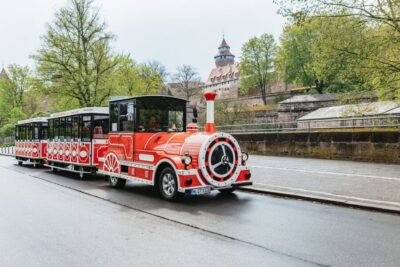
Dachau Concentration Camp Memorial Tour with Train from Munich
Read our review →
Guided Dachau Concentration Camp Memorial Site Tour with Train from Munich
Read our review →
Dachau Small-Group Half-Day Tour from Munich By Train
Read our review →
Browse the lists this tour appears in