
Reviewed · NUREMBERG TOURS
Nuremberg: Medieval Time Travel for Kids
Nuremberg’s medieval past becomes much easier for children to grasp when they can play the old games, act out a sacred ritual, and see how water, food, work, and worship shaped daily life. This two-hour walk turns the Old Town into an outdoor classroom, with short steps between sights and plenty of chances for children to take part.
I like the focus on ordinary life rather than only knights and grand rulers. I also like the way the guide uses acting, objects, and group activities to keep young minds moving. The main drawback is clear: the tour is in German, and children under six or anyone with mobility limitations may not be comfortable with it.
In This Review
- Key points to know before you book
- Starting at the Henkerhaus beside the Pegnitz
- Trödelmarkt and the first look at city life
- Liebesinsel and the Pegnitz connection
- Fleischhauerbrunnen and the work behind medieval food
- Hauptmarkt and Nuremberg’s famous market square
- St. Sebaldus Church and the role of faith
- Weinmarkt and the city beyond fairy tales
- Finishing on Weißgerbergasse
- What the $11 price really gives you
- Who will enjoy this Nuremberg walk
- Practical advice for a smoother two hours
- Should you book this medieval family tour?
- FAQ
- Where does the tour begin?
- Where does the tour finish?
- How long does the walking tour last?
- What language is the tour in?
- What age is this tour suitable for?
- What places does the route include?
- Does the tour include historical games?
- What should I bring?
- Can groups of 10 or more book the tour?
Key points to know before you book
- Medieval childhood is the main theme: Learn what children ate, played with, believed, and did for work.
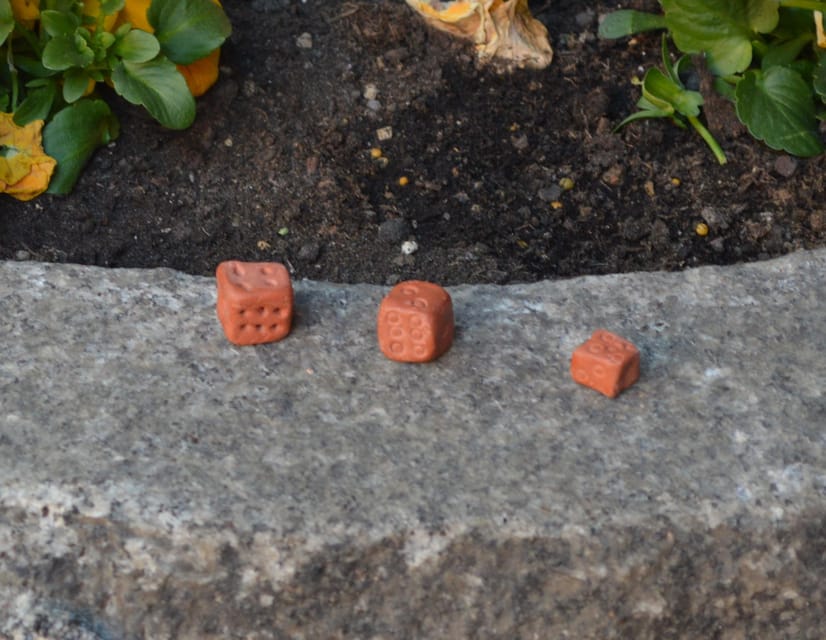
- The tour is active: Historical games and a shared sacred ritual give children something to do at several stops.
- The route covers major Old Town sights: Walk from Henkerhaus through Trödelmarkt, Hauptmarkt, St. Sebaldus Church, Weinmarkt, and Weißgerbergasse.
- The Pegnitz helps explain city life: See how water supported work and daily routines in medieval Nuremberg.
- The guide speaks German: Children need enough German to follow stories, questions, and instructions.
- The price is modest: At $11 per person for two hours, this is a low-cost way to add structure to a family day in Nuremberg.
Starting at the Henkerhaus beside the Pegnitz
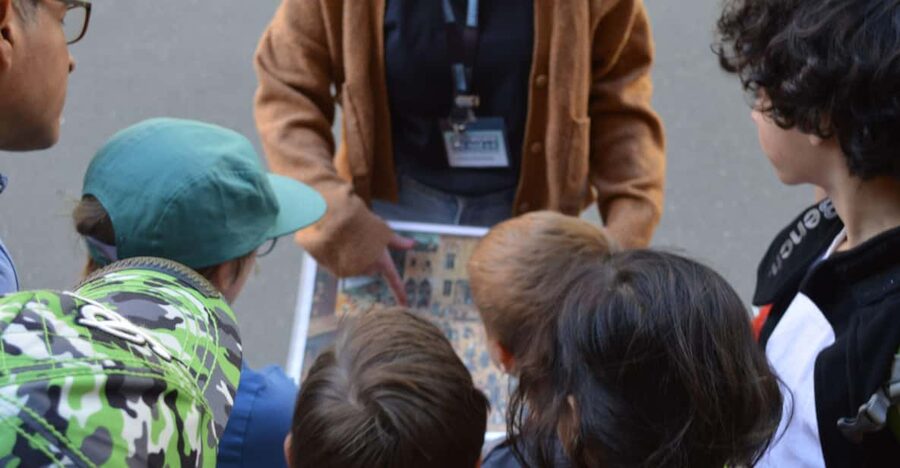
The meeting point is in front of the Henkerhaus Museum, also called the Hangman’s House, at Trödelmarkt. Look for a guide wearing a green name badge and carrying a folder marked Geschichte Für Alle. That detail matters in a busy square, since you will not need to search through every nearby group.
Beginning here gives the tour an immediate connection to medieval city life. The Henkerhaus sits by the Pegnitz, so the guide can introduce the importance of water before the walk moves into the streets and market squares. Children learn that rivers were not just pretty places beside town. They helped support work, cleaning, transport, food production, and other daily needs.
You will want comfortable shoes and clothing suited to the weather. The tour is outdoors for two hours, and the route includes several short walks between stops. The supplied timing lists five minutes between many locations, followed by a longer seven-minute walk toward the final stop.
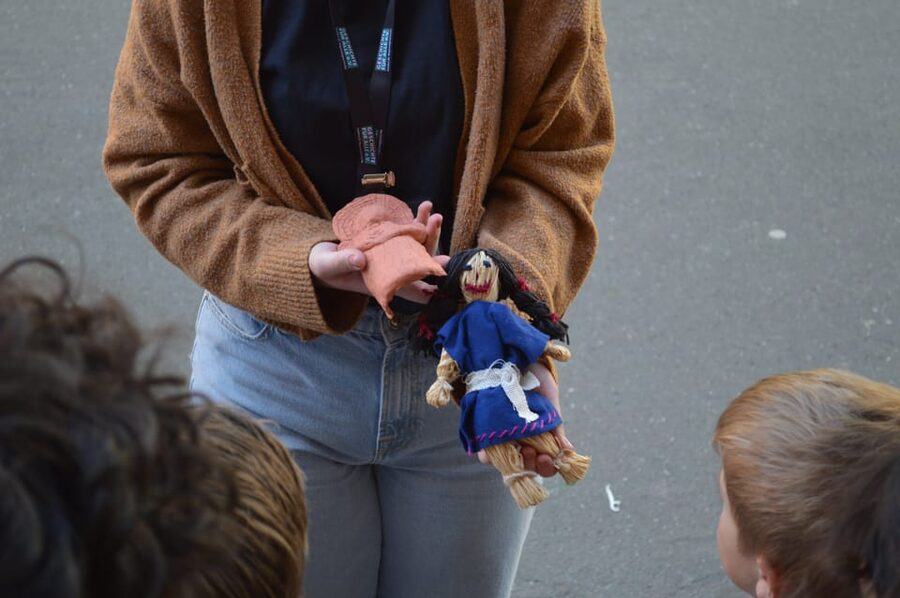
The guide uses stories and questions to make the past feel close to home. Instead of treating the Middle Ages as a parade of castles and battles, the discussion centers on children’s routines. That means food, chores, games, jobs, religious practice, and the practical limits of growing up in an older city.
Other Nuremberg days worth putting on the list:
- Nuremberg: City Tour with the Bimmelbahn Train
★ 4.4 · 2,475 reviews - Nuremberg: Old Town Guided Walking Tour
★ 4.6 · 2,416 reviews - Nuremberg: Tunnels and Secret Passages in the City Wall Tour
★ 4.8 · 2,334 reviews
Trödelmarkt and the first look at city life
From the Henkerhaus, the group begins at Trödelmarkt. This area gives the guide room to connect the river with trade and everyday work. It is a useful opening because children can start thinking about how food, goods, and services moved through a medieval town.
The tour is designed around questions children naturally ask. What did they eat? What did they play with? Did knights and princesses really live in Nuremberg? The guide uses these questions to separate popular fairy-tale images from the less glamorous routines of real life.
That approach is one of the strongest parts of the experience. Children do not need a long list of dates to understand that medieval life depended on work, limited food choices, religious customs, and local trades. The subject becomes concrete when the guide asks them to imagine a day without modern shops, appliances, or entertainment.
The program also introduces different medieval professions. The supplied information does not list each trade, so you should expect a broad look at working life rather than a specialist tour of one craft. Still, this topic gives children a better idea of how a city functioned and why people depended on one another.
Liebesinsel and the Pegnitz connection
The next stop is Liebesinsel, reached after about five minutes on foot. Here the river remains part of the story, with attention to the use of water in medieval times.
This is a good place for the guide to show that Nuremberg’s history was not confined to churches and official buildings. The Pegnitz shaped the town’s work and movement. Children can connect a physical feature they can see with the practical needs of people who lived here centuries ago.
The exact activity at Liebesinsel is not specified, so you should not expect a fixed demonstration every time. The guide’s wider method includes questions, acting, and hands-on participation. The value of this stop lies in linking the river to the rest of the tour, especially the topics of nutrition, work, and urban life.
Parents should keep expectations realistic. This is a guided walking activity, not a museum visit with a large collection of objects. The river and streets provide the setting, while the guide supplies the explanation and activities.
Fleischhauerbrunnen and the work behind medieval food
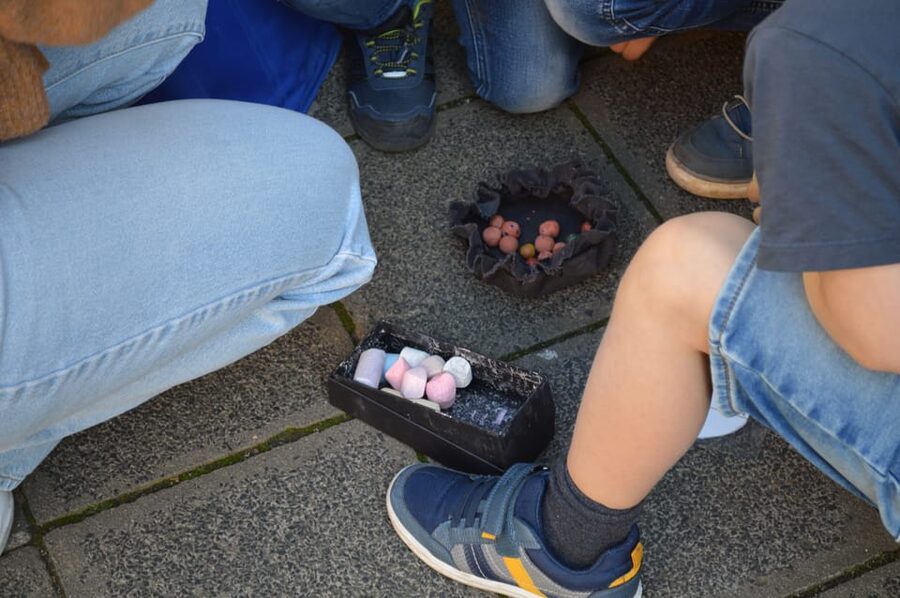
After another short walk, the group reaches Fleischhauerbrunnen. The stop helps bring the subject of food and work together.
Children learn about nutrition in the Middle Ages, including what food might have been available and how daily meals differed from modern family life. The guide also explores professions, so this location offers a natural chance to connect food on the table with the people whose work made it possible.
This part can be especially useful for children who find broad history too abstract. Food is familiar. Work is familiar. By asking who prepared, sold, carried, or produced basic supplies, the guide can show how much labor sat behind an ordinary meal.
The tour does not promise food tasting, and none is included. You are learning through explanation and participation rather than eating medieval dishes. That keeps the cost low, but families looking for a cooking activity should choose a different experience.
Same city, a completely different kind of day:
- Nuremberg: Medieval Dungeons Guided Tour
★ 4.8 · 1,726 reviews - Nuremberg: Walking Tour of Former Nazi Party Rally Grounds
★ 4.7 · 1,665 reviews - Medieval Tour in Nuremberg in Spanish
★ 5.0 · 1,374 reviews - Nuremberg: Historischer Kunstbunker WWII Art Bunker Tour
★ 4.8 · 921 reviews
Hauptmarkt and Nuremberg’s famous market square
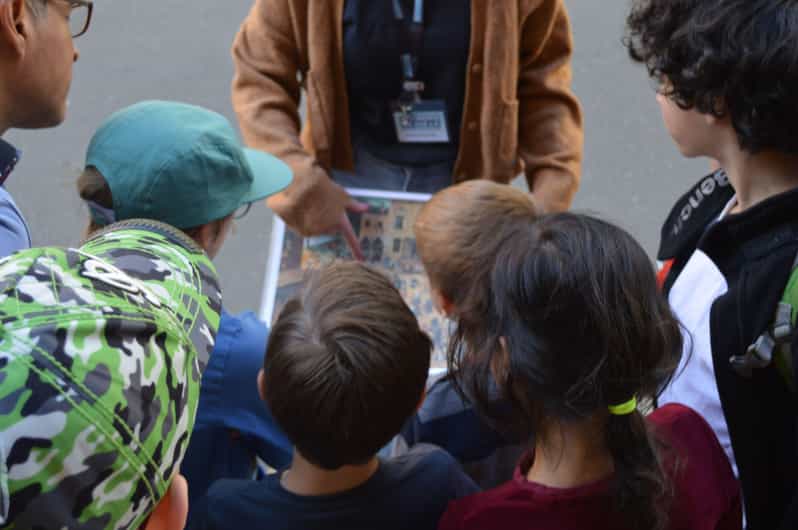
The walk continues to Hauptmarkt, the large central market square known for Nuremberg’s annual Christmas market. This is likely to be one of the easiest stops for children to recognize, since it is an open public space with a strong connection to markets and seasonal celebrations.
The guide uses the square to explain trade, food, and public life. For children, a market is a clear way to understand how a town gathered goods and people in one place. The Christmas market connection also gives parents a familiar reference point, even if they visit Nuremberg at another time of year.
The square can be busy, especially during popular periods. That may make it harder for every child to hear, so staying close to the green-badge guide is sensible. The open setting also means the group may pause rather than sit, another reason comfortable shoes and weather-ready clothing matter.
Hauptmarkt is not simply a photo stop. It helps show that medieval city life happened in shared public spaces. Markets were places to buy supplies, meet others, exchange news, and see the different jobs that kept urban life running.
St. Sebaldus Church and the role of faith
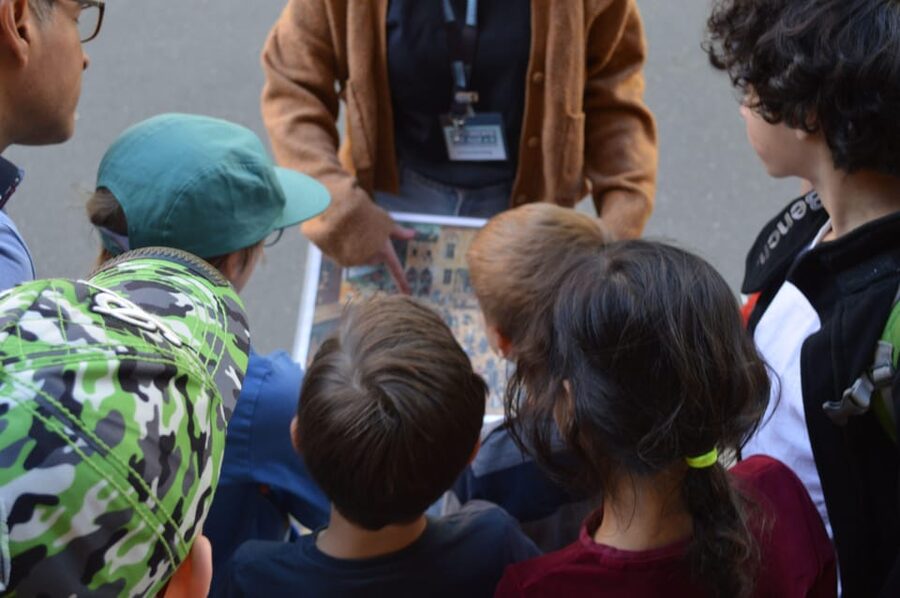
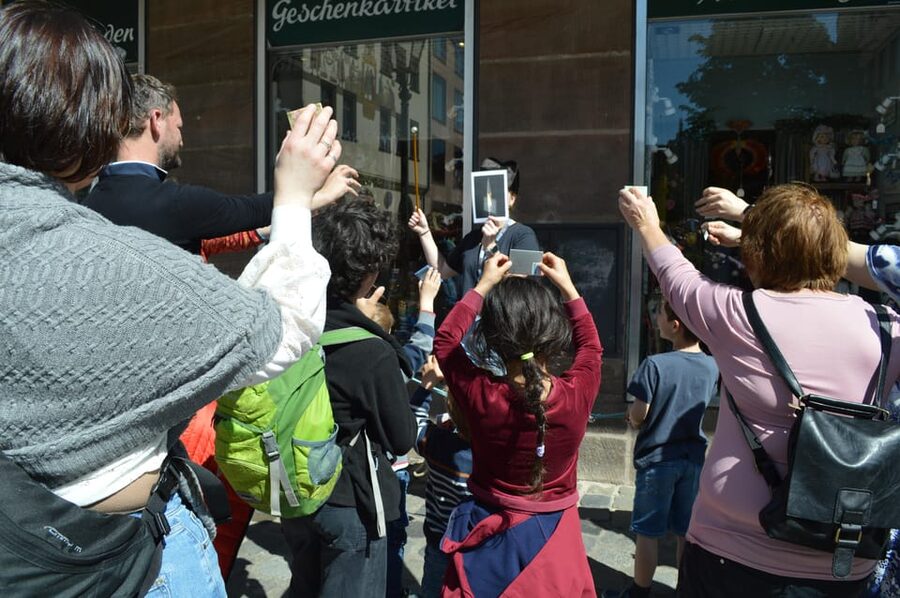
A short walk leads to St. Sebaldus Church. Outside the church, the group examines a relief and uses it to explore the role of the church in medieval society.
This section goes beyond architecture. Children learn how religion affected the rhythm of life, public customs, and ideas about right and wrong. The joint staging of a sacred ritual gives the subject a physical form. Instead of only hearing that faith mattered, children take part in a simple group reenactment.
The activity is educational, but it can also be funny in the best family-tour sense. Children have to listen, follow directions, and work together. The format gives shy children a way to participate without requiring a long speech, while more outgoing children can enjoy the acting element.
The information provided does not describe the exact ritual or provide a script, so the content may vary with the guide and group. You should expect a respectful historical activity, not a religious service. The point is to understand medieval practice and the church’s social role.
This stop also adds balance to the tour. Food, play, and work are easy subjects for children, while religion can feel more distant. The relief and the shared activity help make an important part of medieval life more understandable.
Weinmarkt and the city beyond fairy tales
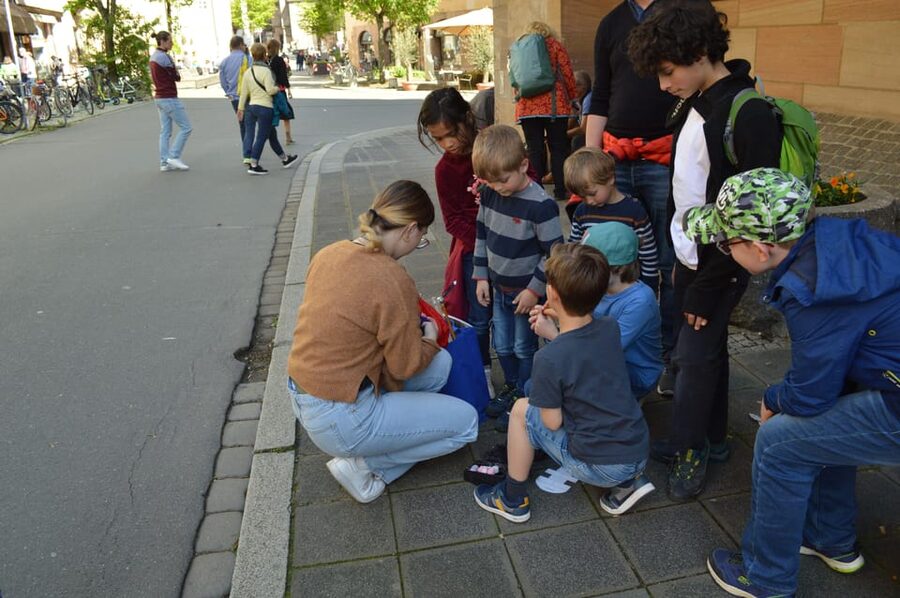
The group then walks to Weinmarkt, with another guided stop along the way. By this point, the children have considered water, markets, food, work, and religion. Weinmarkt helps keep the focus on the city as a place where different people and professions met.
The tour’s central question remains daily life. Were there really knights and princesses in Nuremberg? The answer is not presented as a simple fairy tale. Children learn to place those figures beside the many workers, families, and religious communities who made up the city.
I appreciate that balance. Medieval history can easily become a costume show filled with armor and royalty. This walk uses those familiar ideas as an entry point, then shifts attention to childhood, work, leisure, and nutrition. That gives parents more substance than a string of dramatic legends.
The guide also returns to leisure time and historical games. Children see that play was part of life long before screens and organized toys. The games are not just a break from the information. They help explain how children used their bodies, imagination, and available materials.
Finishing on Weißgerbergasse
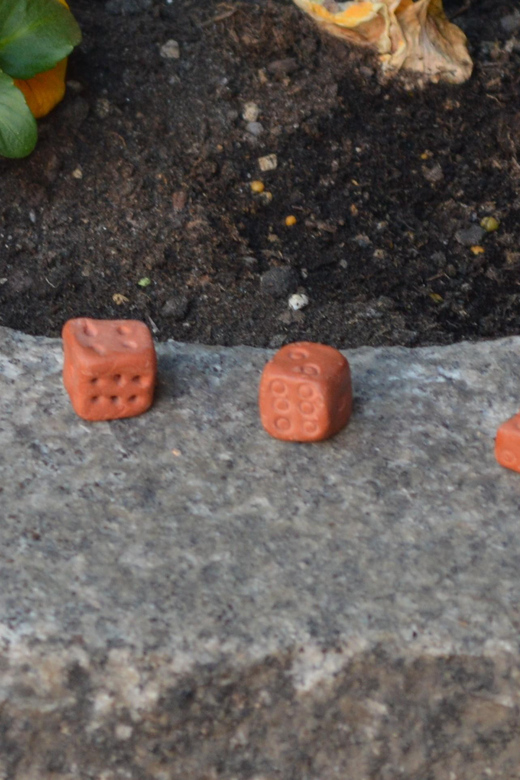
The final destination is Weißgerbergasse, reached after roughly seven minutes on foot from Weinmarkt. The street is a fitting end for a tour that explores professions and ordinary urban life.
By the finish, you will have crossed several types of Old Town space: the river area, market settings, a church site, and historic streets. The route gives children a simple map of how different parts of the city supported different parts of life.
The tour ends here rather than returning to Henkerhaus. Plan your next activity from Weißgerbergasse, not from the starting point. The finish is useful for continuing an Old Town walk, though the supplied details do not specify any onward arrangement with the guide.
The route is not long by sightseeing standards, but two hours can feel substantial for younger children. The frequent stops and activities help break up the walking. Children who need a stroller, have difficulty walking, or tire quickly may not be a good fit, since the tour is specifically listed as unsuitable for people with mobility impairments.
What the $11 price really gives you
At $11 per person, the tour offers good value if you want a guided family activity rather than a formal museum visit. You are paying for two hours with a live guide, a planned route through the Old Town, historical explanations, games, role-play, and a sacred ritual activity.
The strongest value comes from the way the guide turns ordinary sights into teaching tools. You do not need to pay for separate entry to a major attraction at each stop. The streets, river, square, relief, and church exterior form the setting.
The low price also makes it easier to book as an introduction to Nuremberg. You can use the tour to give children a basic framework, then decide which buildings or museums deserve more time afterward. It is not a replacement for an in-depth history visit, but it can make the city easier for a family to understand.
The activity is offered with free cancellation up to 24 hours before the start, and you can reserve while paying later. These terms help if your family schedule is uncertain. For groups of 10 or more, contact Geschichte Für Alle e.V. by email before booking. Bookings made through GetYourGuide do not receive a separate invoice, since the booking confirmation serves as proof of payment.
Who will enjoy this Nuremberg walk
This tour is best for families with children aged six and up, especially children who learn more easily by doing than by standing still. The strongest fit is likely children in the early school years. A pair of boys aged seven and eight enjoyed the child-friendly format, and children aged six and ten also responded well to the combination of games and information.
Adults are included in the activities, too. The program is not designed to send children off on their own while parents listen to a lecture. Everyone can join the games and the ritual, which makes the experience more enjoyable for a mixed-age family.
You should book with care if your child does not understand German. The live guide speaks German, and the activities depend on following explanations and instructions. The supplied information does not list English or another language.
It is also less suitable for anyone who wants a quiet architectural walk. The emphasis is on participation, childhood, and social history. If your children enjoy acting, questions, and group games, that is a plus. If they prefer looking at buildings without joining in, the format may feel too active.
Practical advice for a smoother two hours
Arrive at the Henkerhaus with enough time to identify the guide by the green name badge and Geschichte Für Alle folder. Keep children close in market areas and listen for instructions before each activity.
Wear walking shoes. The route is on foot, with several short connections of about five minutes and one final connection of about seven minutes. Weather-appropriate clothing is important because the experience takes place mainly outdoors.
Think of the tour as a family introduction, not a full history course. Ask your children to listen for three themes: what people ate, how they worked, and how they spent free time. Those subjects appear throughout the walk and give the stops a clear thread.
The activity has a rating of 4.9 from 15 reviews, with praise focused on child-friendly explanations, useful materials, acting, games, and participation for the whole group. That matches the tour’s design: it succeeds by keeping children involved while still giving adults meaningful information.
Should you book this medieval family tour?
Book it if you want an affordable, active introduction to Nuremberg’s Old Town and your children understand German. The price is modest, the route covers several important city spaces, and the use of games and acting gives young children a reason to pay attention.
Skip it if you need English, step-free access, or a stroller-friendly outing. It is also not the right choice for children under six or for anyone hoping for food samples, museum entry, or a long architectural lecture.
For families who fit the age, language, and walking requirements, this is a smart way to make Nuremberg’s medieval past feel less remote. You will leave with more than pictures of market squares. Your children will have a clearer idea of how people ate, worked, worshipped, and played in the city.
FAQ
Where does the tour begin?
The tour begins in front of the Henkerhaus Museum at Trödelmarkt in Nuremberg. The guide wears a green name badge and carries a folder marked Geschichte Für Alle.
Where does the tour finish?
The tour finishes at Weißgerbergasse.
How long does the walking tour last?
The tour lasts two hours.
What language is the tour in?
The live tour guide speaks German.
What age is this tour suitable for?
The tour is not suitable for children under six years old. It is designed around children’s history learning, games, acting, and participation.
What places does the route include?
The route includes Henkerhaus, Trödelmarkt, Liebesinsel, Fleischhauerbrunnen, Hauptmarkt, St. Sebaldus Church, Weinmarkt, and Weißgerbergasse.
Does the tour include historical games?
Yes. Children and adults can take part in historical games and a shared staging of a sacred ritual.
What should I bring?
Bring comfortable shoes and clothing suitable for the weather.
Can groups of 10 or more book the tour?
Yes, but groups of 10 or more should contact Geschichte Für Alle e.V. by email at [email protected].
Just added around Nuremberg
- Tour en español al Campo Zeppelin★ 5.0 · 8 reviews
- Stein: Public guided tour of the “Old Mine” museum★ 4.5 · 18 reviews
- “Rotes Bier” and “Blaue Zipfel”. A historical-culinary walk★ 4.4 · 190 reviews
- Nuremberg: Old Town Guided Tour By Bus★ 4.4 · 198 reviews
- Nürnberg kennenlernen: Highlights in der Altstadt★ 4.7 · 189 reviews
- Nuremberg: Bar and Club Tour with Free Shots and Free Entry★ 3.8 · 23 reviews
- Nürnberg Bachelor(ette) Party with Night PubCrawl★ 4.2 · 5 reviews
- Nuremberg: World War 2 History Tour with Beer Tasting★ 5.0 · 4 reviews
Nuremberg Tours, compared.
Tunnels and Secret Passages in the City Wall Tour
Read our review →
Walking Tour of Former Nazi Party Rally Grounds
Read our review →
Browse the lists this tour appears in