
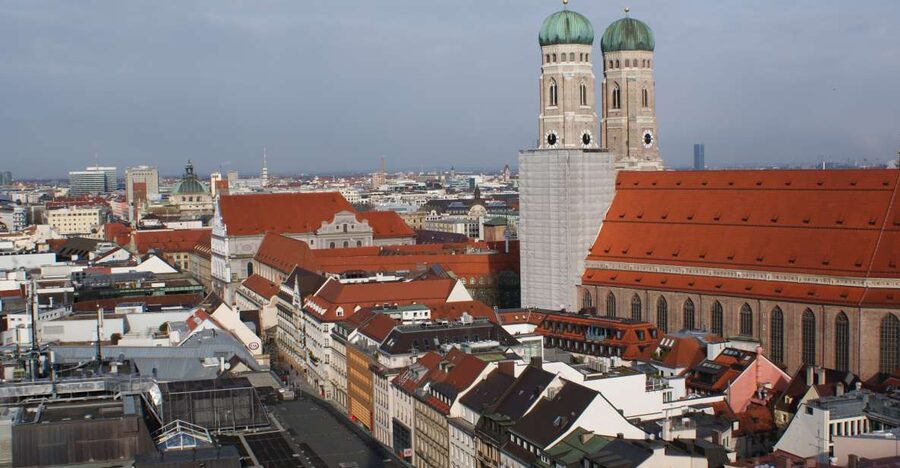
Reviewed · HISTORICAL TOURS
Munich: Nazi History 2-Hour Small Group Walking Tour
Munich’s old center carries a grim political history beneath its handsome squares and grand buildings. This two-hour walk follows Hitler’s early Munich story, from his arrival in 1913 as a 24-year-old with no prospects to the places where the Nazi party gathered, spoke, and tried to seize power.
I like the small-group format, which gives you room to ask questions instead of listening to a guide through a crowd. I also like the focus on real streets and buildings, including Hofbräuhaus and the site of the failed Beer Hall Putsch. The main drawback is time: two hours allows a sharp introduction, not a full study of Nazi Munich. Also, the published details differ slightly on the group limit and final stop, so confirm those points when booking.
In This Review
- Key points to know before you book
- Why this two-hour walk matters in Munich
- Starting at Marienplatz and entering Munich’s political past
- Hofbräuhaus, where beer-hall politics became public
- Odeonsplatz and the failed Beer Hall Putsch
- Königsplatz and the Nazi rally grounds
- Alun Evans and the value of a small group
- Weather, footwear, and the practical side of the walk
- Is $58 a fair price for two hours?
- Who will get the most from this experience?
- My booking advice
- Should you book this Munich Nazi history tour?
- FAQ
- Where does the tour start?
- How do I recognize the guide?
- How long is the tour?
- What language is the tour conducted in?
- Who is the guide?
- Which historic sites are included?
- Does the tour include hotel pickup?
- Are food and drinks included?
- Does the tour operate in bad weather?
- Can I cancel for a refund?
Key points to know before you book
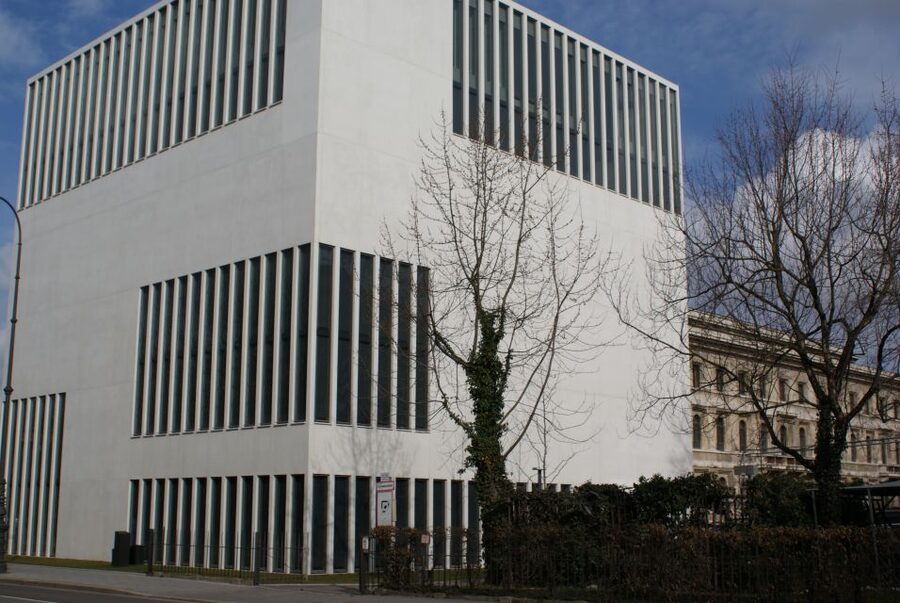
- Alun Evans leads the English tour: His calm, engaged way of explaining the subject earned strong praise, especially for making difficult material clear without turning it into a theatrical show.
- The walk begins at Marienplatz: You meet in front of the Tourist Information Center, making the tour easy to fit into a first day in Munich.
- Hofbräuhaus provides a vivid setting: Hitler gave speeches there, and the Nazi party held meetings in the famous beer hall.
- The Beer Hall Putsch site connects politics to place: You will see where Hitler’s failed 1923 attempt to take power unfolded.
- Odeonsplatz and Königsplatz broaden the story: The route links political power, state buildings, party activity, and Nazi rallies.
- Plan for changing weather: This is an outdoor walk in all conditions, with no refreshments included.
Why this two-hour walk matters in Munich
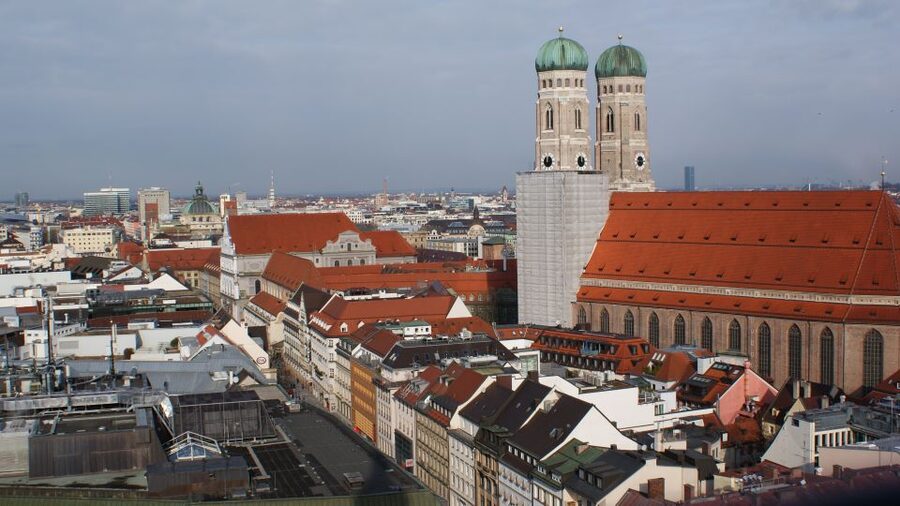
Munich is often introduced through palaces, churches, beer halls, and picture-book squares. Those sights are part of the city, but they can leave out the political story that made Munich an early center of the Nazi movement.
This tour gives you a different set of landmarks. Instead of treating Nazi history as something found only in a museum, it shows how speeches, meetings, rallies, and failed political action took place in familiar public spaces. You see the buildings and streets, then hear how they were used.
That approach is valuable because the subject can otherwise feel distant and abstract. A guide can point out a beer hall, a square, or a government building and explain what happened there. The surroundings do not make the history entertaining, but they make it easier to picture and remember.
The tour is led in English by Alun Evans, whose work has been praised for being clear, thoughtful, friendly, and respectful. This matters with a subject that needs care. You want enough detail to understand events, but you do not want sensational storytelling or a guide who treats the past as a spectacle.
The published duration is two hours. That is a useful length for fitting the tour around museum visits, meals, or a city walk. It also means Alun must keep the story moving. If you already study the Third Reich or have visited several Nazi sites, you may wish for more time and greater depth. If you want a focused introduction to Munich’s role, two hours is a sensible starting point.
A few more Munich trips to weigh up
- Munich: Guided Tour of the historic Town Hall on Marienplatz
★ 4.8 · 63 reviews - Munich and Nazi History Combination Day Tour Small Group
★ 5.0 · 31 reviews - Munich: Historical Walking Tour on the Rise of Hitler
★ 5.0 · 13 reviews
Starting at Marienplatz and entering Munich’s political past
The meeting point is in front of the Tourist Information Center on Marienplatz in central Munich. Look for the guide holding a sign with the local operator’s name.
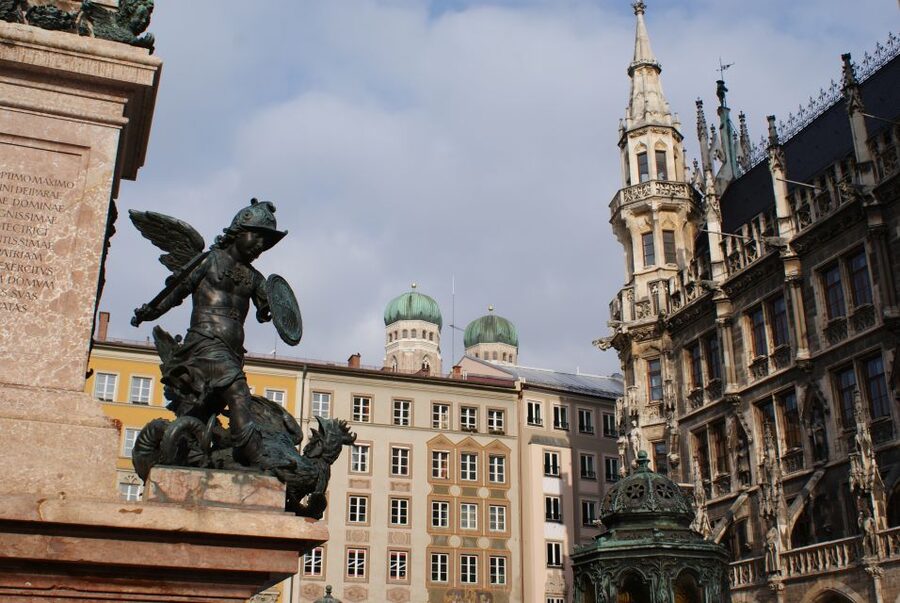
Marienplatz is a practical place to begin. It is central, familiar, and easy to find, so you do not lose time hunting for a side street or hotel pickup. The first part of the walk is listed as about 30 minutes, giving Alun room to set the historical frame and explain how Munich became connected to the rise of the Nazi party.
The key starting point is Hitler’s arrival in Munich in 1913. He was 24 and had no clear prospects. The tour uses that personal starting point to introduce the city he encountered before the Nazi regime existed.
I appreciate this sort of beginning because it avoids treating Hitler as an inevitable political figure. A young man’s arrival in a city is not yet a story of dictatorship. The value of the guide’s explanation is in showing how the setting, political conditions, and later organization helped turn Munich into a major center for the Nazi party.
Expect walking and standing rather than a seated lecture. Marienplatz can be busy, so stay close to the guide and be ready to listen amid normal city noise. Comfortable shoes are more useful here than anything formal.
Hofbräuhaus, where beer-hall politics became public
Hofbräuhaus is one of Munich’s best-known beer halls, but this visit uses it as a political setting rather than simply a place for food and drink. The Nazi party met there, and Hitler gave speeches in the hall.
The guided portion here is listed as about 10 minutes. That is enough to explain why beer halls mattered as public meeting places and to connect the room with the early Nazi movement. It is not a meal stop, and refreshments are not included, so do not arrive expecting a tasting or a reserved table.
This is one of the tour’s most memorable contrasts. You are looking at a famous Munich institution that many people associate with music, beer, and local tradition. The guide adds the uncomfortable political layer without pretending the building has only one meaning.
For me, that is the point of seeing the site in person. A history book can tell you that speeches took place there. Standing in the setting helps you understand how political movements used familiar public spaces to gather support and spread ideas.
The stop may appeal especially to anyone interested in how propaganda worked in everyday settings. You are not only hearing about major events from a distance. You are seeing where people met and listened.
Still, keep your expectations measured. A short stop at Hofbräuhaus cannot explain every stage of the Nazi party’s development. Its strength is atmosphere and context, not exhaustive detail.
Odeonsplatz and the failed Beer Hall Putsch
The route continues to Odeonsplatz, with roughly 15 minutes of guided explanation listed for this part of the tour. Here you hear about the failed Beer Hall Putsch of 1923, an attempted seizure of power that became a key event in Hitler’s early political career.
The site gives the story a clear physical setting. Political failure is easier to understand when you can see where the movement tried to turn speeches and organization into direct action. Alun can connect what happened at the beer hall with what followed in central Munich.
Odeonsplatz also lets the tour place the Nazi story beside major Munich institutions. You see the Bavarian State Opera and the Residenz building in this area, reminders that the Nazi movement operated within a city of established government, culture, and royal history.
That contrast is useful. The tour is not taking you to an isolated memorial or a remote battlefield. It is showing how a radical political movement grew within the normal civic life of a major city.
The stop also demonstrates why a live guide adds value. A plaque can name a location, but it cannot easily explain how separate sites connect. Alun’s role is to link the meeting place, the failed putsch, the speeches, and the later use of Munich as a stage for party activity.
This is likely to be one of the more serious sections of the walk. The subject is violent and politically charged, so expect a sober tone. The strongest feedback about Alun points to his ability to be candid and tactful while keeping the explanation engaging.
Same city, a completely different kind of day:
- From Munich: Neuschwanstein & Linderhof Castle Full-Day Trip
★ 4.5 · 12,494 reviews - Neuschwanstein & Linderhof Castle-Fairytale Day Tour from Munich
★ 4.5 · 7,275 reviews - Munich: Third Reich & WWII Walking Tour
★ 4.6 · 6,181 reviews - Dachau Concentration Camp Memorial Site Tour from Munich by Train
★ 4.5 · 5,637 reviews
Königsplatz and the Nazi rally grounds
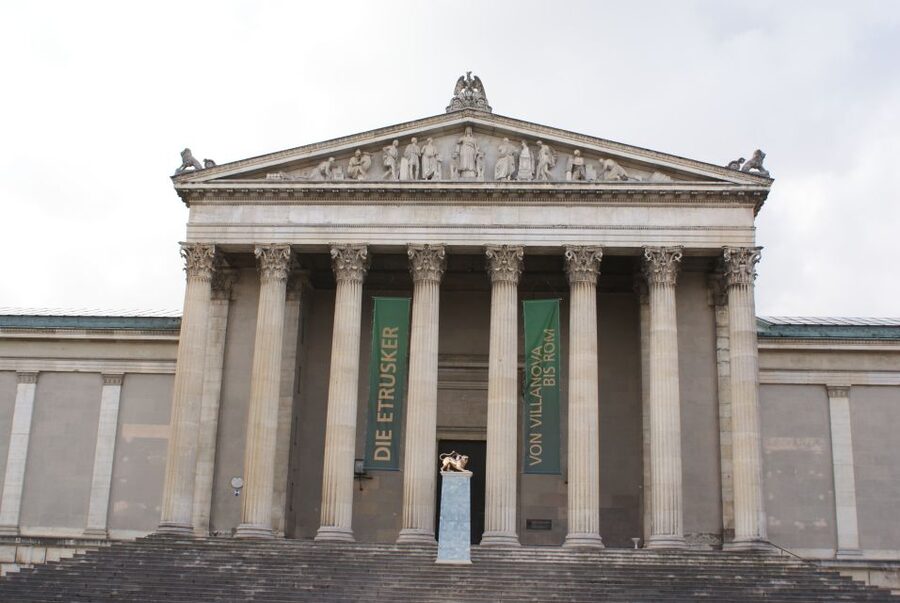
The tour description includes Königsplatz as the place where the Nazis held rallies. It presents the square as the final major historical setting, showing how the movement later used public space for mass displays and political power.
Königsplatz helps broaden the walk beyond Hitler’s early speeches and the failed 1923 putsch. You can see the progression from party meetings to organized rallies and public ceremony. That wider arc is important if you want to understand how the Nazi party presented itself to the public.
There is a practical detail to watch here. The information supplied for the experience says the walk starts and ends at Marienplatz, while another description says it ends at Königsplatz. The listed route also names Marienplatz as the return point, with the option of walking back with the guide on request.
Because those details do not fully match, confirm the final stopping point before you book. This matters if you have a train, restaurant reservation, or another timed visit. If the walk finishes at Königsplatz, you will need to allow time to return to central Munich. If the guide returns you to Marienplatz, the schedule is simpler.
The route information also gives two different group limits: some details say a maximum of 15, while the activity information says the small group is limited to 10. Either size is far more manageable than a large city tour, but you should verify the actual limit for your date.
Alun Evans and the value of a small group
The guide can make or break a history walk, particularly one covering difficult material in only two hours. Alun Evans is the named guide associated with this experience, and the strongest praise centers on his manner as much as his subject knowledge.
He is described as humble, caring, welcoming, patient, engaging, and passionate about history. Those qualities are useful here. You need a guide who can explain events directly, answer questions, and avoid turning Nazi history into a performance.
A small group also changes the feel of the walk. With a listed limit of 10, or possibly 15 depending on the booking details, you can usually hear the guide more easily and take part in the discussion. One particularly useful feature is the chance to ask Alun to walk back to Marienplatz with you if that option applies to your departure point.
A private or nearly private group is possible when bookings are light. One booking resulted in a private tour, while another had only four people despite heavy snow and bitter cold. That does not guarantee a private experience, but it shows why this format can feel personal on some dates.
The smaller setting suits people who want conversation rather than a fixed speech. It is also helpful if you have specific questions about the sites or want the guide to adjust the level of detail.
Weather, footwear, and the practical side of the walk
This tour operates in all weather conditions. Munich can be cold, wet, or snowy, and the walk does not move indoors simply because conditions are poor. Dress in layers, bring rain protection when needed, and wear shoes that handle two hours of city walking and standing.
The snow example is worth taking seriously. A small group completed the tour in heavy snowfall and very cold conditions, with the guide continuing to engage the group. That speaks well of the guide’s commitment, but it also tells you to prepare properly.
There is no hotel pickup. You make your own way to Marienplatz, and the fixed meeting point keeps the arrangement simple. There are also no refreshments included, so have water with you and plan any coffee or meal separately.
The activity includes free cancellation up to 24 hours in advance for a full refund, and you can reserve now and pay later. Those terms are useful if your Munich schedule is still shifting, though you should check the booking screen for the exact conditions attached to your date.
The walking route is central, so you can pair it with other sightseeing. Be careful not to pack the morning or afternoon too tightly. The stated length is two hours, but a small delay, questions, or a return walk can affect your timing.
Is $58 a fair price for two hours?
At $58 per person, this is not the cheapest way to walk around central Munich. You are paying for a live English-speaking guide, a small group, and a focused historical interpretation rather than transportation or entry to a major museum.
The value depends on what you want from the experience. If you only need to see Marienplatz, Hofbräuhaus, Odeonsplatz, and Königsplatz, you can visit these public places on your own. The fee makes sense if you want someone to explain how the sites connect and help you read the political story behind them.
I see the price as reasonable for a specialist two-hour walk when the group remains small. It is less attractive if you expect a full-day Nazi history program, museum admission, hotel pickup, or a meal. None of those extras is included.
The high rating and repeated praise for Alun suggest that the guide is the central part of the value. His explanations, answers, and handling of the subject are what you cannot reproduce with a map or a quick internet search.
History enthusiasts may find the tour too brief for $58, especially if they already know Munich’s Nazi-era sites. For a first visit, a couple, or a family group seeking an accessible introduction, the cost buys a useful framework that can guide later visits to museums and memorials.
Who will get the most from this experience?
I would choose this tour if you want to understand Munich’s role in the rise of the Nazi party without spending an entire day in a museum. It suits first-time visitors who want a serious change of pace from the city’s usual beer-hall and palace circuit.
It is also a good match for people who already know some Second World War history but want to connect names and events with actual places. One booking came from people with a strong interest in the period, and the tour became a highlight because the guide gave physical locations more meaning.
The walk may suit families with older teenagers, though the subject is difficult and parents should judge the material for their group. It also works well for solo visitors because a small group makes it easier to listen and ask questions.
You may want something else if you need extensive coverage, museum interiors, or a longer examination of the Nazi regime. This is an introduction built around central Munich locations. It does not claim to cover every site or every chapter.
My booking advice
Book it early in your Munich plans if Nazi history is an important interest. The route can give you a useful base for deciding which museums or memorial sites to visit afterward.
Before paying, confirm two points: the actual group limit for your date and whether the walk ends at Königsplatz or returns to Marienplatz. Those details are presented differently in the tour information and can affect your schedule.
Bring weatherproof clothing, good shoes, and a willingness to listen carefully. The best part of this experience is not a grand view or a special ticket. It is the connection between ordinary Munich places and the events that gave them a darker meaning.
Should you book this Munich Nazi history tour?
Yes, if you want a concise, thoughtful walk led by an English-speaking guide who can explain difficult history with care. Alun Evans appears to be the main reason this experience works so well, and the small group gives you a better chance to engage with him directly.
Think twice if you want a long academic tour or a complete survey of Nazi-era Munich. At two hours, this is a focused introduction. For most people who want to understand the city beyond its postcard sights, $58 is a fair price for that added context.
FAQ
Where does the tour start?
The tour starts in front of the Tourist Information Center on Marienplatz in central Munich.
How do I recognize the guide?
The guide will be holding a sign with the name of the local tour operator.
How long is the tour?
The walking tour lasts two hours.
What language is the tour conducted in?
The live tour is conducted in English.
Who is the guide?
The named guide is Alun Evans of Alun Evans Personal Tour Guiding Munich.
Which historic sites are included?
The tour includes Marienplatz, Hofbräuhaus, Odeonsplatz, the site of the failed Beer Hall Putsch, and Nazi rally locations connected with Königsplatz.
Does the tour include hotel pickup?
No. You must make your own way to the fixed meeting point at Marienplatz.
Are food and drinks included?
No. Refreshments are not included.
Does the tour operate in bad weather?
Yes. The tour operates in all weather conditions, so dress appropriately.
Can I cancel for a refund?
You can cancel up to 24 hours in advance for a full refund, according to the stated booking terms.
More 2-Hour Experiences in Munich
- Discover Munich 2-Hour Small Group Walking Tour
★ 4.6 · 491 reviews - Exploring Munich by Pedicab: Premium Two Hour Tour
★ 5.0 · 10 reviews - 2 Hours Munich: VIP Private Segway Tour
★ 4.9 · 5 reviews - 2H Best of München Sightseeings Tour
★ 4.8 · 4 reviews
Just added around Munich
- Pub crawl incl. Oktoberfest museum guided tour with beer tasting (private)★ 5.0 · 5 reviews
- South Tyrolean specialties and wine tasting★ 5.0 · 5 reviews
- Size Matters Beer Tour Munich★ 4.6 · 105 reviews
- Short & sweet: Tasting the Viktualienmarkt★ 4.8 · 37 reviews
- Secret Food Tours Munich★ 4.8 · 5 reviews
- Munich: Romantic Wine Experience for Two at Viktualienmarkt★ 4.2 · 14 reviews
- Munich: Resistance against Hitler – Historical Walking Tour★ 5.0 · 5 reviews
- Residence of Munich private tour with skip the line ticket★ 5.0 · 4 reviews
Historical Tours, compared.

City History Canal Sightseeing Tour on a Motorboat
Read our review →






Browse the lists this tour appears in