
Reviewed · HISTORICAL TOURS
Munich: Historical Walking Tour on the Rise of Hitler
Munich’s pretty streets hide a difficult story, and this walking tour puts that story in the places where it happened. With local guide Alex, you trace how an unknown Austrian soldier built power in Munich, then see the squares and buildings that helped turn the city into the Nazi movement’s headquarters. I like the chronological route, which makes a tangled subject easier to follow, and I like that the tour looks at Munich’s role rather than treating Hitler as an isolated figure. The main drawback is that the tour is offered in German, so you need enough German to follow a serious historical discussion.
I also like the balance Alex brings to the subject. He treats National Socialism with care and gravity, yet keeps the presentation human and approachable, with room for questions and short pauses. At $30 for 2.5 hours, the tour offers good value if you want context beyond a quick look at Munich’s famous center. Just wear comfortable shoes and plan for rain or shine.
In This Review
- Key points at a glance
- Why Munich is the right place to study the Nazi rise
- Starting at Marienplatz with Alex
- From political meeting place to Nazi center
- The buildings Hitler’s government used to project power
- Squares where Munich endured propaganda and war
- A serious subject without a stiff presentation
- Why the German-language format matters
- Price, time, and practical value
- Who should book this Munich history walk
- My booking advice
- FAQ
- Where does the tour meet?
- How long does the walking tour last?
- What language is the tour in?
- How much does the tour cost?
- Is hotel pickup included?
- Is the tour wheelchair accessible?
- What should I bring?
- Does the tour run in bad weather?
- Can I cancel or pay later?
Key points at a glance
- Start at the Marian Column: Meet Alex at the large column in central Marienplatz, an easy location to find.
- Follow Munich’s Nazi-era story in order: The chronological approach helps connect political events, public spaces, and propaganda.
- See buildings linked to Hitler’s government: The route focuses on major structures built by the National Socialists, along with places they used for ceremonies and political theater.
- Learn why Munich became the movement’s center: The tour asks how a city known for art and culture became the birthplace of National Socialism.
- Expect a serious but approachable guide: Alex is a Munich native who has studied the subject since youth and welcomes questions.
- Plan for outdoor conditions: The entire experience is a walking tour, and it goes ahead in all weather.
Why Munich is the right place to study the Nazi rise
Munich is often sold through beer halls, royal buildings, museums, and handsome squares. Those are real parts of the city, but they are only half the picture. Munich also played a major role in the early growth of National Socialism, and many of the places tied to that story remain part of the modern city.
That makes this subject especially useful to study on foot. You are not simply hearing dates in a room. You are looking at buildings and public spaces that were designed, altered, or used to project power. The physical setting helps explain how politics became public theater.
The central question is not just what Hitler did. It is how Munich became fertile ground for his movement, how public support was built, and how an open city could be pulled toward dictatorship. Alex frames the tour around those questions, which gives the walk more purpose than a list of Nazi-era addresses.
I appreciate that this approach puts responsibility on the city and its institutions as well as on one man. Hitler later gave Munich the title capital of the movement, a grim label that reflected the city’s importance to the Nazi cause. The tour uses that history to explain why certain buildings appeared and why certain squares became sites of speeches, marches, and ceremonies.
A few more Munich trips to weigh up
- Munich: Guided Tour of the historic Town Hall on Marienplatz
★ 4.8 · 63 reviews - Munich and Nazi History Combination Day Tour Small Group
★ 5.0 · 31 reviews - Munich: Nazi History 2-Hour Small Group Walking Tour
★ 5.0 · 30 reviews
Starting at Marienplatz with Alex
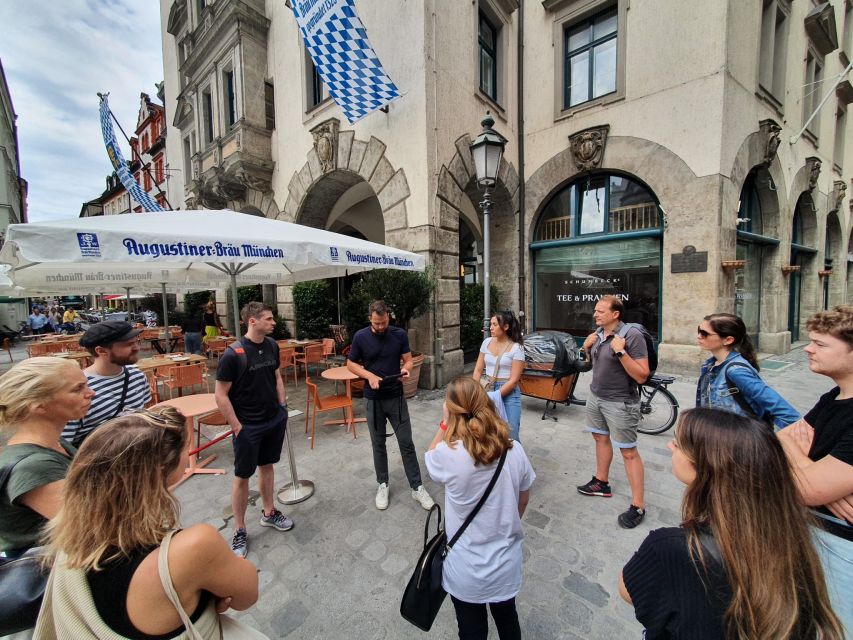
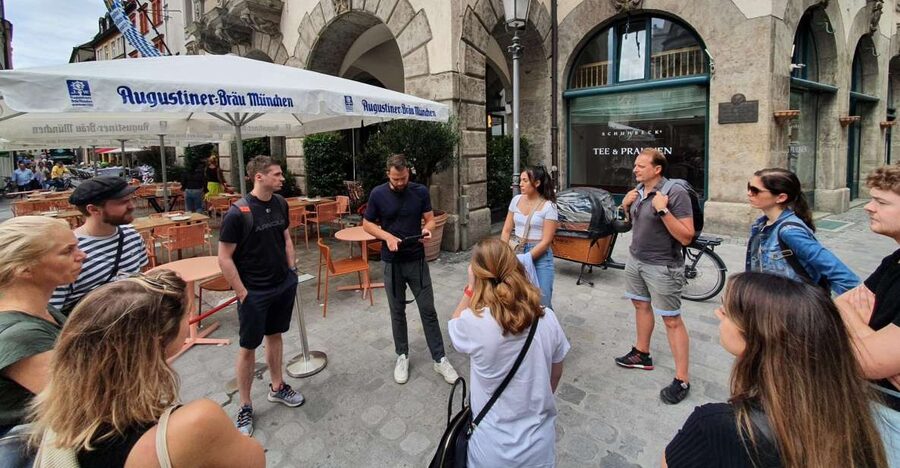
The meeting point is the Marian Column in Marienplatz. Look for the large column with the small golden statue at its center. This is a practical place to begin because it is centrally located and easy to identify, but you should arrive with enough time to orient yourself in the square.
Alex is a Munich native, born and raised in the city. That matters here because the tour is not only about the past. It also asks how Munich lives with that past today. His stated aim is to show the city from all sides, and this walk covers one of its hardest sides without turning the city into a museum of Nazi history.
The group begins with background and then moves through events in chronological order. That is a smart choice. The rise of National Socialism can become confusing when guides jump between the First World War, early party politics, dictatorship, and the bombing of Munich. A timeline gives you a clear thread to hold onto.
Alex has worked on this subject since his youth because he wanted to understand how National Socialism became possible and how the dictatorship destroyed much of Europe within a few years. You do not need to be a history specialist to join. The tour is designed for a broad age range and explains the setting as it goes.
From political meeting place to Nazi center
One of the most useful parts of the walk is its focus on cause and effect. Munich was not simply the place where Hitler happened to gain attention. It became a key setting for the development of the Nazi movement, and the city’s public life helped give that movement an audience.
The tour includes the place where Hitler held his first speech. That stop matters because it connects the personal story of an unknown soldier with the wider political conditions that allowed his message to reach people. You can see how a speech is not just an isolated event. It needs a setting, an audience, and a city where political arguments are already in motion.
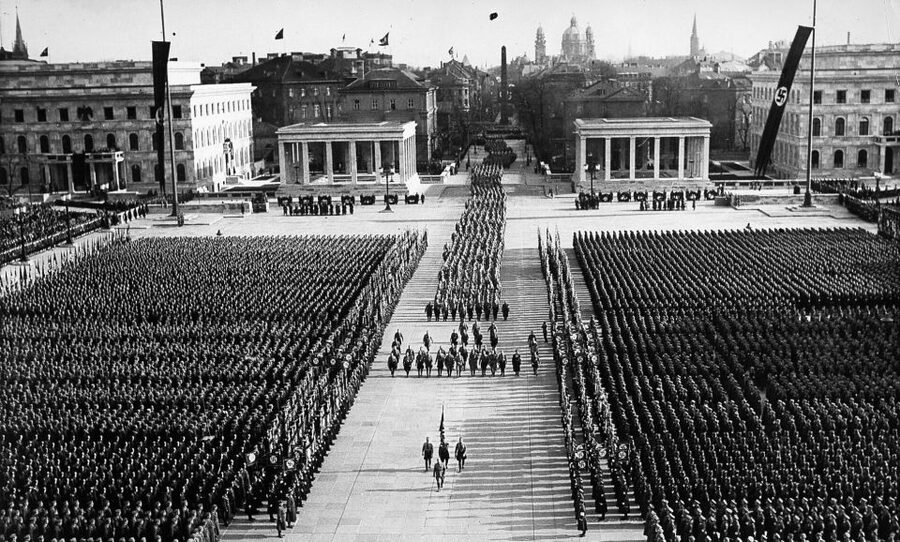
From there, the story moves through the spaces used for Nazi parades and public displays. These locations show how the movement tried to make itself seem permanent, disciplined, and powerful. A parade route is a political tool. It turns streets into a stage and gives spectators the feeling that they are watching history take shape.
Alex’s chronological method should help you understand these changes without losing the human scale. The point is not to admire the machinery of propaganda. It is to see how architecture, ceremony, and repeated public messages helped normalize a dangerous movement.
I would pay close attention to the explanations of connections between events. One of the strongest features of the tour is its effort to show developments and relationships rather than simply name dates. That is why the walk can be useful even if you already know the broad outline of Hitler’s rise.
The buildings Hitler’s government used to project power
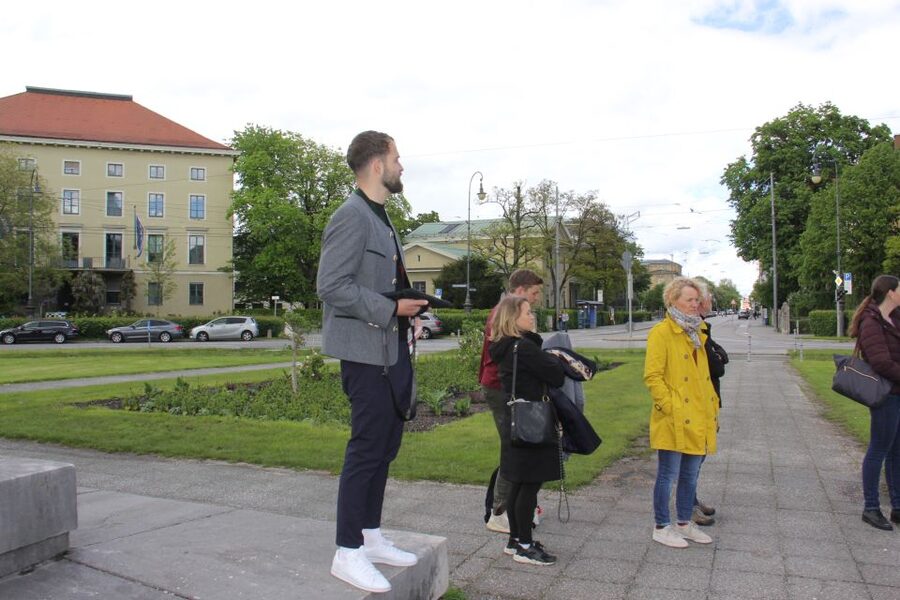
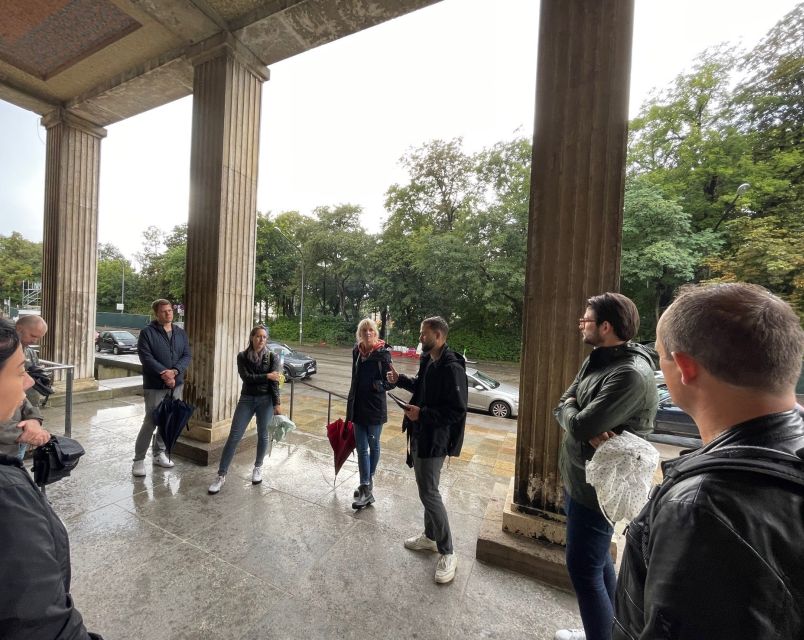
The tour visits important buildings built by the National Socialists, along with structures and public spaces they used as places of political worship. Most of these propaganda buildings survived the war largely intact, so they still affect the appearance of Munich today.
That creates an uncomfortable but valuable experience. You may pass a building that looks formal, grand, or even ordinary at first glance. Alex explains how its original purpose and symbolism fit into the Nazi system. The result is a better understanding of how dictatorship uses architecture to make power feel solid and unavoidable.
The buildings are not presented as isolated monuments. Their meaning comes from the way they worked together with speeches, flags, marches, ceremonies, and official images. A government can use stone and scale to send a message long before anyone reads a political statement.
This is also where the tour helps you read Munich differently after it ends. You may notice the surviving structures again during the rest of your stay. Instead of seeing them only as old buildings, you will understand how they were used and what the city’s survival of them means.
One practical point: the supplied information does not name every stop in advance. That means you should expect the route to depend on the guide’s presentation and access on the day. Alex has sometimes arranged entry into areas not normally open to the public, but you should treat that as a possible benefit rather than a fixed promise.
Same city, a completely different kind of day:
- From Munich: Neuschwanstein & Linderhof Castle Full-Day Trip
★ 4.5 · 12,494 reviews - Neuschwanstein & Linderhof Castle-Fairytale Day Tour from Munich
★ 4.5 · 7,275 reviews - Munich: Third Reich & WWII Walking Tour
★ 4.6 · 6,181 reviews - Dachau Concentration Camp Memorial Site Tour from Munich by Train
★ 4.5 · 5,637 reviews
Squares where Munich endured propaganda and war
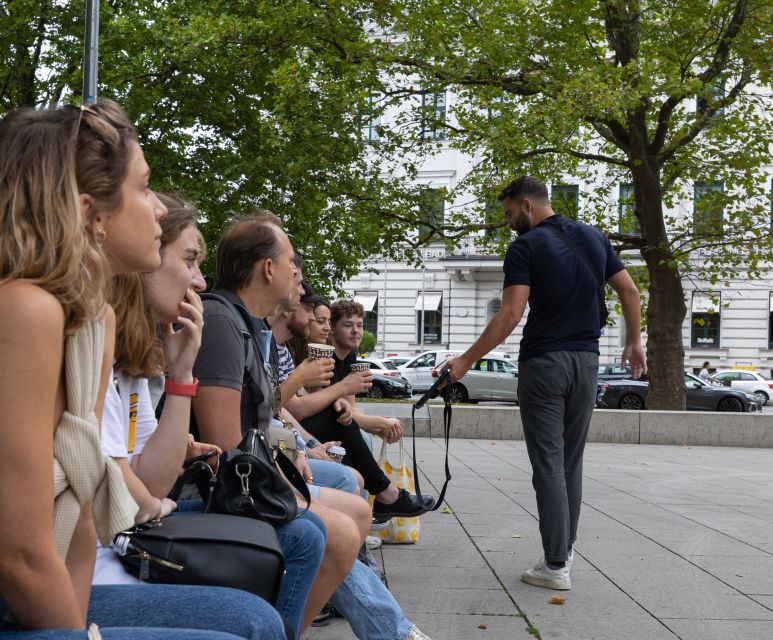
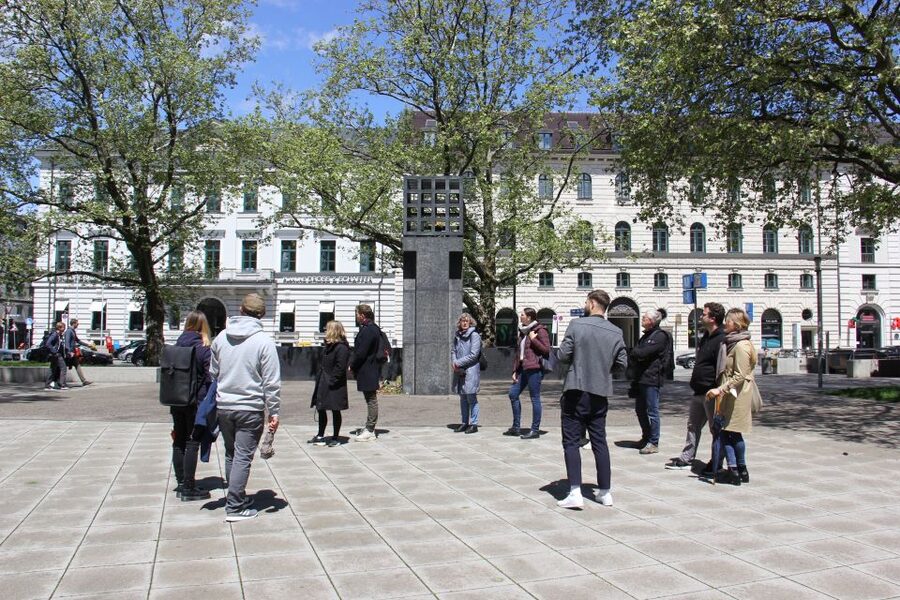
Public squares form another key part of the experience. The tour visits places where Nazi parades took place and where the regime staged ceremonies designed to create loyalty and obedience.
A square can look harmless when it is filled with normal city life. Alex’s explanations reveal how the same space could be transformed through banners, marching crowds, speeches, and carefully planned movement. This is one reason a walking tour works well for the subject. You can stand in the setting and consider how ordinary urban space was turned into political theater.
The route also addresses the bombing war that Munich endured. That broadens the story beyond the rise of the Nazis and shows the consequences for the city. You hear about a Munich that was both the center of the movement and later a target of wartime destruction.
The contrast is important. Munich’s Nazi buildings often survived, while many people suffered through bombing and the wider war created by the regime. The tour does not reduce the city to one role. It presents Munich as a place that helped create the dictatorship, promoted it, and then experienced the destruction that followed.
Short breaks are built into the walk when needed. That is a welcome detail for a serious 2.5-hour tour. The full route can sometimes run closer to three hours when there is a lot to discuss, so do not schedule a tight appointment immediately afterward.
A serious subject without a stiff presentation
The subject demands care, but a guide who speaks in a flat or overly formal way can make two and a half hours feel long. Alex takes a different approach. He aims to keep the tour engaging and allows some humor, while avoiding a shallow treatment of the crimes and consequences involved.
That balance is one of the reasons the experience suits people who are interested in German history and politics but do not want an academic lecture. Alex explains difficult material in a direct way, responds to questions, and keeps the group moving through the city.
The tone is not casual in the sense of treating the subject lightly. Instead, it is approachable. You can ask for clarification without feeling that you need specialist knowledge. That makes the tour a good choice for first-time visitors and for people who already live in Munich but want a clearer account of the city’s political past.
I would still set the right expectations. This is not a cheerful sightseeing walk with a few dark facts added for variety. The focus is National Socialism, the rise of Hitler, propaganda, public power, and the war. You should be ready to give the subject your attention.
The current rating is 5 out of 5 from 13 ratings, and the consistent praise focuses on Alex’s engagement, clear explanations, and ability to remain interesting without becoming superficial. Those are the qualities that matter most on a tour like this.
Why the German-language format matters
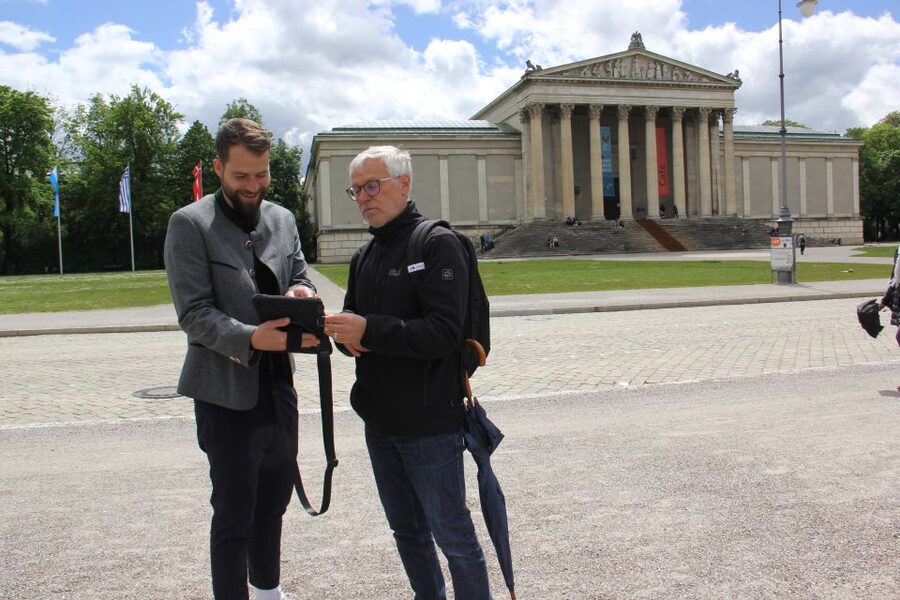
The live tour is offered in German. That is the single biggest booking question for many readers. If you understand spoken German well enough to follow historical explanations, this format may give you a more natural local experience. If you do not, the tour will not be a good fit simply because the subject depends on context and precise wording.
You should not assume that English interpretation is provided. The supplied details list German as the tour language, so check carefully before booking if you need English.
For German speakers, the local setting and Alex’s personal connection to Munich add useful depth. The tour is not built only for international tourists. It can also suit people from Germany, Austria, and Munich itself who want to connect familiar streets with a better account of what took place there.
That local focus is valuable. You are not being rushed from one famous sight to another. You are being asked to look at a familiar city through a difficult historical lens.
Price, time, and practical value
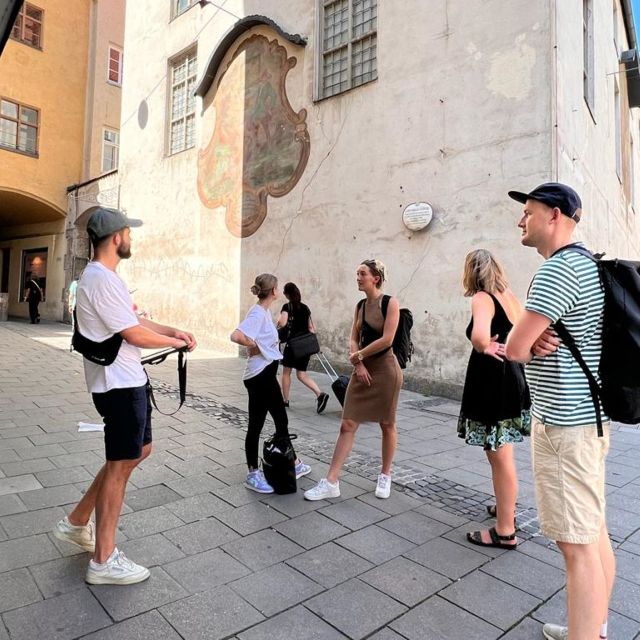
At $30 per person, the tour is reasonably priced for a fully guided 2.5-hour city walk. The value comes from the interpretation rather than admission tickets or transport. You are paying for a structured route, local guidance, historical explanation, and the chance to ask questions at the sites themselves.
There is no hotel pickup, so you need to make your own way to Marienplatz. Because the meeting point is central, this should be simple if you are already sightseeing in central Munich, but the tour does not remove the need to plan your arrival.
Wear comfortable shoes. The route is long enough that poor footwear will distract from the subject, and the tour takes place rain or shine. Bring suitable clothing for the forecast, since the information provided does not describe an indoor alternative.
The tour is wheelchair accessible, which makes it more practical for many visitors. Still, because it takes place on city streets and includes several stops, you may want to confirm the exact route and conditions when booking if you have specific mobility needs.
Flexible booking is another plus. You can cancel up to 24 hours before the start for a full refund, and the reserve-now, pay-later option lets you hold a place without paying immediately. These policies are useful when your Munich plans are still changing.
Who should book this Munich history walk
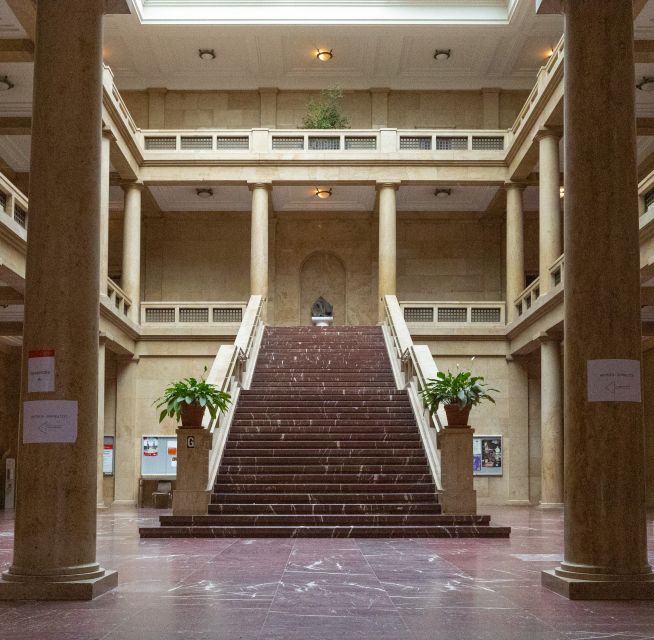
I would recommend the tour to you if you want to understand how Munich became the center of the Nazi movement, not just see a few buildings associated with Hitler. It is especially suitable for people interested in German history, politics, remembrance, architecture, and the way public spaces shape public opinion.
It also works well for Munich residents. Alex’s local perspective and willingness to show areas that may not normally be open to the public can add something even if you already know the central streets.
The tour may suit families with older children or teenagers who can follow a serious discussion, since no specialist background is required. The subject is too heavy for very young children who may not be ready for it, but the supplied information does not set a minimum age.
You should think twice if you need an English-language tour, dislike walking for several hours, or want a light introduction to Munich. This experience asks for attention and emotional maturity.
My booking advice
Book this tour if you want a clear, place-based account of Munich’s Nazi past and can follow German. Alex’s strongest assets are his local roots, his serious preparation, his chronological structure, and his ability to keep the presentation accessible without making it shallow.
The $30 price is fair, particularly if the tour runs close to three hours and includes time for questions and short pauses. Schedule it early enough in your Munich stay that you can recognize the buildings and squares again as you explore on your own.
I would not book it as a substitute for an English tour or as a quick sightseeing add-on. But for German speakers who want to understand the city’s darkest political chapter at the places where it unfolded, this is a thoughtful and useful choice.
FAQ
Where does the tour meet?
Meet Alex at the Marian Column in Marienplatz. It is the large column with the small golden statue in the middle of the square.
How long does the walking tour last?
The listed duration is 2.5 hours. The walk may run close to three hours when there is a great deal to explain.
What language is the tour in?
The live tour guide speaks German. No English-language option is specified.
How much does the tour cost?
The price is $30 per person.
Is hotel pickup included?
No. Hotel pickup is not included, so you need to reach the meeting point at Marienplatz yourself.
Is the tour wheelchair accessible?
Yes, the activity is listed as wheelchair accessible.
What should I bring?
Wear comfortable shoes. Since the tour takes place outdoors, you should also dress for the weather.
Does the tour run in bad weather?
Yes. The tour takes place rain or shine.
Can I cancel or pay later?
You can cancel up to 24 hours in advance for a full refund. The reserve-now, pay-later option lets you reserve a place without paying at the time of booking.
Just added around Munich
- Pub crawl incl. Oktoberfest museum guided tour with beer tasting (private)★ 5.0 · 5 reviews
- South Tyrolean specialties and wine tasting★ 5.0 · 5 reviews
- Size Matters Beer Tour Munich★ 4.6 · 105 reviews
- Short & sweet: Tasting the Viktualienmarkt★ 4.8 · 37 reviews
- Secret Food Tours Munich★ 4.8 · 5 reviews
- Munich: Romantic Wine Experience for Two at Viktualienmarkt★ 4.2 · 14 reviews
- Munich: Resistance against Hitler – Historical Walking Tour★ 5.0 · 5 reviews
- Residence of Munich private tour with skip the line ticket★ 5.0 · 4 reviews
Historical Tours, compared.

City History Canal Sightseeing Tour on a Motorboat
Read our review →






Browse the lists this tour appears in