
Reviewed · BIKE TOURS
From Berlin: Gardens & Palaces of Potsdam Bike Tour
Potsdam packs Prussian palaces, quiet park roads, Cold War landmarks, and a handsome old town into one excellent day out from Berlin. The bike makes sense here: you can cover the wide grounds of Sanssouci, reach Cecilienhof, and still get to Glienicke Bridge, all without spending the day waiting for buses.
I like the included train ride from Alexanderplatz and the relaxed pace once you reach Potsdam. I also like the mix of grand royal buildings and hard-edged 20th-century history, especially the Potsdam Conference and the bridge used for spy exchanges. The main drawback is time: 6.5 hours is a long outing, and you will be outside in all weather while paying separately for lunch.
In This Review
- Key points to know before booking
- Why cycling is the right way to see Potsdam
- From Alexanderplatz to Potsdam by train
- Sanssouci Park and the Hohenzollern court
- Potsdam’s old center, Dutch Quarter, and Brandenburg Gate
- New Garden and the Potsdam Conference
- Glienicke Bridge and the Cold War border
- Guides, pace, and the actual cycling
- What the $100 price really covers
- Who should book this Potsdam bike tour?
- Final decision: a strong day trip with one clear condition
- FAQ
- Where does the Potsdam bike tour begin?
- Is train transportation from Berlin included?
- Do I have to cycle from Berlin to Potsdam?
- How far do we cycle?
- Are palace entrances included?
- Is lunch included in the tour price?
- Is the bicycle suitable for beginners?
- Is a helmet provided?
- What happens if it rains?
- What language is the tour conducted in?
- Can I cancel the tour?
Key points to know before booking
- Train first, bikes later: Meet at Alexanderplatz, ride about 35 minutes to Potsdam, and collect the bicycles there.
- About 17 kilometers of cycling: The route is mostly easy and relaxed, though one past participant estimated more than 20 kilometers overall.
- Palaces are viewed from outside: Sanssouci, the Chinese Tea House, the New Palace, and the Orangerie are part of the ride, not indoor museum visits.
- Cecilienhof adds modern history: This is where Truman, Stalin, and Churchill finalized the Potsdam Agreement after World War II.
- Lunch is in the Dutch Quarter: Food is not included, so bring money for the meal and any drinks.
- Rain does not cancel the ride: Ponchos can be bought at the local shop and refunded if unused.
Why cycling is the right way to see Potsdam
Potsdam is close to Berlin, but it does not feel like another central-city sightseeing stop. Its major sights are spread across parks, lakes, palace grounds, residential streets, and former border areas. Walking between them would take too long. A standard driving tour would cover the distance, but it would miss the quiet paths and small changes of scenery that make Potsdam pleasant.
The bicycle solves that problem. You ride at a comfortable pace, stop at each main site, and avoid the fuss of finding a taxi or waiting for public transport inside Potsdam. The route covers about 10.5 miles, or 17 kilometers, during roughly 4.5 hours of riding and sightseeing. The full outing lasts 390 minutes, including the train journey, stops, lunch, and transitions.
I would not treat this as a sporty cycling trip. It is designed as a sightseeing ride on a city-cruiser-style bicycle. One past participant described the route as flat and manageable even for a novice, while another felt that the total distance was more than 20 kilometers and did not want to go much farther or faster. That is useful advice. You need basic cycling confidence, but you do not need to be a serious cyclist.
More Bike Tours in Berlin
- Berlin: Sights and Highlights Bike Tour with a Local Guide
★ 4.8 · 2,698 reviews - Berlin Highlights 3-Hour Bike Tour
★ 5.0 · 948 reviews - Berlin City Bike Tour with Beer Garden Stop
★ 5.0 · 917 reviews
From Alexanderplatz to Potsdam by train
The day begins at the Fat Tire Tours office at the base of Berlin’s TV Tower in Alexanderplatz. Look for the company signs and flags around the giant Fernsehturm. This is a simple meeting point, but Alexanderplatz can be busy, so I would arrive with enough time to locate the office before the group leaves.
The train ticket to Potsdam is included. That matters because you do not need to arrange a separate regional ticket or worry about the Berlin fare system. The train ride takes about 35 minutes, giving you a quick transition from Berlin’s central streets to Potsdam.
You do not cycle from Berlin. The bicycles are waiting at Potsdam station, where you collect and later return them. This keeps the day focused on Potsdam rather than turning the first part into a long urban ride through Berlin.
The tour is conducted in English with a live guide. Past guides have included Thor, Sam, Anthony, Zoe, Alex, Patrick, Joe, and Maria. The strongest part of the guiding is the way the history is presented in layers. You get royal family details, major political events, and lighter local stories rather than a nonstop lecture.
Sanssouci Park and the Hohenzollern court
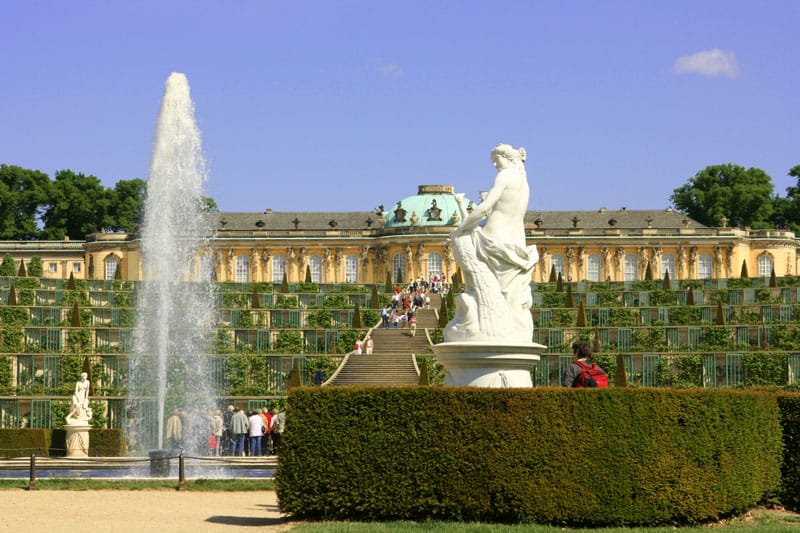
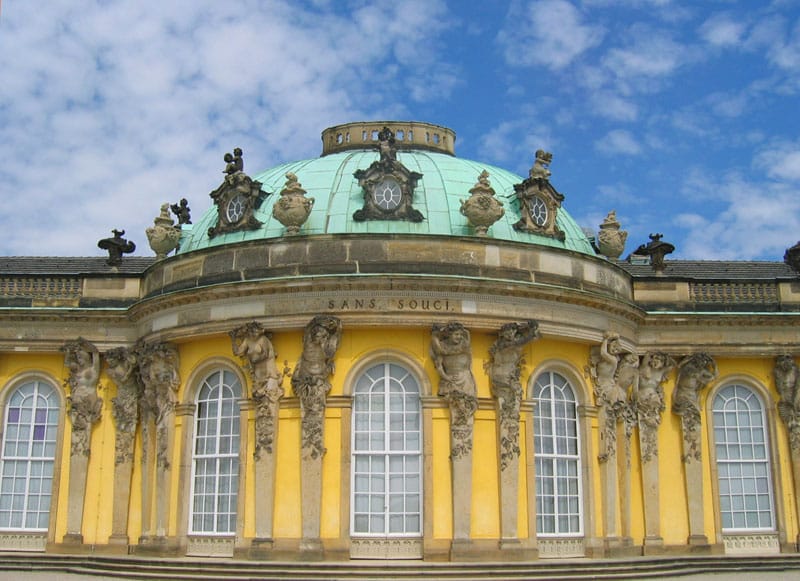
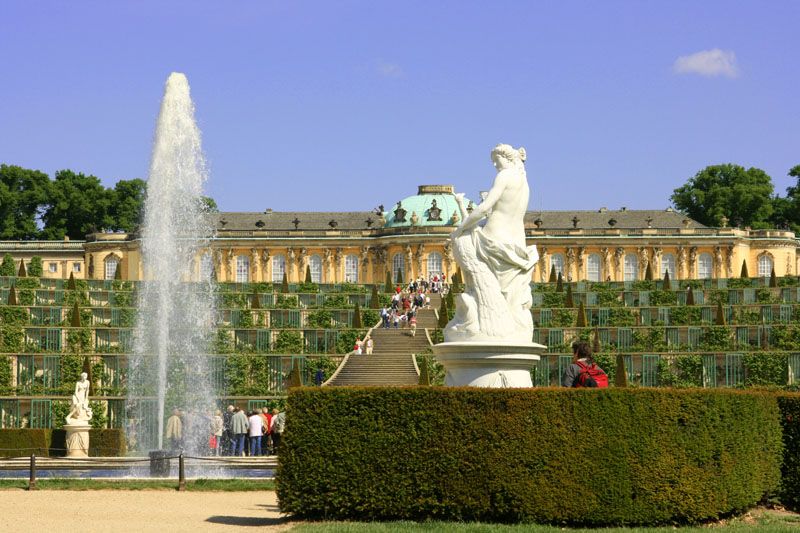
The first major section takes you through the palace grounds connected with Sanssouci. Sanssouci means without worries, an apt name for Frederick the Great’s summer retreat, although the tour is more concerned with the setting and the story than with an interior visit.
The palace is the clearest expression of Prussian royal taste on the route. You see the exterior and learn about the Hohenzollern dynasty, its power, and its private habits. The value here is not only the architecture. A guide can explain how a royal residence worked as a place for display, escape, family politics, and control.
The grounds make the bicycle especially useful. Instead of stopping at one palace and then retracing your steps, you move through the park and connect several buildings in one continuous ride. The gardens are broad, so the sense of scale comes from moving through them rather than simply looking at a map.
The Chinese Tea House gives the route a lighter visual change. It reflects the 18th-century European fashion for idealized Asian decoration. You should expect an exterior stop and time for photographs, not a long indoor tour.
The New Palace has a more formal and imposing character than Sanssouci. It shows a different side of Prussian display, with architecture intended to impress rather than provide a small private retreat. The Orangerie adds another grand park building to the sequence. Seeing these places together helps you understand that Sanssouci was not one isolated palace, but part of a large royal complex.
One practical benefit is that the group stops at each site. You are not expected to pedal past the best views or take photographs while moving. Still, the tour format means you will not have unlimited time inside any one building. If your top priority is palace interiors, a dedicated Sanssouci visit may suit you better.
Potsdam’s old center, Dutch Quarter, and Brandenburg Gate
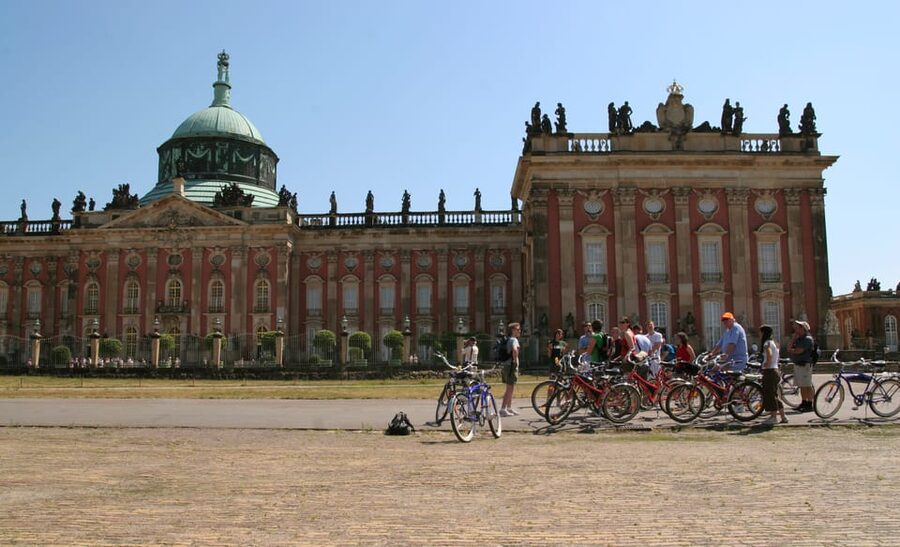
After the palace grounds, the route moves into Potsdam’s historic center. This shift is important. You leave royal parkland and see the city where ordinary urban life, university activity, shops, restaurants, and older neighborhoods come together.
The Dutch Quarter is one of the most distinctive areas on the itinerary. Its brick buildings give the center a different look from the grand palace architecture. This is also where the lunch stop takes place. Food is not included in the $100 price, but the location gives you a chance to choose a meal in a central historic district rather than eating on the move.
The lunch break is a practical pause after several hours outside. You can use it to rest, ask the guide about the next part of the route, and decide how much you want to spend. Past experience suggests there are menu choices for different budgets and tastes, but you should still plan for the meal as an extra expense.
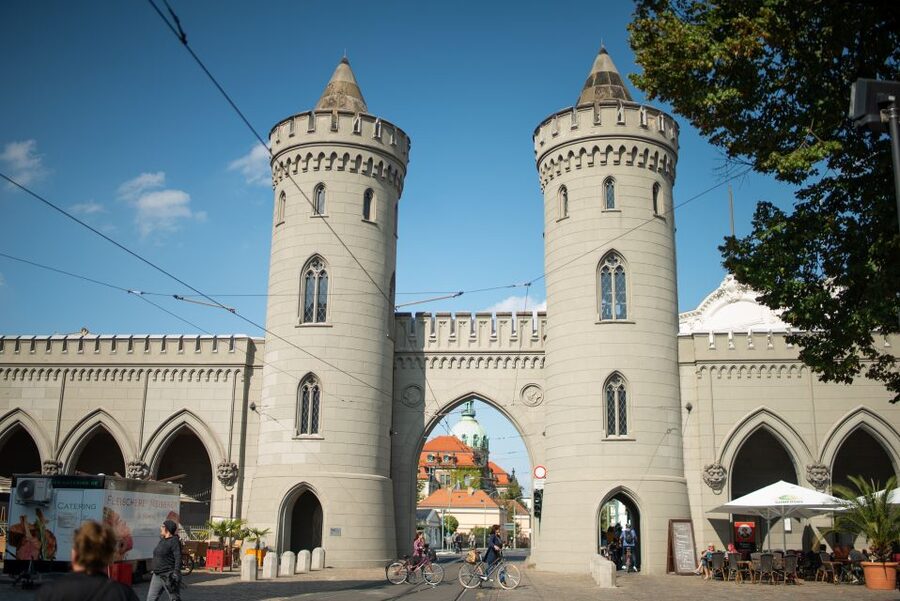
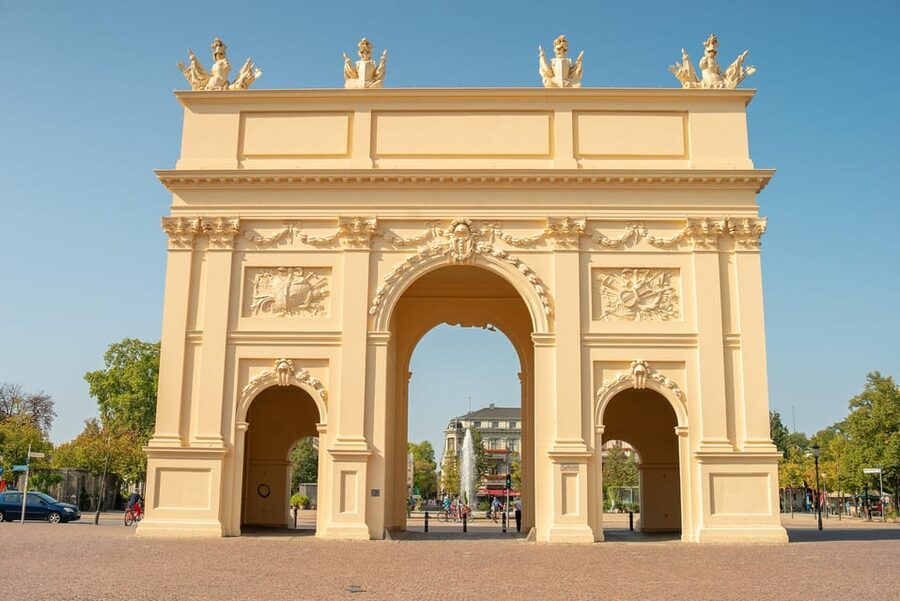
Potsdam’s Brandenburg Gate is another useful stop because it shows that the city has its own landmark, separate from Berlin’s better-known gate. The ride through the center also gives you a feel for Potsdam as a living city rather than only a collection of royal monuments.
Same city, a completely different kind of day:
- Berlin: Reichstag, Dome and Government District Guided Tour
★ 4.7 · 18,288 reviews - Berlin: 1-Hour City Tour by Boat with Guaranteed Seating
★ 4.3 · 16,993 reviews - Berlin: Boat Tour Along the River Spree
★ 4.4 · 11,252 reviews - Discover Berlin Half-Day Walking Tour
★ 5.0 · 9,624 reviews
New Garden and the Potsdam Conference
The next section heads through the New Garden toward Cecilienhof Palace. The setting is more open and park-like again, with the route continuing at an easy pace. This part connects royal history with the political decisions that shaped Europe after World War II.
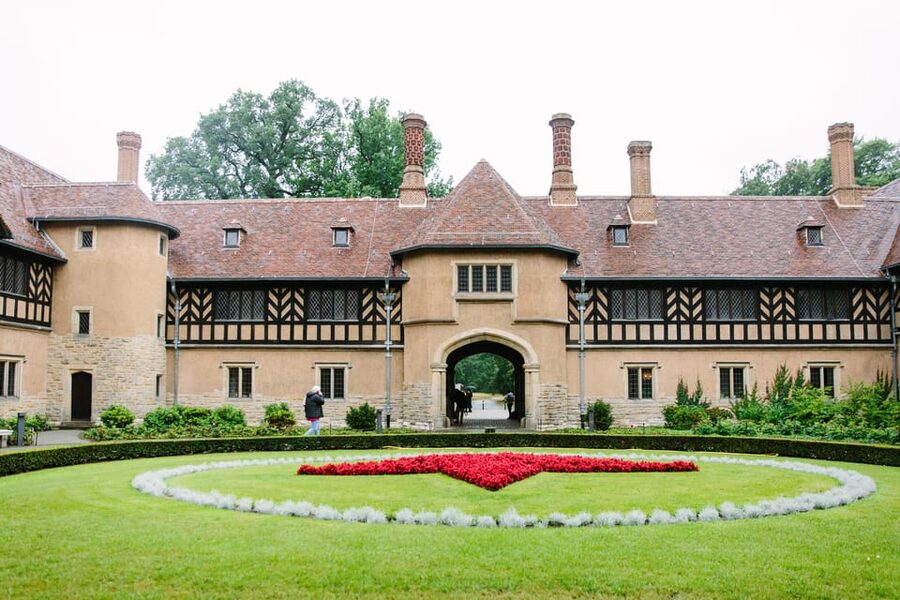
Cecilienhof is the key stop for modern history. Truman, Stalin, and Churchill met here in 1945, and the Potsdam Agreement set out plans for postwar Europe. The building is therefore more than another palace on a sightseeing list. It is the place where the leaders of the victorious Allied powers dealt with Germany’s future and the division of influence across Europe.
You visit the exterior and learn about the conference rather than taking a full indoor museum tour. Even so, the stop has real weight. The earlier palace visits show how rulers lived and presented power. Cecilienhof shows how that same setting became a stage for decisions affecting millions of people.
I appreciate this change in subject. A day focused only on elegant buildings could become pretty but shallow. The route instead links Prussian monarchy, World War II, and the Cold War. The guide’s explanations are especially useful here because the buildings alone cannot tell you why the conference mattered.
Glienicke Bridge and the Cold War border
The final major section turns to the Cold War. You ride through the former border area between West Berlin and East Germany, including the no-man’s-land that once separated the two sides. The change in atmosphere is striking. Earlier, you were moving through royal grounds designed for comfort and ceremony. Here, the focus is on restriction, surveillance, separation, and political tension.
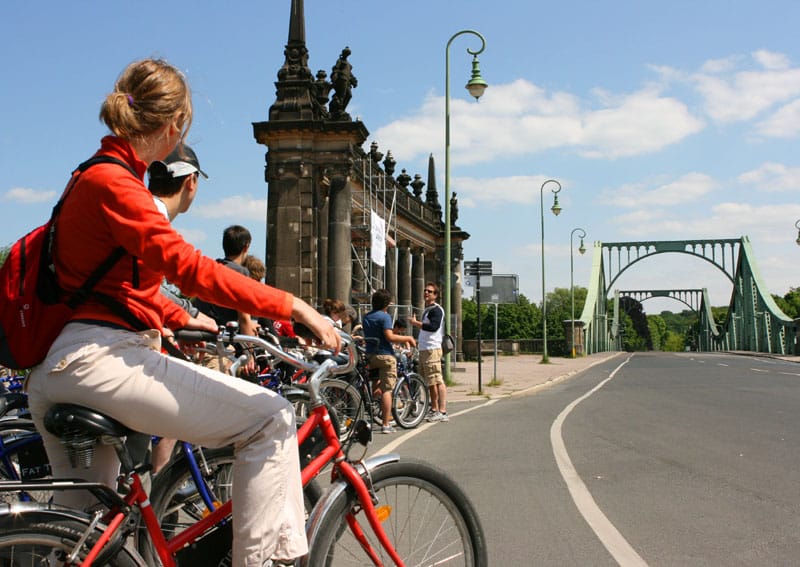
Glienicke Bridge is known as the Bridge of Spies because it was used for exchanges of captured agents between the United States and the Soviet Union. Standing at the bridge gives the Cold War story a clear physical point. This was not an abstract line on a map. It was a controlled crossing with real consequences for people on both sides.
The tour does not treat the bridge as a quick photo stop only. It places the bridge within the wider border zone and explains why the location mattered. You also get a final ride through the surrounding area before returning the bikes at Potsdam station.
This ending works well because it leaves you with a different image of Potsdam. The city is not only Frederick the Great, palace gardens, and picturesque streets. It was also located at a sensitive point between East and West, close to Berlin and tied to some of the most important political events of the 20th century.
Guides, pace, and the actual cycling
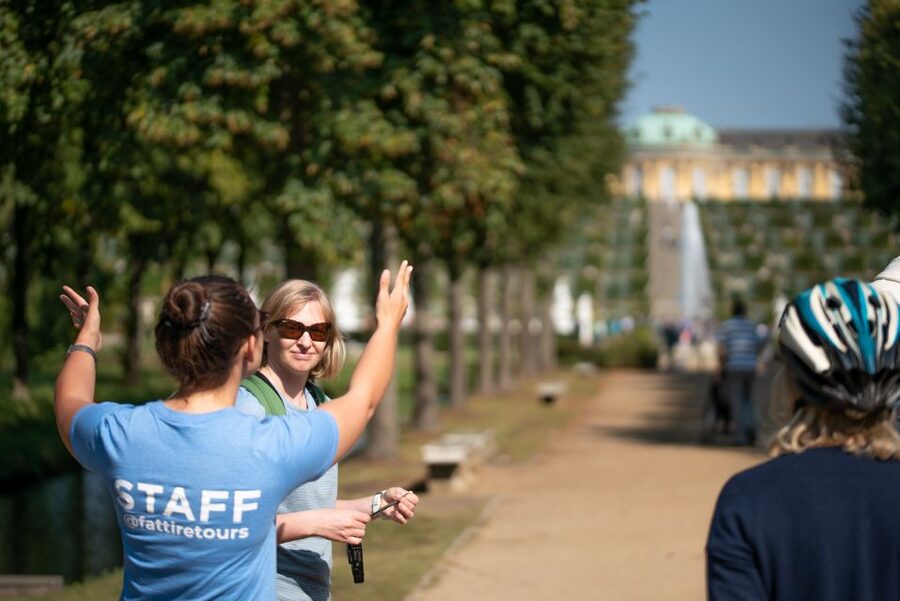
The guide can make or break a history-heavy day, and this tour depends on a good storyteller. The strongest guide feedback centers on friendly, clear explanations and the ability to answer questions beyond the immediate site. Sam and Thor received particularly warm praise, while other guides named by past participants include Anthony, Zoe, Alex, Patrick, Joe, and Maria.
The tone appears to balance serious history with lighter facts. That helps during a long day, especially when the route moves from royal family disputes to Allied negotiations and then to spy exchanges. You are not left with dates alone. The best moments connect the people, buildings, and political decisions.
The bicycles are described as comfortable city cruisers. They are suitable for a novice according to one past rider, and the route is largely flat and not heavily congested. Another rider found the bikes comfortable but somewhat tired rather than new. That is a fair expectation: choose this for a practical sightseeing bicycle, not for premium equipment.
The tour runs rain or shine. Ponchos are available for purchase at the local partner’s shop, and the purchase can be refunded if you do not use the poncho. I would still check the forecast and dress for changing weather. You will spend several hours outdoors, and there is no indoor substitute for the cycling portions.
What the $100 price really covers
At $100 per person, this is not the cheapest way to visit Potsdam. The price becomes easier to assess when you count what is included: round-trip train transport from Berlin, a bicycle, a helmet, an English-speaking guide, and a full route linking sites that are spread across the city and parks.
The train ticket removes a small but real planning task. The bicycle saves you from renting one separately and figuring out where to collect and return it. Most important, the guide provides the historical structure that turns a series of attractive buildings into a coherent day.
Lunch is extra, and so are any palace admission fees if you decide to visit interiors independently. The stated itinerary focuses on exterior viewing, so do not pay this price expecting a full inside tour of every palace.
I consider the value strongest if you have only one day for Potsdam and want both the famous palace grounds and the Cold War sites. It is less compelling if you plan to spend several days in Potsdam, prefer museums and interiors, or already know the history and mainly want unstructured time to wander.
Who should book this Potsdam bike tour?
I would recommend it to adults, families with older children, and teenagers who can comfortably cycle for several hours with breaks. One past participant enjoyed the combination of princess-style castles for a child and history for an adult, while another called it a good choice with teenagers.
It also suits anyone who wants a change from Berlin’s traffic and crowds. The ride offers open parkland, quiet streets, and a slower view of the city. You cover more ground than on foot, but the pace remains gentle enough to stop for photographs.
I would think twice if cycling in rain would ruin your day, if you have trouble riding for the stated distance, or if you need extensive indoor sightseeing. The tour is also a poor fit for anyone seeking a fast athletic ride. Its strength is the combination of movement, scenery, and explanation.
Final decision: a strong day trip with one clear condition
Book this tour if you want Potsdam’s major sights tied together by a human guide rather than visited as separate stops. The train, bicycle, palace grounds, Dutch Quarter, Cecilienhof, and Glienicke Bridge make a full and varied day for the price.
Go prepared for a long outdoor outing, a separate lunch bill, and exterior visits rather than a palace-interior program. If that sounds right, this is one of the more efficient ways to understand why Potsdam matters, from Hohenzollern grandeur to the border tensions that shaped modern Europe.
FAQ
Where does the Potsdam bike tour begin?
The meeting point is the Fat Tire Tours office at the base of the giant TV Tower in Alexanderplatz, Berlin. The office is marked with Fat Tire Tours signs and flags.
Is train transportation from Berlin included?
Yes. The cost of round-trip train transportation from Berlin to Potsdam is included in the tour price.
Do I have to cycle from Berlin to Potsdam?
No. You take the train from Alexanderplatz to Potsdam. The bicycles are waiting for you at Potsdam station.
How far do we cycle?
The planned cycling route covers about 10.5 miles, or 17 kilometers, during approximately 4.5 hours of sightseeing and riding. One past participant estimated the total distance at more than 20 kilometers, so expect some variation.
Are palace entrances included?
The itinerary describes exterior visits to Sanssouci, the Chinese Tea House, the New Palace, and the Orangerie. Palace admission is not listed as included.
Is lunch included in the tour price?
No. The tour stops for lunch in Potsdam’s historic Dutch Quarter, but you pay for your own food and drinks.
Is the bicycle suitable for beginners?
The tour provides comfortable city-cruiser-style bicycles, and the route is described as largely flat and not heavily congested. You still need to be comfortable cycling for several hours.
Is a helmet provided?
Yes. A helmet is provided, but wearing it is optional.
What happens if it rains?
The tour runs rain or shine. Rain ponchos are available for purchase at the local partner’s shop, and you can receive a refund if you do not use the poncho.
What language is the tour conducted in?
The tour is conducted in English with a live English-speaking guide.
Can I cancel the tour?
You can cancel up to 24 hours in advance for a full refund. A reserve-now, pay-later option is also available.
More Cycling Tours in Berlin
- Berlin Highlights: 3-Hour Bike Tour
★ 4.9 · 809 reviews - Berlin Highlights Sightseeing Bike Tour in Small Groups
★ 5.0 · 652 reviews - Berlin: Alternative Bike Tour of Kreuzberg & Friedrichshain
★ 4.7 · 548 reviews - Berlin: Guided Bike Tour of the Berlin Wall and Third Reich
★ 4.7 · 499 reviews
Just added around Berlin
- Love and War in Berlin: Self-Guided Story Puzzle Walk★ 5.0 · 7 reviews
- Rickshaw Tours Berlin – Groups of up to 16 people with several rickshaws★ 4.0 · 97 reviews
- Walking on the Wall: 3-Hour Tour in Berlin★ 4.5 · 34 reviews
- eSIM for Germany and 34 European Countries★ 4.5 · 16 reviews
- Warnemuende Shore Excursion: Berlin Private Sightseeing Tour from Rostock★ 5.0 · 4 reviews
- Your ticket to The Wall Museum Berlin★ 3.0 · 60 reviews
- Warnemuende Shore Excursion: Private Berlin Tour★ 4.5 · 27 reviews
- Berlin’s Gay, Lesbian, and Queer Scene Small-Group Walking Tour★ 4.5 · 66 reviews
Bike Tours, compared.
Sights and Highlights Bike Tour with a Local Guide
Read our review →
Classic Mike’s Bike Tour daily @ 11.30 incl Beer Garden & Surfers
Read our review →
Browse the lists this tour appears in