Reviewed · TICKETS
Cologne: Virtual Reality Time Travel Experience Ticket
Cologne’s lost prewar city center comes back to life in this 45-minute VR time trip. You watch a 1920s film, visit a hatter’s shop, then ride an electric streetcar through 1926 Cologne with a full 360-degree view. I like the clear three-part format and the chance to see places such as the old main station and theater before wartime destruction changed them.
I also like the mix of history and play. The hat shop gives the experience a human touch, while the tram ride supplies the real thrill. The main drawback is its short length. Some parts can feel rushed, and at $23, the value depends on how much you enjoy staged storytelling and VR.
In This Review
- Key points to know before booking
- A quick trip to Cologne before the war
- Stop one: the 1920s cinema
- Stop two: the Riedschneider hat shop
- Stop three: the 1926 electric streetcar
- What the experience gets right
- Where it may fall short
- Who should book this Cologne attraction
- Planning the 45-minute visit
- My verdict: a smart short stop for the right visitor
- FAQ
- How long does the Cologne VR time travel experience last?
- What historical period does the experience cover?
- What happens in the cinema section?
- What happens in the hatter’s store?
- What happens during the VR ride?
- Which Cologne landmarks can I see in VR?
- Is the experience available in English?
- Can I wear glasses during the VR ride?
- Is the attraction wheelchair accessible?
- Can I cancel the ticket?
Key points to know before booking
- Three 15-minute chapters: A cinema film, a recreated hatter’s shop, and a 360-degree streetcar ride make up the visit.
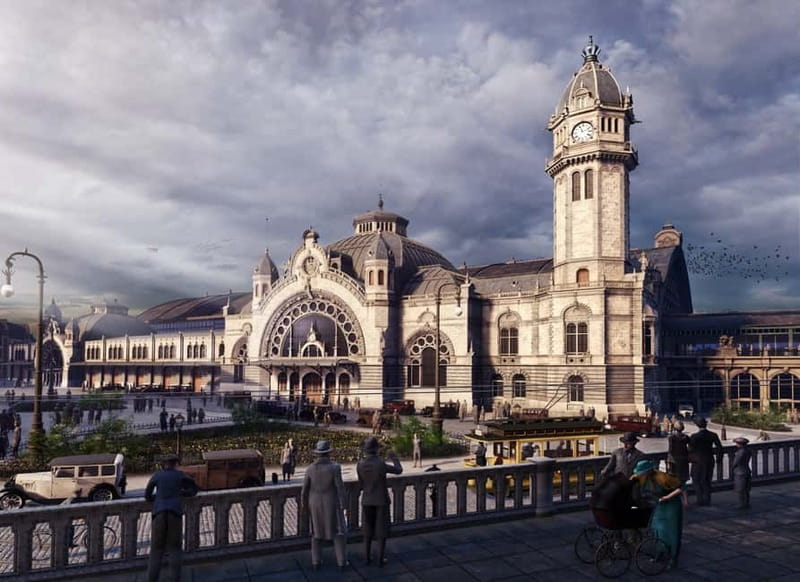
- A vanished Cologne: The VR route shows the cathedral area, old main station, city hall, Schauspielhaus theater, and other places before World War II.
- Tessa and Pitter guide the story: A fictional hatter and streetcar driver connect fashion, daily life, and the city’s changing streets.
- The VR ride is the main event: The panoramic tram journey is the most memorable part, while the film and shop provide context.
- Good for a wet afternoon: This is an indoor activity with English and German options, though language arrangements deserve a quick check.
- Short and easy to fit in: At 45 minutes, it works well before dinner or between other central Cologne sights.
A quick trip to Cologne before the war
TimeRide’s Cologne experience focuses on the Golden Twenties, a lively but unsettled period after World War I. The city was under British occupation, coping with the Spanish flu, and enjoying new forms of entertainment and fashion. You see this era through a small story rather than a long museum visit.
The fictional characters Tessa, a hatter, and Pitter, a Cologne streetcar driver, carry the plot from one stop to the next. Tessa has an urgent special order to deliver, and Pitter may be the person who gets it to Neumarkt on time. It is a simple setup, but it gives the tour a reason to move from hats to streets to carnival.
I appreciate this approach because the experience does not treat the 1920s as a collection of dates. You get a sense of how people dressed, traveled, watched films, and used public spaces. The story can feel a little corny at times, but it keeps the presentation accessible, especially for families and anyone who prefers a guided attraction to a traditional museum.
The setting also matters. Cologne was later heavily damaged in World War II, so the VR ride offers views of a city that is partly gone or greatly changed. This is not a full survey of Cologne’s past, and it does not move through several centuries. Instead, it gives you one carefully chosen day in 1926.
A few more Germany trips to weigh up
- Dresden: Semperoper Tickets and Guided Tour
★ 4.7 · 12,102 reviews - Berlin: Jewish Museum Berlin Entrance Ticket
★ 4.5 · 8,393 reviews - Berlin: Berlin Story Bunker Entry Ticket
★ 4.6 · 6,759 reviews
Stop one: the 1920s cinema
The visit begins in a cinema designed to recall the grand movie palaces of the 1920s. You take a seat with the era’s fashionable audience and watch a short film lasting about 15 minutes.
The cinema was more than a place for entertainment in this period. It was also a source of news and public information, and the film uses that role to introduce Cologne’s political and social setting. You learn about the postwar years, the British occupation, and the Spanish flu while seeing how the city presented itself to the public.
This opening is useful because it gives the VR ride some basic context. Without it, old streets and buildings could look impressive but feel disconnected. The film explains what kind of Cologne you are about to see and why 1926 is the chosen year.
The film is presented in the style of its period, which adds atmosphere but may not appeal to everyone. If you prefer detailed historical analysis, 15 minutes will seem light. If you are sightseeing with children or want a compact introduction, the length is about right.
Language is important here. English and German tours are available, but the scheduled language can be an issue if a change is made after booking. I would confirm the language at the entrance, especially if you are relying on the narration to follow the story.
Stop two: the Riedschneider hat shop
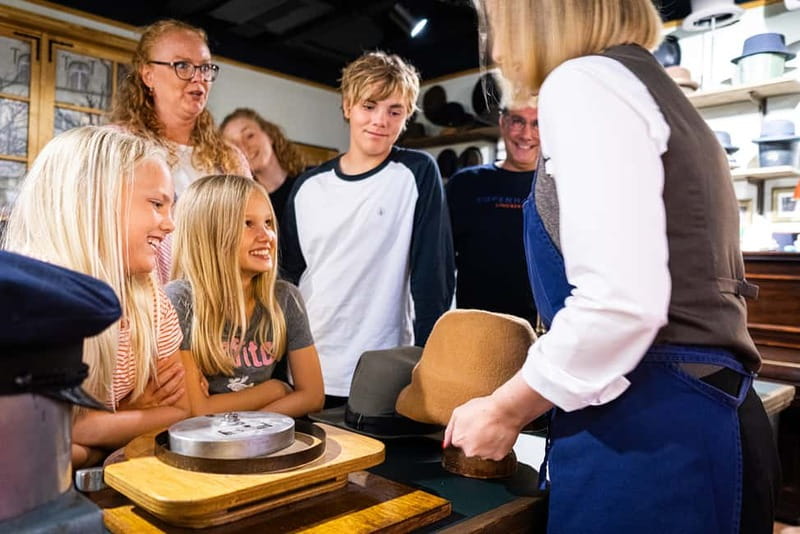
The second section takes place in the Riedschneider family hatter’s store. Here, Tessa introduces the role of hats in 1920s life and explains how a person’s choice of headwear could signal status, taste, or occupation.
The shop contains original hat-making items from Cologne’s Diefenthal family of hat makers. That detail gives the room more substance than a simple theatrical set. You can see how clothing and craft shaped ordinary social life, and you may get the chance to try on hats yourself.
This is the most hands-on part of the experience. It breaks up the film and prepares you for the streetcar ride by placing the story in a personal setting. The hat order also gives Tessa’s character a practical problem to solve, so the transition to Pitter and Neumarkt feels natural.
I like this stop because it shows a side of the 1920s that a city tour might skip. Cologne’s past is not only churches, ruins, and public buildings. It is also about what people wore and how skilled local makers earned a living.
The limitation is time. The shop section lasts about 15 minutes, and that includes the explanation, the story, and any opportunity to interact with the hats. If you are especially interested in clothing or historic crafts, you may wish it lasted longer. The pace can feel rushed when the group is moving on to the VR equipment.
Stop three: the 1926 electric streetcar
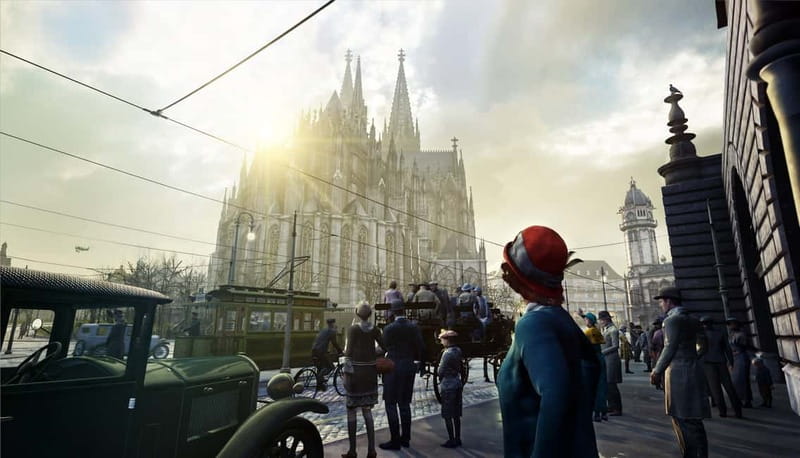
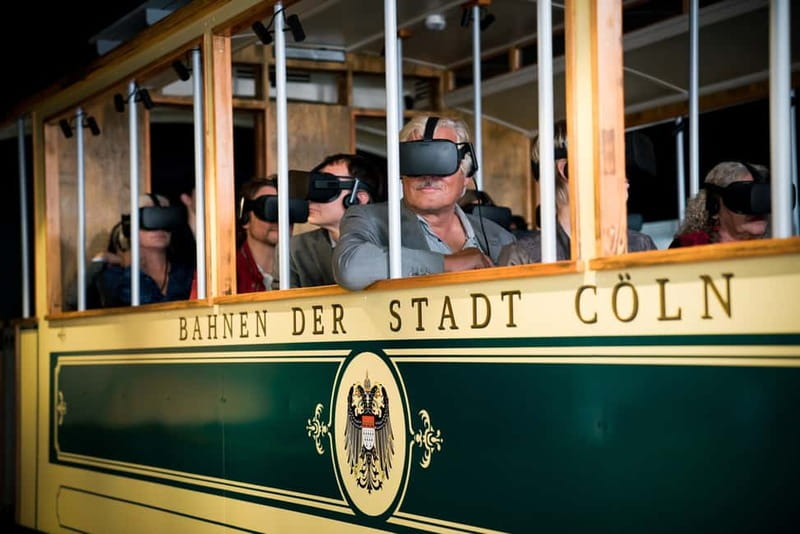
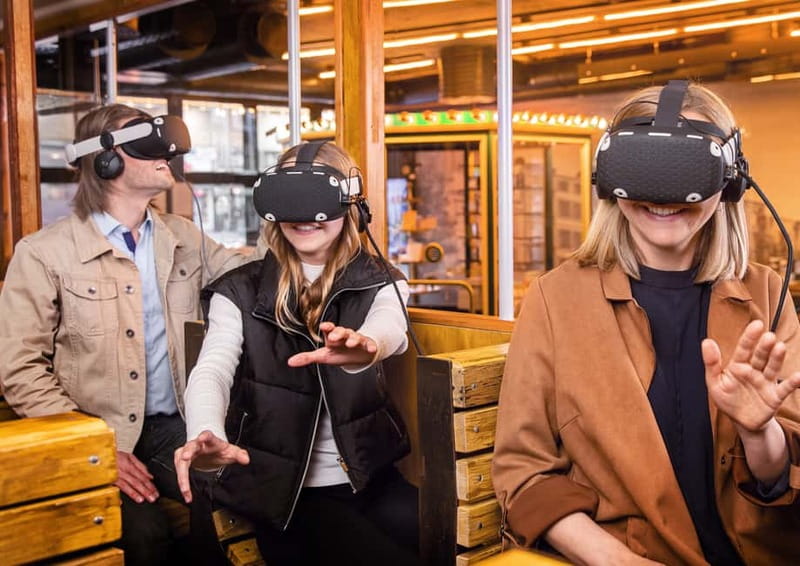
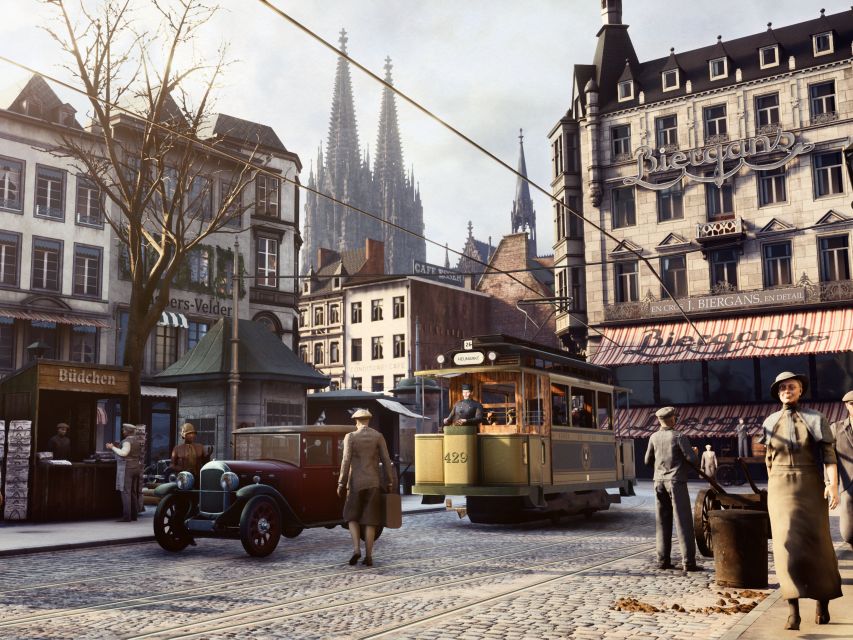
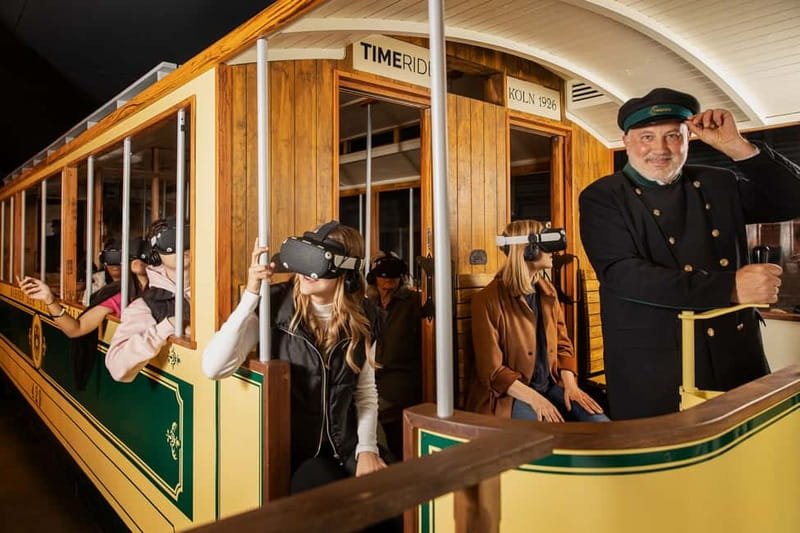
The final 15 minutes are the star of the show. You put on VR goggles and take a virtual ride on Cologne’s first electric streetcar, traveling through a panoramic reconstruction of the city in 1926.
The 360-degree view lets you look around instead of staring straight ahead. That freedom is important. You can turn toward buildings, streets, and passing details while the tram carries you through the route. The experience feels more like occupying a place than watching a flat historical video.
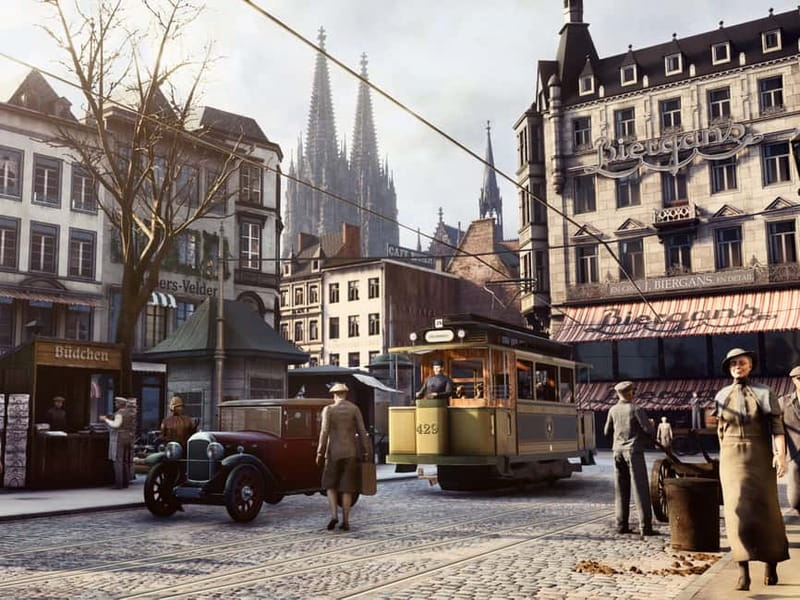
The route includes the area around Cologne Cathedral, the old main train station, the Schauspielhaus theater, city hall under Konrad Adenauer, and other landmarks. Many of these sites were destroyed, rebuilt, or altered during and after World War II. Seeing them together in their earlier form helps you understand how much the city center has changed.
The ride ends at Neumarkt during carnival, with a colorful final scene. This gives the trip a festive finish and brings Tessa’s delivery story back into the action. The graphics are a major strength, and the tram format makes the history easy to follow.
You should keep your expectations sensible. This is a short attraction, not a full-length simulated city tour. The VR portion lasts around 15 minutes, and some people will wish it continued longer. Still, the panoramic view and vanished landmarks make it the part most likely to stay with you after the visit.
Same city, a completely different kind of day:
- Berlin: Reichstag, Dome and Government District Guided Tour
★ 4.7 · 18,288 reviews - Berlin: 1-Hour City Tour by Boat with Guaranteed Seating
★ 4.3 · 16,993 reviews - Hamburg: Sex and Crime in St. Pauli Tour for Ages 18+
★ 4.7 · 15,447 reviews - Hamburg: 1.5-Hour Harbor and Speicherstadt Day Cruise
★ 4.6 · 14,200 reviews
What the experience gets right
The strongest feature is the way the three sections support one another. The film provides background, the hat shop supplies a close-up look at daily life, and the tram ride lets you see the city itself. None of the parts is very long, but the sequence has a clear purpose.
The attraction is also easy to approach. You do not need specialist knowledge of Cologne or virtual reality. The live staff explain what to do, and the equipment is included in the ticket. English and German are available, and the staff are described as friendly and accommodating.
The VR setup works for people who wear glasses. That is a useful practical point, since some virtual reality attractions require you to remove them. Flash photography is not allowed, and pets are not permitted.
I also find the indoor format valuable. Cologne weather can be wet, and this gives you a planned activity that does not depend on the forecast. It is not a substitute for walking the real city, but it adds historical context before or after your sightseeing.
Where it may fall short
The $23 price is fair if you treat this as a polished attraction with three different elements. You receive the admission, technical equipment, and taxes in one ticket, and the experience offers a type of historical view that ordinary street signs cannot provide.
The price feels less attractive if you want a long guided tour or serious academic history. The total visit is only 45 minutes, and the story focuses on one period rather than showing Cologne’s development across many time periods. One person in a group may also find the cost high for such a short activity.
The storytelling is designed for broad appeal, not subtle drama. Tessa and Pitter make the route easy to follow, but the plot may feel a little forced to adults looking for a more formal presentation. The film and narration also carry much of the historical information, so language matters.
Technical problems can occasionally affect the flow. A small delay or equipment issue may reduce an already short visit. The attraction has had some language mix-ups as well, with an English booking not always matching the presentation. I would check your assigned language when you arrive and allow a little patience if the staff need to reset equipment.
Who should book this Cologne attraction
I would recommend it to first-time visitors who want a quick introduction to Cologne’s past, especially if you plan to see the cathedral and central streets afterward. The VR ride can help you notice how much the surrounding city has changed.
Families are a good match. The 45-minute length is manageable, the hat shop adds a hands-on element, and the VR ride has the feel of a historical video game. Children under six are not permitted, so this is better for older children and adults.
It also suits people who already know Cologne. Familiar streets can look surprisingly different when the surrounding buildings, tram routes, and public spaces are restored to their earlier form. The experience gives local residents a fresh way to think about places they may pass every day.
History fans should see it as an introduction rather than a complete account. You will get a useful sense of the 1920s, but not a detailed treatment of the years before or after. If you are hoping for postwar Cologne, this attraction does not provide it.
The tour is wheelchair accessible, with space for one wheelchair per tour. That makes advance checking sensible if more than one person in your party uses a wheelchair. The attraction is mostly visual, so anyone who prefers a talk-heavy historical tour may find the format less satisfying.
Planning the 45-minute visit
The experience has set starting times, so check availability before you plan the rest of your day. It is central and accessible for tourists, making it convenient to combine with other Cologne sightseeing, though the exact address and route should be checked with your booking information.
The visit itself is divided into three sections of roughly 15 minutes each. There is no food or drink included, and this is not a meal stop. Plan it as a compact attraction before lunch, after a museum, or during a rainy spell.
You can cancel up to 24 hours in advance for a full refund, and a reserve-now, pay-later option is available. That is helpful when your Cologne schedule depends on train times or changing weather.
Arrive ready for a possible wait at the entrance. Flash photography is not allowed, and pets cannot come inside. If English is important to you, confirm the presentation language early rather than assuming every part will automatically be in English.
My verdict: a smart short stop for the right visitor
Book this TimeRide experience if you want a lively, indoor look at old Cologne and you enjoy visual storytelling. The VR streetcar ride is the main reason to go, while the cinema and hat shop make it feel like more than a simple headset attraction.
Skip it if you want a long walking tour, a broad history of Cologne, or the lowest possible cost per minute. At $23, it asks you to value the technology, the recreated setting, and the view of a city that no longer exists in the same form.
For most visitors, I would place it between a conventional museum and a theme-park ride. It is informative without being heavy, playful without requiring much time, and especially useful on a wet day. Just check the language, accept the short running time, and treat the hat shop and film as part of the story rather than waiting only for the VR.
FAQ
How long does the Cologne VR time travel experience last?
The experience lasts about 45 minutes, with the cinema, hat shop, and VR ride each taking roughly 15 minutes.
What historical period does the experience cover?
The main focus is Cologne in the 1920s, especially the year 1926. It also covers the period after World War I, the British occupation, and the Spanish flu.
What happens in the cinema section?
You sit in a recreated 1920s movie theater and watch an entertaining short film about Cologne’s development during the twenties.
What happens in the hatter’s store?
You visit the Riedschneider family hat shop, learn about 1920s hats and hat-making, see original items connected with Cologne’s Diefenthal family of hat makers, and follow Tessa’s special delivery story.
What happens during the VR ride?
You wear VR goggles and take a virtual ride on the first electric Cologne streetcar. The 360-degree view shows the city as it appeared in 1926.
Which Cologne landmarks can I see in VR?
The ride includes the area around Cologne Cathedral, the old main train station, the Schauspielhaus theater, city hall led by Konrad Adenauer, and other historic locations.
Is the experience available in English?
English and German options are available. Check the language at the entrance, since the scheduled language may occasionally differ from the original booking.
Can I wear glasses during the VR ride?
Yes. The experience is suitable for people who wear glasses.
Is the attraction wheelchair accessible?
Yes, it is wheelchair accessible, but the provider has space for one wheelchair per tour.
Can I cancel the ticket?
You can cancel up to 24 hours before the experience for a full refund. A reserve-now, pay-later option is also available.
Just added around Germany
- Aachen old town tour – GERMAN (public)★ 5.0 · 24 reviews
- Aachen Private Walking Tour With A Professional Guide★ 5.0 · 11 reviews
- Cologne Highlights: Exclusive Private Tour★ 5.0 · 5 reviews
- Bremen Private Walking Tour With A Professional Guide★ 5.0 · 7 reviews
- Private Walking Tour through the Fascinating Bremen’s City Center★ 5.0 · 5 reviews
- Explore Cologne’s best Street Art Quarter★ 4.5 · 4 reviews
- Bremen Exploration Private Game and City Tour on your Phone★ 4.5 · 7 reviews
- e-Scavenger hunt Bremen: Explore the city at your own pace★ 4.0 · 24 reviews
Tickets, compared.