Reviewed · GUIDED
Berlin: The Wall Ride Guided Trabi Tour
Berlin’s Cold War story feels different from the driver’s seat of a sputtering Trabant. This 135-minute convoy tour puts you behind the wheel of the former East German car, taking you past the East Side Gallery, old border zones, and Checkpoint Charlie. You are not simply looking out a bus window. You are steering, shifting, and trying to keep the Trabi ahead in sight.
I like the private car for each booking, since you can share the experience with family or friends without strangers in your vehicle. I also like the mix of history and mechanical oddity: the car itself is part of the story. The main drawback is that driving takes concentration. Radio commentary can be hard to hear, and back-seat passengers get less of the action than the driver and front passenger.
In This Review
- Key points to know before booking
- Why the Trabant changes a Berlin sightseeing tour
- Starting at Trabi World on Zimmerstrasse
- Following the convoy through present-day Berlin
- East Side Gallery and the Wall’s surviving traces
- The former death strip and the human cost of the Wall
- Checkpoint Charlie and a famous Cold War crossing
- Cobblestones, weather, and the reality of the ride
- What the commentary can and cannot do
- Is $116 good value for 135 minutes?
- Who should book this tour?
- Practical details that affect your decision
- Should you book the Berlin Wall Ride?
- FAQ
- Where does the Berlin Wall Ride start?
- How long does the tour last?
- Do I drive the Trabant myself?
- How many people can ride in one Trabant?
- Can drivers change during the tour?
- What driving license do I need?
- What is the minimum age for drivers?
- What languages are available?
- Are children charged for the tour?
- Is insurance included?
Key points to know before booking
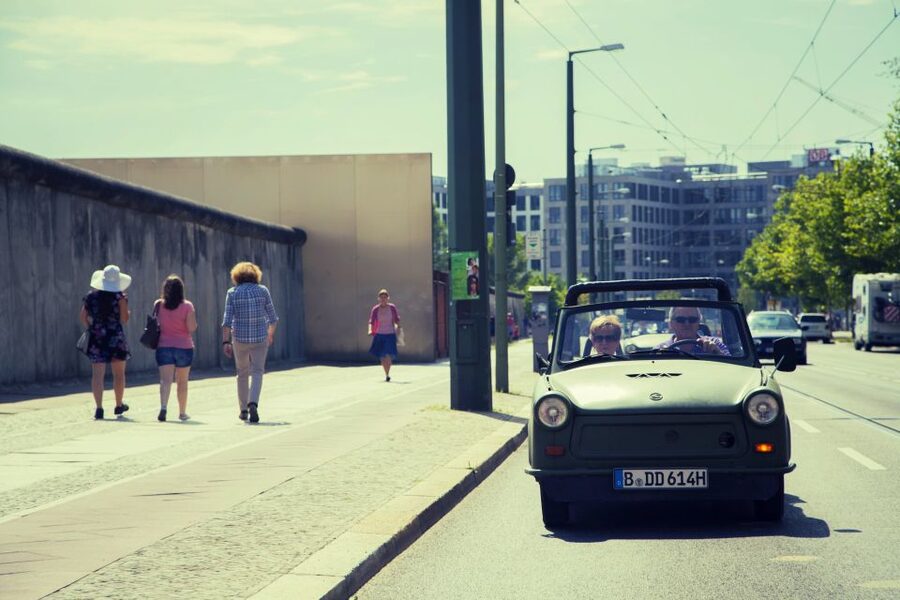
- You drive a real Trabant: Each car is private, and drivers can change during the tour.
- The route follows Berlin’s Cold War story: Expect the East Side Gallery, former death-strip areas, Checkpoint Charlie, and former symbols of Marxism and Leninism.
- You follow a lead guide in a convoy: The guide drives in front while live commentary comes through the car radio.
- The car is part of the attraction: The noisy, basic Trabi draws attention from people along the route and makes the city tour feel unusual.
- The driving conditions matter: Sunday roads may be easier than weekday traffic, while cobblestones can make the ride rough.
- You need the right documents: Drivers must be at least 18 and bring a class B driving license.
Why the Trabant changes a Berlin sightseeing tour
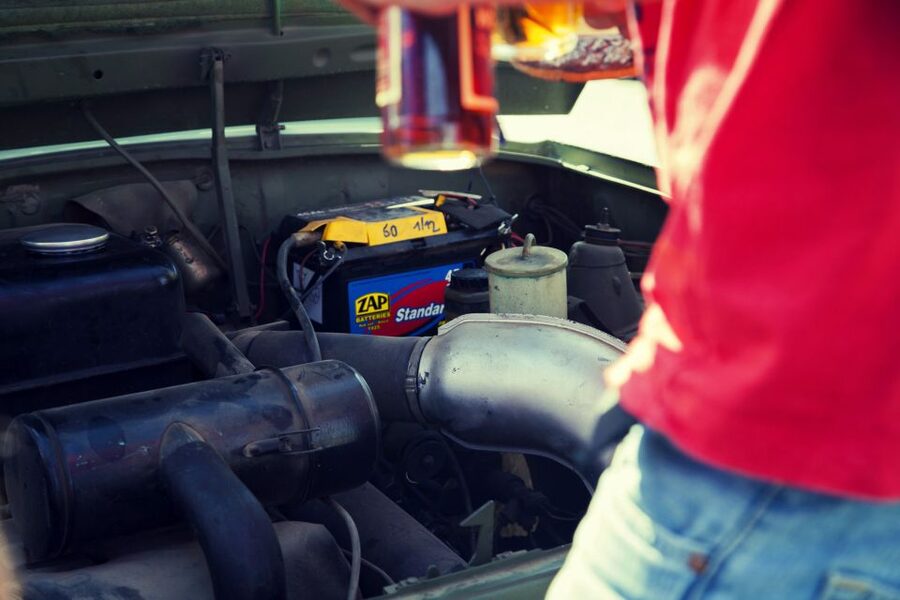
The Trabant was the everyday car of East Germany, and it carries political meaning far beyond its small size. It was simple, slow, noisy, and built for a country where getting a new car could take years. Driving one through modern Berlin creates a clear link between the divided city and the city you see today.
That is the appeal here. You are not riding in a polished sightseeing coach with tinted windows. You are in a compact car with its own quirks, keeping an eye on the convoy while trying to listen to the guide. The experience has a playful side, but the route deals with serious places.
The group travels in several Trabants, with a guide leading from the front. You receive live radio commentary in English or German, and an audio guide is included in both languages. The format is useful, but you need to keep the volume high enough to hear it. One practical weakness is that the radio can be difficult to understand from inside the car, especially when traffic, weather, or the Trabi’s own engine noise gets in the way.
You should think of this as a driving experience with historical commentary, not a full walking tour at each stop. The guide points out sites as you pass. You generally do not get long periods to leave the car, study displays, or explore an interior.
A few more Berlin trips to weigh up
- Berlin: Reichstag, Dome and Government District Guided Tour
★ 4.7 · 18,288 reviews - Berlin: Government District around the Reichstag Guided Tour
★ 4.7 · 8,447 reviews - Berlin: Hidden Backyards Guided Walking Tour
★ 4.8 · 5,360 reviews
Starting at Trabi World on Zimmerstrasse
The tour begins at Trabi World, Zimmerstrasse 97, on the corner of Wilhelmstrasse in Berlin-Mitte. The nearest listed underground station is Kochstrasse on the U6.
This location puts you close to the former Wall zone, which makes sense for a tour focused on Berlin’s division. Arrive ready to drive, not just to board. You must bring your driving license, and every person in the car needs a ticket. Children need a free ticket, but they still need to be included in the booking.
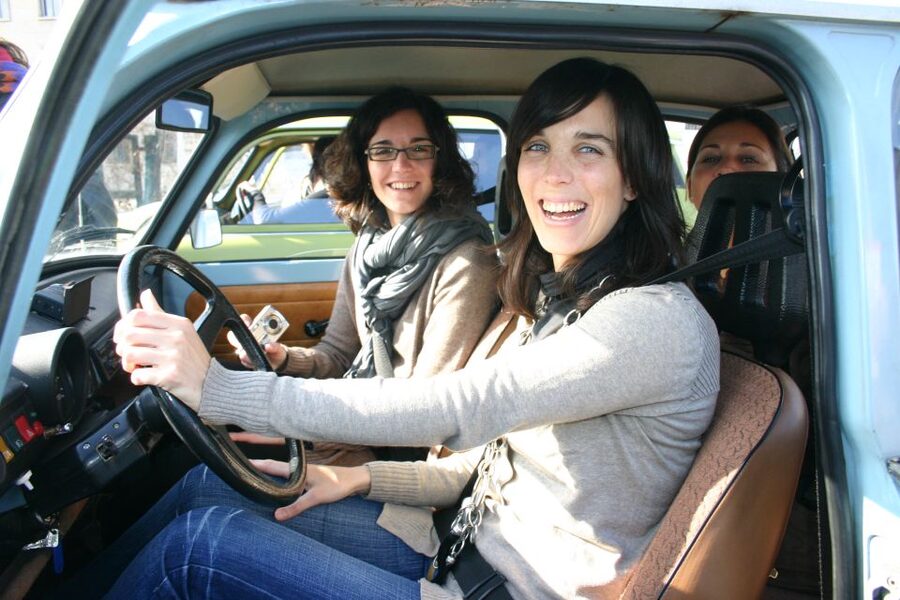
The rules are clear. Drivers must be at least 18, hold a class B, formerly class 2, driving license, and be fit to drive. The car can carry up to four people or 330 kilograms, whichever limit you reach first. Drivers may change during the outing, so two qualified adults can share the wheel.
Before setting out, you get your private Trabi and meet the guide who leads the convoy. If you have never driven a manual car, allow yourself time to get familiar with the controls. A past participant who did not usually drive manual vehicles was able to manage the car after instruction, but you should still expect a learning curve.
Following the convoy through present-day Berlin
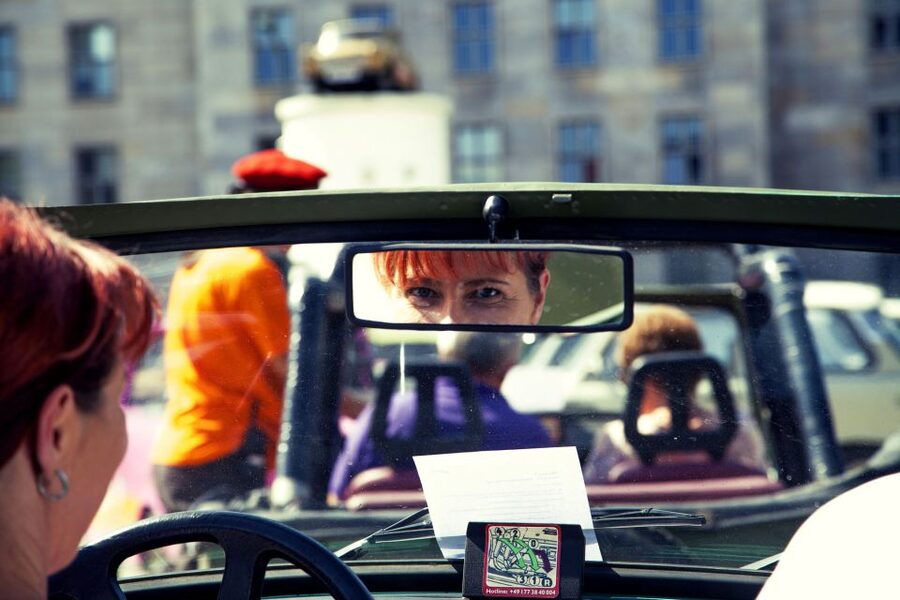
The tour’s unusual rhythm begins once the cars leave Trabi World. You are watching the road, checking the vehicle in front, and listening for commentary. That makes the information feel immediate, but it also means you cannot give every sight your full attention.
This is especially important for the driver. The front passenger gets a better view of buildings and can help watch the route, while the back seat is less ideal for sightseeing. One useful tactic is to let the strongest driver take the first part, then change drivers later if the group wants to share the experience.
The convoy format also affects your pace. On a Sunday, lighter traffic can make it easier to stay with the other Trabants. Weekday traffic may be more demanding, and you should not expect the group to move like a private car on an open road.
The cars attract attention as they pass. People taking photographs around Berlin’s central sights may turn their cameras toward the convoy, which adds to the fun. If you prefer a quiet, anonymous tour, this is not that kind of outing. The Trabi is deliberately visible.
East Side Gallery and the Wall’s surviving traces
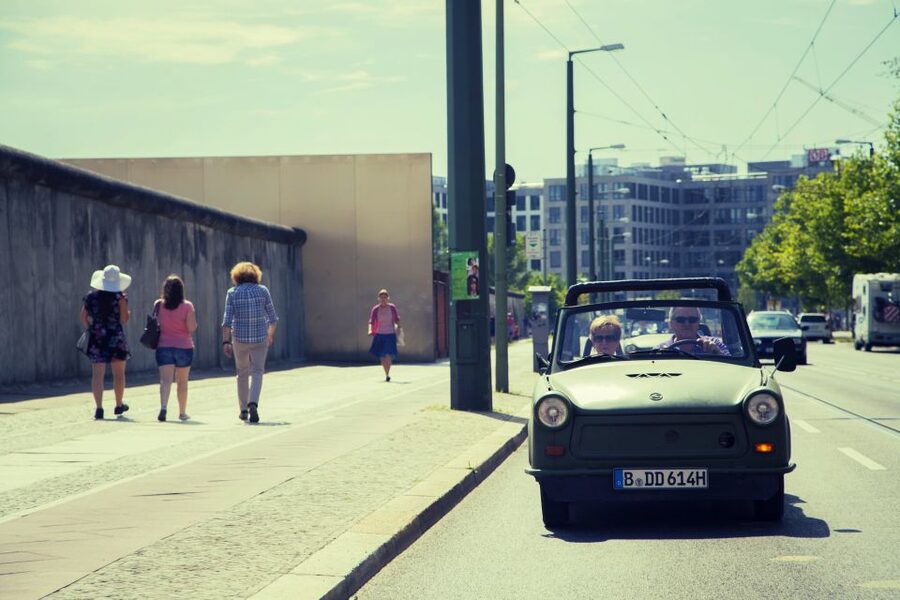
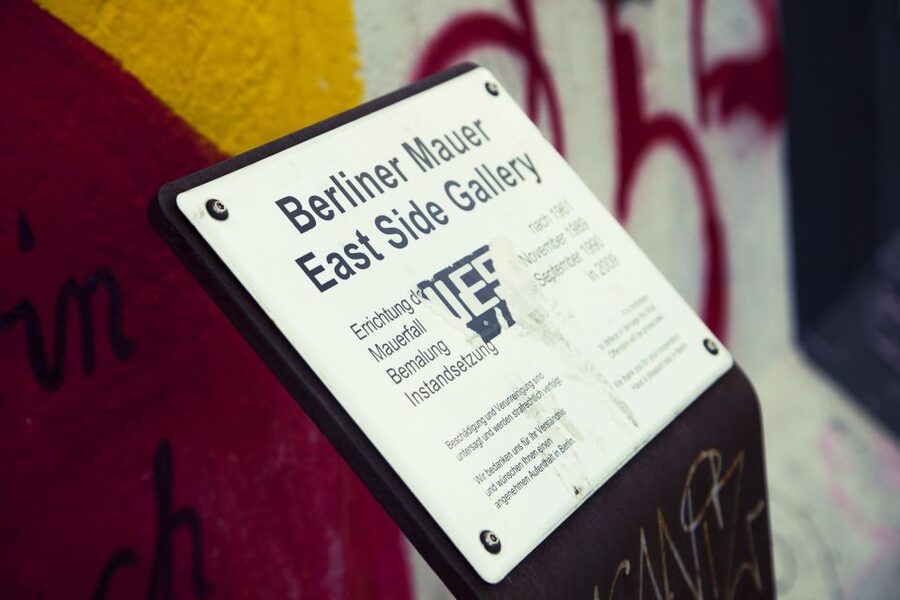
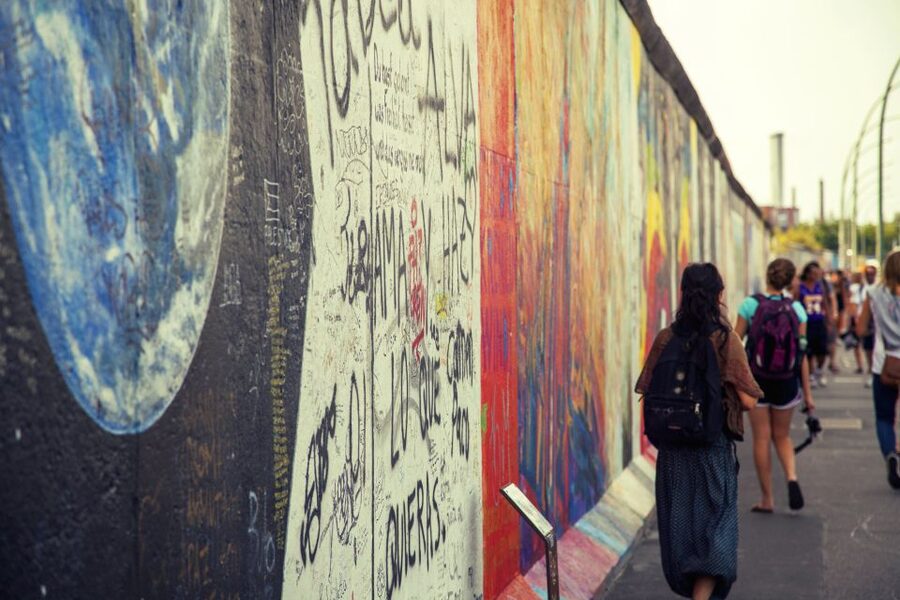
The East Side Gallery is one of the tour’s main landmarks. This long remaining section of the Berlin Wall is covered with murals created after the Wall fell. It represents the change from a guarded border to an open-air display of art and public memory.
You may already have seen photographs of the best-known paintings, but arriving in a Trabant gives the stop a different edge. The car is a product of the former East German system, while the murals represent the hopeful period after the Wall opened. That contrast is one of the strongest ideas in the tour.
Do not expect entry to a museum or a guided art walk. Sight entry is not included, and the tour is built around passing the major locations rather than stopping for long visits. If you want time to examine individual murals, return to the East Side Gallery separately.
The route also takes you past former symbols of Marxism and Leninism. These reminders help show how much Berlin has changed. Monuments, roads, and neighborhoods now serve a united capital, but the city still contains signs of its former political split.
Same city, a completely different kind of day:
- Berlin: 1-Hour City Tour by Boat with Guaranteed Seating
★ 4.3 · 16,993 reviews - Berlin: Boat Tour Along the River Spree
★ 4.4 · 11,252 reviews - Discover Berlin Half-Day Walking Tour
★ 5.0 · 9,624 reviews - Berlin: Hop-on Hop-off Bus Tour with Live Commentary
★ 4.3 · 8,579 reviews
The former death strip and the human cost of the Wall
The phrase death strip refers to the heavily controlled zone between sections of the Berlin Wall. It was designed to stop people from crossing from East Berlin to the West, using fences, patrol routes, watchtowers, lights, and other barriers.
Passing through former border areas gives the tour its serious center. The Trabi may make people smile, but these places point to surveillance, separation, and the danger faced by anyone trying to escape. You gain a firsthand sense that the Wall was not simply a concrete structure. It cut through streets, divided neighbors, and controlled daily life.
The commentary helps connect the physical route with that past. Still, keep your expectations realistic. The tour gives information while you are moving, and the driver has to focus on the convoy. If you want a detailed account of escape attempts, border engineering, or individual lives, plan a separate museum visit.
That limitation is not a flaw so much as a matter of format. This tour gives you a broad route through the city. A museum gives you time and documents. Combining both can make the history easier to understand.
Checkpoint Charlie and a famous Cold War crossing
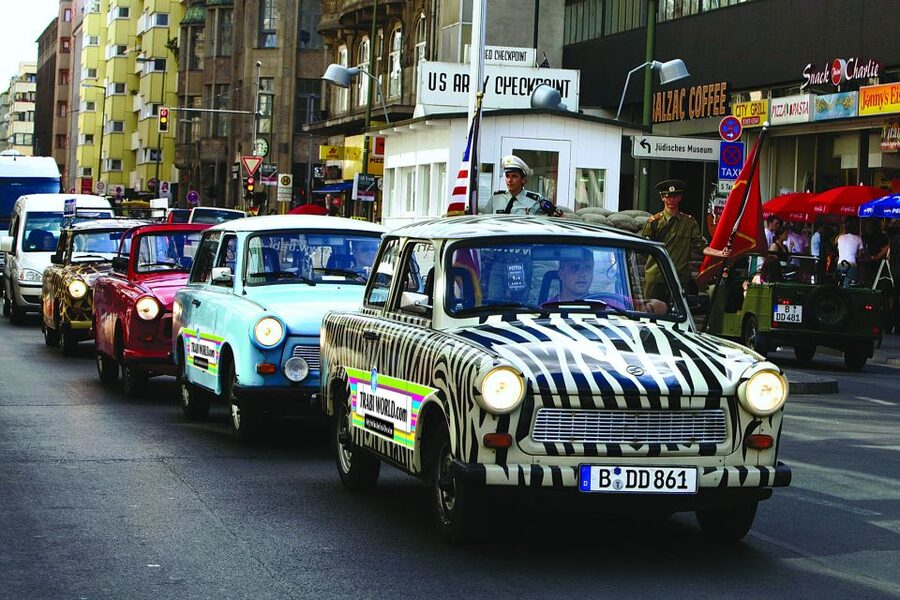
Checkpoint Charlie is another major point on the route. It was one of the best-known crossing points between East and West Berlin, where passport checks took place during the city’s division.
The checkpoint has become one of Berlin’s most visited Cold War sites, and its present-day setting can feel busy and commercial. That is part of the challenge of seeing historical places in a living city. The tour helps by placing the location within the wider route rather than treating it as an isolated photo stop.
You pass through the area in the Trabant convoy, which adds context without pretending the checkpoint looks exactly as it did during the Cold War. The car itself helps bridge the gap between the old East German setting and today’s Berlin.
Again, this is a passing tour rather than a ticketed attraction. Entry fees to sights are not included. If you want to visit nearby exhibitions or displays, set aside separate time and budget.
Cobblestones, weather, and the reality of the ride
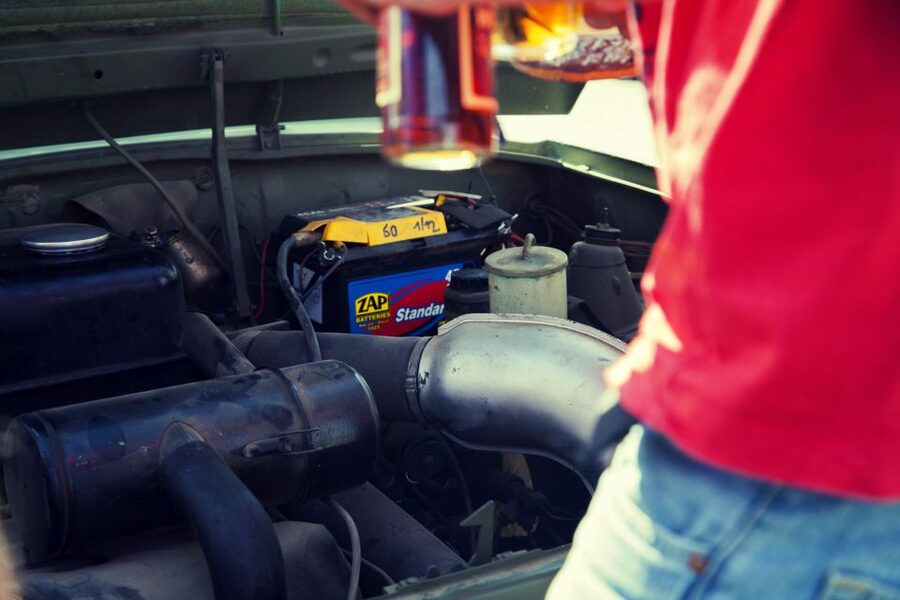
The Trabi is memorable partly because it is not a modern touring car. A ride over cobblestones can feel rough, and one account compared the sensation to being in a blender. That sounds uncomfortable, but it also captures the playful, old-car character of the outing.
You should dress for the weather and expect the car to behave like an older vehicle. In wet conditions, visibility and equipment may become an issue. Near the end of one tour, the windscreen wipers and radio stopped working during poor weather. That appears to have been a temporary problem rather than the usual pattern, but it is a useful reminder that this is not a luxury vehicle.
The included insurance has a 650 euro excess in case of damage. That amount matters. You receive liability and comprehensive insurance, but you remain responsible for the stated excess. Drive carefully, especially if you are unfamiliar with manual transmission or narrow city streets.
Mileage and petrol are included, so you do not need to manage fuel costs during the tour. A souvenir Trabi driver’s license is also included. It is a small keepsake, but it suits an experience built around the novelty of being at the controls.
What the commentary can and cannot do
The guide leads the convoy and provides live radio commentary. The commentary is available in English and German, and the tour guide speaks those languages as well.
The guide has to perform two jobs at once: keep the convoy together and explain the sights. That is why the information comes in short bursts rather than as a long lecture. You will hear about the places you pass, but you may miss a detail while changing gear, watching traffic, or trying not to lose the car ahead.
The best seats for the commentary are likely the driver and front passenger positions, simply because they are more connected to the action. Back-seat passengers may hear less clearly and have a more limited view. If historical detail is your first priority, a walking tour or museum may serve you better.
If the audio is difficult to hear, ask the staff about the volume before departure. The radio is part of the supplied equipment, and checking it early is easier than trying to solve the problem in traffic.
The guides are praised for being friendly and well prepared, with one guide described as offering a fun, wide-ranging view of Berlin’s past. No individual guide names are provided, so do not book expecting a particular person.
Is $116 good value for 135 minutes?

At $116 per person, this is not the cheapest way to see Berlin. The price pays for more than a standard city ride, though. It includes your private Trabant, the guide-led convoy, live commentary, fuel, mileage, insurance, and the souvenir license.
The value depends on how many people share the car. Up to four people can ride in one Trabi, within the 330 kilogram limit, but each participant needs a ticket. That means you are paying per person, not renting the entire car for one flat price.
I think the price makes the most sense for people who see the Trabant as the main attraction. If you only want to hear Berlin history, public transport and museums will cost less and may give you more detail. If you want to drive an East German car through the streets tied to its history, this experience offers something those options cannot.
The car also turns the tour into a shared activity. Families, couples, and small groups can swap drivers and laugh at the machine’s unusual handling. A family activity from earlier years was praised for being friendly and informative, and the private-car setup keeps the group together.
Who should book this tour?
You should consider it if you enjoy unusual transport, modern European history, and hands-on sightseeing. It suits a small group that wants to do something more active than follow a guide on foot.
It is also a good choice for anyone who has already seen Berlin’s main museums and wants a fresh way to connect the city’s Cold War sites. The route covers several important places in one outing, without asking you to spend the whole day walking.
You may want another type of tour if you need quiet audio, long stops, or detailed museum-style teaching. Drivers who dislike manual cars, busy roads, rough surfaces, or convoy travel should think carefully before booking. The back seat is also less rewarding for someone who wants constant views.
Book it for the experience of driving the Trabi first, and for the sightseeing second. That order will help you enjoy the noise, the attention, the gear changes, and the occasional bump rather than treating them as faults.
Practical details that affect your decision
You can cancel up to 24 hours before the start time for a full refund, and you can reserve now and pay later. Starting times vary, so check availability for your date.
Wheelchair access is listed as available, but the supplied details do not explain the exact vehicle arrangement or transfer process. Contact the provider before booking if you need specific mobility support.
The tour lasts 135 minutes. One past booking describes a 2.5 hour tour, so allow some flexibility around the listed running time for arrival, instruction, convoy movement, or finishing procedures.
You can visit the Trabi Museum at Trabi World afterward if you want more background on the vehicle. Museum entry is not included in the tour price.
Should you book the Berlin Wall Ride?
Book this tour if you want Berlin’s Cold War story delivered through a genuine piece of East German everyday life. The East Side Gallery, former death-strip areas, and Checkpoint Charlie give the route real substance, while driving the Trabant keeps the outing lively.
I would choose it for a couple or small group that wants to share the wheel and does not mind a rough, noisy ride. I would skip it for a visitor whose main goal is detailed historical study or a calm, easy-to-hear sightseeing trip.
The strongest reason to go is simple: Berlin is the backdrop, but the Trabant is the experience. At $116 per person, it asks for a healthy budget, yet it offers a type of city tour you cannot reproduce from a bus window.
FAQ
Where does the Berlin Wall Ride start?
The tour starts at Trabi World, Zimmerstrasse 97, on the corner of Wilhelmstrasse, in Berlin-Mitte. The listed underground connection is Kochstrasse on the U6.
How long does the tour last?
The listed duration is 135 minutes. A past booking describes a 2.5 hour version, so allow some extra time around the scheduled activity.
Do I drive the Trabant myself?
Yes. Each booking includes a private Trabi that you drive yourself.
How many people can ride in one Trabant?
A maximum of four people or 330 kilograms, which is 727.5 pounds, are allowed in each car.
Can drivers change during the tour?
Yes. Drivers can change during the tour, provided each driver meets the age and license requirements.
What driving license do I need?
You need a class B driving license, formerly referred to as class 2, and you must bring it with you.
What is the minimum age for drivers?
Drivers must be at least 18 years old and fit to drive.
What languages are available?
The live guide and audio commentary are available in English and German.
Are children charged for the tour?
Children need a cost-free ticket. Every person in the car must still be included in the booking.
Is insurance included?
Liability and comprehensive insurance are included, with a 650 euro excess in case of damage. Mileage and petrol are also included.
Just added around Berlin
- Love and War in Berlin: Self-Guided Story Puzzle Walk★ 5.0 · 7 reviews
- Rickshaw Tours Berlin – Groups of up to 16 people with several rickshaws★ 4.0 · 97 reviews
- Walking on the Wall: 3-Hour Tour in Berlin★ 4.5 · 34 reviews
- eSIM for Germany and 34 European Countries★ 4.5 · 16 reviews
- Warnemuende Shore Excursion: Berlin Private Sightseeing Tour from Rostock★ 5.0 · 4 reviews
- Your ticket to The Wall Museum Berlin★ 3.0 · 60 reviews
- Warnemuende Shore Excursion: Private Berlin Tour★ 4.5 · 27 reviews
- Berlin’s Gay, Lesbian, and Queer Scene Small-Group Walking Tour★ 4.5 · 66 reviews
Guided, compared.

Reichstag, Dome and Government District Guided Tour
Read our review →