Reviewed · GUIDED
Berlin: “The Humboldt Forum for Newbies” Guided Tour
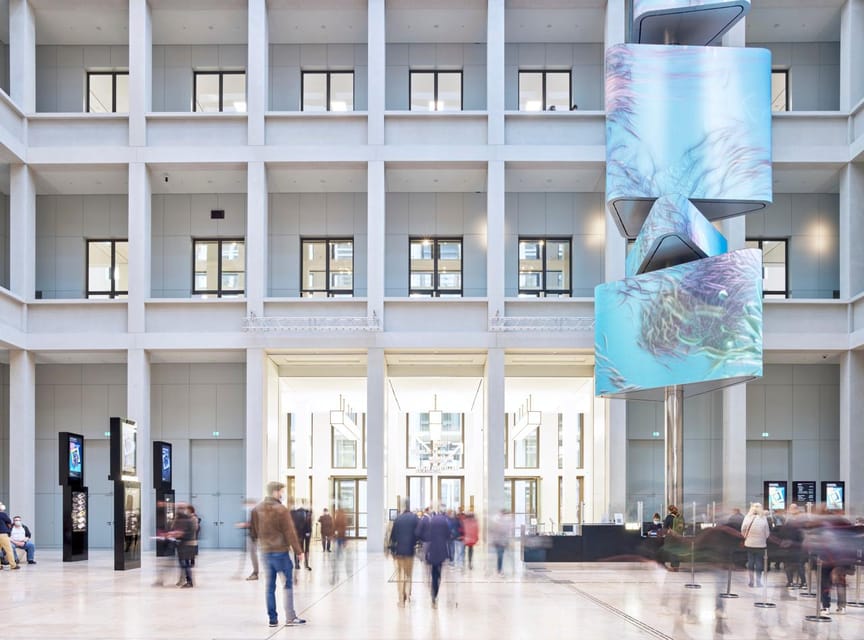
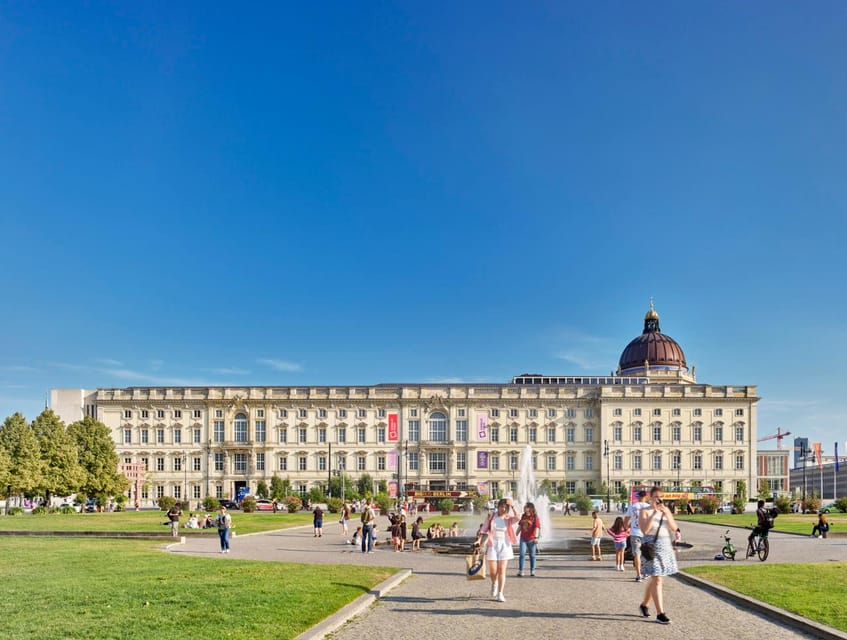
The most useful thing about this one-hour Humboldt Forum tour is its focus: it gives you a clear starting point before you tackle the building on your own. You’ll connect Alexander and Wilhelm von Humboldt with the site, learn why architect Franco Stella looked beyond the former Berlin Palace for ideas, and spot traces of the location’s eventful past.
I like the low $10 price and the choice of English or German. I also like that the guide can take questions and explain points clearly, which one verified booking specifically praised. The main catch is practical: the meeting point is inside the foyer, and one person arrived late after waiting outside by the street entrance.
In This Review
- Key points to know before booking
- Why this short Humboldt Forum tour is useful
- Meeting at the foyer, not outside
- The first lesson: what the Humboldt Forum is
- Alexander and Wilhelm von Humboldt in the building
- Reading Franco Stella’s architectural choices
- Finding traces of the site’s eventful past
- English or German: choosing the right version
- How the one-hour pace shapes the visit
- Is $10 good value?
- Who should book this introduction?
- Booking advice and final call
- FAQ
- How long does The Humboldt Forum for Newbies tour last?
- Is the tour offered in English?
- Is there a German version of the tour?
- Where do I meet the guide?
- Is the tour wheelchair accessible?
- What is included in the price?
Key points to know before booking
- A one-hour orientation: This is a focused introduction, not an all-day museum visit.
- Two language choices: Select the English Humboldt Forum for Newbies tour or the German Humboldt Forum for the Curious.
- Architecture with a backstory: Franco Stella’s design draws on more than the former Berlin Palace.
- The Humboldt brothers matter: Alexander and Wilhelm von Humboldt help explain the building’s name and purpose.
- Look for surviving traces: The tour points out signs of the site’s changing and sometimes troubled past.
- Meet inside the foyer: Go to Meeting Point A inside the Humboldt Forum, not simply the street outside.
Why this short Humboldt Forum tour is useful
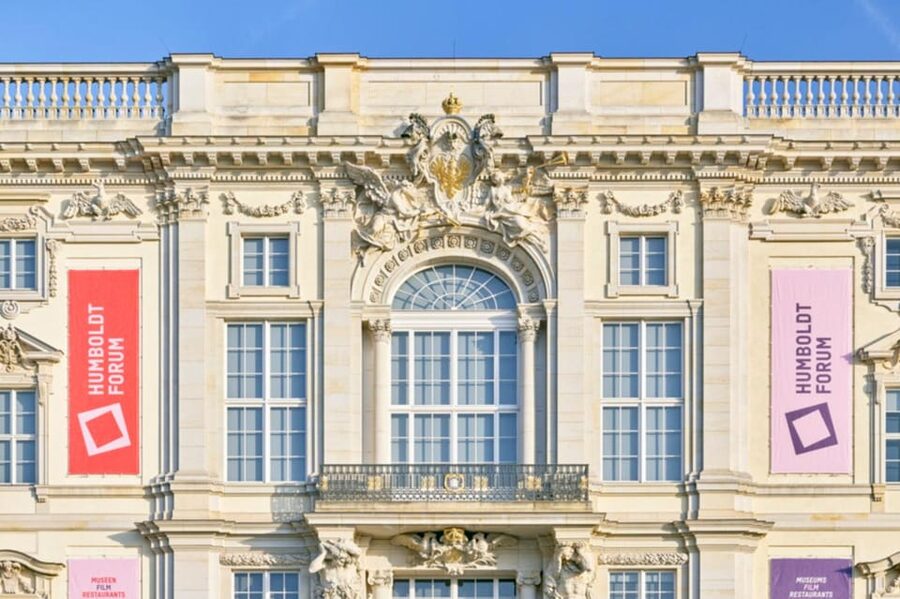
The Humboldt Forum can be a lot to take in. It is tied to Berlin’s royal past, modern reconstruction, museum work, global cultural exchange, and the ideas associated with two famous brothers. A first-time visitor can easily see a handsome facade without understanding what the building is trying to say.
This tour tackles that problem in a sensible way. Instead of sending you straight into a maze of rooms and displays, it offers a basic framework. You learn what the Humboldt Forum contains, why the building looks as it does, and how the site’s earlier chapters still show up today.
That matters because architecture here is not just decoration. The building itself carries arguments about memory, reconstruction, and the way Berlin presents its past. A guide can point out those links as you move through the space, giving you questions to carry into the rest of your visit.
At one hour, the tour also fits neatly into a day of sightseeing. You can use it as a starting point before exploring other parts of the Humboldt Forum, or as a compact cultural stop when you have limited time in Berlin. I would not treat it as a replacement for a full museum visit. I would treat it as the key that helps the rest of the building make more sense.
A few more Berlin trips to weigh up
- Berlin: Reichstag, Dome and Government District Guided Tour
★ 4.7 · 18,288 reviews - Berlin: Government District around the Reichstag Guided Tour
★ 4.7 · 8,447 reviews - Berlin: Hidden Backyards Guided Walking Tour
★ 4.8 · 5,360 reviews
Meeting at the foyer, not outside
Your meeting point is Meeting Point A in the foyer of the Humboldt Forum. This detail deserves attention because the location can be confusing if you arrive without checking it closely.
One verified booking described waiting near the entrance on the street and missing part of the start because the actual meeting point was inside the foyer. My practical advice is simple: allow enough time to enter the building and locate Meeting Point A before the scheduled departure. Do not assume that waiting outside by the road is correct.
The indoor meeting point is a sensible choice for a tour of the building. It puts you in the place you are about to study, rather than starting on a pavement and spending the first few minutes moving indoors. Still, the wording matters. If you are unfamiliar with the Humboldt Forum, read the meeting instructions carefully and head into the foyer.
The tour is wheelchair accessible, which makes this introductory format useful for a wider range of visitors. The provided details do not state the group size or describe a particular route through every gallery, so you should think of the experience as a guided orientation rather than a fixed list of exhibition rooms.
The first lesson: what the Humboldt Forum is
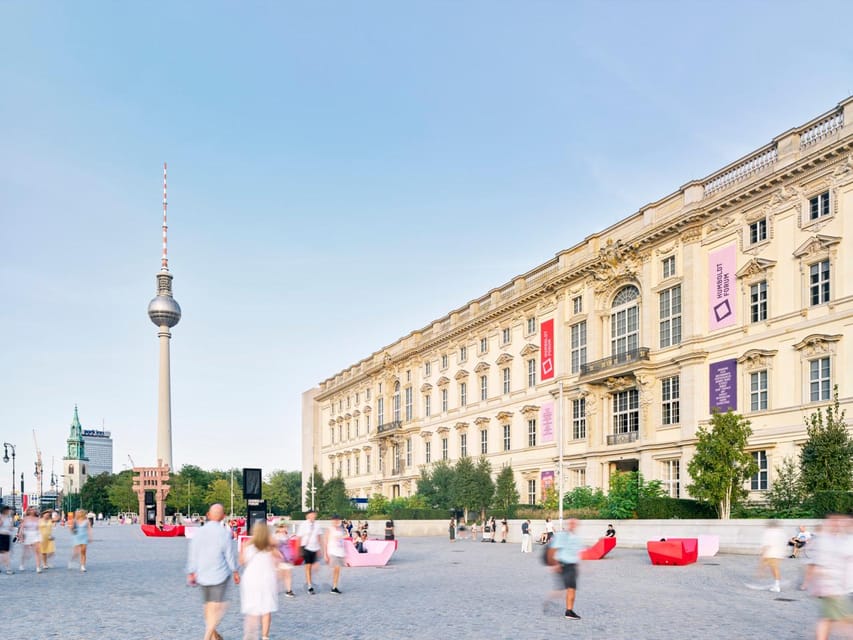
The tour begins with the basic question many first-time visitors have: what exactly is in the Humboldt Forum?
The guide uses that question to set up the building’s main themes. You are not simply shown a historic facade or given a list of rooms. You get an explanation of the institution and its place in Berlin’s cultural setting, along with the ideas tied to the Humboldt name.
That opening is especially helpful if you have only seen the building from outside. It gives you a way to read the space before you start exploring it independently. Instead of treating each part as a separate attraction, you can connect the building, its collections, its reconstruction, and its historical setting.
The hour-long format means the guide has to keep this introduction moving. That is a benefit if you prefer a clear, lively overview. It may feel brief if you want long stops, detailed object discussions, or a full account of every museum section. The tour’s job is to orient you, not cover everything.
Alexander and Wilhelm von Humboldt in the building
The Humboldt brothers are central to the tour. Alexander and Wilhelm von Humboldt were not added as a minor footnote to the building’s name. Their ideas help frame the way the Humboldt Forum presents learning, research, and connections across cultures.
You will learn what each brother has to do with the building and why their names are used here. The supplied information does not set out a full biography of either man, so you should expect the guide to focus on their connection to the Humboldt Forum rather than a long life story.
That focus is valuable. A name on a building can otherwise become background noise. By explaining the brothers’ role, the guide gives you a human entry point into a large institution. You can then understand why the Forum links architecture and collections with wider questions about knowledge and cultural contact.
I particularly like this part for visitors who want context without committing to a long academic tour. You get enough information to see why the brothers matter, while still leaving room to explore the building’s other themes at your own pace.
If you already know a great deal about Alexander and Wilhelm, this section may feel familiar. The tour is designed for newcomers, so it aims to establish the basics rather than offer specialist research.
Same city, a completely different kind of day:
- Berlin: 1-Hour City Tour by Boat with Guaranteed Seating
★ 4.3 · 16,993 reviews - Berlin: Boat Tour Along the River Spree
★ 4.4 · 11,252 reviews - Discover Berlin Half-Day Walking Tour
★ 5.0 · 9,624 reviews - Berlin: Hop-on Hop-off Bus Tour with Live Commentary
★ 4.3 · 8,579 reviews
Reading Franco Stella’s architectural choices
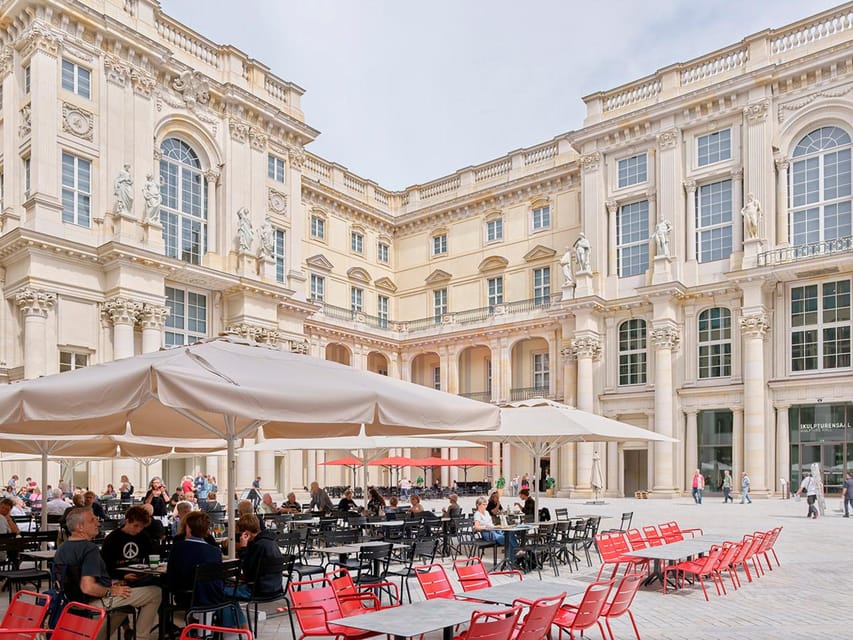
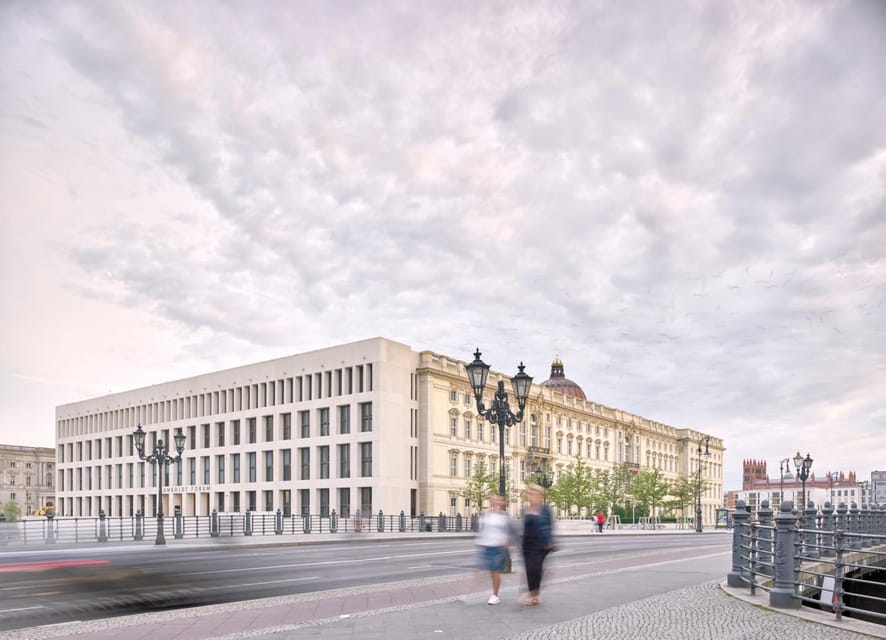
The building’s design gets its own close look. Franco Stella drew inspiration from the former Berlin Palace, but the tour makes clear that the palace was not his only model.
That is an important distinction. Visitors often look at a reconstruction and assume there was one simple source behind it. The guide instead encourages you to consider the wider set of architectural ideas that shaped the building. You will learn about influences beyond the palace and gain a better sense of how old and new elements were brought together.
The tour does not promise a technical architecture lecture, and the available details do not name every model or feature you will study. What you can expect is an explanation of the design’s inspiration and purpose, with attention to the building as an object in its own right.
I like this approach because it asks you to look up from the displays. Walls, courtyards, facades, and layout become part of the visit. Once the guide explains the thinking behind Stella’s work, you may notice details you would otherwise walk past.
There is also a useful built-in caution. A one-hour introduction cannot unpack every debate around reconstruction and architectural style. If those subjects are your main reason for visiting, you may want more time afterward to examine the building for yourself. The tour gives you the vocabulary and basic context, but not a full architectural seminar.
Finding traces of the site’s eventful past
One of the most appealing promises of this experience is its attention to the marks left by the site’s earlier chapters. The guide points out traces that remain visible today, rather than treating the Humboldt Forum as a completely new object with no connection to what came before.
This gives the tour a strong sense of place. You are not only hearing about distant events in a classroom-like setting. You are looking at a building and location where layers of Berlin’s past still matter. The exact traces are not itemized in the supplied details, so I would not book this expecting a checklist of specific ruins, rooms, or artifacts.
Instead, expect the guide to help you notice the relationship between the present building and the site’s changing identity. That can be more useful than memorizing dates. You begin to see the Forum as part of an ongoing conversation about what Berlin keeps, rebuilds, explains, or changes.
This is also where the tour’s tone may become more thoughtful. The site has an eventful and sometimes difficult past, and the experience presents that past as part of the building’s meaning. It is a good fit for visitors who want to understand the place rather than only admire its appearance.
English or German: choosing the right version
You can book the tour in English or German. The English option is called The Humboldt Forum for Newbies, while the German version is titled Humboldt Forum for the Curious.
The content is built around the same core questions: what the Forum contains, how the Humboldt brothers connect to it, what influenced Franco Stella, and what signs of the site’s past remain. The main difference is the language in which the guide presents the material.
Choose the language in which you can comfortably follow architectural and historical explanations. A tour about a complicated building is not the place to struggle through unfamiliar vocabulary. If you are deciding between English and German, choose the one that lets you ask questions without hesitation.
The guide-led format is a real advantage here. One verified booking specifically praised the guide for responding to questions and explaining everything well. No individual guide name is provided, so I cannot recommend a particular person, but that feedback points to an interactive style rather than a speech delivered without pause.
Still, do not assume every question will receive a long specialist answer. This is an introductory tour, and the one-hour limit calls for a brisk pace. Think of questions as a way to clarify the main story, not as a promise of a private research session.
How the one-hour pace shapes the visit
The duration is both the tour’s strength and its limit. One hour is long enough to cover the building’s purpose, the Humboldt brothers, Stella’s influences, and visible traces of the past. It is short enough to fit before or after other Berlin plans.
You should expect a concentrated route with stops that build on one another. The tour starts with orientation, moves into the people and ideas behind the name, then turns to architecture and the site’s past. The supplied details do not provide a minute-by-minute route or a list of exhibition galleries, so I would leave room afterward if you want to explore further.
This pace suits first-time visitors who want a firm base without spending half a day in a guided group. It also works for people who learn better when a guide connects the parts of a place for them.
The tradeoff is depth. You will not cover every collection, display, architectural detail, or historical period in sixty minutes. If you already know the Humboldt Forum well, the introduction may feel basic. For most newcomers, that is the point.
Is $10 good value?
At $10 per person, this is an easy tour to justify if you want context before exploring the Humboldt Forum alone. The price is low compared with many guided city experiences, while the subject is large enough that a short explanation can save you time and confusion.
The value depends on how you use it. If you arrive hoping for a full museum tour with detailed object commentary, you may feel that one hour is too short. If you want to understand the building’s purpose and design, the price is more attractive.
I see the tour as a practical add-on to a Berlin day. You pay for a guide who can connect several complicated subjects in one sitting: the Humboldt brothers, Stella’s architectural thinking, and the site’s earlier layers. After that, you can decide which parts deserve your own attention.
Food and drinks are not included, but that is hardly a serious issue for a one-hour indoor orientation. The experience is about the building and its ideas, not refreshments.
The booking terms also reduce some of the risk. You can cancel up to 24 hours in advance for a full refund, and the reserve-now, pay-later option lets you hold a place without paying immediately. Check the available start times before planning the rest of your day.
Who should book this introduction?
I would recommend it to a first-time visitor who wants the Humboldt Forum to feel understandable rather than merely impressive. It is also a good choice if you enjoy architecture, Berlin’s changing past, or the story behind the institution’s name.
The tour should suit you especially well if:
- You have about an hour and want a focused cultural stop.
- You prefer English or German guided explanation.
- You want to ask questions as you go.
- You are interested in how a modern building relates to earlier architecture.
- You want help spotting traces of the site’s past.
- You plan to explore more of the Humboldt Forum on your own afterward.
I would hesitate if you want a long, object-by-object museum tour or a highly specialized architecture lecture. The tour is aimed at newcomers, and its strength is clarity rather than exhaustive detail.
Booking advice and final call
Book this tour if you want a clear first look at the Humboldt Forum for a modest price. The English and German choices make it accessible, the one-hour length is easy to fit into a Berlin itinerary, and the guide-led format gives you a chance to ask questions instead of relying only on wall text.
Just get the meeting point right. Enter the Humboldt Forum and find Meeting Point A in the foyer, rather than waiting outside by the street entrance. That small detail can make the difference between starting with the group and arriving late.
My call: yes, book it if you are new to the Humboldt Forum and want the building’s people, design, and past explained in one compact visit. Skip it only if you already know the site well or want a much longer museum tour.
FAQ
How long does The Humboldt Forum for Newbies tour last?
The tour lasts one hour.
Is the tour offered in English?
Yes. The English option is called The Humboldt Forum for Newbies.
Is there a German version of the tour?
Yes. The German option is called Humboldt Forum for the Curious.
Where do I meet the guide?
Meet at Meeting Point A in the foyer of the Humboldt Forum. The meeting point is inside, so do not wait only outside by the street entrance.
Is the tour wheelchair accessible?
Yes, the activity is listed as wheelchair accessible.
What is included in the price?
The price includes a guided tour in the language selected, either English or German. Food and drinks are not included.
Just added around Berlin
- Love and War in Berlin: Self-Guided Story Puzzle Walk★ 5.0 · 7 reviews
- Rickshaw Tours Berlin – Groups of up to 16 people with several rickshaws★ 4.0 · 97 reviews
- Walking on the Wall: 3-Hour Tour in Berlin★ 4.5 · 34 reviews
- eSIM for Germany and 34 European Countries★ 4.5 · 16 reviews
- Warnemuende Shore Excursion: Berlin Private Sightseeing Tour from Rostock★ 5.0 · 4 reviews
- Your ticket to The Wall Museum Berlin★ 3.0 · 60 reviews
- Warnemuende Shore Excursion: Private Berlin Tour★ 4.5 · 27 reviews
- Karl-Marx-Allee Tour: Life and Architecture in East Berlin★ 5.0 · 19 reviews
Guided, compared.

Reichstag, Dome and Government District Guided Tour
Read our review →