
Reviewed · BIKE TOURS
Berlin: Small Group Bike Tour Through City Center
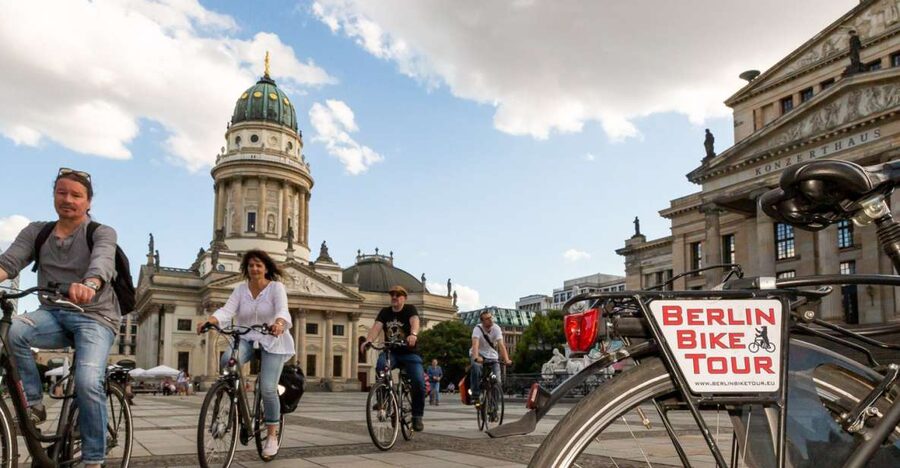
Berlin tells its story in long, open spaces, and a bicycle is a smart way to connect them. This 3.5-hour ride starts at Bornholmer Straße, the former Wall crossing where East and West Berliners joined together when the border opened, then links the Government Quarter, Tiergarten, Brandenburg Gate, Alexanderplatz, and Prenzlauer Berg.
I like the small group of no more than eight people, which should make it easier to hear the German-speaking guide and ask questions. I also like the route’s mix of famous sights and less obvious stops, including the Old Post Headquarters, New Synagogue, Charité, and East German World Clock.
The main drawback is practical: the tour runs in all weather, and it is offered in German only. You also need to leave luggage and large bags behind, and groups of three or more must cancel at least three days ahead, despite the general 24-hour cancellation policy.
In This Review
- Key points at a glance
- Why this bike route works for Berlin
- Starting at Bornholmer Straße
- New Synagogue and the Old Post Headquarters
- Charité, Hauptbahnhof, and a changing capital
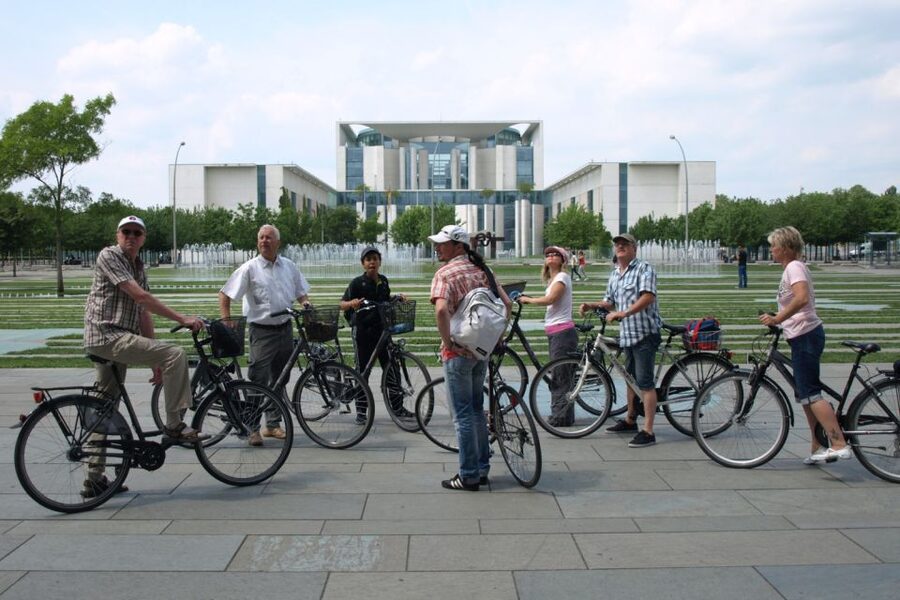
- The Reichstag and Government Quarter
- Tiergarten to the Brandenburg Gate
- Holocaust Memorial and central monuments
- Alexanderplatz and East German Berlin
- Finishing through Prenzlauer Berg
- Small group size, language, and pace
- Weather and what the $39 price covers
- Who should book this Berlin ride?
- Should you book it?
- FAQ
- How long does the Berlin bike tour last?
- How many people can join the tour?
- What language is the tour conducted in?
- Where does the tour start?
- How can I reach the meeting point by public transport?
- Where does the tour end?
- Is a bicycle included?
- What happens if it rains?
- Can I bring luggage or a large bag?
- What is the cancellation policy?
Key points at a glance
- Bornholmer Straße begins the story: See the former border crossing tied to the fall of the Berlin Wall.
- Eight people is the maximum: The small group keeps the ride more personal than a large bike procession.
- The route crosses both sides of Berlin’s identity: Ride past the Reichstag, Brandenburg Gate, Alexanderplatz, and Prenzlauer Berg.
- The itinerary mixes headline sights with quieter landmarks: Look for the New Synagogue, Old Post Headquarters, Charité, and Neptune Fountain.
- The ride covers a lot in 3.5 hours: You get a broad first look at central Berlin, not long visits inside museums.
- German is the tour language: Bring your ID, sunglasses, sun hat, and camera, and prepare for changing weather.
Why this bike route works for Berlin
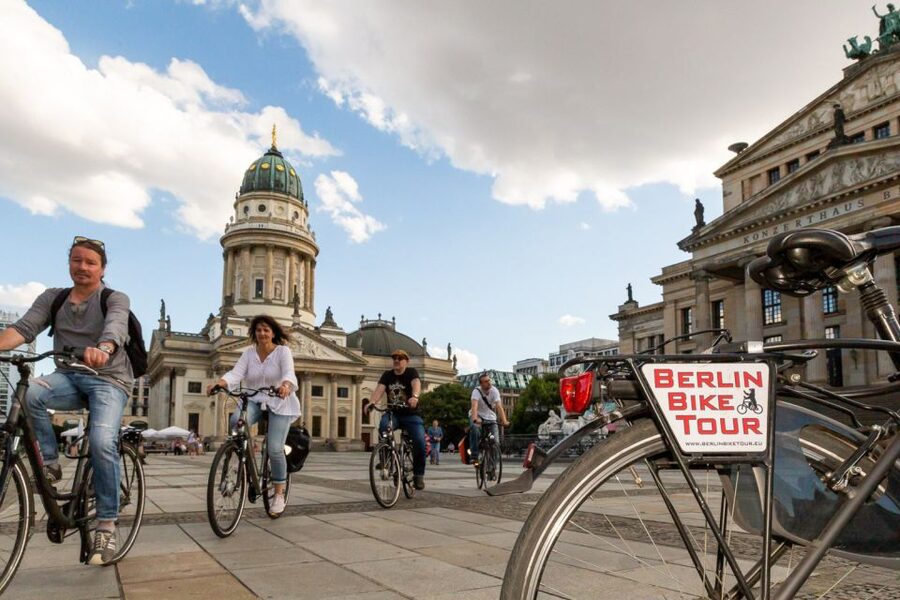
Berlin can feel spread out. The Brandenburg Gate, Alexanderplatz, Hauptbahnhof, former Wall sites, and Prenzlauer Berg are all central, but walking between every stop takes time and energy. This route uses a bicycle to stitch those places together in one outing.
You are not simply pedaling from monument to monument. The route moves through different versions of Berlin: the divided city, the reunited capital, the government center, the broad park at its heart, and the eastern districts that now give the city much of its youthful character.
At $39 per person, the value comes from that coverage. A 3.5-hour tour gives you a useful orientation without the cost of several separate sightseeing stops. Your guide supplies the bicycle and leads the way, so you can focus on the city instead of route planning.
The tradeoff is depth. This is a moving city tour, not a series of long monument visits. You should book it to understand Berlin’s shape and major landmarks, then return on your own to the places that deserve more time.
More Bike Tours in Berlin
- Berlin: Sights and Highlights Bike Tour with a Local Guide
★ 4.8 · 2,698 reviews - Berlin Highlights 3-Hour Bike Tour
★ 5.0 · 948 reviews - Berlin City Bike Tour with Beer Garden Stop
★ 5.0 · 917 reviews
Starting at Bornholmer Straße
Meet 20 minutes before departure at 75 Bornholmer Straße, Berlin 10439. The starting point sits close to public transport, which makes it simple to reach from other parts of Berlin.
The tram stop Björnsonstraße is about a minute away, served by M1, M13, and M50. S-Bahn station Bornholmer Straße is about two minutes away, with S1, S2, S8, S25, and S85 services. Schönhauser Allee, served by several S-Bahn lines and U2, is roughly a 10-minute walk.
Bornholmer Straße is not a random place to begin. It was a former border crossing between East and West Berlin, and on the day the Wall fell, people from both sides gathered here in celebration. That gives the first stop a clear human meaning before you even reach the famous center.
I like this beginning because it puts Berlin’s modern story ahead of its grand buildings. You start with a place tied to ordinary people crossing a line that had split their city, then ride toward the capital’s formal symbols.
The activity ends back at the same meeting point. Plan your onward schedule with that return in mind.
New Synagogue and the Old Post Headquarters
The route continues toward two very different pieces of Berlin’s built past: the New Synagogue and the Old Post Headquarters.
The New Synagogue is known for its striking form and its place in Berlin’s Jewish history. It gives the ride a more reflective stop than the grand political sights later in the day. You will see it as part of the city route, so anyone wanting a detailed interior visit or extended museum time should plan a separate visit.
The Old Post Headquarters adds another layer. It points to the working city, not just the ceremonial one. Together, these stops help show why Berlin is best understood through contrasts: religious and civic buildings, old institutions and new government, memorials and everyday neighborhoods.
Your guide speaks German, so this portion will be most useful if you understand German well enough to follow historical explanations. The small group should help with hearing the guide, especially when the route pauses near busy streets or open public spaces.
Charité, Hauptbahnhof, and a changing capital
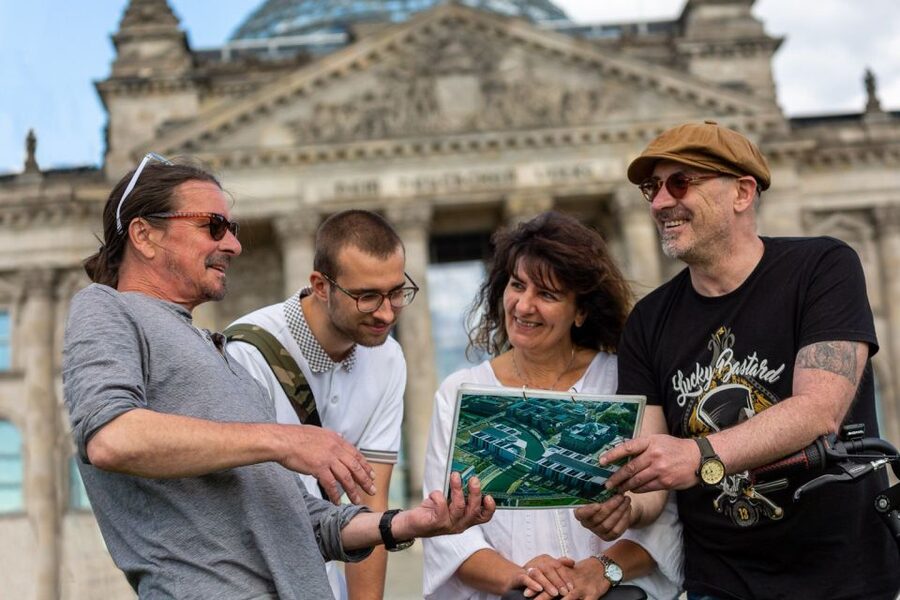
The ride then brings you past the Berlin Charité and Hauptbahnhof. These are not interchangeable sights, and that is the point.
Charité represents Berlin as a center of medicine and research. Hauptbahnhof, the city’s major rail station, represents the modern capital and its constant movement. Seeing them in sequence gives you a quick lesson in how Berlin works today, beyond the familiar Wall and Nazi-era landmarks.
This is one of the route’s useful choices. Many first-time visitors spend their entire day on monuments and miss the institutions that keep a capital running. The route gives you a look at both the city’s public symbols and its active civic life.
Do not expect a long stop at either location. The tour’s strength is connection. You will see how the central districts relate to one another rather than study one building in detail.
Same city, a completely different kind of day:
- Berlin: Reichstag, Dome and Government District Guided Tour
★ 4.7 · 18,288 reviews - Berlin: 1-Hour City Tour by Boat with Guaranteed Seating
★ 4.3 · 16,993 reviews - Berlin: Boat Tour Along the River Spree
★ 4.4 · 11,252 reviews - Discover Berlin Half-Day Walking Tour
★ 5.0 · 9,624 reviews
The Reichstag and Government Quarter
From there, you ride through Berlin’s Government Quarter and see the Reichstag. The building is one of the clearest symbols of reunified Germany, and its location makes the political story easy to follow.
The Reichstag is not just an old parliamentary building placed on a sightseeing route. It represents the return of the German national government to Berlin after division, and it sits in a district shaped by the country’s new political role.
The bike approach is helpful here because you can take in the wider setting. You get the government buildings, open public spaces, and connections to the river and central Berlin in one sweep. That broader view is harder to appreciate when you arrive at a single entrance by taxi or underground train.
The tour does not include a visit inside the Reichstag. If you want to enter, you will need to arrange that separately, and this activity should not be treated as a substitute for a reserved building visit.
Tiergarten to the Brandenburg Gate
The route next crosses the Tiergarten, Berlin’s large central park. It is often compared with a city’s main urban park, and this stretch gives the tour a needed change of pace after the government district.
The Tiergarten matters because it is not just a patch of greenery between sights. It gives Berlin breathing room. On a bicycle, you can move through the park while still staying close to the city’s political center and major monuments.
I like this part because it balances the harder historical material. After the Wall crossing, synagogue, government buildings, and Reichstag, the park offers a calmer ride toward the Brandenburg Gate.
The Brandenburg Gate is the tour’s biggest landmark. It once belonged to a divided and heavily controlled border zone, and it now functions as a symbol of a united Berlin. Seeing it after the former Bornholmer Straße crossing makes the route feel planned rather than random: you begin with the border opening and reach the city’s most recognizable image of unity.
You will have a chance to see the gate as part of the ride, but this is not a private photography session. Expect a popular public space with plenty to look at and a limited amount of time to linger.
Holocaust Memorial and central monuments
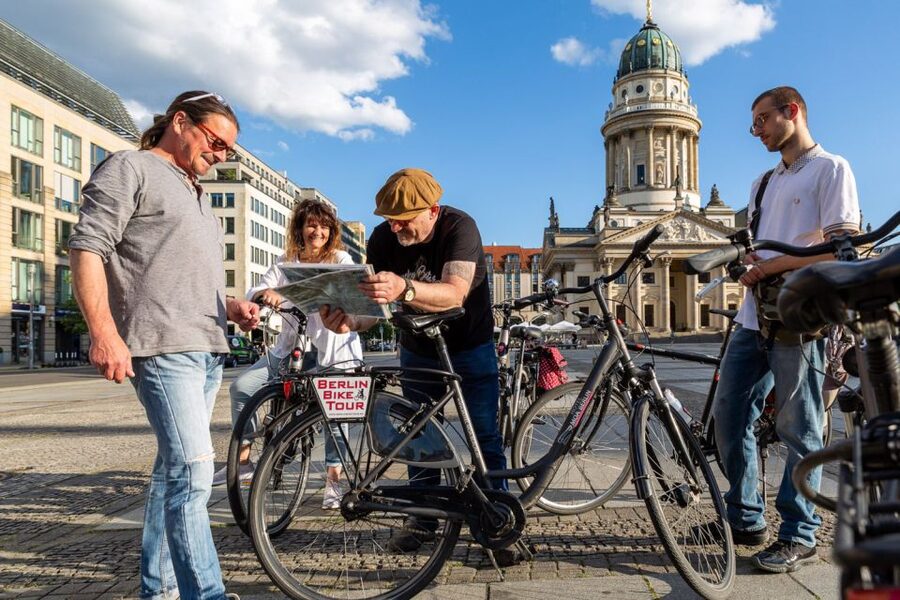
After the Brandenburg Gate, the route passes the Holocaust Memorial and other historic monuments. The memorial’s field of concrete slabs is deliberately spare and unsettling. It asks for quiet attention rather than a quick photo and souvenir-shop stop.
A bicycle tour can only give you an introduction here. If you want to read the information center beneath the memorial, set aside another visit. Still, placing the memorial on this route is important because it prevents Berlin’s political center from becoming a parade of attractive buildings without context.
The sequence also shows how close Berlin’s major chapters are to one another. Government, reunification, remembrance, and tourism all meet within a compact central area. The guide’s explanations are especially valuable at this point, but remember that the tour language is German.
Alexanderplatz and East German Berlin
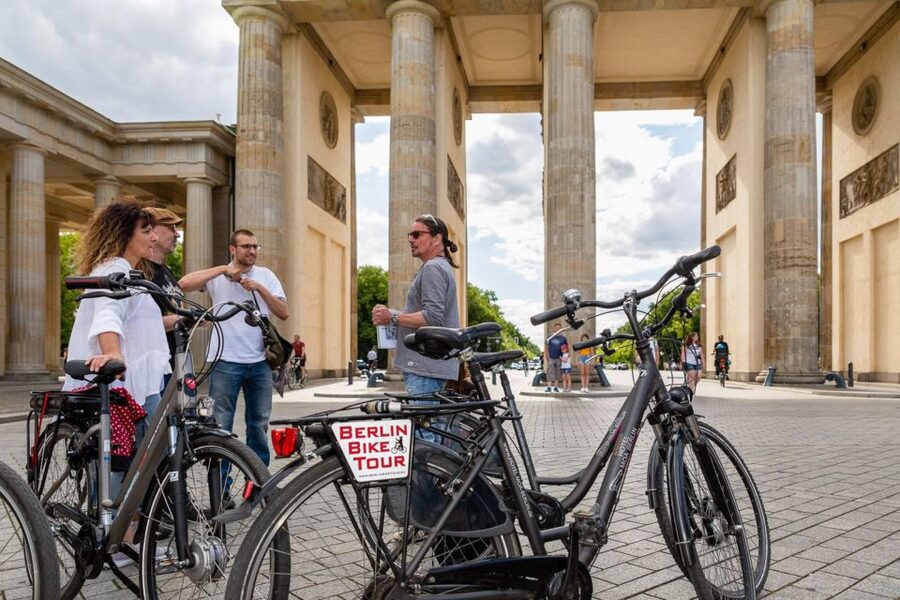
The ride continues to Alexanderplatz, one of Berlin’s best-known public squares. Here you will see the Red Town Hall, TV Tower, Neptune Fountain, and East German World Clock.
These sights make Alexanderplatz a strong counterpoint to the Brandenburg Gate and Reichstag. The area reflects Berlin’s eastern side and the visual language of the former German Democratic Republic. The World Clock is particularly distinctive because it turns a practical object into a piece of public design.
The Red Town Hall and Neptune Fountain add older civic and decorative elements, while the TV Tower dominates the skyline. You get several landmarks in one stop, but they do not all tell the same story. That mix is what makes Alexanderplatz useful for understanding Berlin’s layered identity.
The square is also one of the busier points on the route. Keep your attention on the guide and bike handling, especially if you are not used to cycling in a large city. The supplied bicycle is included, but the tour does not include food or drinks, so bring what you need for three and a half hours.
Finishing through Prenzlauer Berg
The final stretch takes you through Prenzlauer Berg, often called Prenzlauerberg in tour information. This district is known as one of the newer, hipper faces of Berlin, and it gives the route a more local neighborhood feel after the formal sights of Mitte.
That change matters. You have seen border history, national government, memorials, and monumental squares. Prenzlauer Berg shows how Berlin’s identity continues in cafés, streets, housing, and ordinary urban life, even though this tour does not promise specific café stops or meals.
The route ends where it began on Bornholmer Straße. Returning to the former border area gives the itinerary a neat shape. You start with the Wall’s opening, ride through the symbols of a united city, and finish in a district connected to the city’s divided past.
Small group size, language, and pace
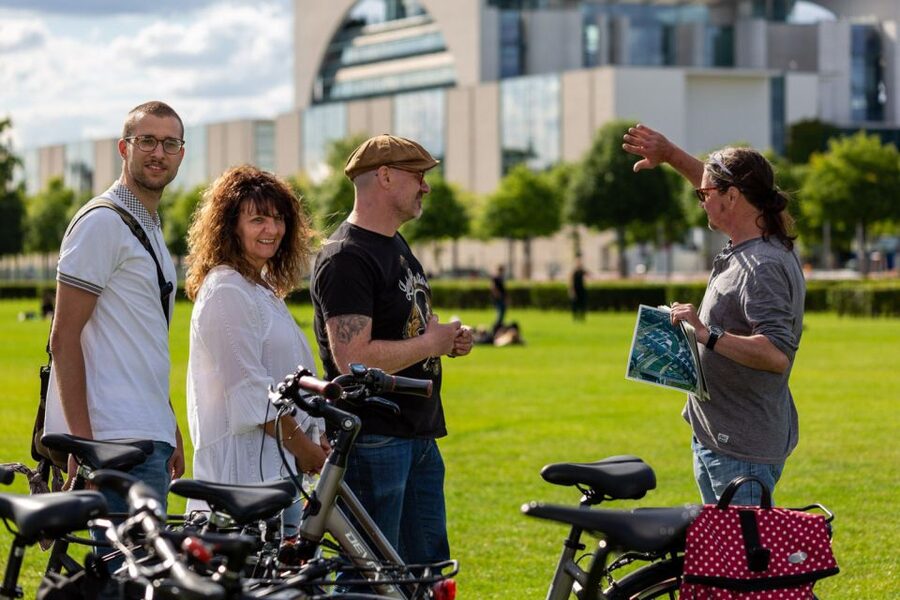
The maximum group size is eight people. That is a real advantage for a bike tour because large groups can stretch across streets, slow at crossings, and make it hard to hear instructions. A smaller group also gives you a better chance to ask the guide about a landmark while the route is paused.
The guide language is German. This is the single most important booking question. If you do not understand German, you may still recognize the sights, but you will lose much of the historical explanation that gives the itinerary its value.
The tour lasts 3.5 hours, with starting times shown according to availability. Because the route covers many districts and landmarks, expect a steady sightseeing ride rather than a relaxed short spin. The exact experience will depend on traffic, weather, and how long the group pauses at each place.
You should bring a passport or ID card, sunglasses, a sun hat, and a camera. Large bags and luggage are not allowed. That rule is sensible for cycling, but it means you need to make other arrangements for your belongings before arriving.
Weather and what the $39 price covers
The tour runs in all weather. On rainy days, rain ponchos are provided, which removes one worry, but it does not turn a wet bike ride into a dry one. Wear clothing suited to the forecast and be ready for conditions to affect your comfort.
At $39, the price includes the bicycle, city guide, and poncho when needed. It does not include arrival costs, food, or drinks. I consider that a fair price for a small-group ride covering this much of central Berlin, especially if you want a first-day orientation.
The value is strongest for visitors who want to see many landmarks without arranging several transit connections. It is less compelling if you already know central Berlin well or prefer to spend a long time inside each monument.
Cancellation terms need a careful look. The general policy allows a full refund up to 24 hours before departure, but groups of three or more have a three-day cancellation deadline. If you are booking for a family or group of friends, use the stricter deadline when planning.
Who should book this Berlin ride?
I would choose this tour for a first visit, especially if you want Berlin’s major sights placed in historical order. The route gives you the former Wall crossing, the Government Quarter, Reichstag, Tiergarten, Brandenburg Gate, Holocaust Memorial, Alexanderplatz, and Prenzlauer Berg in one outing.
It also suits active visitors who prefer seeing a city in motion. The bicycle saves time between districts and lets you cover more ground than a walking tour without sitting inside a vehicle.
You should think twice if you need an English-speaking guide, dislike cycling in all weather, want extensive time inside museums, or plan to carry luggage. The German-only format is not a minor detail, and the tour is designed for broad sightseeing rather than close study.
Should you book it?
Book this ride if you want a compact, active introduction to Berlin’s divided past and reunited present. The best features are the eight-person limit, the strong route design, and the way it connects Bornholmer Straße to the Brandenburg Gate and Alexanderplatz.
Skip it if your priority is indoor sightseeing, English commentary, or a slow pace. For everyone else who understands German and can manage a 3.5-hour ride, $39 is a sensible way to get your bearings across Berlin’s historic center.
FAQ
How long does the Berlin bike tour last?
The tour lasts 3.5 hours. Check availability for the starting times offered on your chosen date.
How many people can join the tour?
The group is limited to eight participants.
What language is the tour conducted in?
The live tour guide speaks German.
Where does the tour start?
The meeting point is 75 Bornholmer Straße, Berlin 10439. You should arrive 20 minutes before the tour begins.
How can I reach the meeting point by public transport?
The meeting point is about one minute from tram stop Björnsonstraße, served by M1, M13, and M50. It is about two minutes from S-Bahn station Bornholmer Straße, served by S1, S2, S8, S25, and S85. Schönhauser Allee station is about a 10-minute walk away.
Where does the tour end?
The activity ends back at the Bornholmer Straße meeting point.
Is a bicycle included?
Yes. The bicycle is included in the tour price.
What happens if it rains?
The tour operates in all weather. Rain ponchos are provided on rainy days.
Can I bring luggage or a large bag?
No. Luggage and large bags are not allowed. You should make other arrangements for them before the tour.
What is the cancellation policy?
The general policy allows cancellation up to 24 hours in advance for a full refund. For tours with groups of three or more people, the cancellation deadline is three days before the scheduled tour.
More Cycling Tours in Berlin
- Berlin Highlights: 3-Hour Bike Tour
★ 4.9 · 809 reviews - Berlin Highlights Sightseeing Bike Tour in Small Groups
★ 5.0 · 652 reviews - Berlin: Alternative Bike Tour of Kreuzberg & Friedrichshain
★ 4.7 · 548 reviews - Berlin: Guided Bike Tour of the Berlin Wall and Third Reich
★ 4.7 · 499 reviews
Just added around Berlin
- Love and War in Berlin: Self-Guided Story Puzzle Walk★ 5.0 · 7 reviews
- Rickshaw Tours Berlin – Groups of up to 16 people with several rickshaws★ 4.0 · 97 reviews
- Walking on the Wall: 3-Hour Tour in Berlin★ 4.5 · 34 reviews
- eSIM for Germany and 34 European Countries★ 4.5 · 16 reviews
- Warnemuende Shore Excursion: Berlin Private Sightseeing Tour from Rostock★ 5.0 · 4 reviews
- Your ticket to The Wall Museum Berlin★ 3.0 · 60 reviews
- Warnemuende Shore Excursion: Private Berlin Tour★ 4.5 · 27 reviews
- Berlin’s Gay, Lesbian, and Queer Scene Small-Group Walking Tour★ 4.5 · 66 reviews
Bike Tours, compared.
Sights and Highlights Bike Tour with a Local Guide
Read our review →
Classic Mike’s Bike Tour daily @ 11.30 incl Beer Garden & Surfers
Read our review →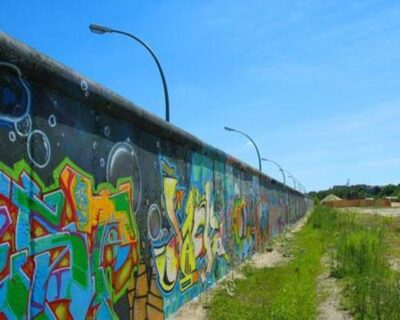

Browse the lists this tour appears in